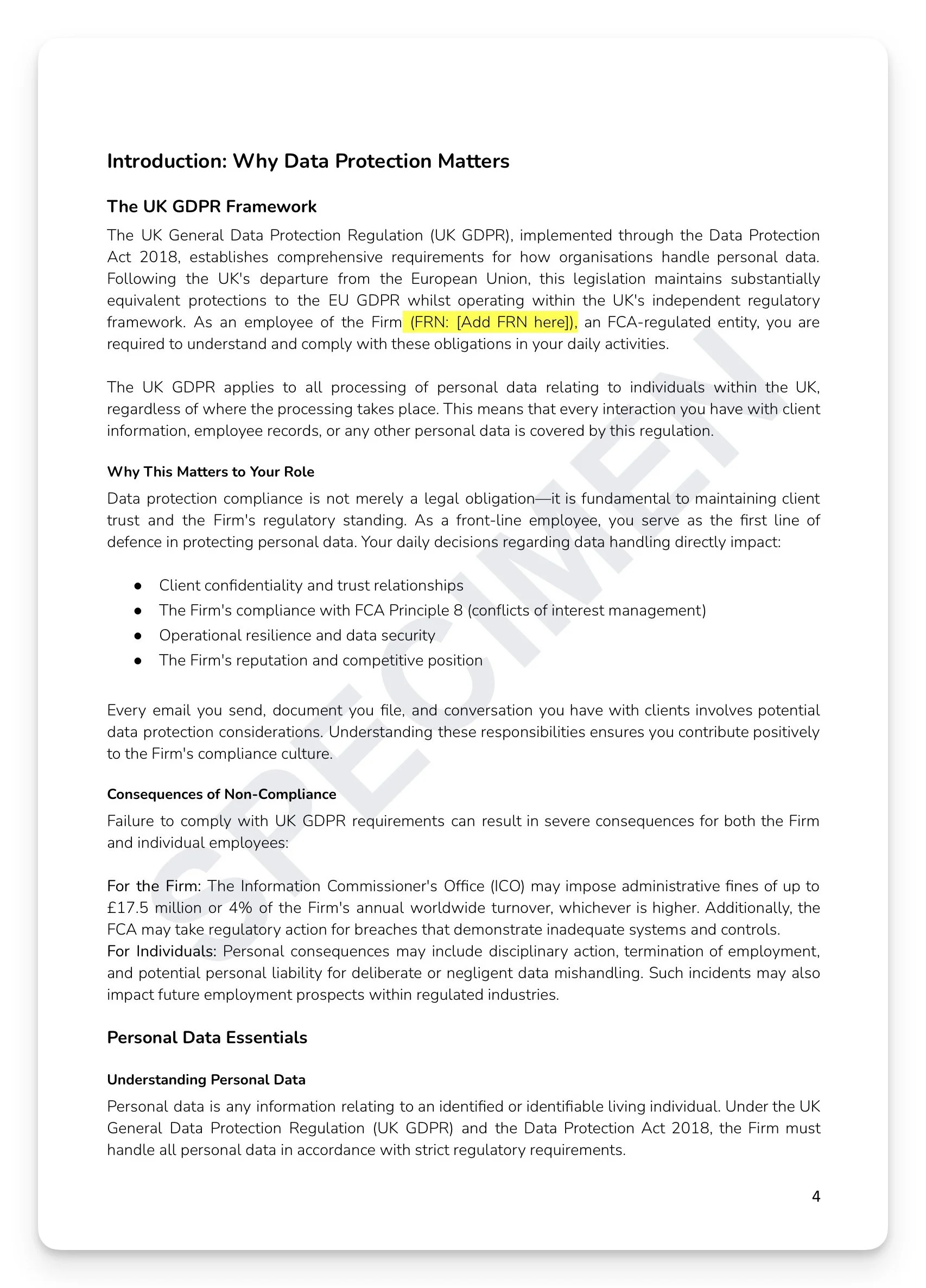
Every piece of client data you hold is a regulatory obligation. Under UK GDPR Article 5, you must process personal data lawfully, minimise what you collect, keep it accurate, secure it properly, and delete it when it's no longer needed. Under FCA SYSC 3.2.6R, your systems and controls must reflect all of that. The ICO can fine you £17.5 million. The FCA can fine you separately. Both are watching. The FCA doesn't wait.
What's included:
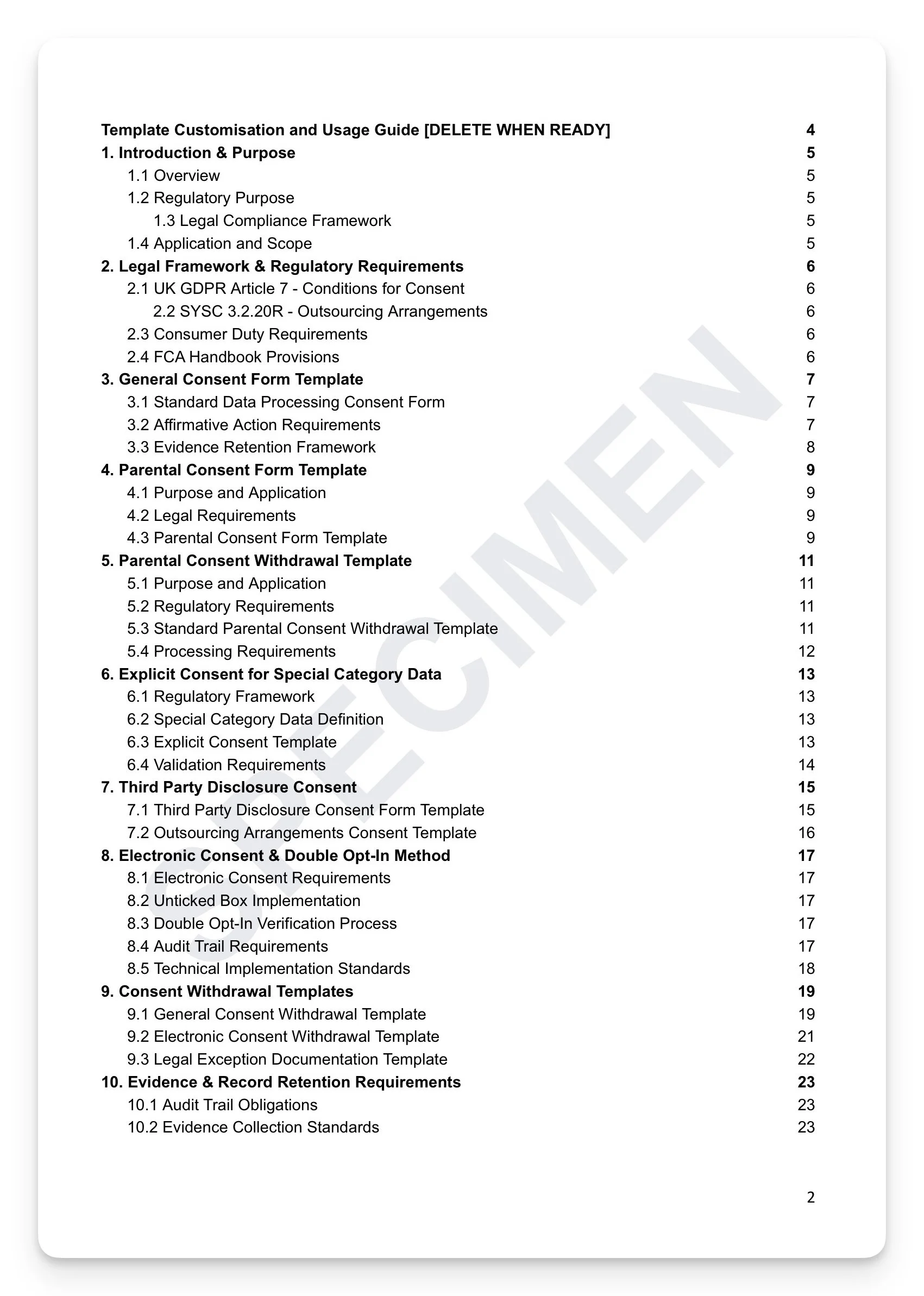
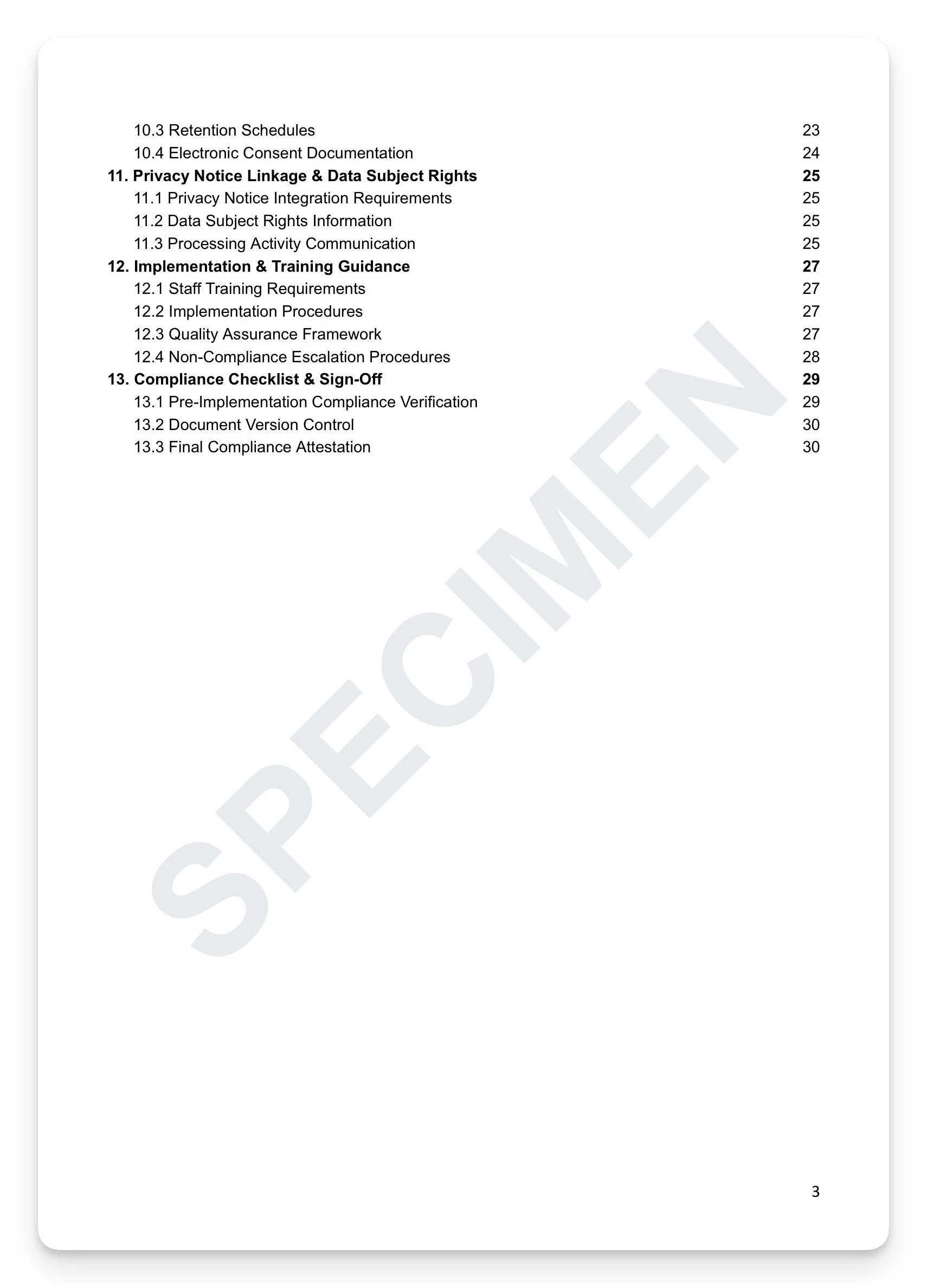
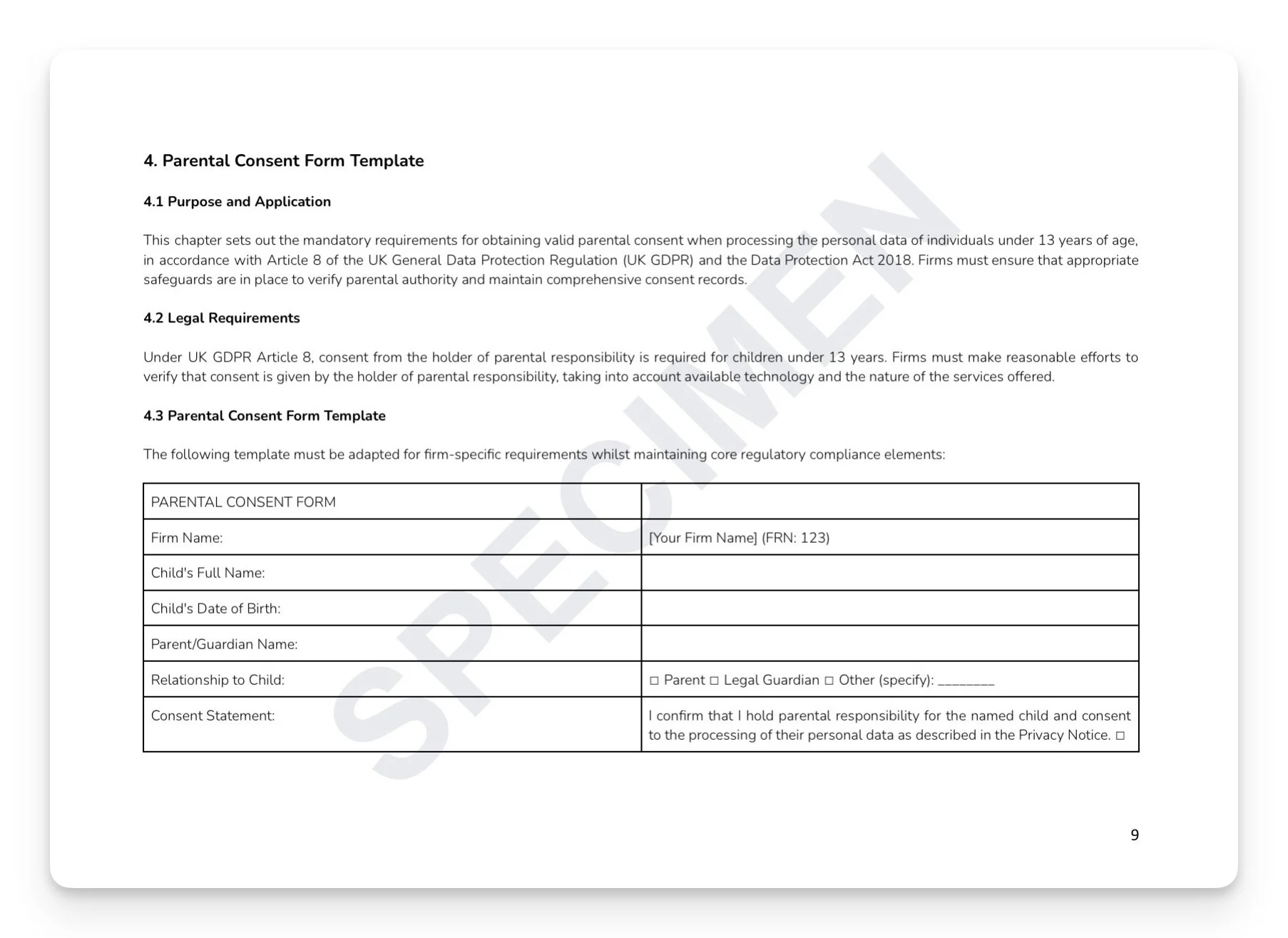
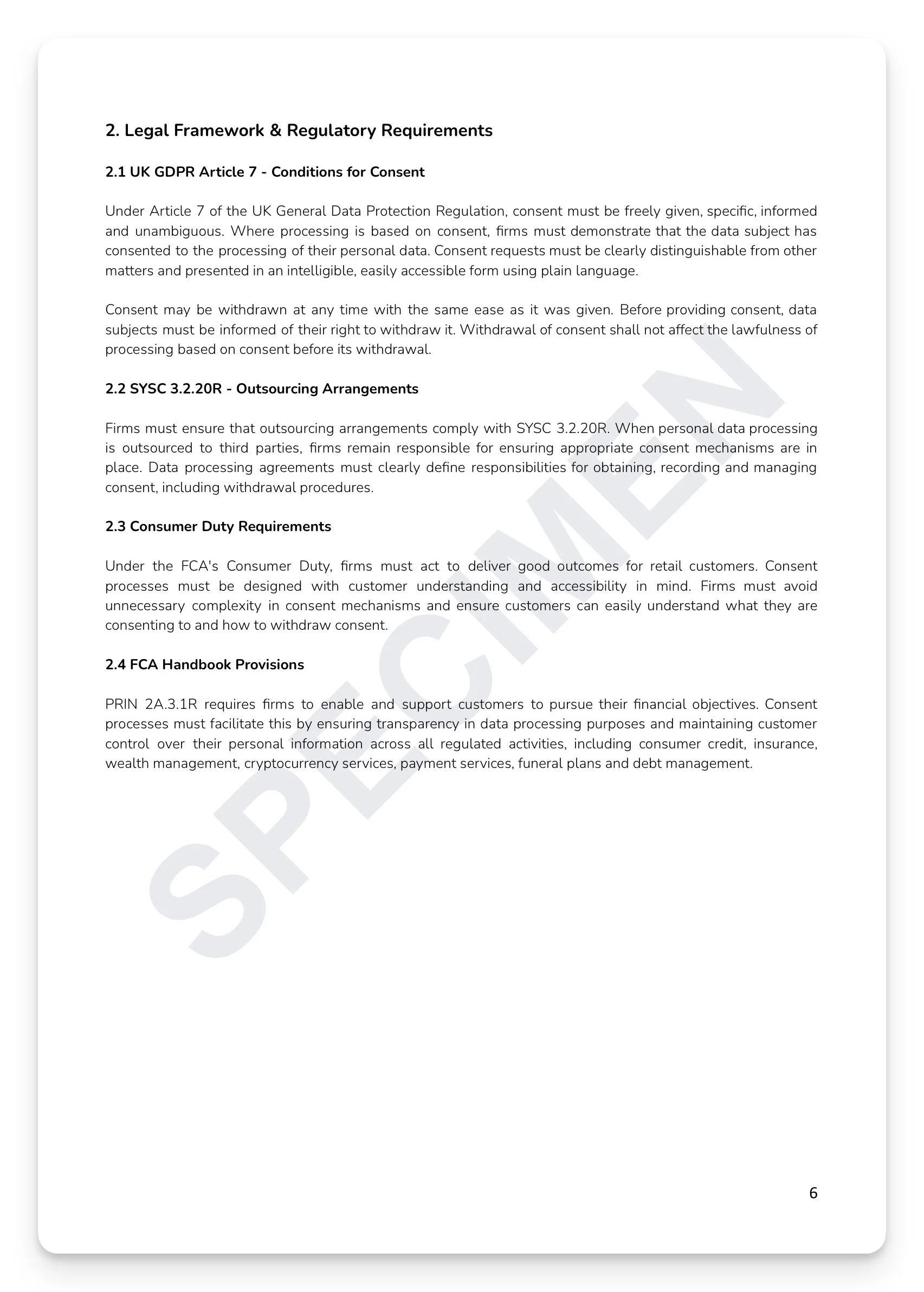
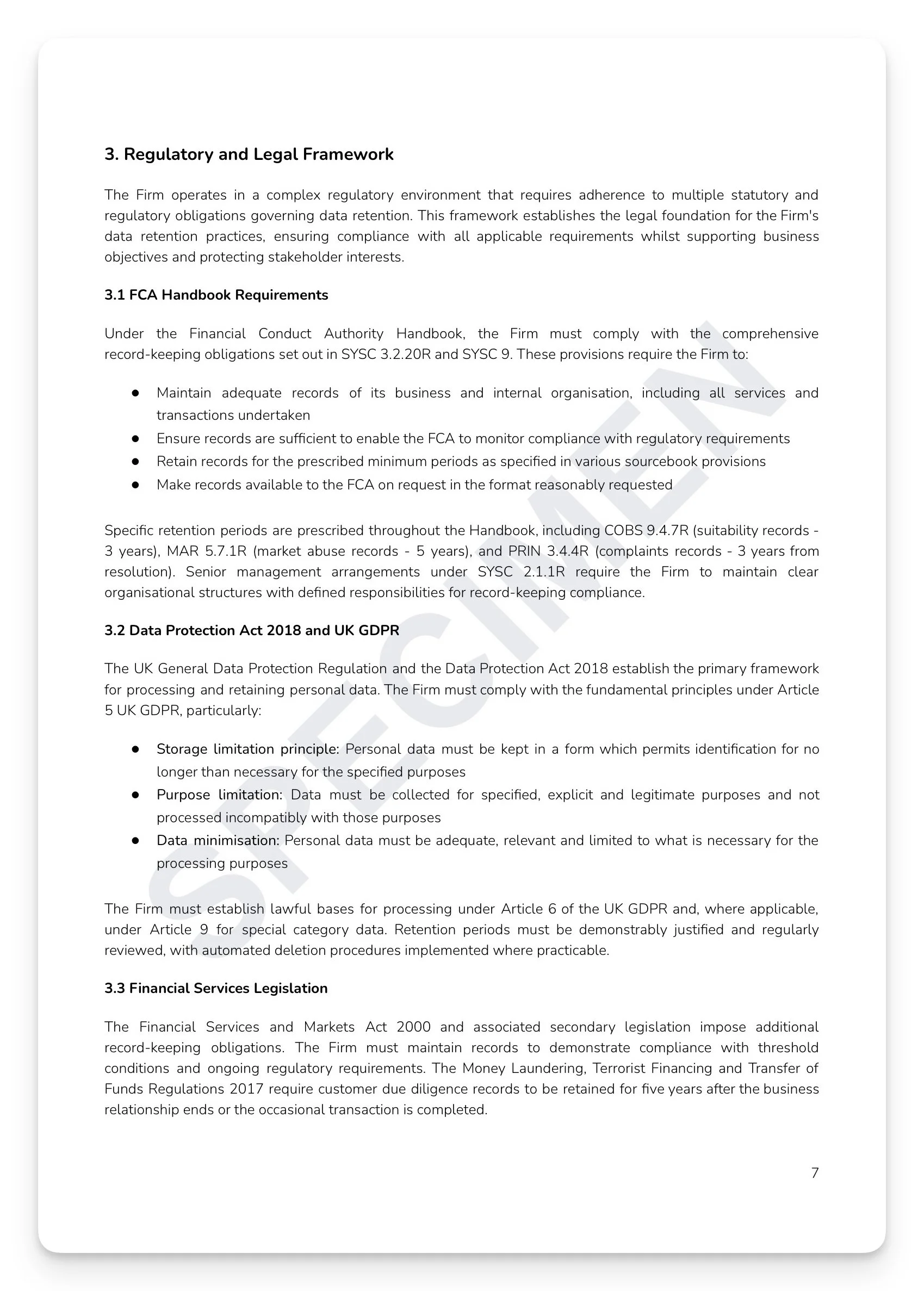
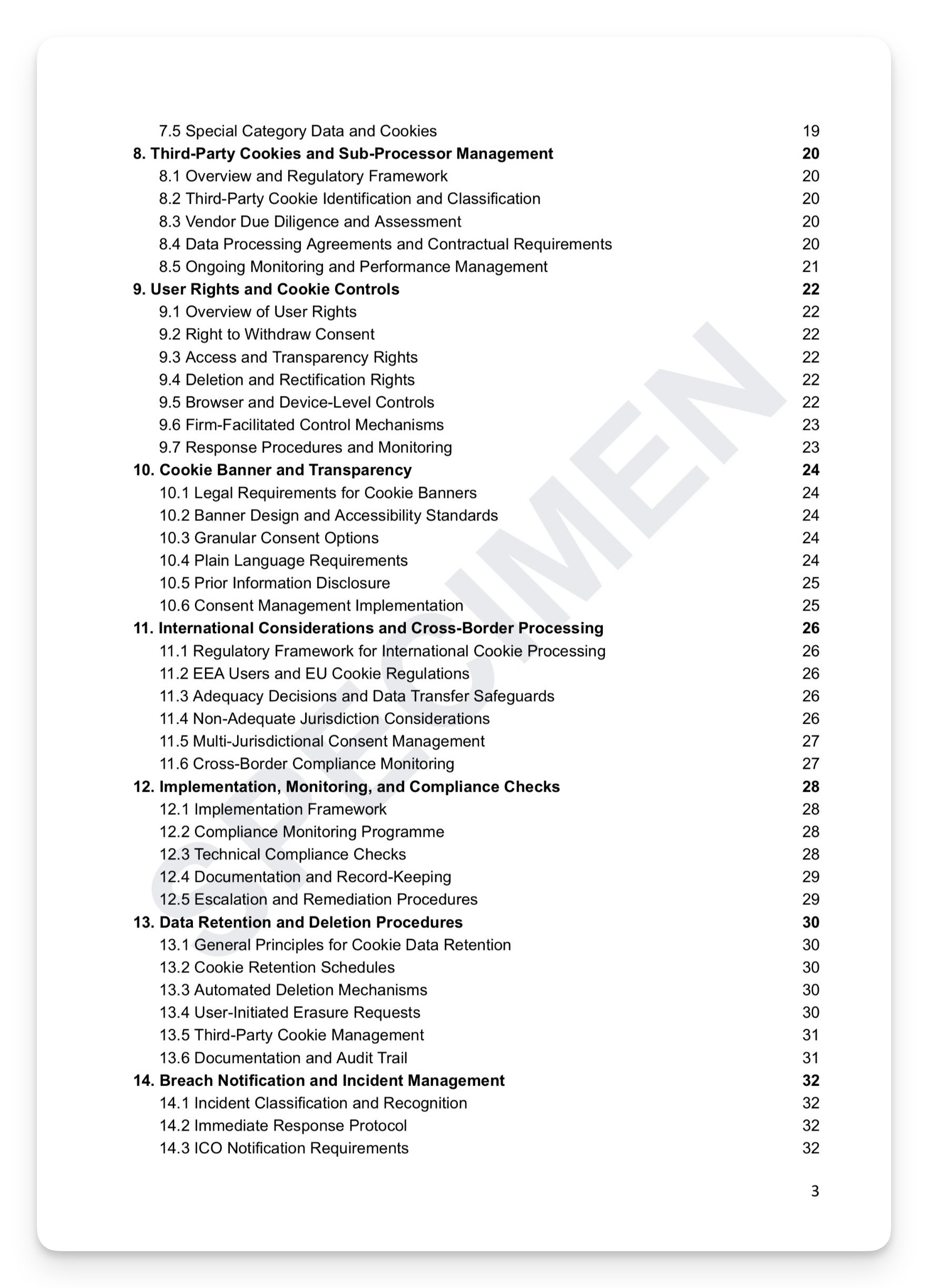
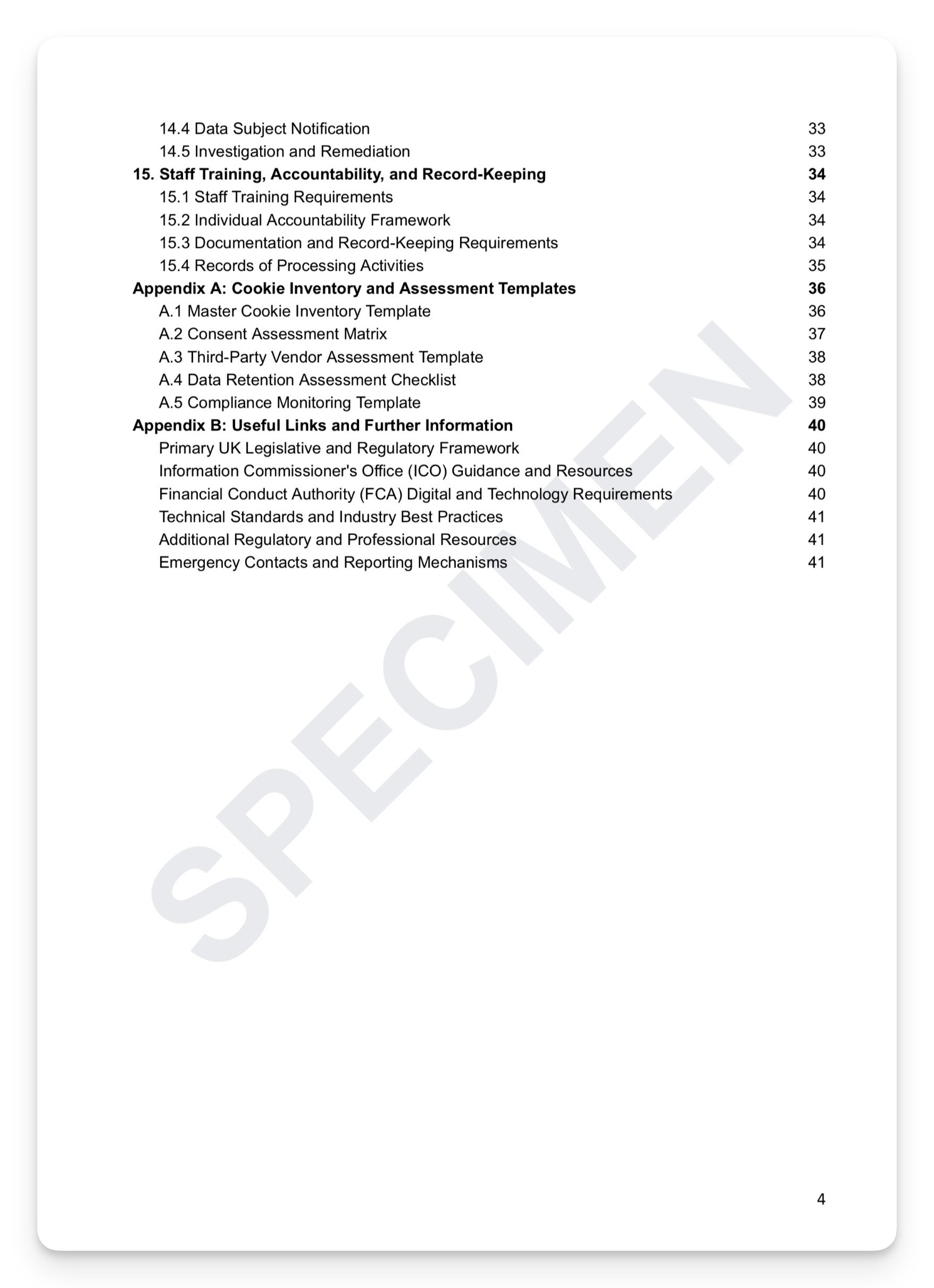
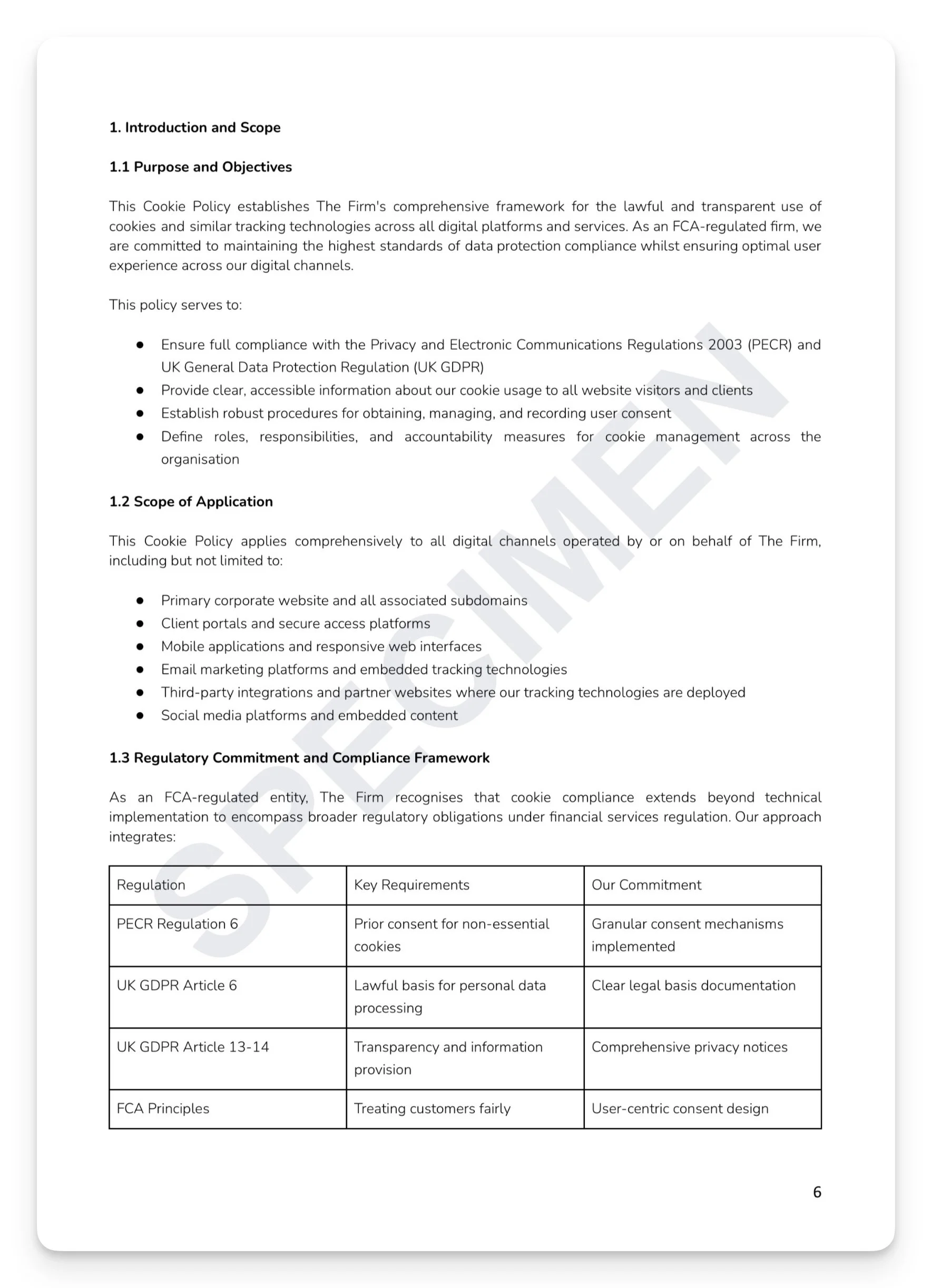
All seven UK GDPR principles with implementation requirements and six lawful bases mapped to financial services processing activities
Full data subject rights procedures: Articles 15–22 with one-month response framework
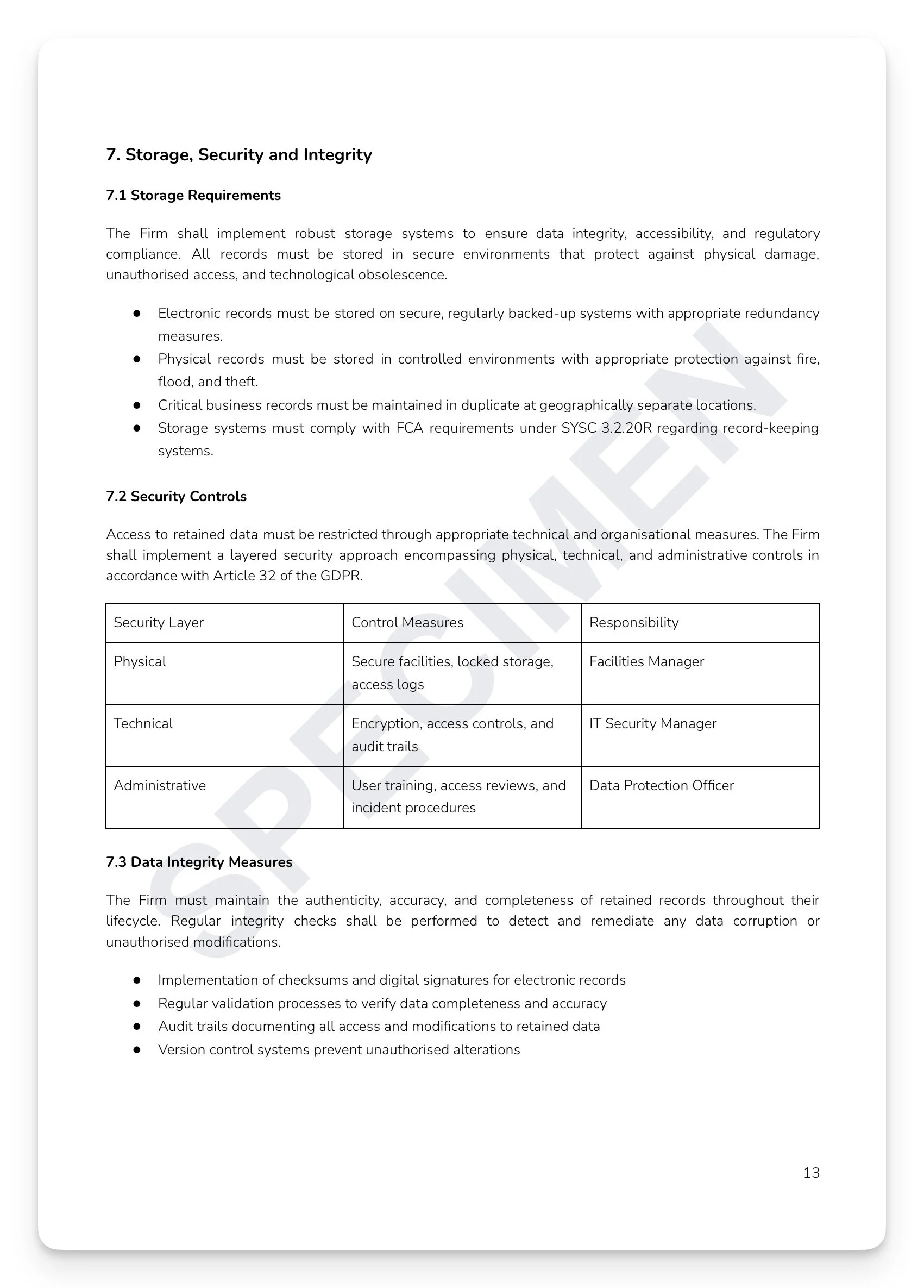
Technical security standards: AES-256/TLS 1.3 encryption, MFA, RBAC, SIEM and DLP monitoring
Third-party processor due diligence, DPA requirements, and sub-processor management
72-hour ICO breach notification procedures with individual notification assessment criteria
DPIA mandatory triggers, methodology, and content requirements
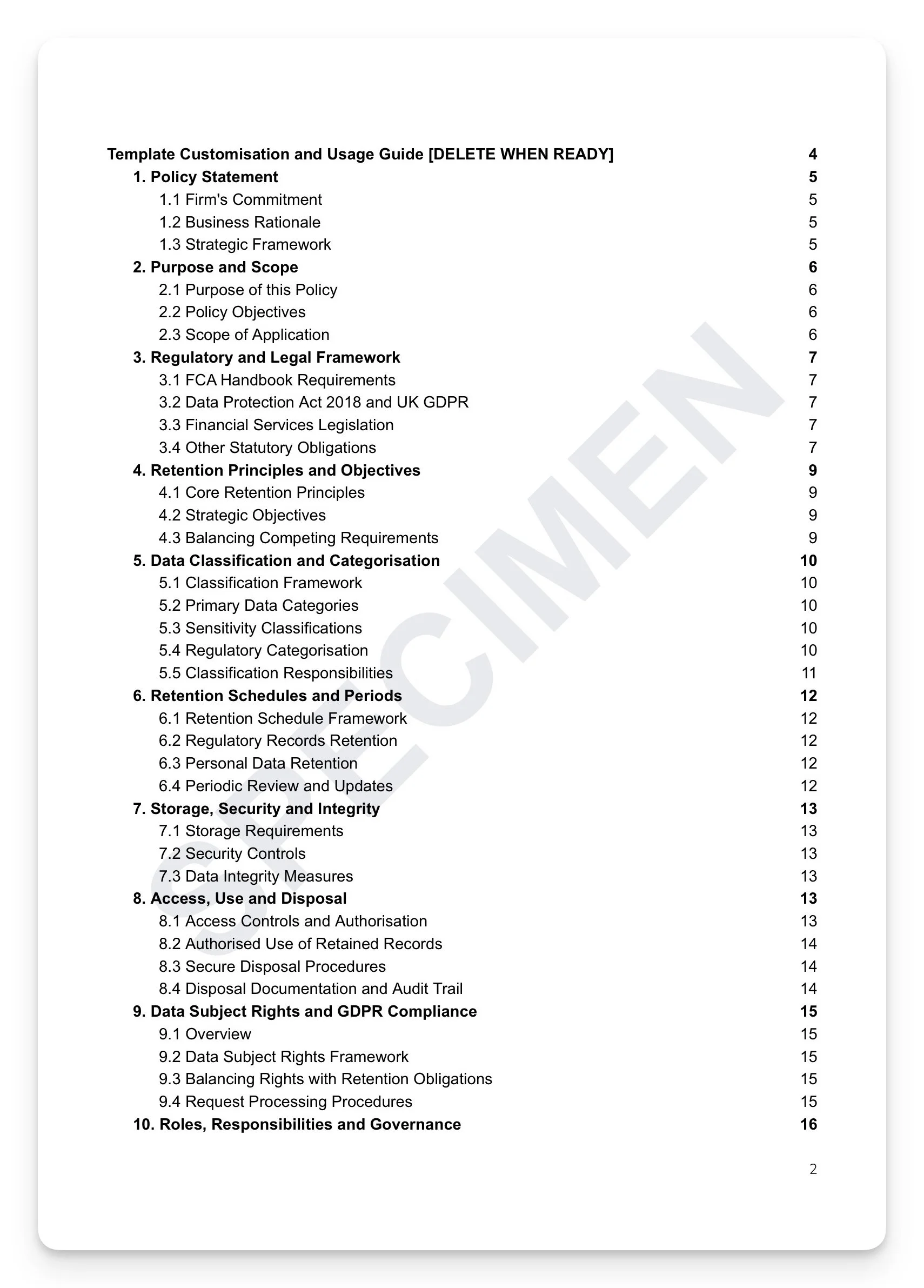
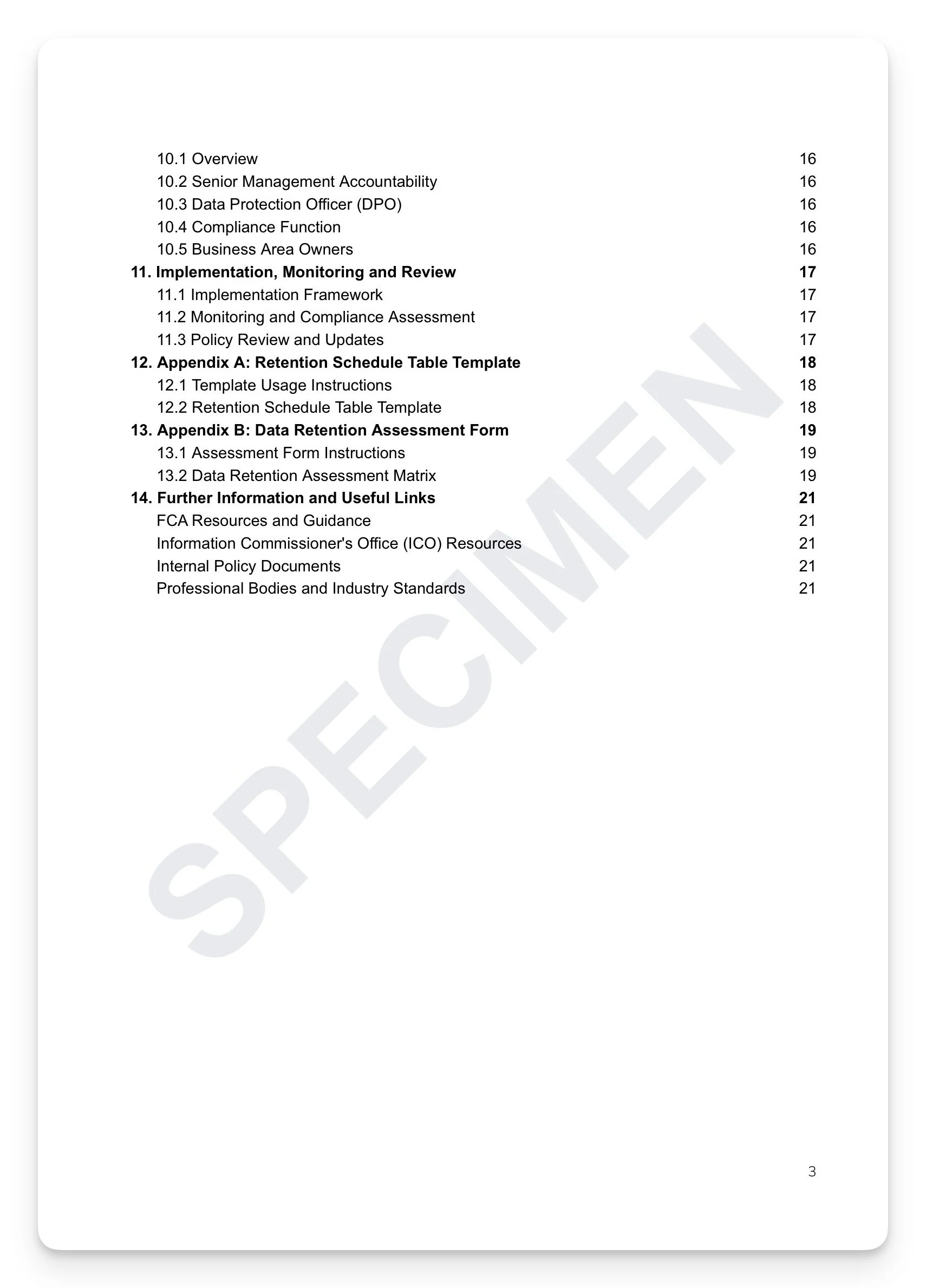
Ready-to-use appendices: Register of Processing Activities, data audit checklist, and product data protection assessment matrix + much more
Who is this for?
Data Protection Officers, Compliance Officers, senior management, IT security teams, and compliance consultants across all FCA-regulated firms processing client, employee, or third-party personal data.
How it works
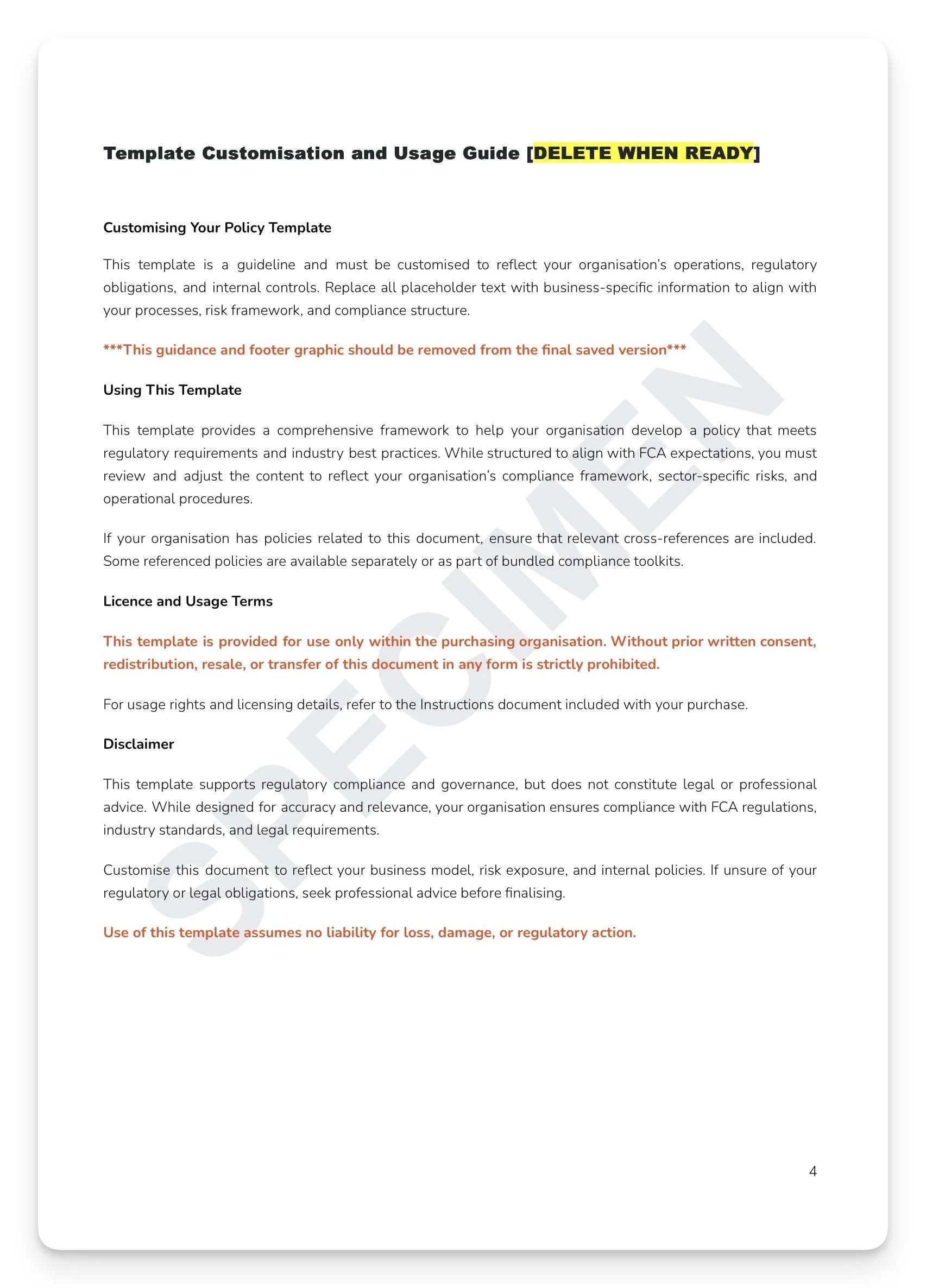
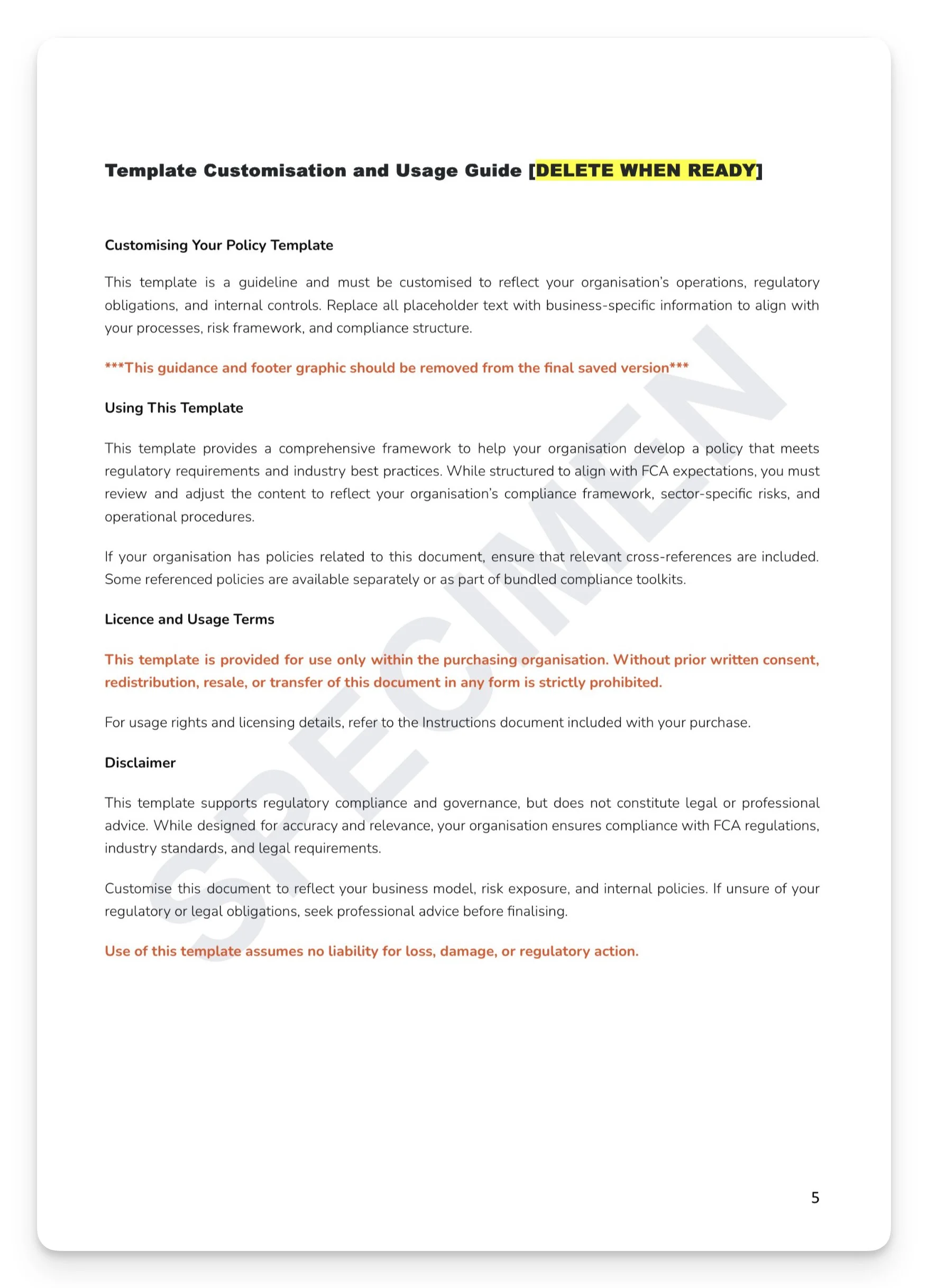
Step 1 — Read it. Every section exists for a reason, grounded in a specific regulatory obligation.
Step 2 — Understand it. Map the content against your current practices. Identify where you're strong and where gaps exist.
Step 3 — Make it yours. Tailor the language to reflect how your organisation actually operates. A policy that sounds like your firm is a policy your people will follow.
Step 4 — Take ownership. Assign clear accountability — Board approval, named SMF holder, designated policy owner. A policy without an owner is a liability, not an asset.
Step 5 — Operationalise it. Embed the policy into your governance calendar, training programme, and annual review cycle. This is where compliance becomes culture.
Or, get this free with RegTechPRO
Access this alongside the full compliance policy library — SM&CR, COBS, AML, Consumer Duty, GDPR, and more — for a fraction of the cost of consultancy.
View RegTechPRO pricing and packages →
Every piece of client data you hold is a regulatory obligation. Under UK GDPR Article 5, you must process personal data lawfully, minimise what you collect, keep it accurate, secure it properly, and delete it when it's no longer needed. Under FCA SYSC 3.2.6R, your systems and controls must reflect all of that. The ICO can fine you £17.5 million. The FCA can fine you separately. Both are watching. The FCA doesn't wait.
What's included:
All seven UK GDPR principles with implementation requirements and six lawful bases mapped to financial services processing activities
Full data subject rights procedures: Articles 15–22 with one-month response framework
Technical security standards: AES-256/TLS 1.3 encryption, MFA, RBAC, SIEM and DLP monitoring
Third-party processor due diligence, DPA requirements, and sub-processor management
72-hour ICO breach notification procedures with individual notification assessment criteria
DPIA mandatory triggers, methodology, and content requirements
Ready-to-use appendices: Register of Processing Activities, data audit checklist, and product data protection assessment matrix + much more
Who is this for?
Data Protection Officers, Compliance Officers, senior management, IT security teams, and compliance consultants across all FCA-regulated firms processing client, employee, or third-party personal data.
How it works
Step 1 — Read it. Every section exists for a reason, grounded in a specific regulatory obligation.
Step 2 — Understand it. Map the content against your current practices. Identify where you're strong and where gaps exist.
Step 3 — Make it yours. Tailor the language to reflect how your organisation actually operates. A policy that sounds like your firm is a policy your people will follow.
Step 4 — Take ownership. Assign clear accountability — Board approval, named SMF holder, designated policy owner. A policy without an owner is a liability, not an asset.
Step 5 — Operationalise it. Embed the policy into your governance calendar, training programme, and annual review cycle. This is where compliance becomes culture.
Or, get this free with RegTechPRO
Access this alongside the full compliance policy library — SM&CR, COBS, AML, Consumer Duty, GDPR, and more — for a fraction of the cost of consultancy.
View RegTechPRO pricing and packages →


 Image 1 of 9
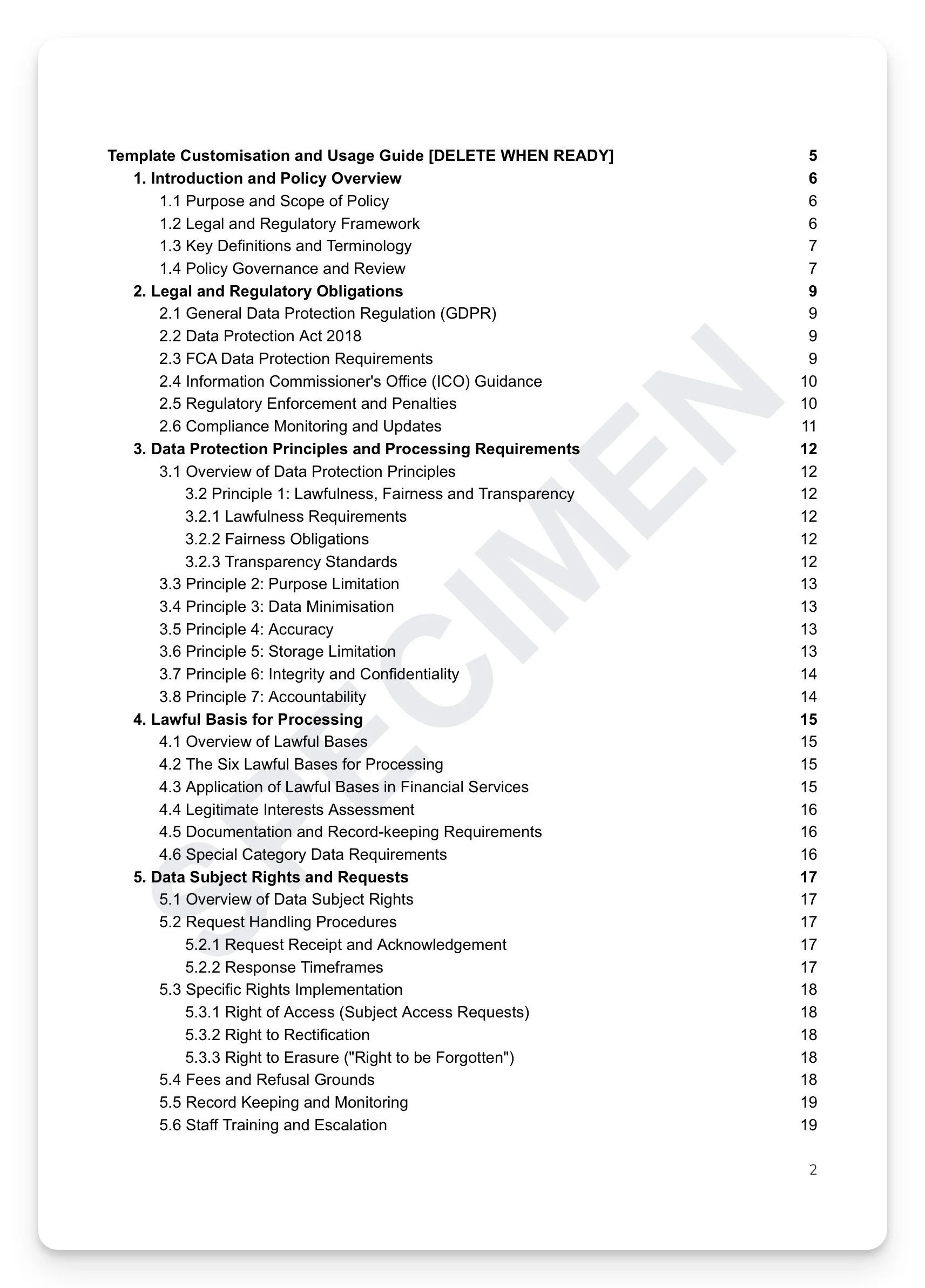 Image 2 of 9
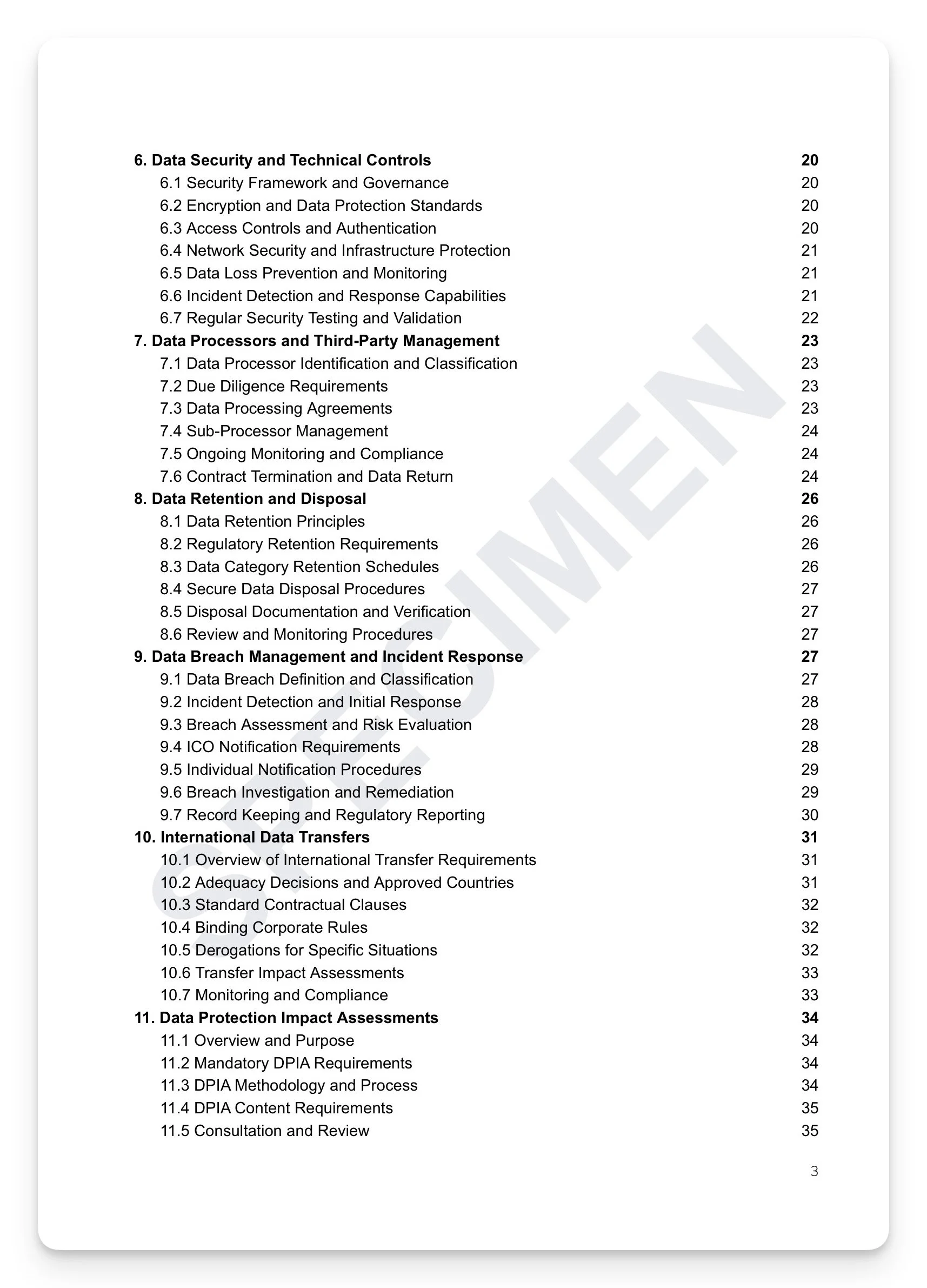 Image 3 of 9
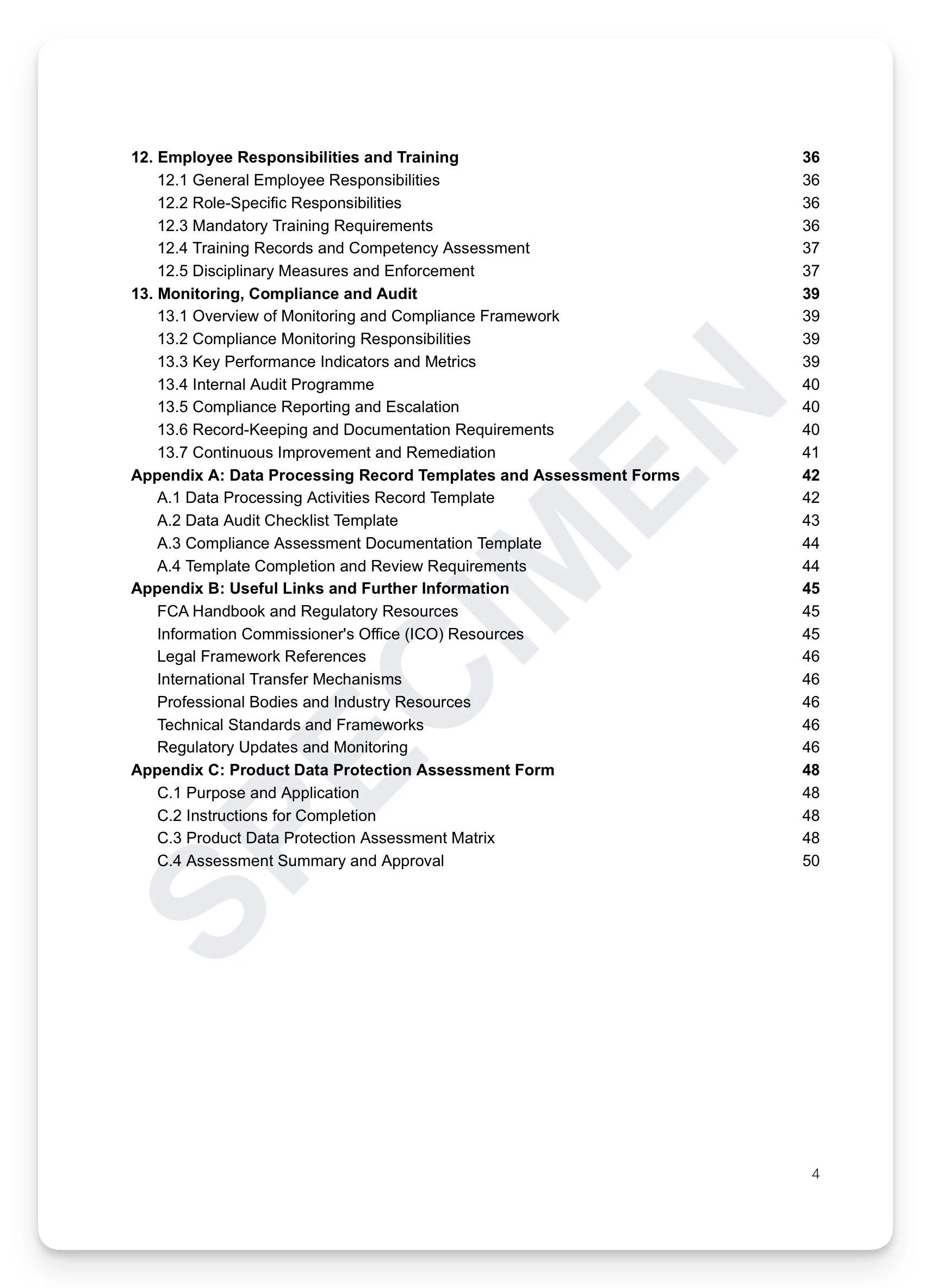 Image 4 of 9
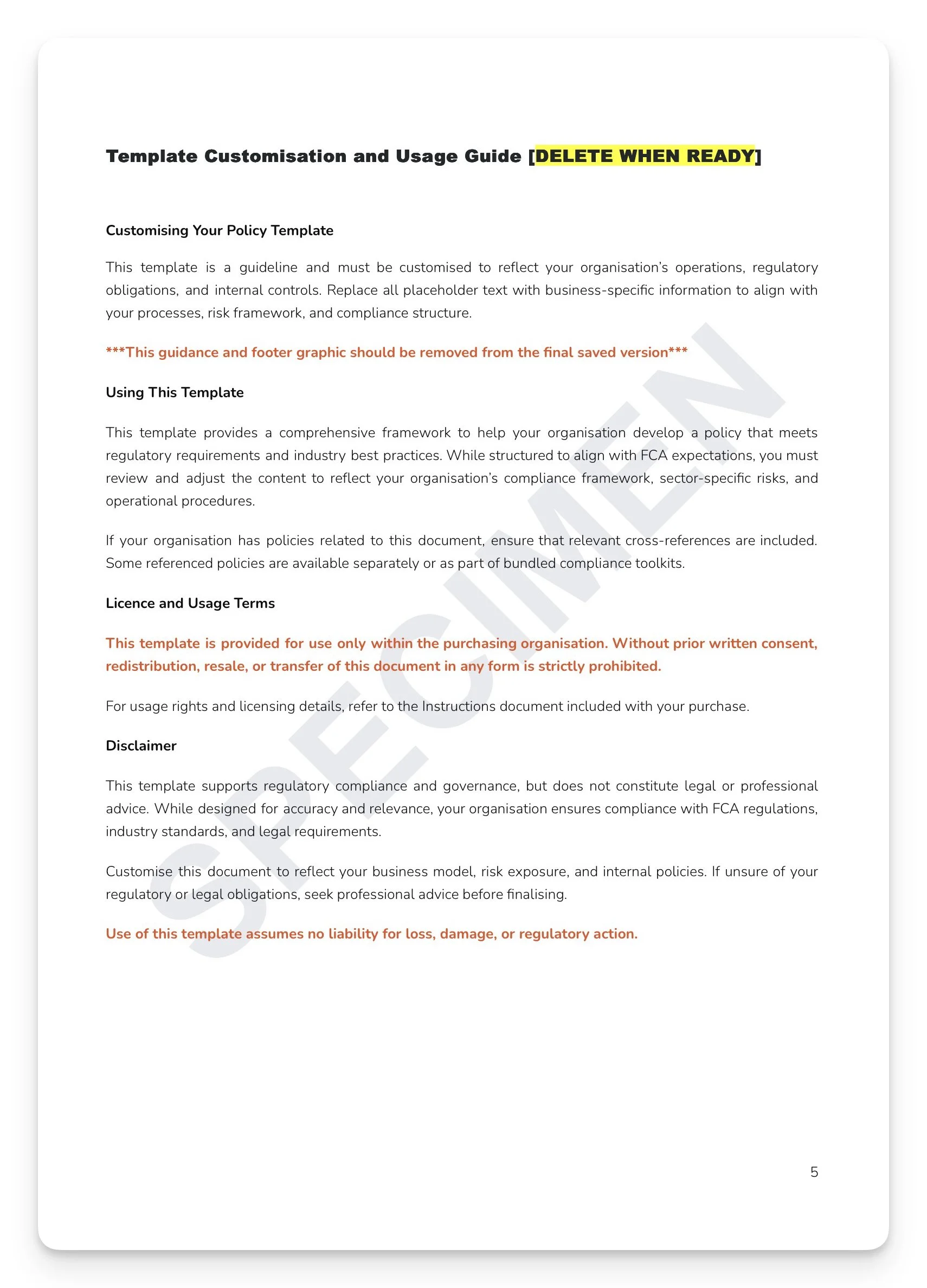 Image 5 of 9
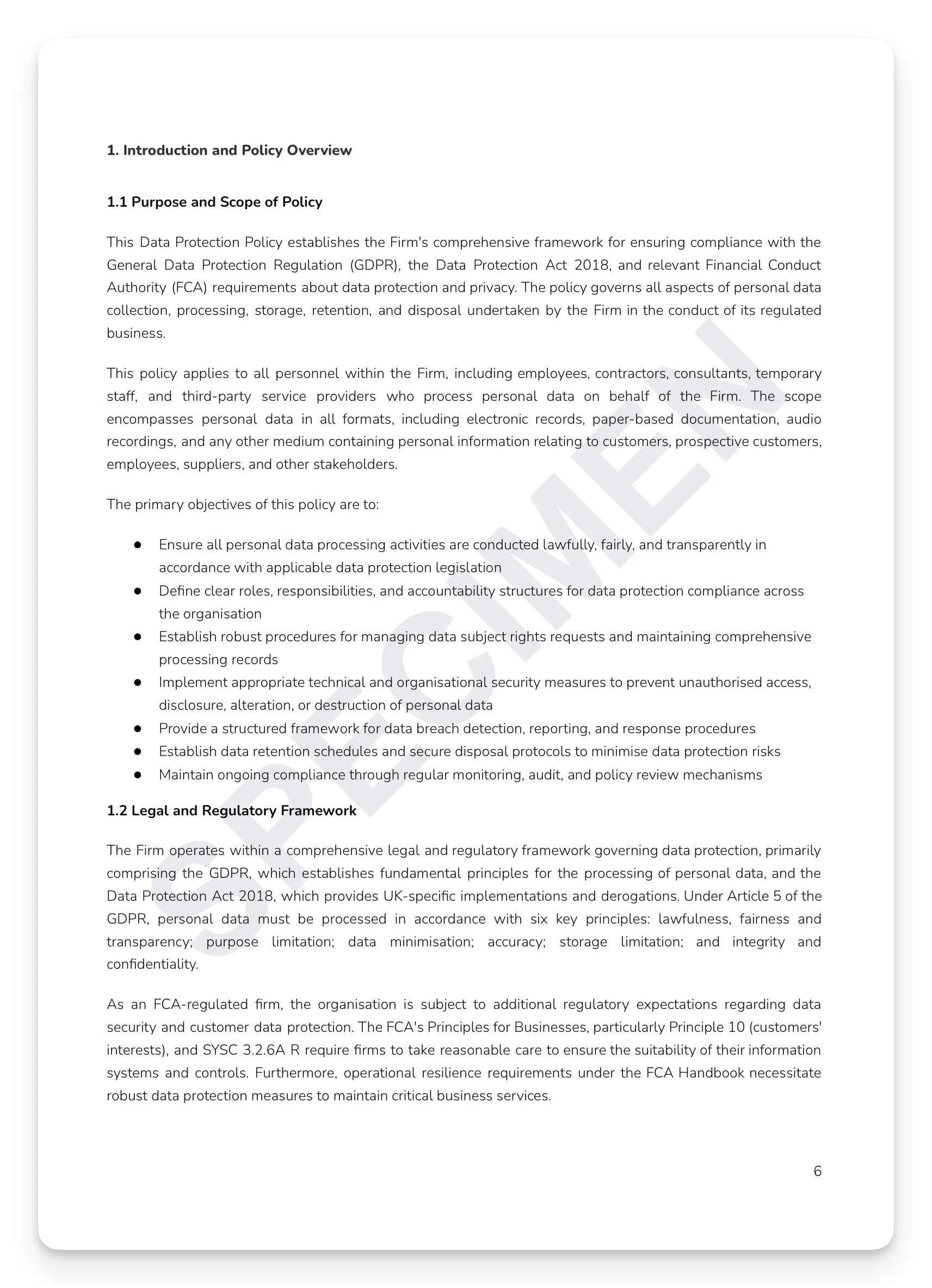 Image 6 of 9
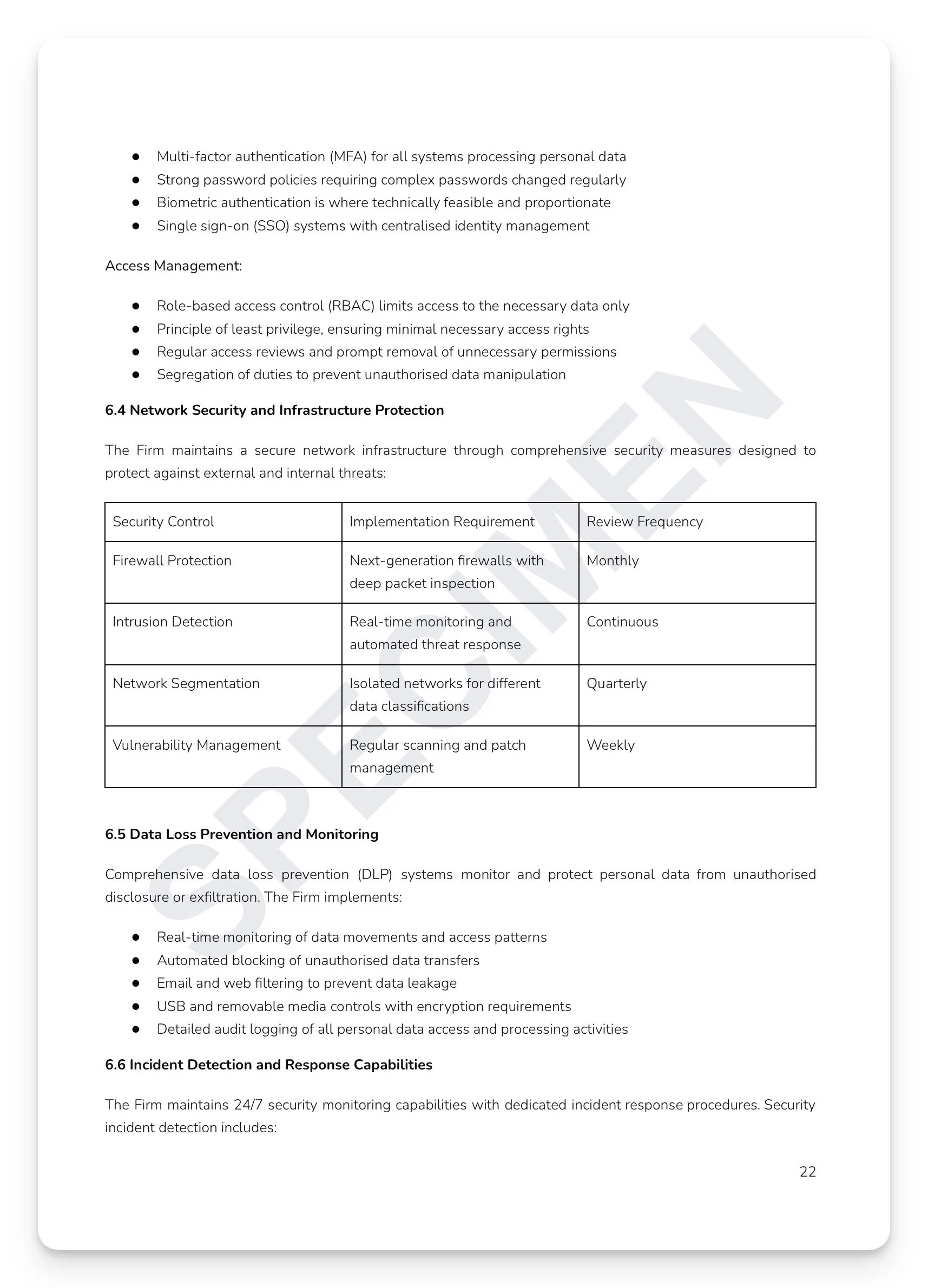 Image 7 of 9
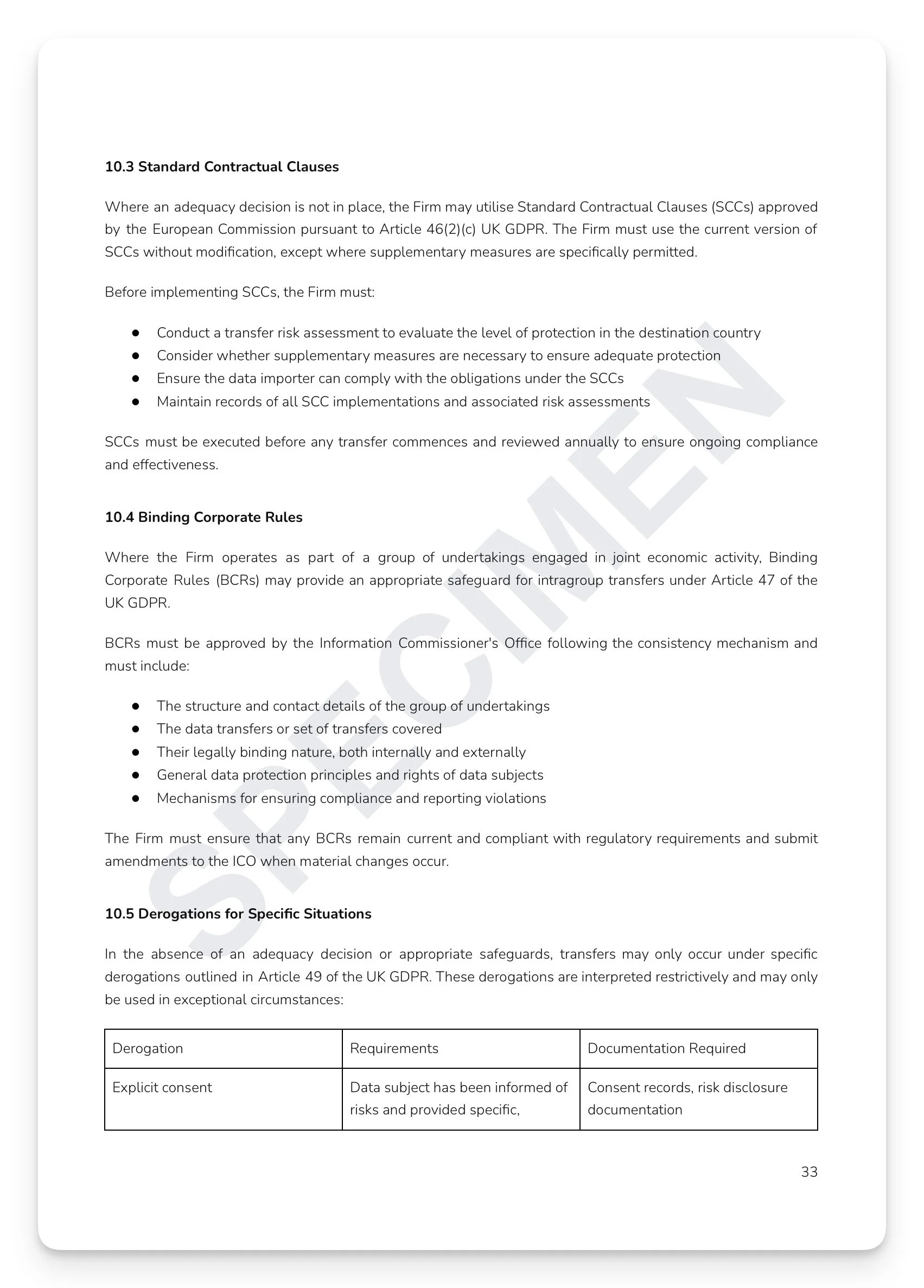 Image 8 of 9
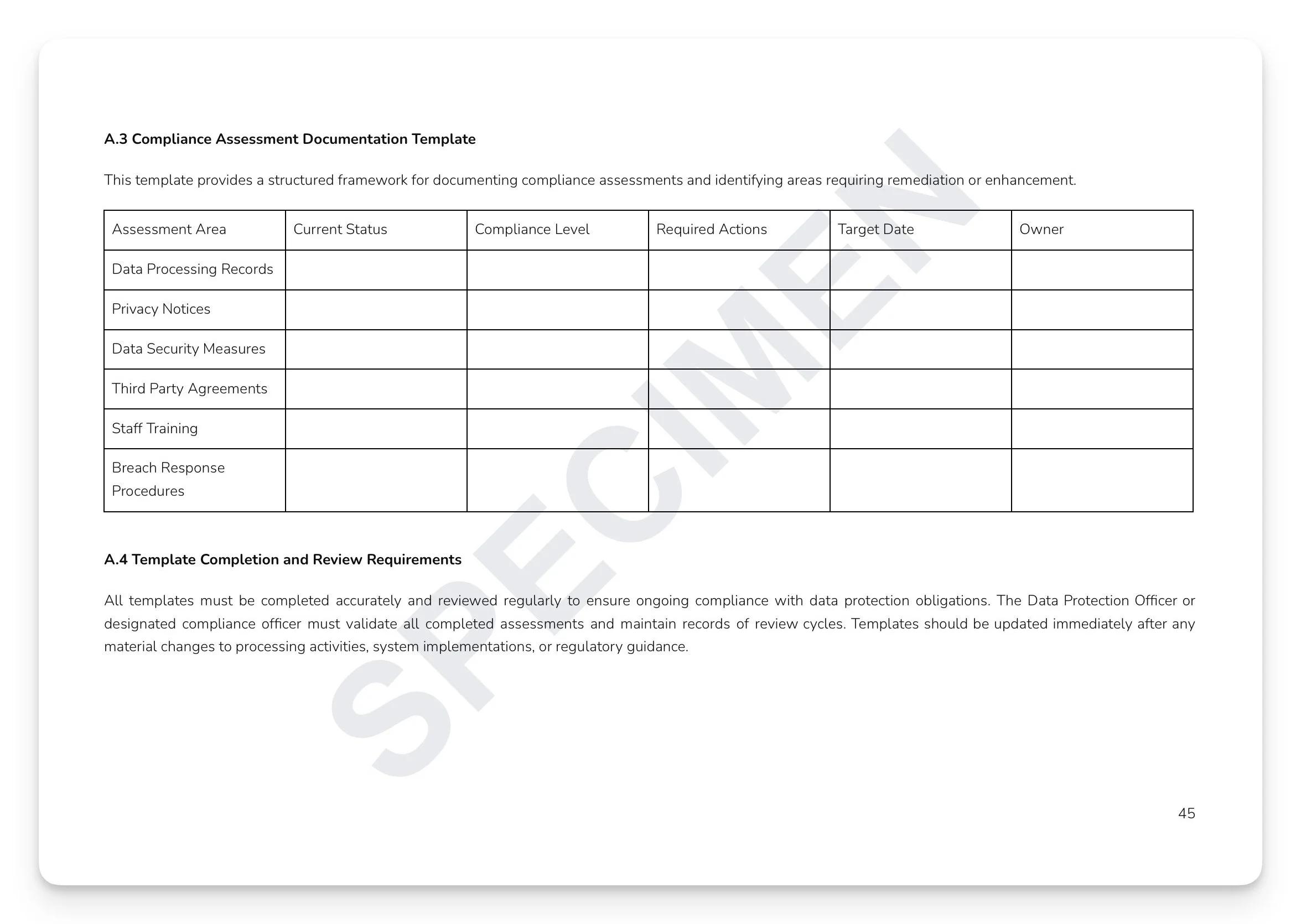 Image 9 of 9