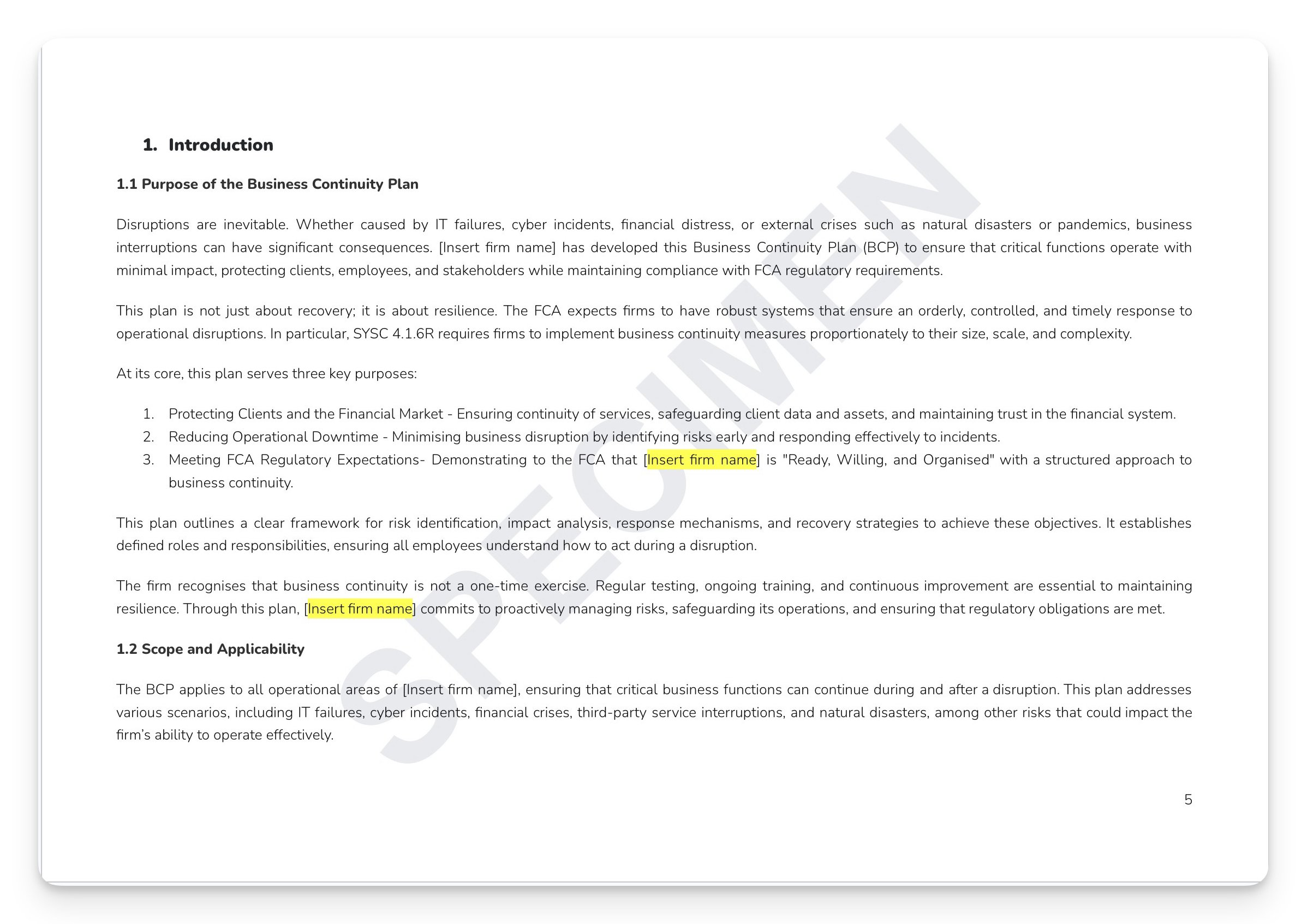
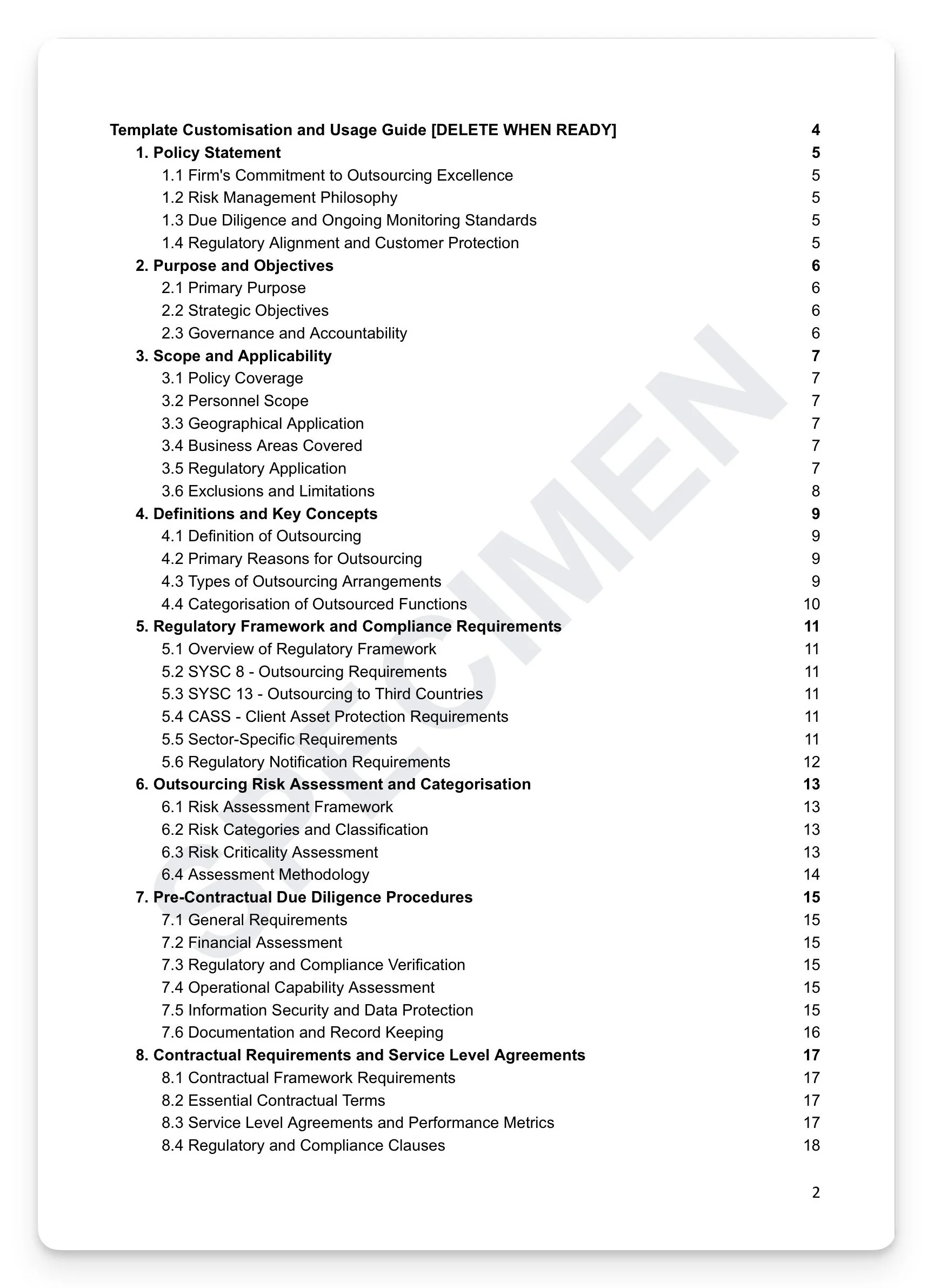
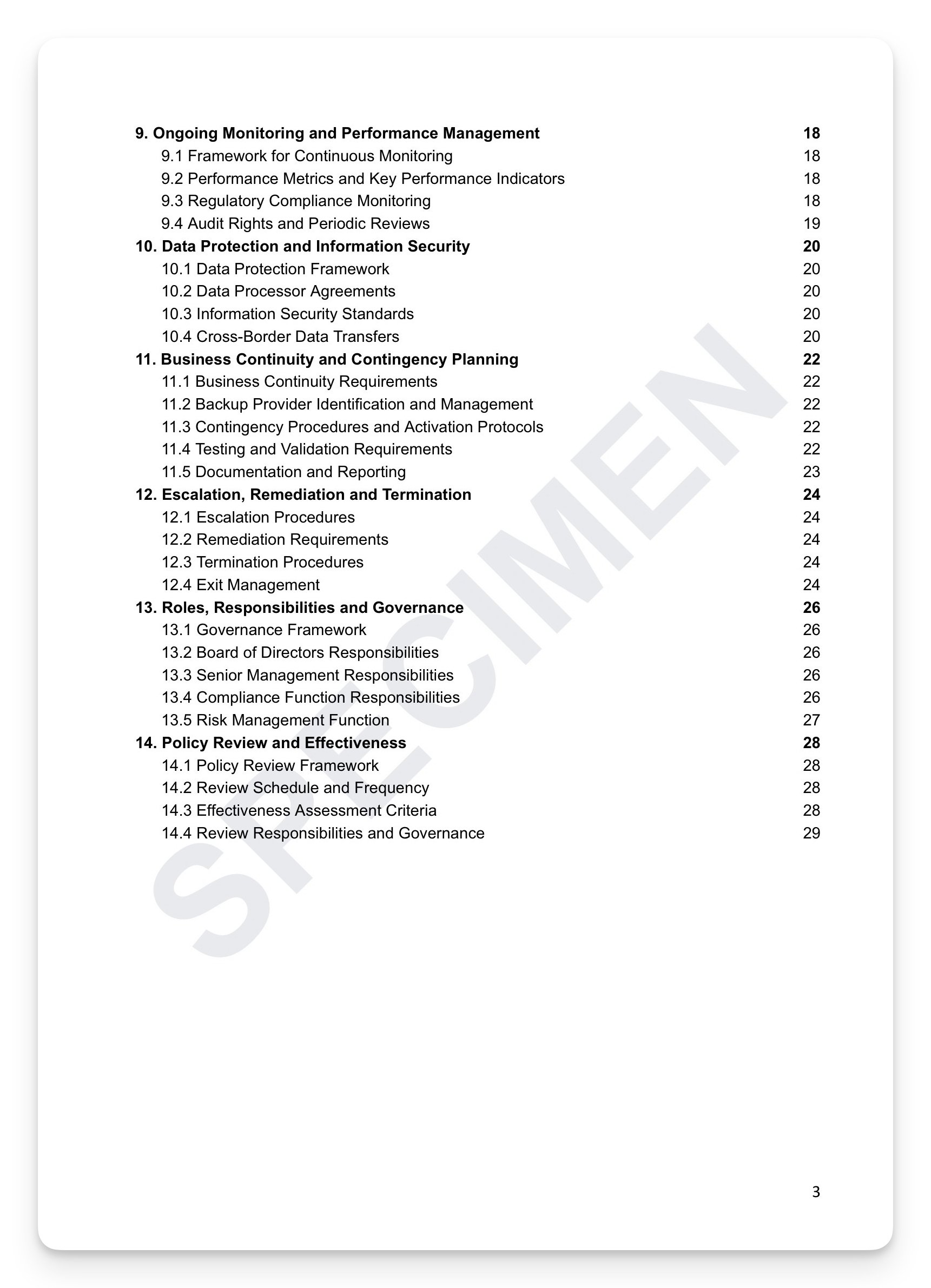
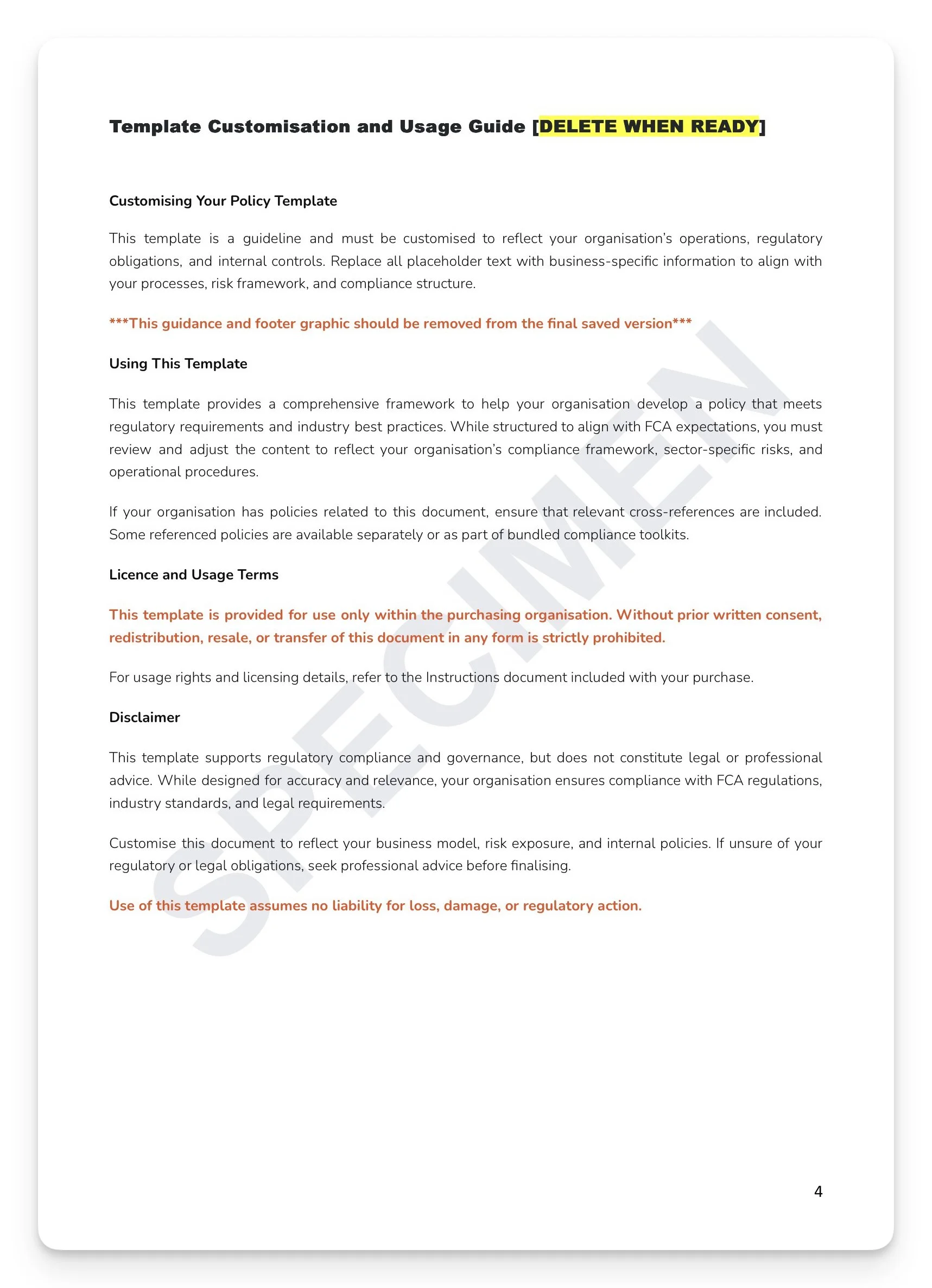
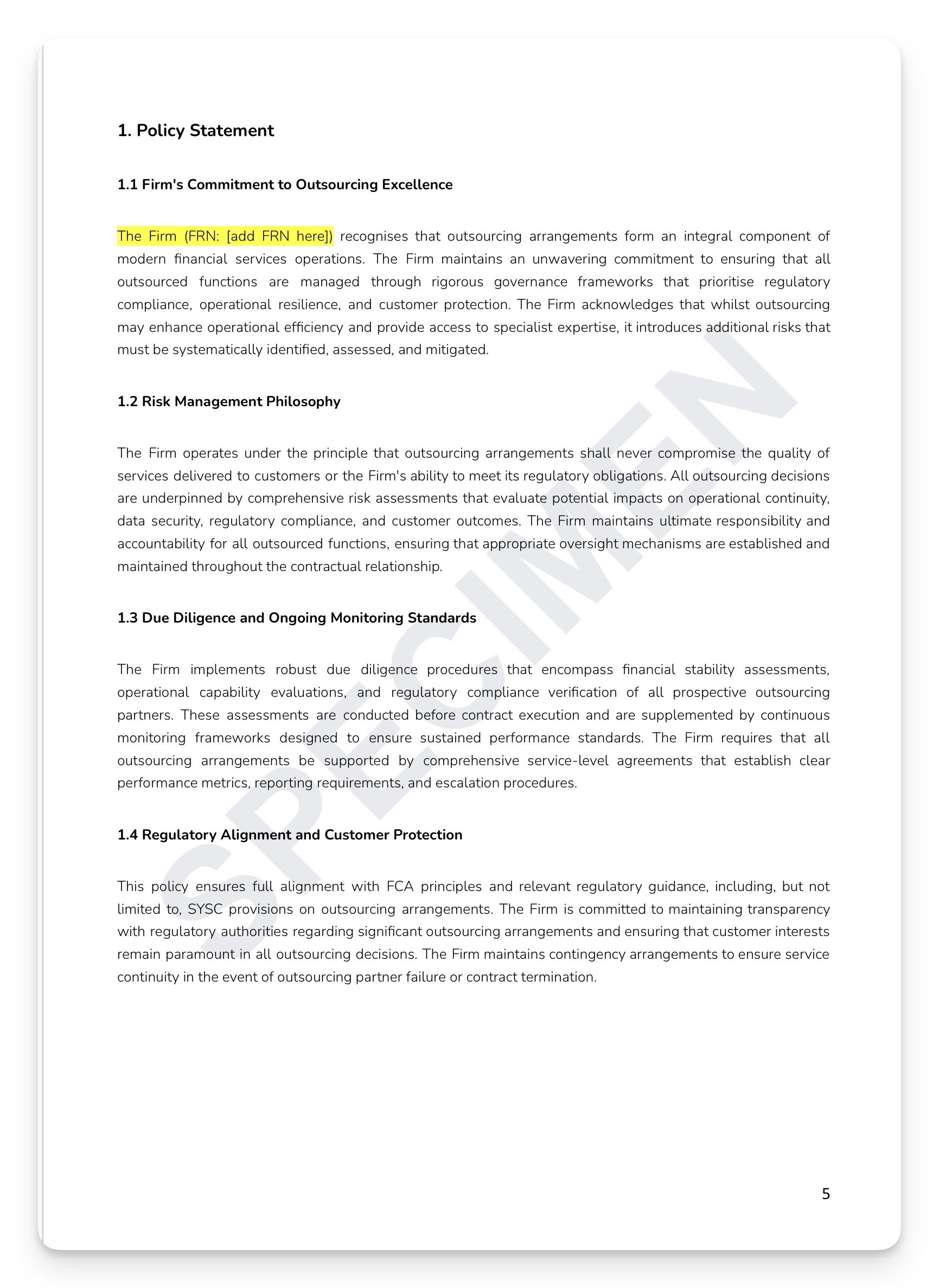
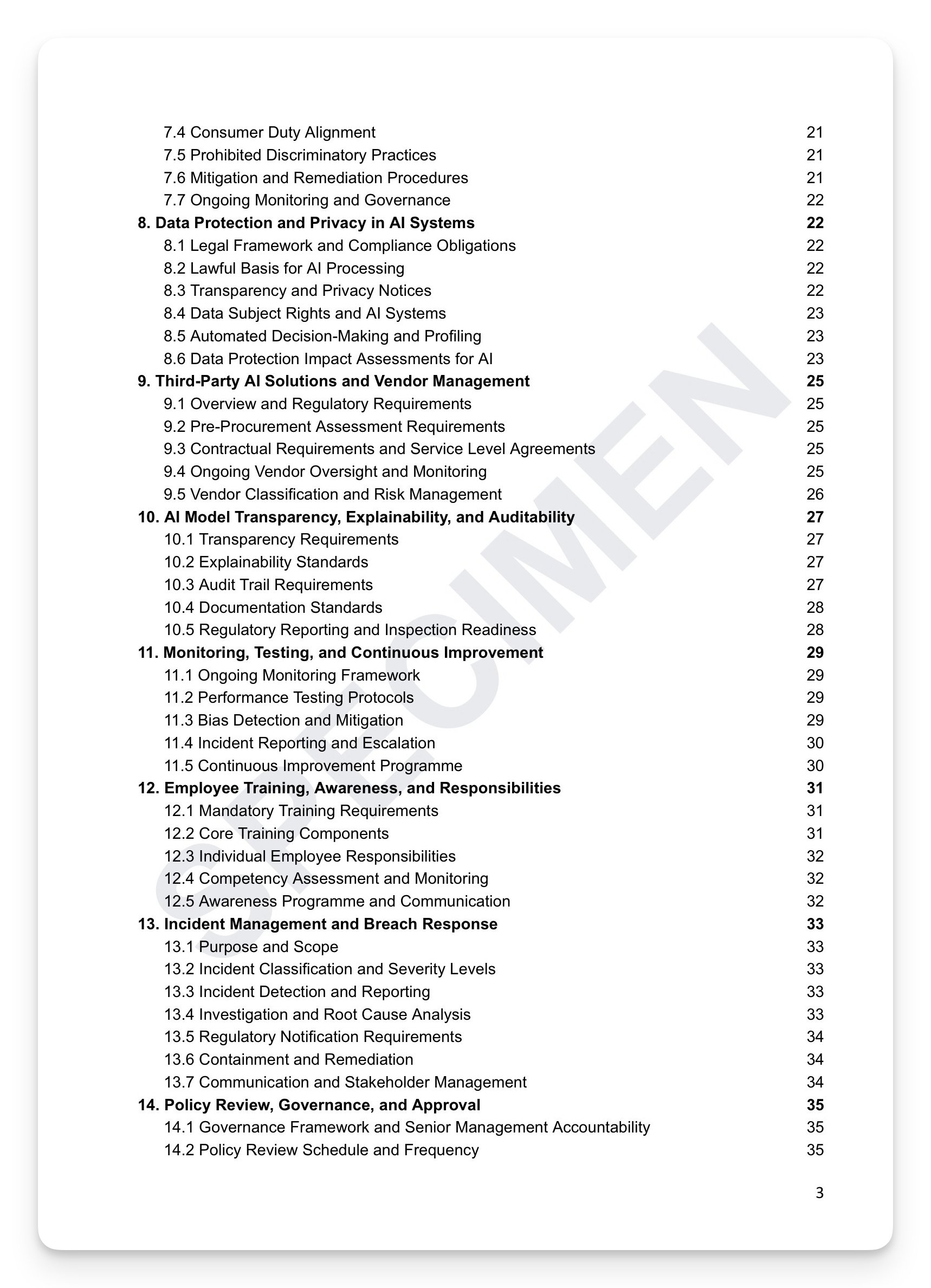
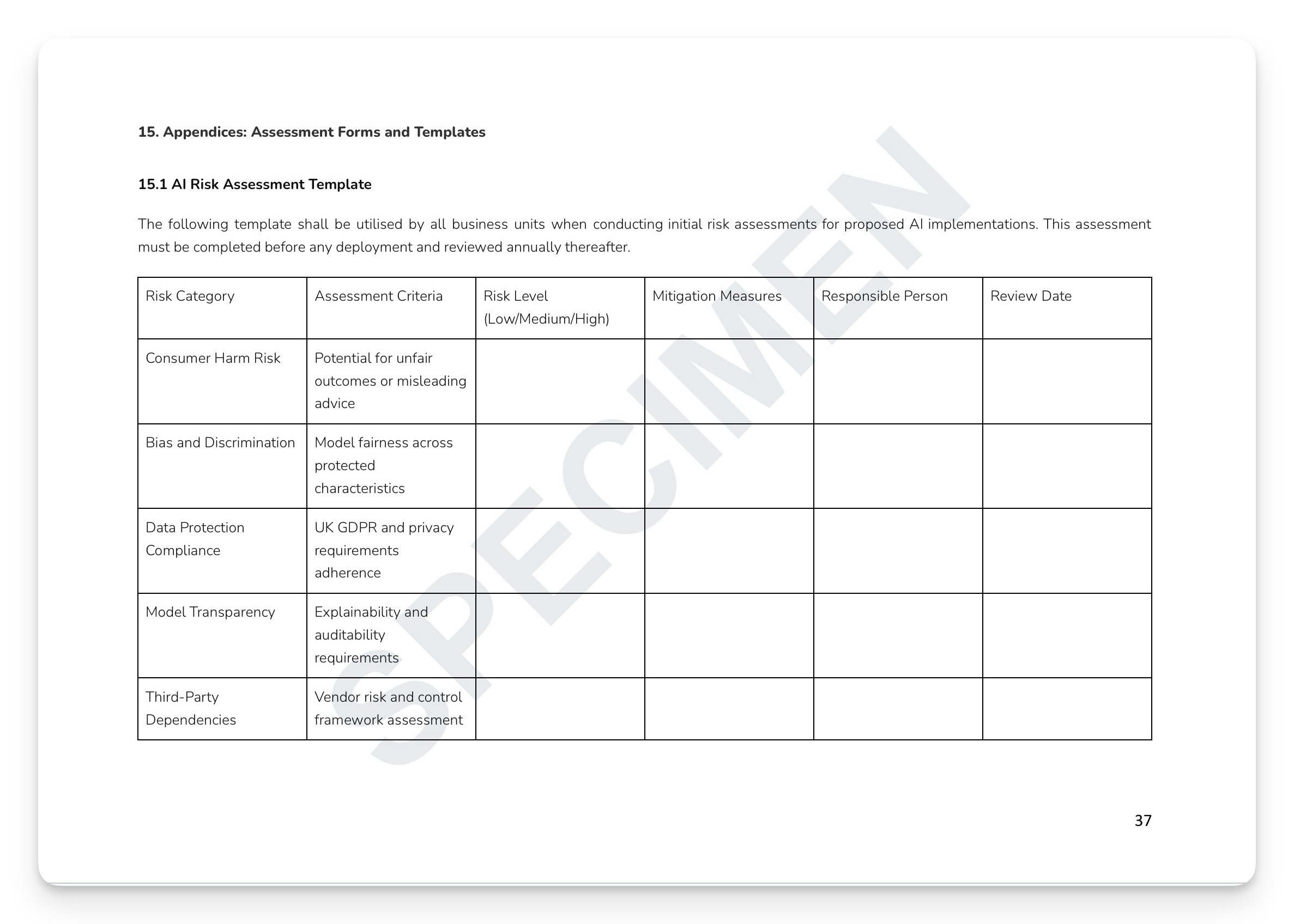
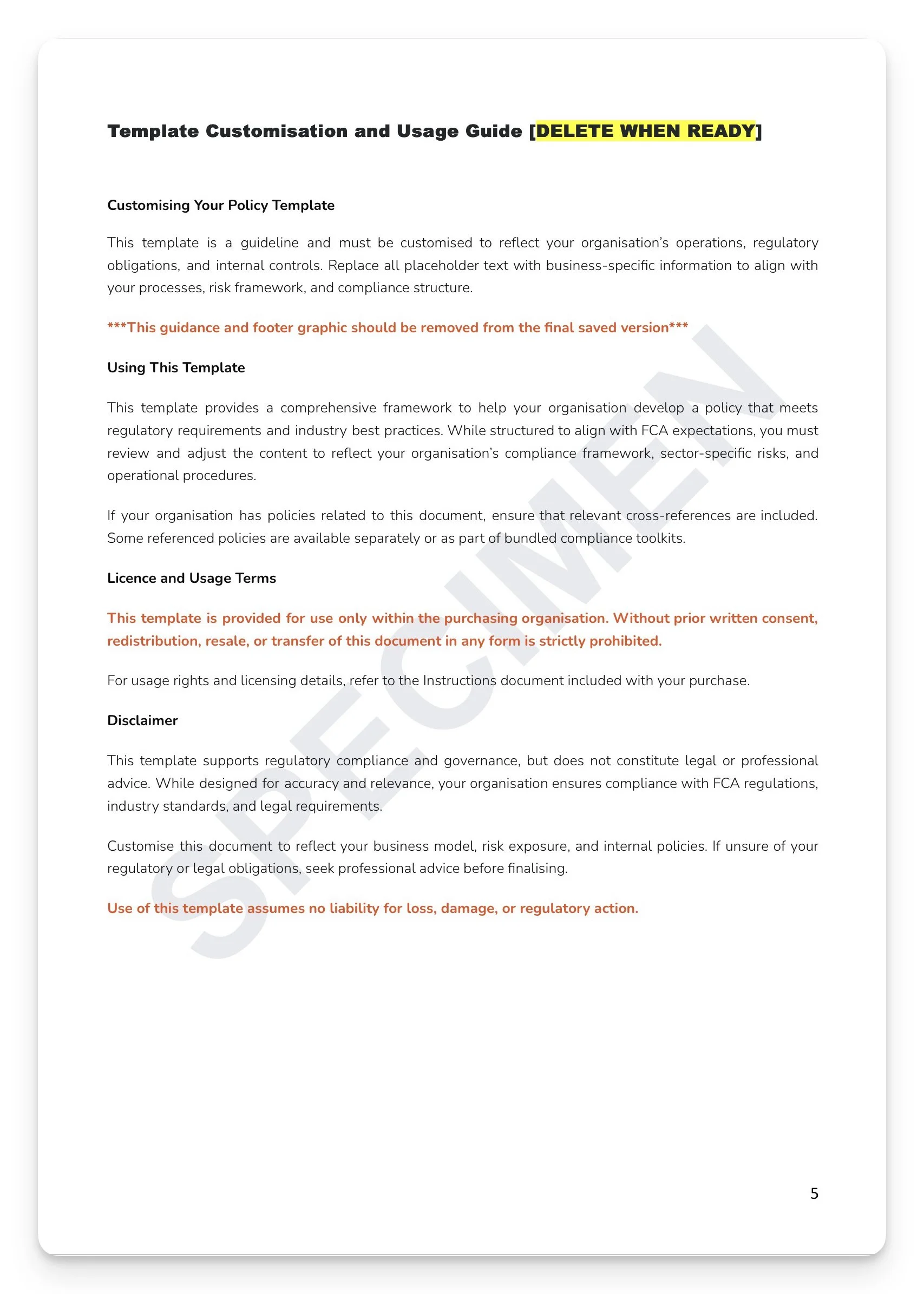
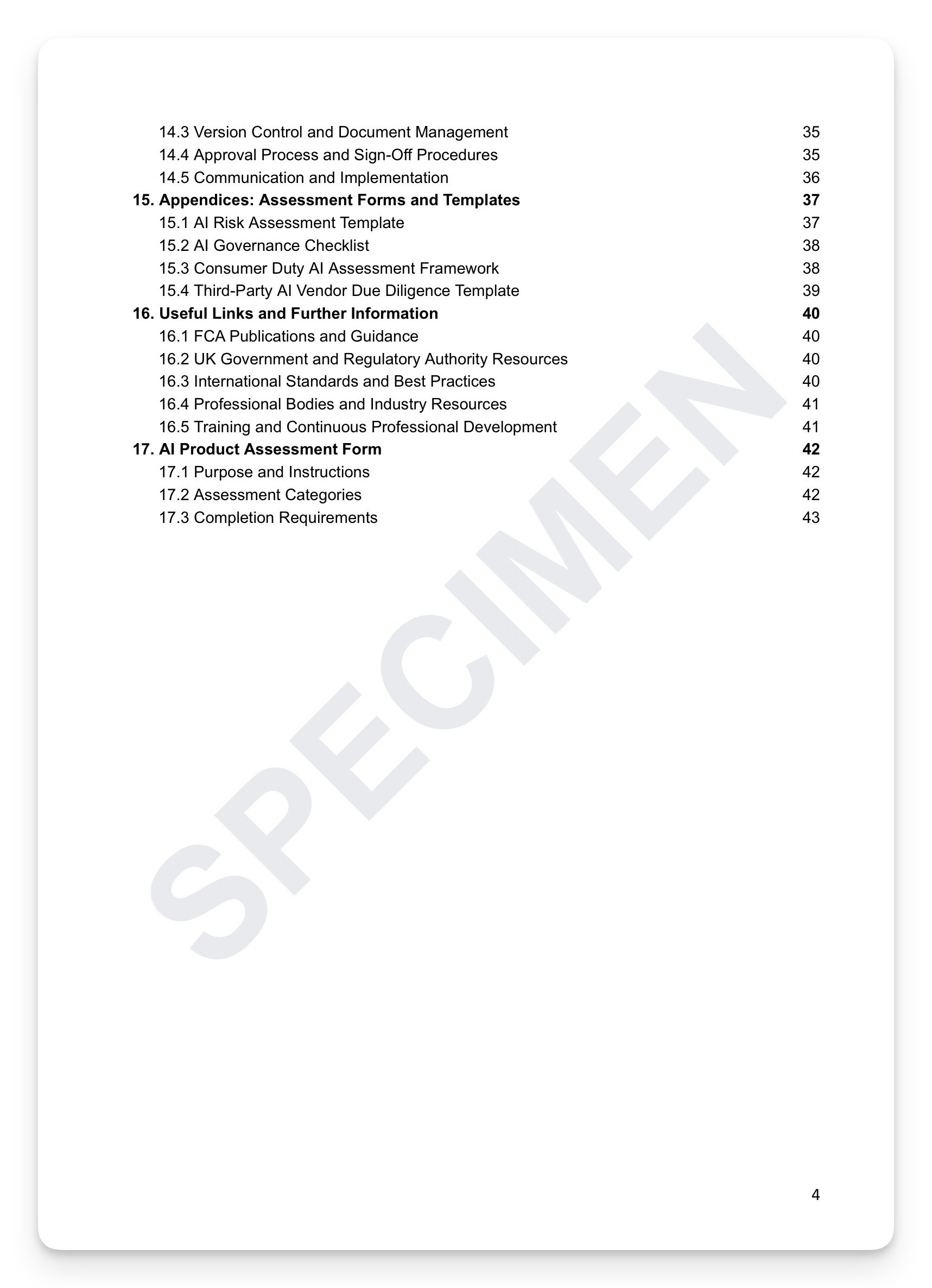
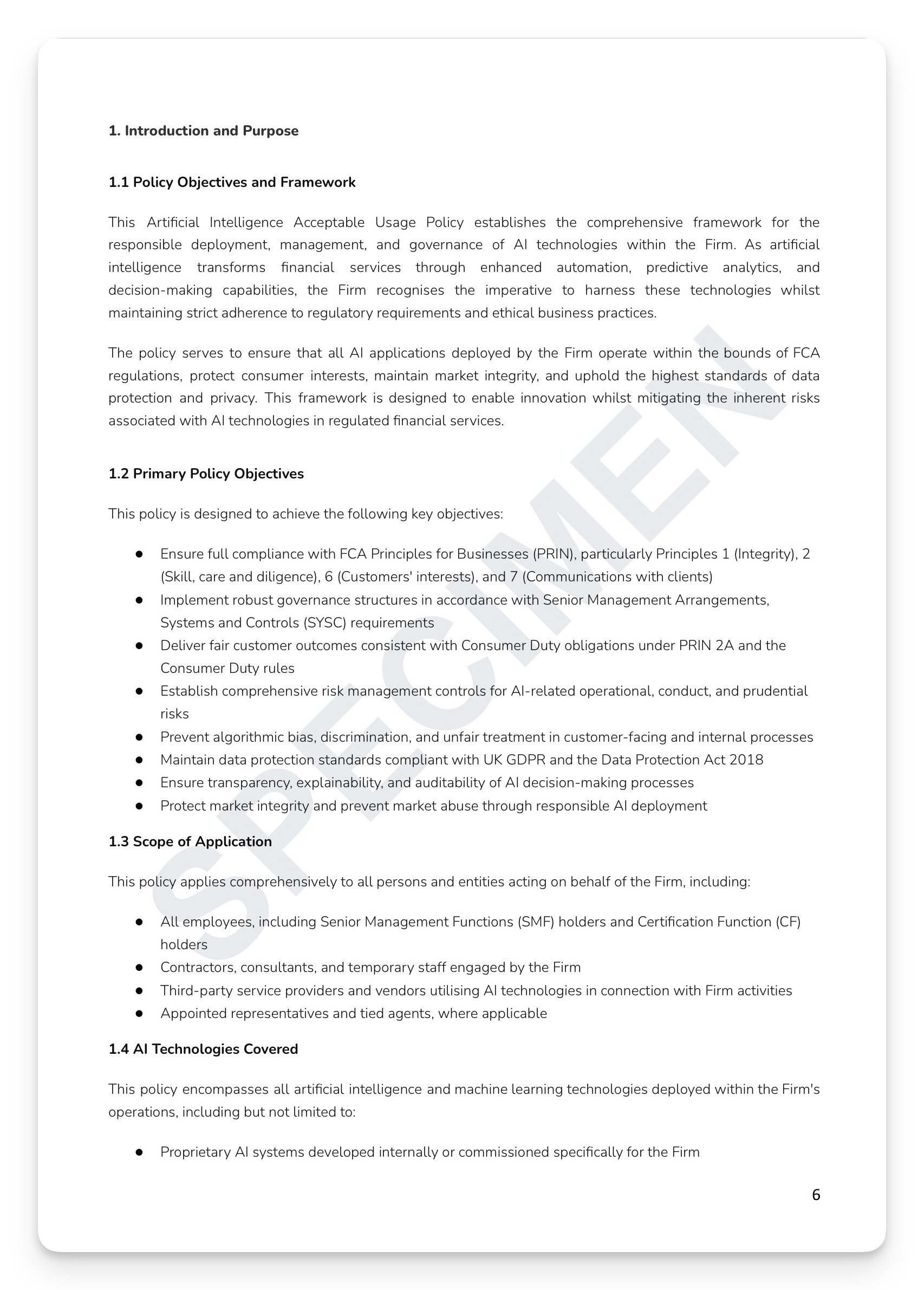
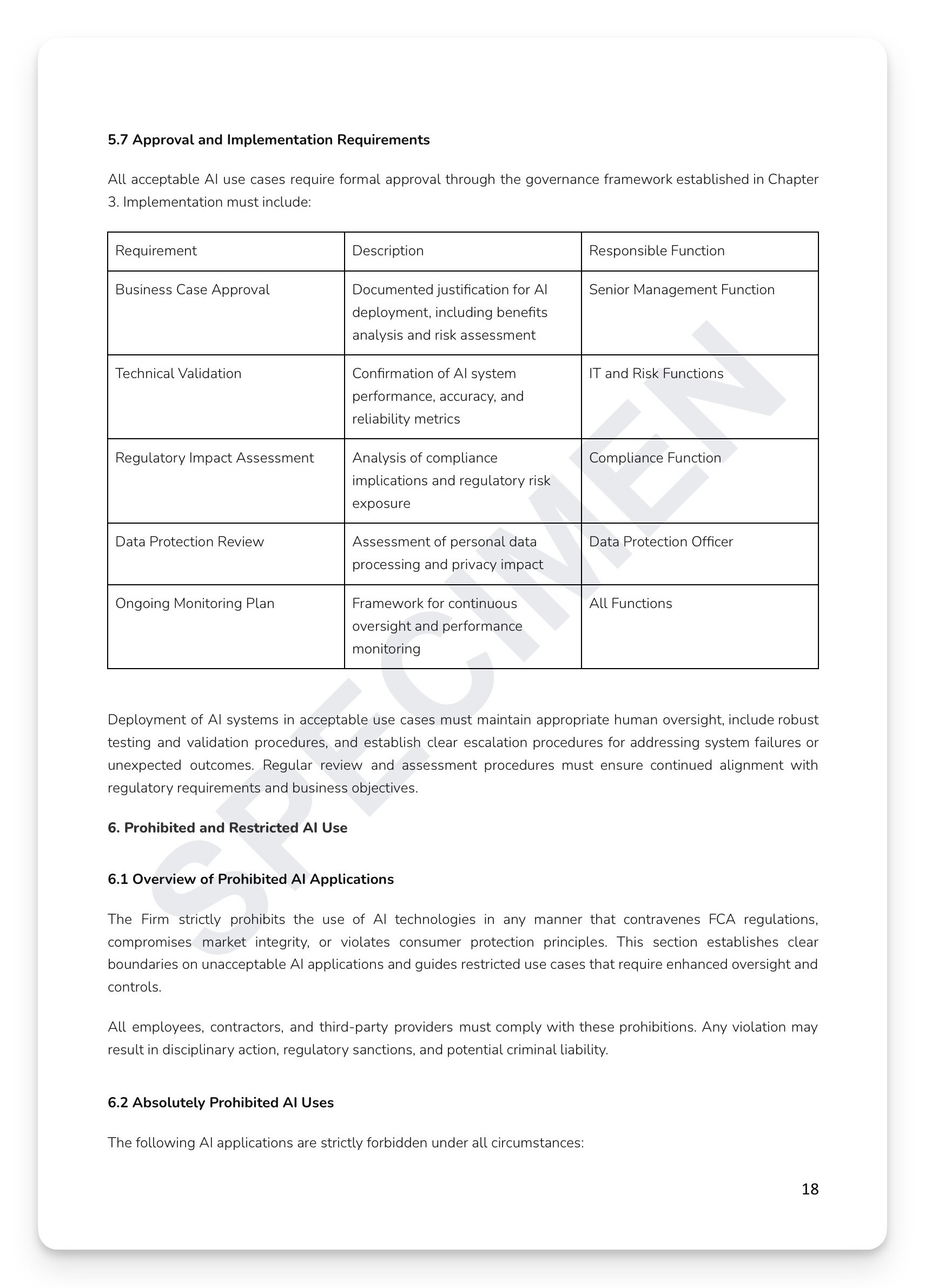
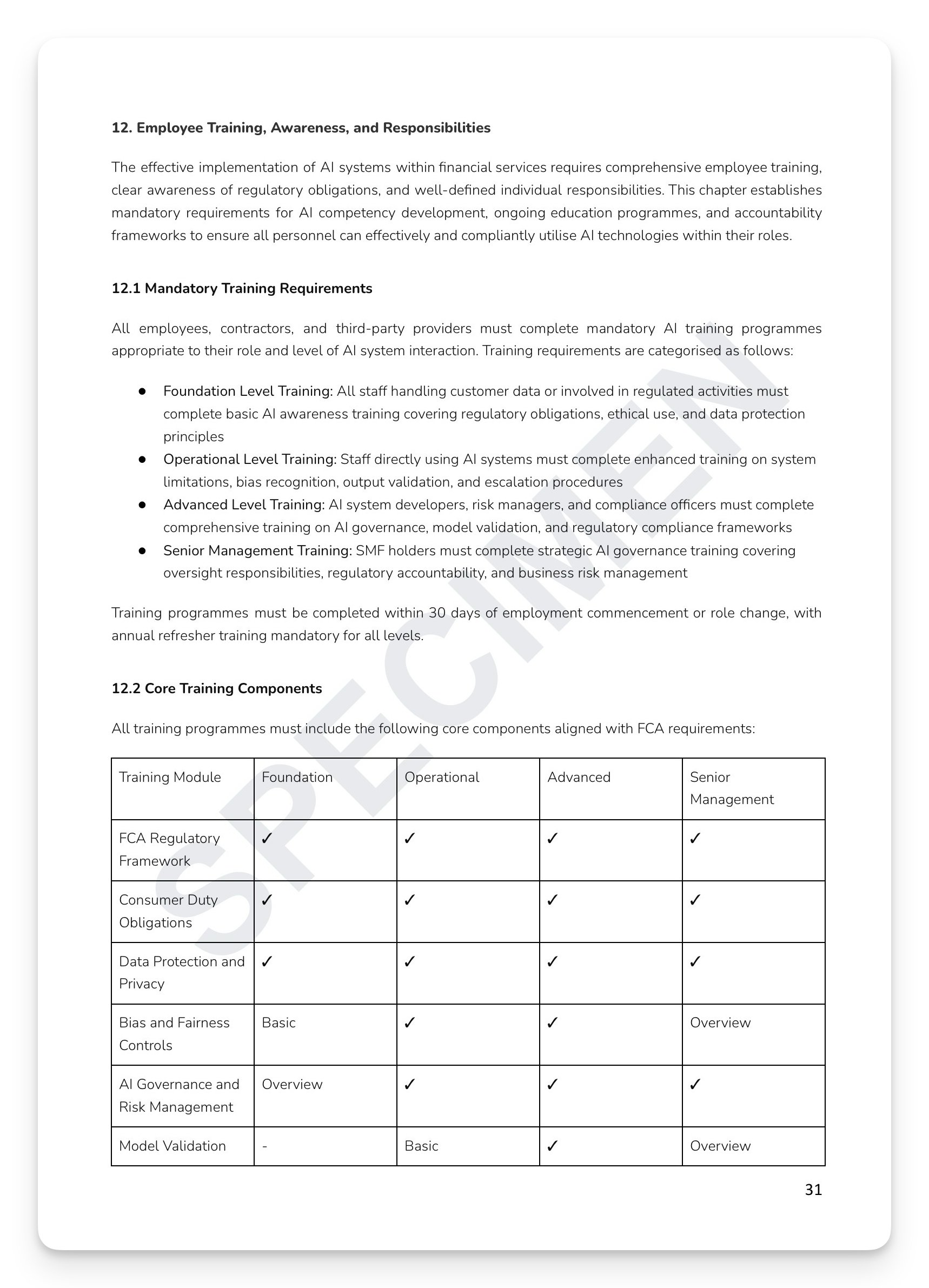
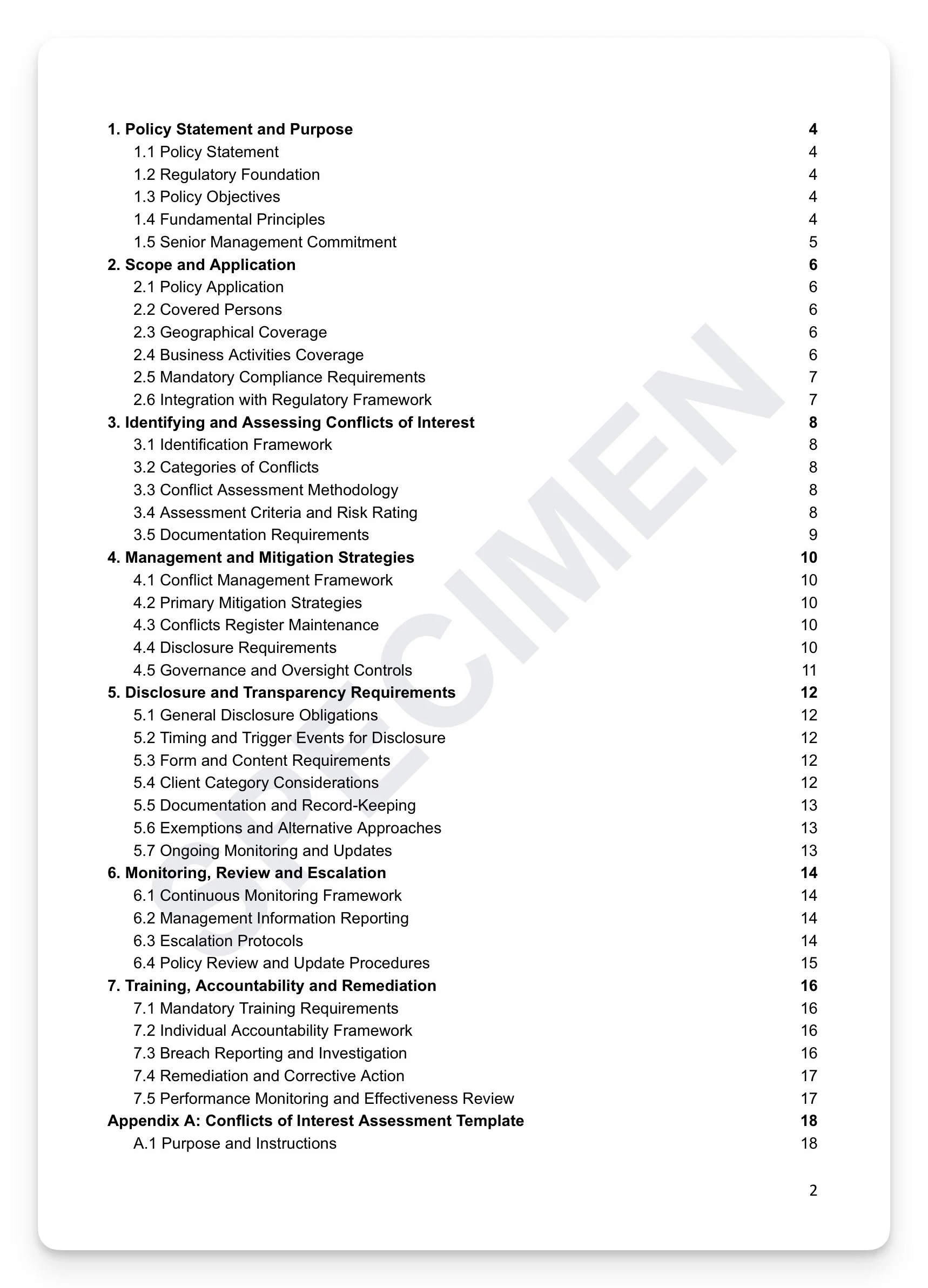
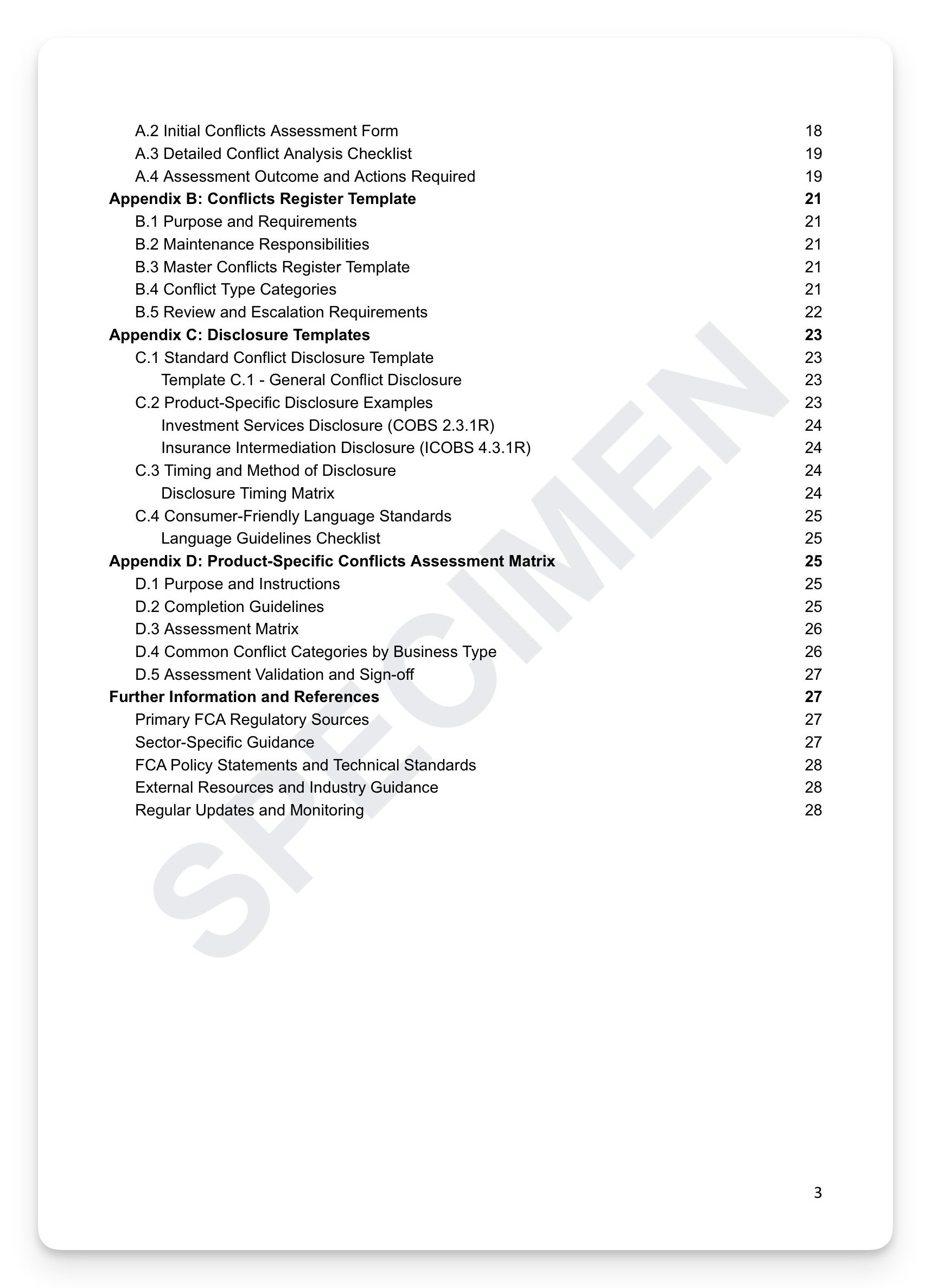
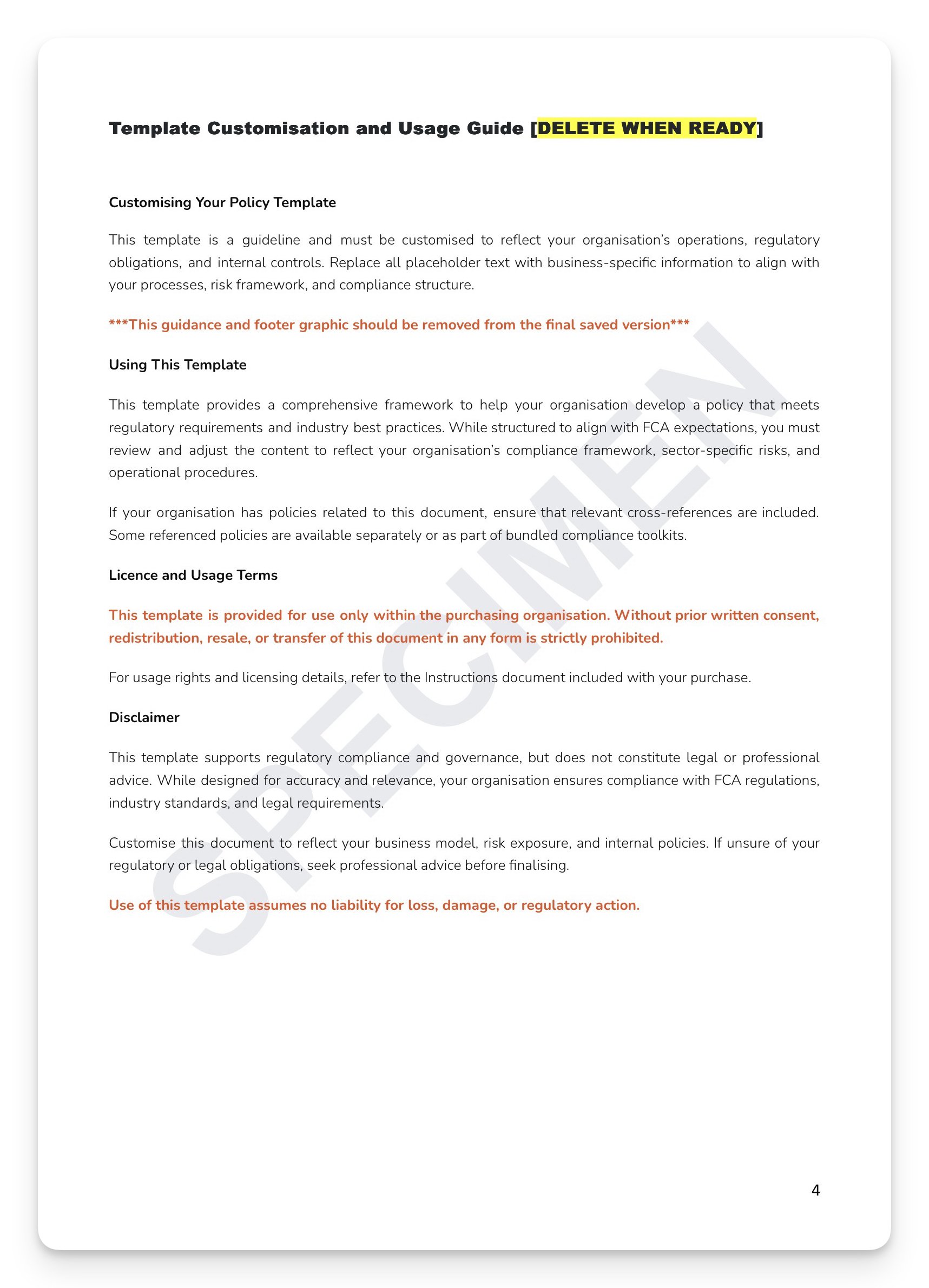
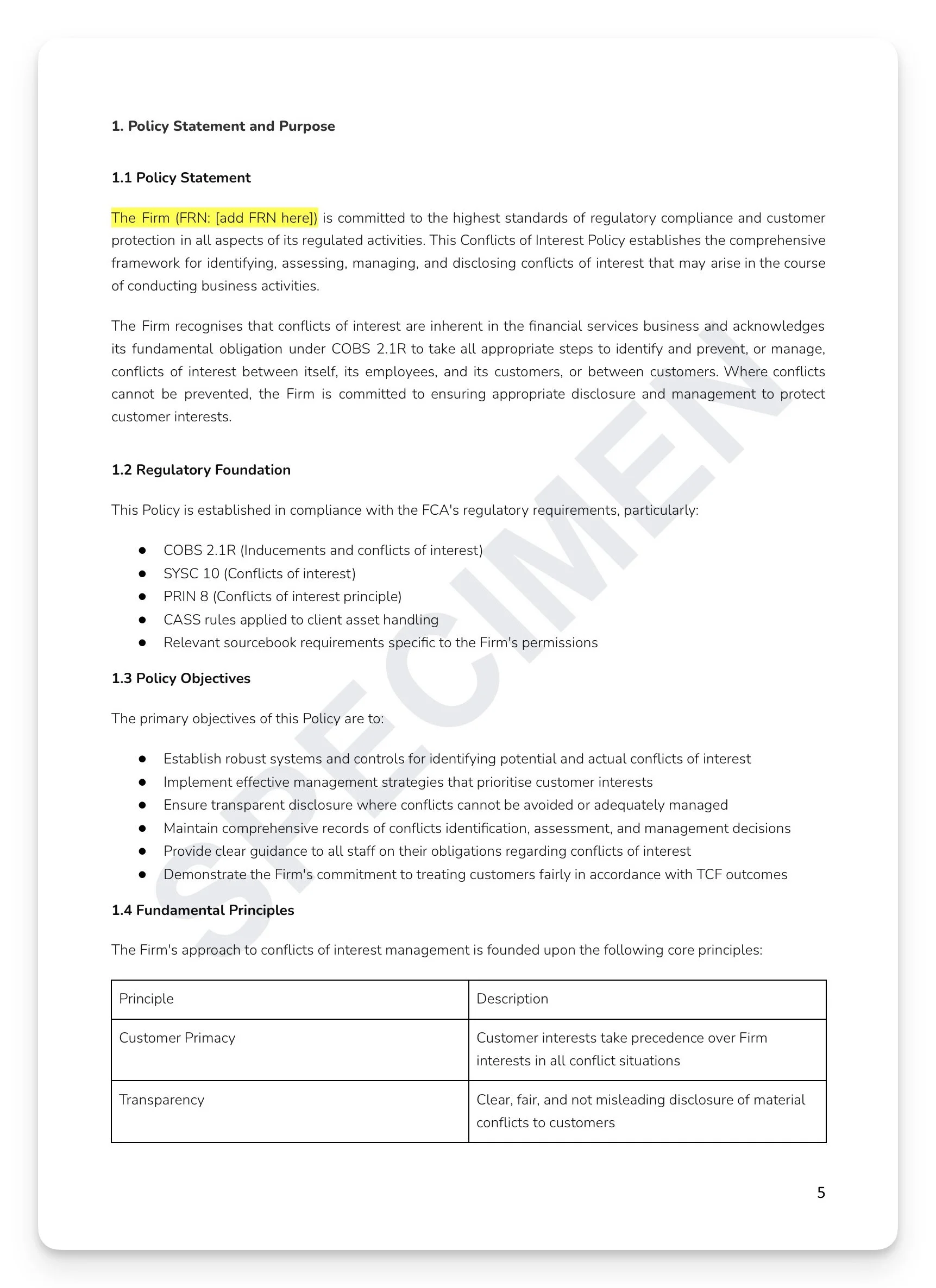
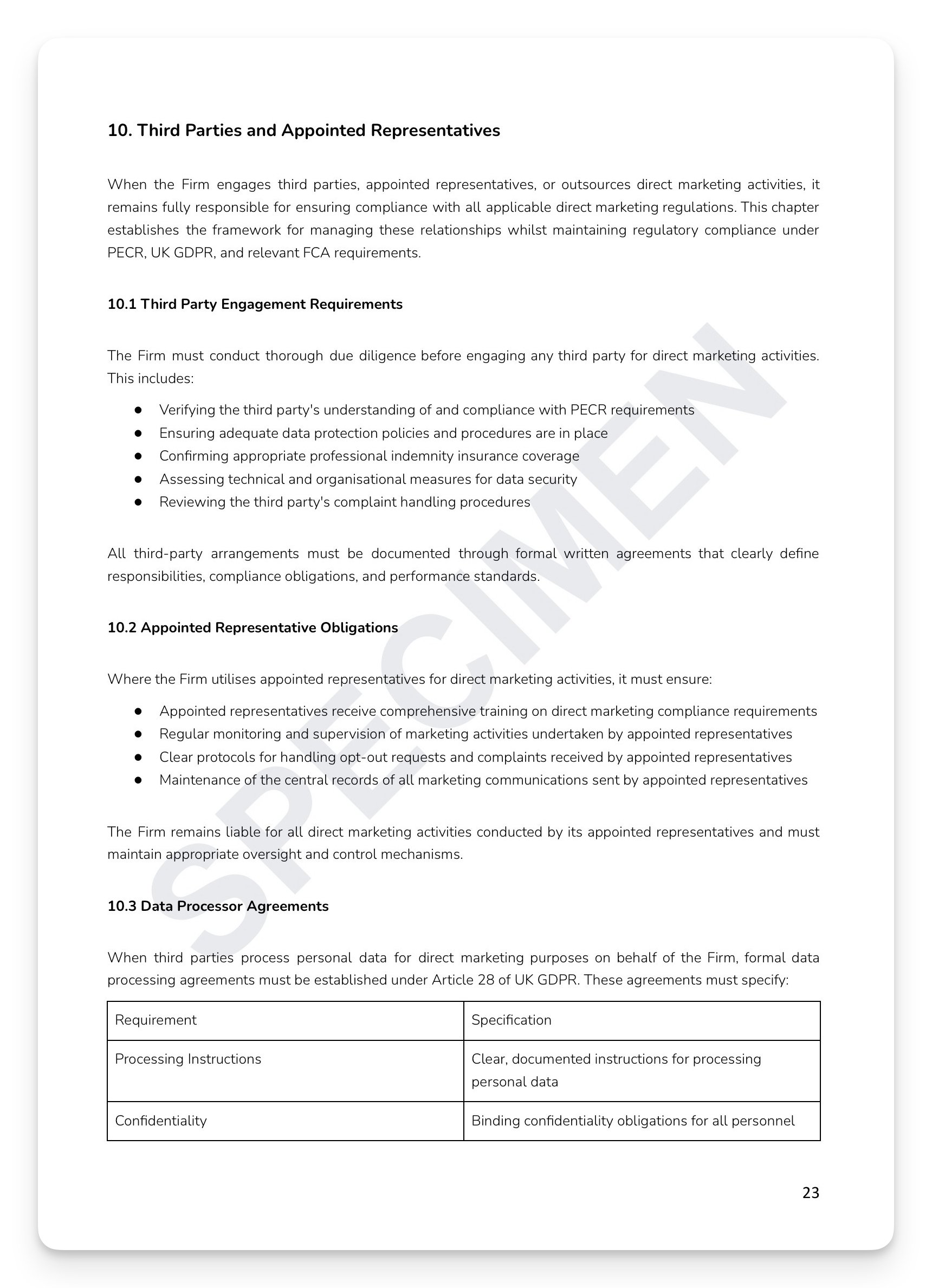
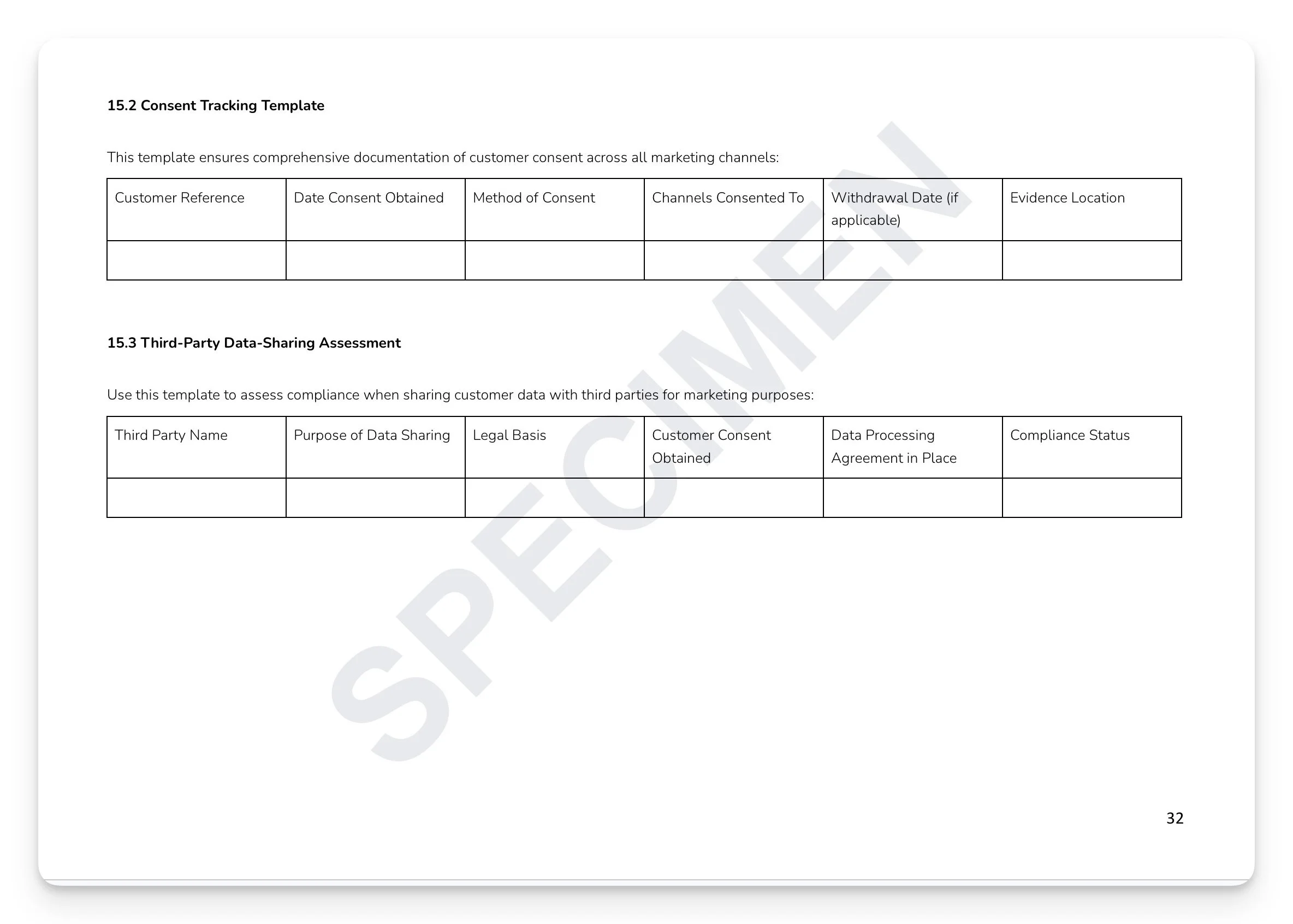
Having compliance policies is one thing. Having a compliance management system — a structured, documented, continuously improving framework that demonstrates to regulators, auditors, and senior management that compliance is genuinely embedded in how the firm operates — is rare among FCA-regulated firms. Regulators don't fine firms for lacking policies. They fine firms for failing to implement those policies. ISO 37301 is the international standard for exactly that: not a checklist, but a complete governance architecture built on the Plan-Do-Check-Act cycle. For FCA-regulated firms, ISO 37301 alignment signals something the regulator increasingly wants to see — that compliance is a management system, not a filing cabinet.
What's included:
Full dual mapping: ISO 37301:2021 Clauses 4–10 × FCA Handbook (PRIN 1–12, SYSC 3/4/5/6/9, SM&CR SYSC 24–27, FSMA 2000, MLRs 2017, UK GDPR/DPA 2018, and Consumer Duty PS22/9)
PDCA cycle architecture: Plan (context/leadership/obligations/programme), Do (controls/third-party management), Check (monitoring/incidents/documentation), and Act (continuous improvement)
Three-lines-of-defence governance: First Line (business operations), Second Line (Compliance function), and Third Line (internal audit) — with Board, Risk and Compliance Committee, and Executive Management structure
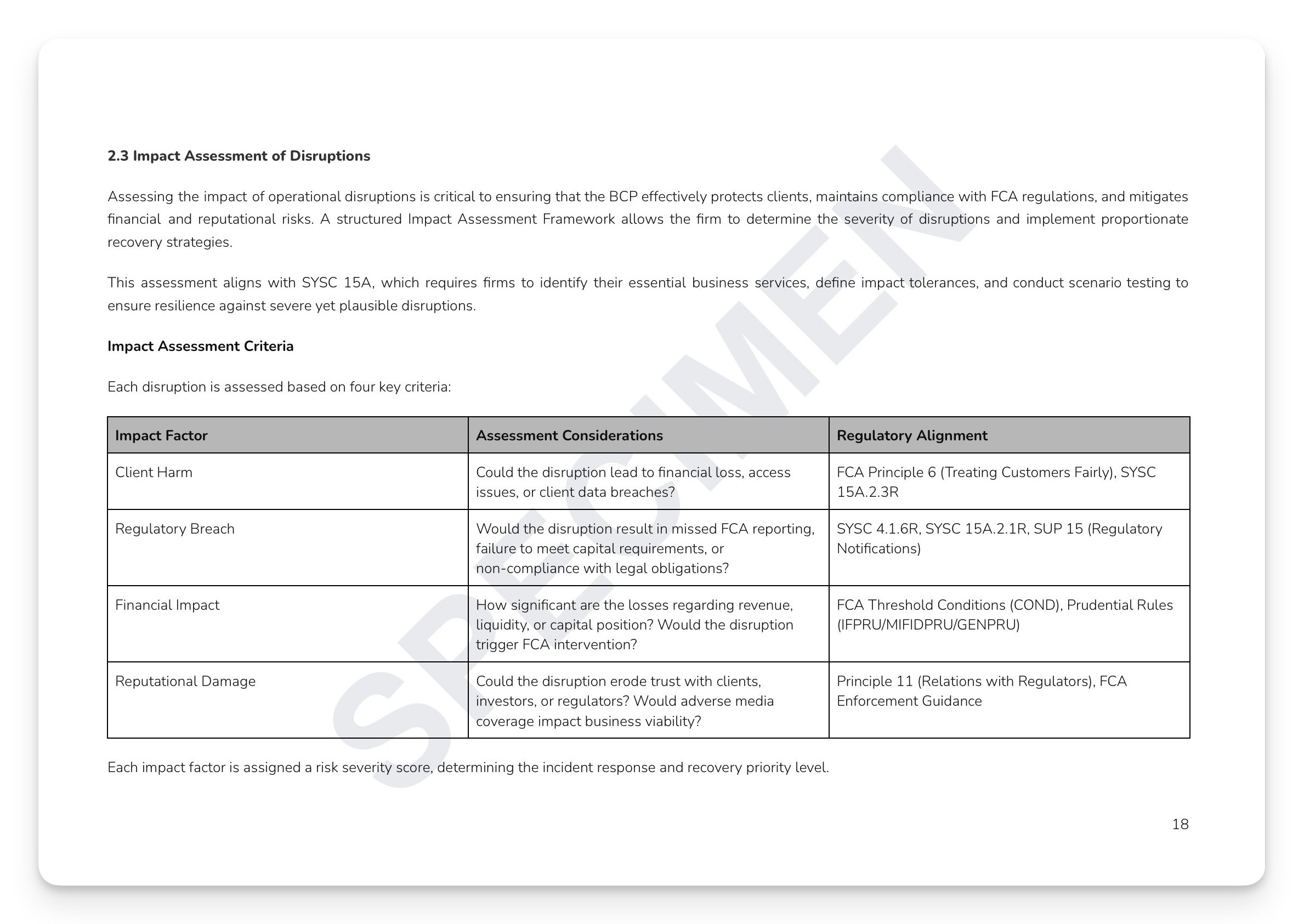
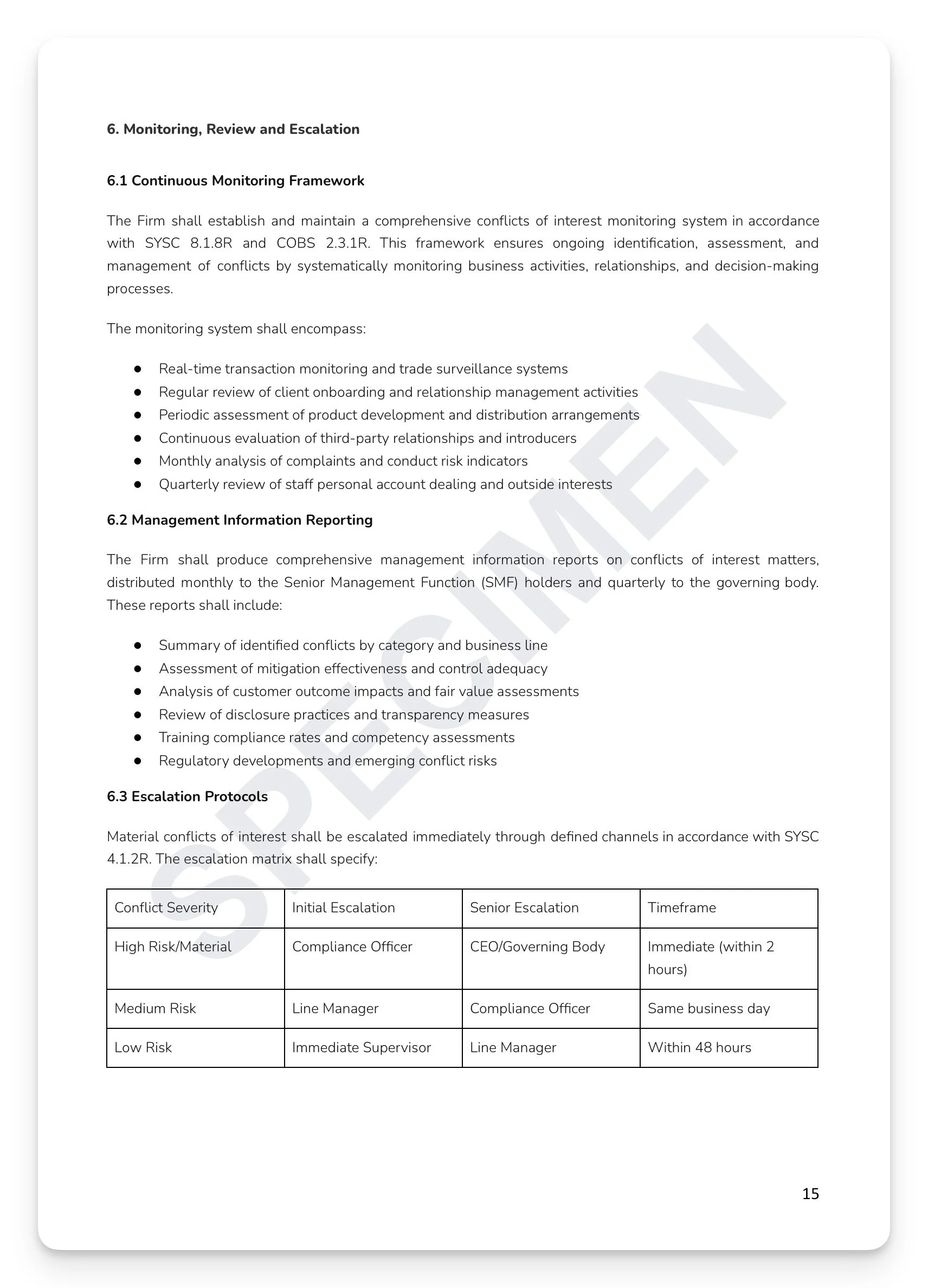
Six-category risk classification: Conduct, Prudential, Operational, Financial Crime, Data & Privacy, and Market — with three-stage inherent/control/residual assessment methodology
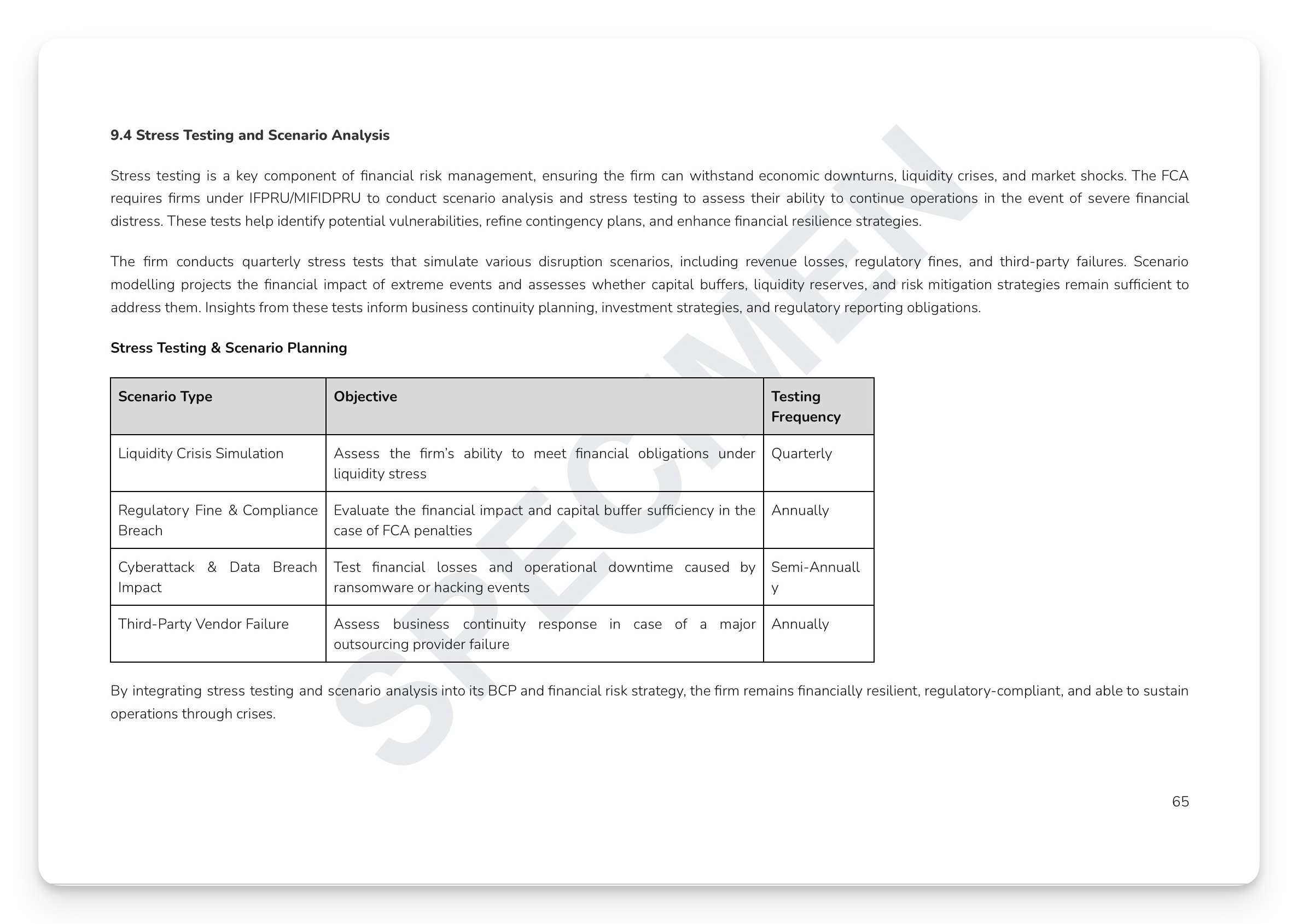
Compliance testing programme: quarterly (high risk), semi-annual (medium risk), and annual (low risk) — with 15 business day reporting standard
Incident classification: Critical (immediate Board/24-hour regulatory), High (4-hour senior management/48-hour regulatory assessment), Medium (24-hour), and Low (line management)
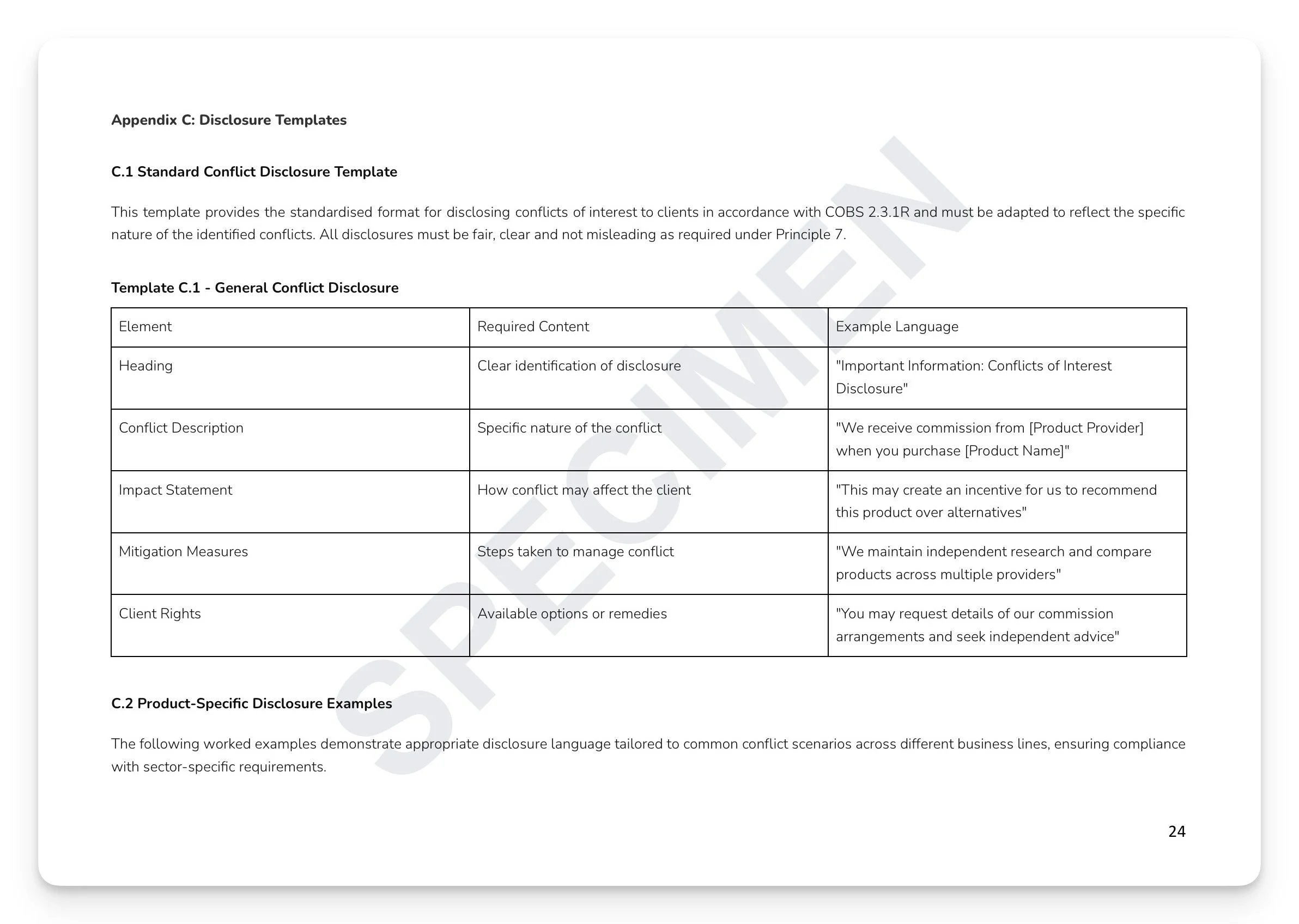
Ready-to-use assessment templates: ISO 37301 Self-Assessment, Compliance Risk Assessment Matrix, Control Testing Checklist, and Regulatory Readiness Evaluation Framework
+ much more
Who is this for?
Chief Compliance Officers, SMF16 holders, Chief Risk Officers, Internal Audit leads, and Board governance teams at FCA-regulated firms who need a complete, board-approved ISO 37301-aligned Compliance Management System that satisfies both the international standard and FCA supervisory expectations.
How it works
Step 1 — Read it. Every section exists for a reason, grounded in a specific regulatory obligation.
Step 2 — Understand it. Map the content against your current practices. Identify where you're strong and where gaps exist.
Step 3 — Make it yours. Tailor the language to reflect how your organisation actually operates. A policy that sounds like your firm is a policy your people will follow.
Step 4 — Take ownership. Assign clear accountability — Board approval, named SMF holder, designated policy owner. A policy without an owner is a liability, not an asset.
Step 5 — Operationalise it. Embed the policy into your governance calendar, training programme, and annual review cycle. This is where compliance becomes culture.
Or, get this free with RegTechPRO
Access this alongside the full compliance policy library — SM&CR, COBS, AML, Consumer Duty, GDPR, and more — for a fraction of the cost of consultancy.
View RegTechPRO pricing and packages →
Having compliance policies is one thing. Having a compliance management system — a structured, documented, continuously improving framework that demonstrates to regulators, auditors, and senior management that compliance is genuinely embedded in how the firm operates — is rare among FCA-regulated firms. Regulators don't fine firms for lacking policies. They fine firms for failing to implement those policies. ISO 37301 is the international standard for exactly that: not a checklist, but a complete governance architecture built on the Plan-Do-Check-Act cycle. For FCA-regulated firms, ISO 37301 alignment signals something the regulator increasingly wants to see — that compliance is a management system, not a filing cabinet.
What's included:
Full dual mapping: ISO 37301:2021 Clauses 4–10 × FCA Handbook (PRIN 1–12, SYSC 3/4/5/6/9, SM&CR SYSC 24–27, FSMA 2000, MLRs 2017, UK GDPR/DPA 2018, and Consumer Duty PS22/9)
PDCA cycle architecture: Plan (context/leadership/obligations/programme), Do (controls/third-party management), Check (monitoring/incidents/documentation), and Act (continuous improvement)
Three-lines-of-defence governance: First Line (business operations), Second Line (Compliance function), and Third Line (internal audit) — with Board, Risk and Compliance Committee, and Executive Management structure
Six-category risk classification: Conduct, Prudential, Operational, Financial Crime, Data & Privacy, and Market — with three-stage inherent/control/residual assessment methodology
Compliance testing programme: quarterly (high risk), semi-annual (medium risk), and annual (low risk) — with 15 business day reporting standard
Incident classification: Critical (immediate Board/24-hour regulatory), High (4-hour senior management/48-hour regulatory assessment), Medium (24-hour), and Low (line management)
Ready-to-use assessment templates: ISO 37301 Self-Assessment, Compliance Risk Assessment Matrix, Control Testing Checklist, and Regulatory Readiness Evaluation Framework
+ much more
Who is this for?
Chief Compliance Officers, SMF16 holders, Chief Risk Officers, Internal Audit leads, and Board governance teams at FCA-regulated firms who need a complete, board-approved ISO 37301-aligned Compliance Management System that satisfies both the international standard and FCA supervisory expectations.
How it works
Step 1 — Read it. Every section exists for a reason, grounded in a specific regulatory obligation.
Step 2 — Understand it. Map the content against your current practices. Identify where you're strong and where gaps exist.
Step 3 — Make it yours. Tailor the language to reflect how your organisation actually operates. A policy that sounds like your firm is a policy your people will follow.
Step 4 — Take ownership. Assign clear accountability — Board approval, named SMF holder, designated policy owner. A policy without an owner is a liability, not an asset.
Step 5 — Operationalise it. Embed the policy into your governance calendar, training programme, and annual review cycle. This is where compliance becomes culture.
Or, get this free with RegTechPRO
Access this alongside the full compliance policy library — SM&CR, COBS, AML, Consumer Duty, GDPR, and more — for a fraction of the cost of consultancy.
View RegTechPRO pricing and packages →


 Image 1 of 9
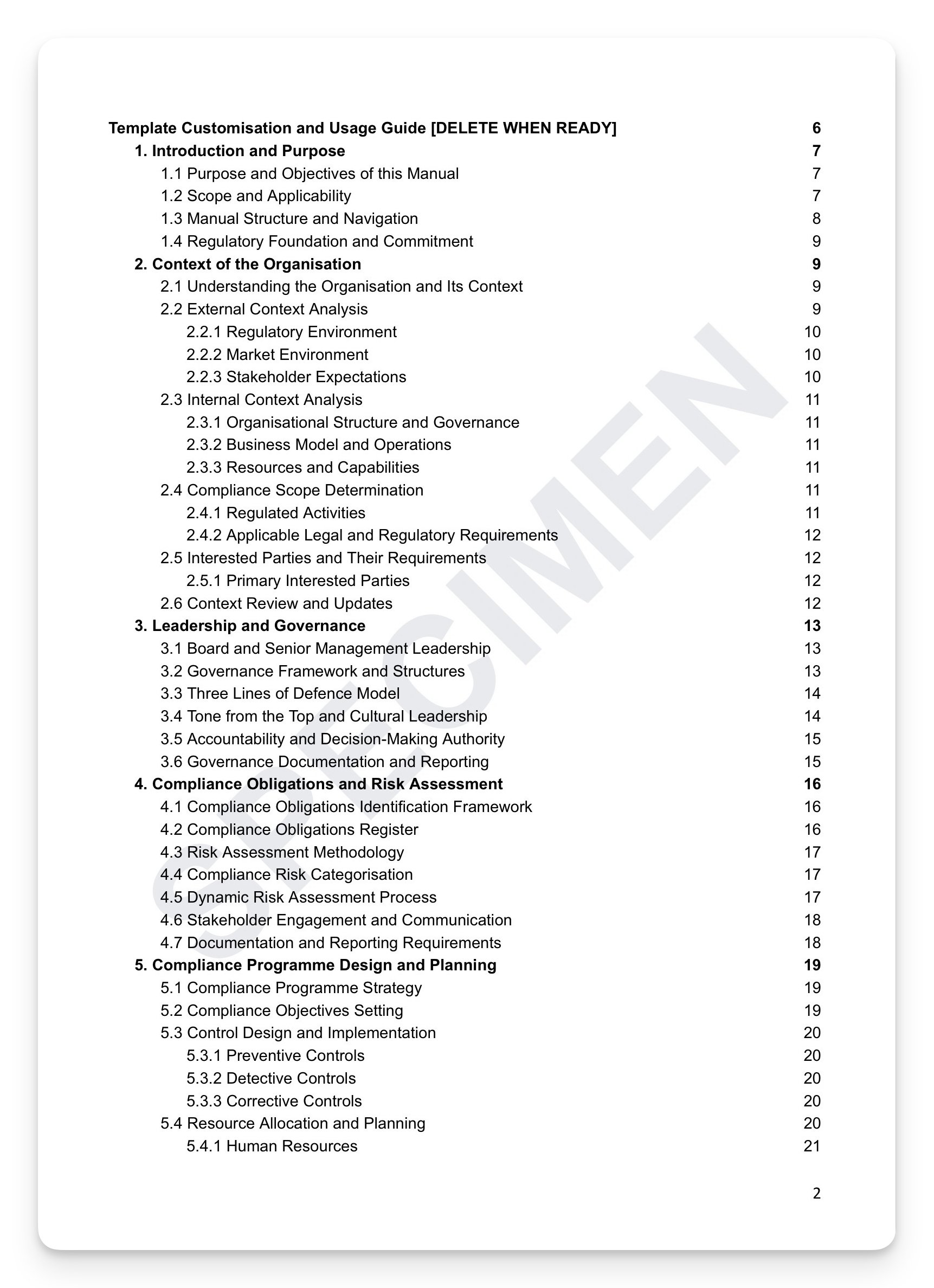 Image 2 of 9
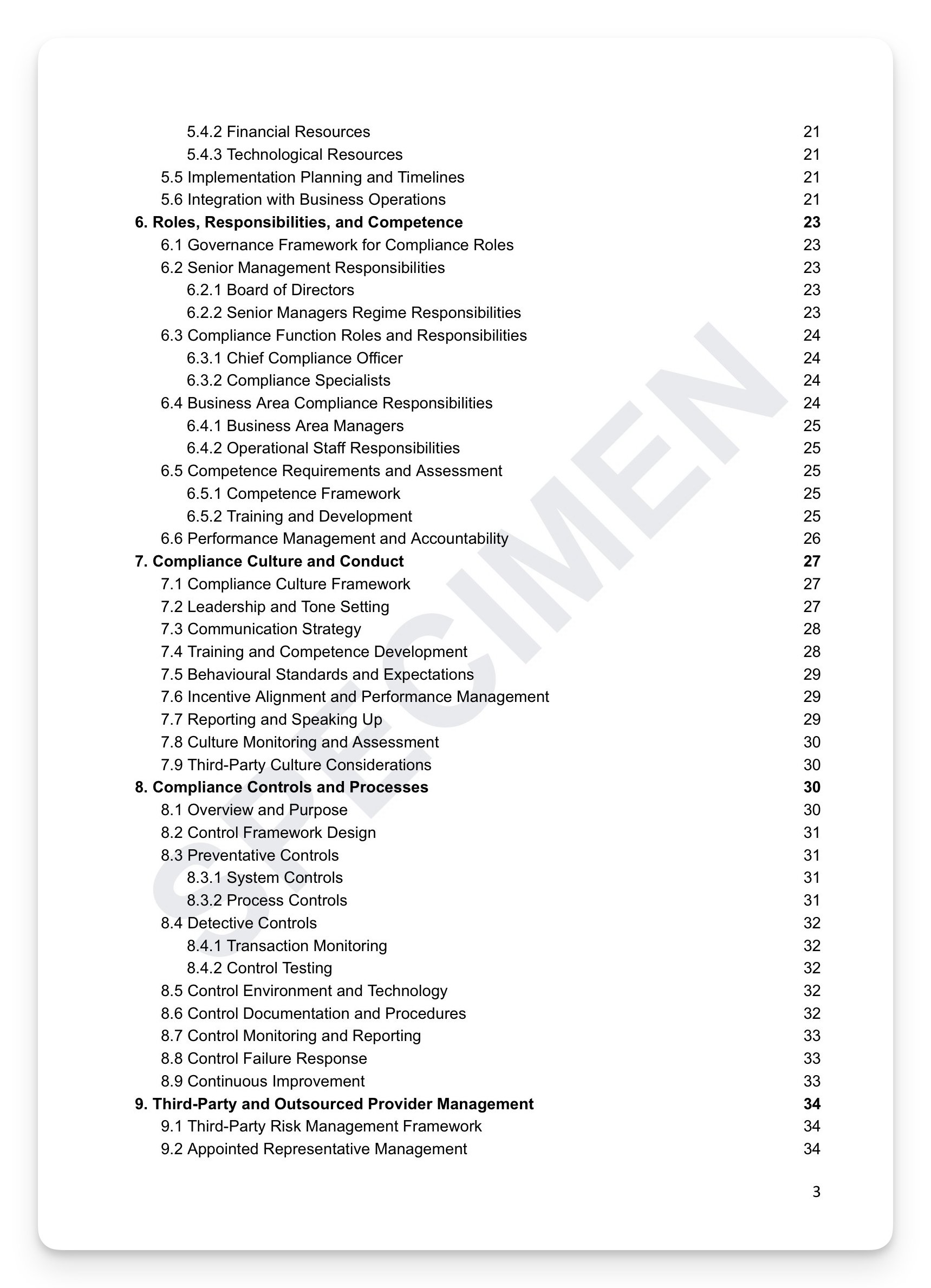 Image 3 of 9
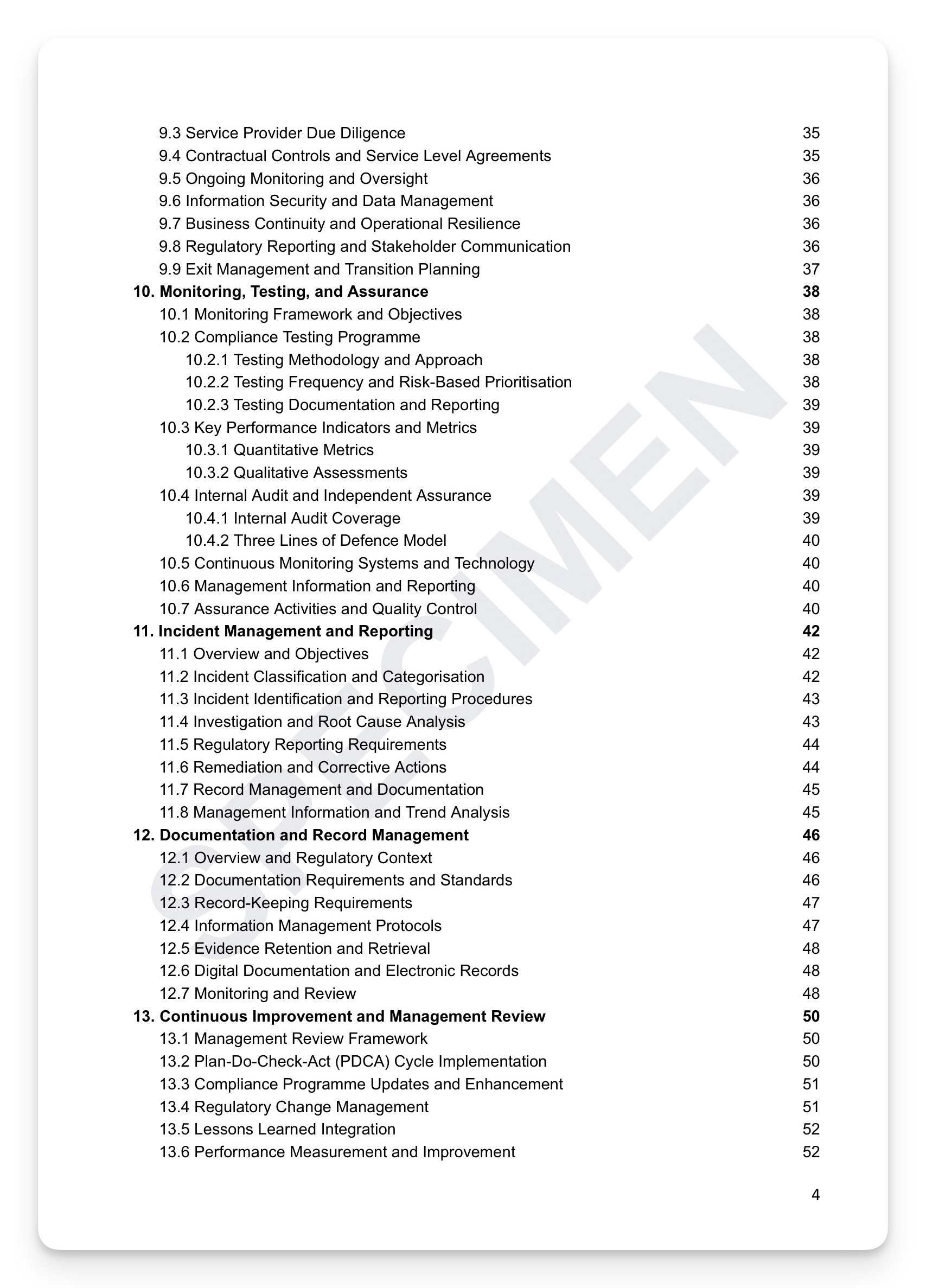 Image 4 of 9
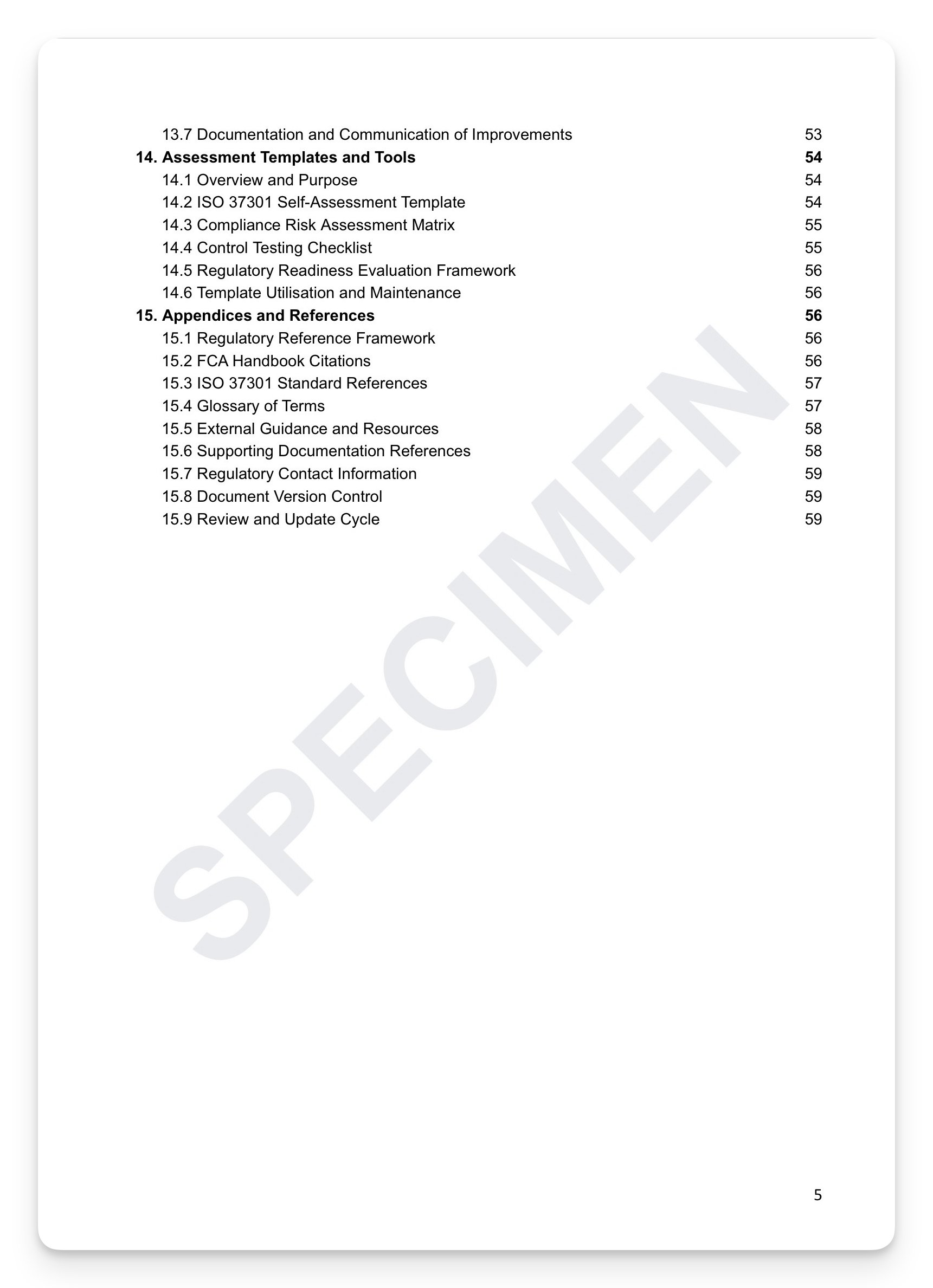 Image 5 of 9
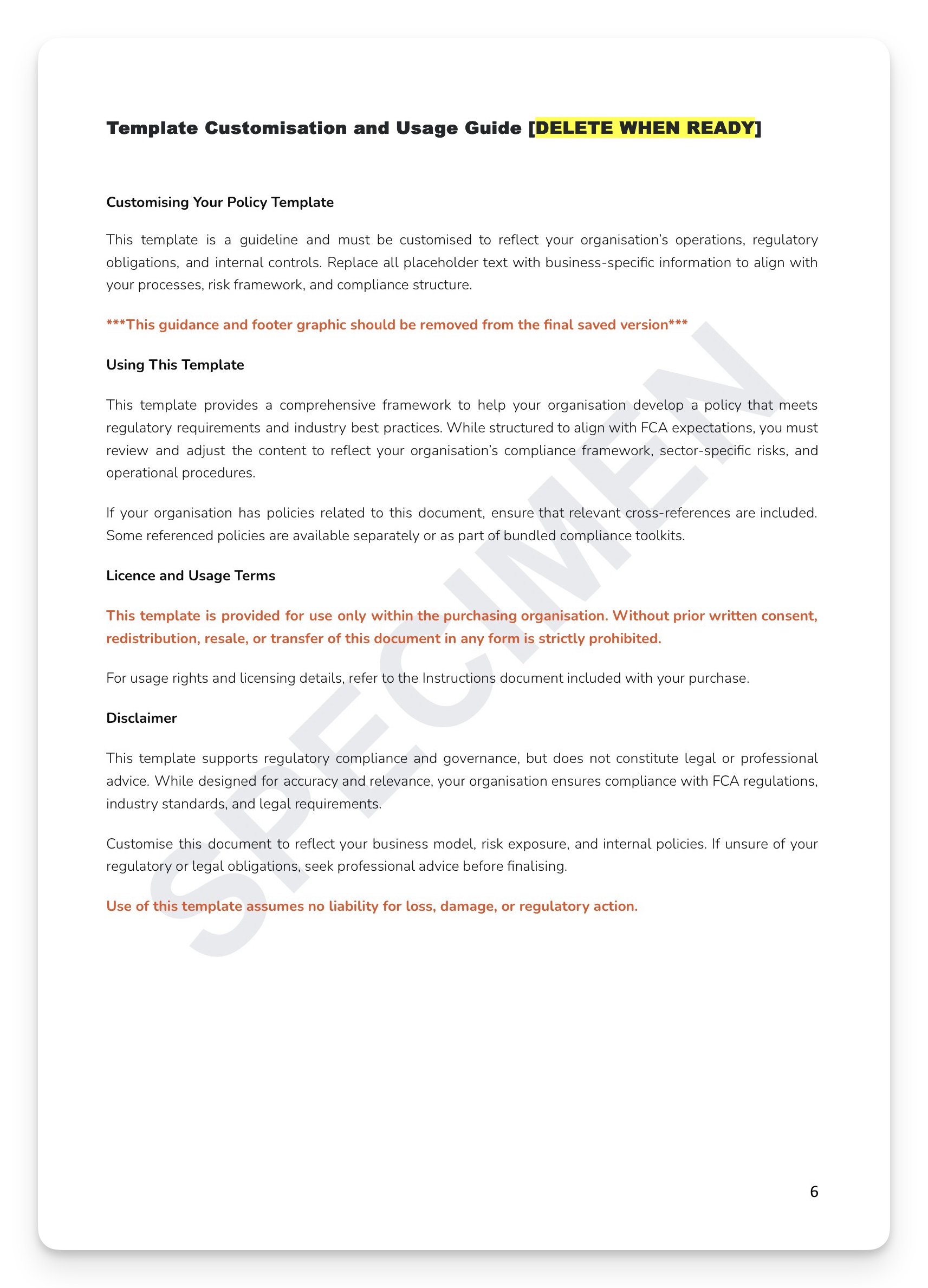 Image 6 of 9
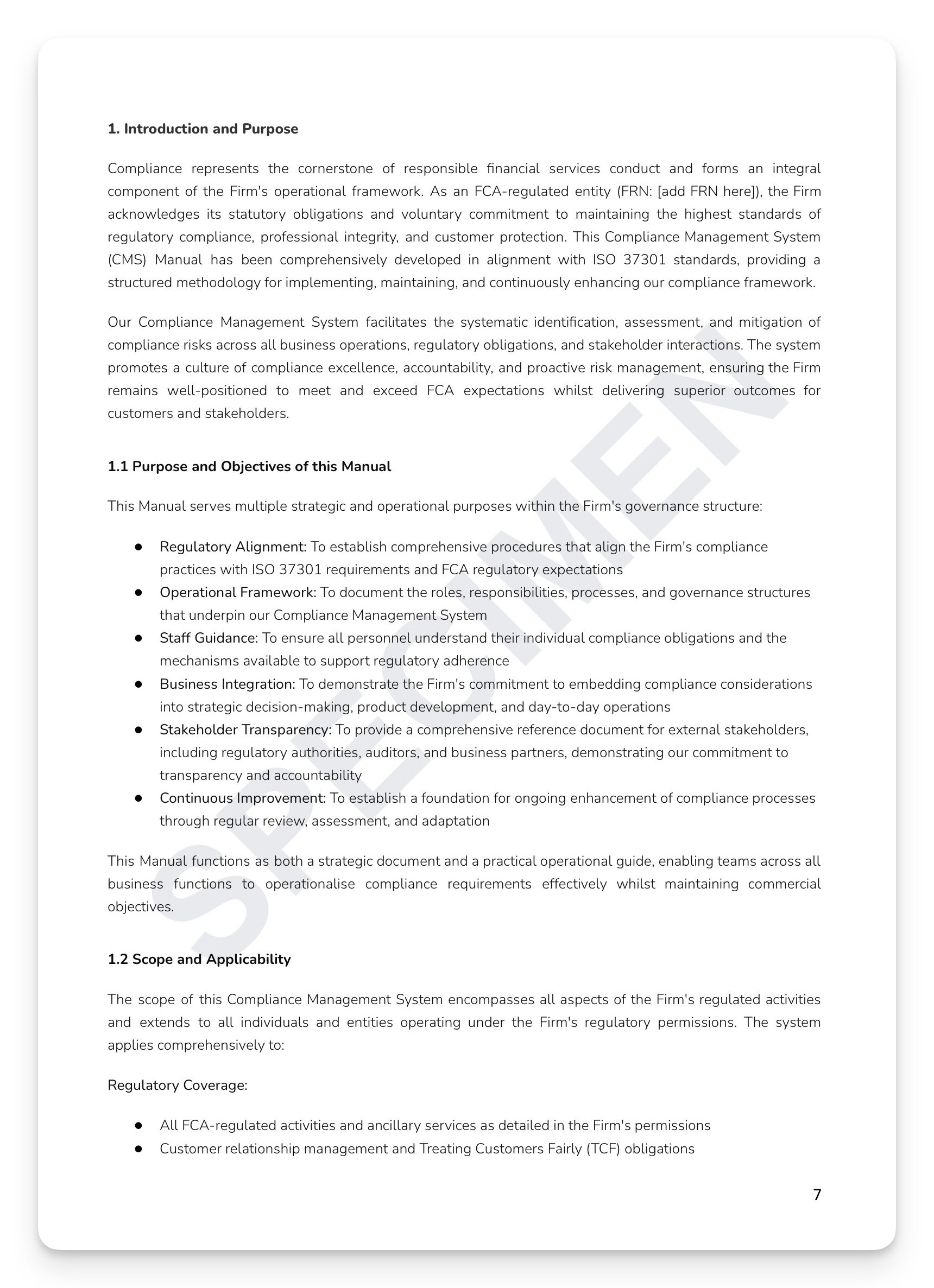 Image 7 of 9
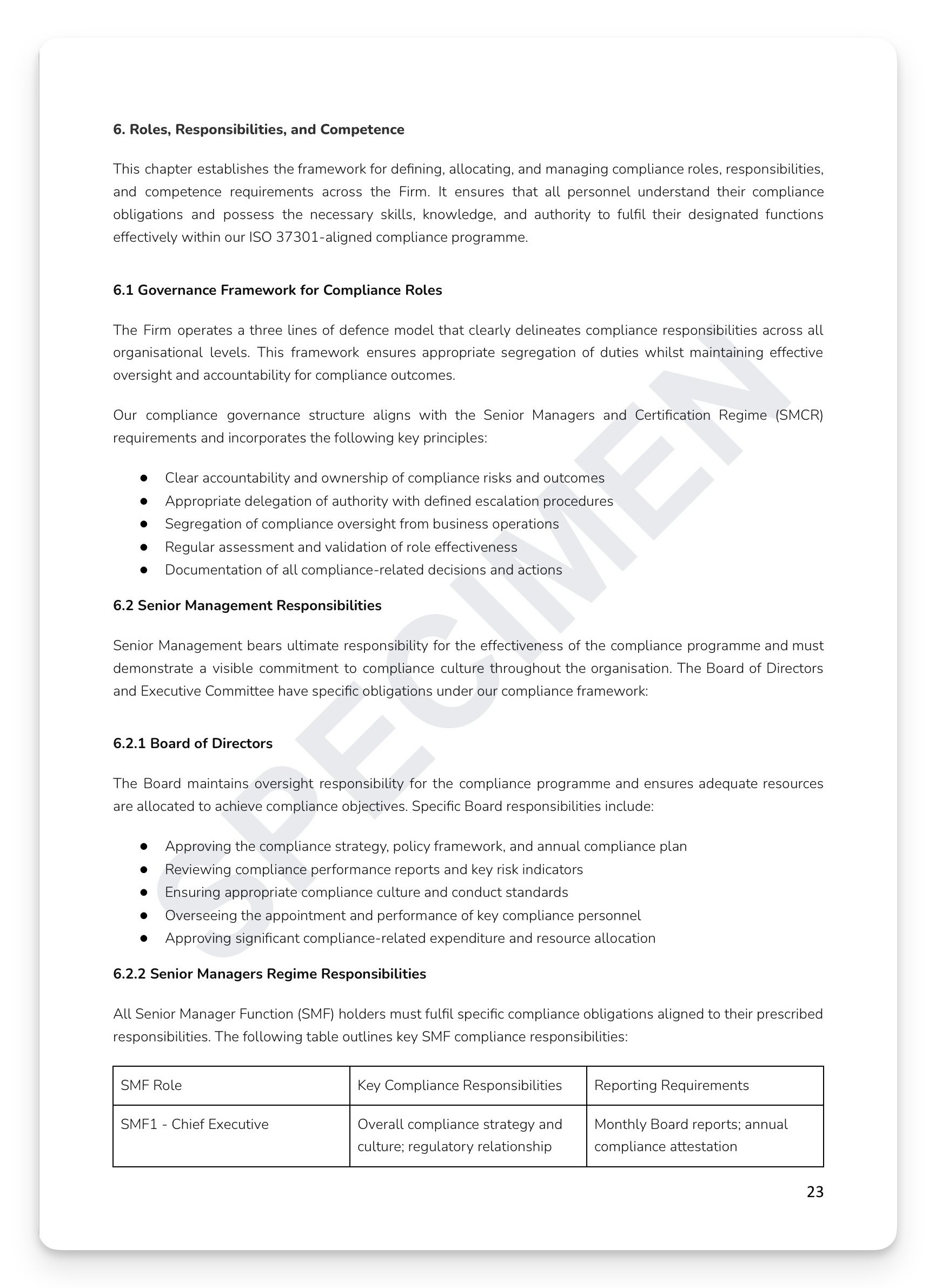 Image 8 of 9
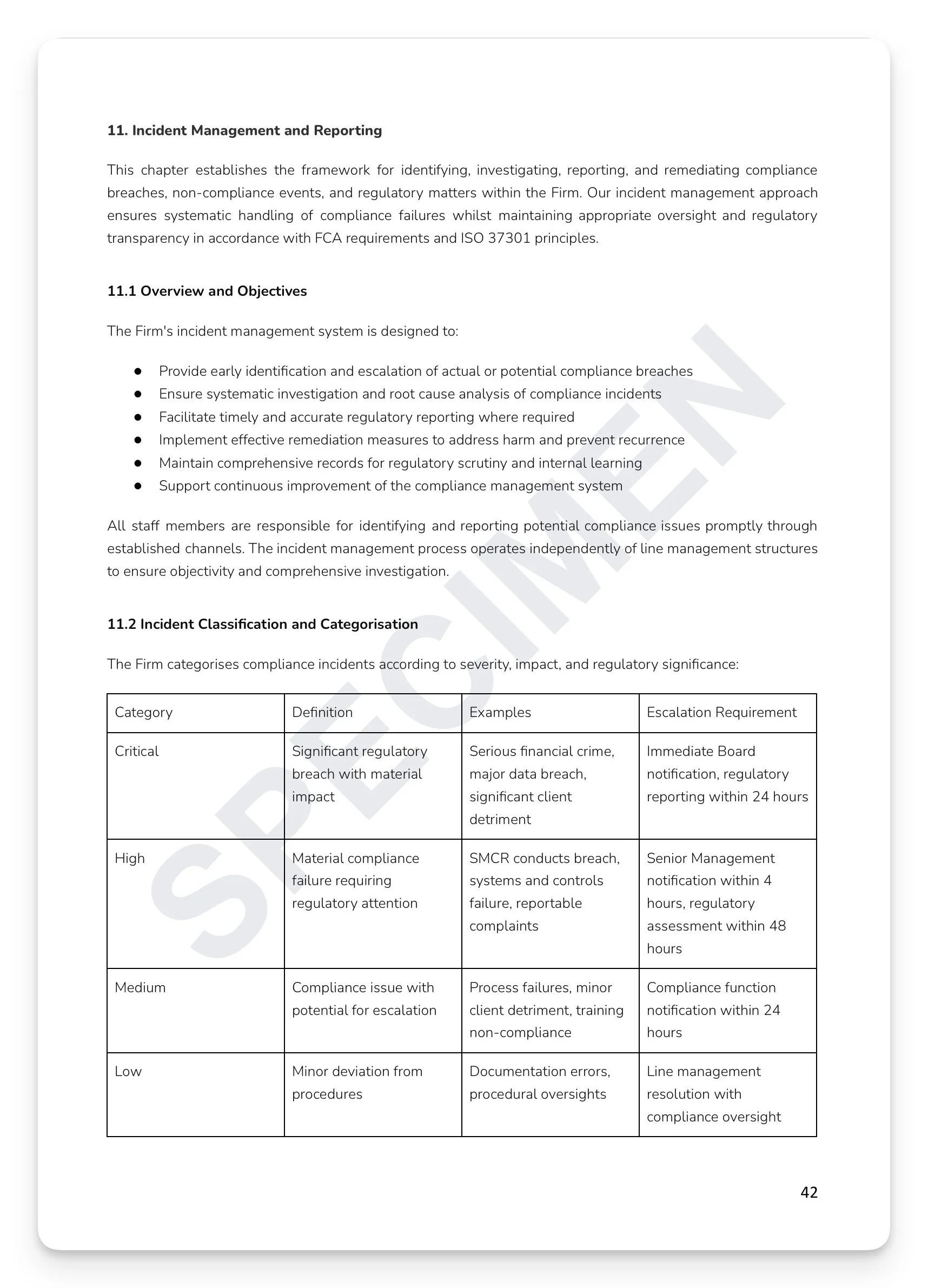 Image 9 of 9