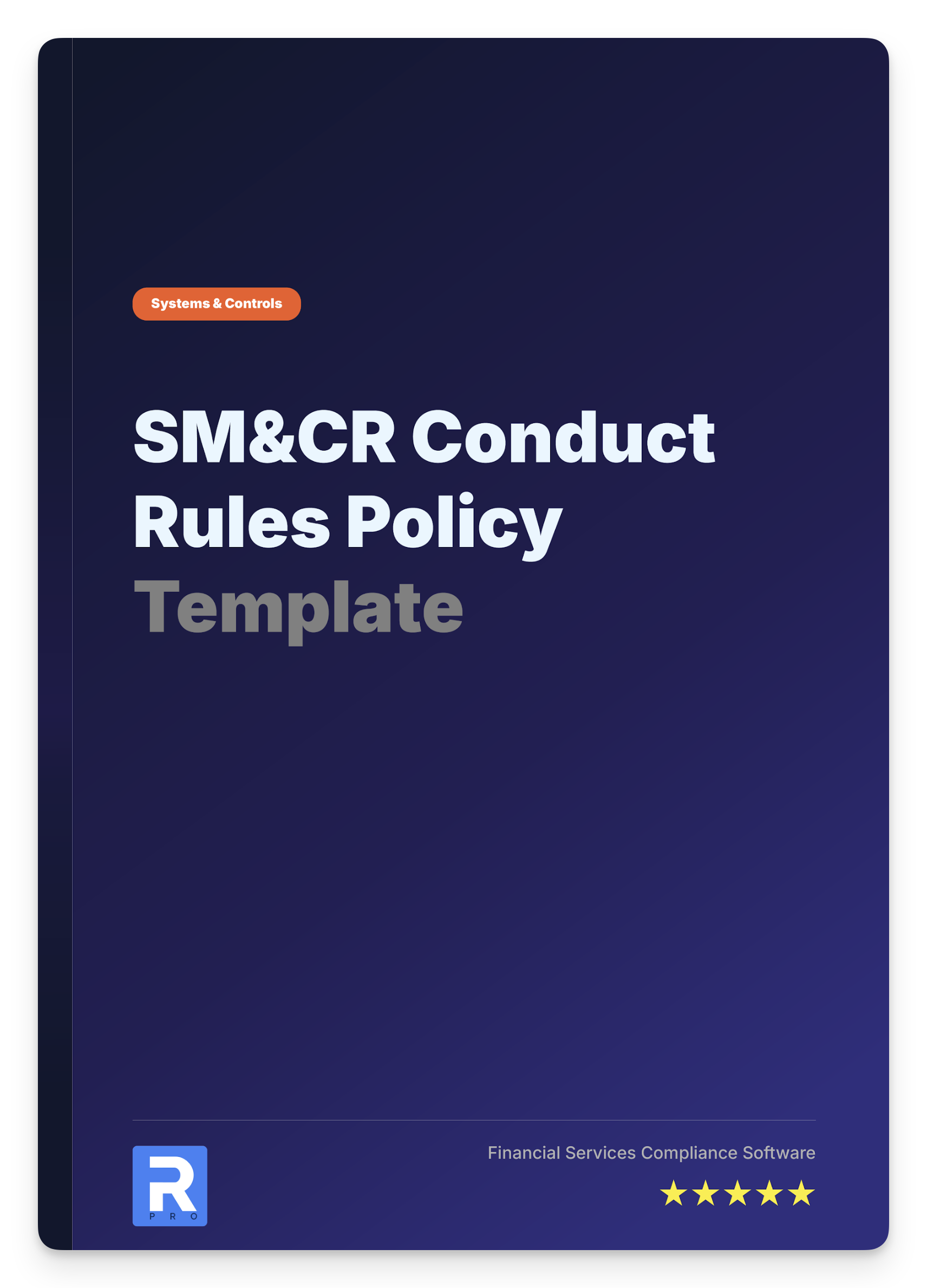
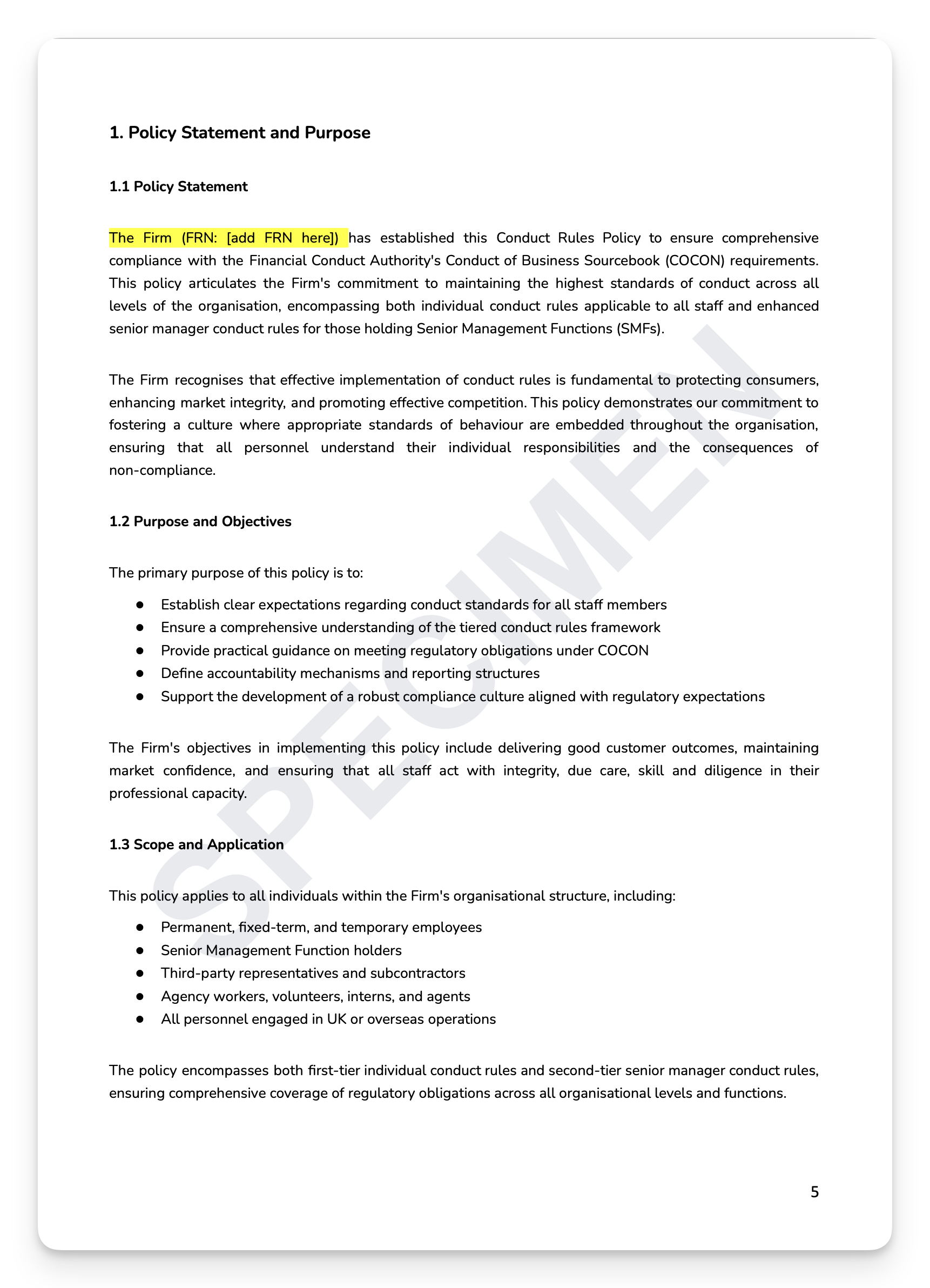
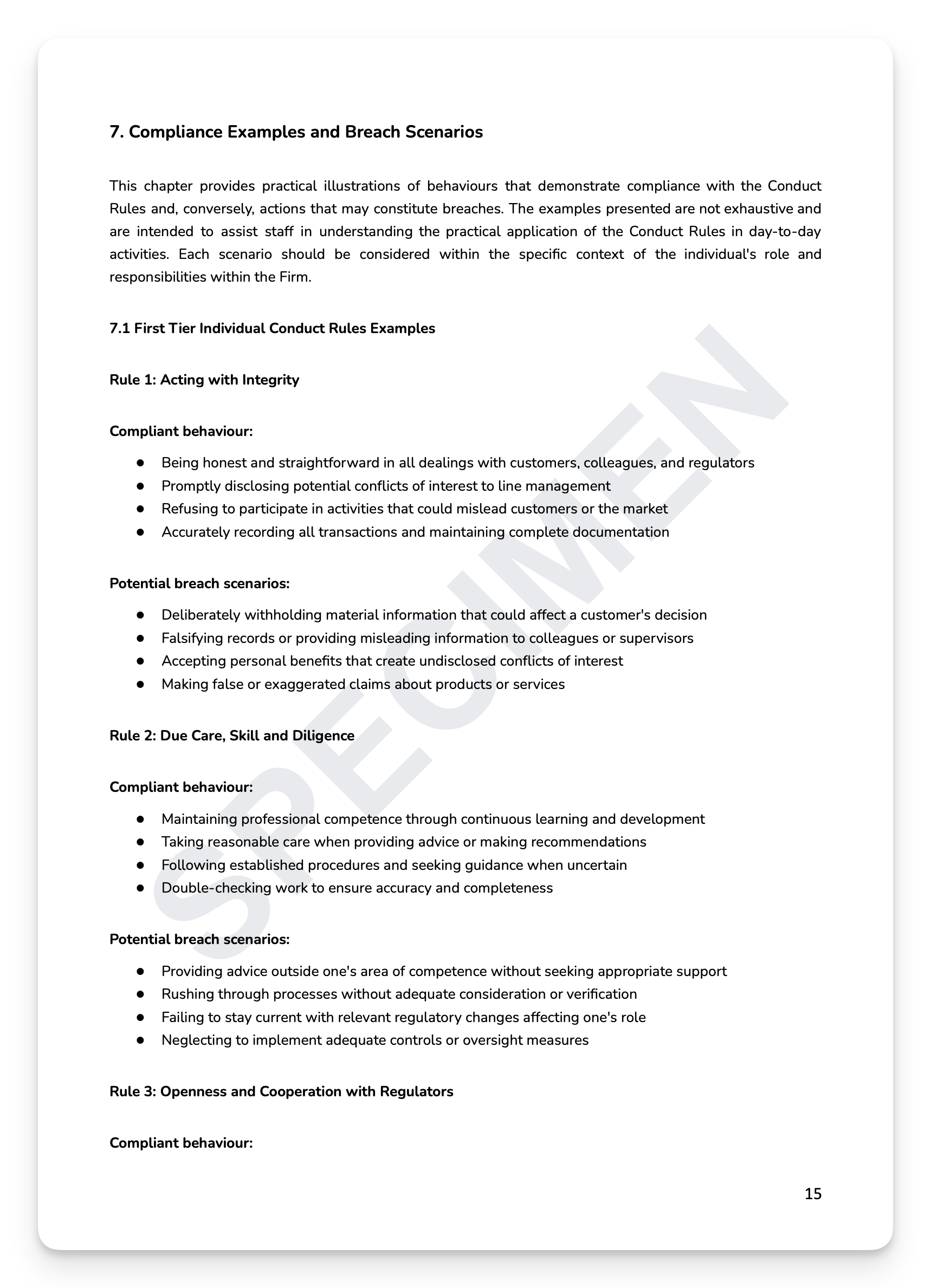
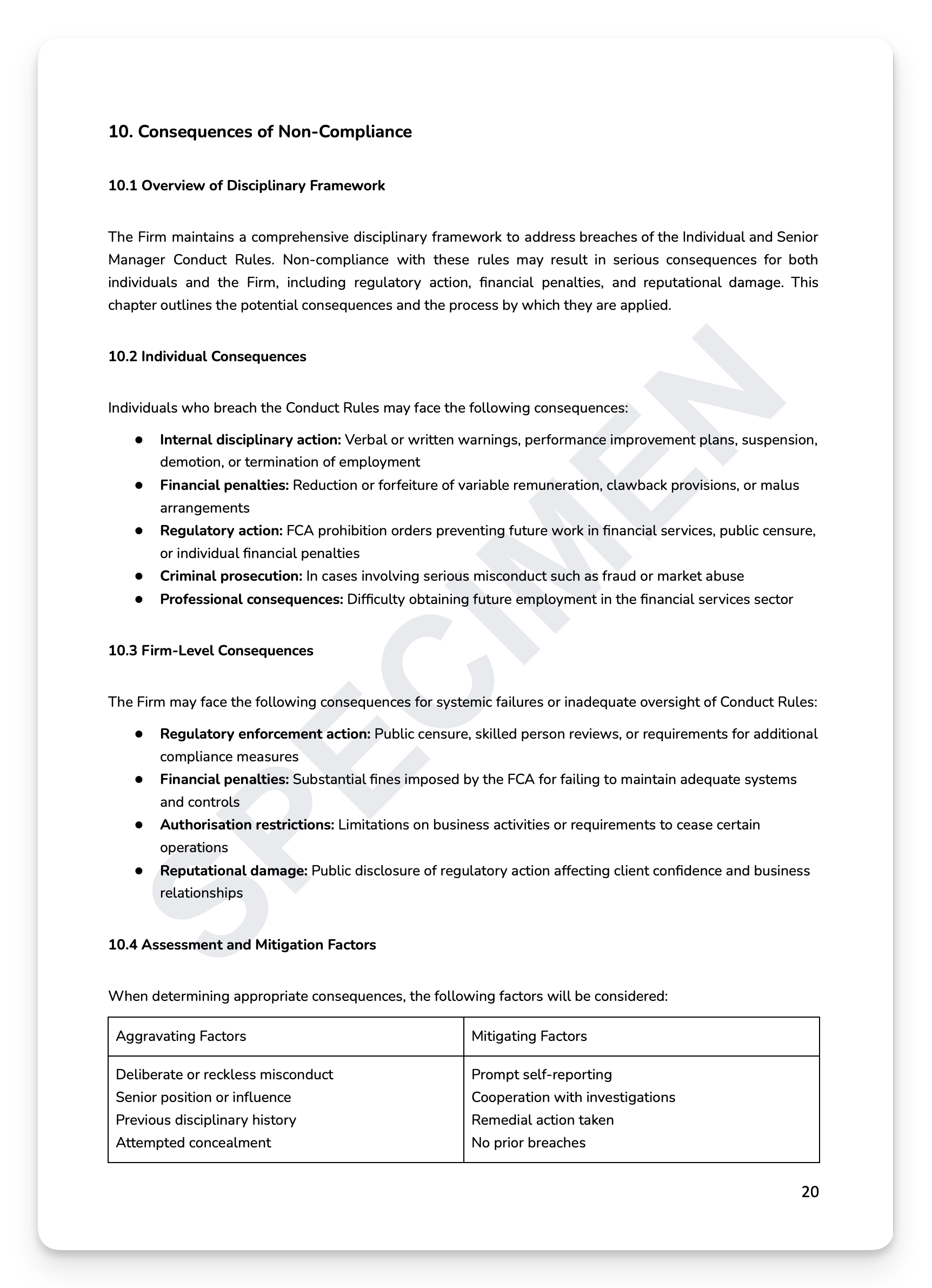
SM&CR fundamentally changed FCA regulation — shifting enforcement focus from institutions to individuals. Senior managers now face personal regulatory liability under the Duty of Responsibility, certified staff require formal annual assessment, and Conduct Rules apply to virtually every employee. Firms treating this as an HR process rather than an accountability framework are exposed. The FCA doesn't wait.
What's included:
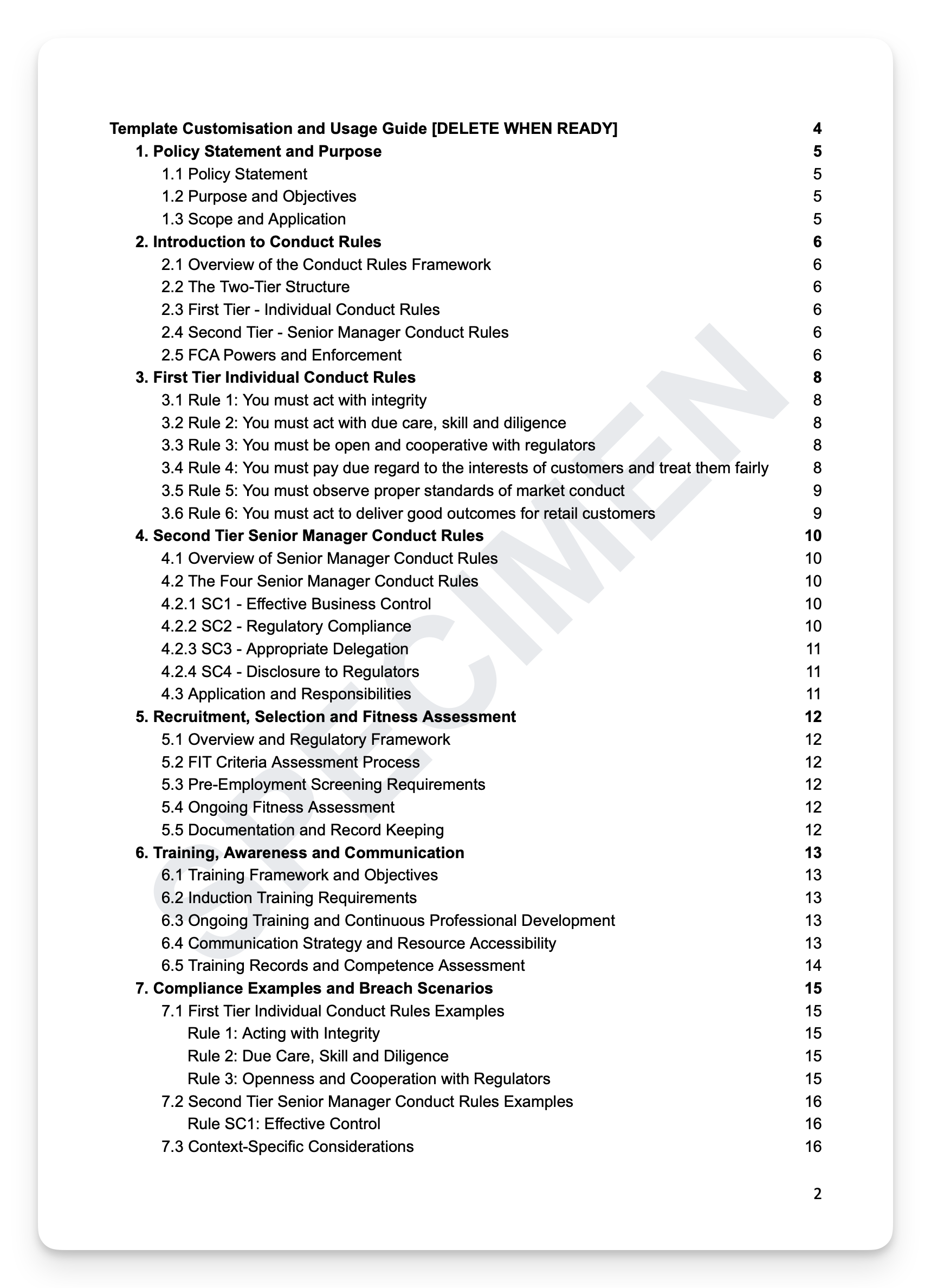
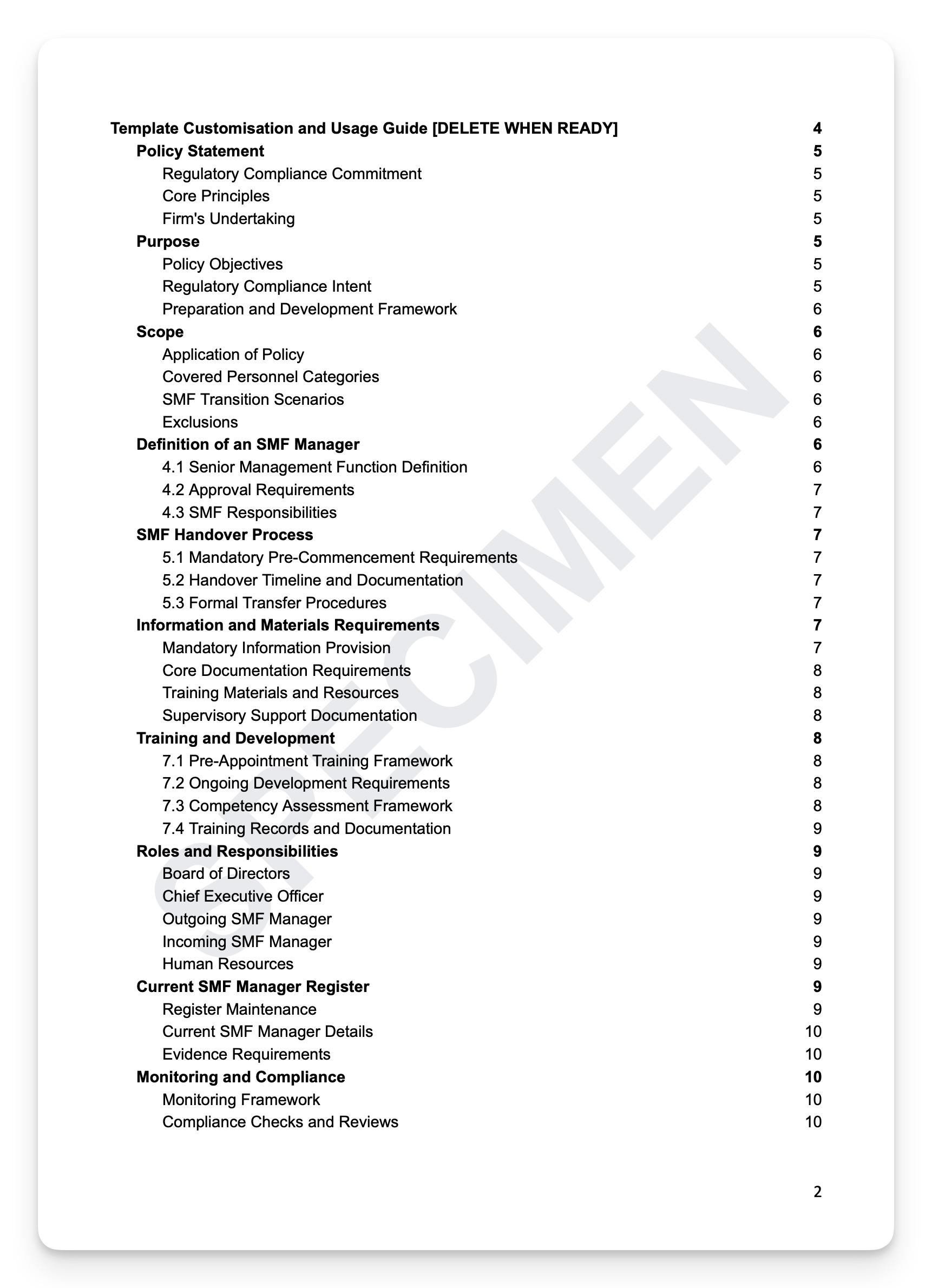
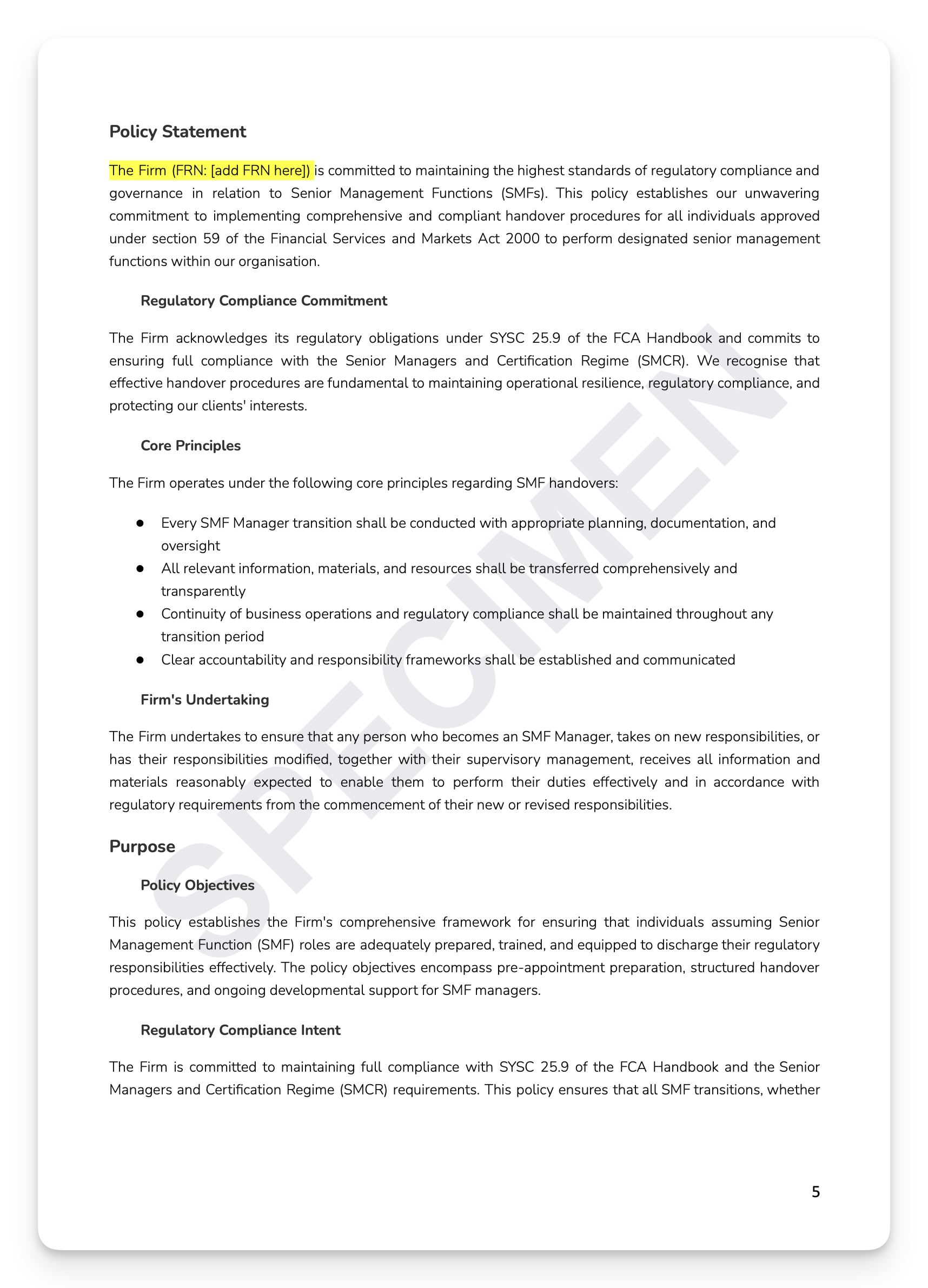
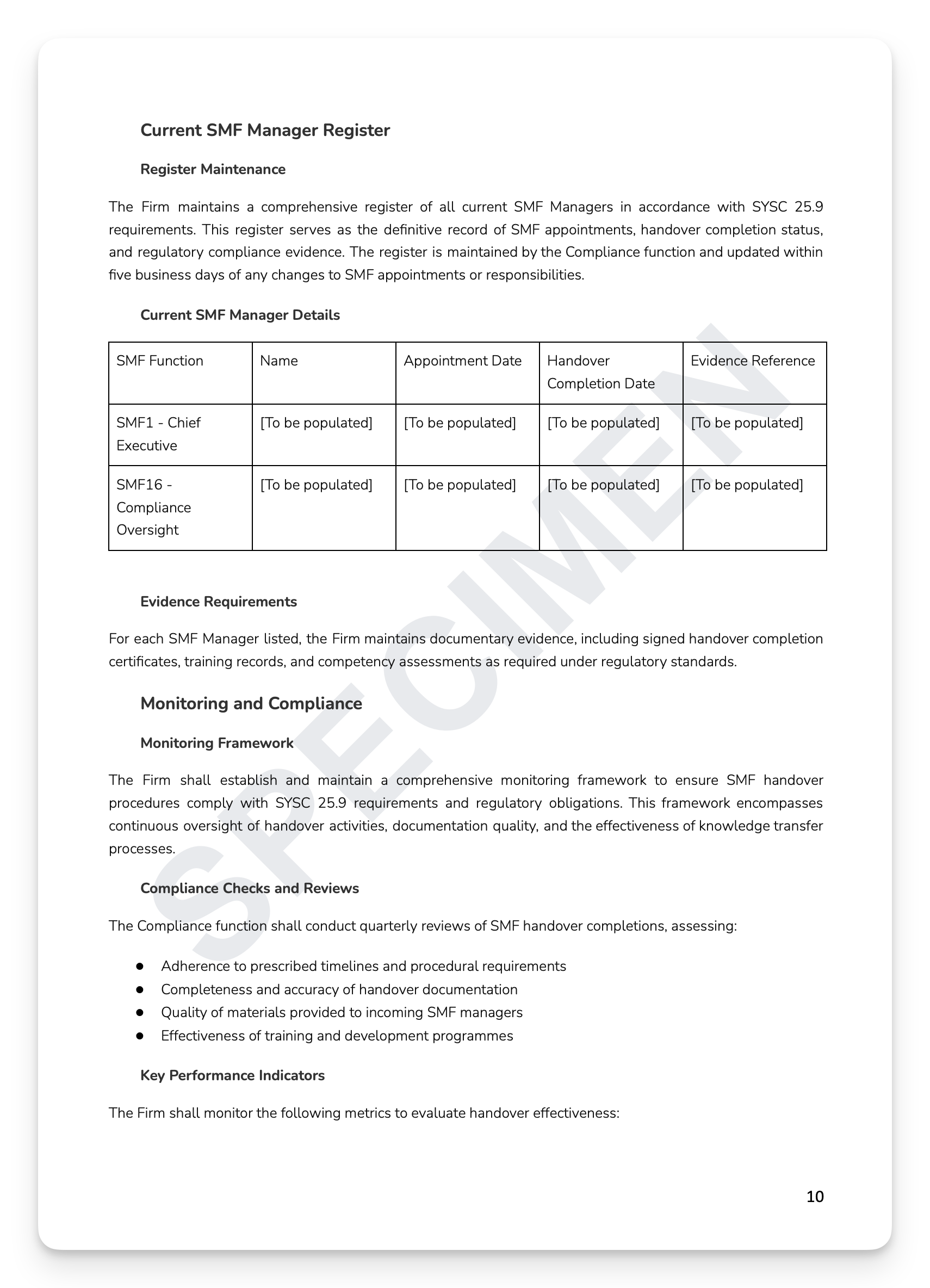
Complete SMF framework: all functions (SMF1–SMF17), Statements of Responsibilities, and Prescribed Responsibilities with no gaps
Full regulatory mapping: FSMA s.66B, SUP 10C/10D, SYSC 24, COCON, FIT 1–3, and UK GDPR
Firm classification matrix: Enhanced, Core, and Limited Scope requirements clearly differentiated
Certification Regime: full annual cycle management, certificate issuance, and ongoing monitoring
Fitness and Propriety assessment: all three FCA criteria, pre-employment screening, regulatory references, and ongoing reassessment
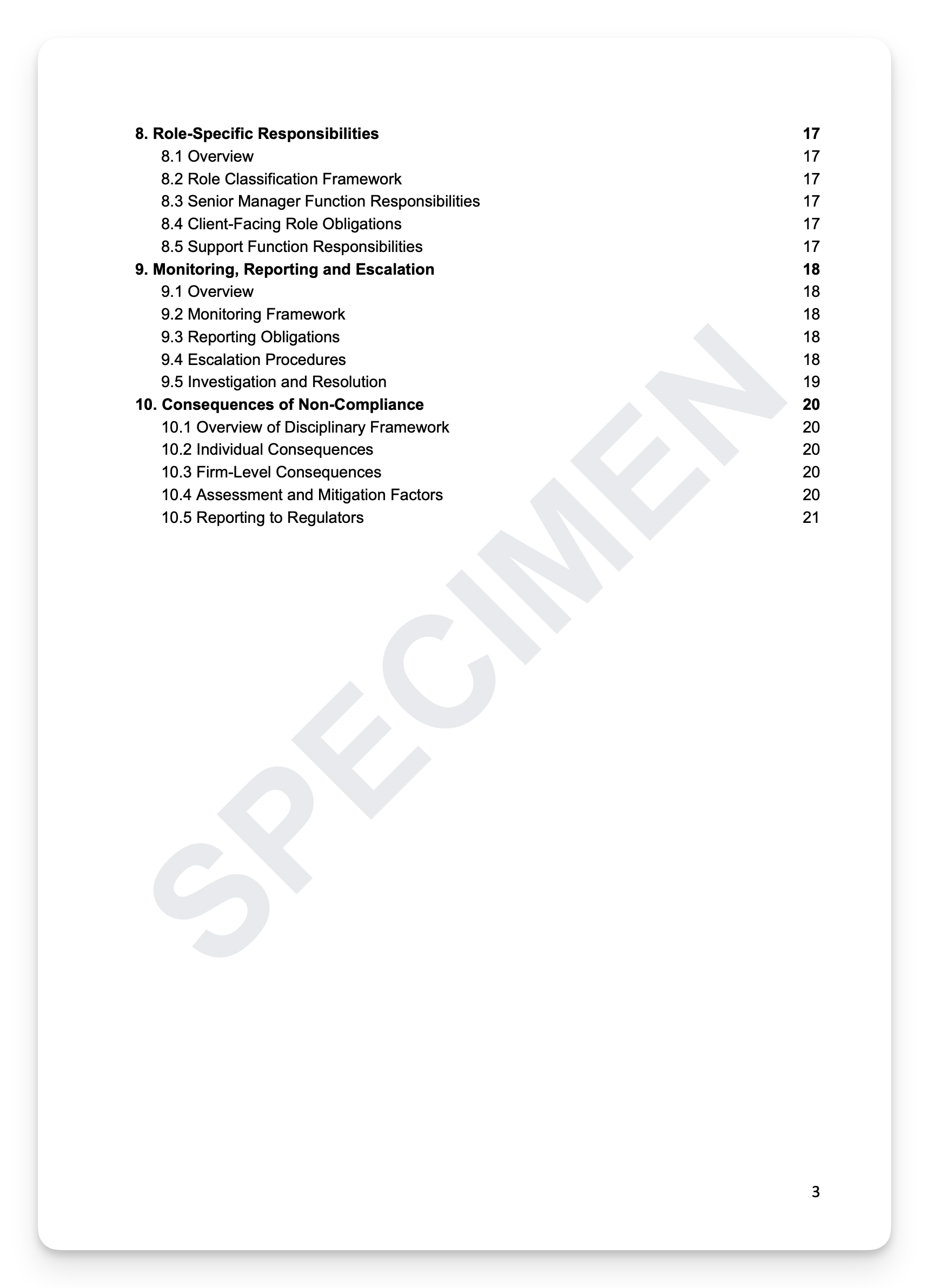
Conduct Rules implementation: Individual Rules 1–5 and Senior Manager Rules SC1–SC4 with breach detection procedures
Disciplinary framework: Disciplinary Committee structure, investigation timelines, sanctions range, and appeals process
+ much more
Who is this for?
SMF16 holders, CEOs, HR Directors, and Governing Bodies at Enhanced, Core, and Limited Scope FCA-regulated firms who need a complete, audit-ready SM&CR infrastructure — structured so that when the FCA knocks, the answer is "yes, it's all here."
How it works
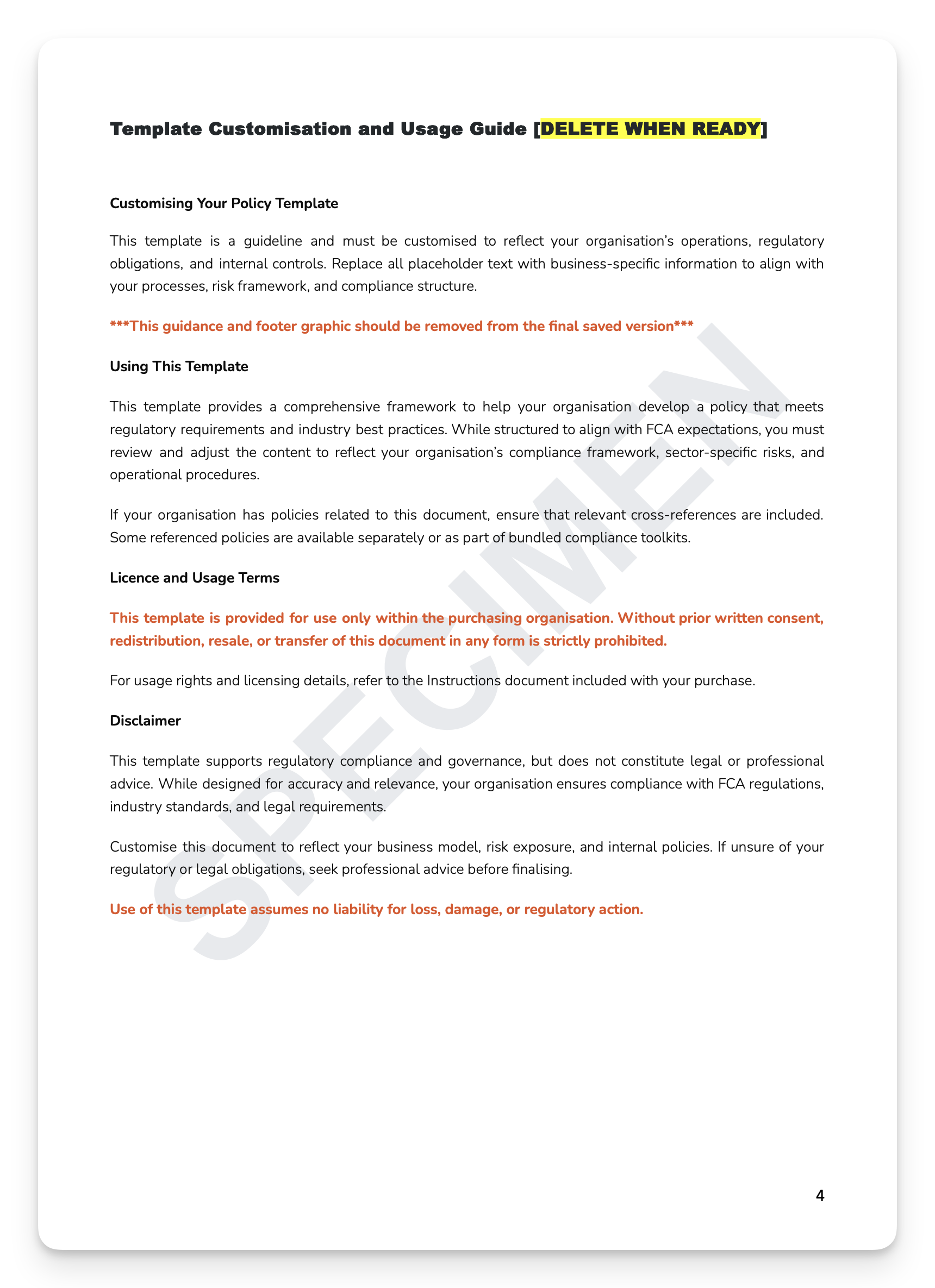
Step 1 — Read it. Every section exists for a reason, grounded in a specific regulatory obligation.
Step 2 — Understand it. Map the content against your current practices. Identify where you're strong and where gaps exist.
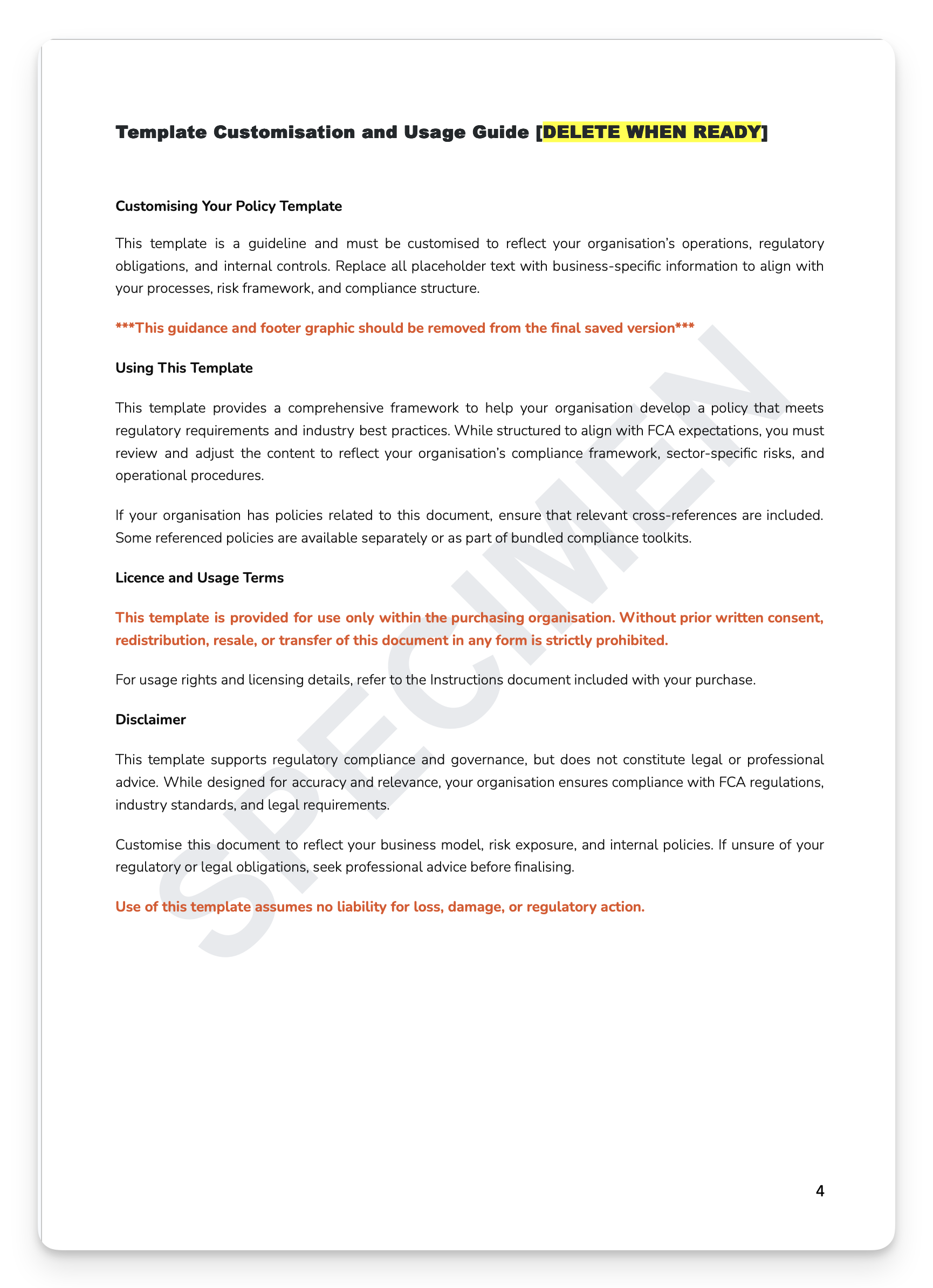
Step 3 — Make it yours. Tailor the language to reflect how your organisation actually operates. A policy that sounds like your firm is a policy your people will follow.
Step 4 — Take ownership. Assign clear accountability — Board approval, named SMF holder, designated policy owner. A policy without an owner is a liability, not an asset.
Step 5 — Operationalise it. Embed the policy into your governance calendar, training programme, and annual review cycle. This is where compliance becomes culture.
Or, get this free with RegTechPRO
Access this alongside the full compliance policy library — SM&CR, COBS, AML, Consumer Duty, GDPR, and more — for a fraction of the cost of consultancy.
View RegTechPRO pricing and packages →
SM&CR fundamentally changed FCA regulation — shifting enforcement focus from institutions to individuals. Senior managers now face personal regulatory liability under the Duty of Responsibility, certified staff require formal annual assessment, and Conduct Rules apply to virtually every employee. Firms treating this as an HR process rather than an accountability framework are exposed. The FCA doesn't wait.
What's included:
Complete SMF framework: all functions (SMF1–SMF17), Statements of Responsibilities, and Prescribed Responsibilities with no gaps
Full regulatory mapping: FSMA s.66B, SUP 10C/10D, SYSC 24, COCON, FIT 1–3, and UK GDPR
Firm classification matrix: Enhanced, Core, and Limited Scope requirements clearly differentiated
Certification Regime: full annual cycle management, certificate issuance, and ongoing monitoring
Fitness and Propriety assessment: all three FCA criteria, pre-employment screening, regulatory references, and ongoing reassessment
Conduct Rules implementation: Individual Rules 1–5 and Senior Manager Rules SC1–SC4 with breach detection procedures
Disciplinary framework: Disciplinary Committee structure, investigation timelines, sanctions range, and appeals process
+ much more
Who is this for?
SMF16 holders, CEOs, HR Directors, and Governing Bodies at Enhanced, Core, and Limited Scope FCA-regulated firms who need a complete, audit-ready SM&CR infrastructure — structured so that when the FCA knocks, the answer is "yes, it's all here."
How it works
Step 1 — Read it. Every section exists for a reason, grounded in a specific regulatory obligation.
Step 2 — Understand it. Map the content against your current practices. Identify where you're strong and where gaps exist.
Step 3 — Make it yours. Tailor the language to reflect how your organisation actually operates. A policy that sounds like your firm is a policy your people will follow.
Step 4 — Take ownership. Assign clear accountability — Board approval, named SMF holder, designated policy owner. A policy without an owner is a liability, not an asset.
Step 5 — Operationalise it. Embed the policy into your governance calendar, training programme, and annual review cycle. This is where compliance becomes culture.
Or, get this free with RegTechPRO
Access this alongside the full compliance policy library — SM&CR, COBS, AML, Consumer Duty, GDPR, and more — for a fraction of the cost of consultancy.
View RegTechPRO pricing and packages →


 Image 1 of 10
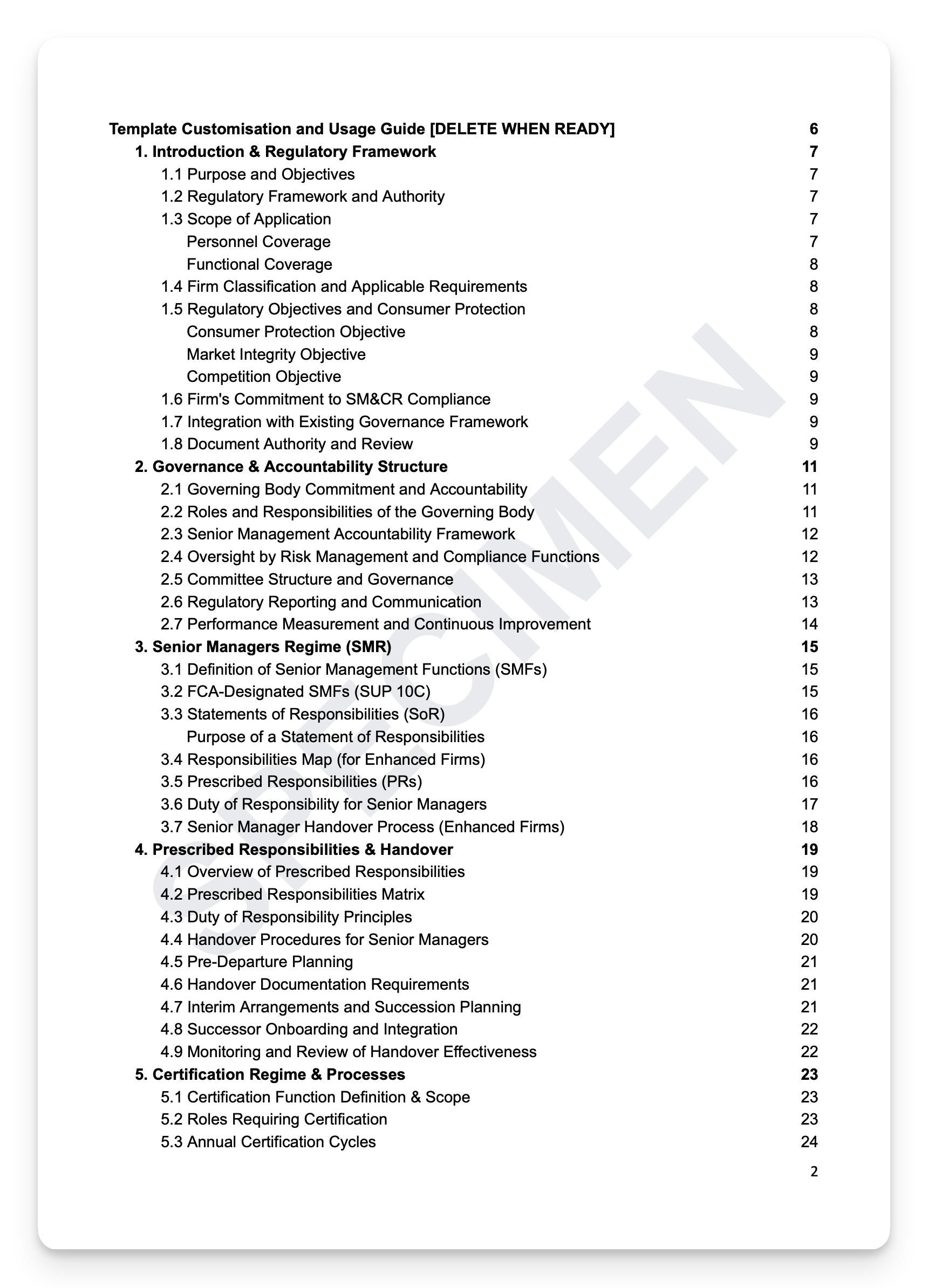 Image 2 of 10
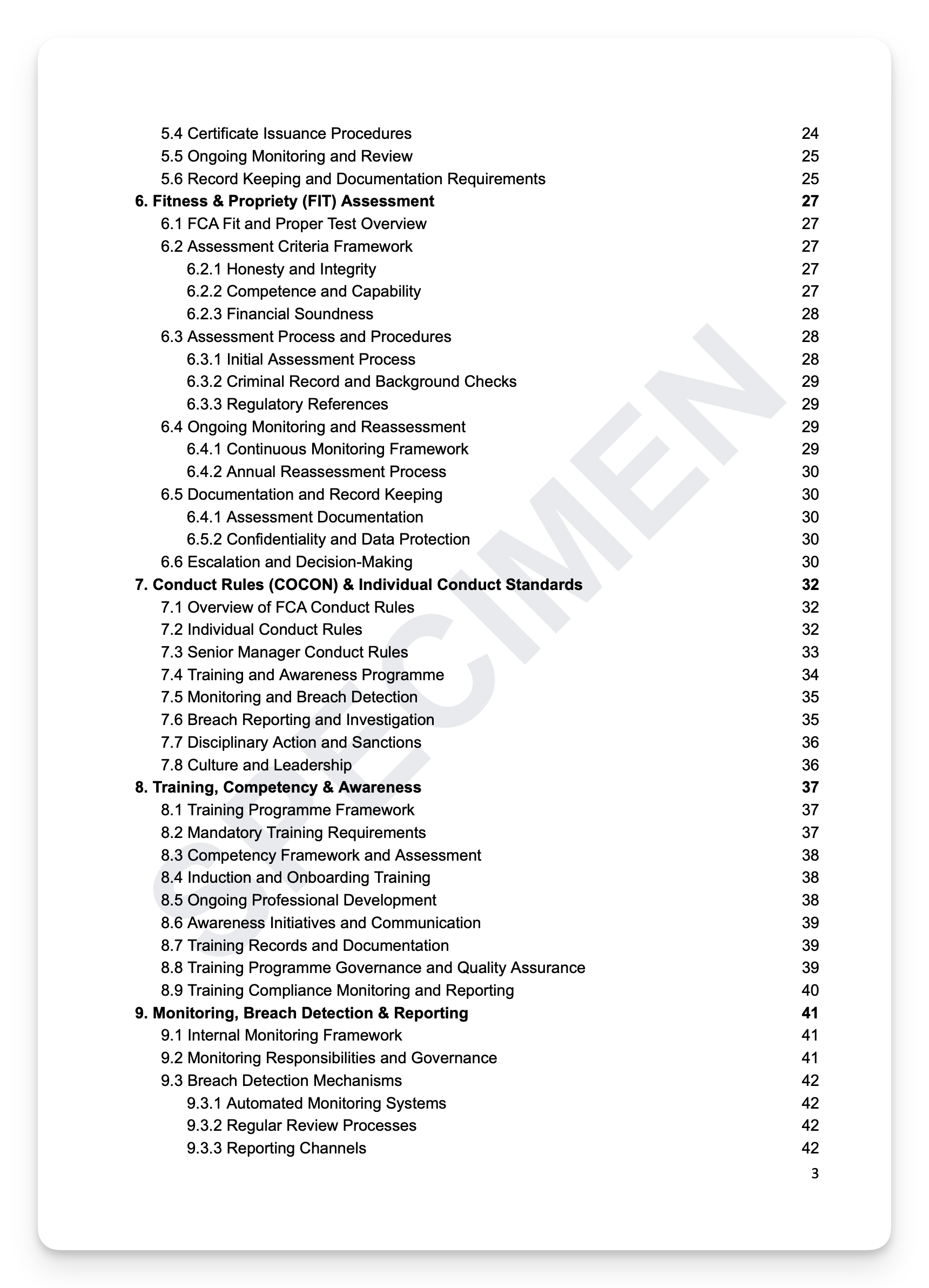 Image 3 of 10
 Image 4 of 10
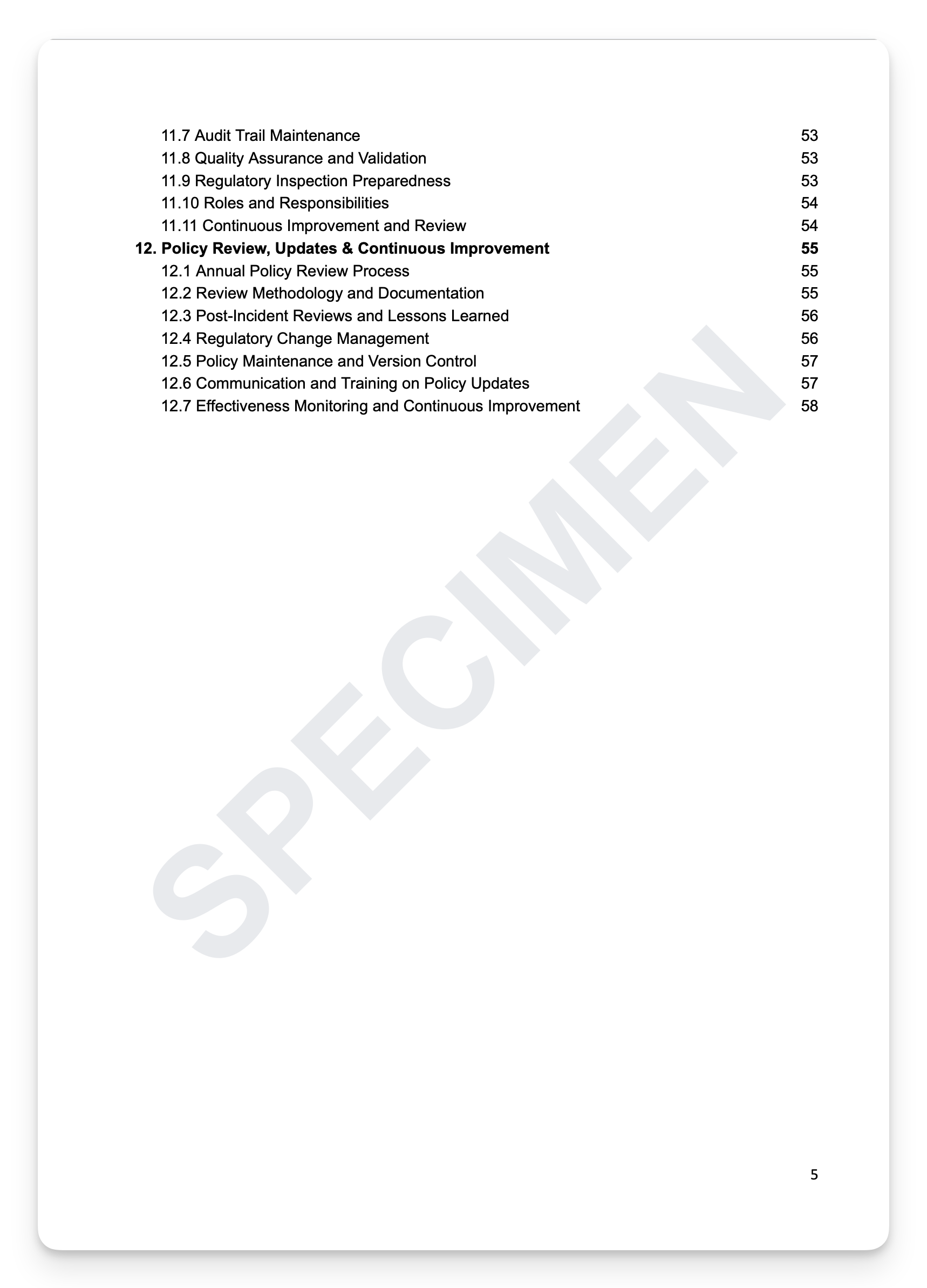 Image 5 of 10
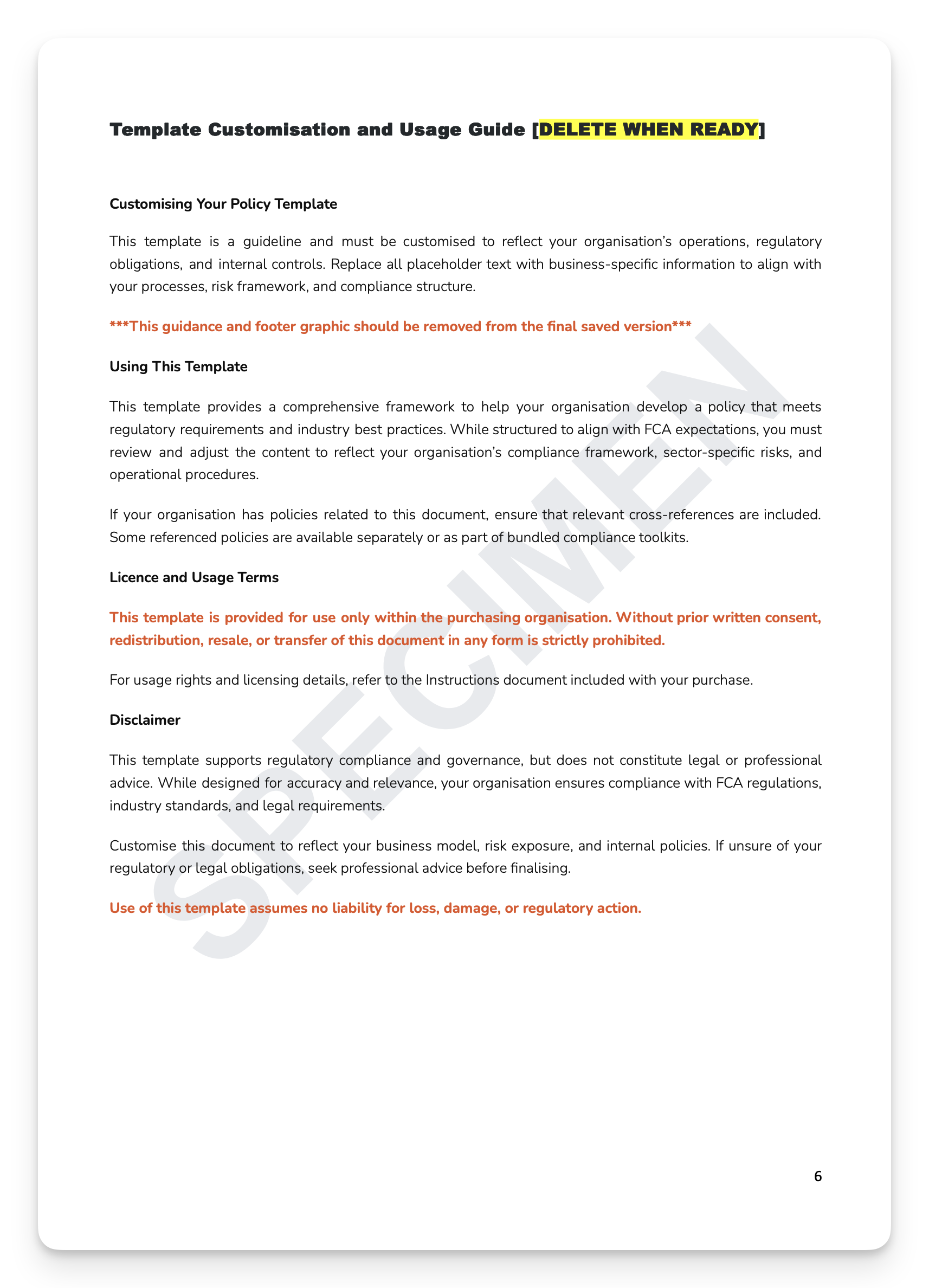 Image 6 of 10
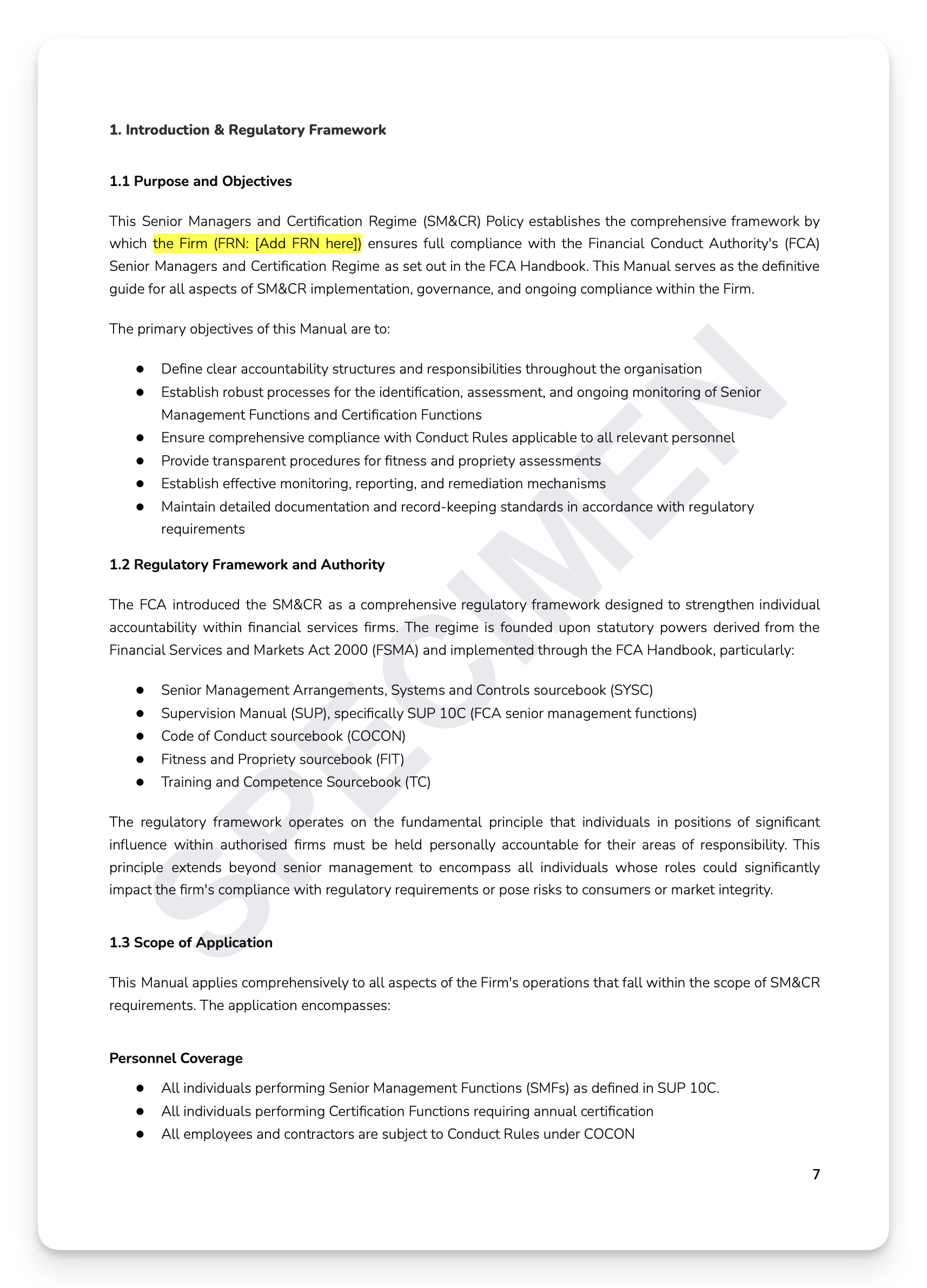 Image 7 of 10
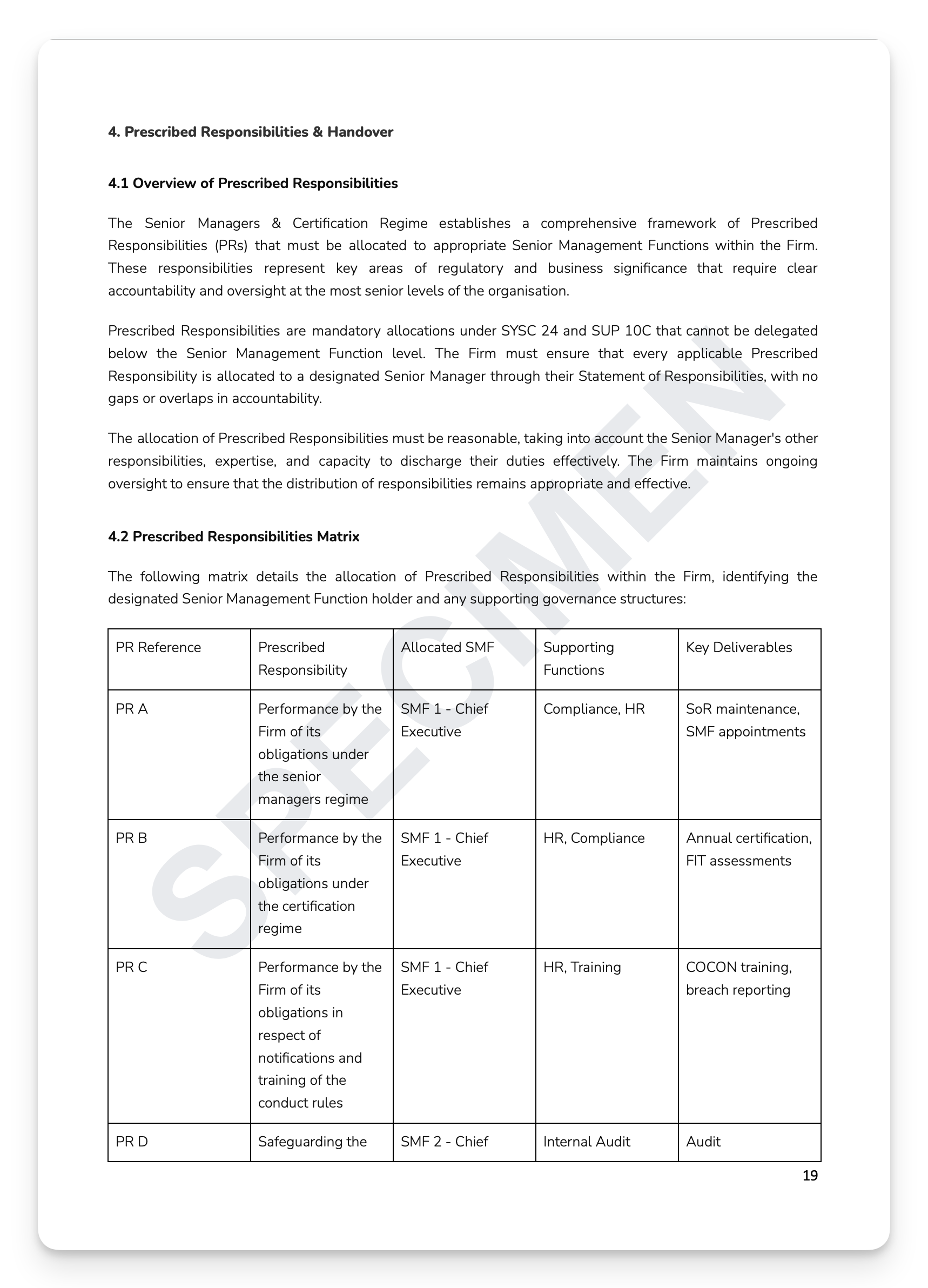 Image 8 of 10
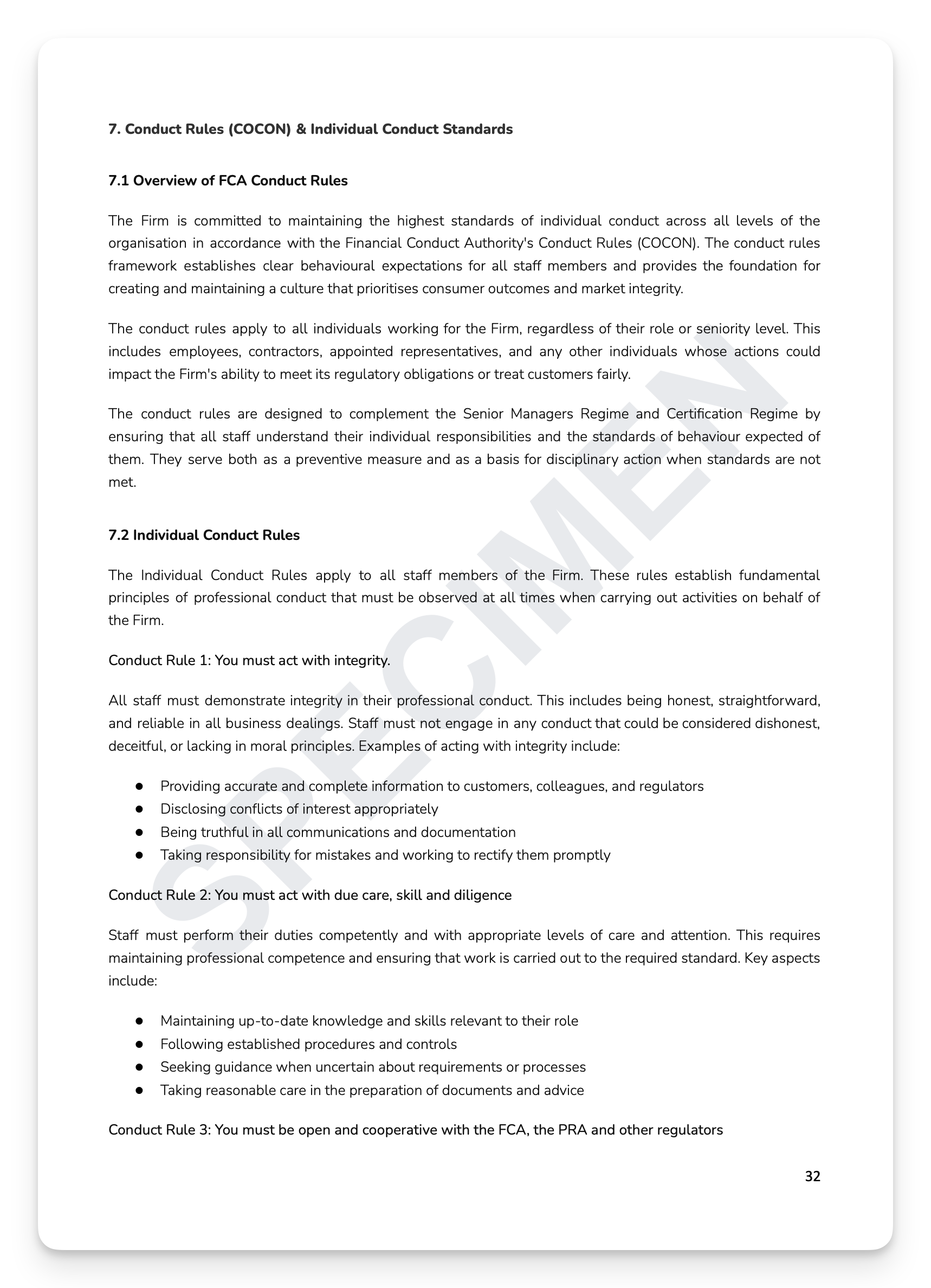 Image 9 of 10
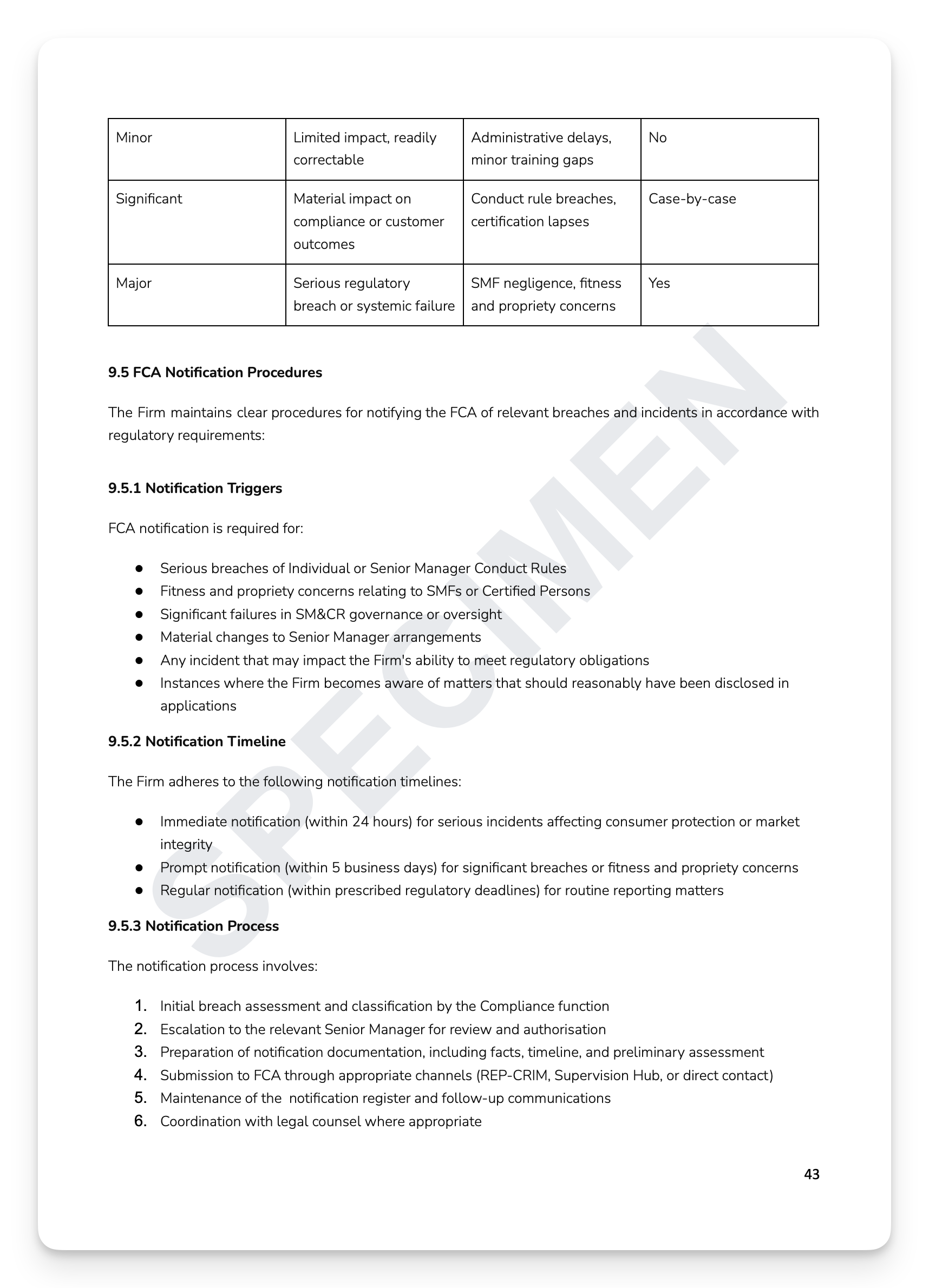 Image 10 of 10