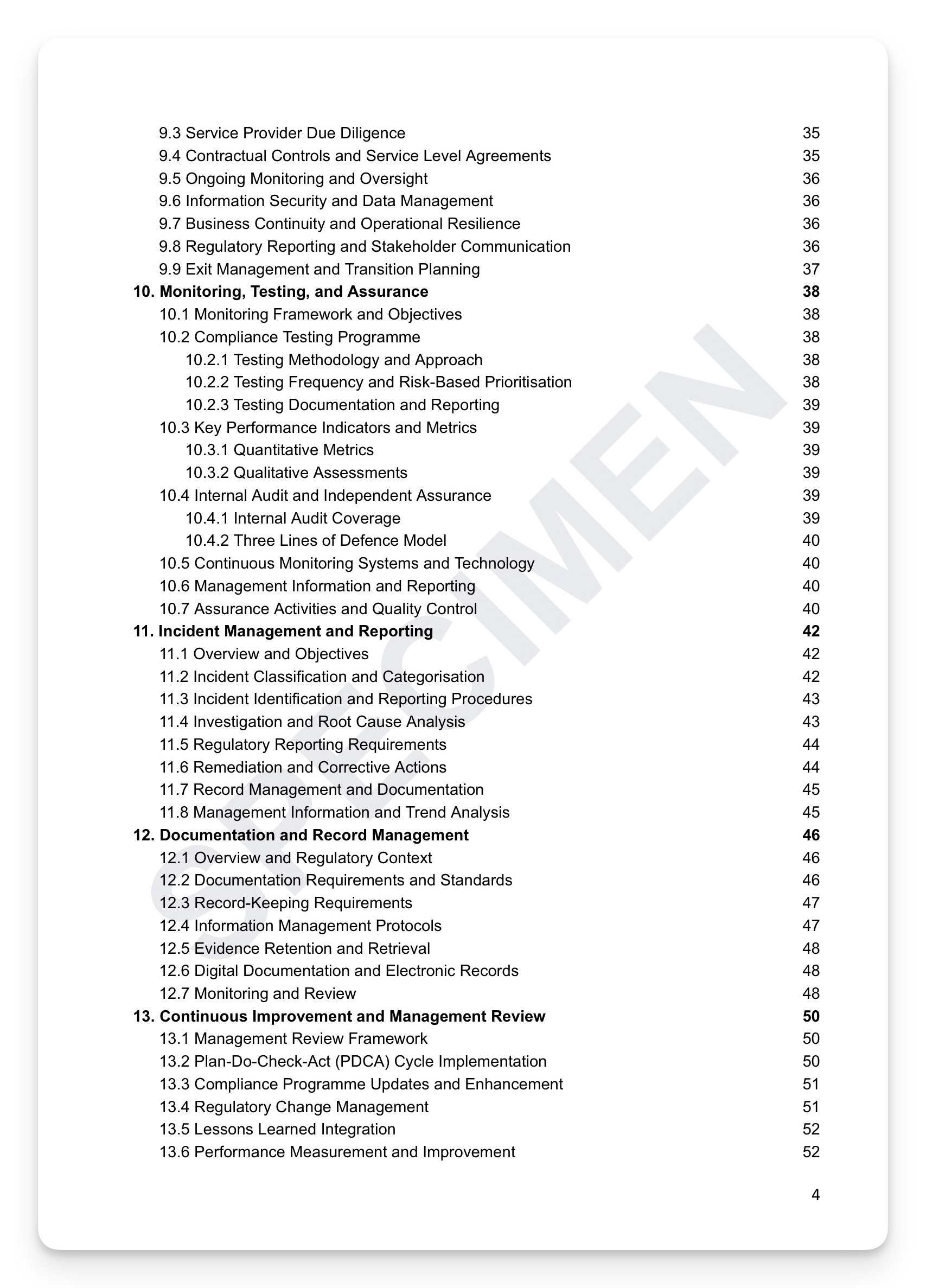
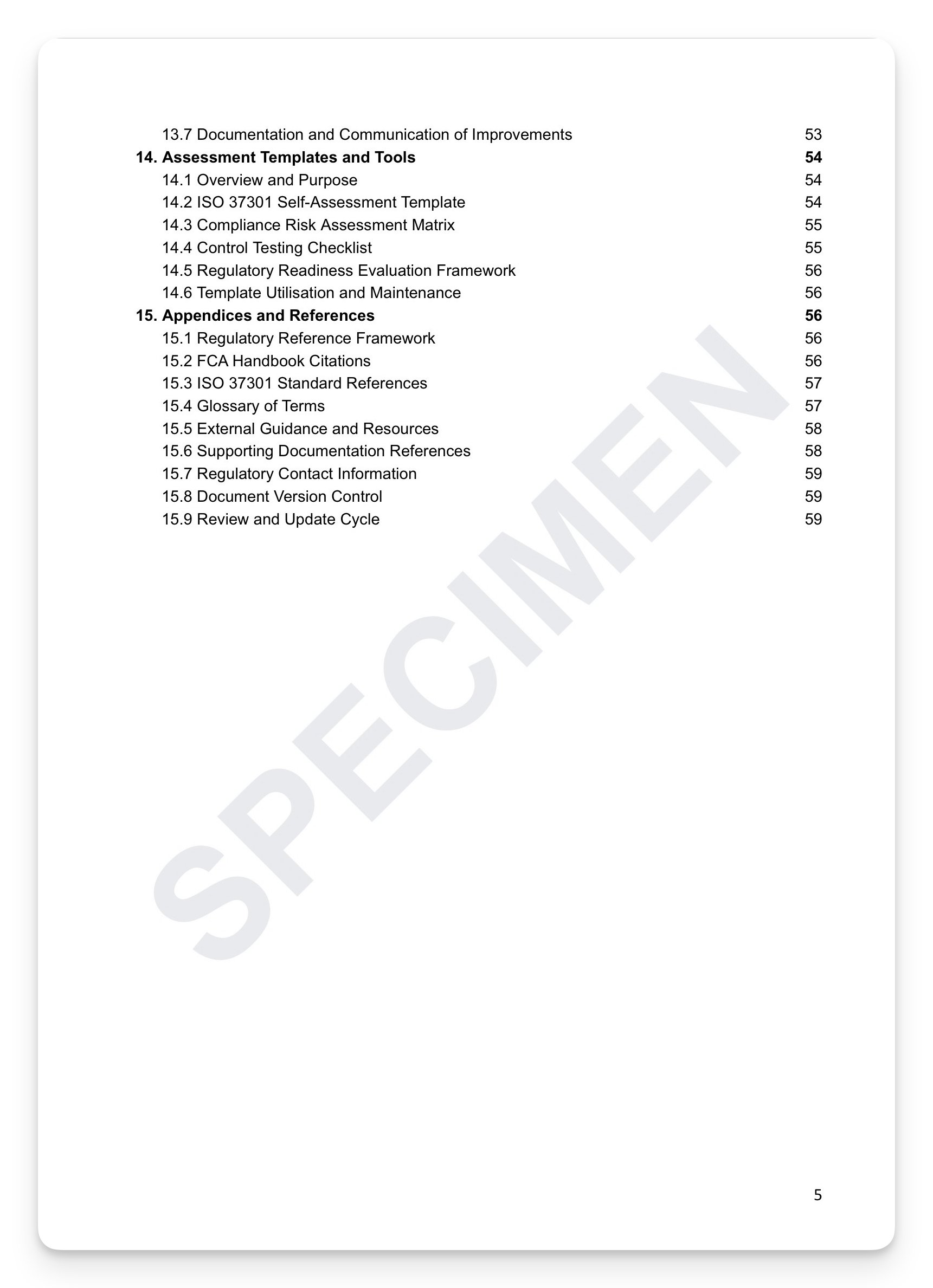
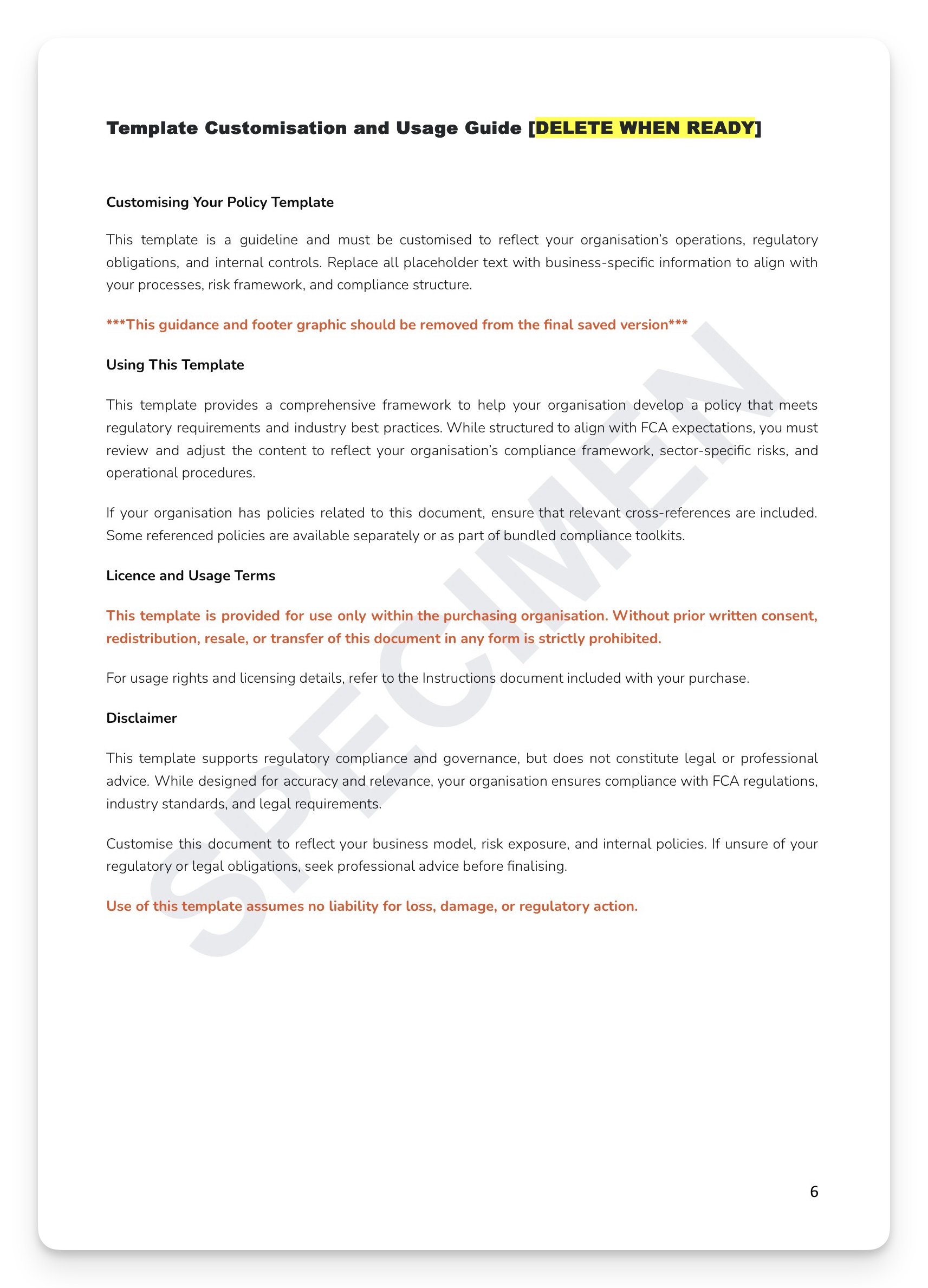
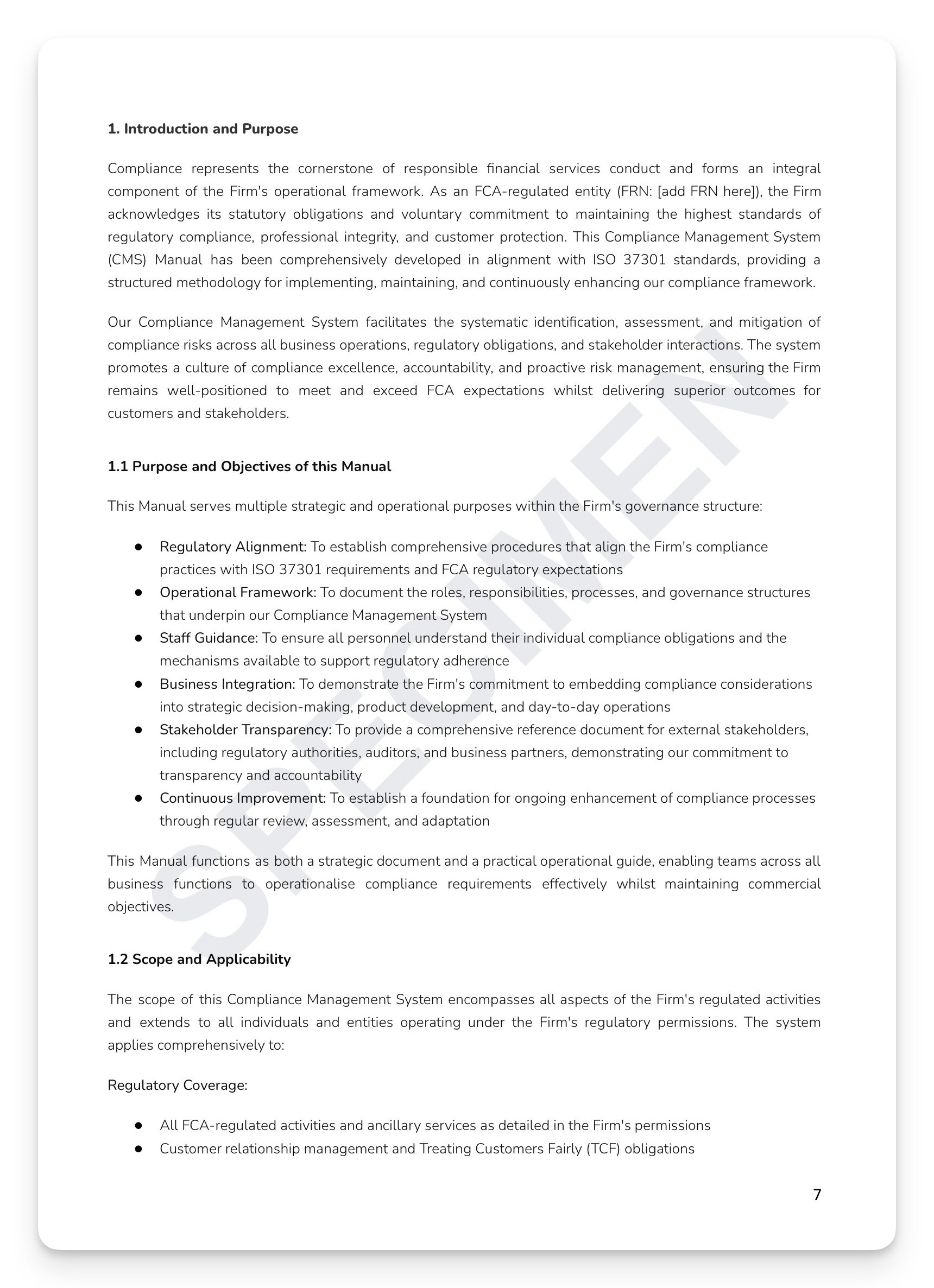
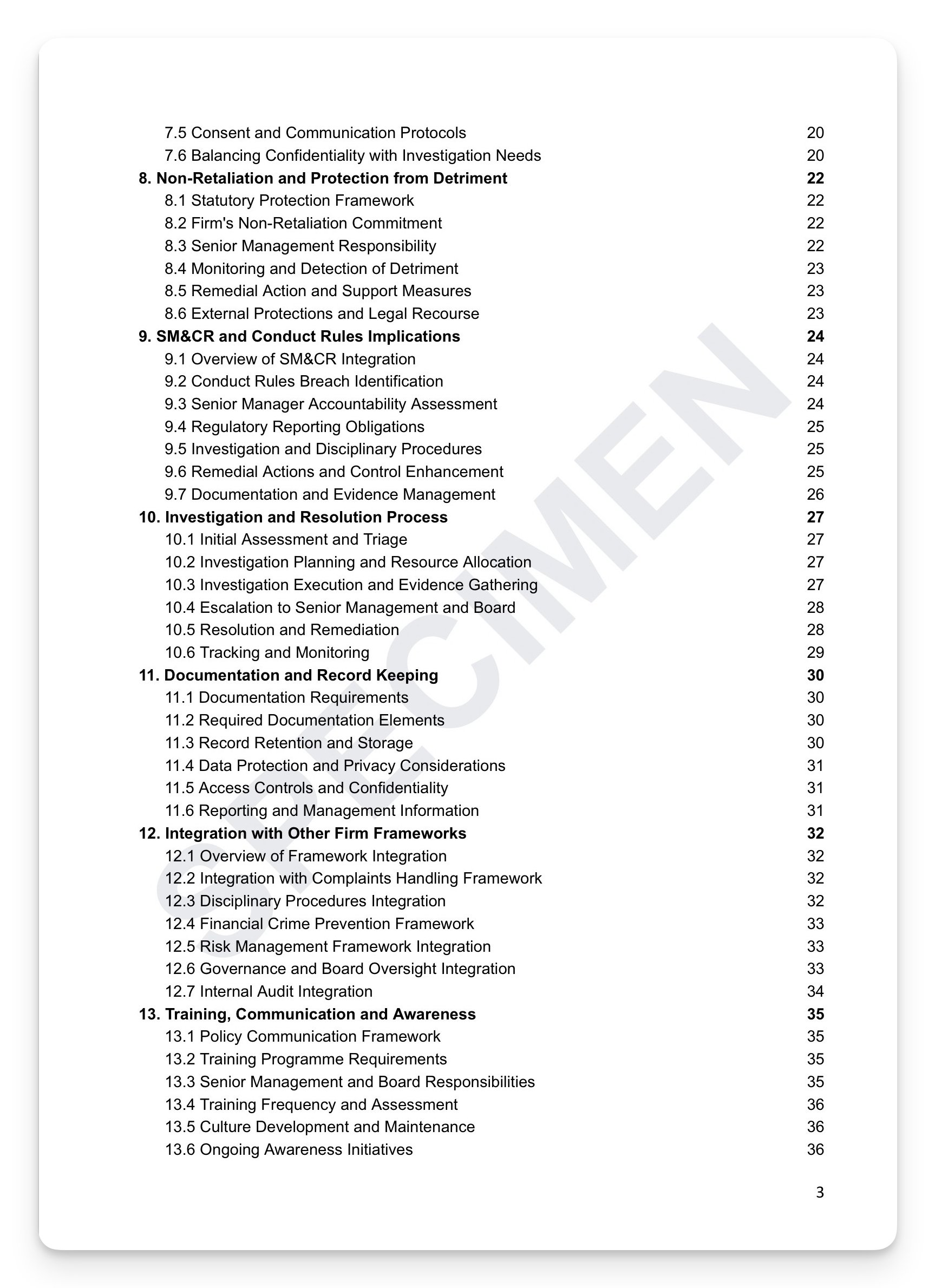
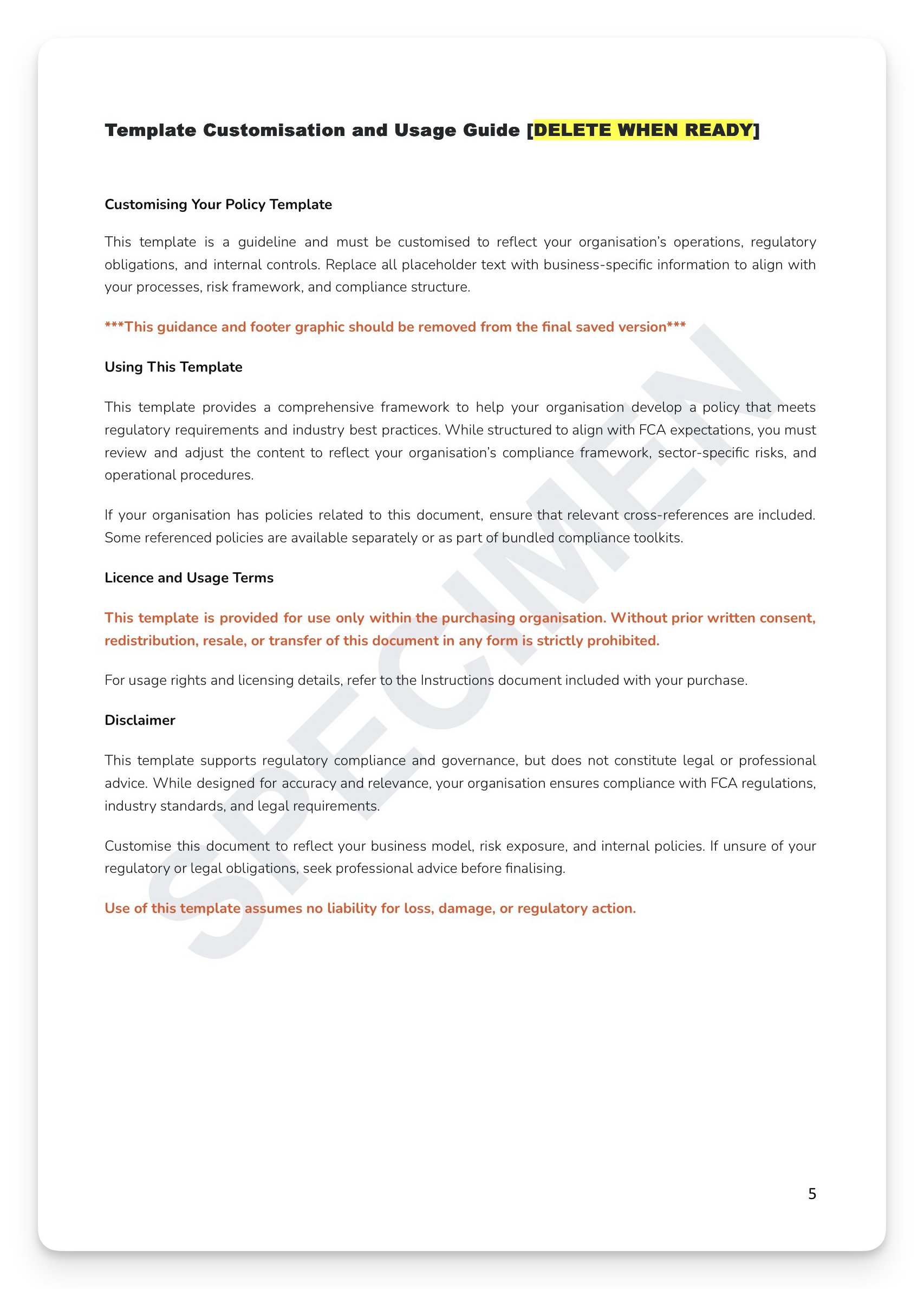
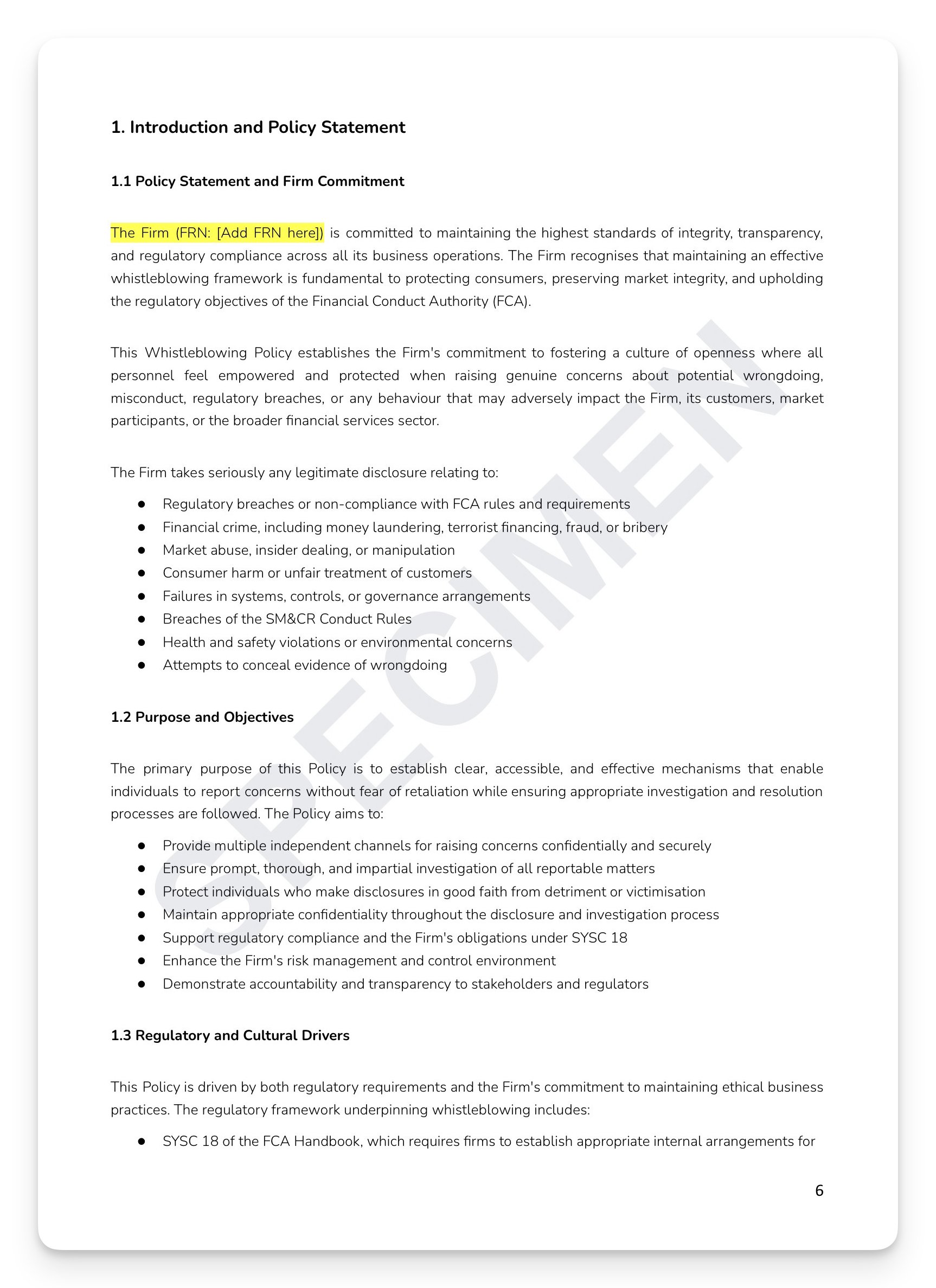
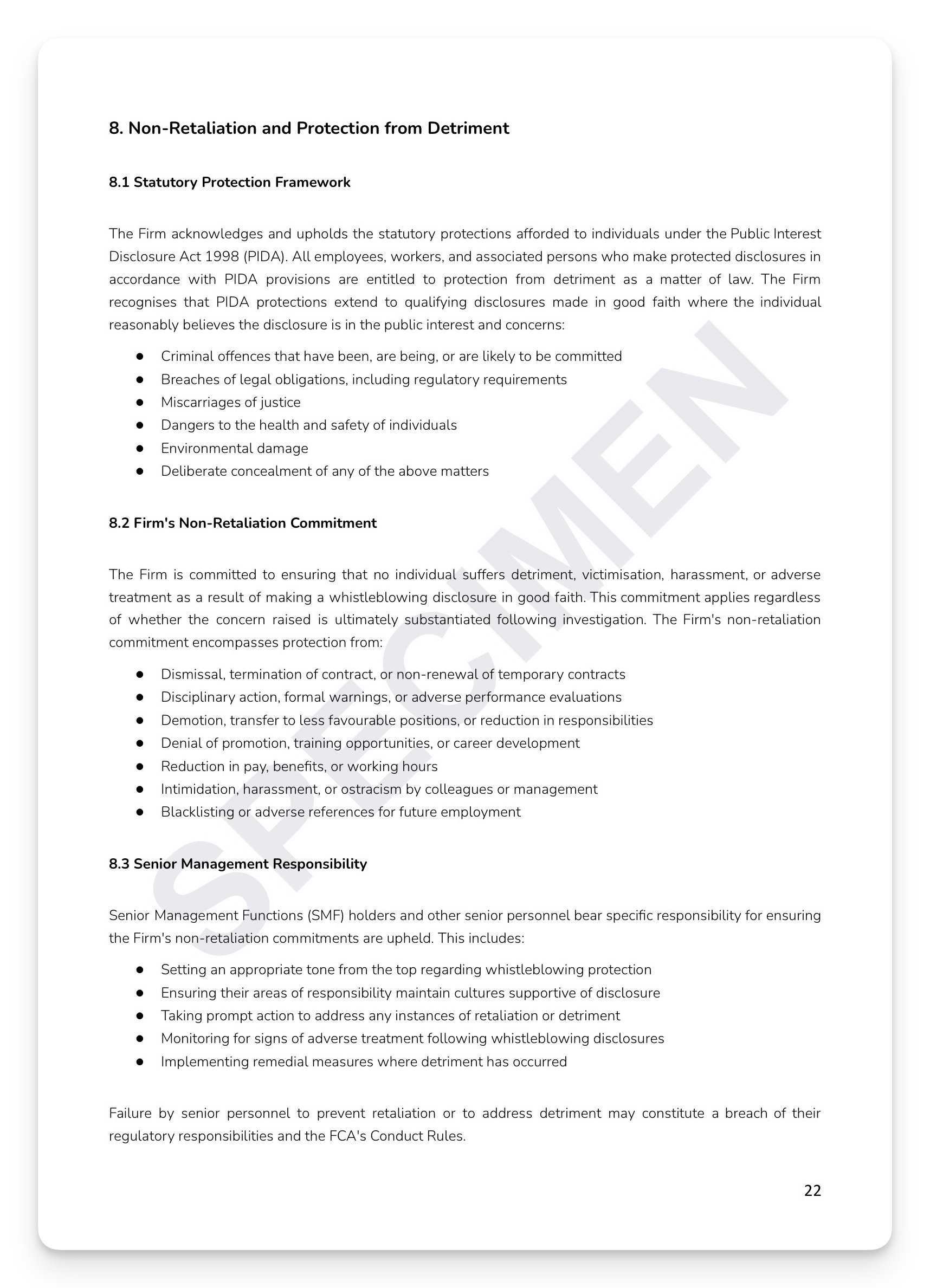
Every material change to your business carries regulatory risk. Most firms manage the change. Few manage the risk. Under SYSC 4.1.1R, every FCA-regulated firm must have robust governance arrangements with clear lines of responsibility for managing the risks it faces. Change — new systems, restructured teams, product modifications, regulatory-driven process updates, and outsourcing arrangements — is one of the most consistent sources of operational and compliance risk in regulated firms. Not because change is inherently dangerous, but because unstructured change bypasses controls, creates undocumented exposure, and gives the FCA evidence that governance is inadequate. Change without governance isn't agility — it's exposure.
What's included:
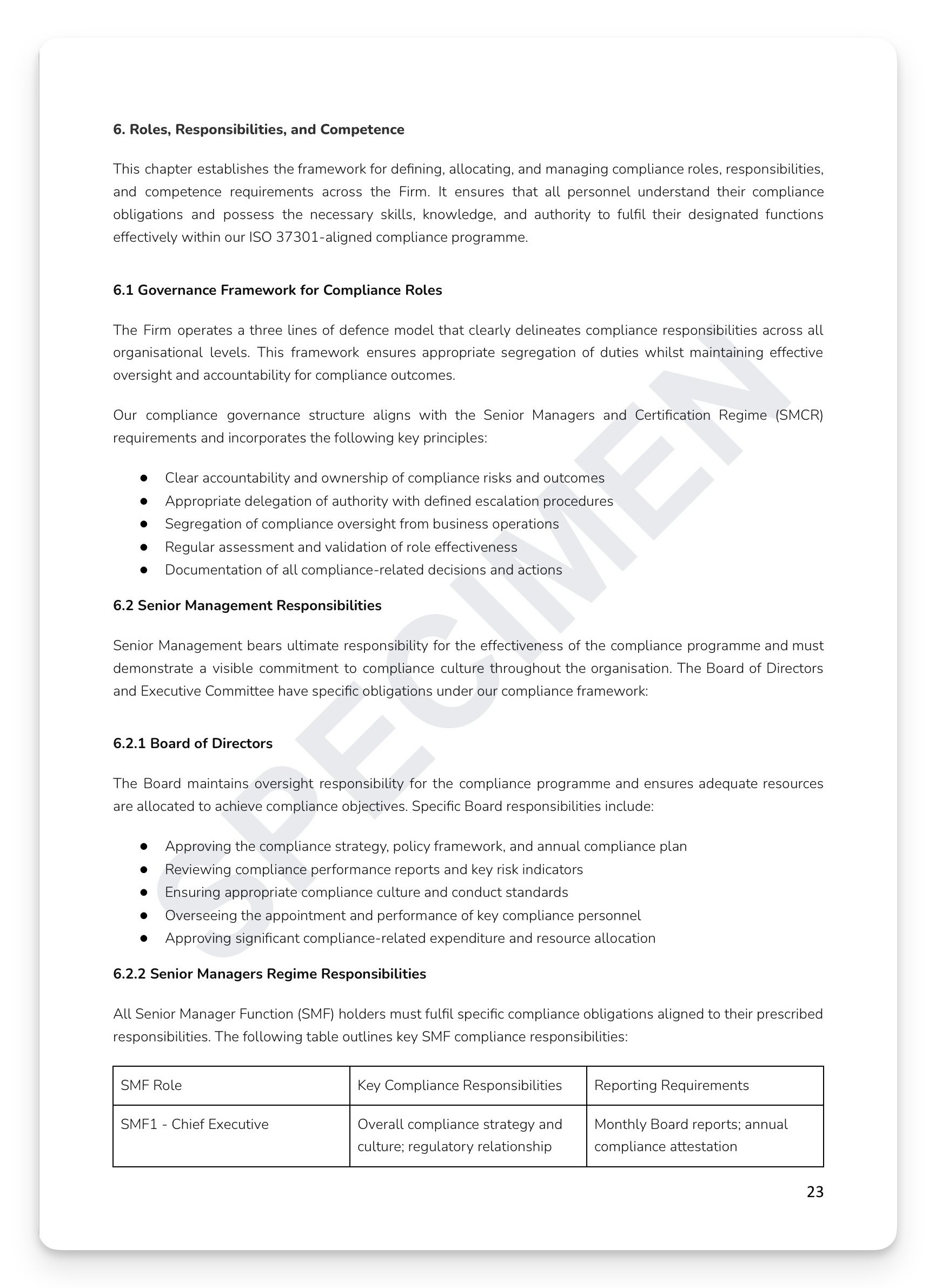
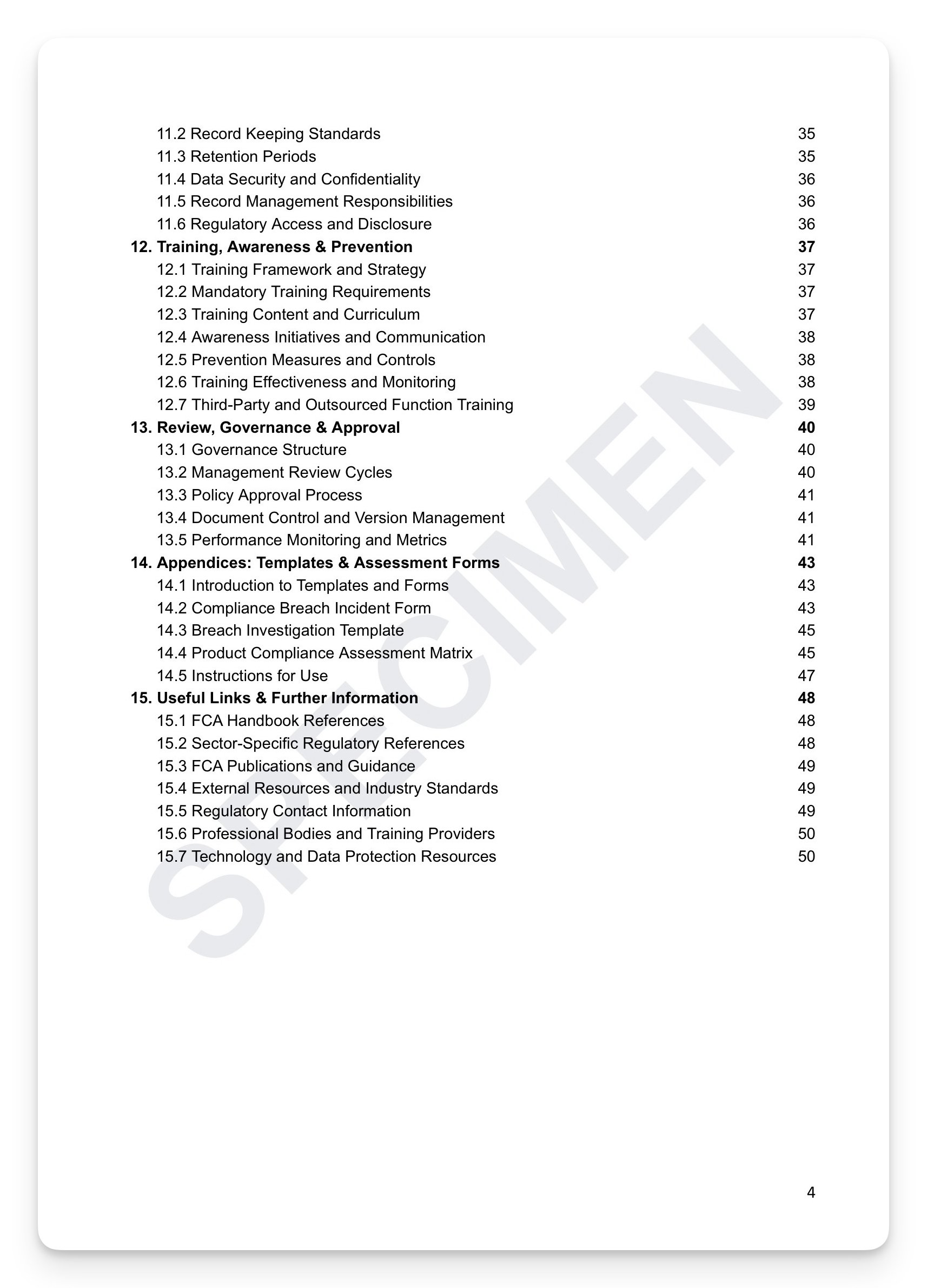
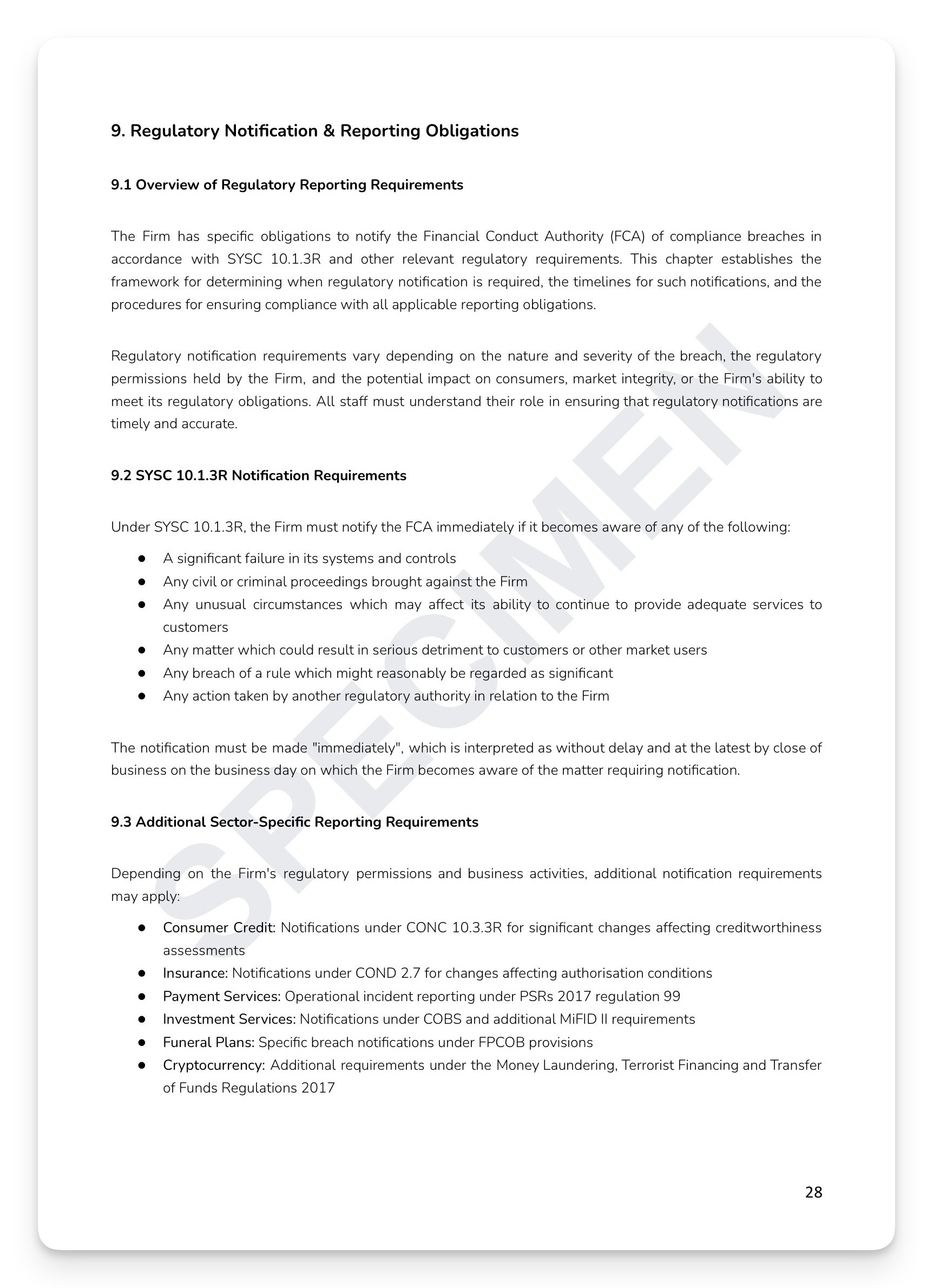
Full regulatory mapping: SYSC 3.1.1R/4.1.1R/5.1.1R/6.1.1R/7.1.2R/8.1.1R/9.1.1R/13/24.2.1R/25.1.1R, PRIN 3/6/8/11, Consumer Duty PRIN 2A, SUP 15.3.1R, COCON 2.1.1R, and TC Sourcebook
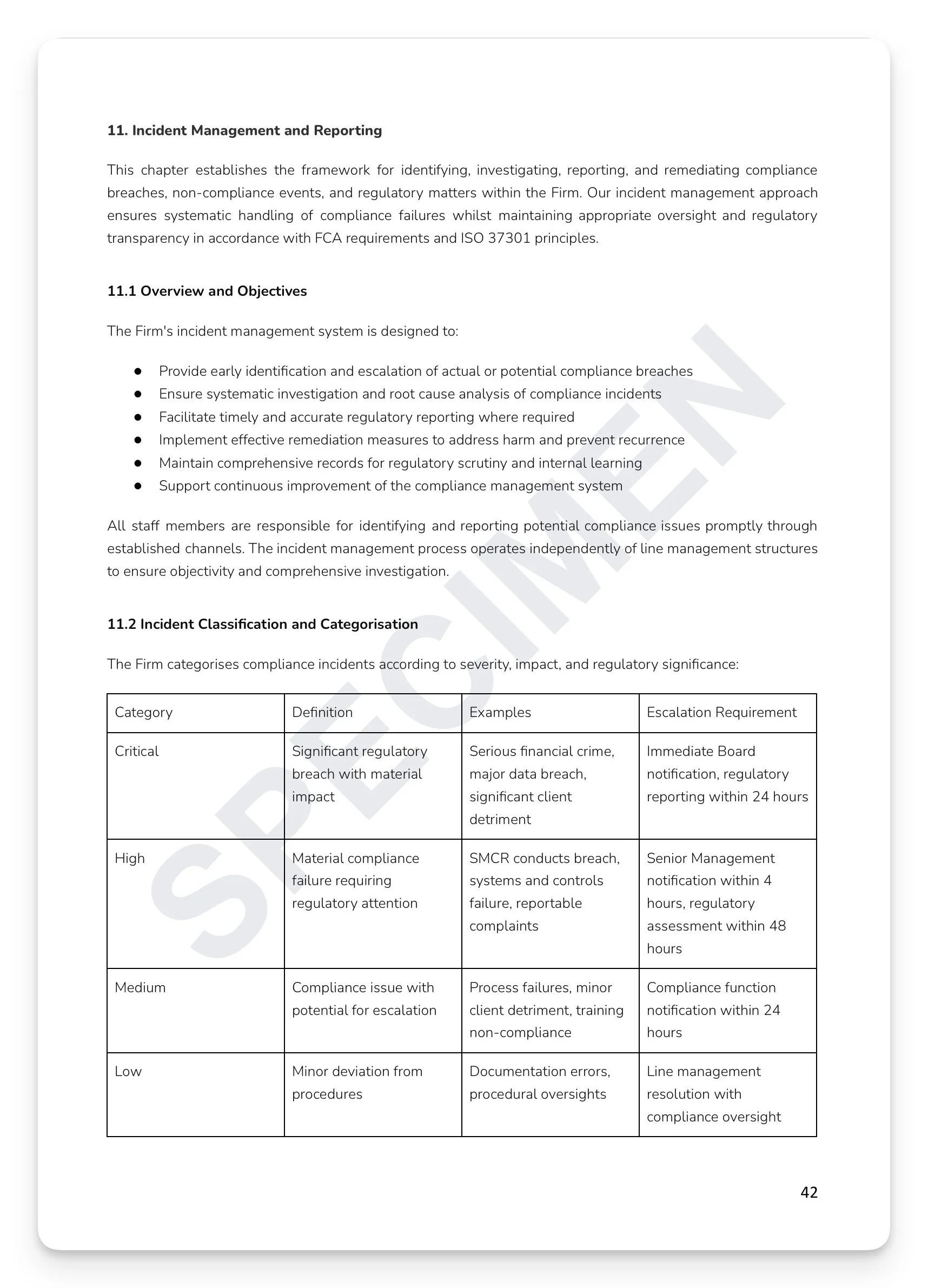
Three-tier change classification: Minor, Moderate, and Major — with approval authorities from Department Head through to the Board and defined materiality thresholds across financial, staff, customer, regulatory, and system dimensions
Four-phase implementation methodology: Planning, Development and Testing, Implementation, and Review — with go/no-go decision points and documented rollback and contingency procedures
Employment law compliance: Employment Rights Act 1996, TULRCA 1992 consultation requirements (30 days for 20–99 redundancies, 45 days for 100+), Equality Act 2010 selection criteria, and TUPE 2006
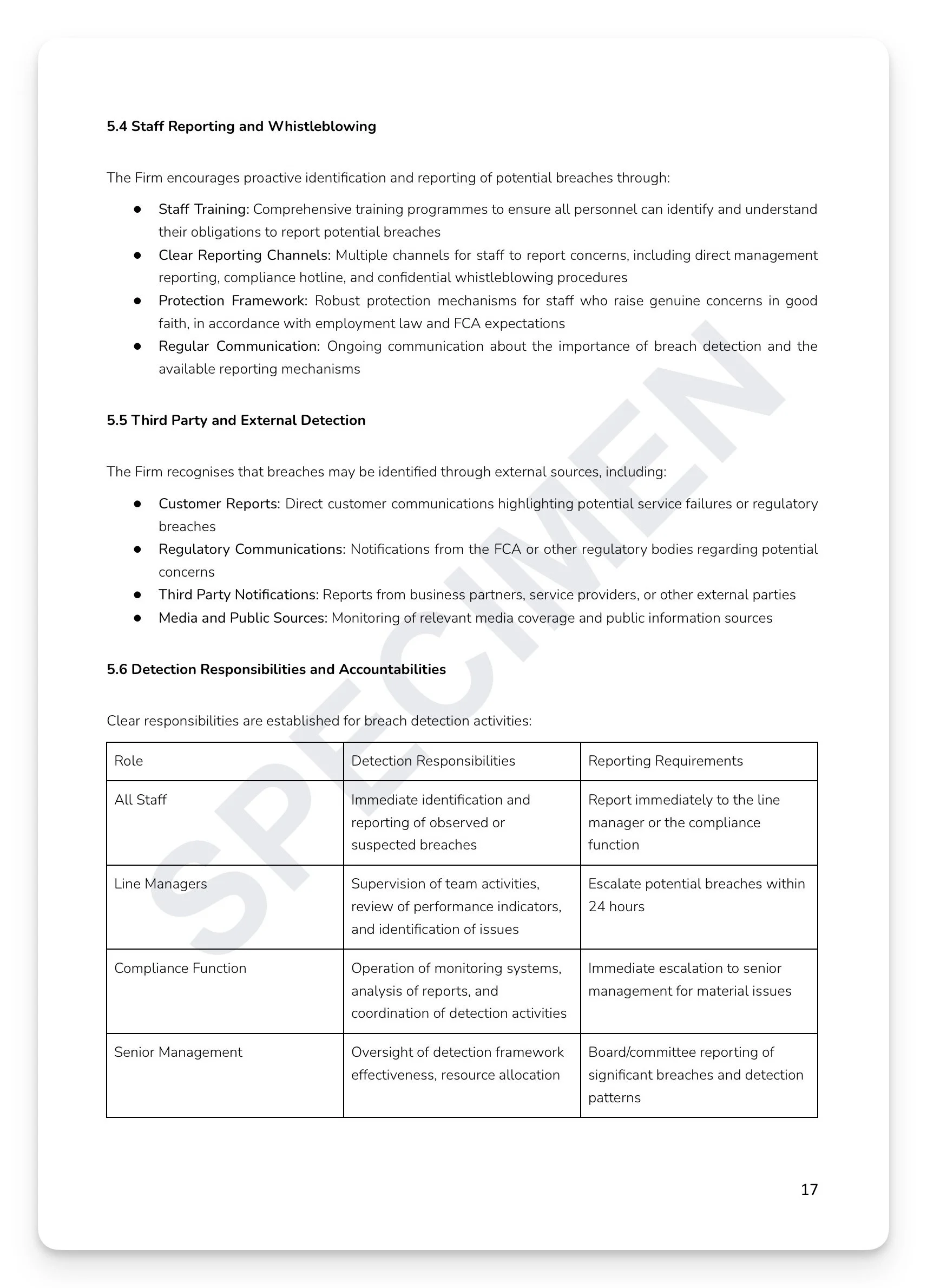
SMF change notification requirements: 7-business-day FCA notification, Form A applications, and regulatory reference obligations
Eight change risk categories with likelihood/impact matrix and risk treatment framework: avoidance, reduction, transfer, and acceptance
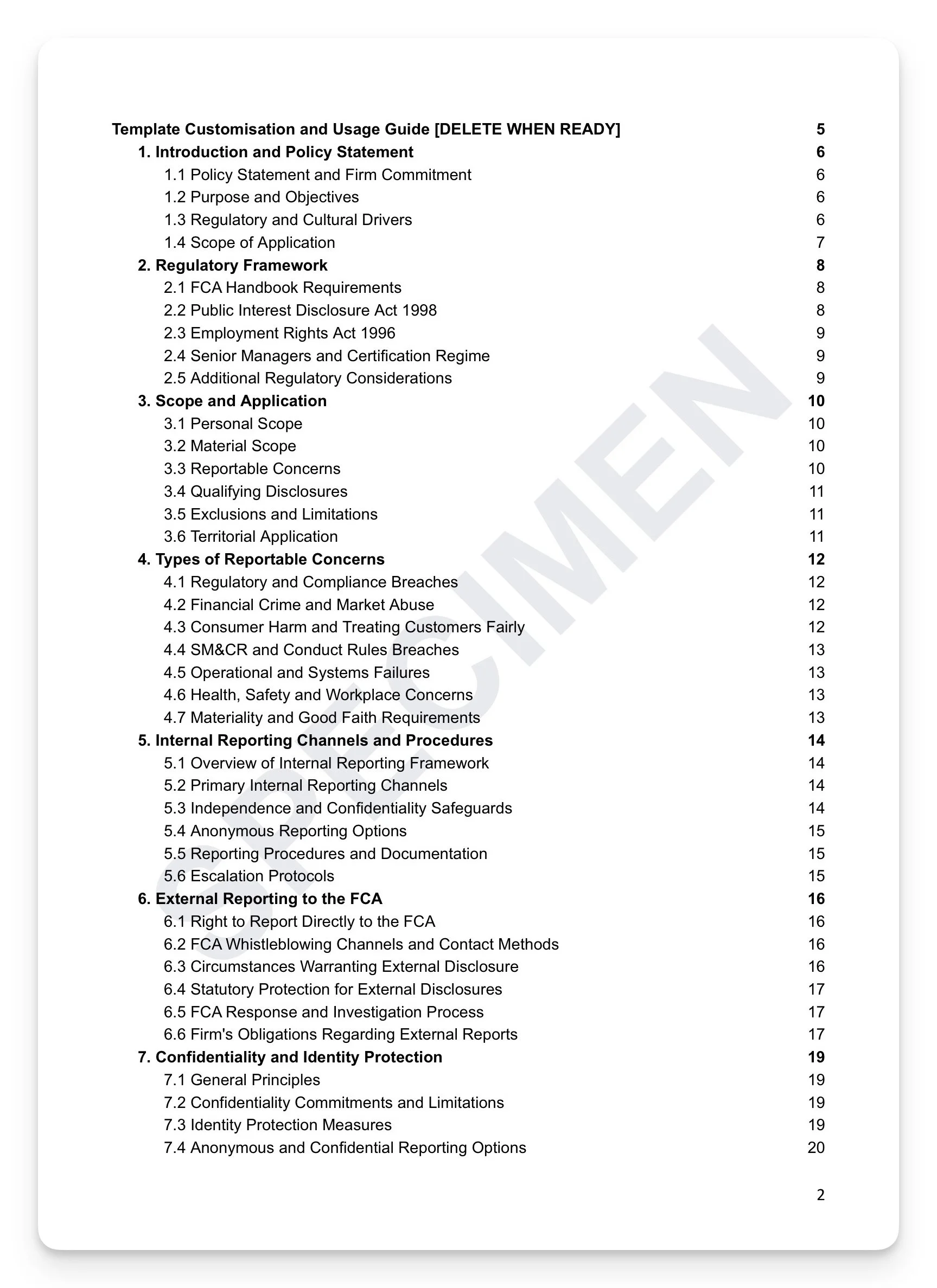
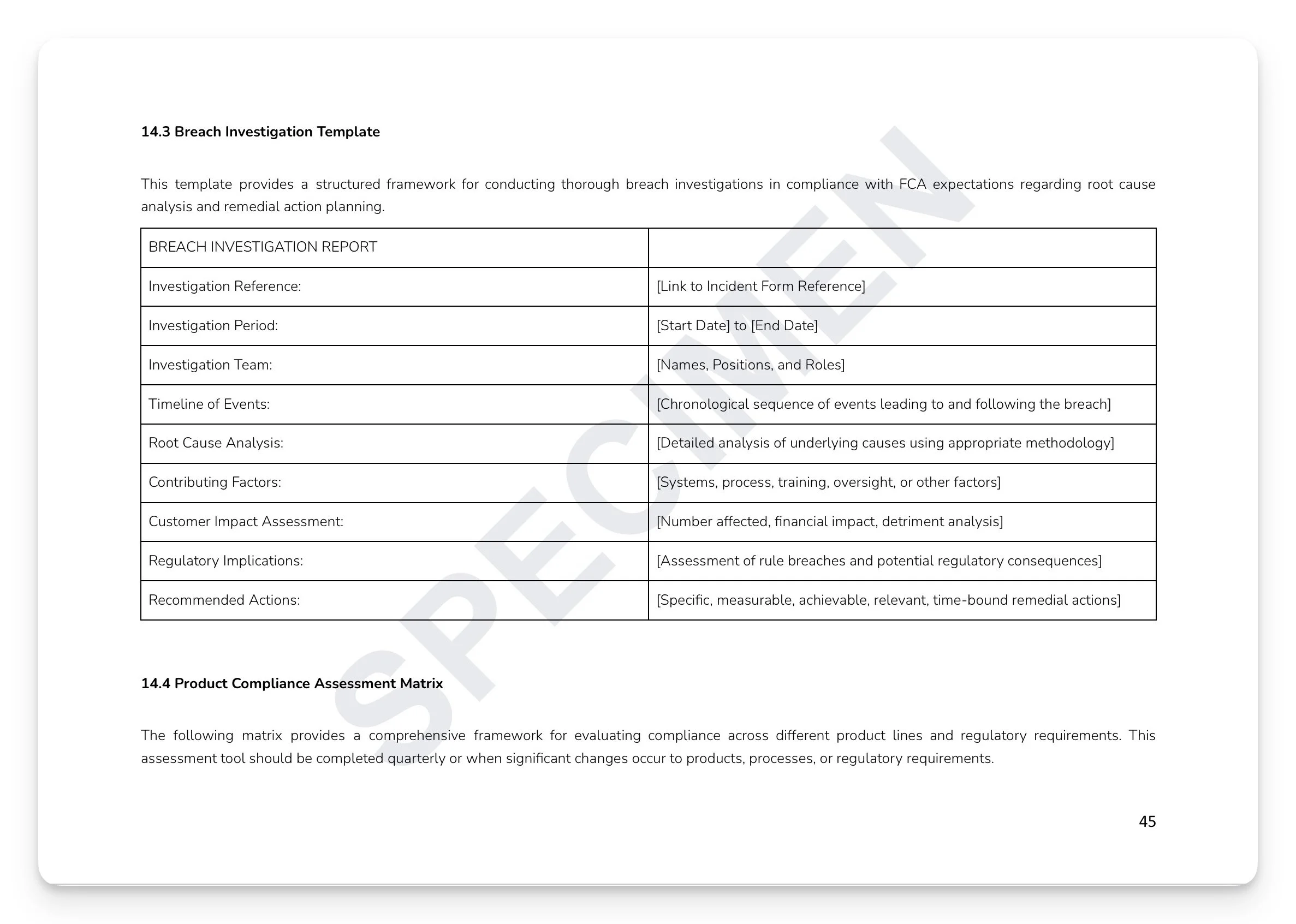
Ready-to-use appendices: Change Impact Assessment Form, Regulatory Change Assessment Checklist (12-point), Risk Assessment Matrix, Change Implementation Tracker, Change Closure Certificate, and Product Change Assessment Tool across 10 regulatory dimensions
+ much more
Who is this for?
Compliance Officers, Chief Risk Officers, COOs, HR Directors, and SMF holders at FCA-regulated firms who need a complete, board-approved Change Management Policy that ensures every material organisational change is governed, documented, risk-assessed, and implemented in a way that satisfies regulatory expectations.
How it works
Step 1 — Read it. Every section exists for a reason, grounded in a specific regulatory obligation.
Step 2 — Understand it. Map the content against your current practices. Identify where you're strong and where gaps exist.
Step 3 — Make it yours. Tailor the language to reflect how your organisation actually operates. A policy that sounds like your firm is a policy your people will follow.
Step 4 — Take ownership. Assign clear accountability — Board approval, named SMF holder, designated policy owner. A policy without an owner is a liability, not an asset.
Step 5 — Operationalise it. Embed the policy into your governance calendar, training programme, and annual review cycle. This is where compliance becomes culture.
Or, get this free with RegTechPRO
Access this alongside the full compliance policy library — SM&CR, COBS, AML, Consumer Duty, GDPR, and more — for a fraction of the cost of consultancy.
View RegTechPRO pricing and packages →
Every material change to your business carries regulatory risk. Most firms manage the change. Few manage the risk. Under SYSC 4.1.1R, every FCA-regulated firm must have robust governance arrangements with clear lines of responsibility for managing the risks it faces. Change — new systems, restructured teams, product modifications, regulatory-driven process updates, and outsourcing arrangements — is one of the most consistent sources of operational and compliance risk in regulated firms. Not because change is inherently dangerous, but because unstructured change bypasses controls, creates undocumented exposure, and gives the FCA evidence that governance is inadequate. Change without governance isn't agility — it's exposure.
What's included:
Full regulatory mapping: SYSC 3.1.1R/4.1.1R/5.1.1R/6.1.1R/7.1.2R/8.1.1R/9.1.1R/13/24.2.1R/25.1.1R, PRIN 3/6/8/11, Consumer Duty PRIN 2A, SUP 15.3.1R, COCON 2.1.1R, and TC Sourcebook
Three-tier change classification: Minor, Moderate, and Major — with approval authorities from Department Head through to the Board and defined materiality thresholds across financial, staff, customer, regulatory, and system dimensions
Four-phase implementation methodology: Planning, Development and Testing, Implementation, and Review — with go/no-go decision points and documented rollback and contingency procedures
Employment law compliance: Employment Rights Act 1996, TULRCA 1992 consultation requirements (30 days for 20–99 redundancies, 45 days for 100+), Equality Act 2010 selection criteria, and TUPE 2006
SMF change notification requirements: 7-business-day FCA notification, Form A applications, and regulatory reference obligations
Eight change risk categories with likelihood/impact matrix and risk treatment framework: avoidance, reduction, transfer, and acceptance
Ready-to-use appendices: Change Impact Assessment Form, Regulatory Change Assessment Checklist (12-point), Risk Assessment Matrix, Change Implementation Tracker, Change Closure Certificate, and Product Change Assessment Tool across 10 regulatory dimensions
+ much more
Who is this for?
Compliance Officers, Chief Risk Officers, COOs, HR Directors, and SMF holders at FCA-regulated firms who need a complete, board-approved Change Management Policy that ensures every material organisational change is governed, documented, risk-assessed, and implemented in a way that satisfies regulatory expectations.
How it works
Step 1 — Read it. Every section exists for a reason, grounded in a specific regulatory obligation.
Step 2 — Understand it. Map the content against your current practices. Identify where you're strong and where gaps exist.
Step 3 — Make it yours. Tailor the language to reflect how your organisation actually operates. A policy that sounds like your firm is a policy your people will follow.
Step 4 — Take ownership. Assign clear accountability — Board approval, named SMF holder, designated policy owner. A policy without an owner is a liability, not an asset.
Step 5 — Operationalise it. Embed the policy into your governance calendar, training programme, and annual review cycle. This is where compliance becomes culture.
Or, get this free with RegTechPRO
Access this alongside the full compliance policy library — SM&CR, COBS, AML, Consumer Duty, GDPR, and more — for a fraction of the cost of consultancy.
View RegTechPRO pricing and packages →


 Image 1 of 12
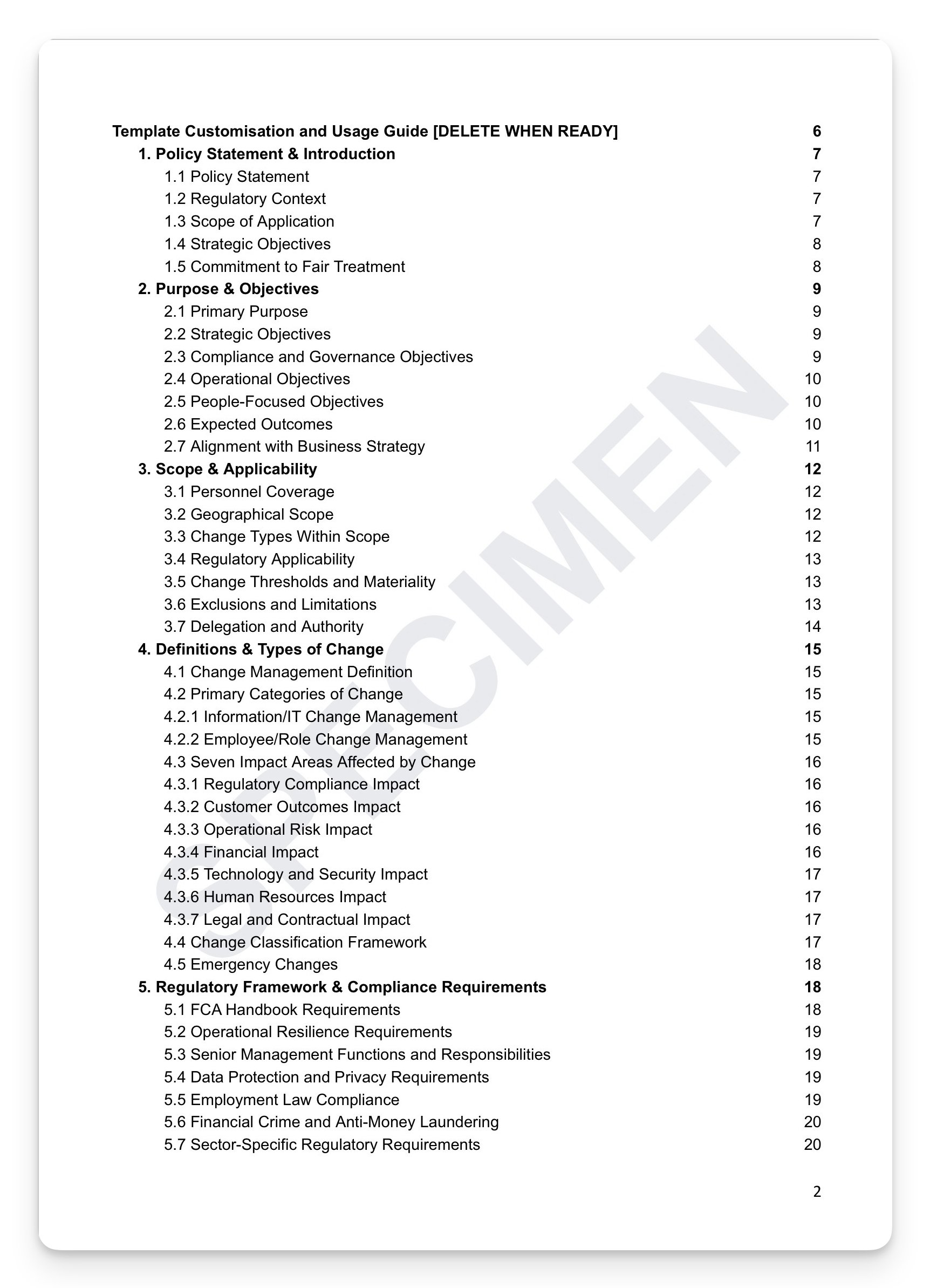 Image 2 of 12
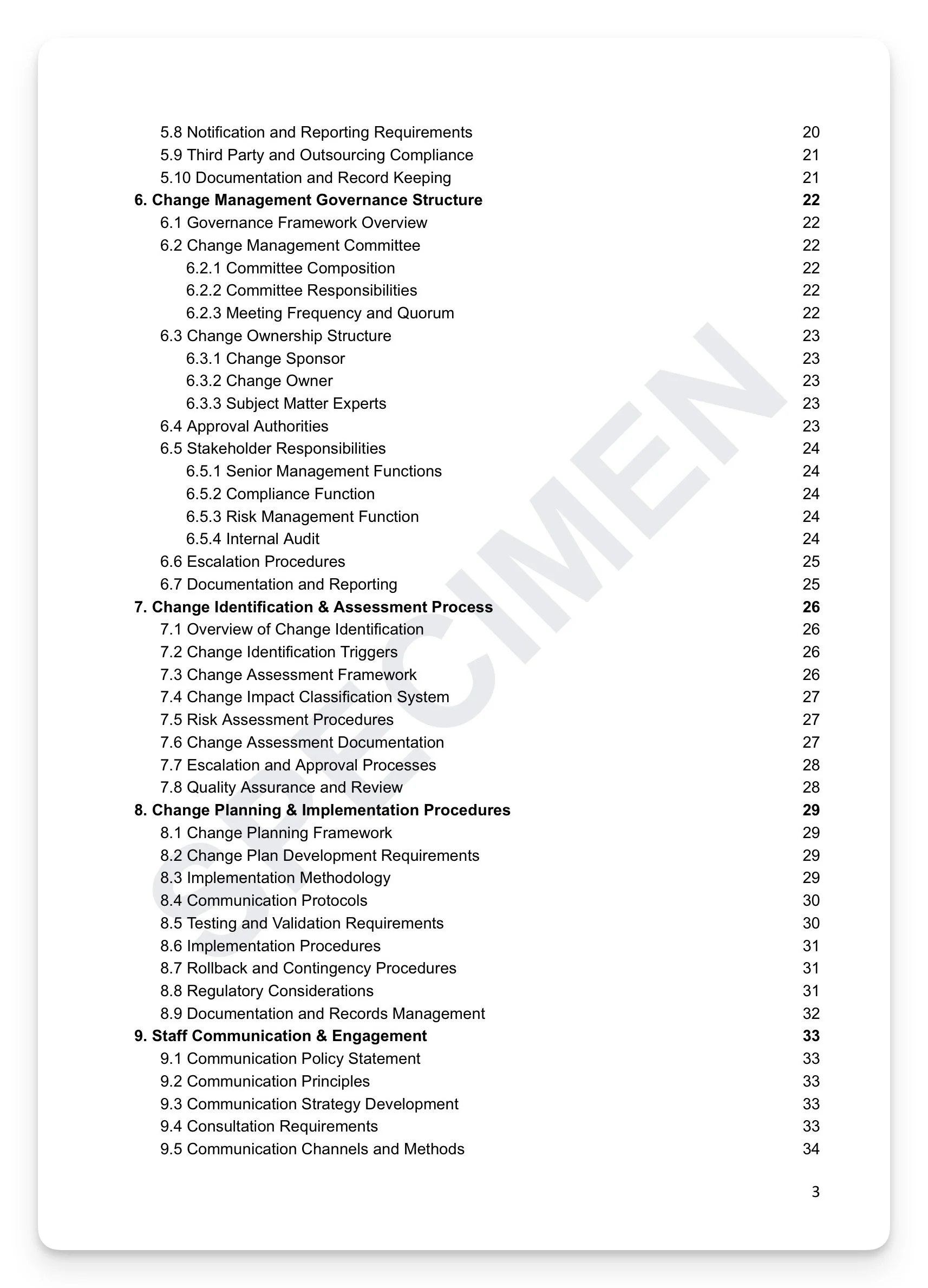 Image 3 of 12
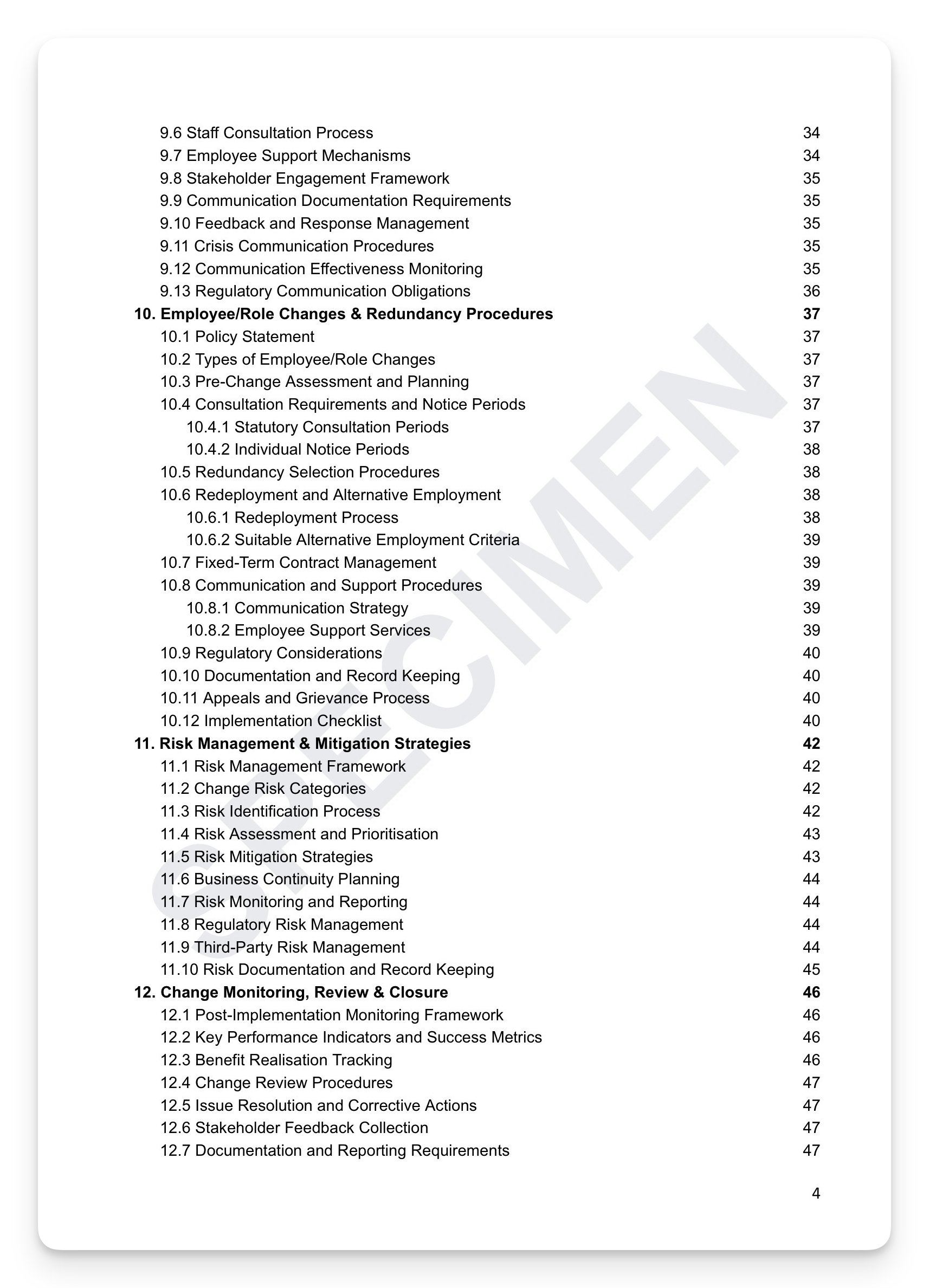 Image 4 of 12
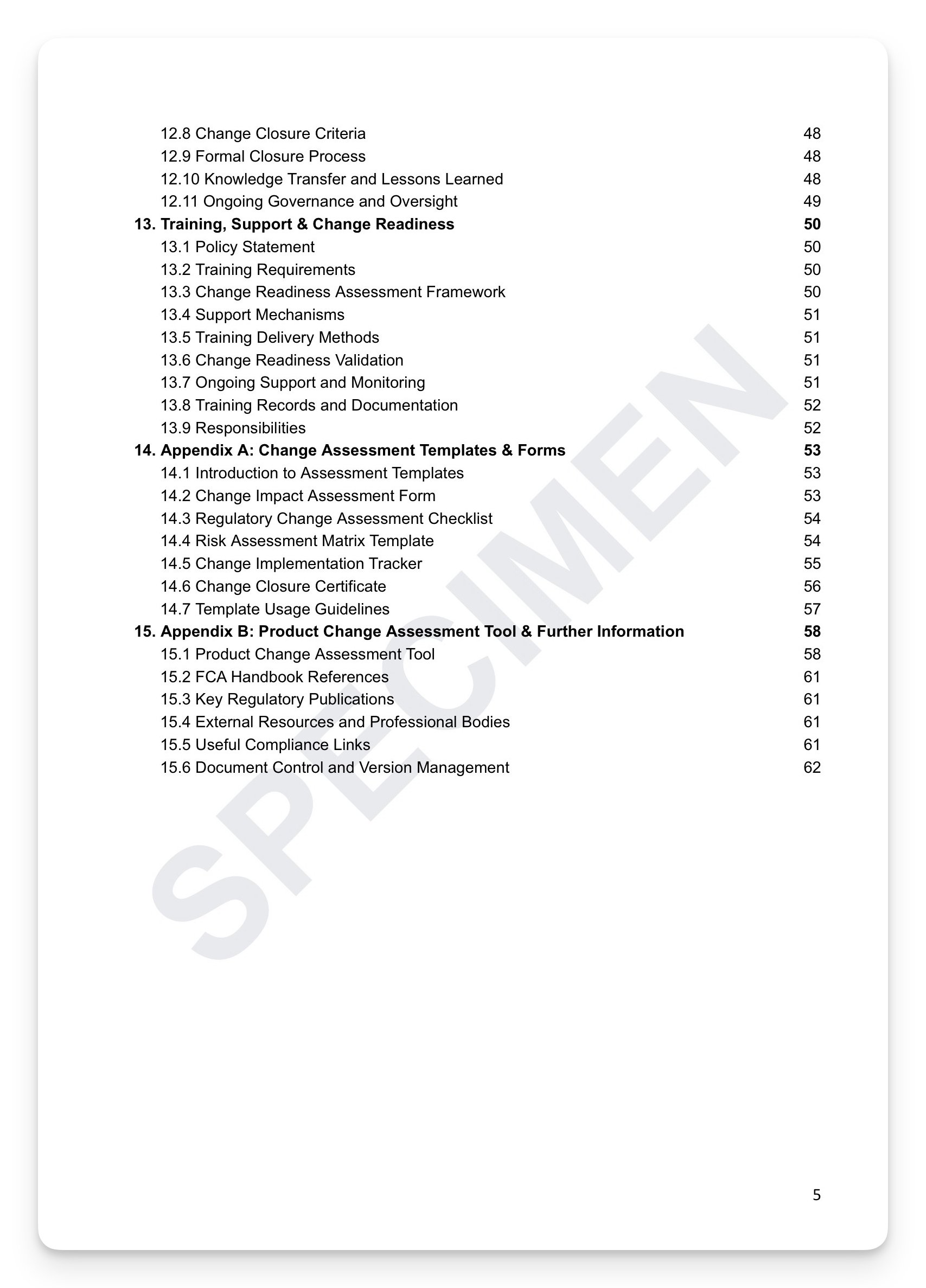 Image 5 of 12
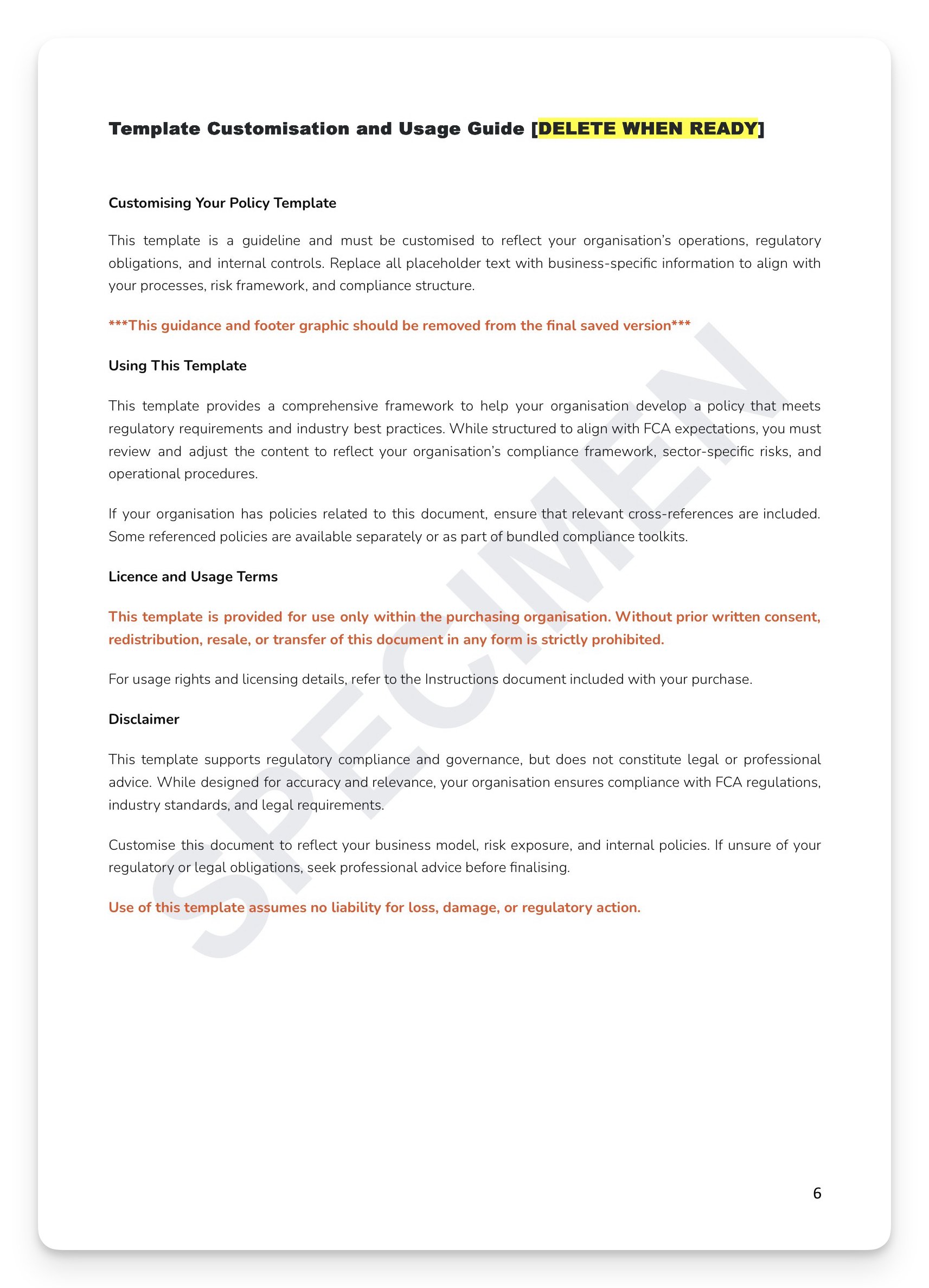 Image 6 of 12
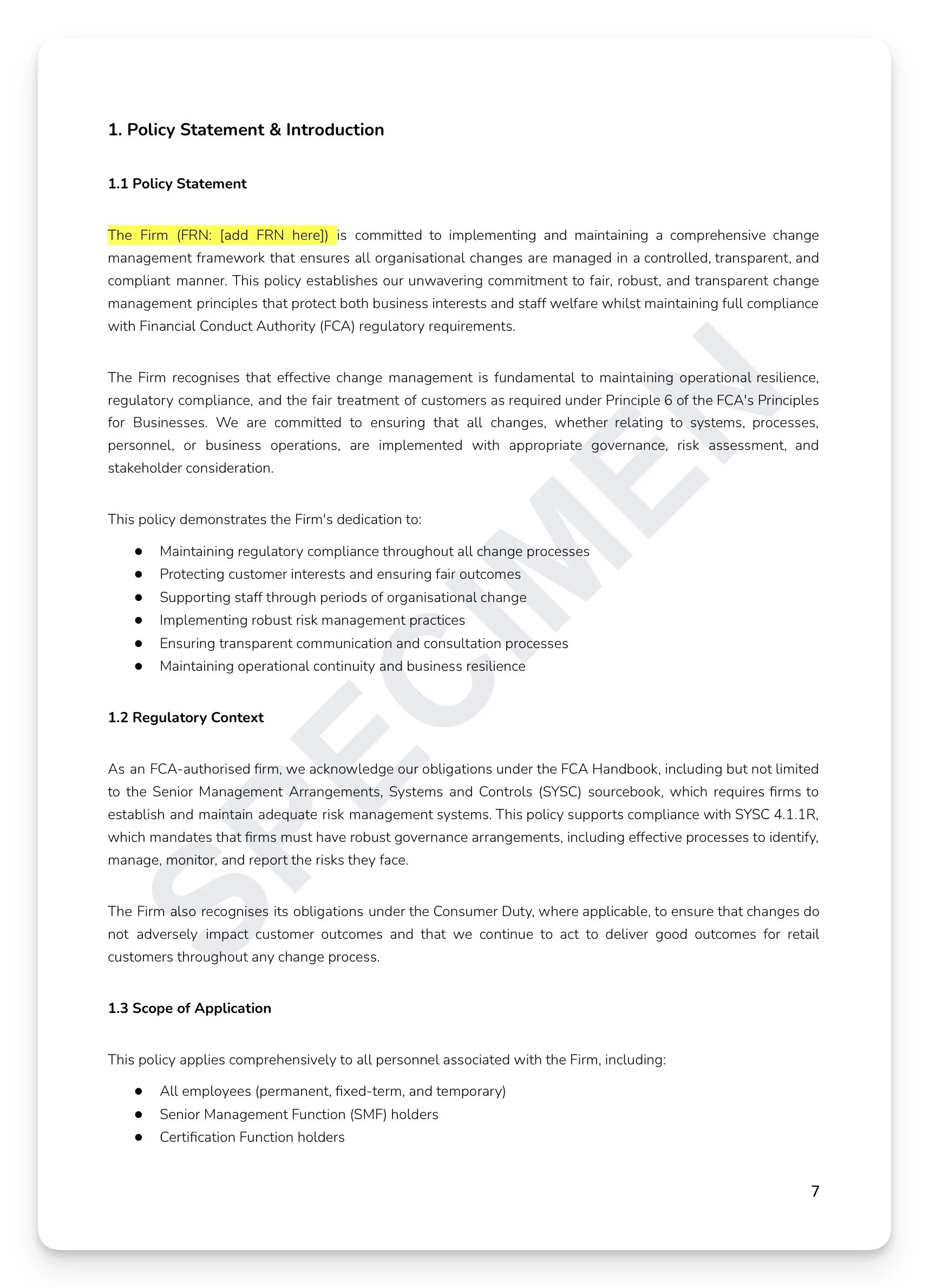 Image 7 of 12
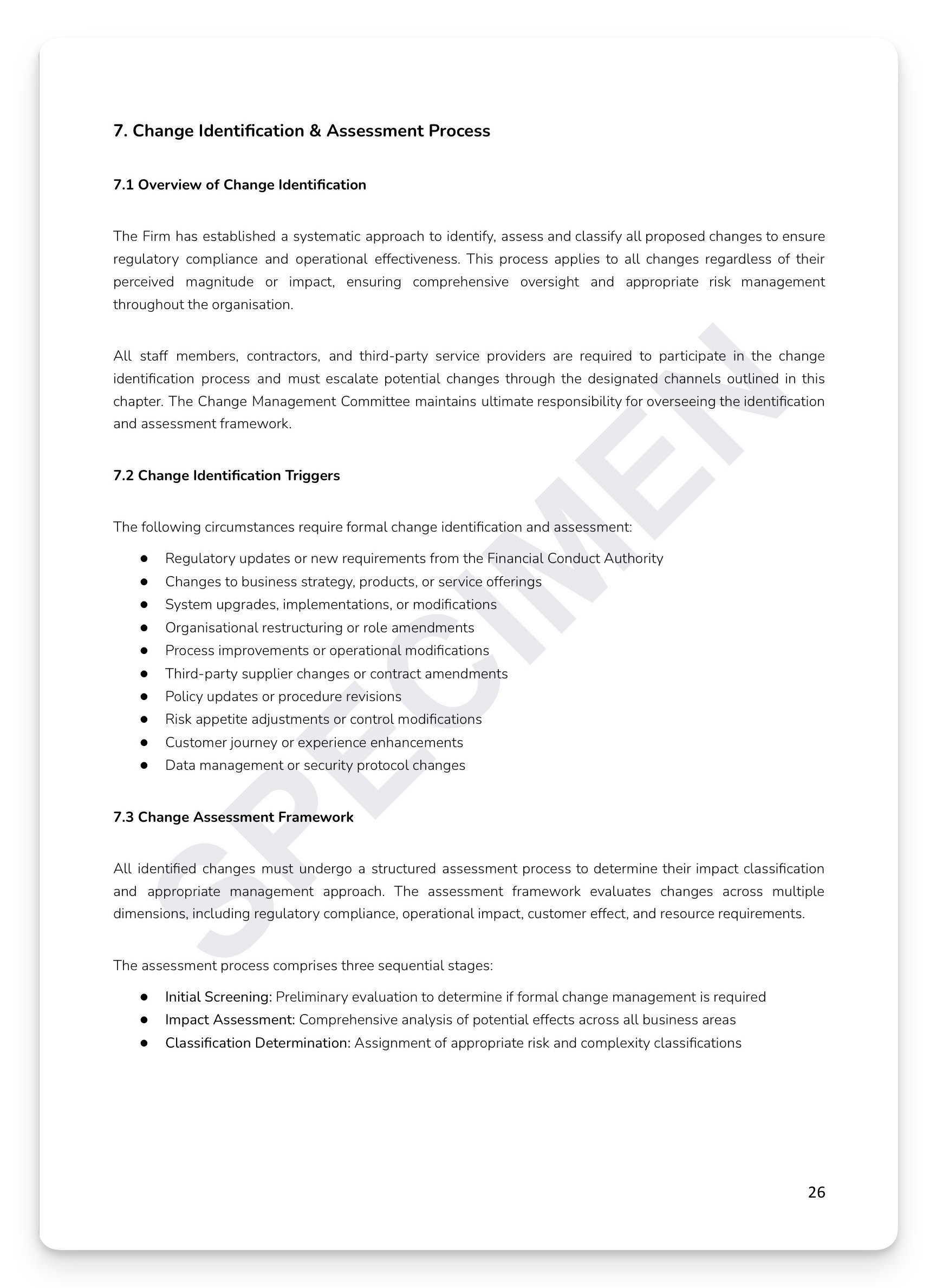 Image 8 of 12
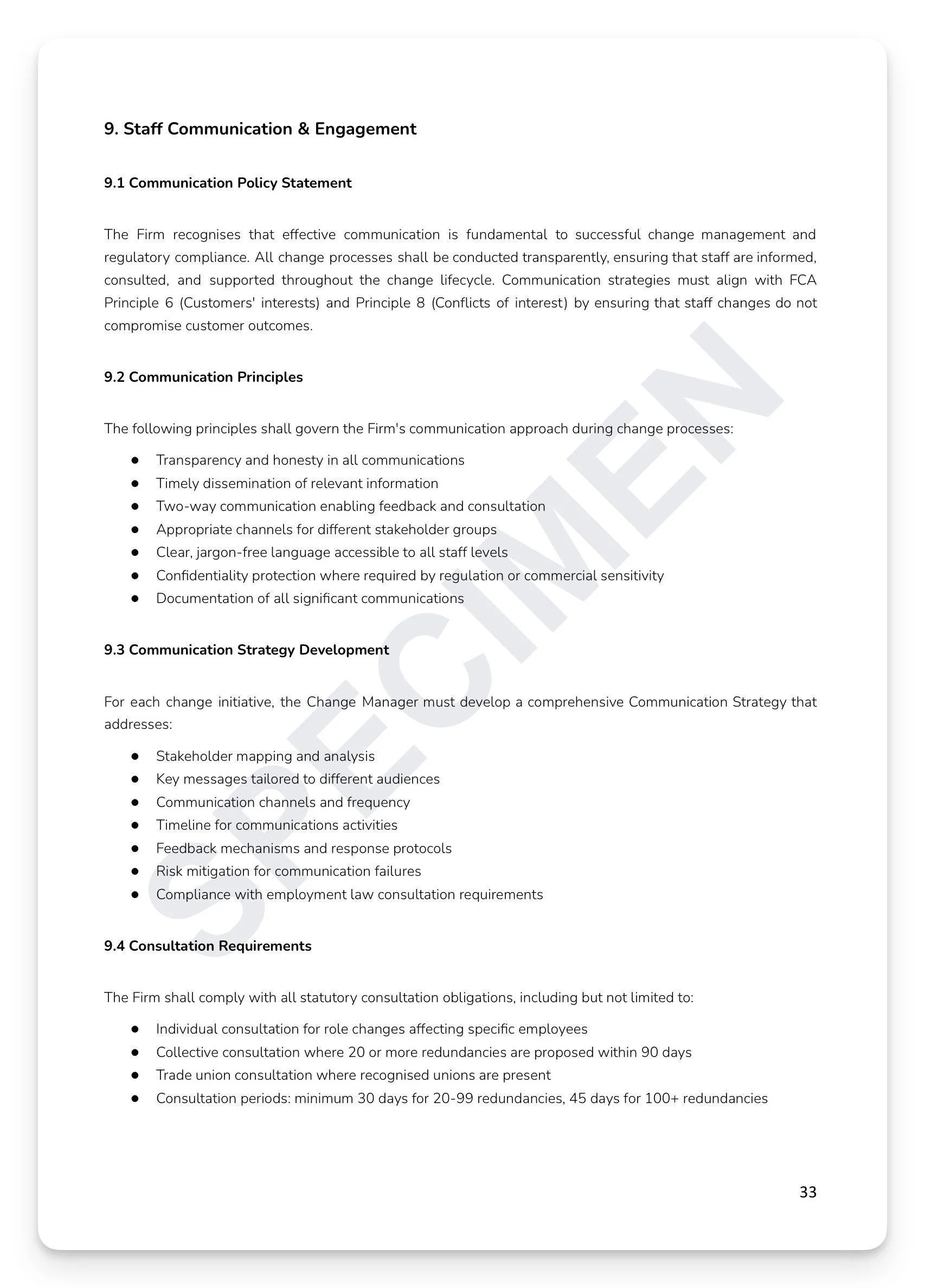 Image 9 of 12
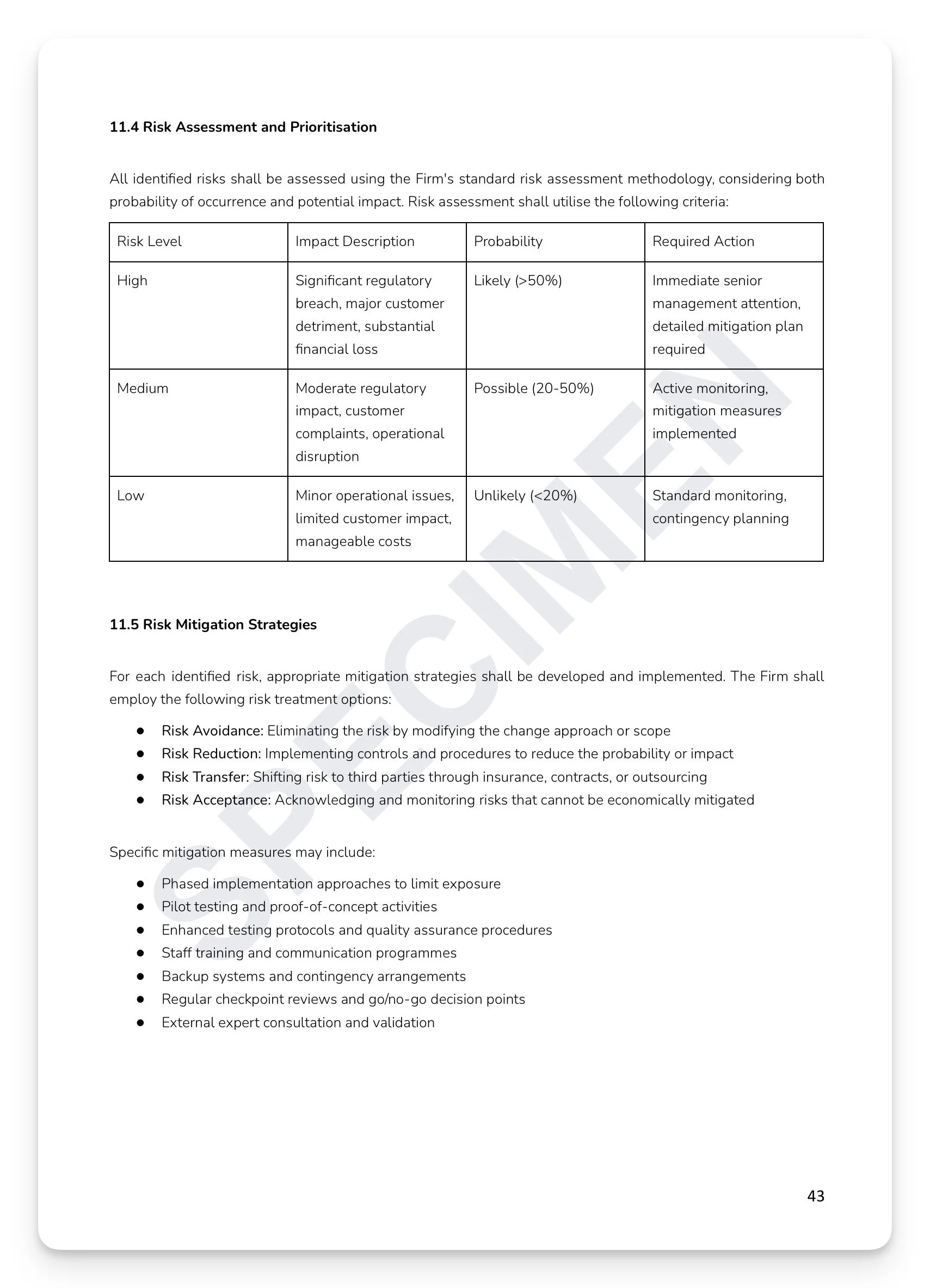 Image 10 of 12
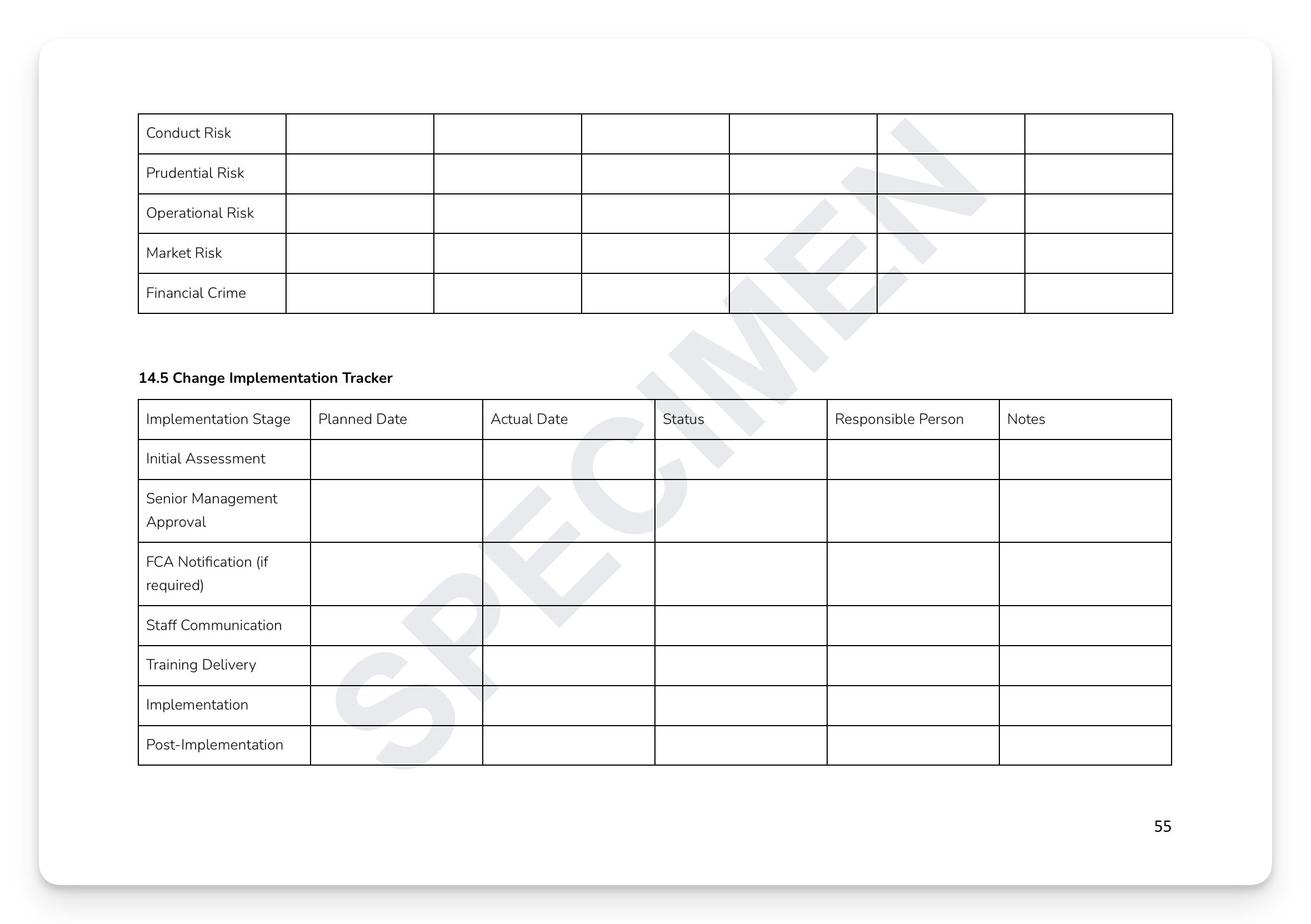 Image 11 of 12
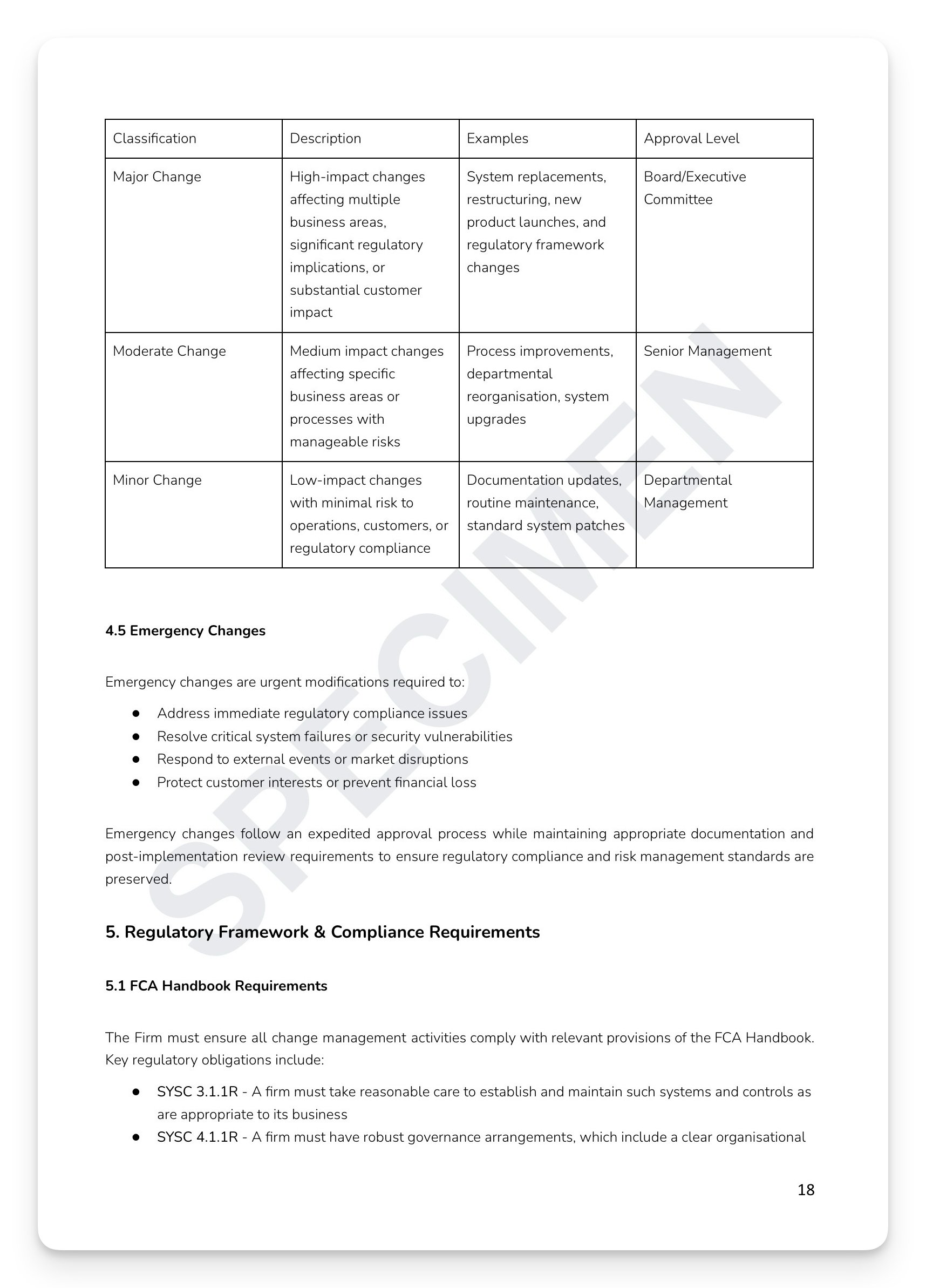 Image 12 of 12