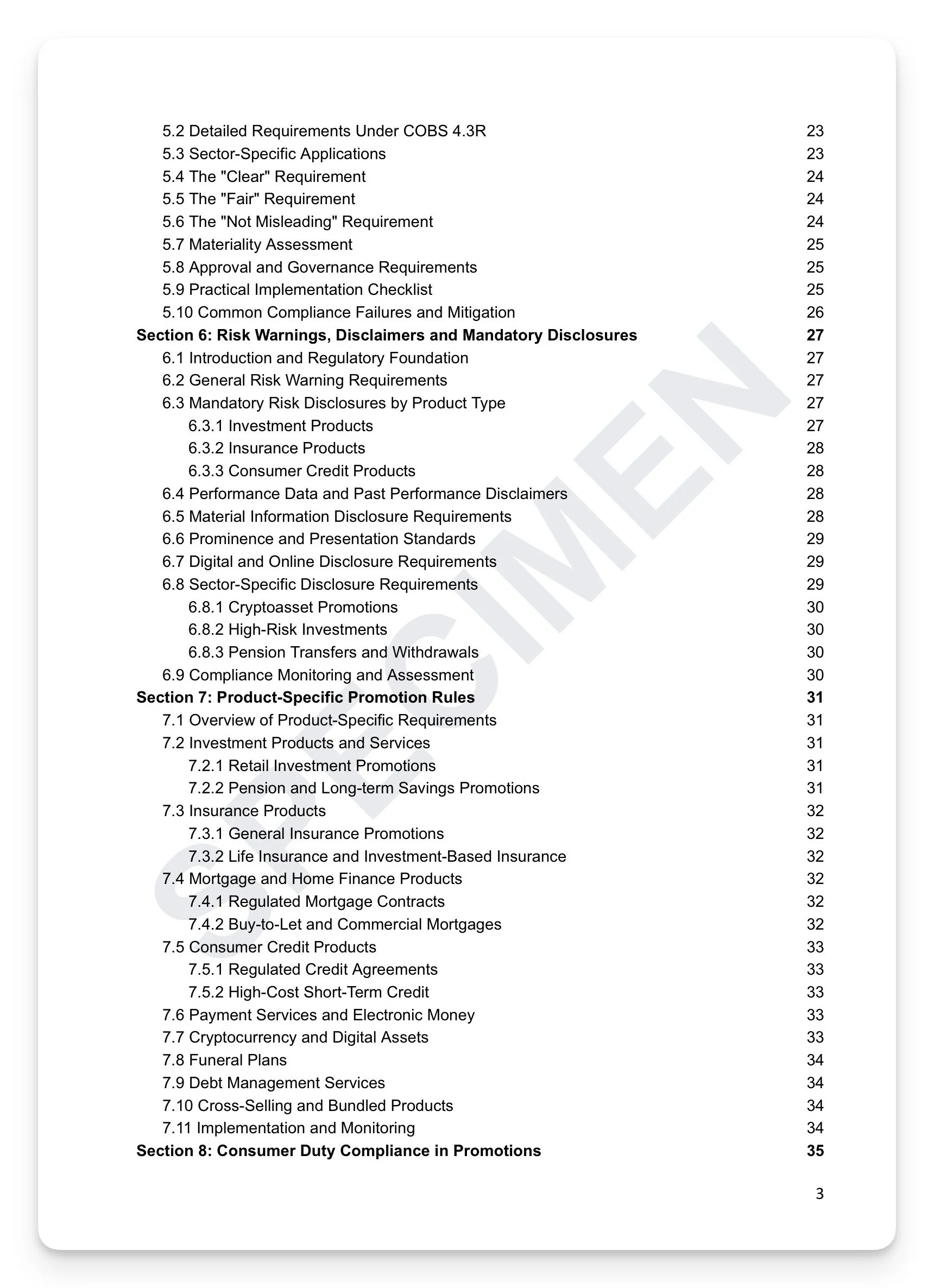
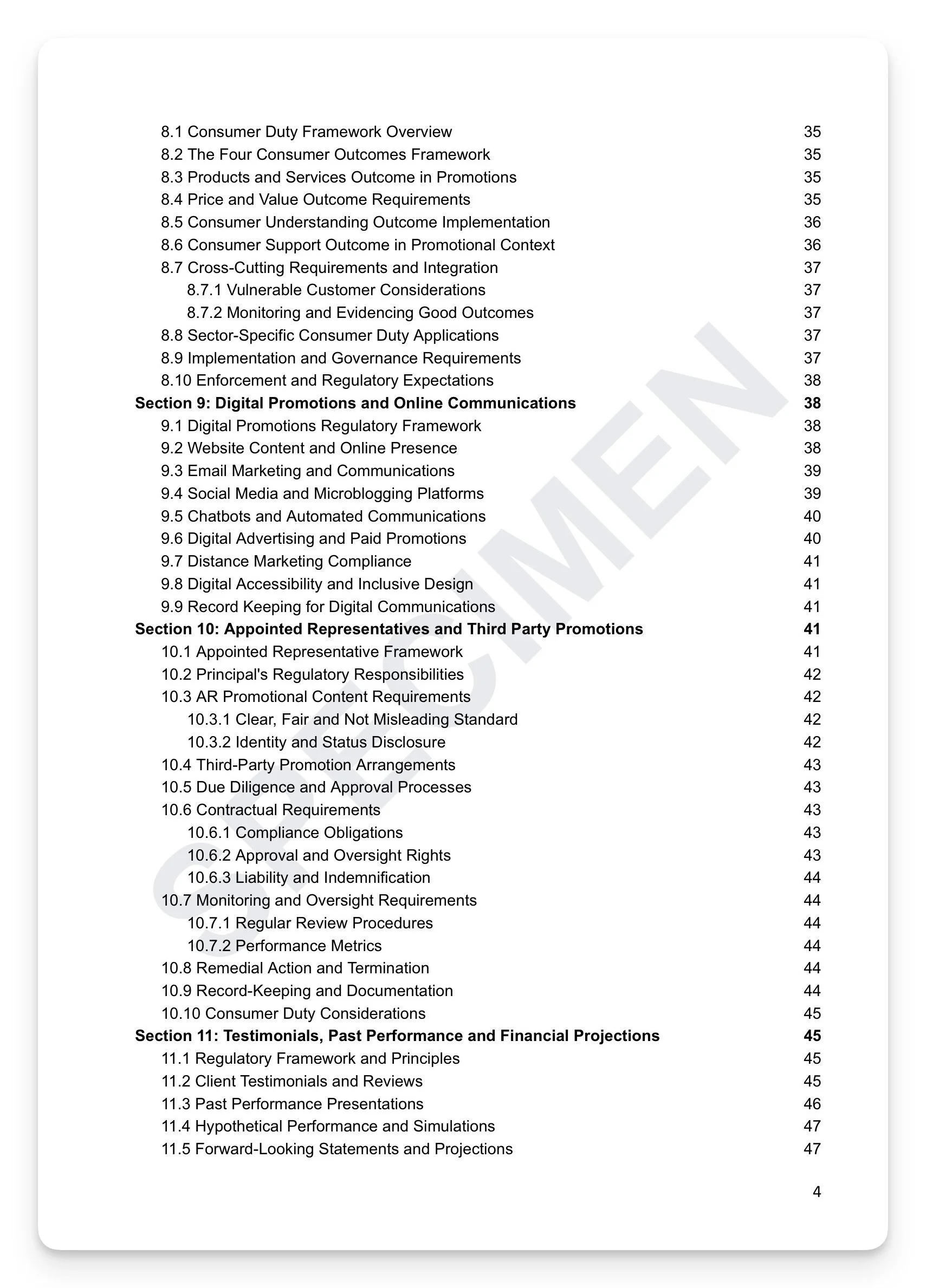
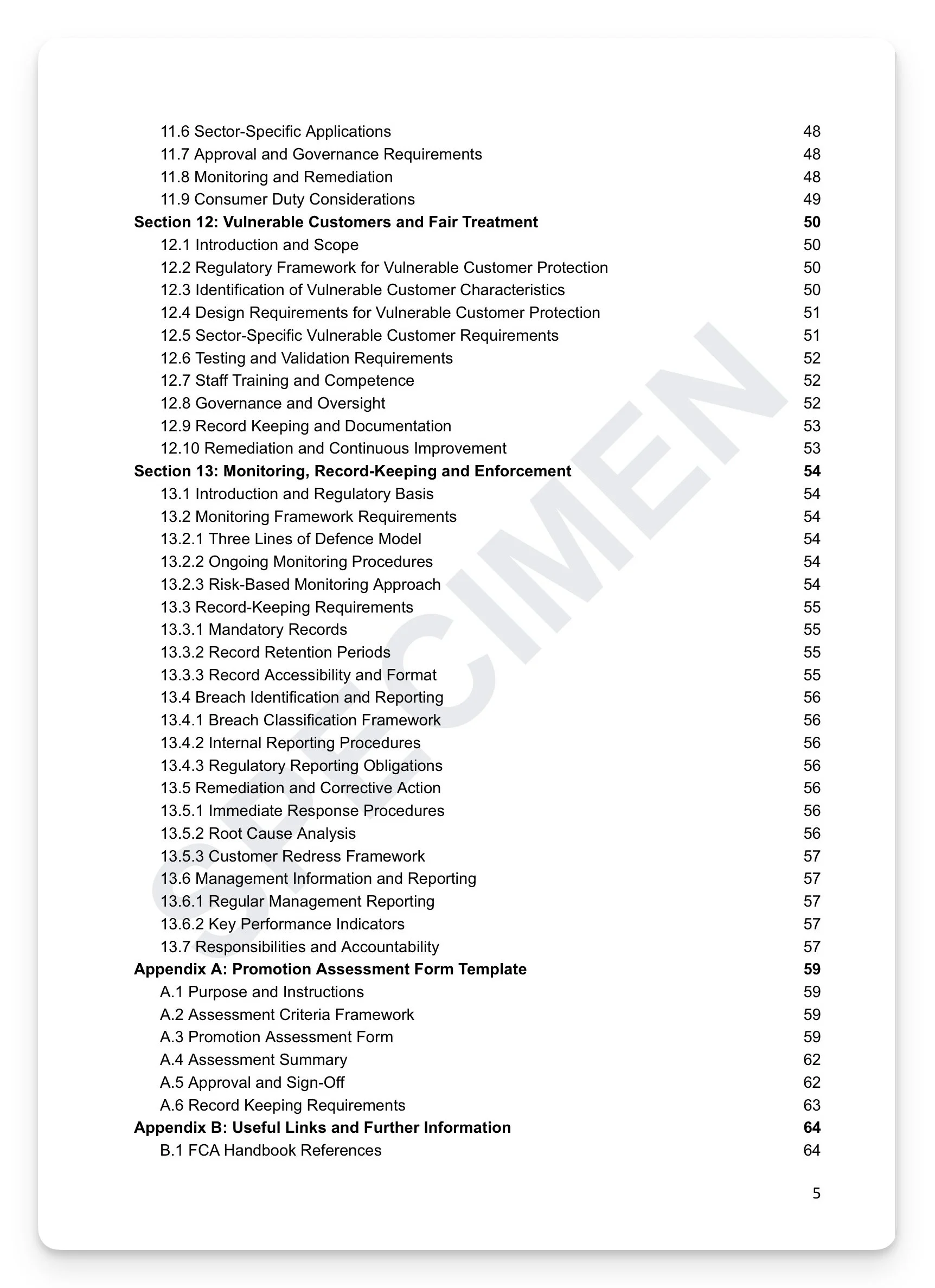
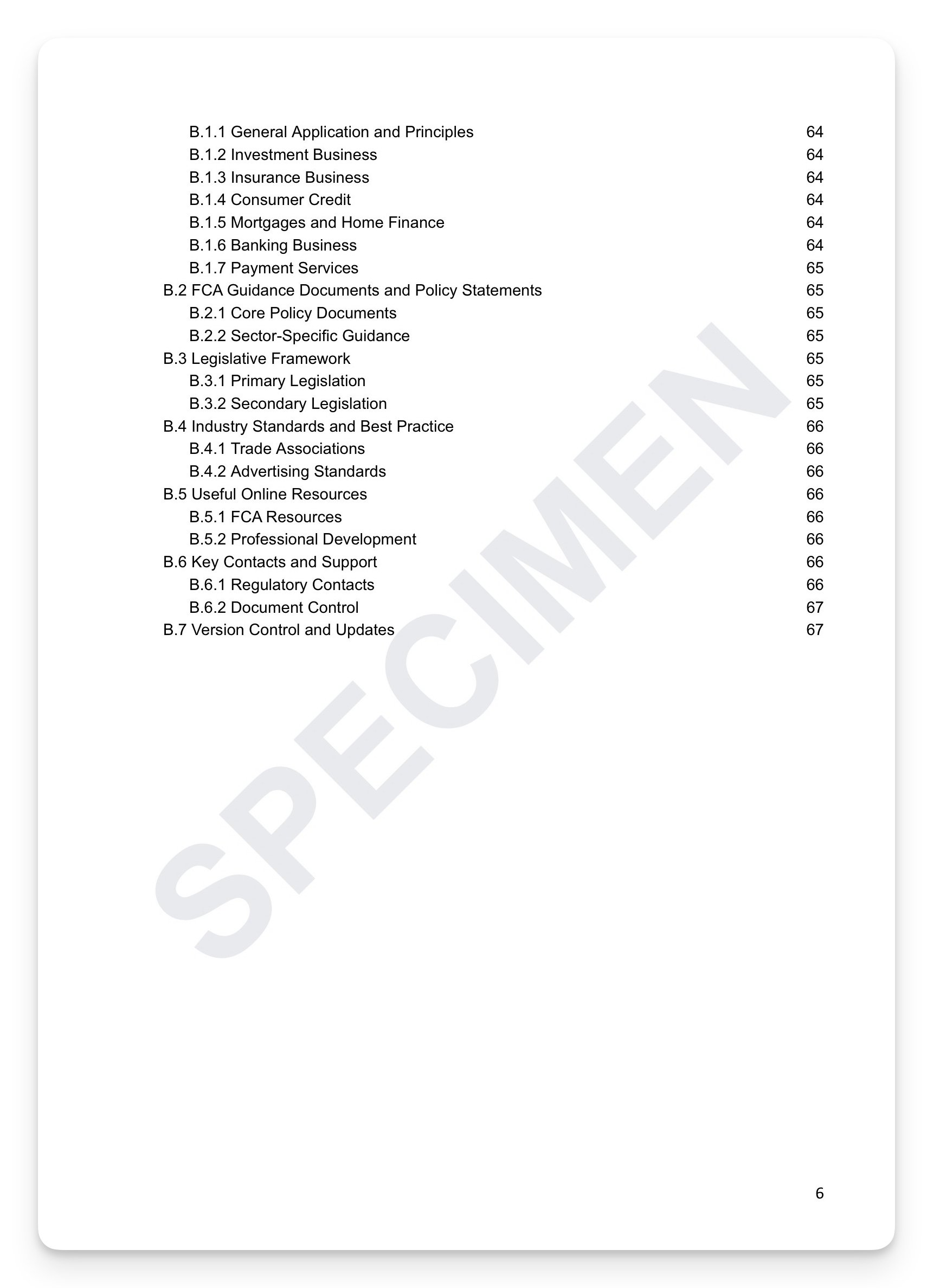
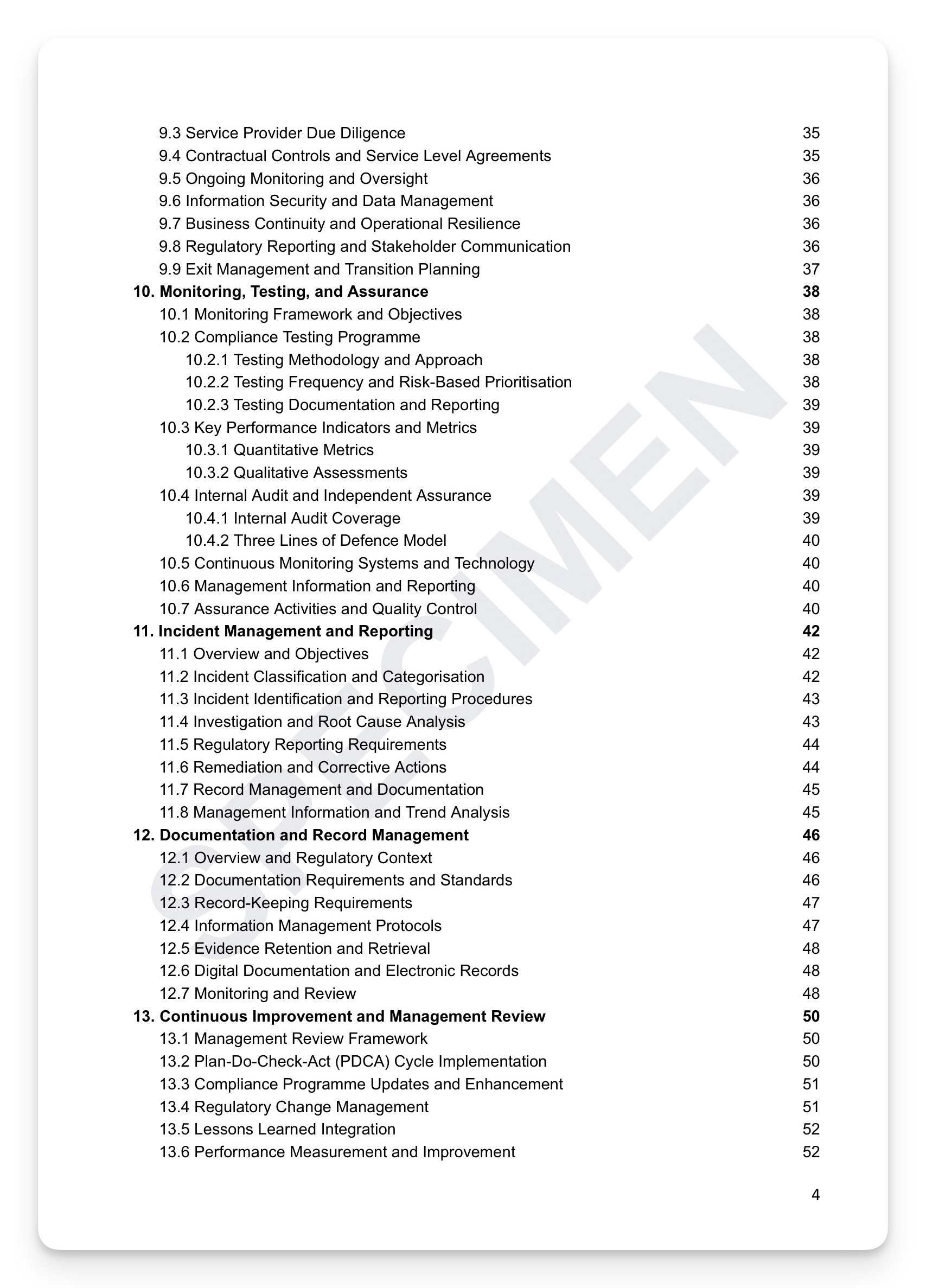
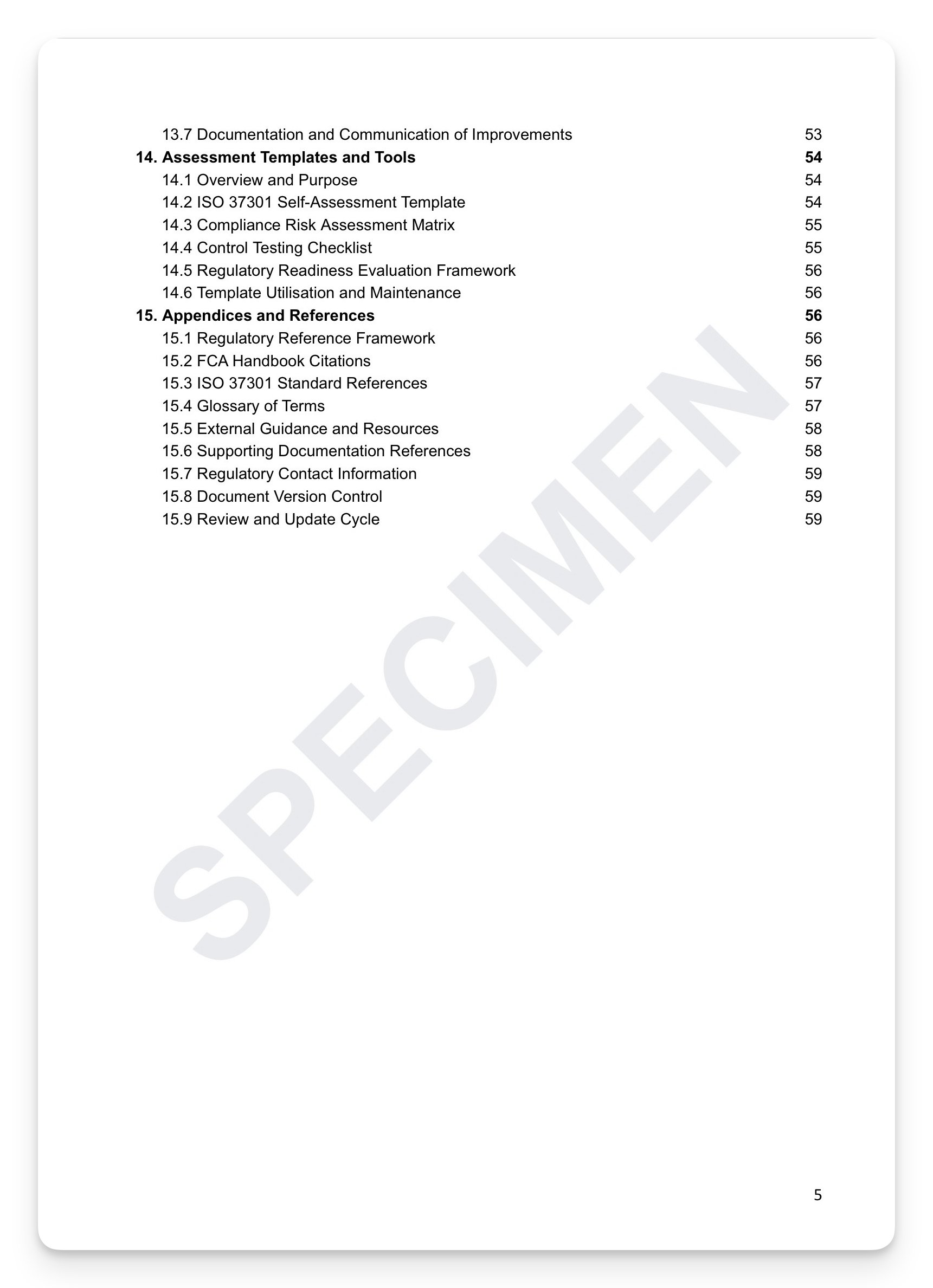
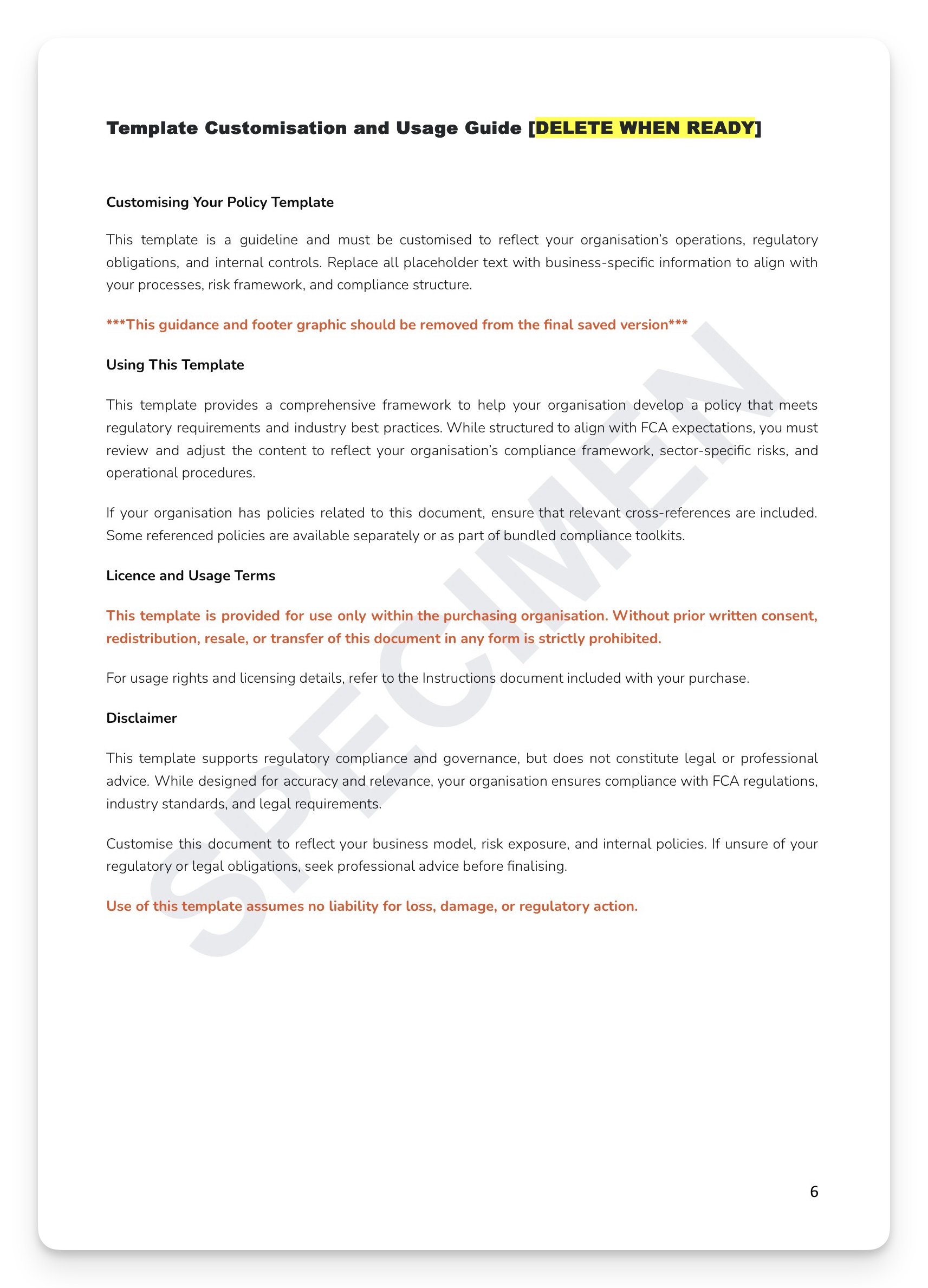
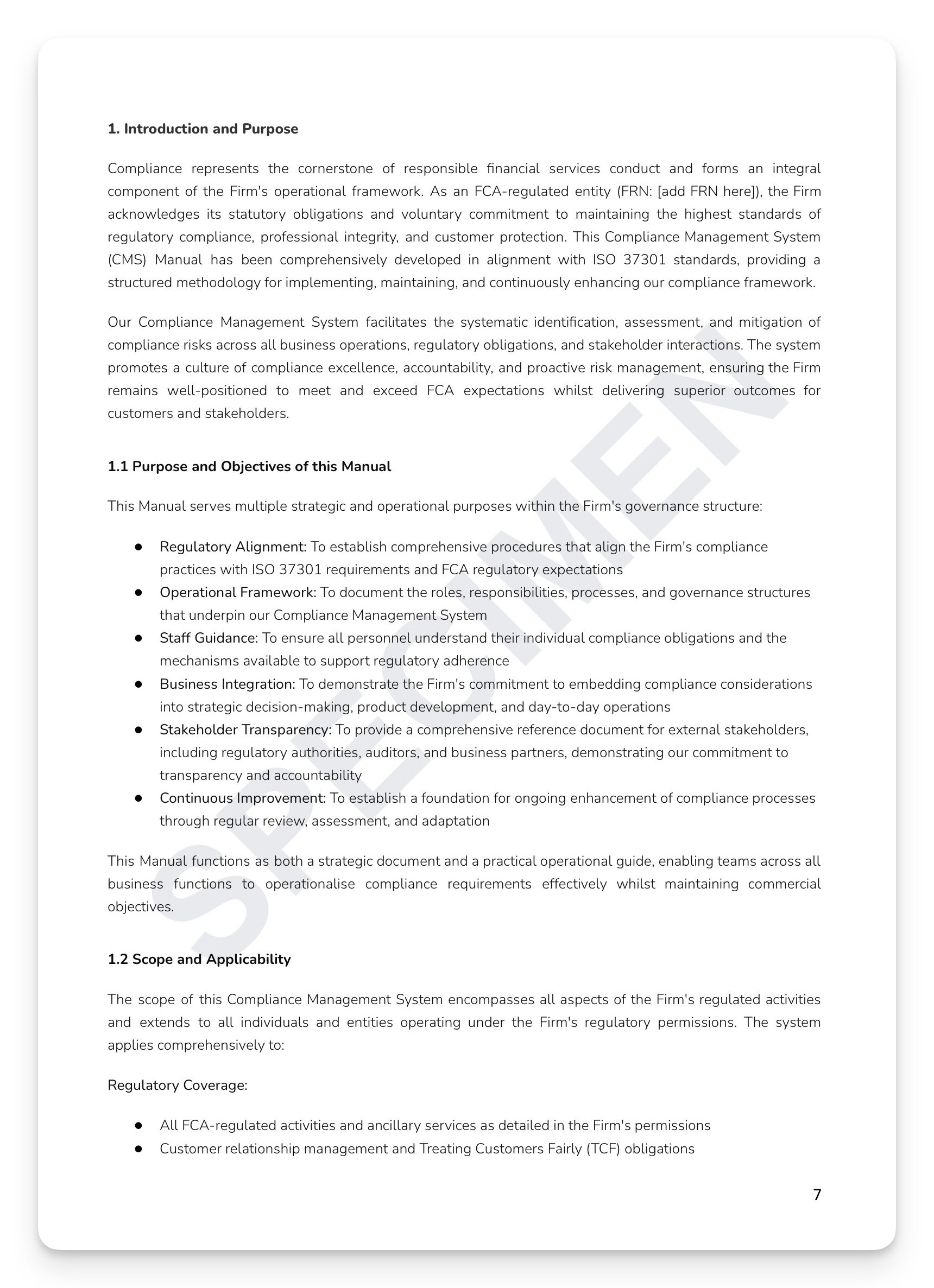
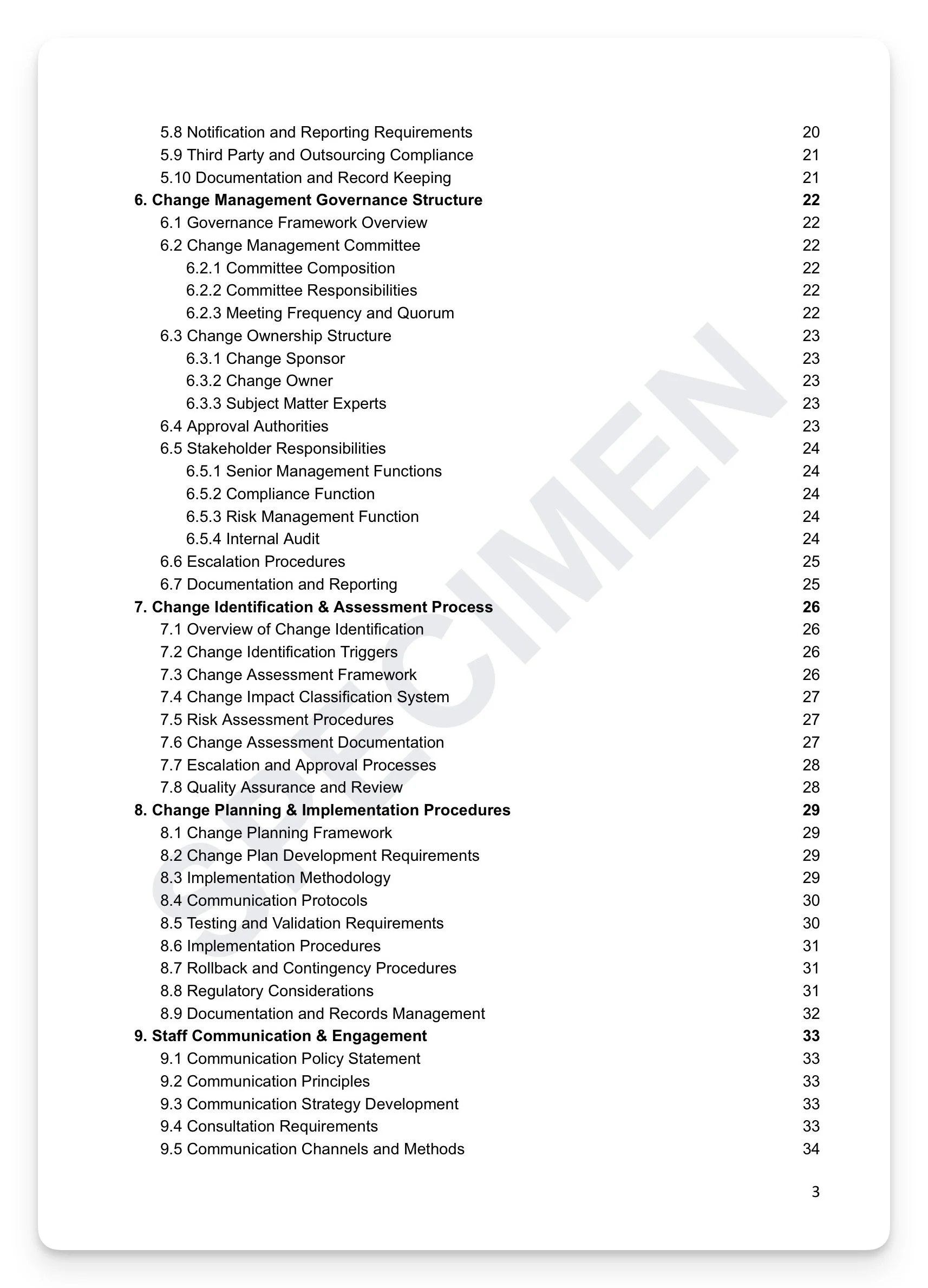
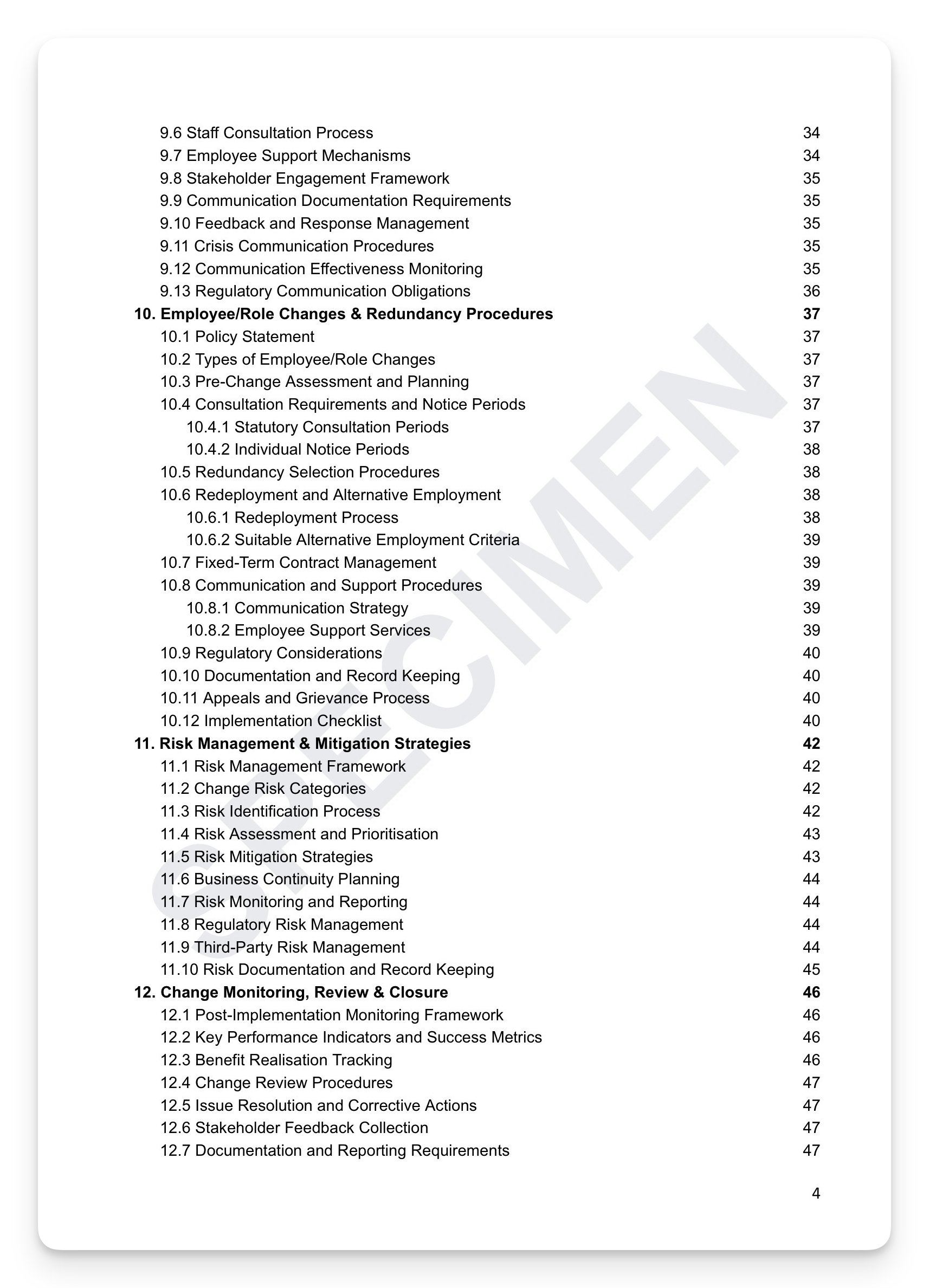
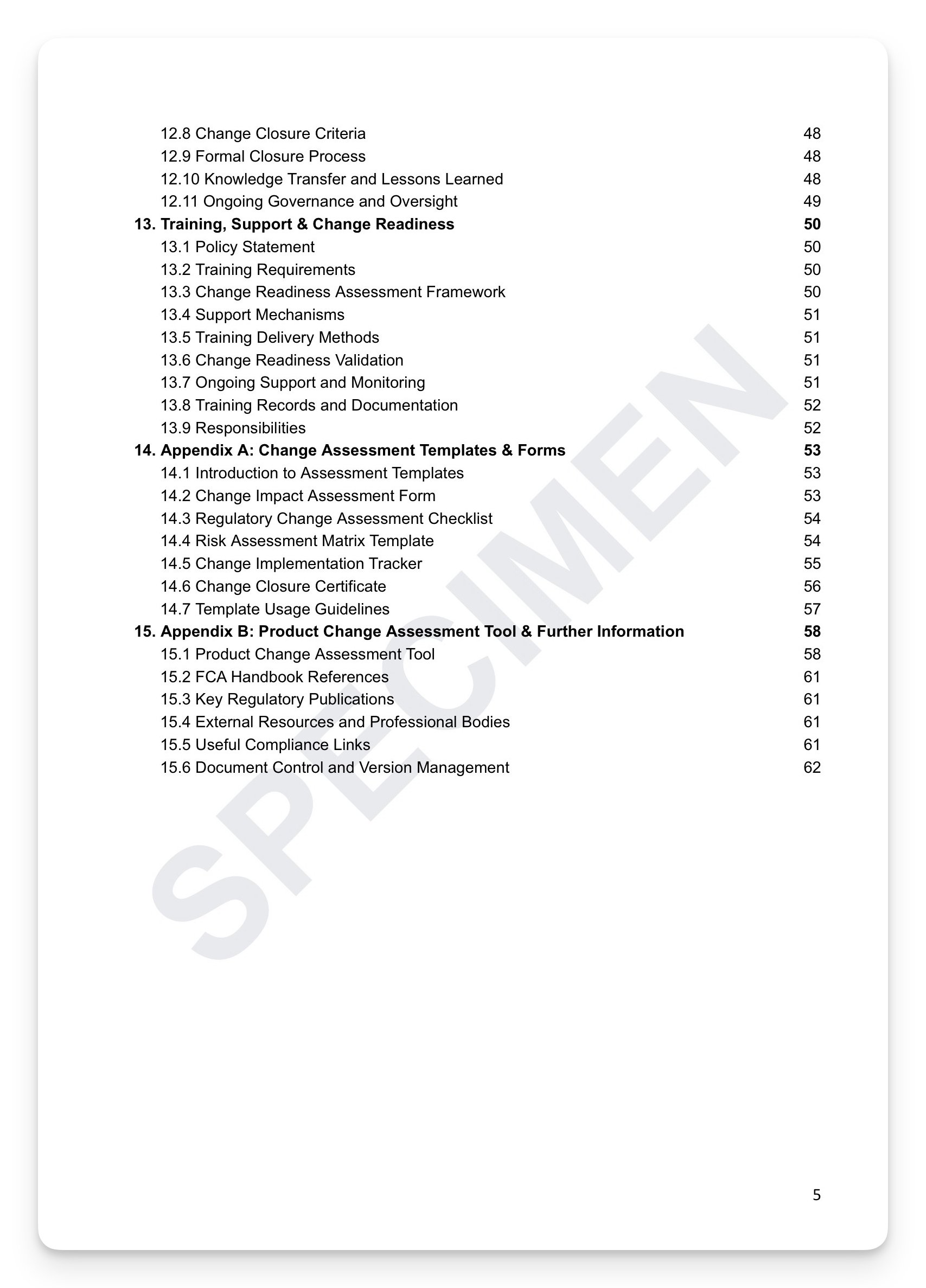
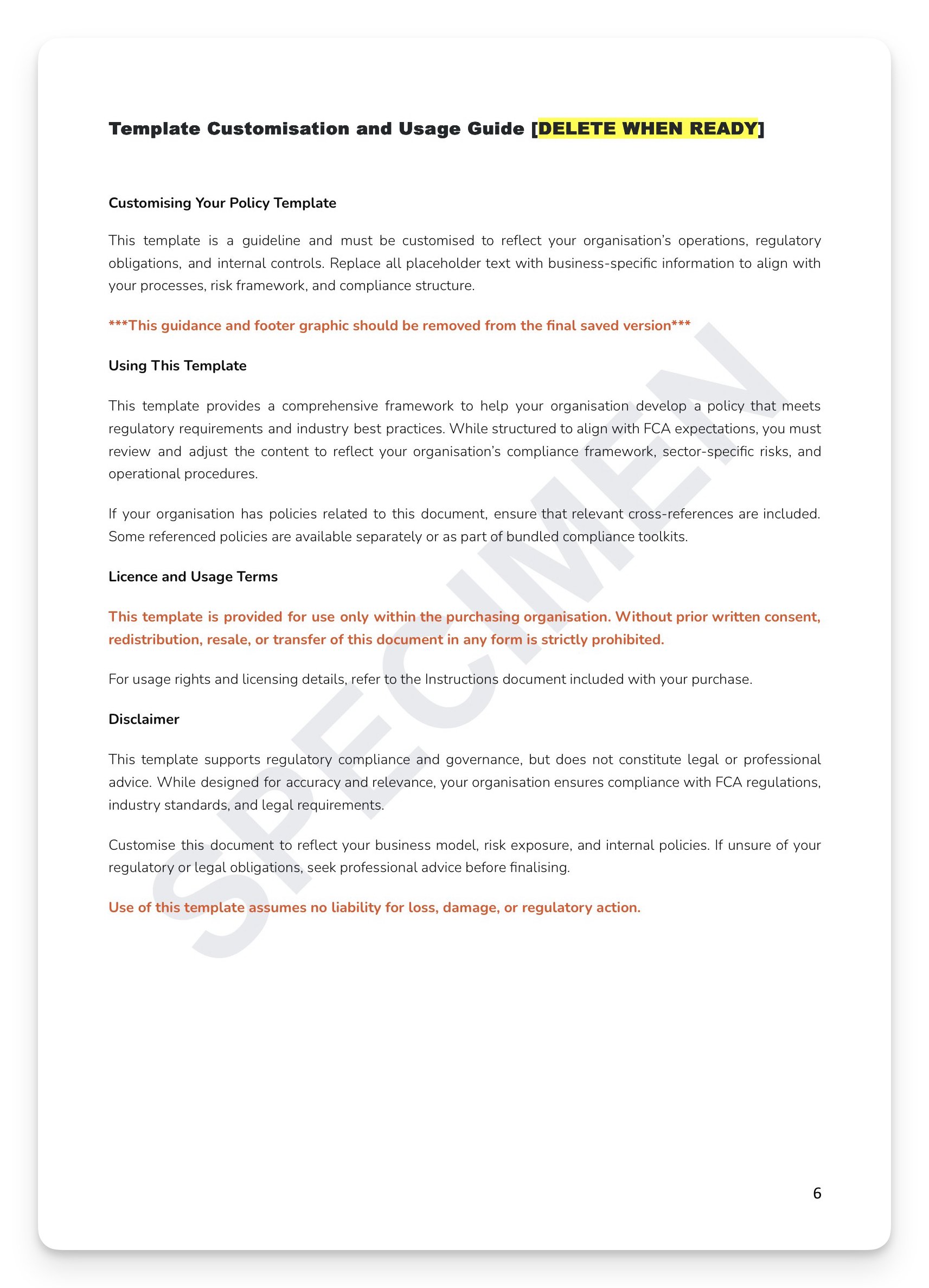
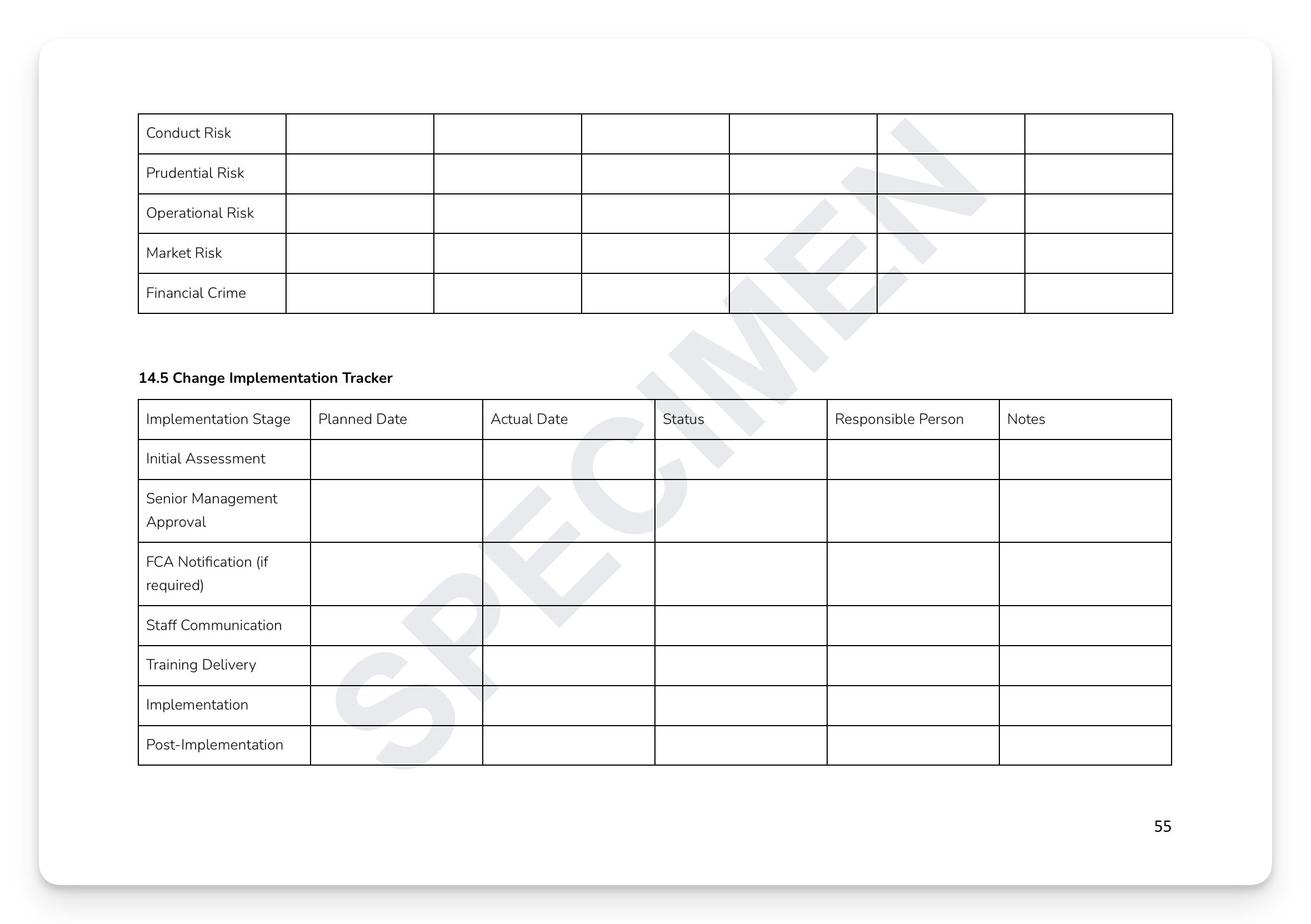
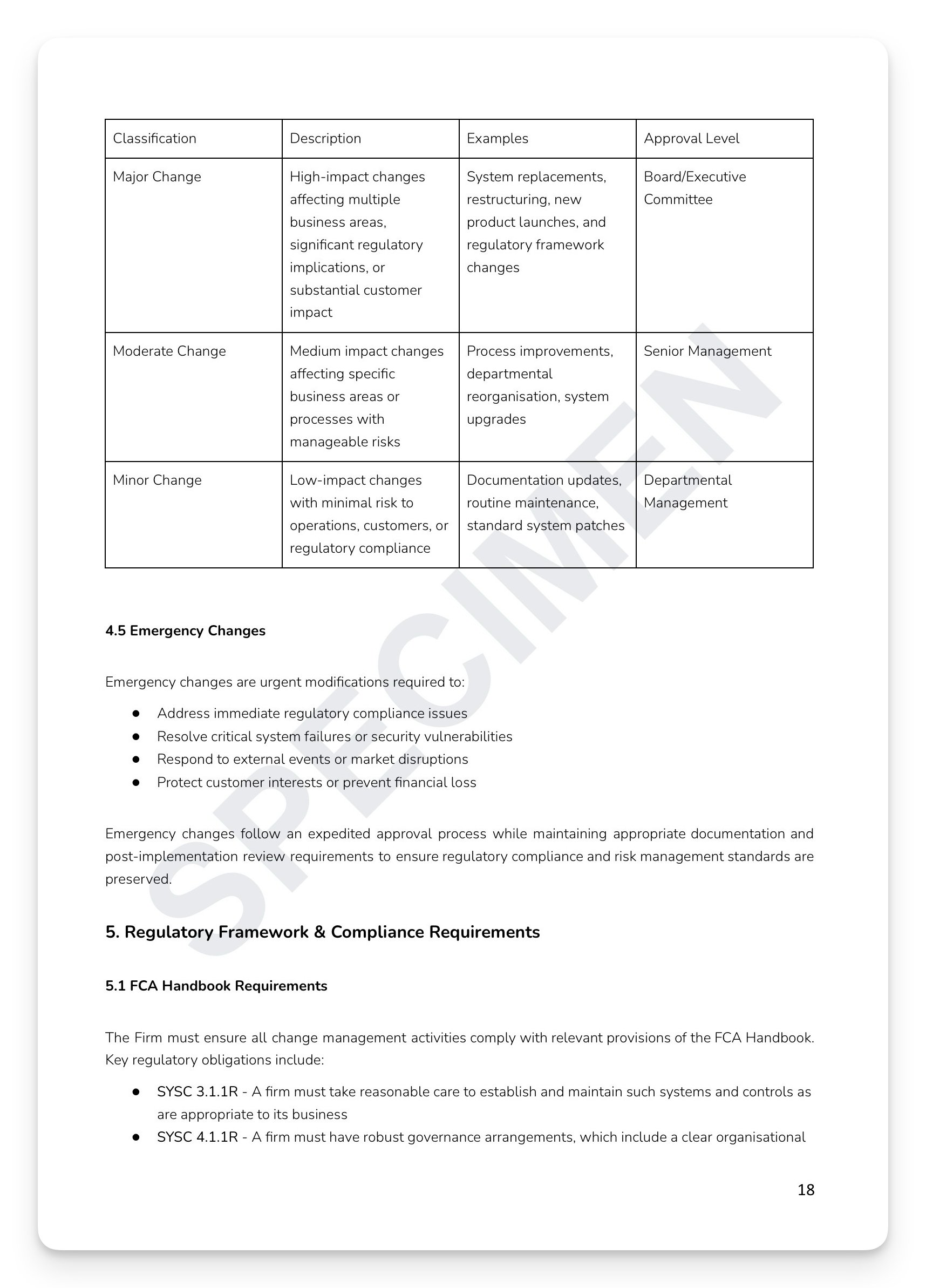
The FCA's position is unambiguous: you can outsource the function, you cannot outsource the responsibility. SYSC 8 sounds straightforward until something goes wrong — and then firms discover their outsourcing arrangements were governance theatre rather than governance. The regulator doesn't care that your IT provider failed, your compliance monitoring was outsourced to a firm that cut corners, or your payment processor had a data breach. The question it asks is whether you conducted adequate due diligence before engagement, maintained appropriate oversight throughout, had contractual protections in place, and could demonstrate continuous monitoring. Outsourcing failure doesn't just disrupt operations — it generates enforcement correspondence.
What's included:
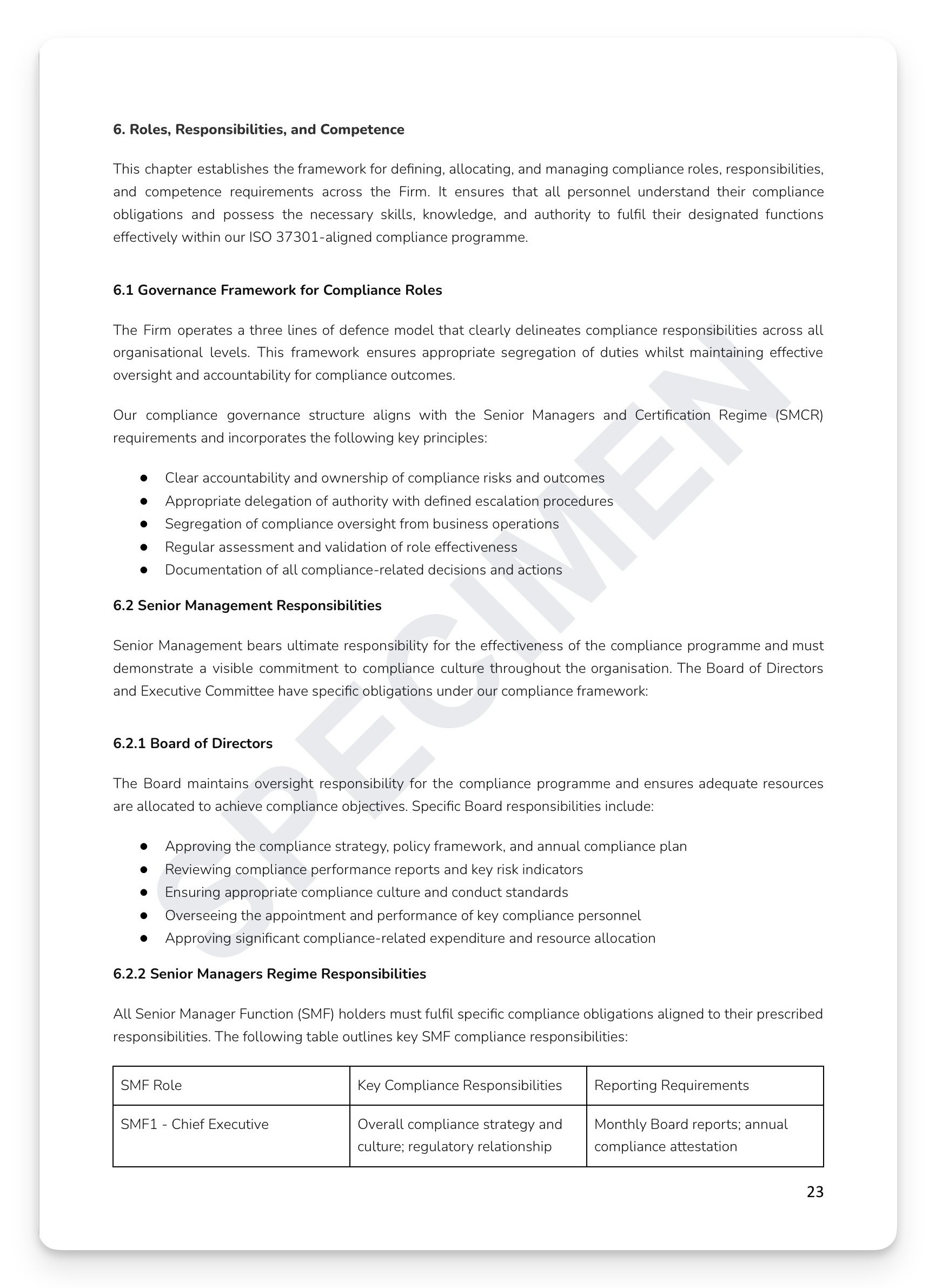
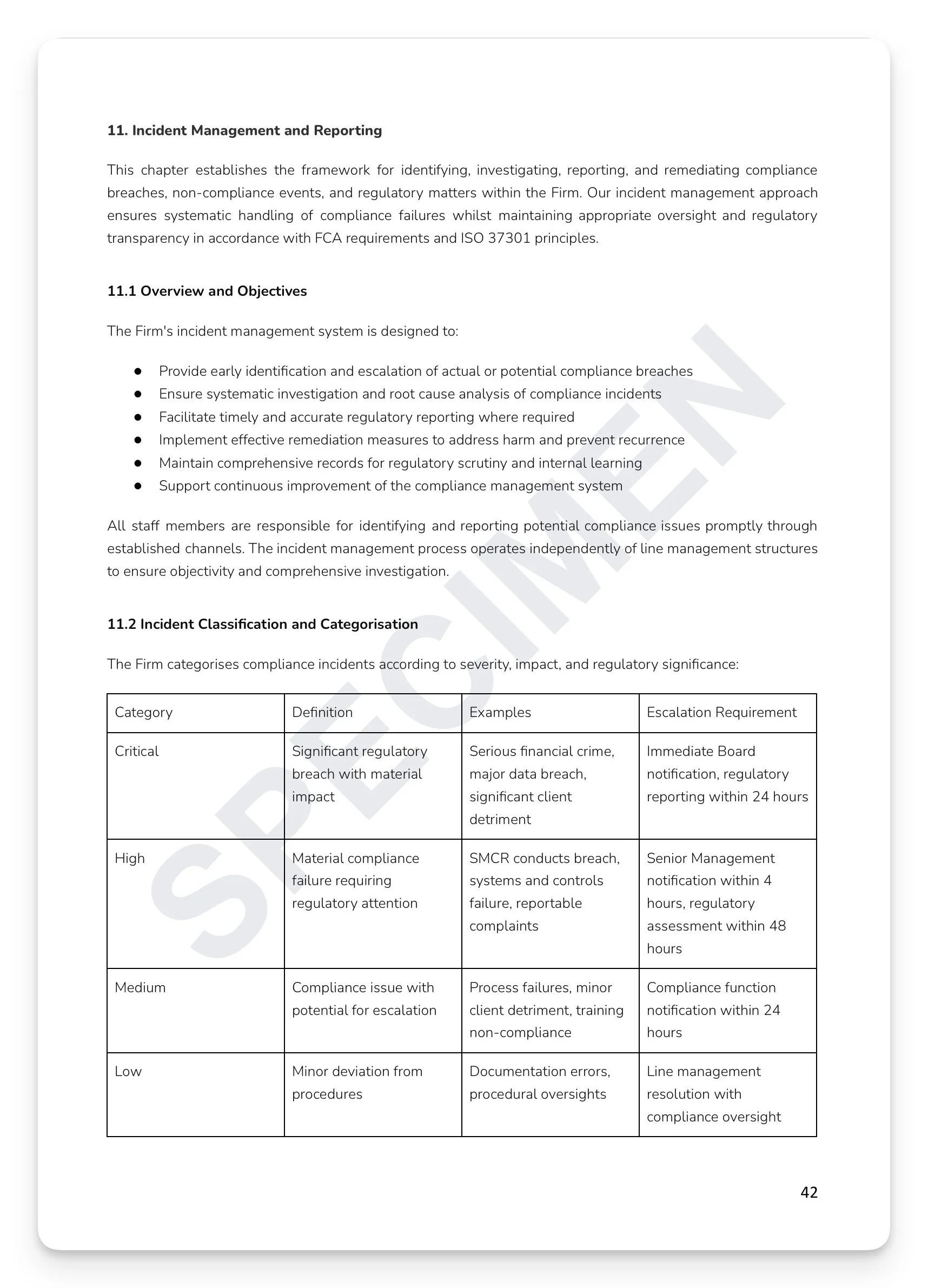
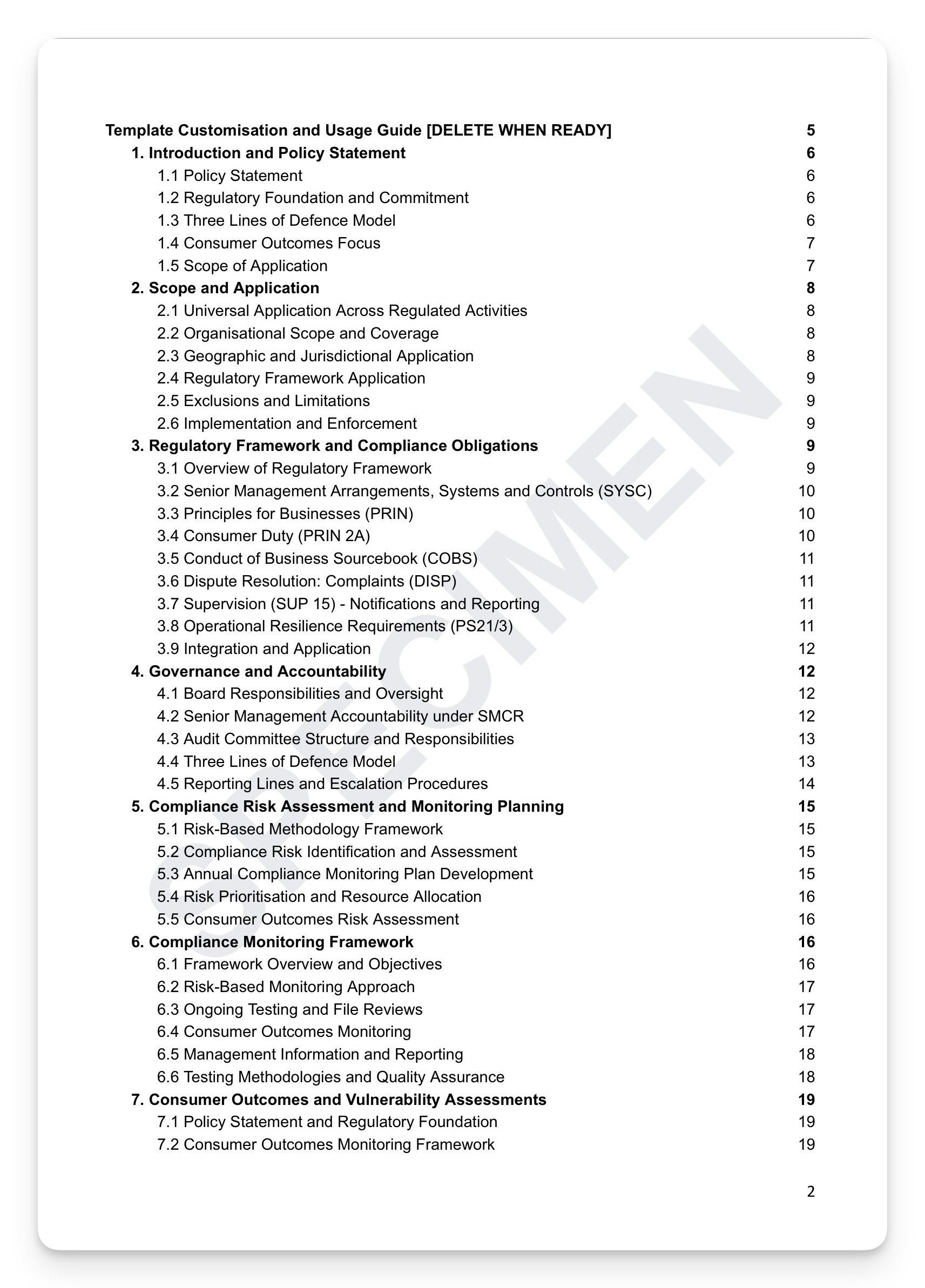
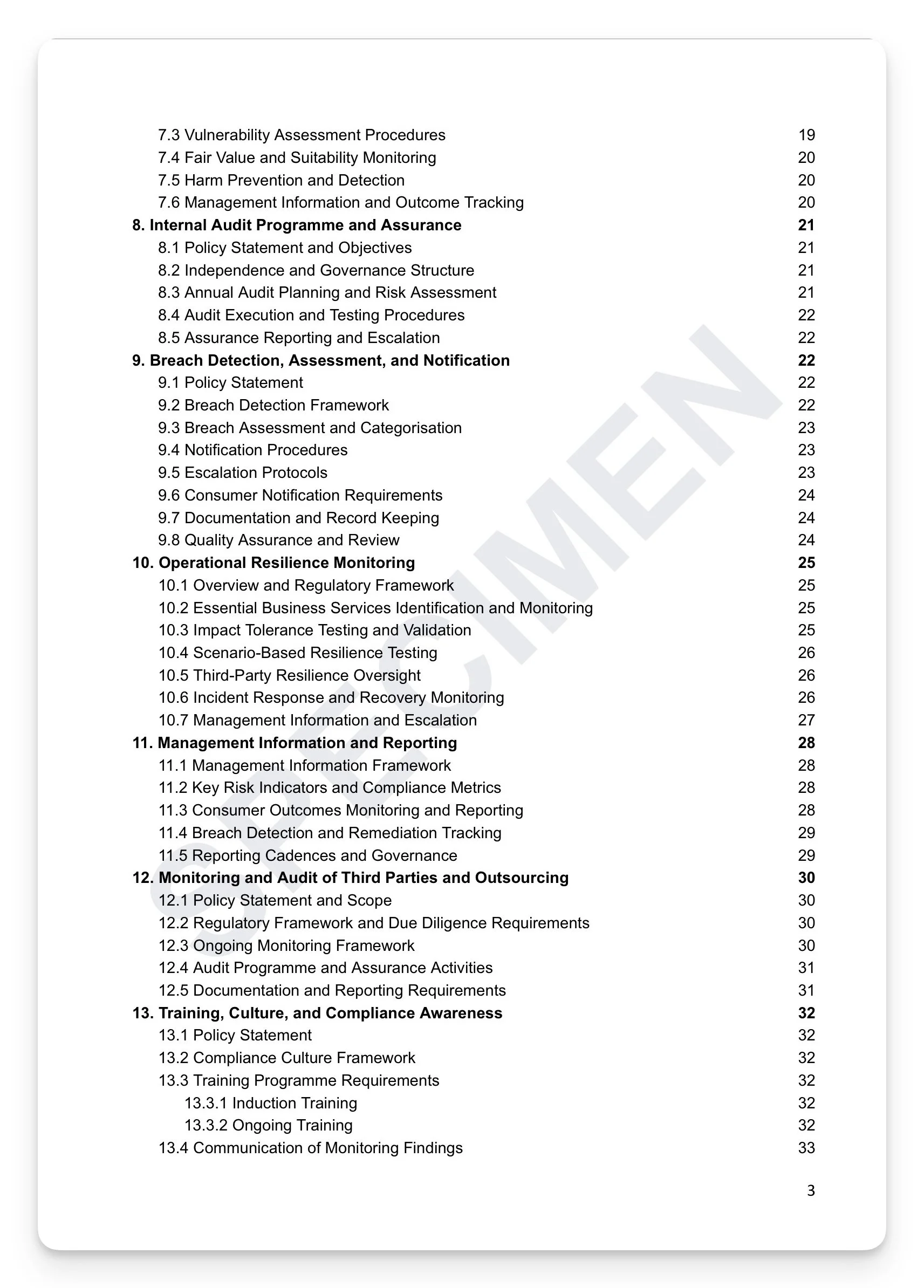
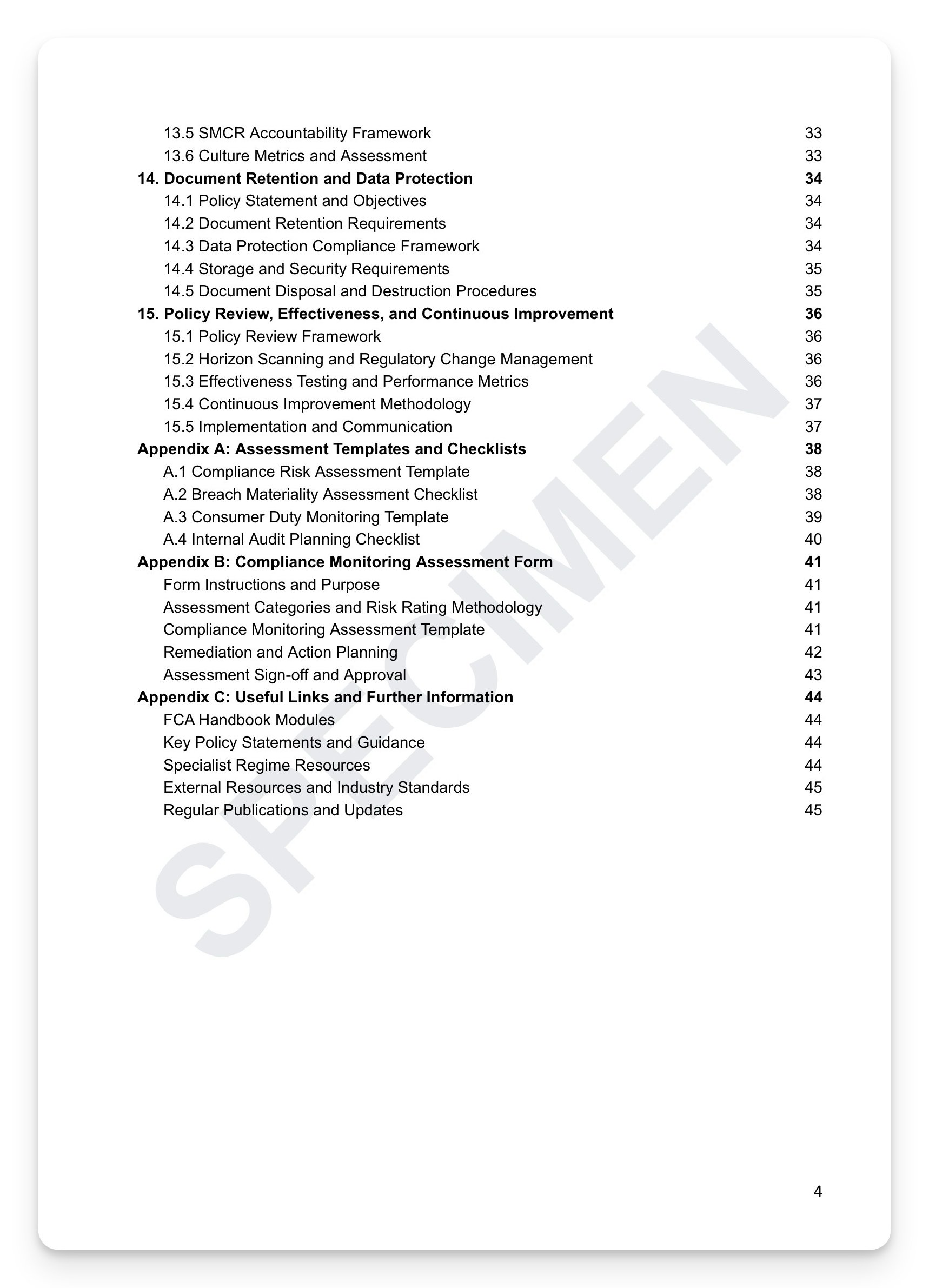
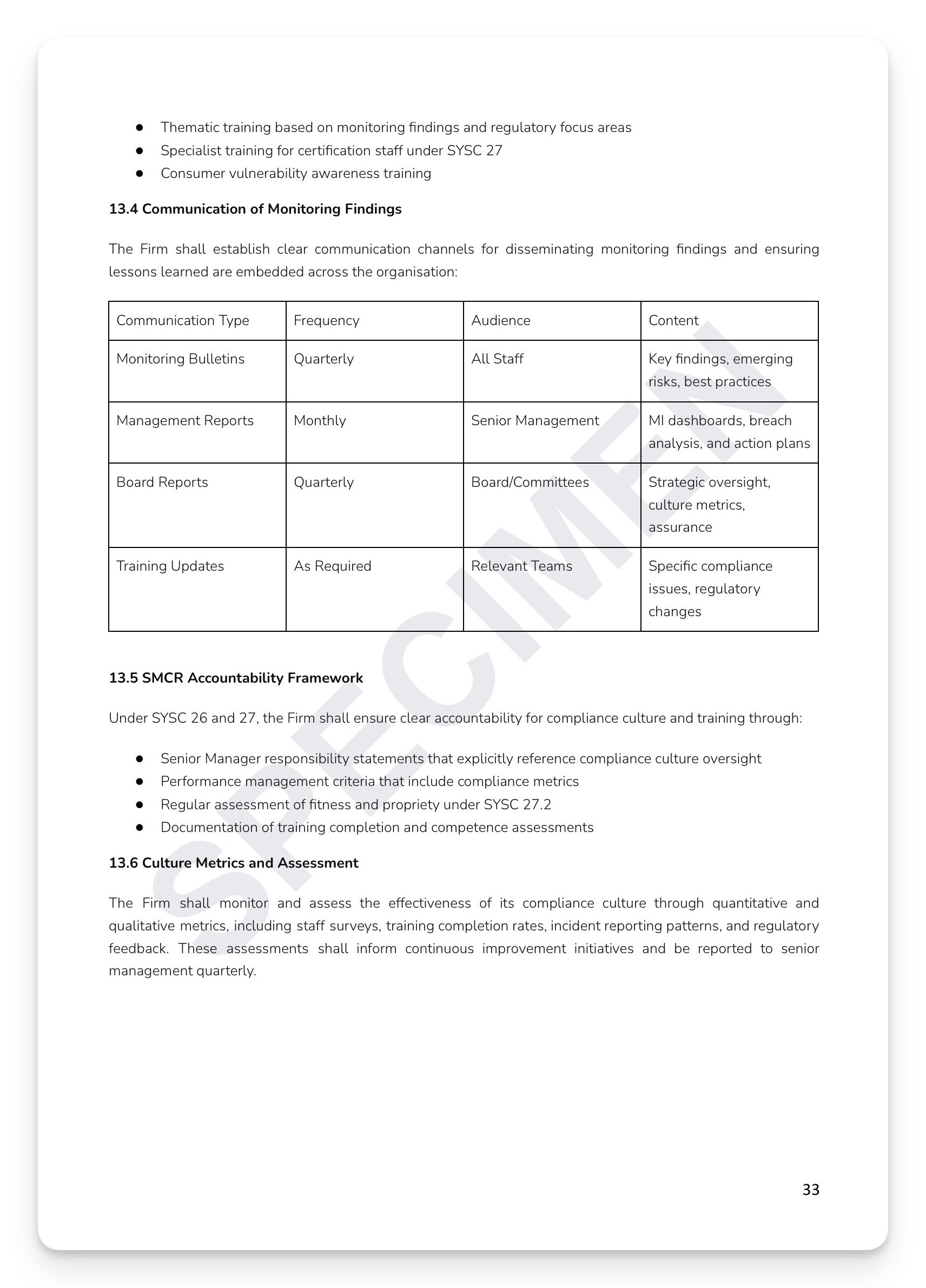
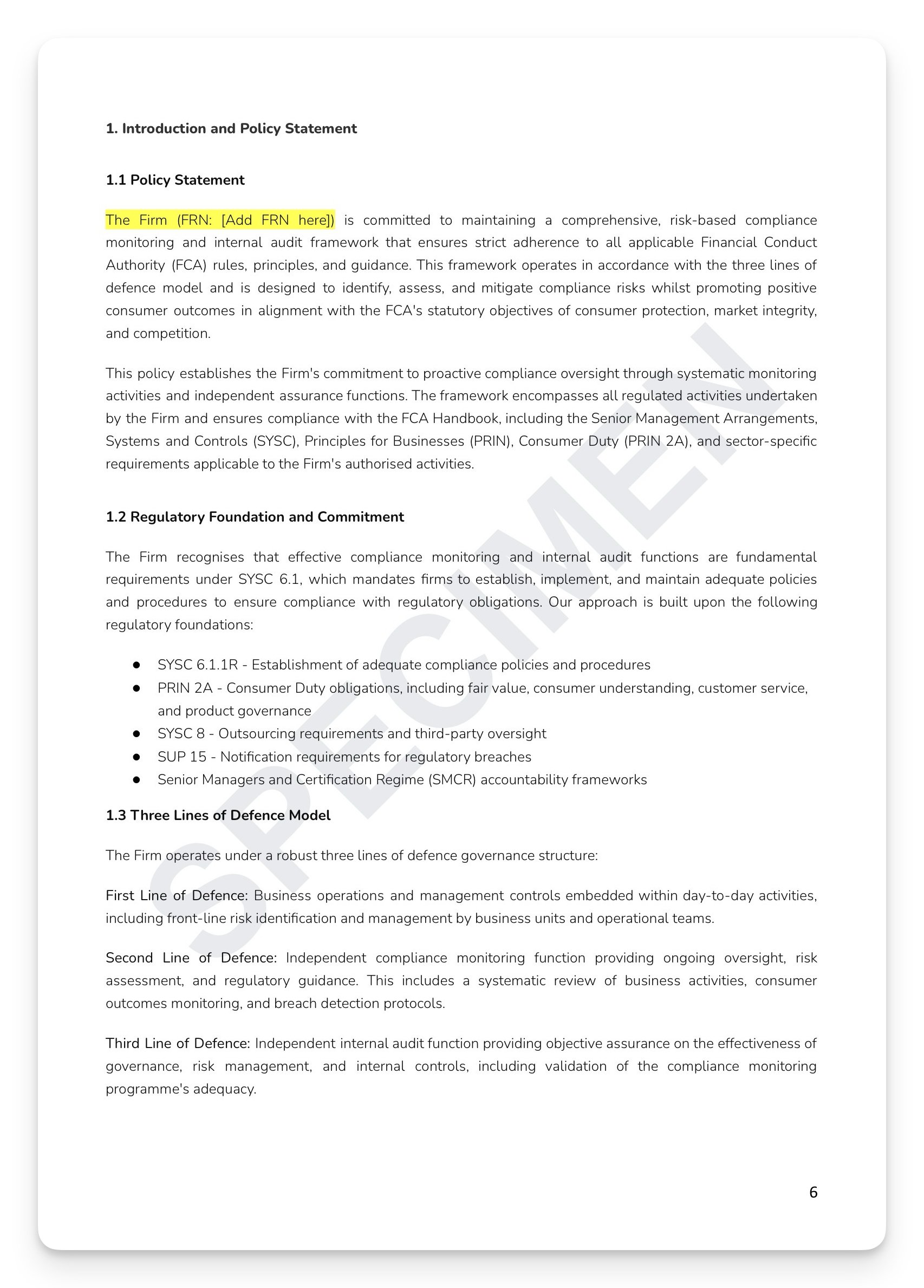
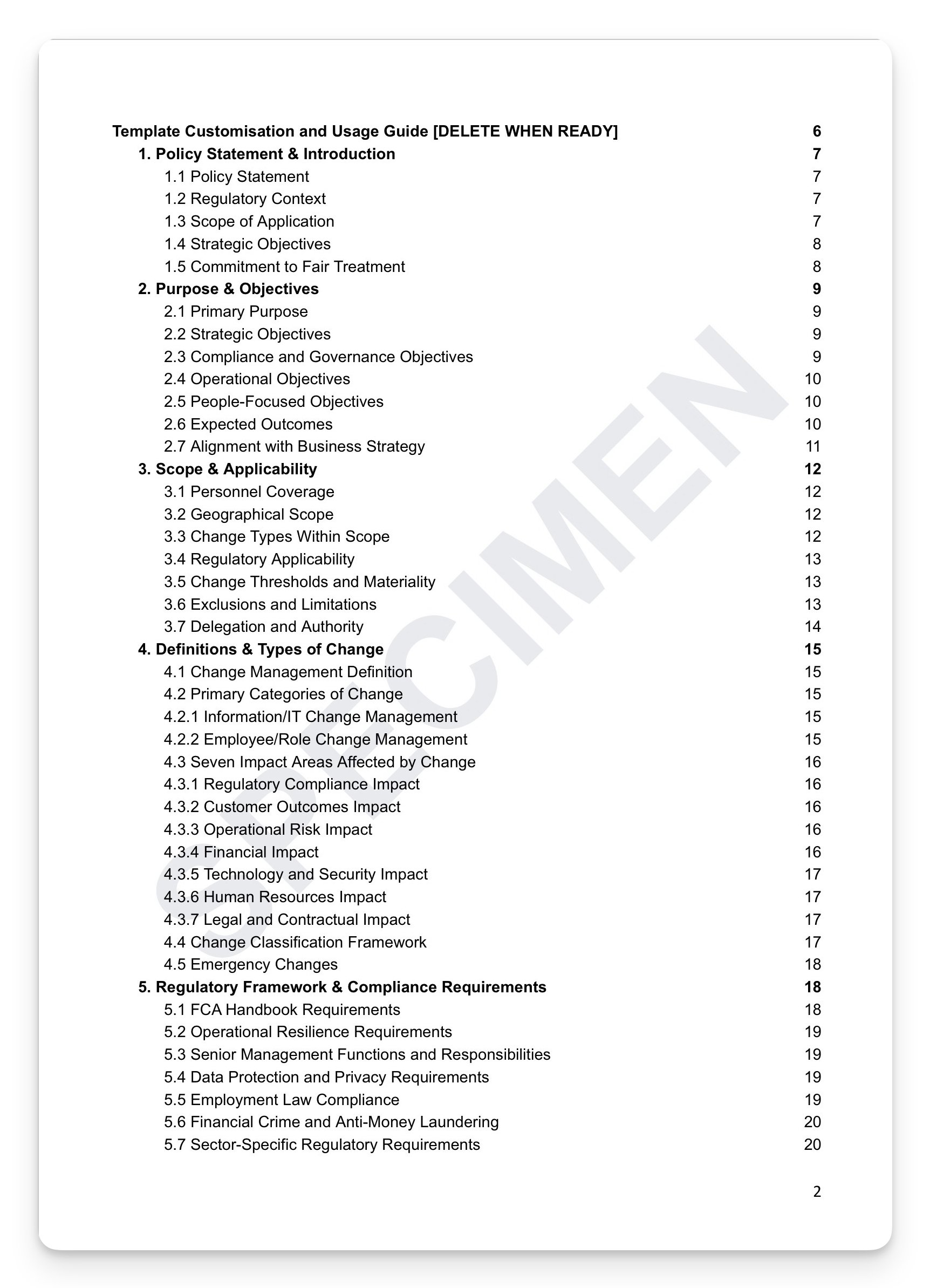
Full regulatory mapping: SYSC 8 & 13, CASS, FSMA 2000, UK GDPR Article 28, DPA 2018, SM&CR SYSC 24–27, Consumer Duty PS22/9, and PRIN 11
Pre-contractual due diligence matrix: financial assessment (3-year audited accounts, credit ratings, professional indemnity, cyber liability), regulatory verification (FCA permissions, enforcement history, AML-CTF), and information security (ISO 27001)
Mandatory contractual terms: scope, SLA with penalty clauses, UK GDPR Article 28 data processing agreement, right of audit, termination notice periods, sub-contracting restrictions, and liability and indemnification
Ongoing monitoring: monthly minimum, weekly or real-time for critical functions, unannounced inspection rights, and annual audit of all arrangements
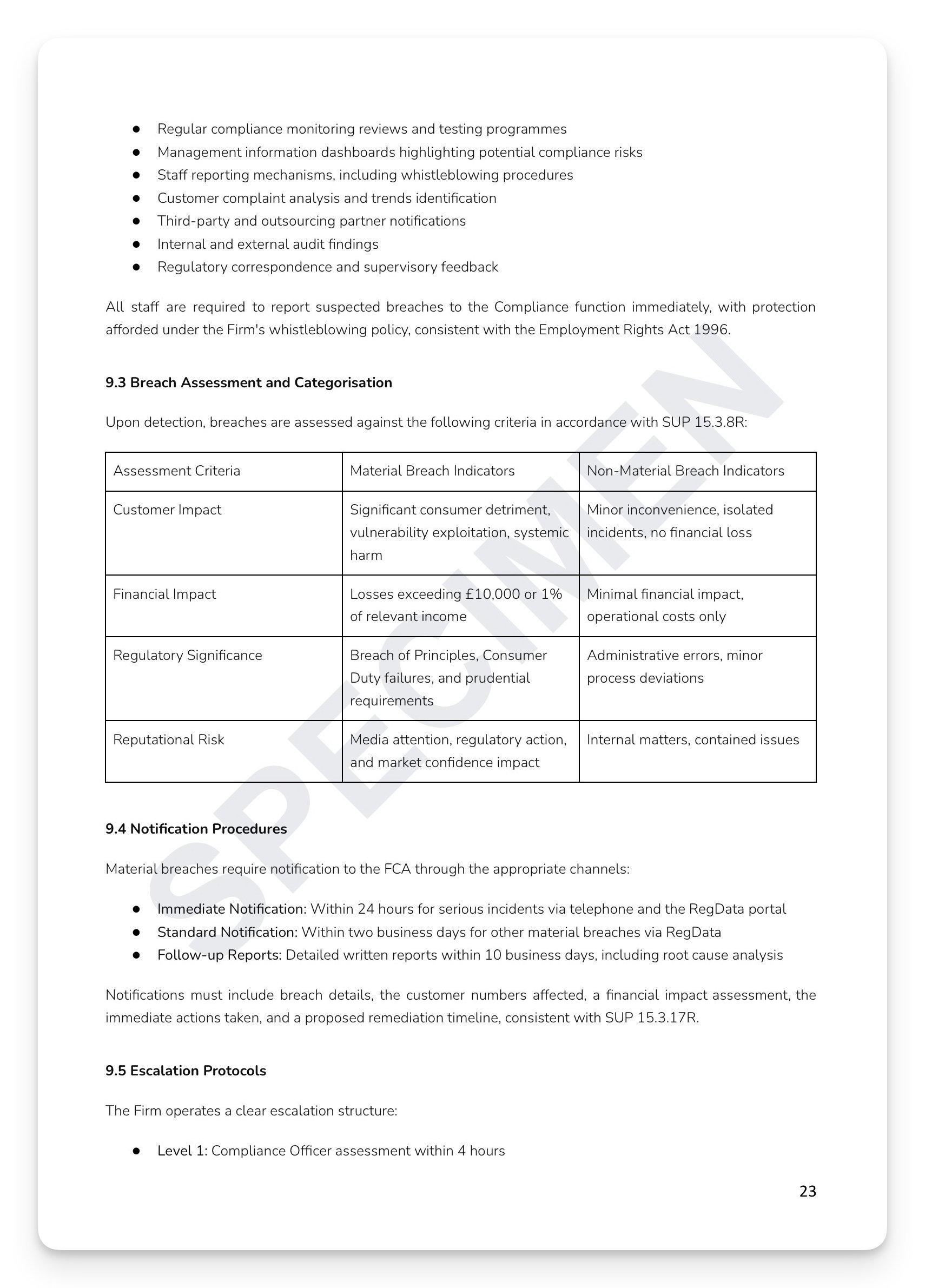
Three-tier escalation: operational (2-day trigger), senior management (5-day unresolved), and immediate for regulatory, data security, or customer service failures
Termination matrix: material breach (30 days), regulatory non-compliance (immediate), and commercial (90 days) — with named accountability at each level
Business continuity testing: desktop exercises quarterly, partial activation semi-annually, and full end-to-end annually
+ much more
Who is this for?
Chief Risk Officers, Chief Compliance Officers, COOs, SMF holders, and governance teams at FCA-regulated firms who need a complete, board-approved Outsourcing Policy that governs every third-party relationship from initial due diligence through to exit.
How it works
Step 1 — Read it. Every section exists for a reason, grounded in a specific regulatory obligation.
Step 2 — Understand it. Map the content against your current practices. Identify where you're strong and where gaps exist.
Step 3 — Make it yours. Tailor the language to reflect how your organisation actually operates. A policy that sounds like your firm is a policy your people will follow.
Step 4 — Take ownership. Assign clear accountability — Board approval, named SMF holder, designated policy owner. A policy without an owner is a liability, not an asset.
Step 5 — Operationalise it. Embed the policy into your governance calendar, training programme, and annual review cycle. This is where compliance becomes culture.
Or, get this free with RegTechPRO
Access this alongside the full compliance policy library — SM&CR, COBS, AML, Consumer Duty, GDPR, and more — for a fraction of the cost of consultancy.
View RegTechPRO pricing and packages →
The FCA's position is unambiguous: you can outsource the function, you cannot outsource the responsibility. SYSC 8 sounds straightforward until something goes wrong — and then firms discover their outsourcing arrangements were governance theatre rather than governance. The regulator doesn't care that your IT provider failed, your compliance monitoring was outsourced to a firm that cut corners, or your payment processor had a data breach. The question it asks is whether you conducted adequate due diligence before engagement, maintained appropriate oversight throughout, had contractual protections in place, and could demonstrate continuous monitoring. Outsourcing failure doesn't just disrupt operations — it generates enforcement correspondence.
What's included:
Full regulatory mapping: SYSC 8 & 13, CASS, FSMA 2000, UK GDPR Article 28, DPA 2018, SM&CR SYSC 24–27, Consumer Duty PS22/9, and PRIN 11
Pre-contractual due diligence matrix: financial assessment (3-year audited accounts, credit ratings, professional indemnity, cyber liability), regulatory verification (FCA permissions, enforcement history, AML-CTF), and information security (ISO 27001)
Mandatory contractual terms: scope, SLA with penalty clauses, UK GDPR Article 28 data processing agreement, right of audit, termination notice periods, sub-contracting restrictions, and liability and indemnification
Ongoing monitoring: monthly minimum, weekly or real-time for critical functions, unannounced inspection rights, and annual audit of all arrangements
Three-tier escalation: operational (2-day trigger), senior management (5-day unresolved), and immediate for regulatory, data security, or customer service failures
Termination matrix: material breach (30 days), regulatory non-compliance (immediate), and commercial (90 days) — with named accountability at each level
Business continuity testing: desktop exercises quarterly, partial activation semi-annually, and full end-to-end annually
+ much more
Who is this for?
Chief Risk Officers, Chief Compliance Officers, COOs, SMF holders, and governance teams at FCA-regulated firms who need a complete, board-approved Outsourcing Policy that governs every third-party relationship from initial due diligence through to exit.
How it works
Step 1 — Read it. Every section exists for a reason, grounded in a specific regulatory obligation.
Step 2 — Understand it. Map the content against your current practices. Identify where you're strong and where gaps exist.
Step 3 — Make it yours. Tailor the language to reflect how your organisation actually operates. A policy that sounds like your firm is a policy your people will follow.
Step 4 — Take ownership. Assign clear accountability — Board approval, named SMF holder, designated policy owner. A policy without an owner is a liability, not an asset.
Step 5 — Operationalise it. Embed the policy into your governance calendar, training programme, and annual review cycle. This is where compliance becomes culture.
Or, get this free with RegTechPRO
Access this alongside the full compliance policy library — SM&CR, COBS, AML, Consumer Duty, GDPR, and more — for a fraction of the cost of consultancy.
View RegTechPRO pricing and packages →


 Image 1 of 7
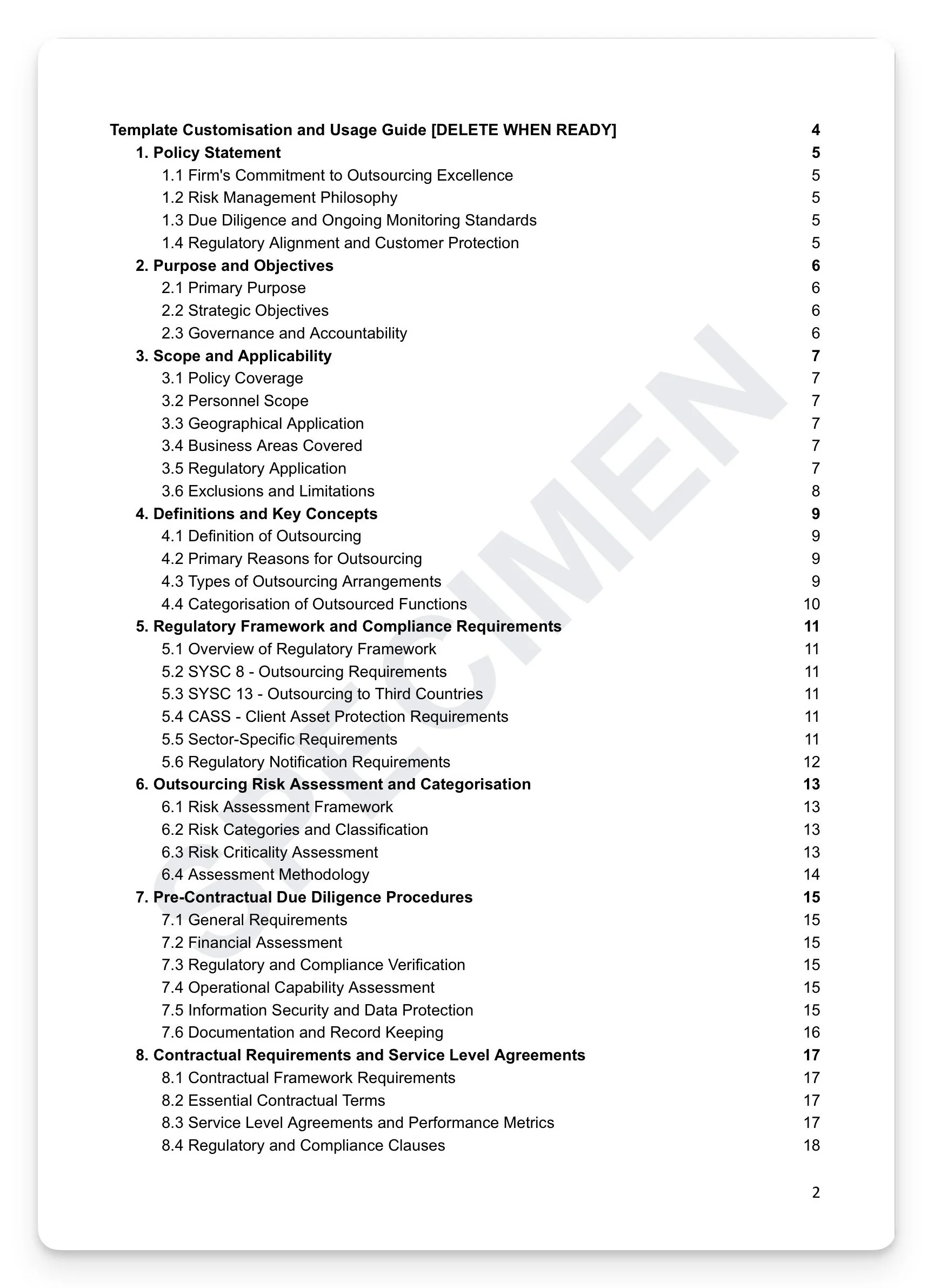 Image 2 of 7
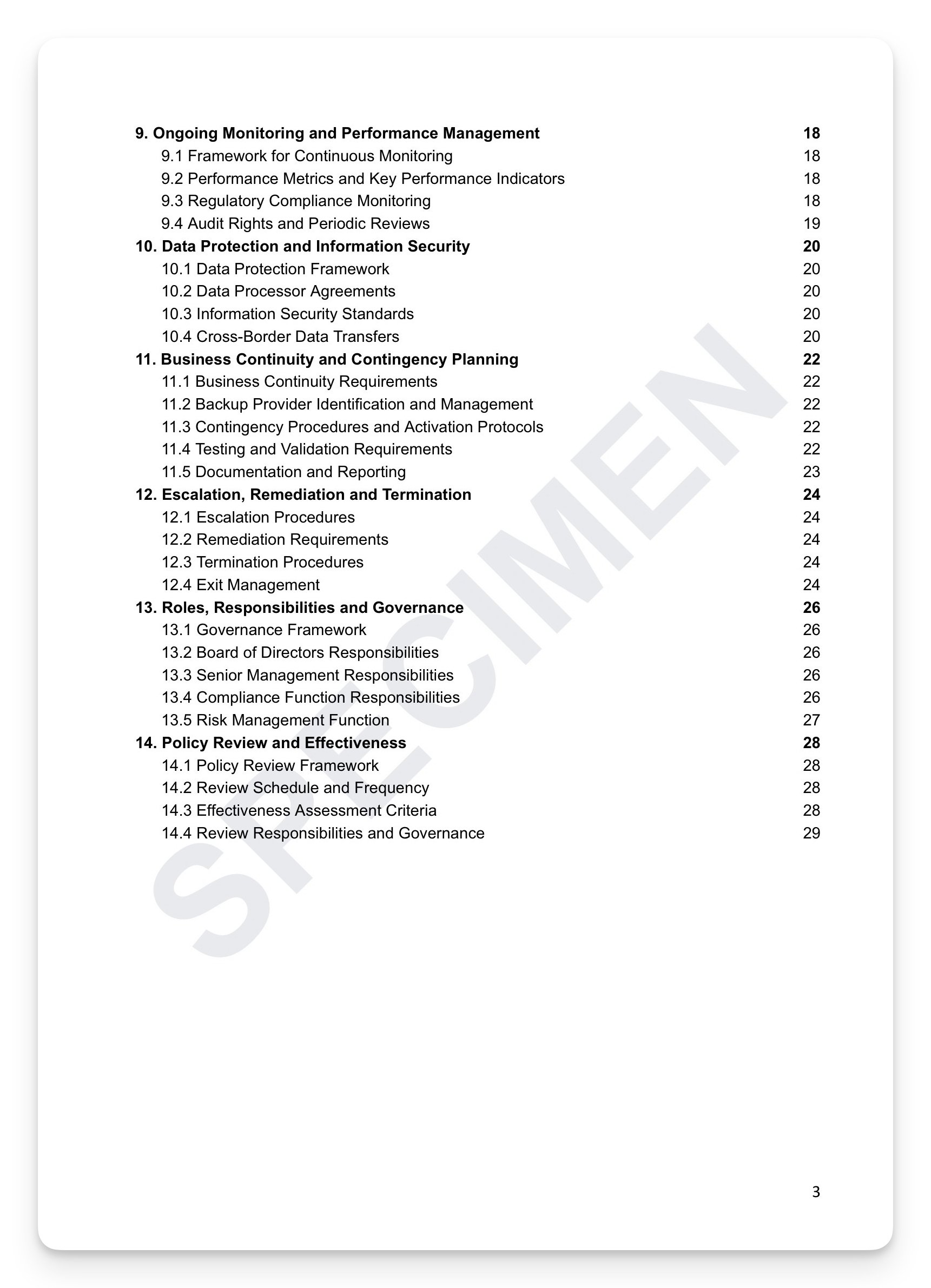 Image 3 of 7
 Image 4 of 7
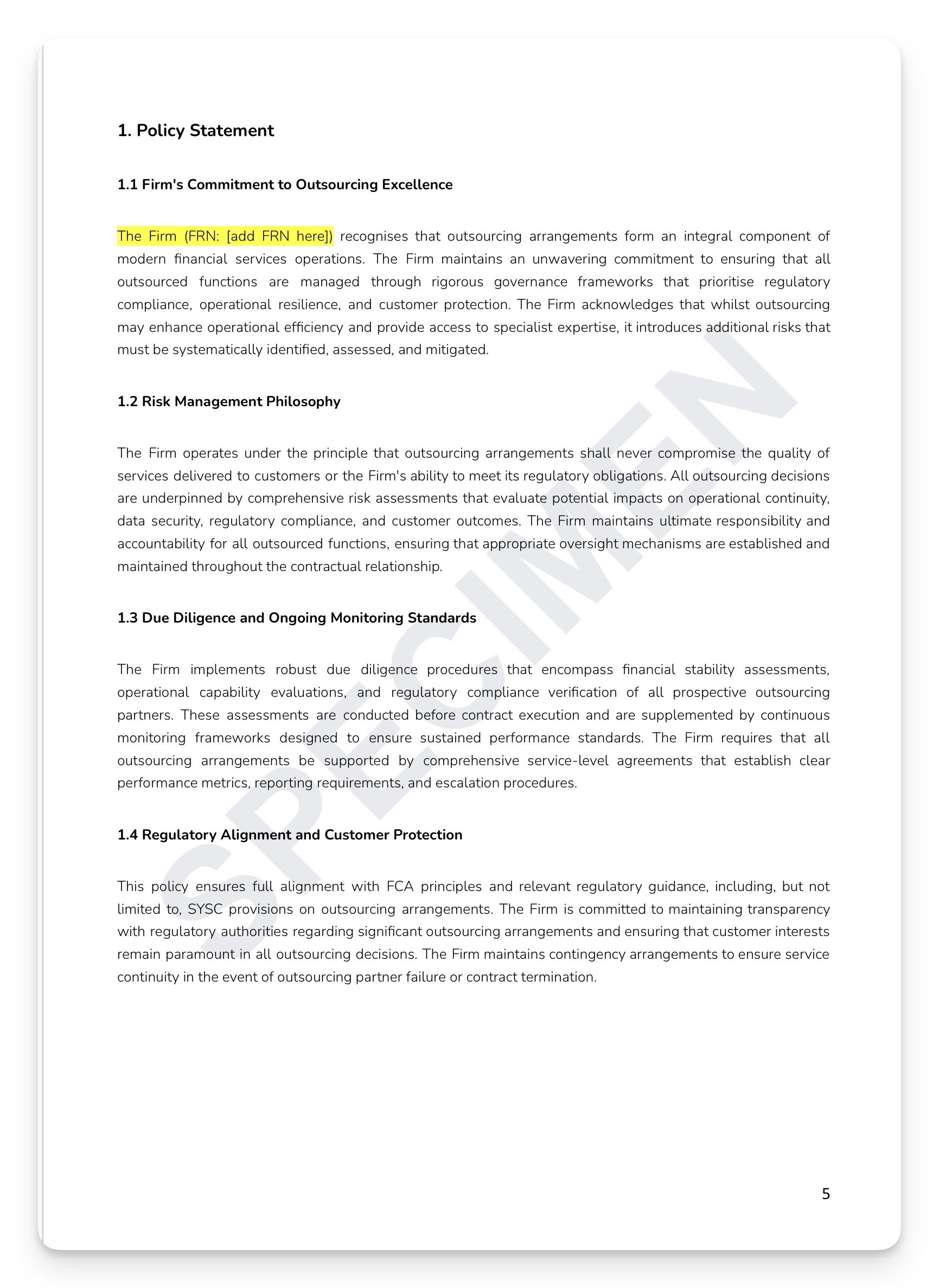 Image 5 of 7
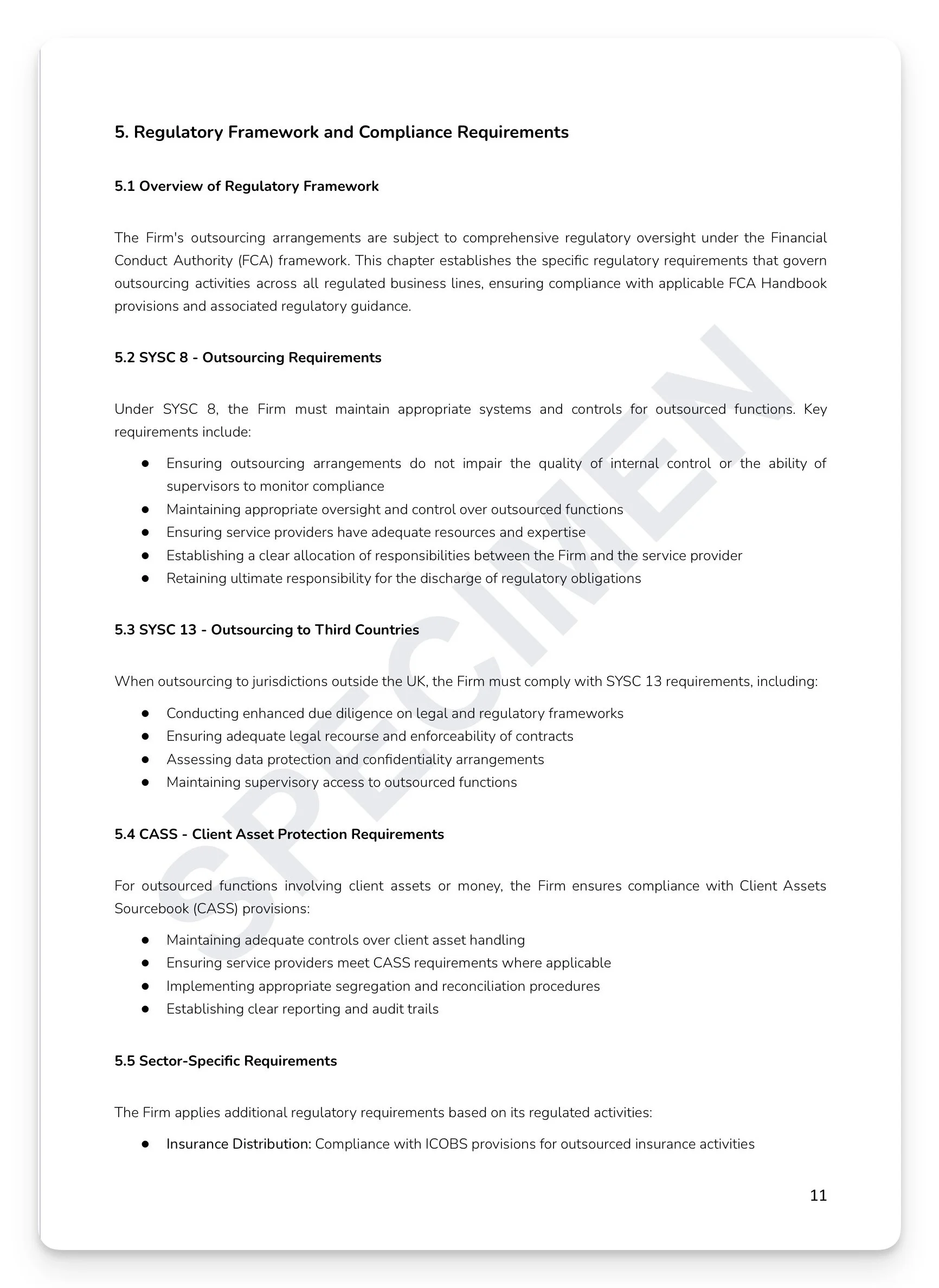 Image 6 of 7
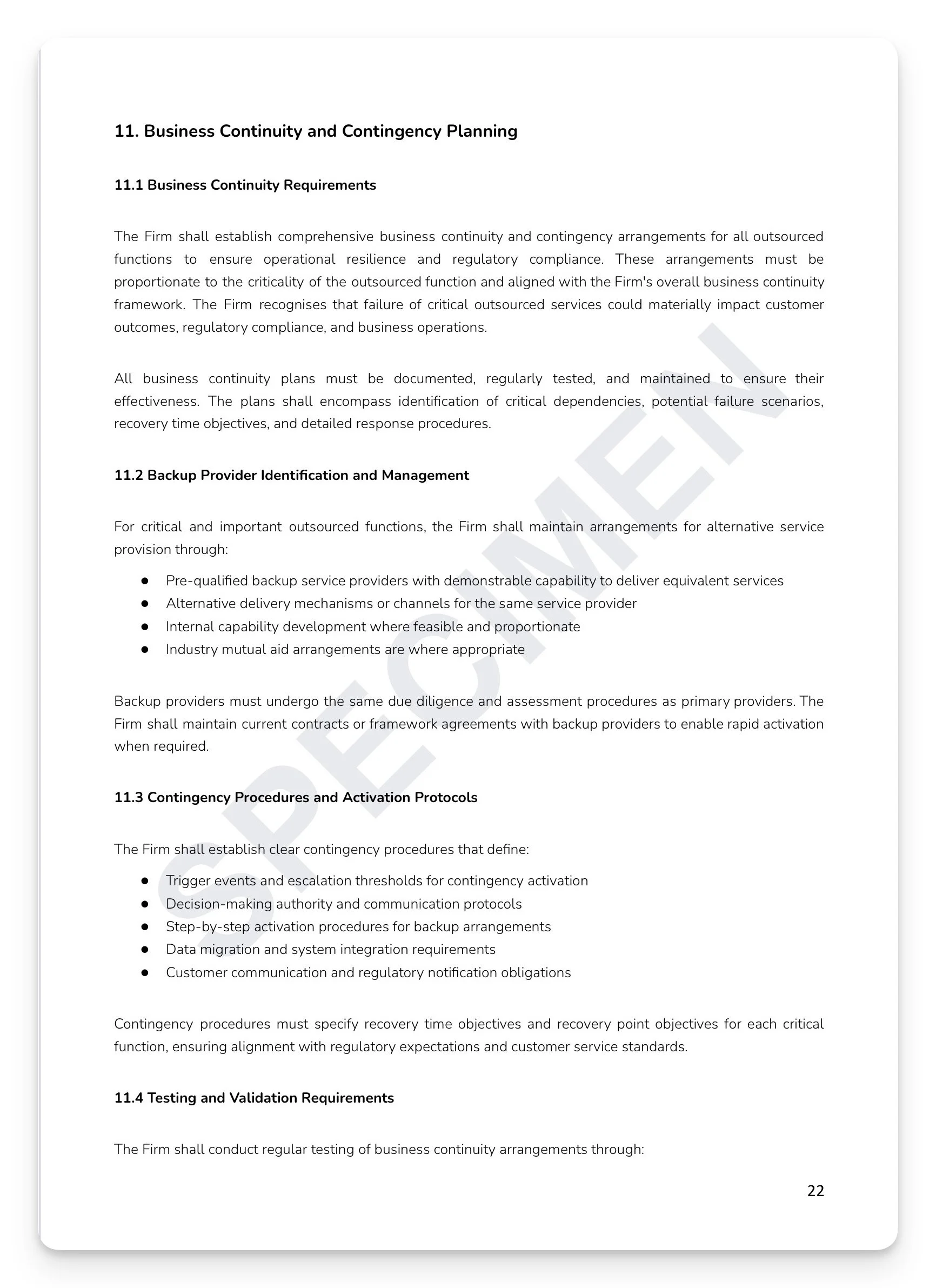 Image 7 of 7