Modern Slavery Policy Template

£50.00

The Modern Slavery Act 2015 Created a Legal Obligation Most FCA-Regulated Firms Treat as a Checkbox. The FCA Treats It as a Governance Matter.

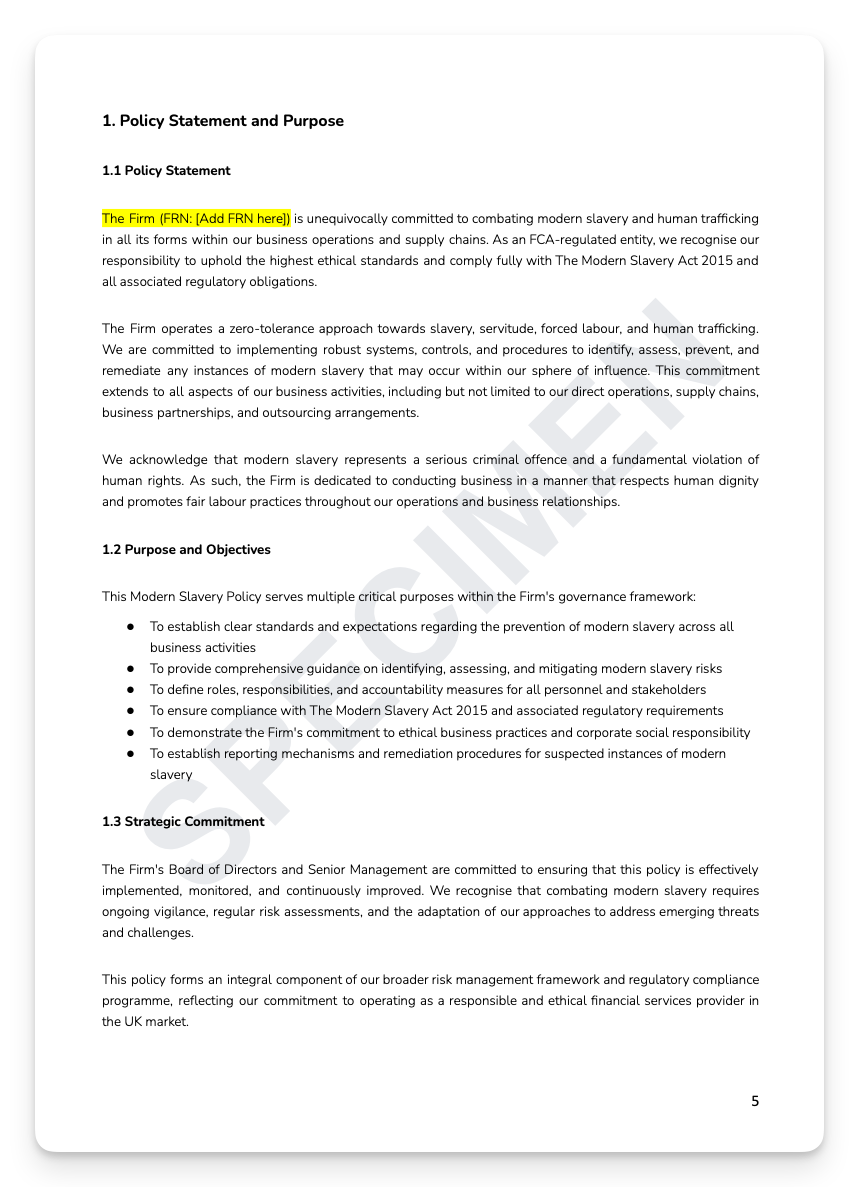
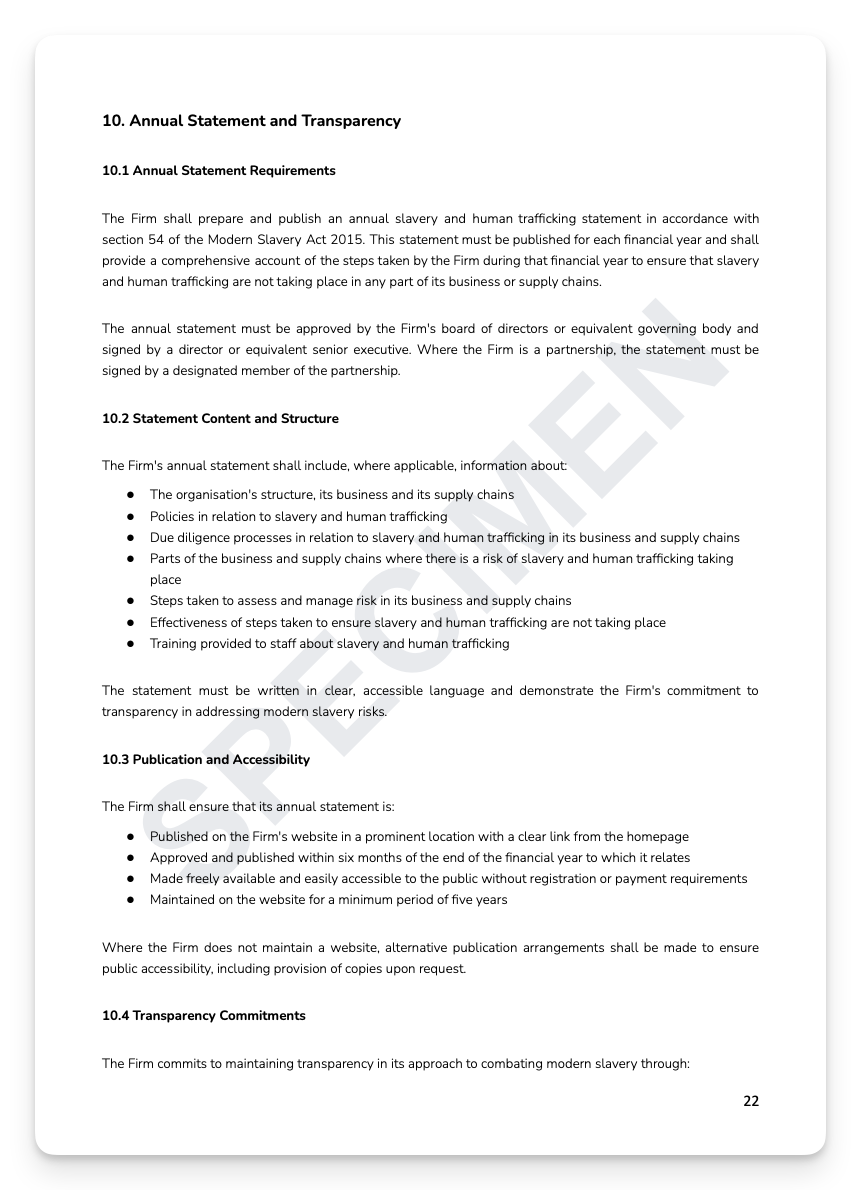
Section 54 of the Modern Slavery Act 2015 requires commercial organisations with annual turnover of £36 million or more to publish an annual slavery and human trafficking statement — board-approved, director-signed, published on the homepage within six months of financial year end. That's the statutory minimum. The FCA's expectations go further. PRIN 1 (integrity) and PRIN 3 (management and control) require firms to conduct business with integrity and maintain adequate risk management systems. Those principles extend to supply chain labour practices, third-party working conditions, and recruitment safeguards for the firm's own workforce. Under SM&CR, the Senior Manager with oversight of third-party relationships and operational risk owns the modern slavery risk question personally. A firm that discovers a supplier is using forced labour and can't demonstrate it conducted due diligence, had contractual protections in place, and had a reporting and remediation process ready isn't just exposed to reputational damage — it's demonstrating inadequate governance to a regulator that already prioritises supply chain risk. For firms in financial services, the intersections are specific: recruitment practices for temporary and migrant staff, cleaning and facilities management contractors, IT subcontractors in low-cost jurisdictions, complex outsourcing arrangements with limited supply chain visibility. The risk isn't abstract. This comprehensive Modern Slavery Policy gives FCA-regulated firms a complete Modern Slavery Act and FCA-aligned framework covering risk assessment, supplier due diligence, employment safeguards, training, investigation procedures, annual statement requirements, governance accountability, and continuous improvement — built to satisfy both the Home Office transparency expectations and the FCA's governance standards.

The annual statement is public. The FCA can read it.

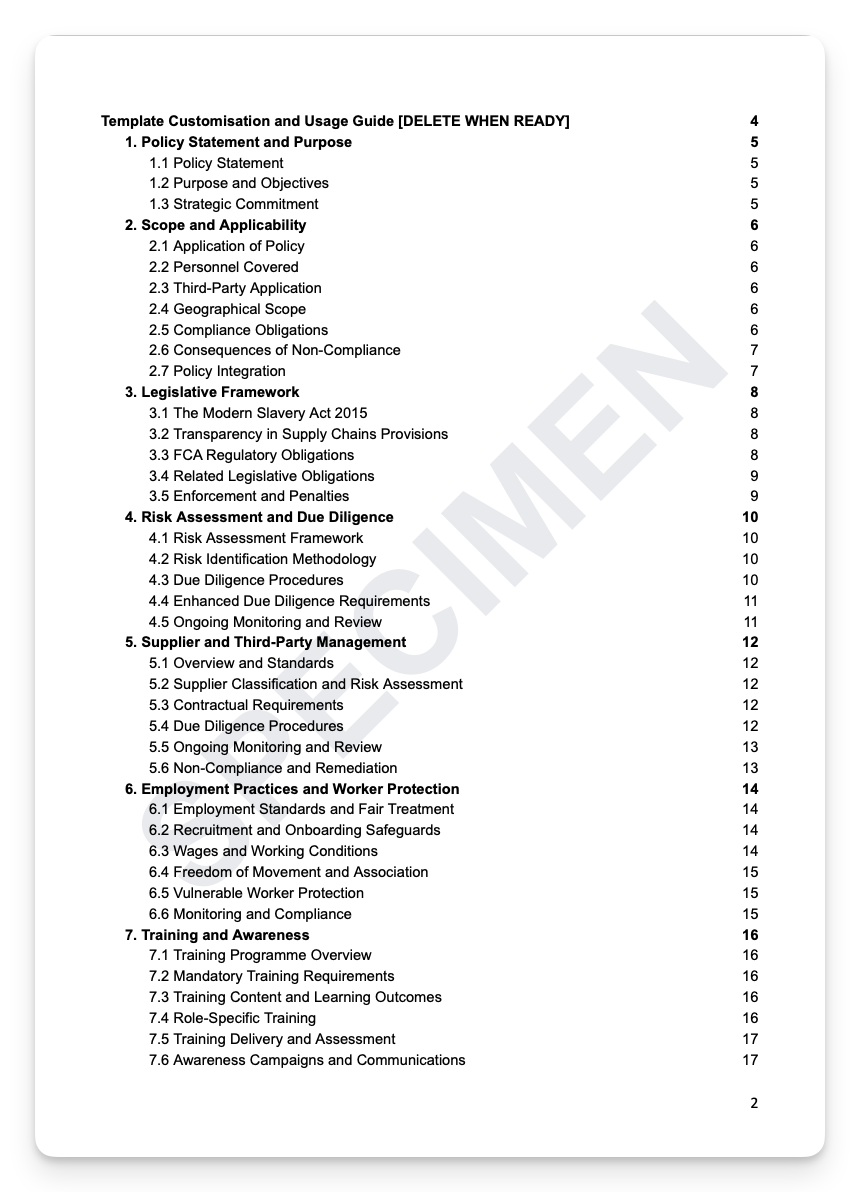
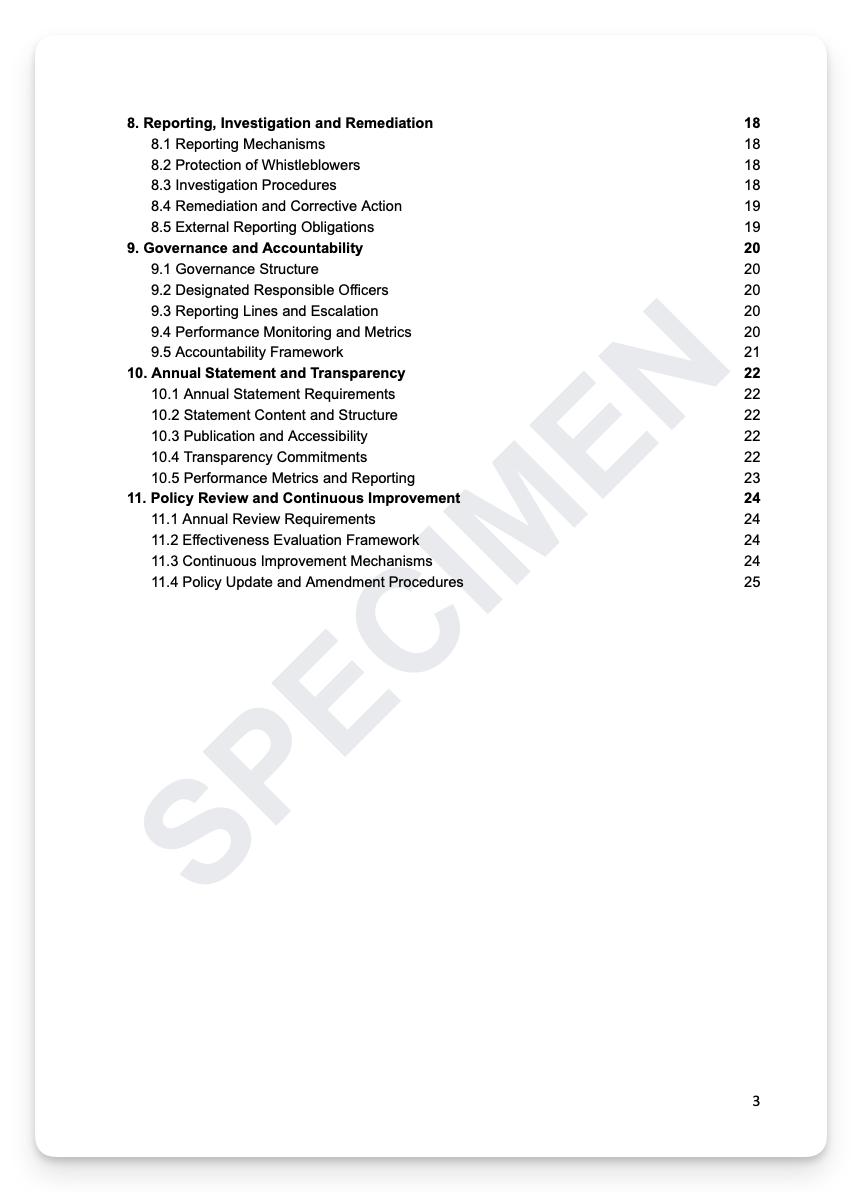
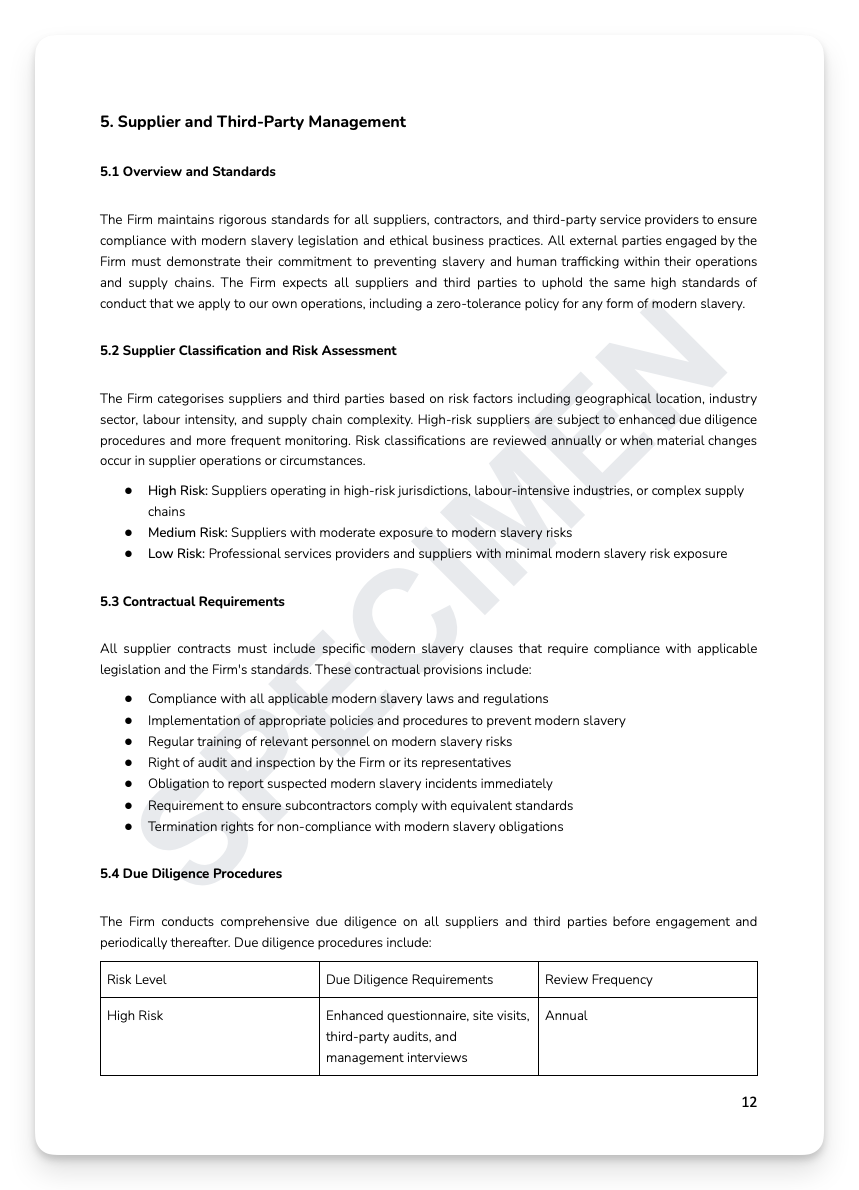
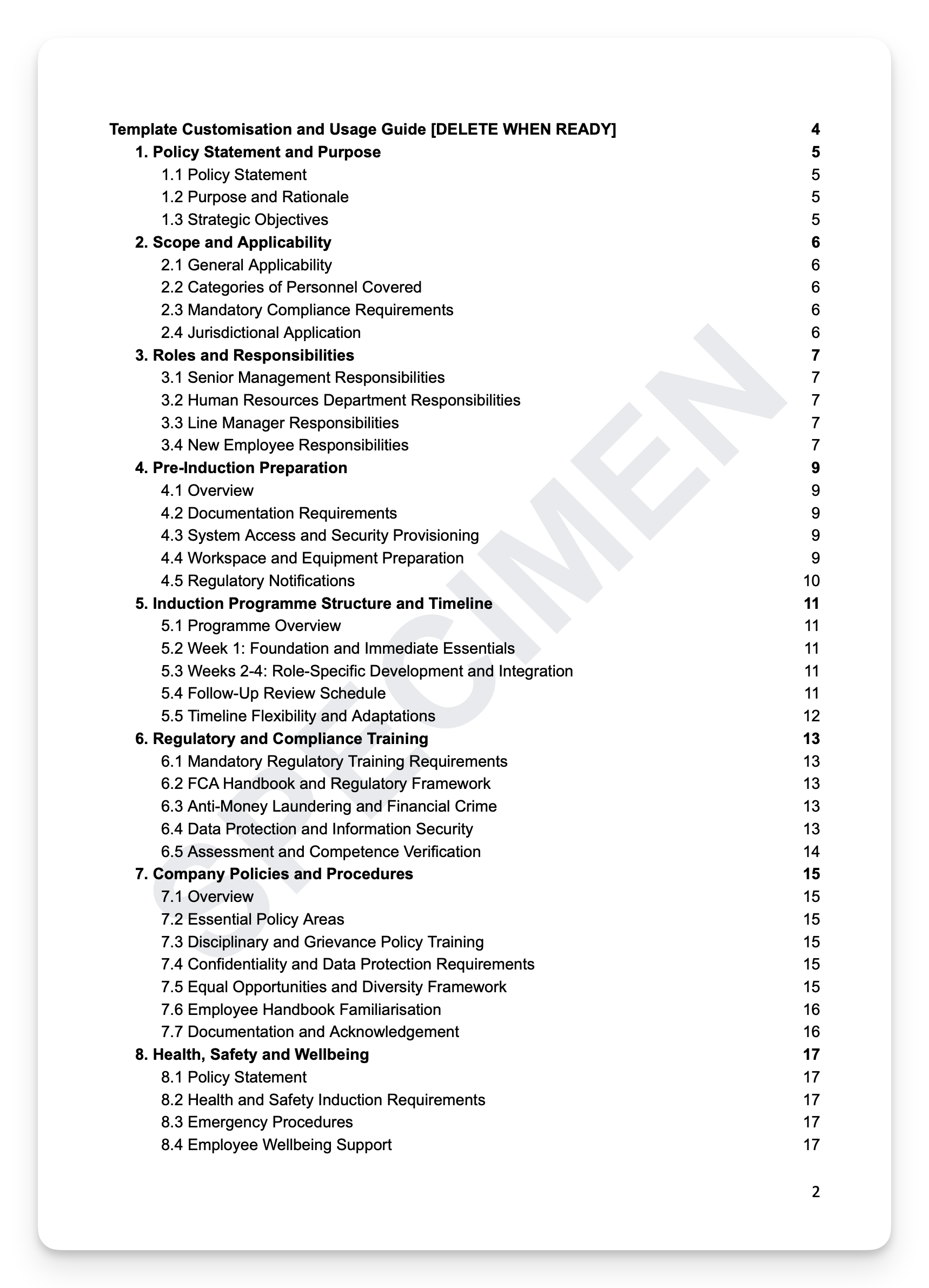
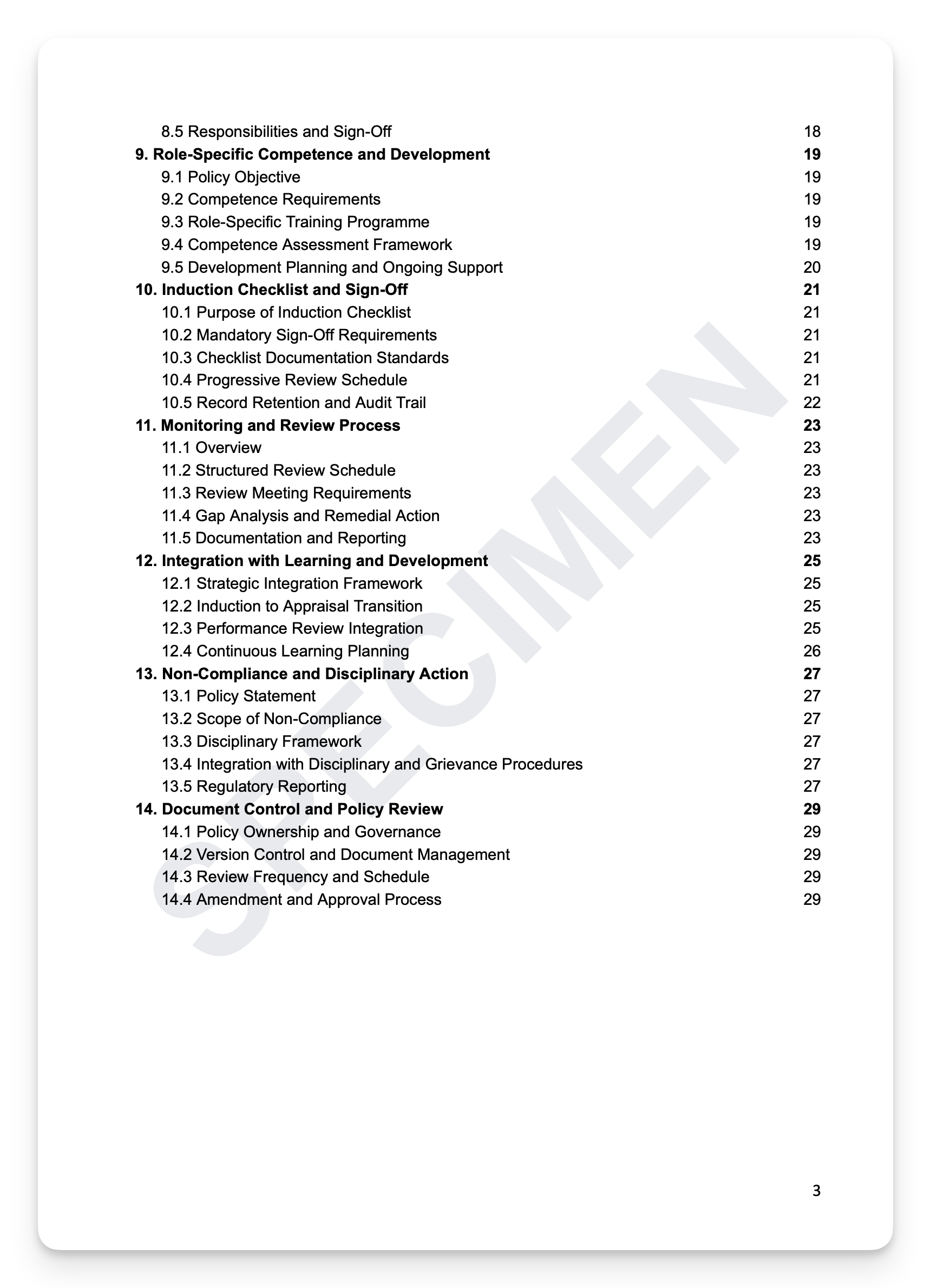
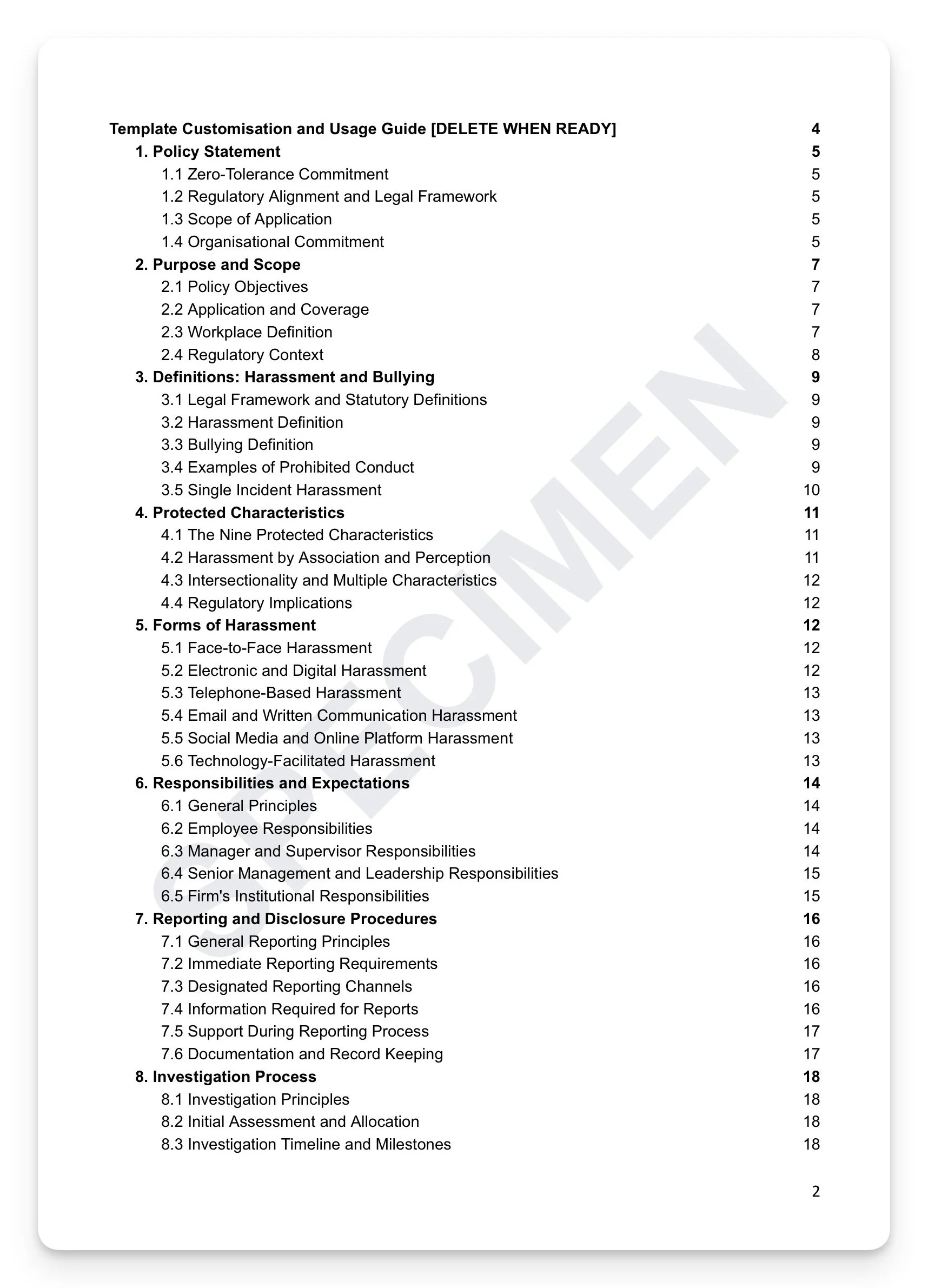
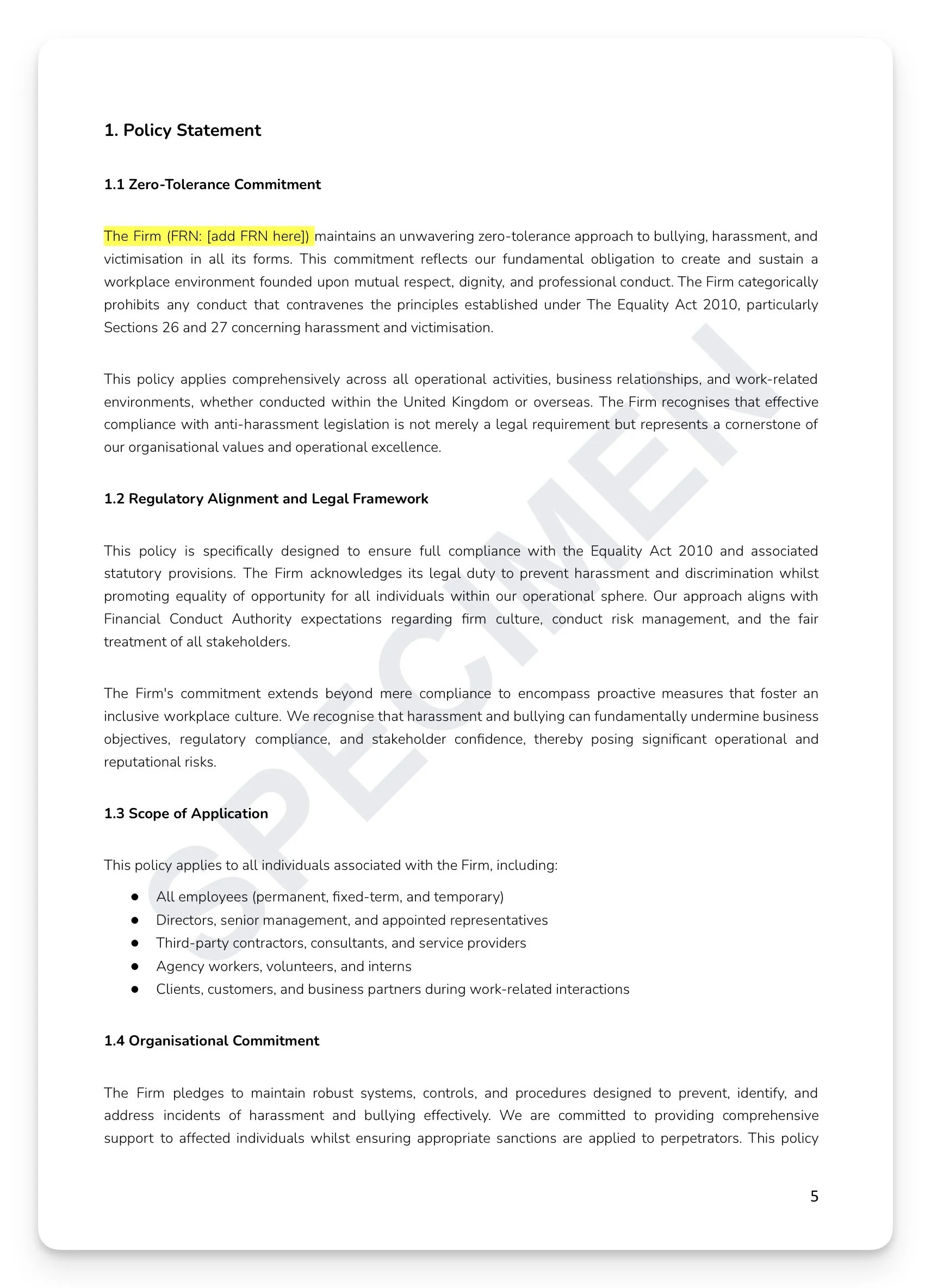
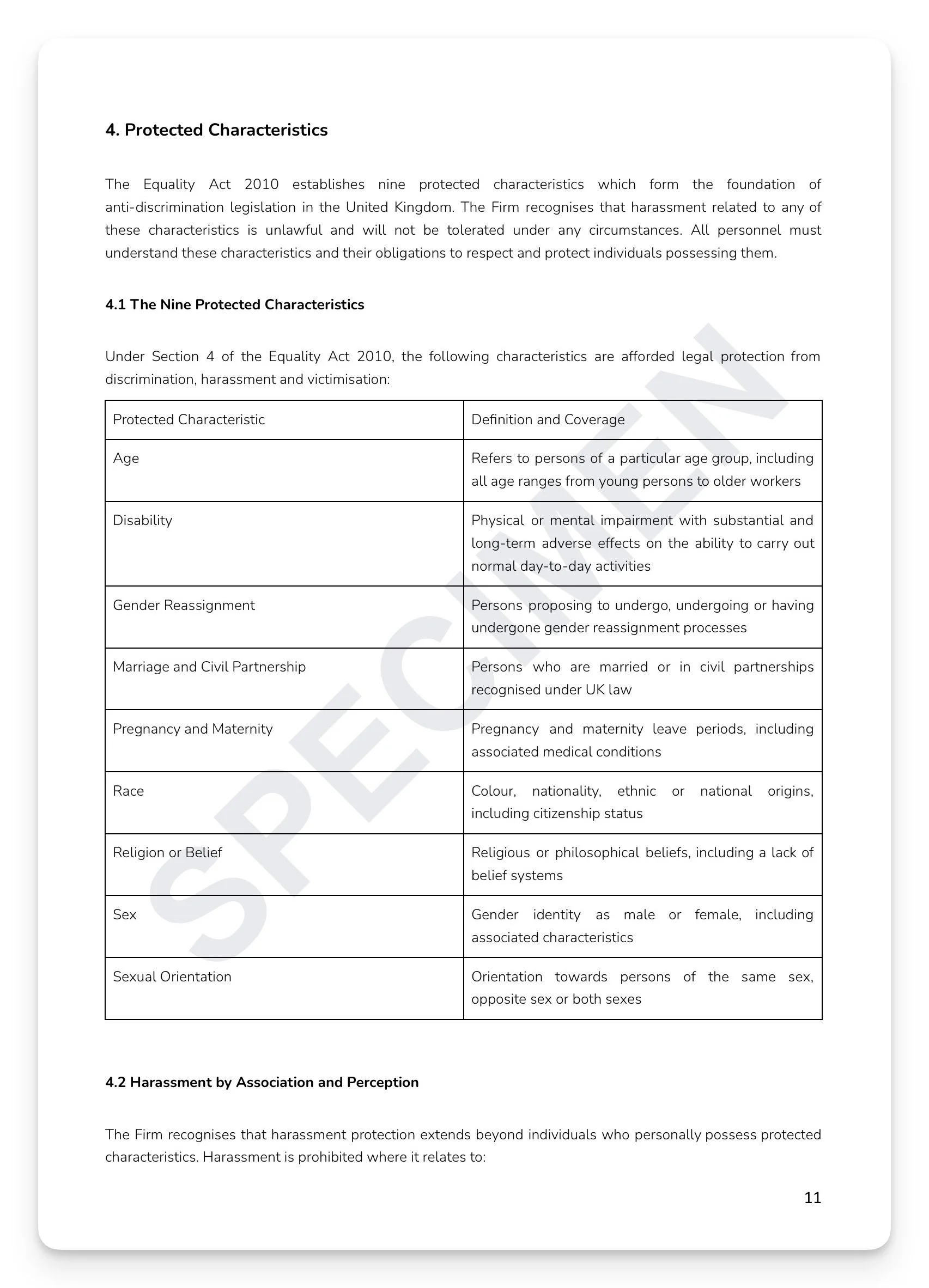
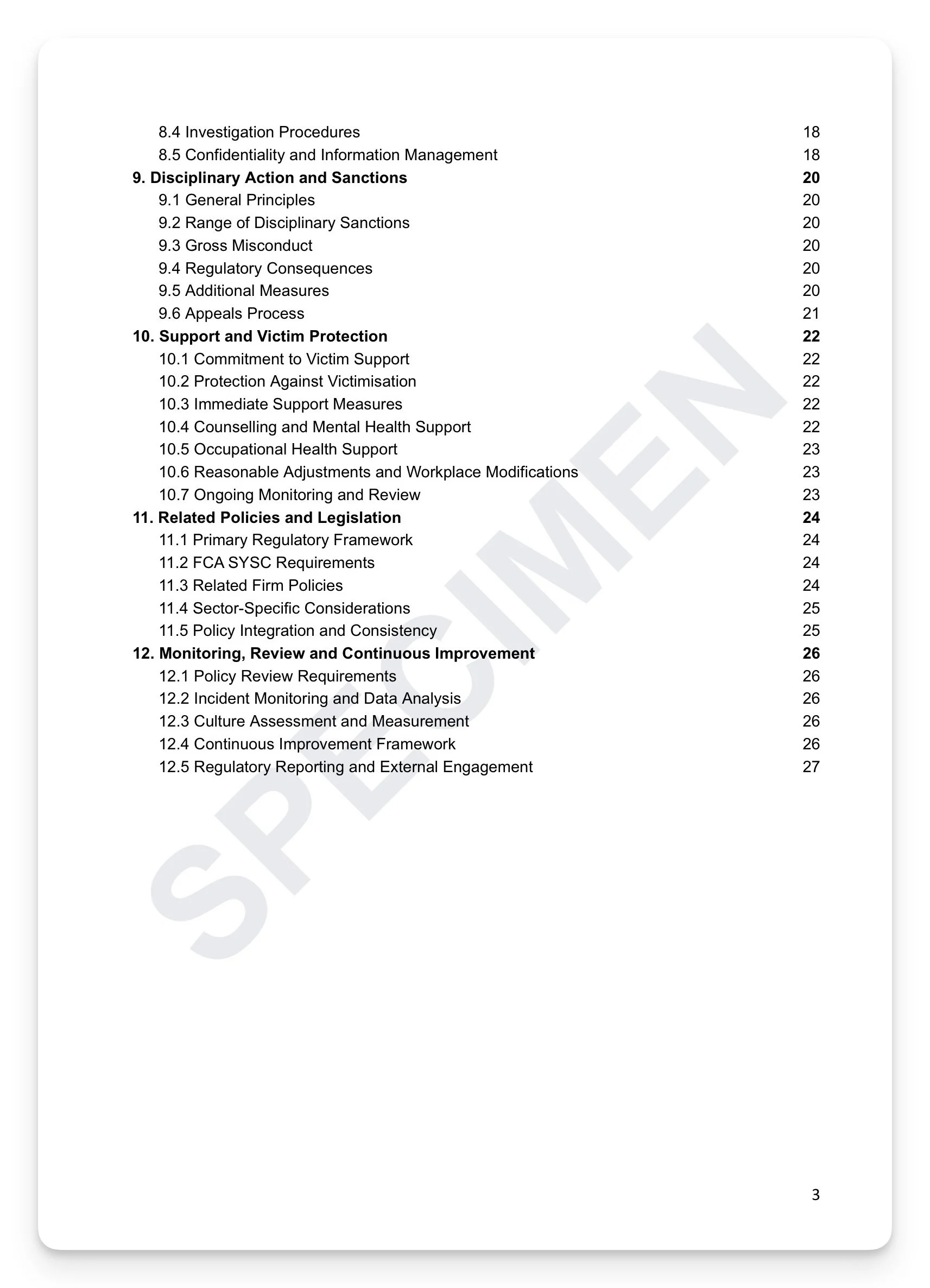
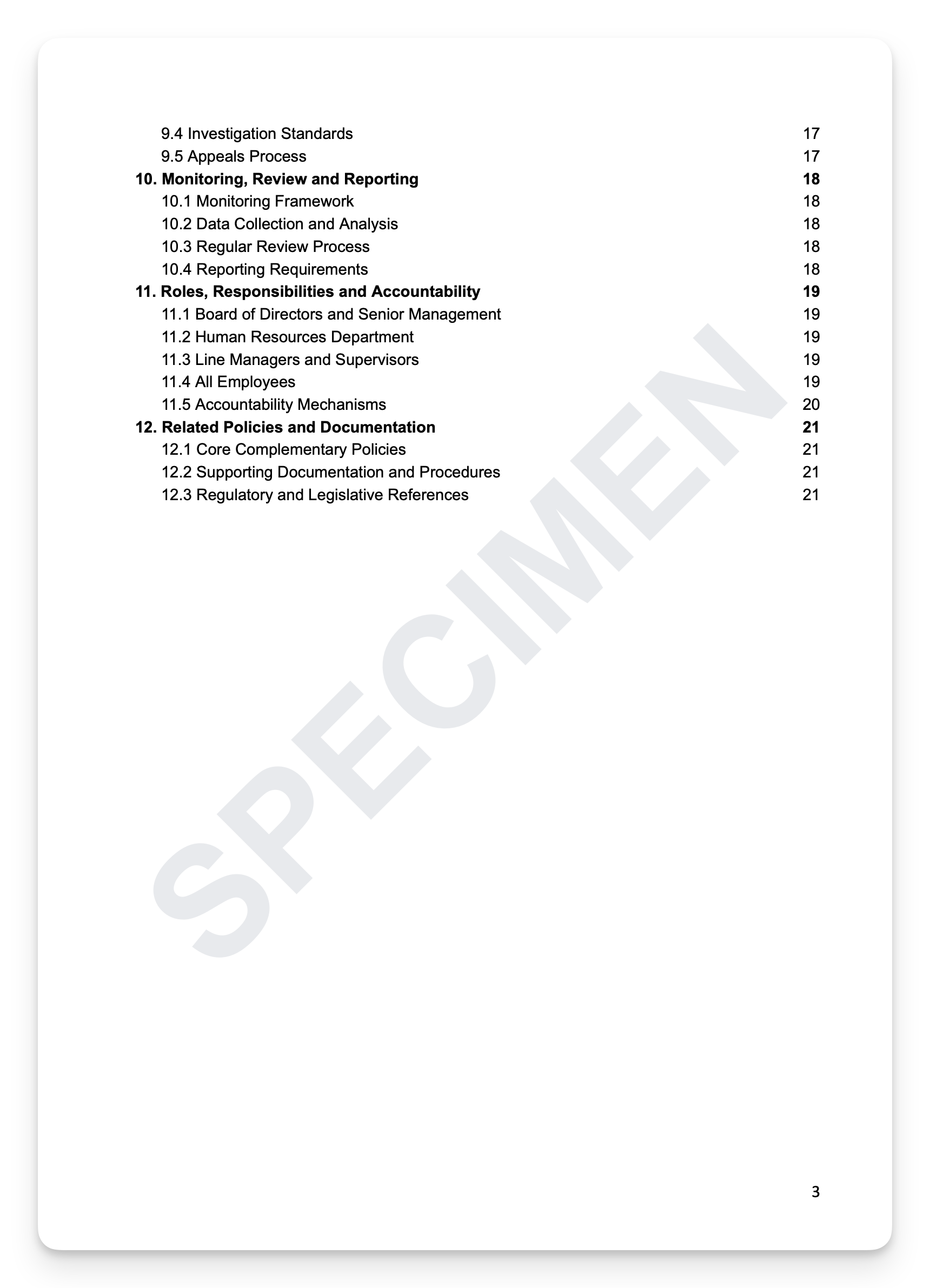
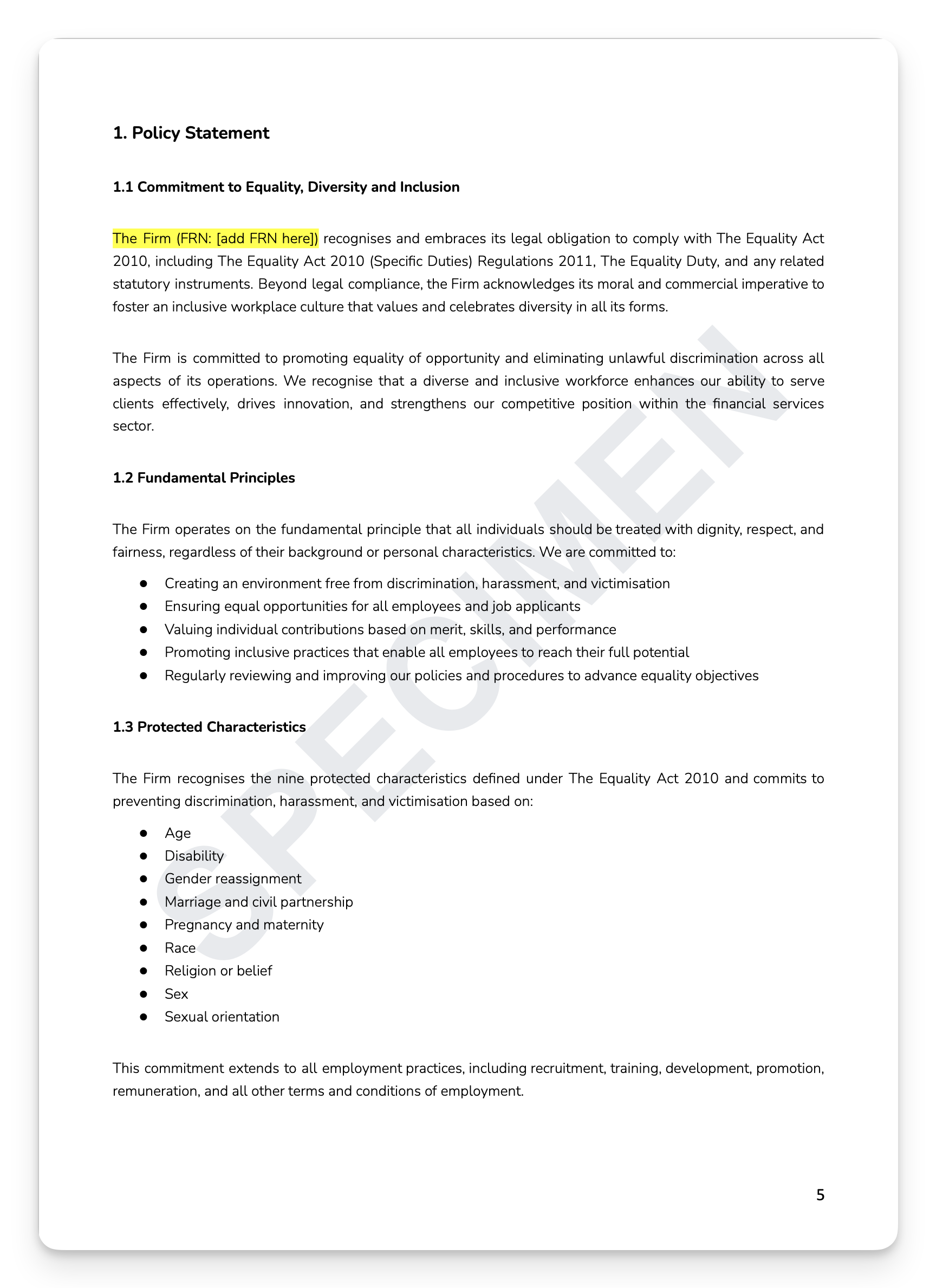
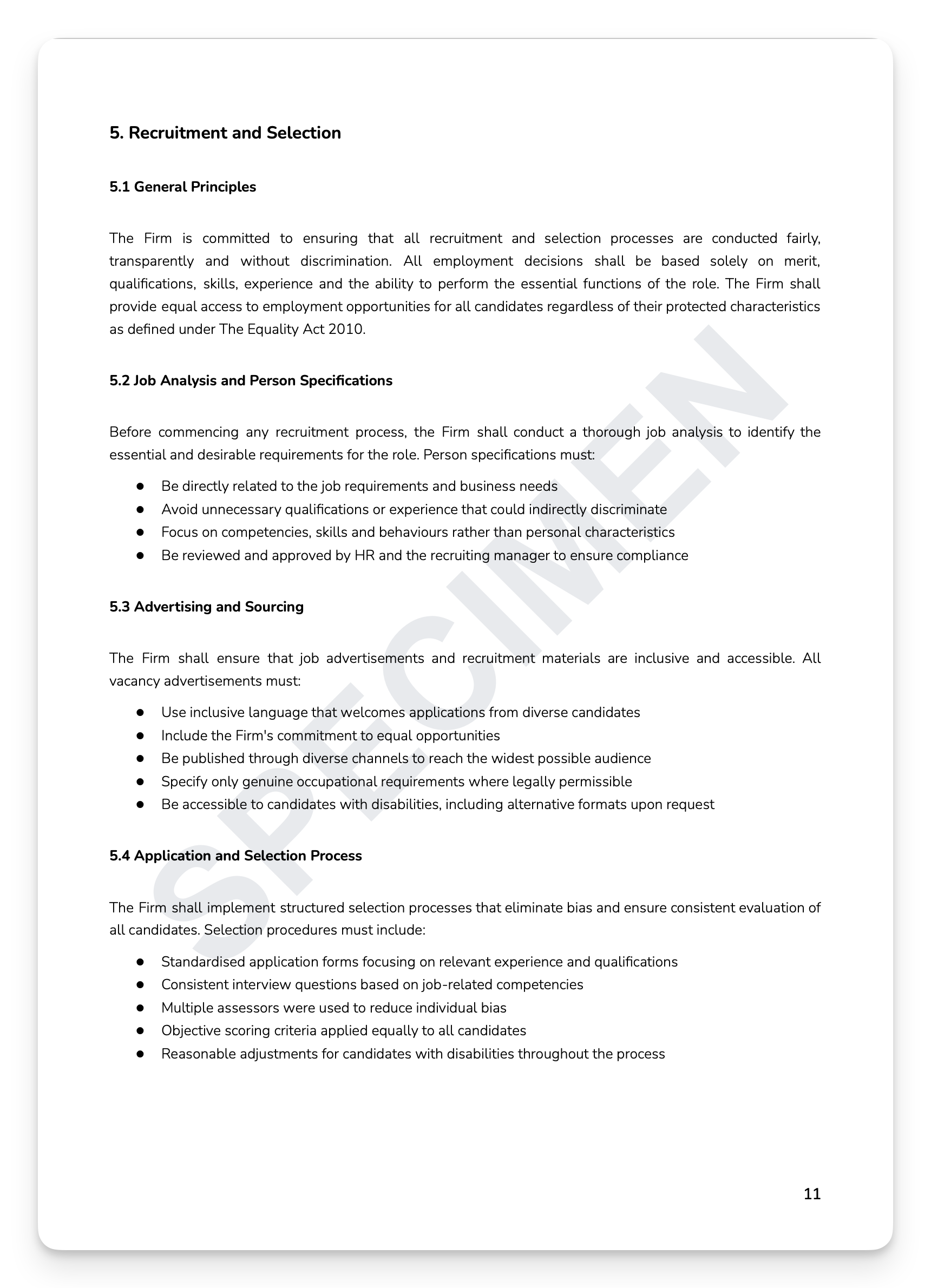
What's included: Full legislative and regulatory mapping — Modern Slavery Act 2015 (four offences: slavery/servitude/forced or compulsory labour/human trafficking/slavery and trafficking in supply chains/modern slavery in employment)/Section 54 (annual statement mandatory for £36m+ turnover/board approval/director signature/homepage publication within 6 months of financial year end/minimum 5-year retention), FCA PRIN 1 (integrity)/PRIN 3 (management and control — extends to supply chain oversight), SM&CR personal accountability for third-party and operational risk oversight, Proceeds of Crime Act 2002 (intersecting money laundering/SAR obligations), Bribery Act 2010 (anti-corruption intersection), Employment Rights Act 1996, Equality Act 2010, National Minimum Wage Act 1998, Working Time Regulations 1998 (worker protection standards mapped against policy commitments) · Risk assessment framework — inherent and residual risk methodology/five high-risk indicators: high-prevalence jurisdictions/forced-labour-associated sectors/labour-intensive supply chains with subcontracting/migrant and temporary labour recruitment/complex supply chains with limited visibility — dynamic risk register with annual review and material change triggers · Three-tier supplier classification — High Risk (high-risk jurisdictions/labour-intensive/complex chains: enhanced questionnaire/site visits/third-party audits/management interviews/annual review), Medium Risk (standard questionnaire/document review/management certification/biennial), Low Risk (basic questionnaire/policy confirmation/triennial) — with mandatory contractual clauses: legislative compliance/appropriate policies/training obligations/right of audit/immediate incident reporting/subcontractor equivalence/termination rights for non-compliance · Employment safeguards framework — recruitment fees borne entirely by firm (not workers)/job advertisements with clear terms/right to work verification/multilingual contracts where required/prohibition on identity document retention/National Living Wage minimum/direct bank transfer payment only/detailed monthly payslips/48-hour maximum working week/11-hour minimum rest between shifts/28-day minimum annual leave/freedom of movement and association explicitly protected · Vulnerable worker protection — enhanced safeguards for migrant workers/temporary staff/young persons/regular welfare checks/independent advice access/multilingual support materials/manager identification and escalation training · Investigation timeline — 24-hour victim safety and acknowledgement/48-hour investigation team establishment and initial risk assessment/5 working day formal investigation commencement/30-day completion with remedial actions — with immediate National Crime Agency/local police/FCA external reporting obligations · Annual statement requirements — board approval/director signature/seven mandatory content areas (structure and supply chains/policies/due diligence processes/risk areas/risk assessment and management/effectiveness of steps/training)/published on homepage/approved within 6 months of financial year end/5-year website retention · Governance structure — Board (ultimate responsibility/annual statement approval/regular compliance reporting)/Modern Slavery Lead (senior executive/direct Board reporting)/Compliance Officer (regulatory oversight)/Risk Manager (risk assessments/mitigation)/HR Director (employment practices/worker protection)/Procurement Manager (supplier due diligence) · KPI monitoring matrix — supplier due diligence completion (monthly/Procurement)/training completion (quarterly/HR)/risk assessment updates (annually/Risk Manager)/incident reporting and resolution (ongoing/Compliance)/remediation actions (quarterly/Senior Management) · Training requirements — all personnel within 3 months of commencement/annual refresher/enhanced role-specific: Procurement and Supply Chain (supplier due diligence/contract management/chain monitoring)/HR Personnel (recruitment practices/worker protection/employment law)/Customer-Facing Staff (vulnerability indicators/response protocols)/Senior Management (governance responsibilities/stakeholder engagement)

Built for: Compliance Officers, Procurement Directors, HR Directors, SMF holders, and board members at FCA-regulated firms who need a complete Modern Slavery Act 2015 and FCA-aligned Modern Slavery Policy covering every supply chain, employment, and governance obligation — from annual statement requirements through supplier due diligence, worker protection, investigation procedures, and accountability structures that demonstrate to both the Home Office and the FCA that modern slavery risk is genuinely managed.

The Modern Slavery Act 2015 Created a Legal Obligation Most FCA-Regulated Firms Treat as a Checkbox. The FCA Treats It as a Governance Matter.

Section 54 of the Modern Slavery Act 2015 requires commercial organisations with annual turnover of £36 million or more to publish an annual slavery and human trafficking statement — board-approved, director-signed, published on the homepage within six months of financial year end. That's the statutory minimum. The FCA's expectations go further. PRIN 1 (integrity) and PRIN 3 (management and control) require firms to conduct business with integrity and maintain adequate risk management systems. Those principles extend to supply chain labour practices, third-party working conditions, and recruitment safeguards for the firm's own workforce. Under SM&CR, the Senior Manager with oversight of third-party relationships and operational risk owns the modern slavery risk question personally. A firm that discovers a supplier is using forced labour and can't demonstrate it conducted due diligence, had contractual protections in place, and had a reporting and remediation process ready isn't just exposed to reputational damage — it's demonstrating inadequate governance to a regulator that already prioritises supply chain risk. For firms in financial services, the intersections are specific: recruitment practices for temporary and migrant staff, cleaning and facilities management contractors, IT subcontractors in low-cost jurisdictions, complex outsourcing arrangements with limited supply chain visibility. The risk isn't abstract. This comprehensive Modern Slavery Policy gives FCA-regulated firms a complete Modern Slavery Act and FCA-aligned framework covering risk assessment, supplier due diligence, employment safeguards, training, investigation procedures, annual statement requirements, governance accountability, and continuous improvement — built to satisfy both the Home Office transparency expectations and the FCA's governance standards.

The annual statement is public. The FCA can read it.

What's included: Full legislative and regulatory mapping — Modern Slavery Act 2015 (four offences: slavery/servitude/forced or compulsory labour/human trafficking/slavery and trafficking in supply chains/modern slavery in employment)/Section 54 (annual statement mandatory for £36m+ turnover/board approval/director signature/homepage publication within 6 months of financial year end/minimum 5-year retention), FCA PRIN 1 (integrity)/PRIN 3 (management and control — extends to supply chain oversight), SM&CR personal accountability for third-party and operational risk oversight, Proceeds of Crime Act 2002 (intersecting money laundering/SAR obligations), Bribery Act 2010 (anti-corruption intersection), Employment Rights Act 1996, Equality Act 2010, National Minimum Wage Act 1998, Working Time Regulations 1998 (worker protection standards mapped against policy commitments) · Risk assessment framework — inherent and residual risk methodology/five high-risk indicators: high-prevalence jurisdictions/forced-labour-associated sectors/labour-intensive supply chains with subcontracting/migrant and temporary labour recruitment/complex supply chains with limited visibility — dynamic risk register with annual review and material change triggers · Three-tier supplier classification — High Risk (high-risk jurisdictions/labour-intensive/complex chains: enhanced questionnaire/site visits/third-party audits/management interviews/annual review), Medium Risk (standard questionnaire/document review/management certification/biennial), Low Risk (basic questionnaire/policy confirmation/triennial) — with mandatory contractual clauses: legislative compliance/appropriate policies/training obligations/right of audit/immediate incident reporting/subcontractor equivalence/termination rights for non-compliance · Employment safeguards framework — recruitment fees borne entirely by firm (not workers)/job advertisements with clear terms/right to work verification/multilingual contracts where required/prohibition on identity document retention/National Living Wage minimum/direct bank transfer payment only/detailed monthly payslips/48-hour maximum working week/11-hour minimum rest between shifts/28-day minimum annual leave/freedom of movement and association explicitly protected · Vulnerable worker protection — enhanced safeguards for migrant workers/temporary staff/young persons/regular welfare checks/independent advice access/multilingual support materials/manager identification and escalation training · Investigation timeline — 24-hour victim safety and acknowledgement/48-hour investigation team establishment and initial risk assessment/5 working day formal investigation commencement/30-day completion with remedial actions — with immediate National Crime Agency/local police/FCA external reporting obligations · Annual statement requirements — board approval/director signature/seven mandatory content areas (structure and supply chains/policies/due diligence processes/risk areas/risk assessment and management/effectiveness of steps/training)/published on homepage/approved within 6 months of financial year end/5-year website retention · Governance structure — Board (ultimate responsibility/annual statement approval/regular compliance reporting)/Modern Slavery Lead (senior executive/direct Board reporting)/Compliance Officer (regulatory oversight)/Risk Manager (risk assessments/mitigation)/HR Director (employment practices/worker protection)/Procurement Manager (supplier due diligence) · KPI monitoring matrix — supplier due diligence completion (monthly/Procurement)/training completion (quarterly/HR)/risk assessment updates (annually/Risk Manager)/incident reporting and resolution (ongoing/Compliance)/remediation actions (quarterly/Senior Management) · Training requirements — all personnel within 3 months of commencement/annual refresher/enhanced role-specific: Procurement and Supply Chain (supplier due diligence/contract management/chain monitoring)/HR Personnel (recruitment practices/worker protection/employment law)/Customer-Facing Staff (vulnerability indicators/response protocols)/Senior Management (governance responsibilities/stakeholder engagement)

Built for: Compliance Officers, Procurement Directors, HR Directors, SMF holders, and board members at FCA-regulated firms who need a complete Modern Slavery Act 2015 and FCA-aligned Modern Slavery Policy covering every supply chain, employment, and governance obligation — from annual statement requirements through supplier due diligence, worker protection, investigation procedures, and accountability structures that demonstrate to both the Home Office and the FCA that modern slavery risk is genuinely managed.