Environmental Sustainability Policy Template

£50.00

The FCA's ESG Agenda Is No Longer Aspirational. It's Supervisory.

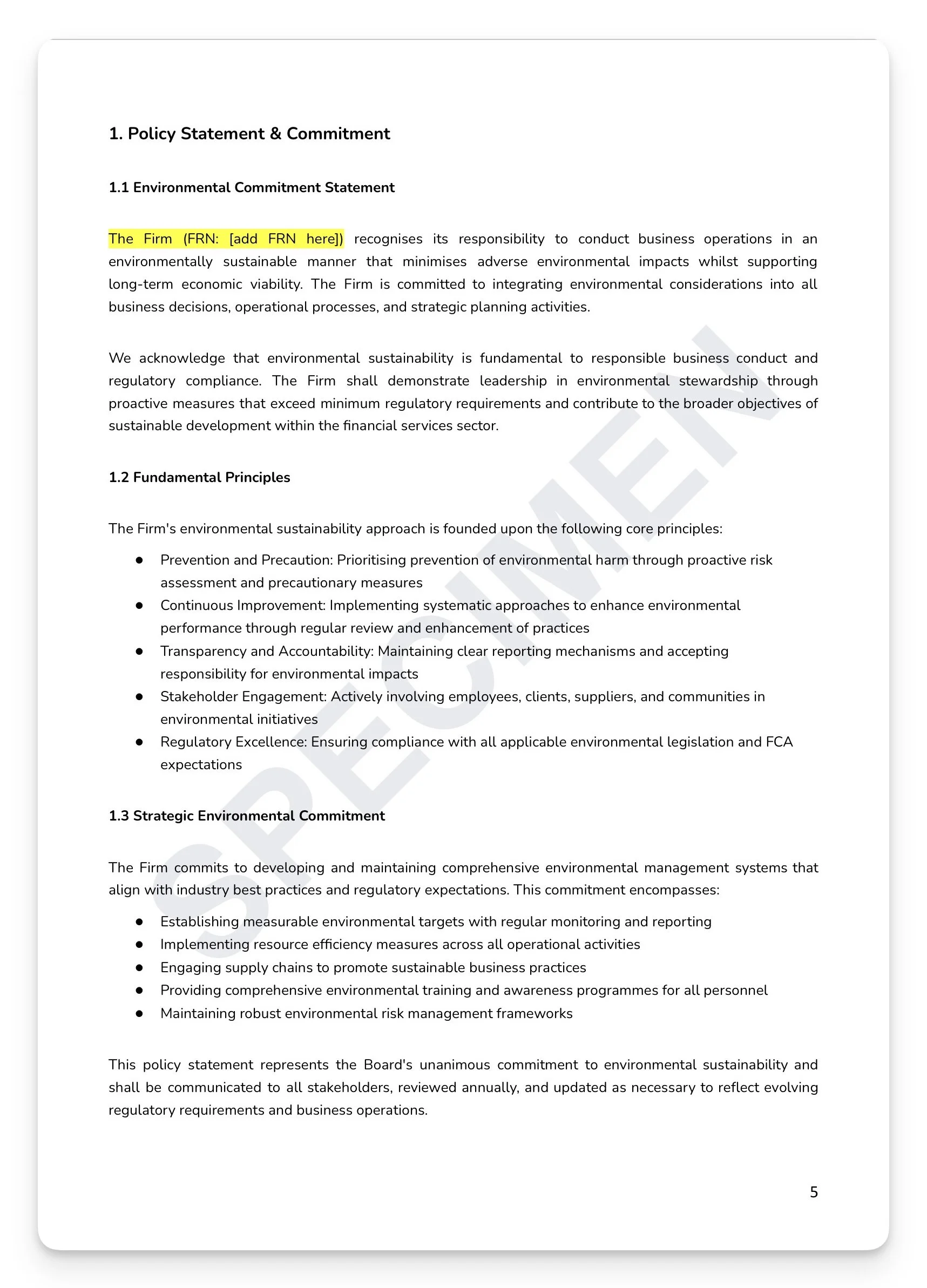
For most of the last decade, an Environmental Sustainability Policy was a governance nicety — something firms had because it looked responsible. That changed. The FCA's focus on ESG, climate-related financial risk, and sustainable finance has moved from consultation papers into supervisory expectations, disclosure requirements, and conduct standards. FCA-regulated firms now face a specific set of environmental obligations: climate-related financial disclosures where applicable, the requirement that environmental claims in consumer communications are fair, clear and not misleading under COBS/ICOBS standards, the integration of climate and environmental risks into SYSC risk management frameworks, and growing scrutiny of greenwashing — firms overstating environmental credentials in ways that constitute misleading conduct. Beyond regulatory compliance, institutional clients, suppliers, and increasingly retail customers are assessing firms against ESG criteria as part of their own due diligence. A firm without a documented, measurable, governed Environmental Sustainability Policy lacks the evidence to satisfy those assessments. This comprehensive Environmental Sustainability Policy gives FCA-regulated firms a complete framework covering governance accountability, waste management, circular economy implementation, energy and resource efficiency, water conservation, supply chain sustainability, employee training, environmental risk assessment, full legislative compliance mapping, and measurable targets with phased implementation timelines — structured to satisfy both FCA ESG expectations and UK environmental legislation simultaneously.

ESG used to be a differentiator. Now it's a baseline. And greenwashing is an enforcement risk.

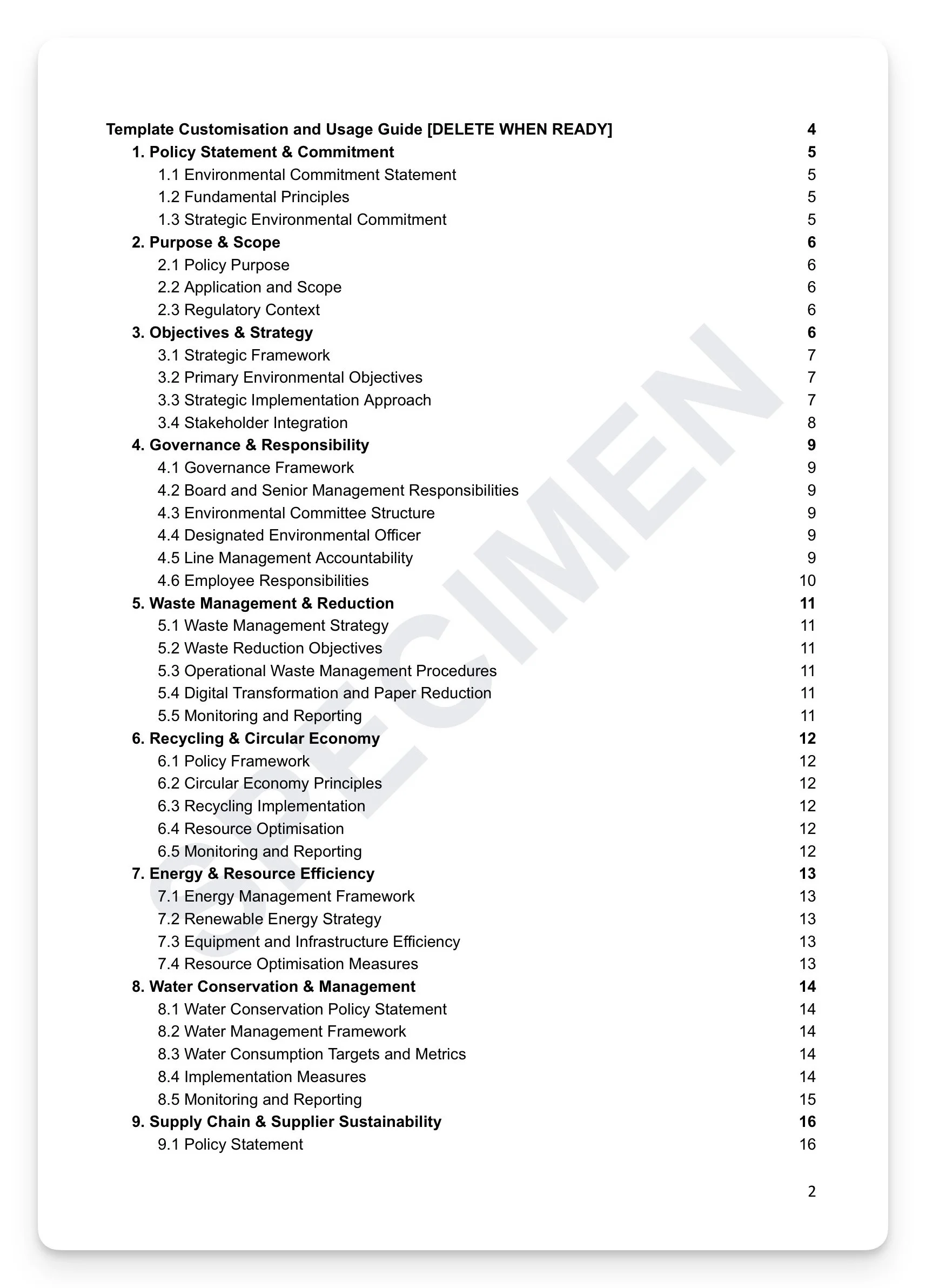
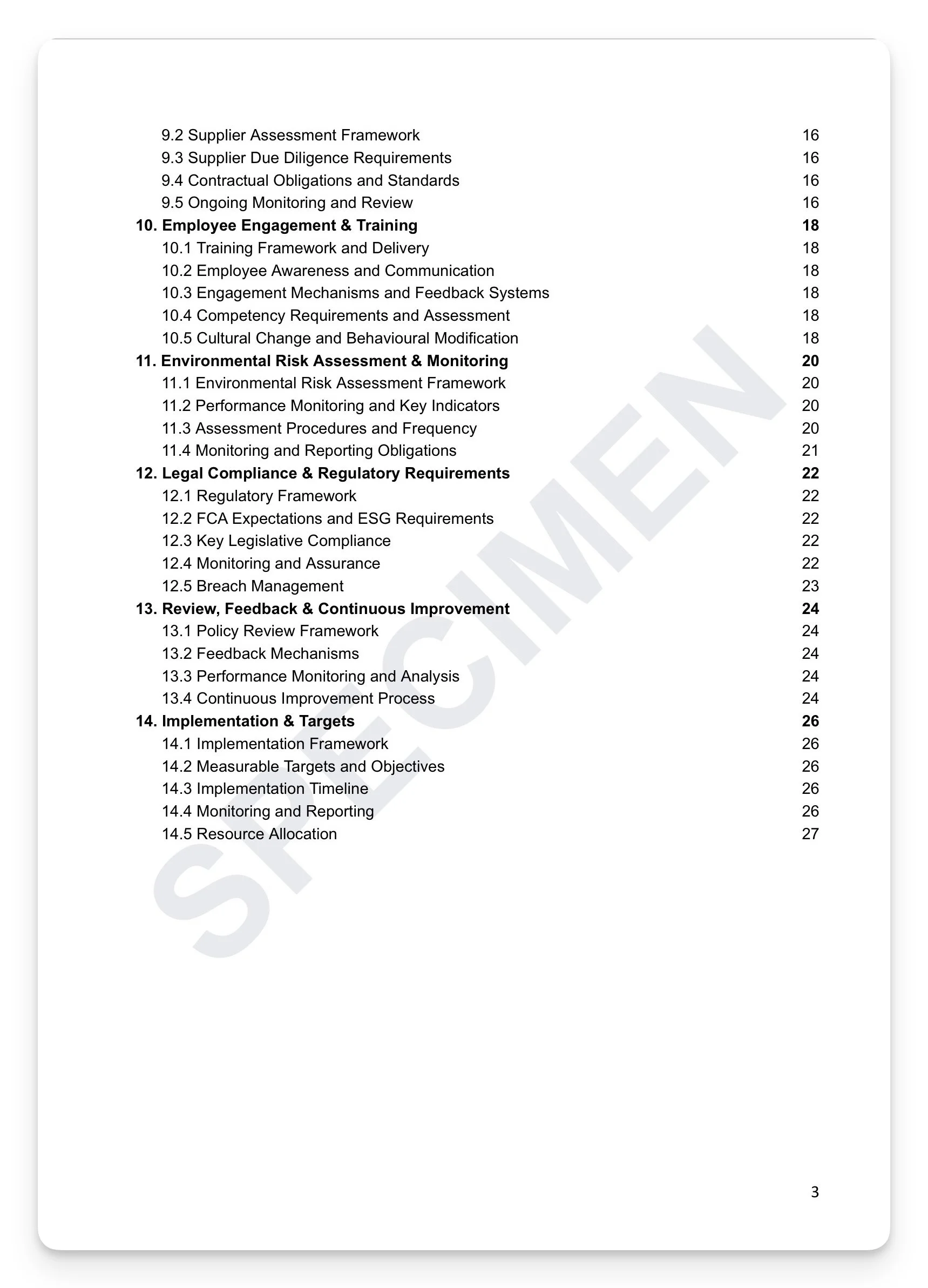
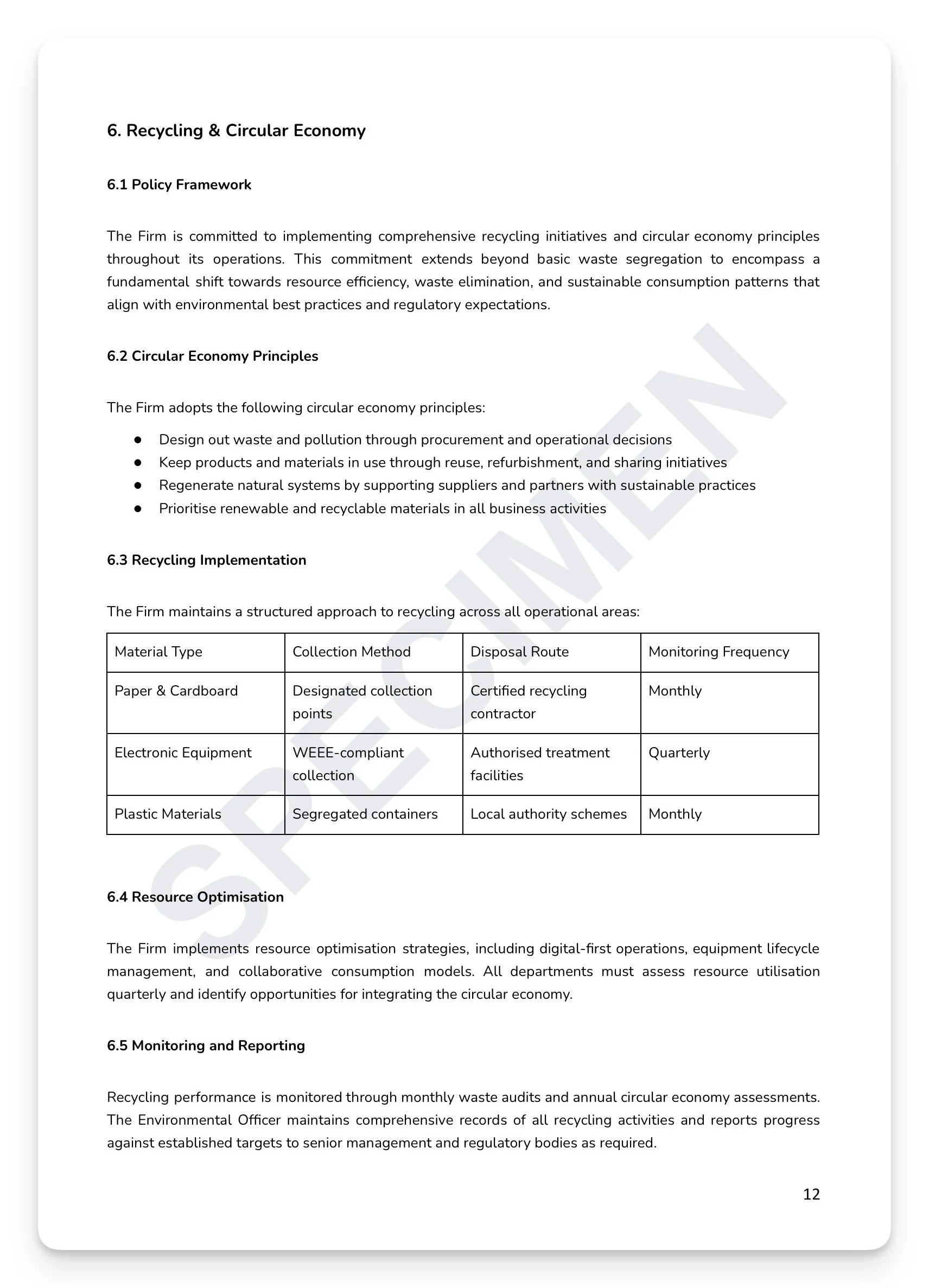
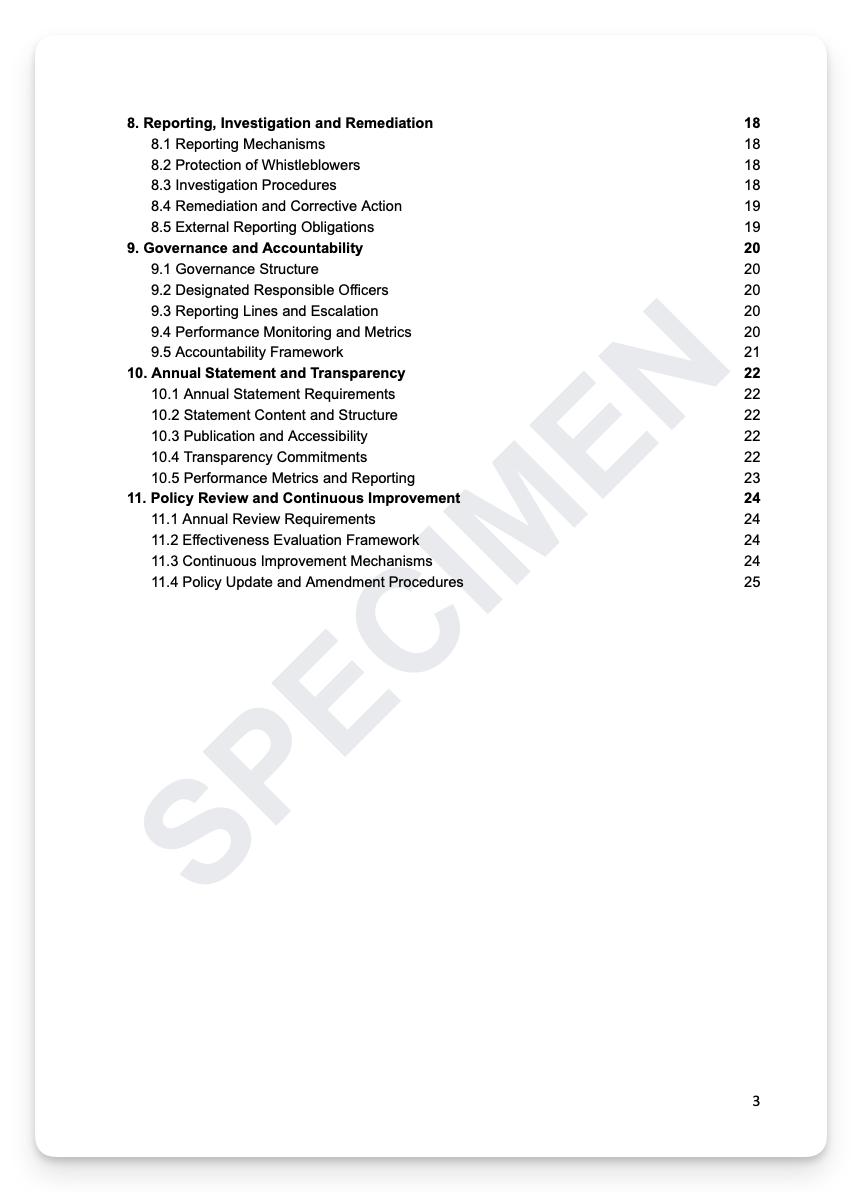
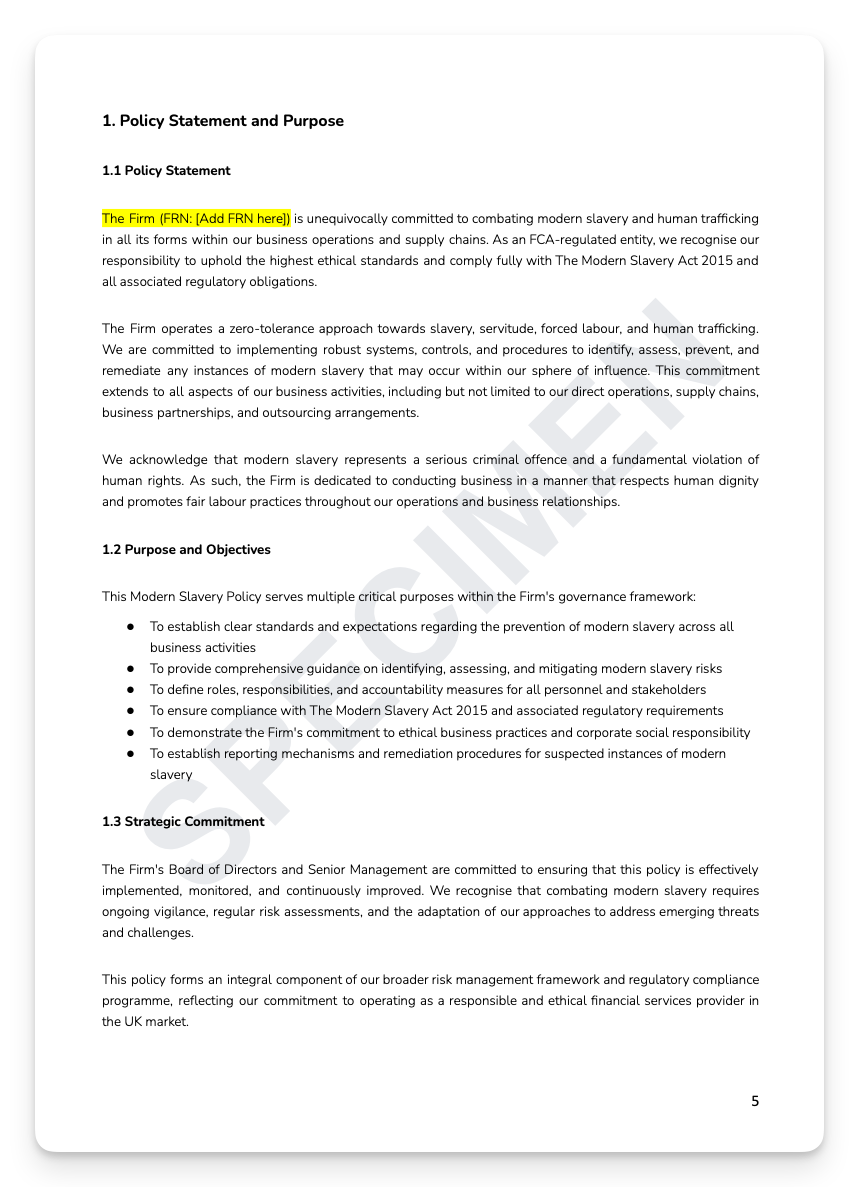
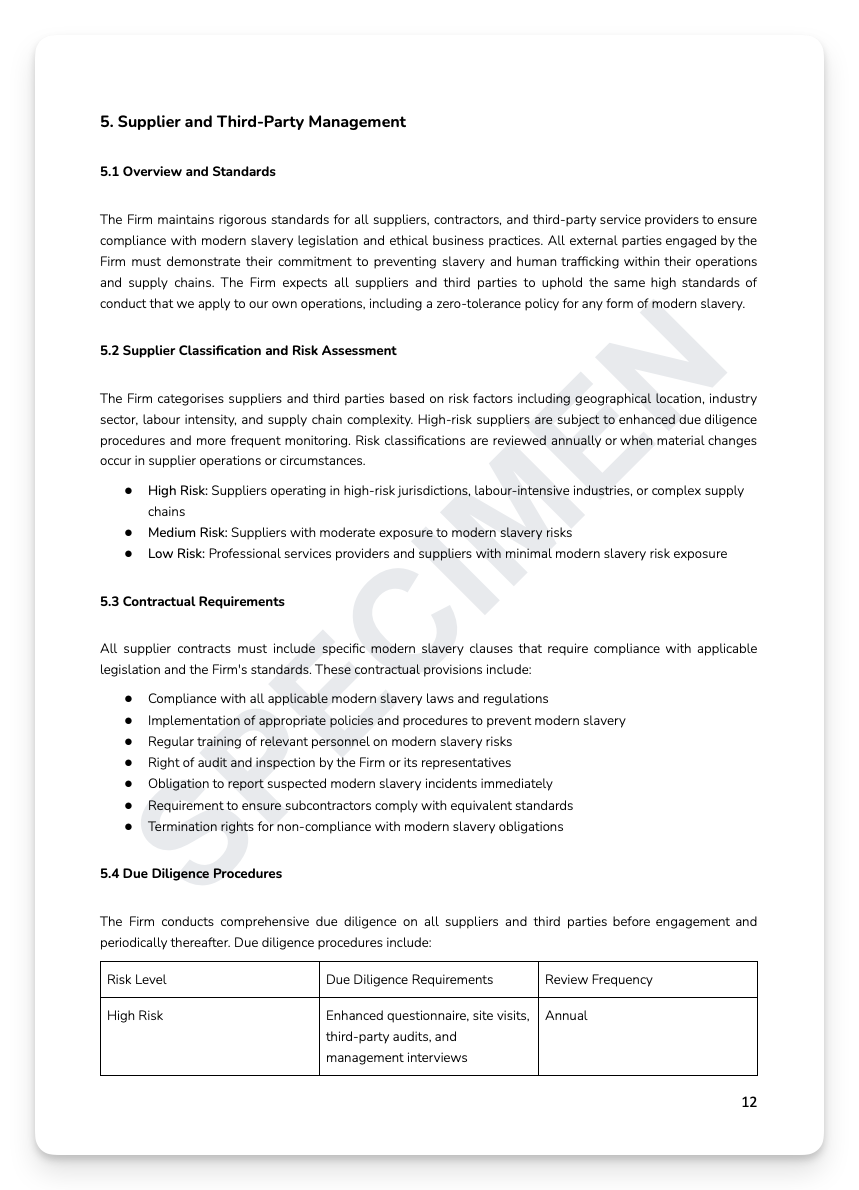
What's included: Full regulatory and legislative mapping — FCA ESG expectations (climate-related financial disclosure requirements/sustainable finance policy statements/fair clear not misleading environmental claims in consumer communications/integration of environmental factors into risk management frameworks), Climate Change Act 2008 (carbon budgeting and reporting), Environmental Protection Act 1990 (waste management and disposal duties), Water Resources Act 1991 (water abstraction and discharge), Energy Act 2013 (energy efficiency reporting), ISO 14001 (supplier environmental management system standard), WEEE Regulations (electronic equipment disposal), UK GDPR/DPA 2018 (environmental data processing), SYSC (environmental risk integration into firm risk management framework) · Four-tier governance structure — Board (annual policy approval/quarterly performance review/resource allocation/visible commitment mandate), Environmental Committee (quarterly: target monitoring/risk review/management system effectiveness/policy recommendations), Designated Environmental Officer (implementation/training coordination/legislative compliance/regulatory reporting), Line Management (departmental performance accountability/improvement identification/employee engagement) · Quantified targets framework — carbon emissions 25% reduction within 3 years/zero waste to landfill/waste diversion 75% minimum/water consumption 10% annual reduction/water consumption per employee 15% reduction within 24 months/energy consumption 20% reduction per employee within 18 months/80% of suppliers demonstrating environmental compliance within 24 months/paperless operations 80% of processes within 12 months · Three-phase implementation timeline — Phase 1 Months 1-6 (baseline assessment/staff training/initial waste reduction), Phase 2 Months 7-18 (energy efficiency upgrades/supplier engagement/monitoring systems), Phase 3 Months 19-36 (advanced sustainability/carbon reduction/target achievement) · Waste hierarchy framework — reduce/reuse/recycle/recover/segregation at source/certified contractor engagement/waste transfer documentation/digital transformation paper reduction/20% year-on-year waste reduction target · Circular economy principles — design out waste through procurement/keep materials in use/regenerate natural systems/prioritise renewable and recyclable materials — with recycling matrix: paper and cardboard/electronic equipment WEEE-compliant/plastic materials · Supply chain sustainability — pre-engagement environmental assessment (ISO 14001 or equivalent/carbon footprint reduction strategies/waste management/water conservation/legislative compliance/sustainability reporting), risk-based due diligence categorisation, mandatory contractual clauses (environmental standards adherence/sustainability KPI reporting/continuous improvement commitments/audit rights/incident notification), quarterly performance reviews/annual sustainability assessments/contract termination for non-compliance · KPI monitoring matrix — energy consumption (kWh per employee/renewable percentage/monthly), waste management (total generated/recycling rates/landfill diversion/monthly), water usage (litres per employee/efficiency improvements/quarterly), carbon emissions (Scope 1/2/3/carbon intensity ratios/quarterly) · Renewable energy strategy — certified green energy tariff procurement/on-site generation assessment/energy storage solutions/emerging technology evaluation · Water conservation implementation — low-flow fixtures/automatic taps/dual-flush systems/leak rectification programme/employee awareness campaigns · Employee engagement framework — mandatory induction/annual refresher/role-specific workshops/green champion networks/environmental suggestion schemes/sustainability surveys/recognition programmes/annual performance review environmental competency assessment · Greenwashing risk management — FCA fair clear not misleading standards applied to all environmental claims in consumer-facing communications · Breach management — immediate escalation through incident management/regulatory notification where required/corrective action plan implementation · Quarterly FCA regulatory horizon scanning for emerging ESG requirements and sustainable finance developments

Built for: Compliance Officers, Sustainability Officers, SMF16 holders, board members, and operations teams at FCA-regulated firms who need a complete Environmental Sustainability Policy that satisfies both FCA ESG supervisory expectations and UK environmental legislative obligations — with measurable targets, governance accountability, supply chain requirements, and a phased implementation framework that turns environmental commitment from a statement into an evidenced management system.

The FCA's ESG Agenda Is No Longer Aspirational. It's Supervisory.

For most of the last decade, an Environmental Sustainability Policy was a governance nicety — something firms had because it looked responsible. That changed. The FCA's focus on ESG, climate-related financial risk, and sustainable finance has moved from consultation papers into supervisory expectations, disclosure requirements, and conduct standards. FCA-regulated firms now face a specific set of environmental obligations: climate-related financial disclosures where applicable, the requirement that environmental claims in consumer communications are fair, clear and not misleading under COBS/ICOBS standards, the integration of climate and environmental risks into SYSC risk management frameworks, and growing scrutiny of greenwashing — firms overstating environmental credentials in ways that constitute misleading conduct. Beyond regulatory compliance, institutional clients, suppliers, and increasingly retail customers are assessing firms against ESG criteria as part of their own due diligence. A firm without a documented, measurable, governed Environmental Sustainability Policy lacks the evidence to satisfy those assessments. This comprehensive Environmental Sustainability Policy gives FCA-regulated firms a complete framework covering governance accountability, waste management, circular economy implementation, energy and resource efficiency, water conservation, supply chain sustainability, employee training, environmental risk assessment, full legislative compliance mapping, and measurable targets with phased implementation timelines — structured to satisfy both FCA ESG expectations and UK environmental legislation simultaneously.

ESG used to be a differentiator. Now it's a baseline. And greenwashing is an enforcement risk.

What's included: Full regulatory and legislative mapping — FCA ESG expectations (climate-related financial disclosure requirements/sustainable finance policy statements/fair clear not misleading environmental claims in consumer communications/integration of environmental factors into risk management frameworks), Climate Change Act 2008 (carbon budgeting and reporting), Environmental Protection Act 1990 (waste management and disposal duties), Water Resources Act 1991 (water abstraction and discharge), Energy Act 2013 (energy efficiency reporting), ISO 14001 (supplier environmental management system standard), WEEE Regulations (electronic equipment disposal), UK GDPR/DPA 2018 (environmental data processing), SYSC (environmental risk integration into firm risk management framework) · Four-tier governance structure — Board (annual policy approval/quarterly performance review/resource allocation/visible commitment mandate), Environmental Committee (quarterly: target monitoring/risk review/management system effectiveness/policy recommendations), Designated Environmental Officer (implementation/training coordination/legislative compliance/regulatory reporting), Line Management (departmental performance accountability/improvement identification/employee engagement) · Quantified targets framework — carbon emissions 25% reduction within 3 years/zero waste to landfill/waste diversion 75% minimum/water consumption 10% annual reduction/water consumption per employee 15% reduction within 24 months/energy consumption 20% reduction per employee within 18 months/80% of suppliers demonstrating environmental compliance within 24 months/paperless operations 80% of processes within 12 months · Three-phase implementation timeline — Phase 1 Months 1-6 (baseline assessment/staff training/initial waste reduction), Phase 2 Months 7-18 (energy efficiency upgrades/supplier engagement/monitoring systems), Phase 3 Months 19-36 (advanced sustainability/carbon reduction/target achievement) · Waste hierarchy framework — reduce/reuse/recycle/recover/segregation at source/certified contractor engagement/waste transfer documentation/digital transformation paper reduction/20% year-on-year waste reduction target · Circular economy principles — design out waste through procurement/keep materials in use/regenerate natural systems/prioritise renewable and recyclable materials — with recycling matrix: paper and cardboard/electronic equipment WEEE-compliant/plastic materials · Supply chain sustainability — pre-engagement environmental assessment (ISO 14001 or equivalent/carbon footprint reduction strategies/waste management/water conservation/legislative compliance/sustainability reporting), risk-based due diligence categorisation, mandatory contractual clauses (environmental standards adherence/sustainability KPI reporting/continuous improvement commitments/audit rights/incident notification), quarterly performance reviews/annual sustainability assessments/contract termination for non-compliance · KPI monitoring matrix — energy consumption (kWh per employee/renewable percentage/monthly), waste management (total generated/recycling rates/landfill diversion/monthly), water usage (litres per employee/efficiency improvements/quarterly), carbon emissions (Scope 1/2/3/carbon intensity ratios/quarterly) · Renewable energy strategy — certified green energy tariff procurement/on-site generation assessment/energy storage solutions/emerging technology evaluation · Water conservation implementation — low-flow fixtures/automatic taps/dual-flush systems/leak rectification programme/employee awareness campaigns · Employee engagement framework — mandatory induction/annual refresher/role-specific workshops/green champion networks/environmental suggestion schemes/sustainability surveys/recognition programmes/annual performance review environmental competency assessment · Greenwashing risk management — FCA fair clear not misleading standards applied to all environmental claims in consumer-facing communications · Breach management — immediate escalation through incident management/regulatory notification where required/corrective action plan implementation · Quarterly FCA regulatory horizon scanning for emerging ESG requirements and sustainable finance developments

Built for: Compliance Officers, Sustainability Officers, SMF16 holders, board members, and operations teams at FCA-regulated firms who need a complete Environmental Sustainability Policy that satisfies both FCA ESG supervisory expectations and UK environmental legislative obligations — with measurable targets, governance accountability, supply chain requirements, and a phased implementation framework that turns environmental commitment from a statement into an evidenced management system.