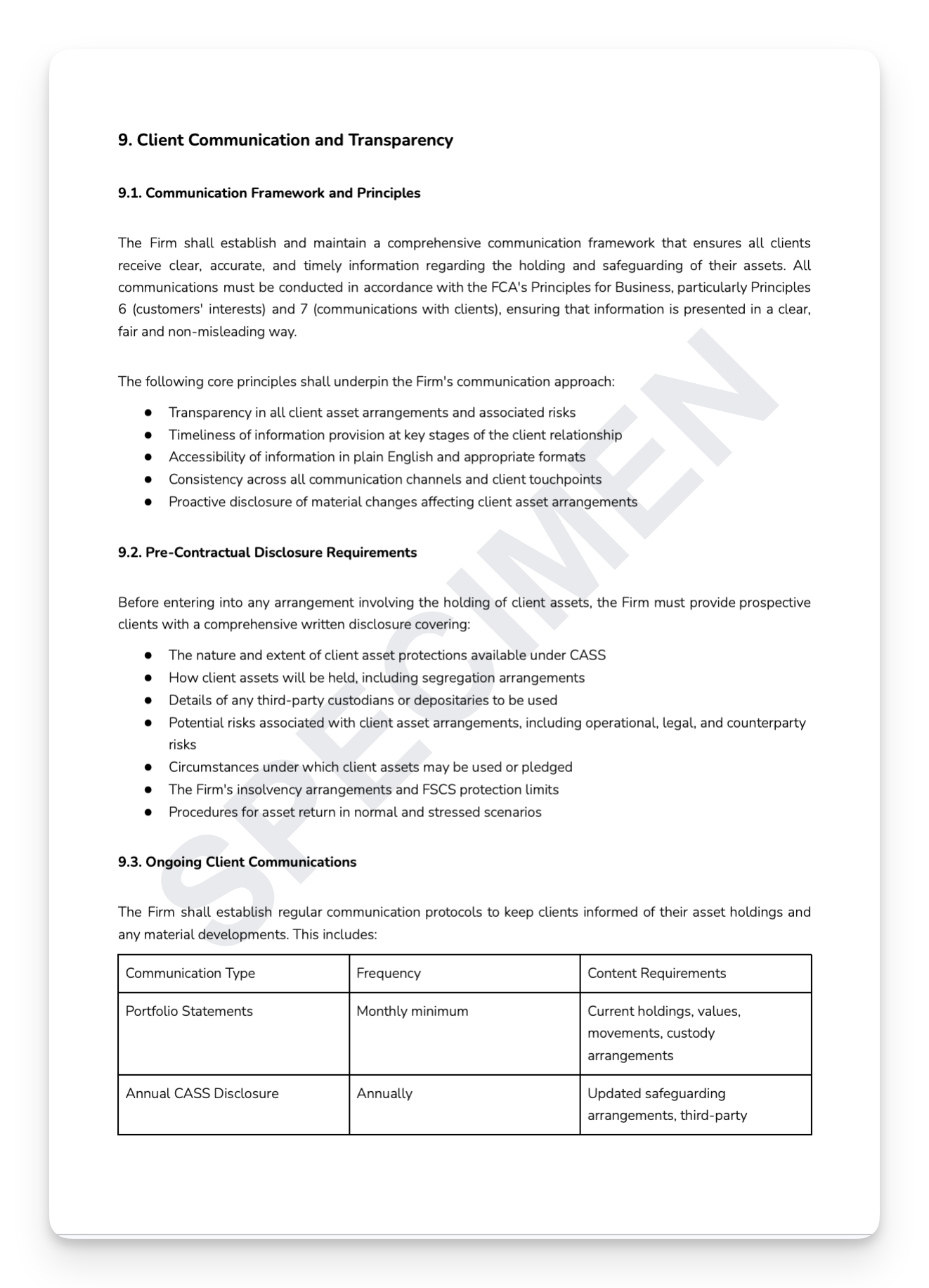
Client money is not the firm's money. That distinction is the foundation of CASS — and when it breaks down, the consequences are immediate, irreversible, and personal. The CF10a/SMF18 holder carries personal accountability. A segregation failure, a missed reconciliation, or an inadequate resolution pack doesn't stay a compliance problem — it becomes a regulatory intervention. The FCA doesn't wait.
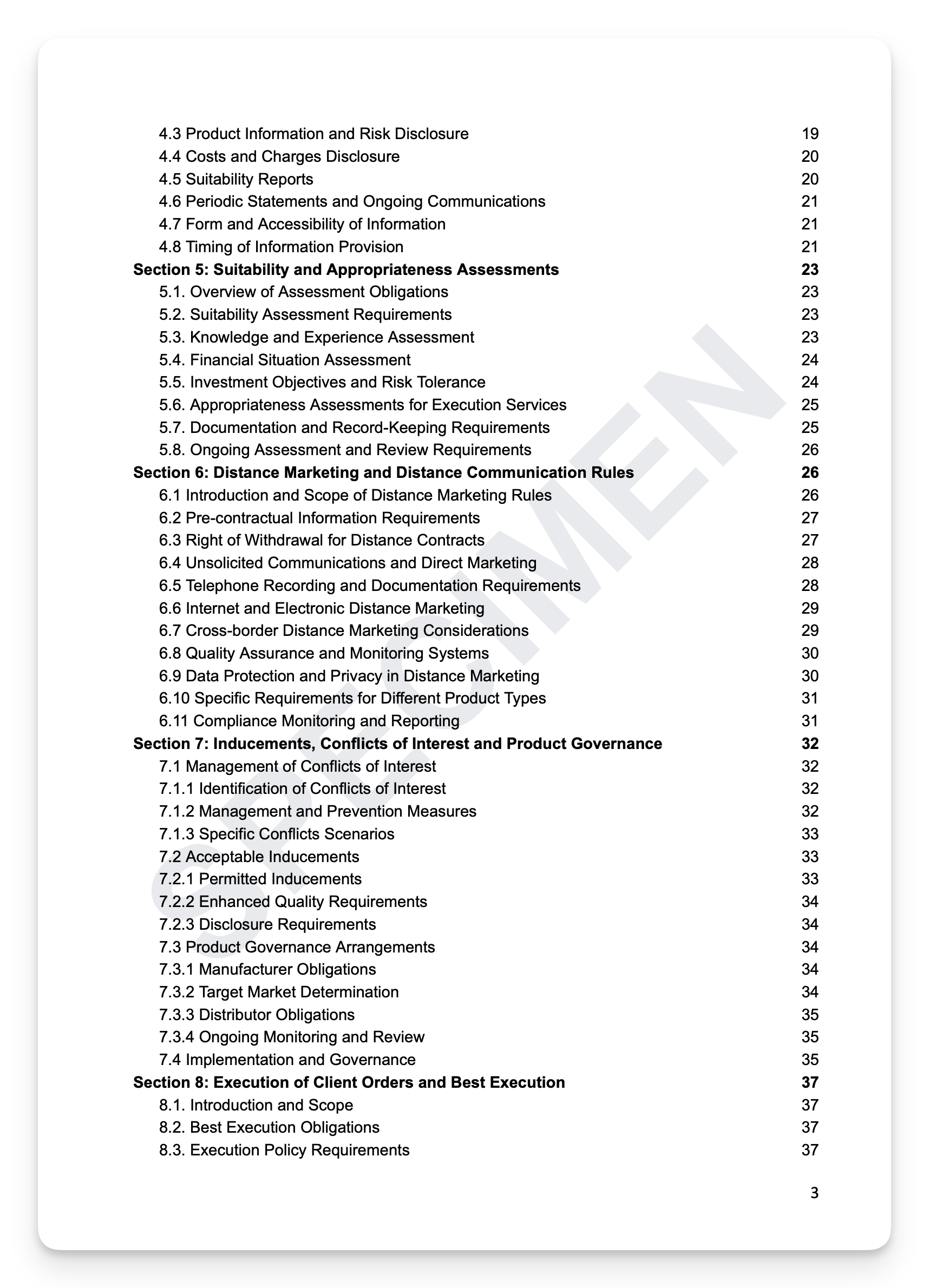
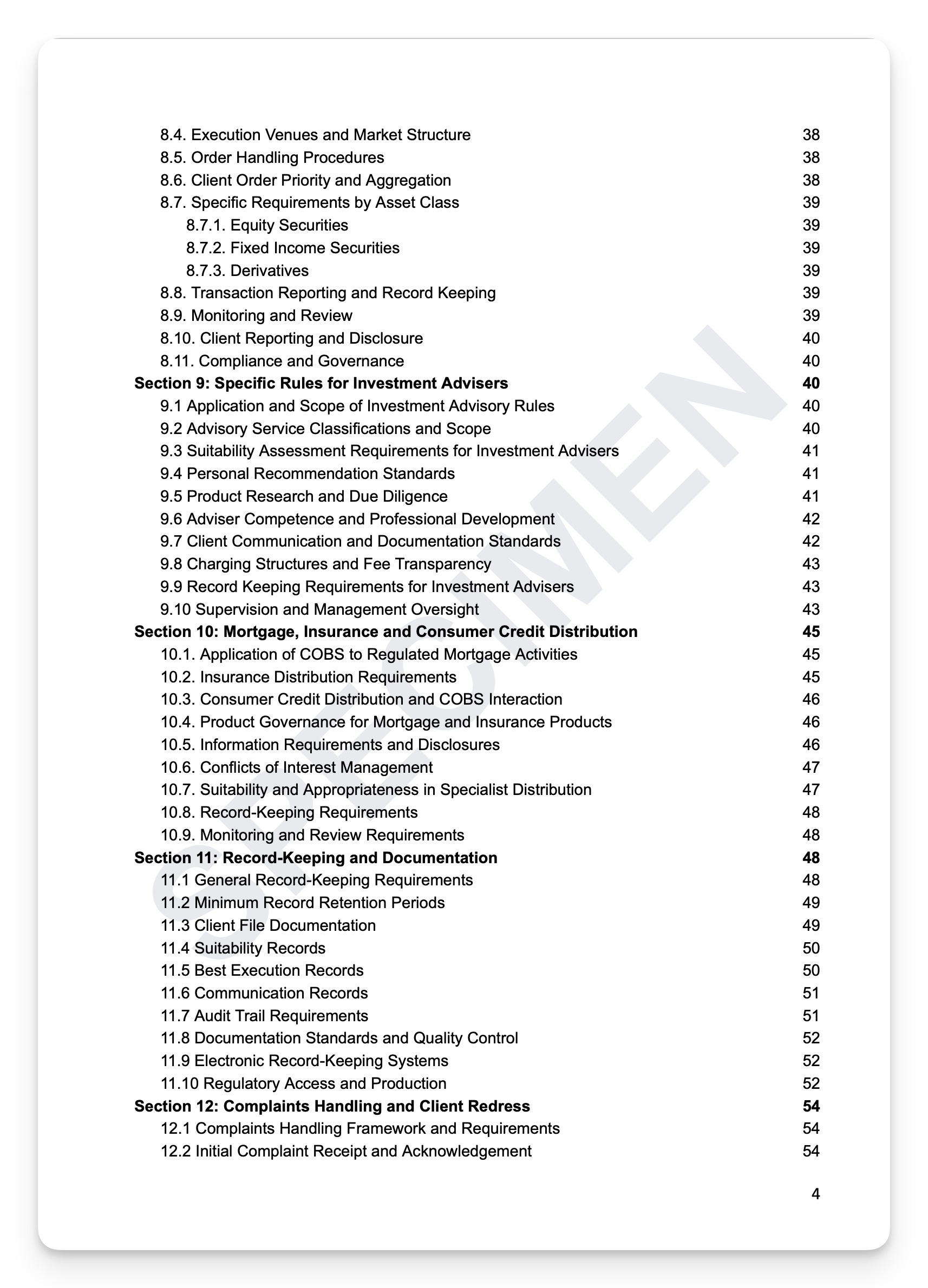
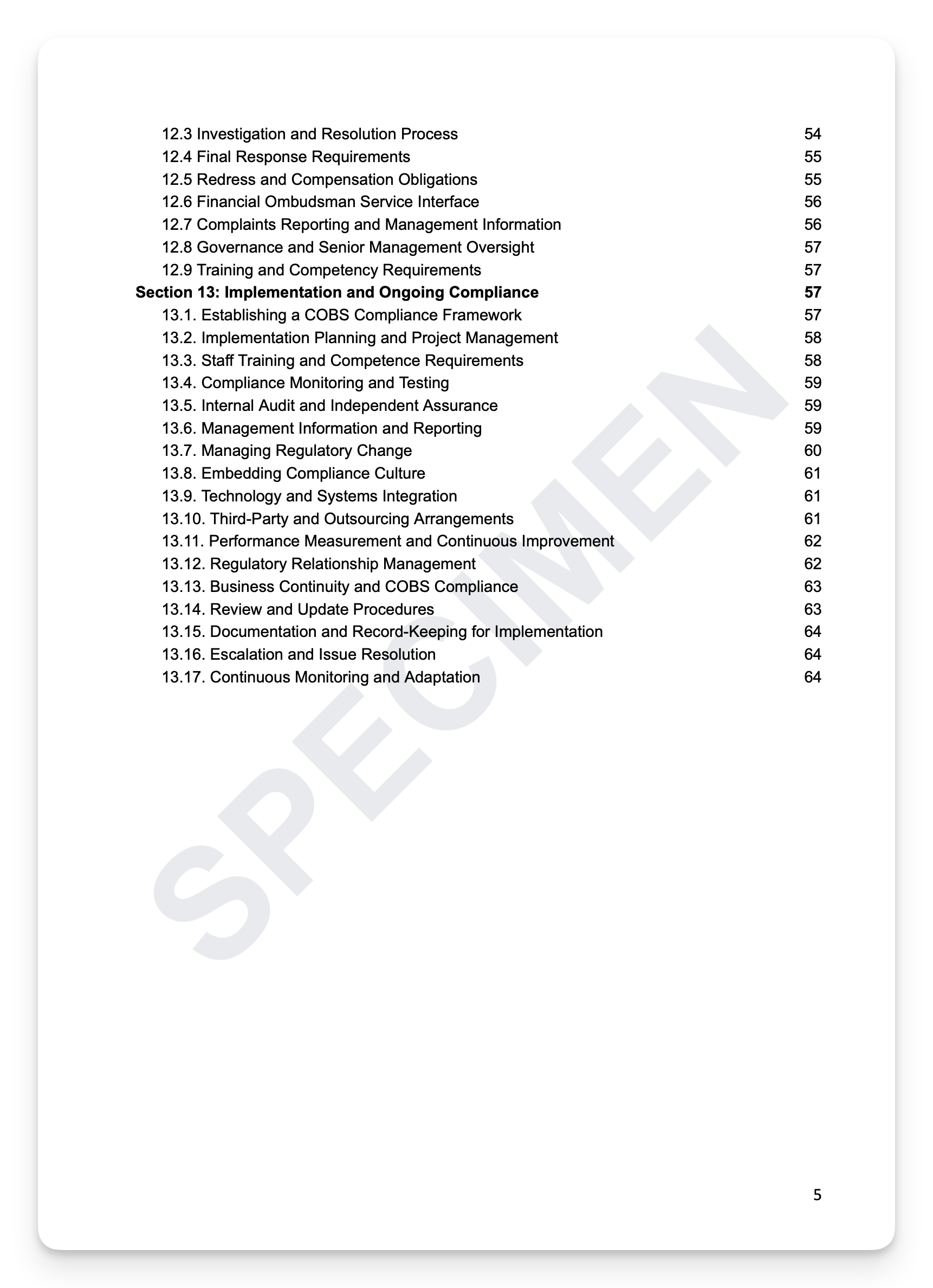
What's included:
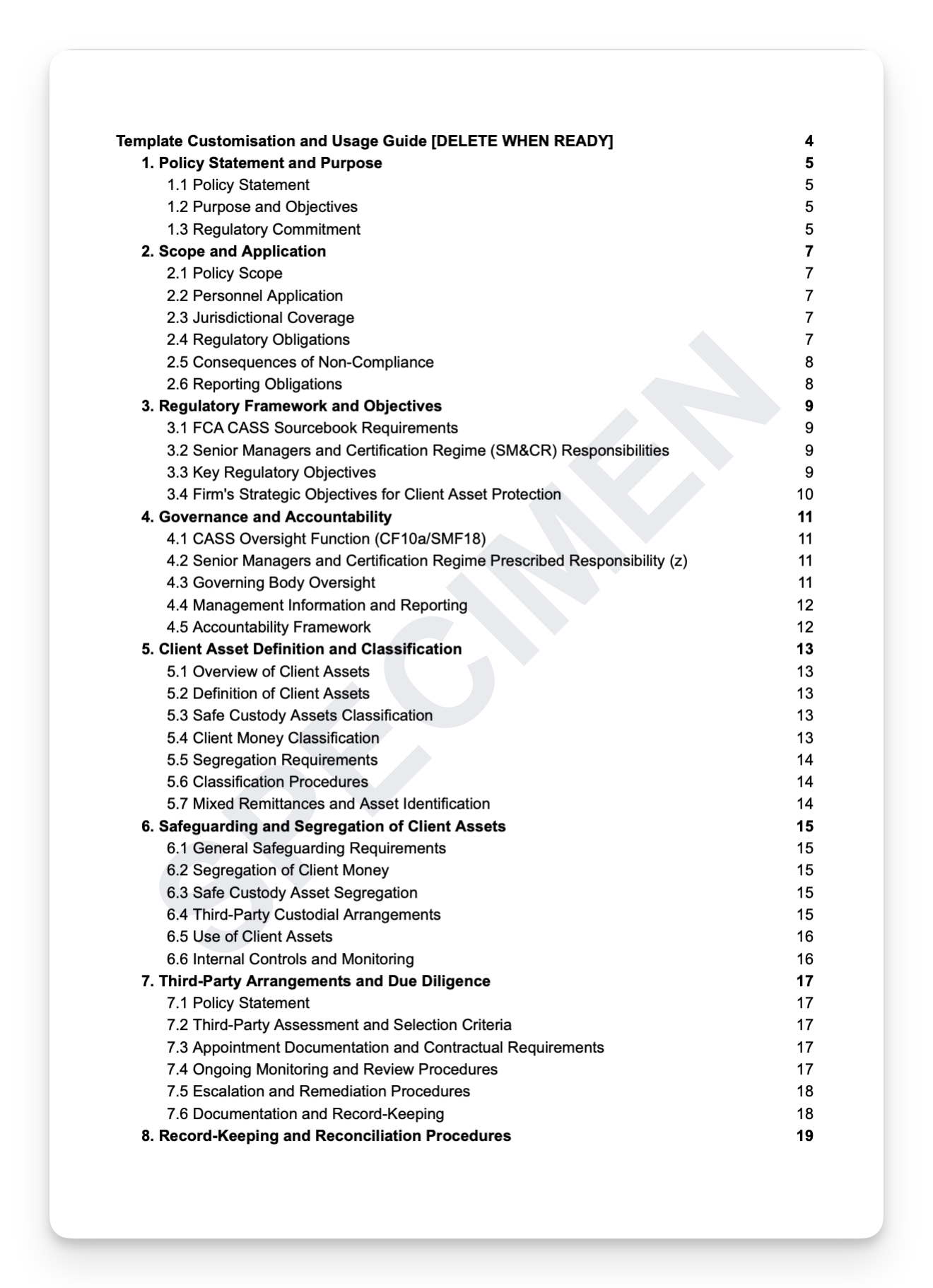
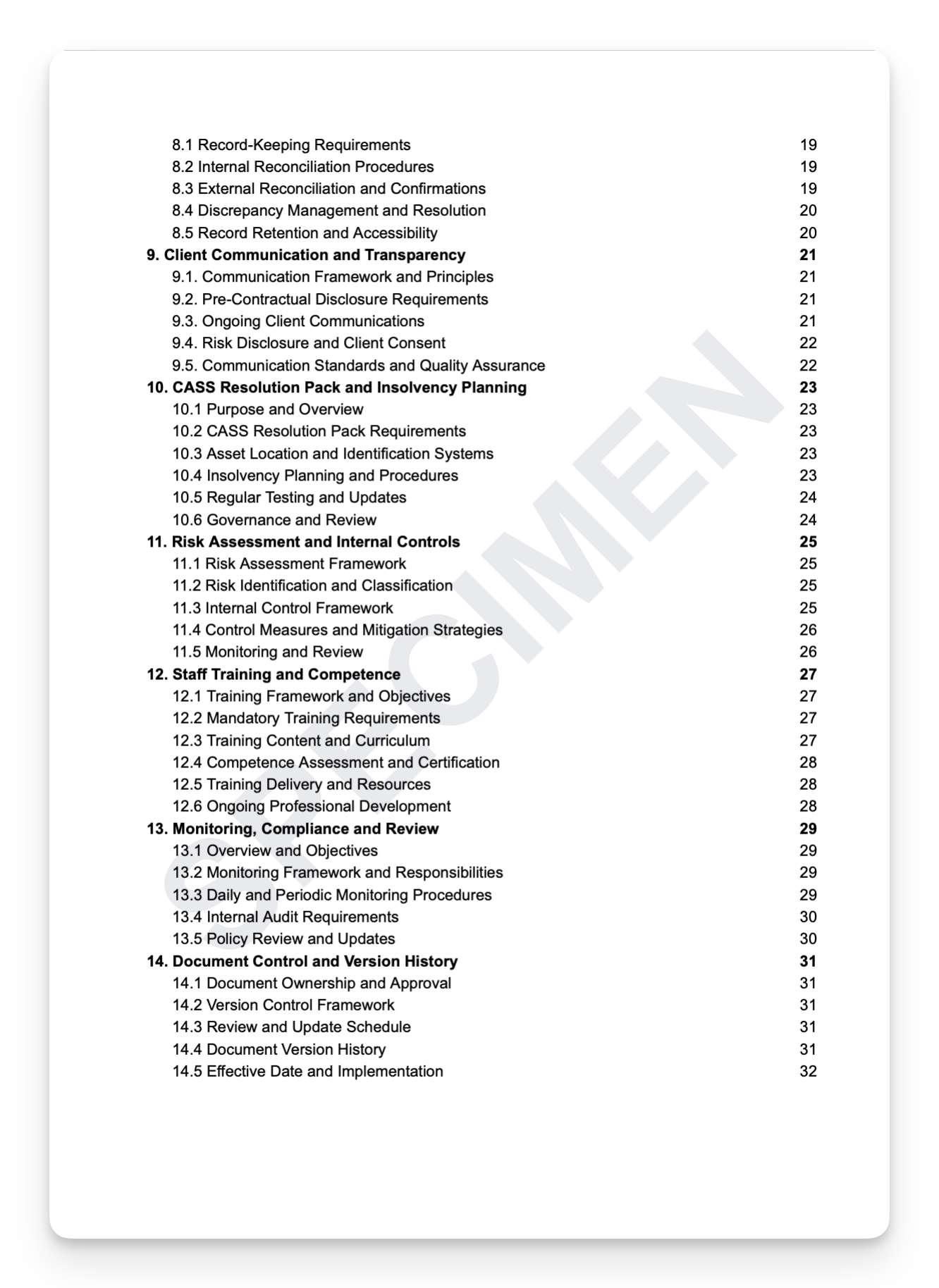
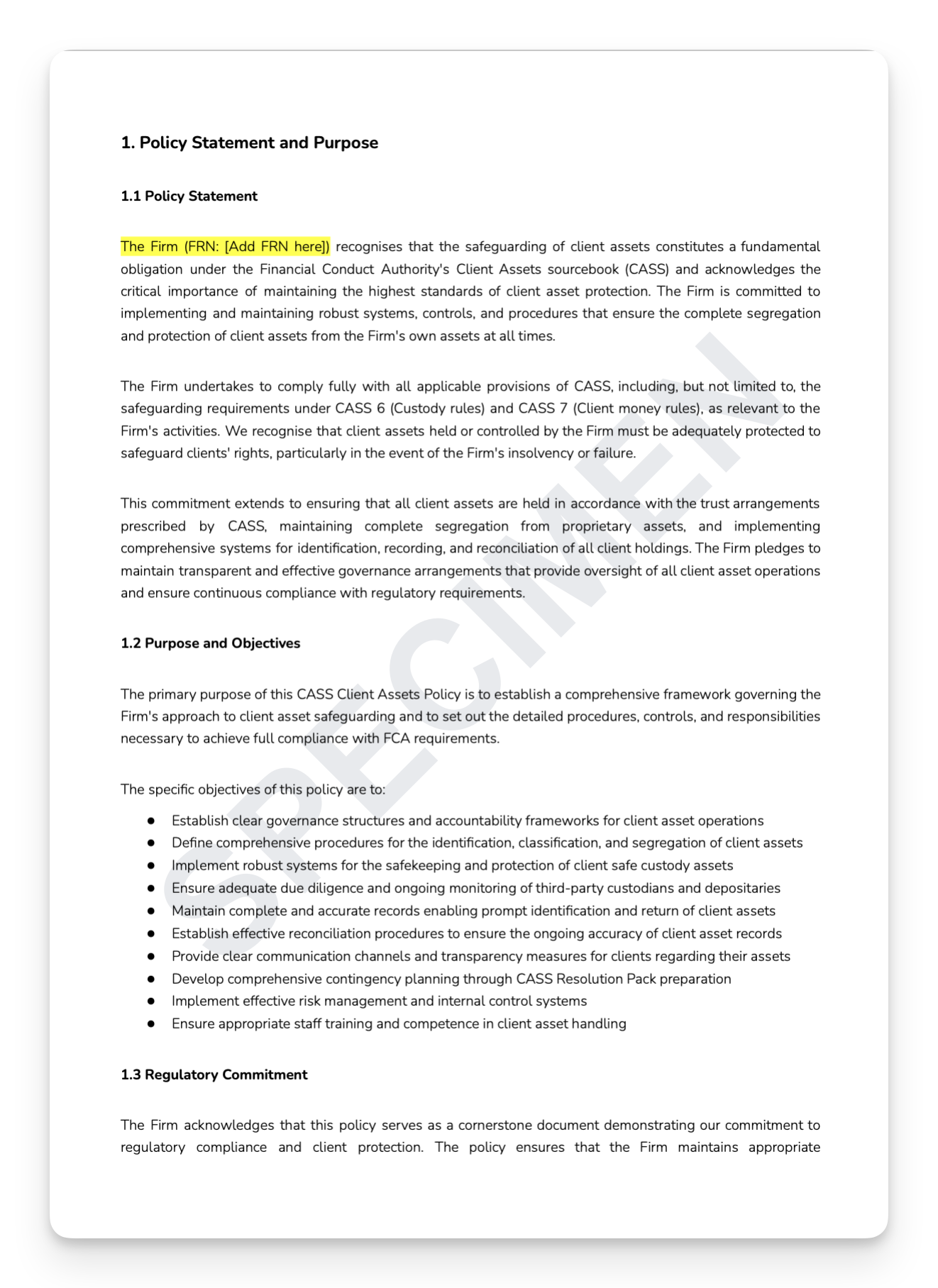
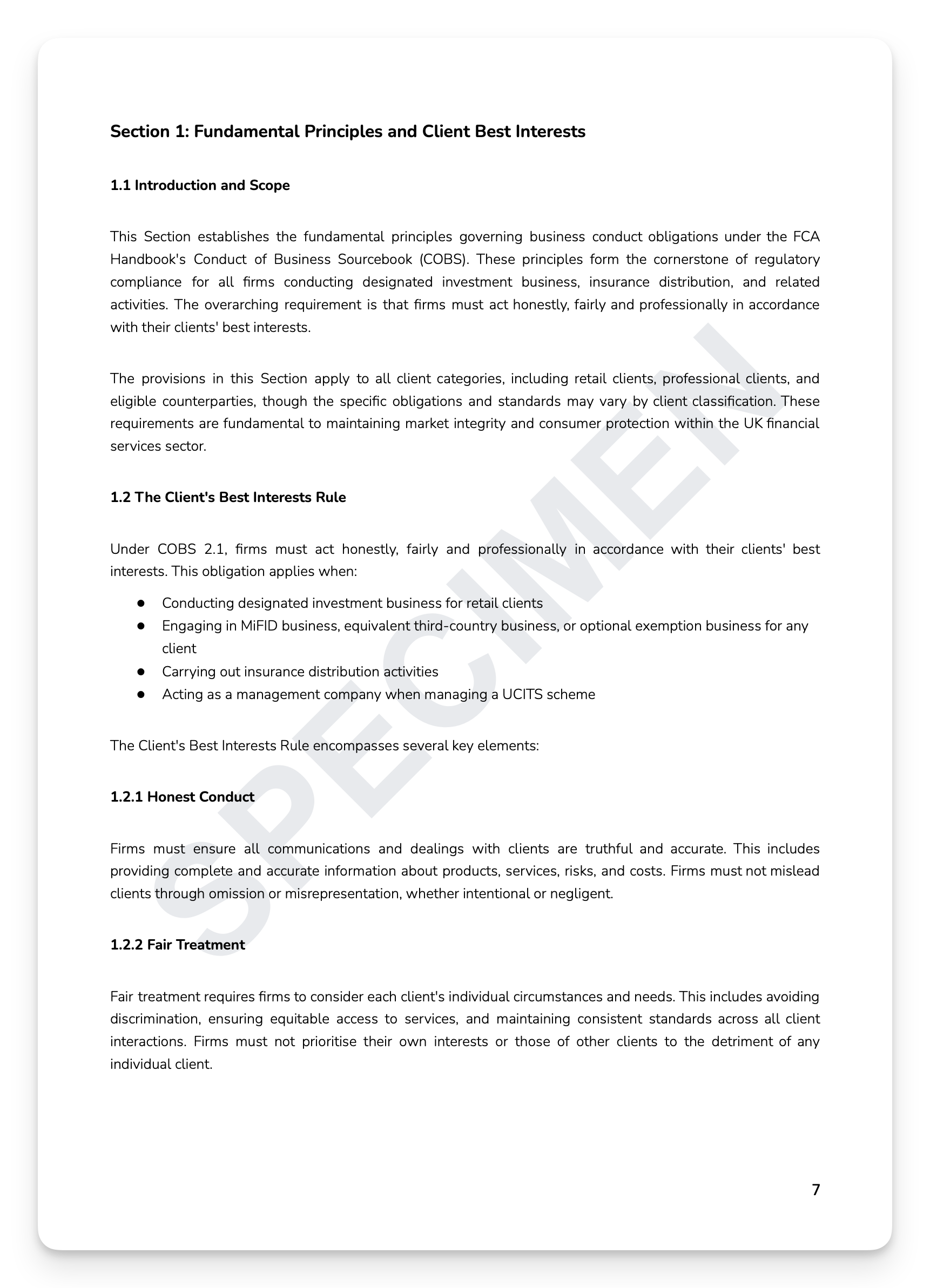
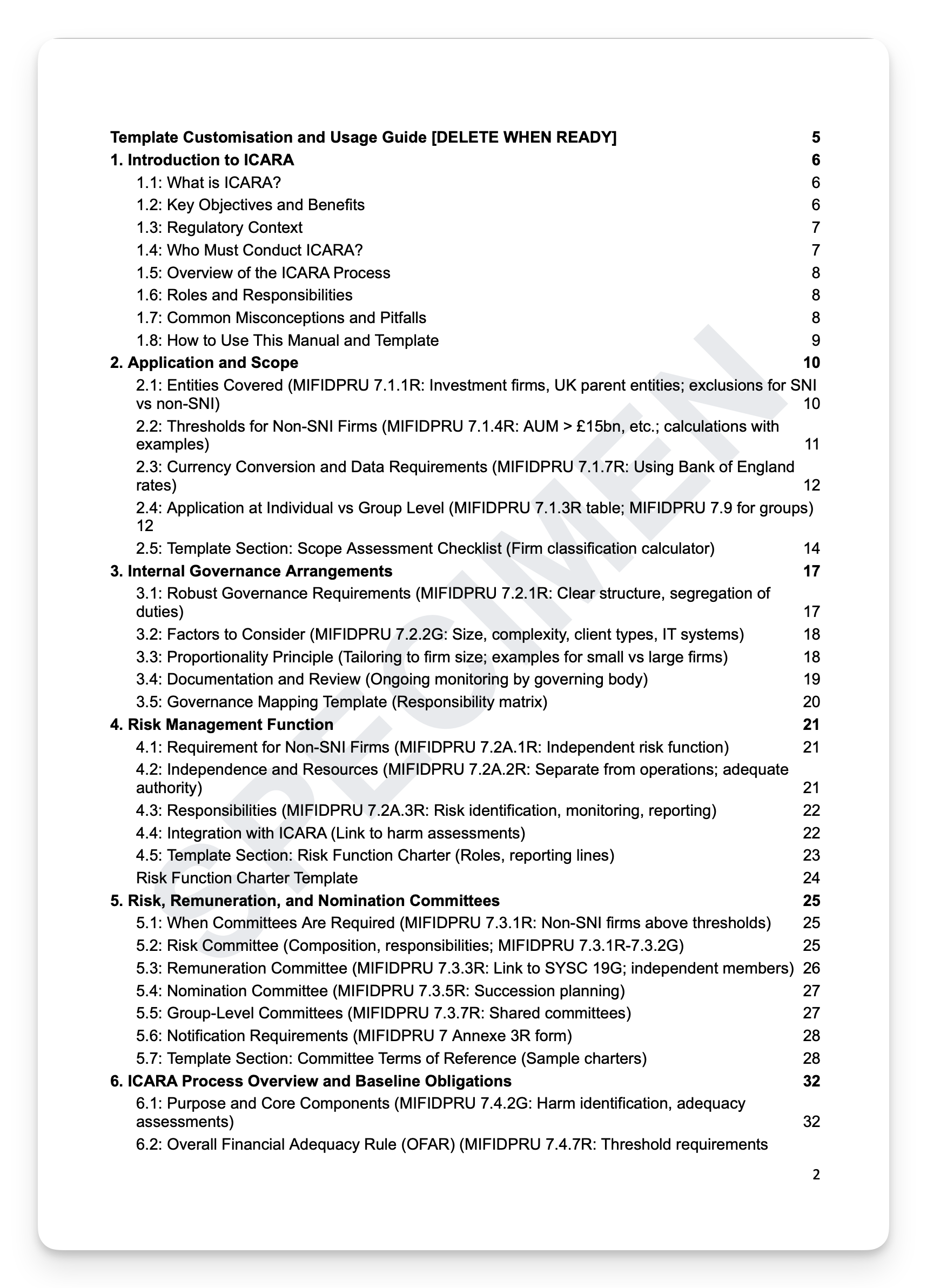
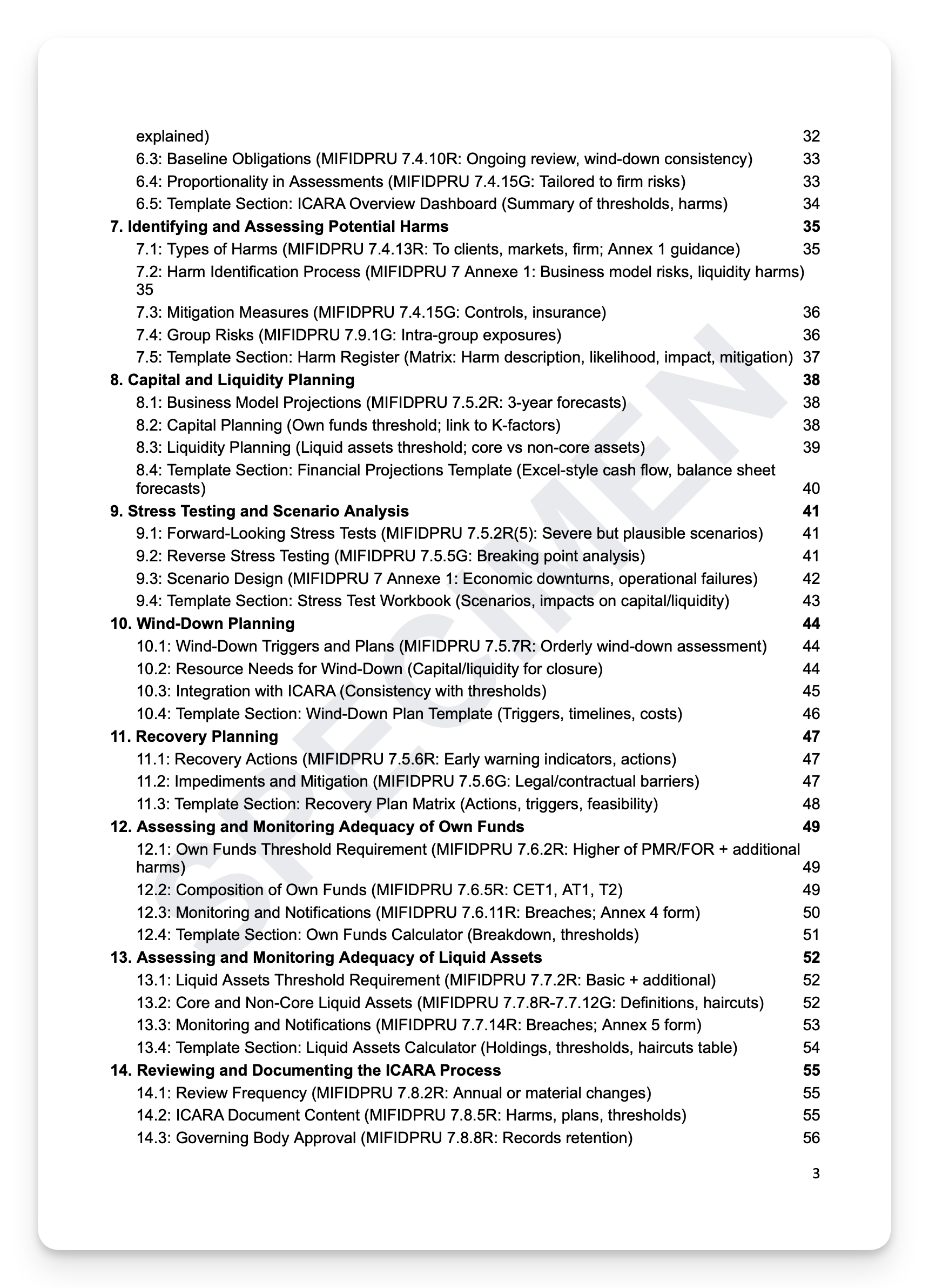
Client money definition and classification: identification process, classification categories, exclusions, and mixed remittances
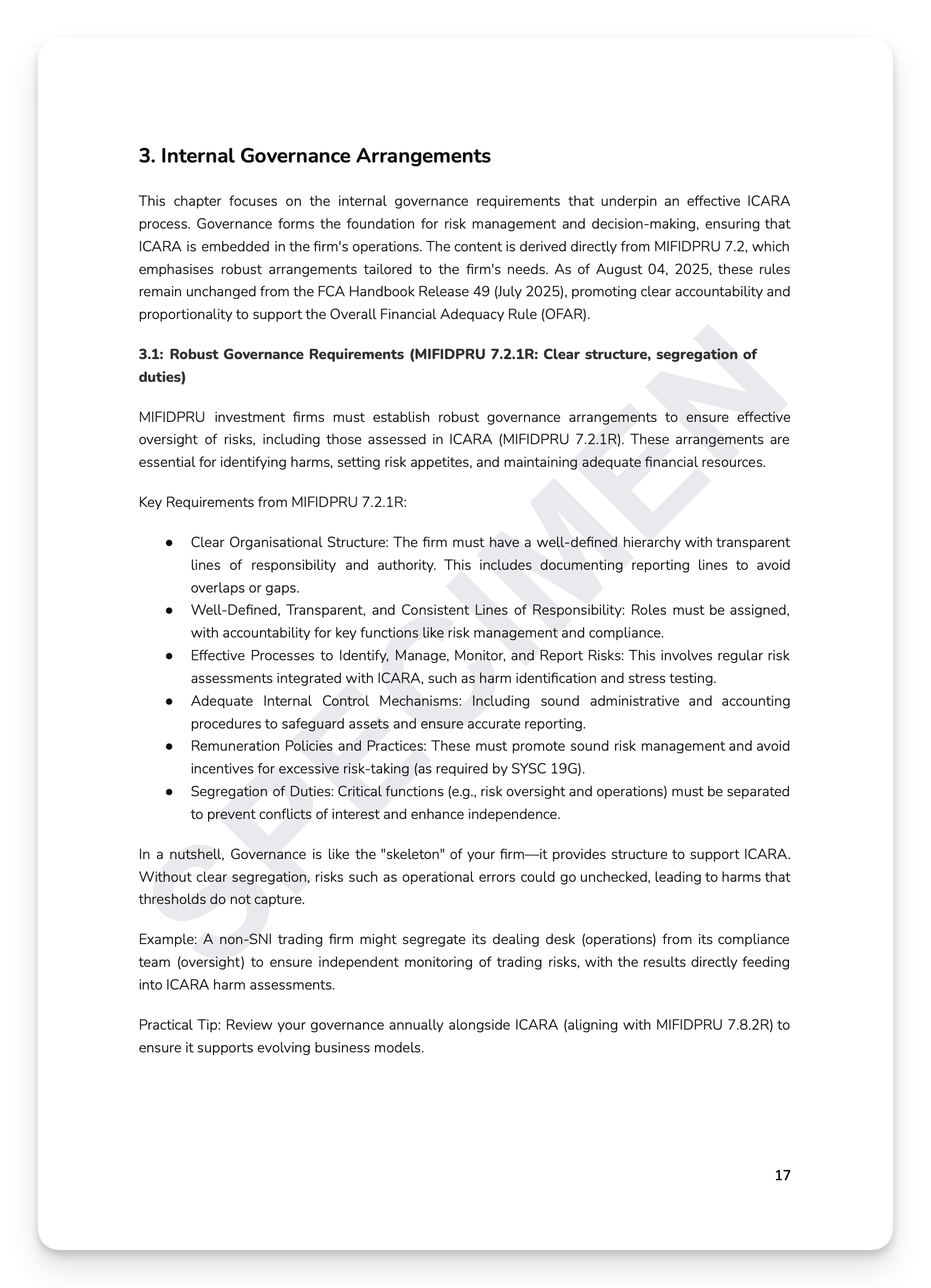
Client money segregation: fundamental principles, client bank account requirements, bank selection and due diligence, and physical segregation controls
Daily reconciliation and record keeping: reconciliation procedures, systems and controls, and quality assurance and independent review
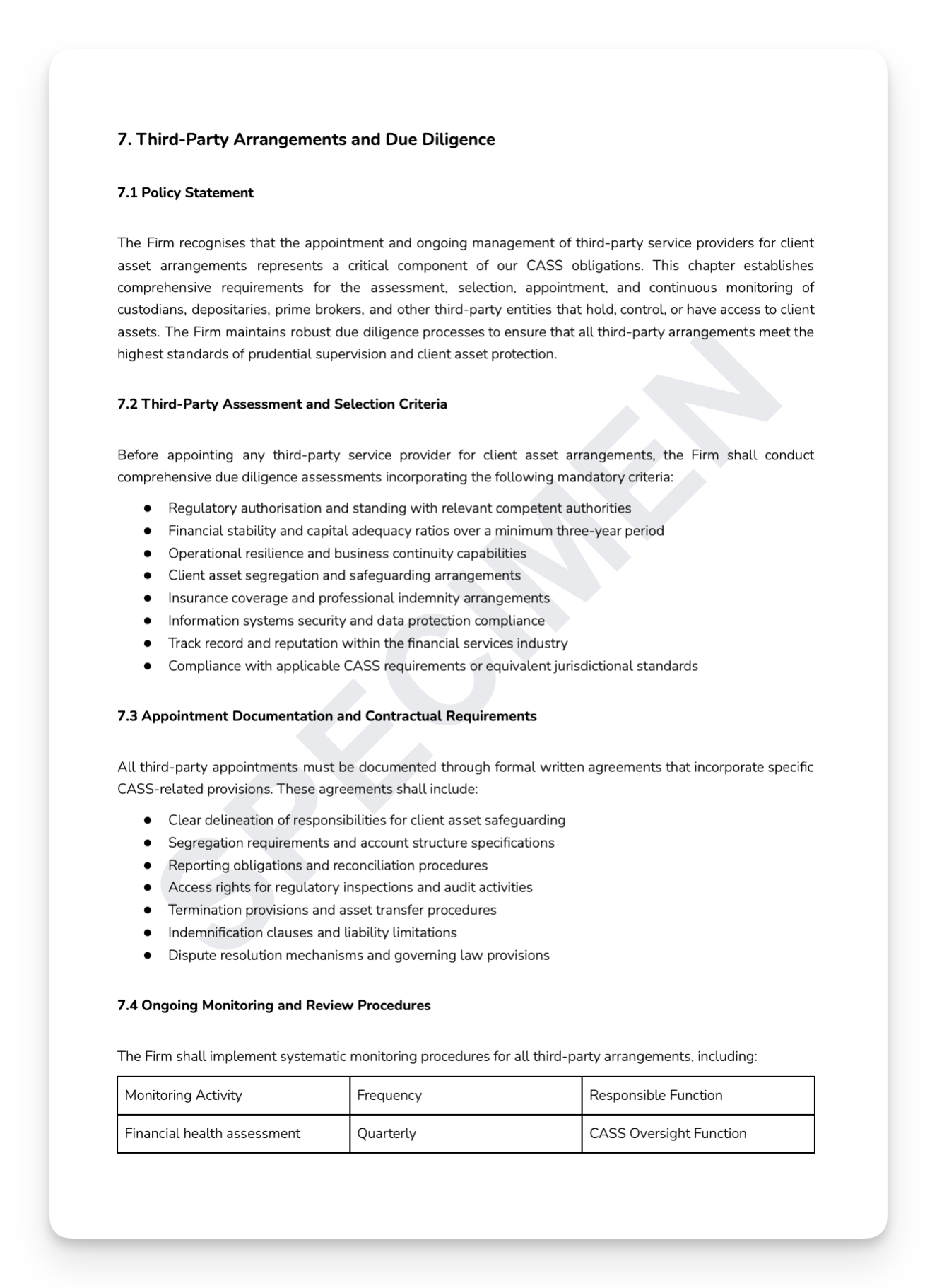
Third-party management and due diligence: risk assessment, ongoing monitoring, approved bank selection, and contractual arrangements
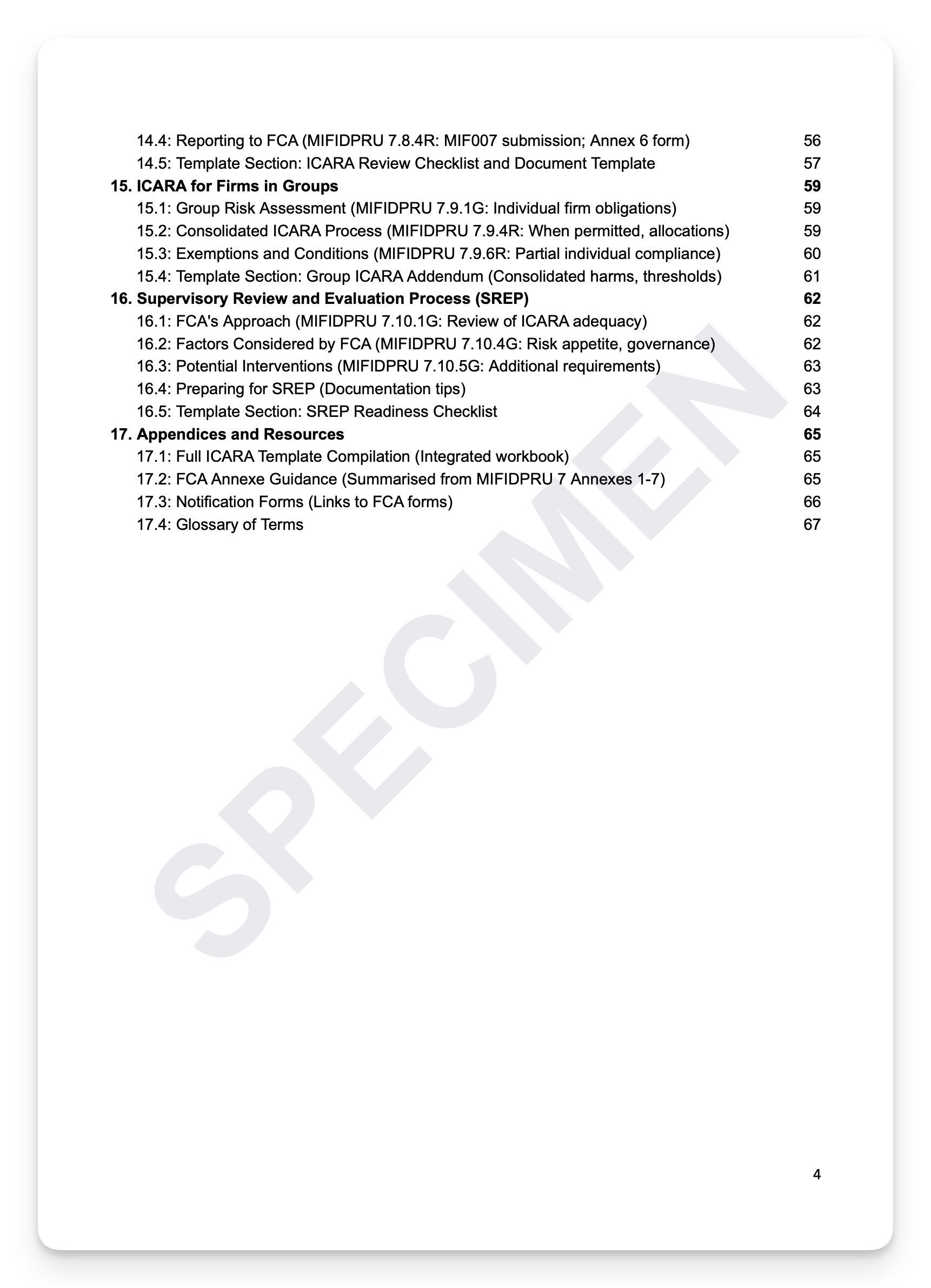
CASS Resolution Pack and exit planning: resolution pack content, wind-down procedures, client money distribution, and testing and validation
Governance: CF10a/SMF18 responsibilities, CASS Committee, Client Money Team obligations, and reporting and escalation
Training and compliance monitoring: training framework, competency assessment, regular monitoring activities, and escalation
+ much more
Who is this for?
CF10a/SMF18 CASS Oversight Function holders, Compliance Officers, Finance Directors, and Boards at FCA-regulated investment and wealth management firms.
How it works
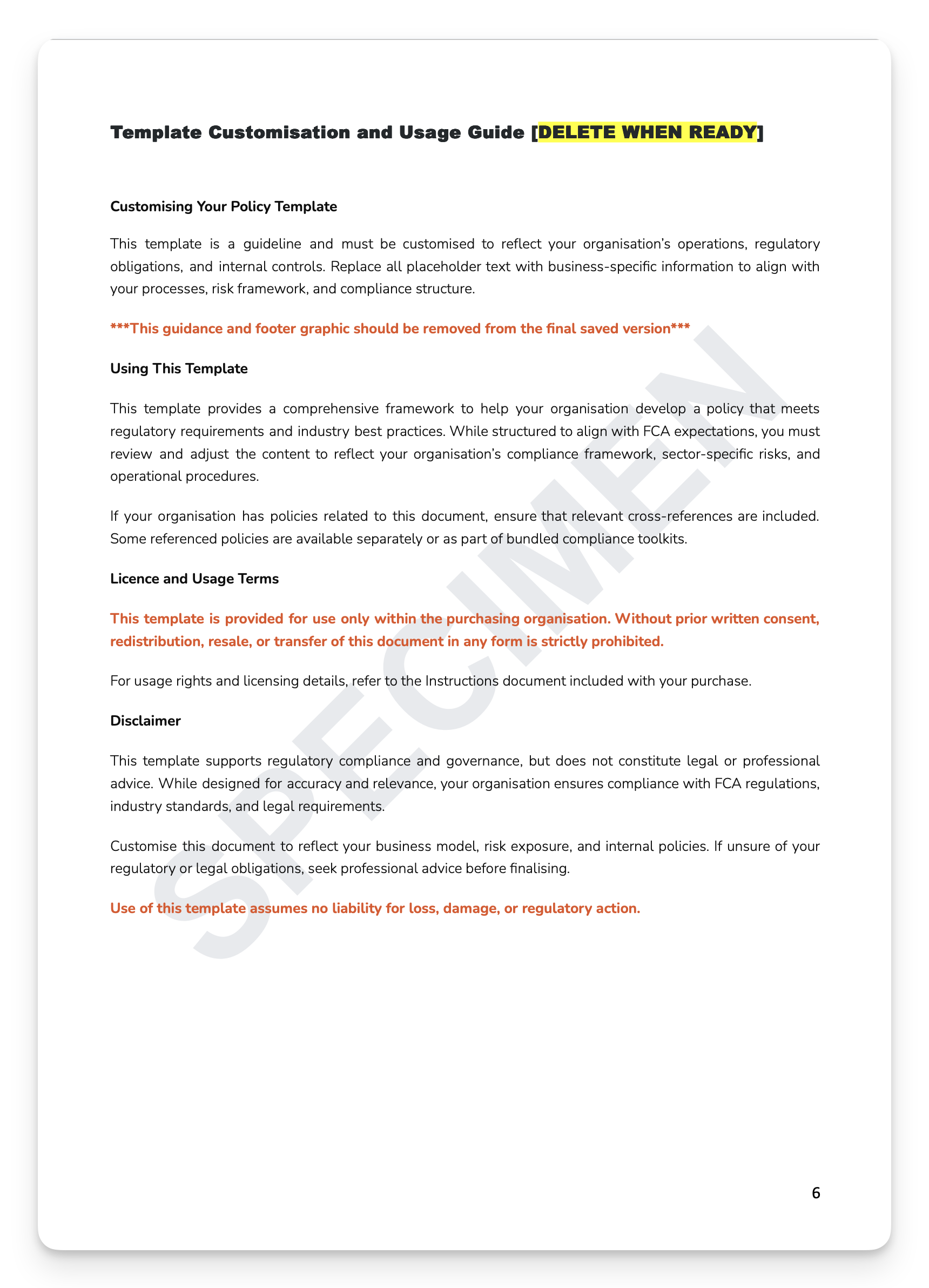
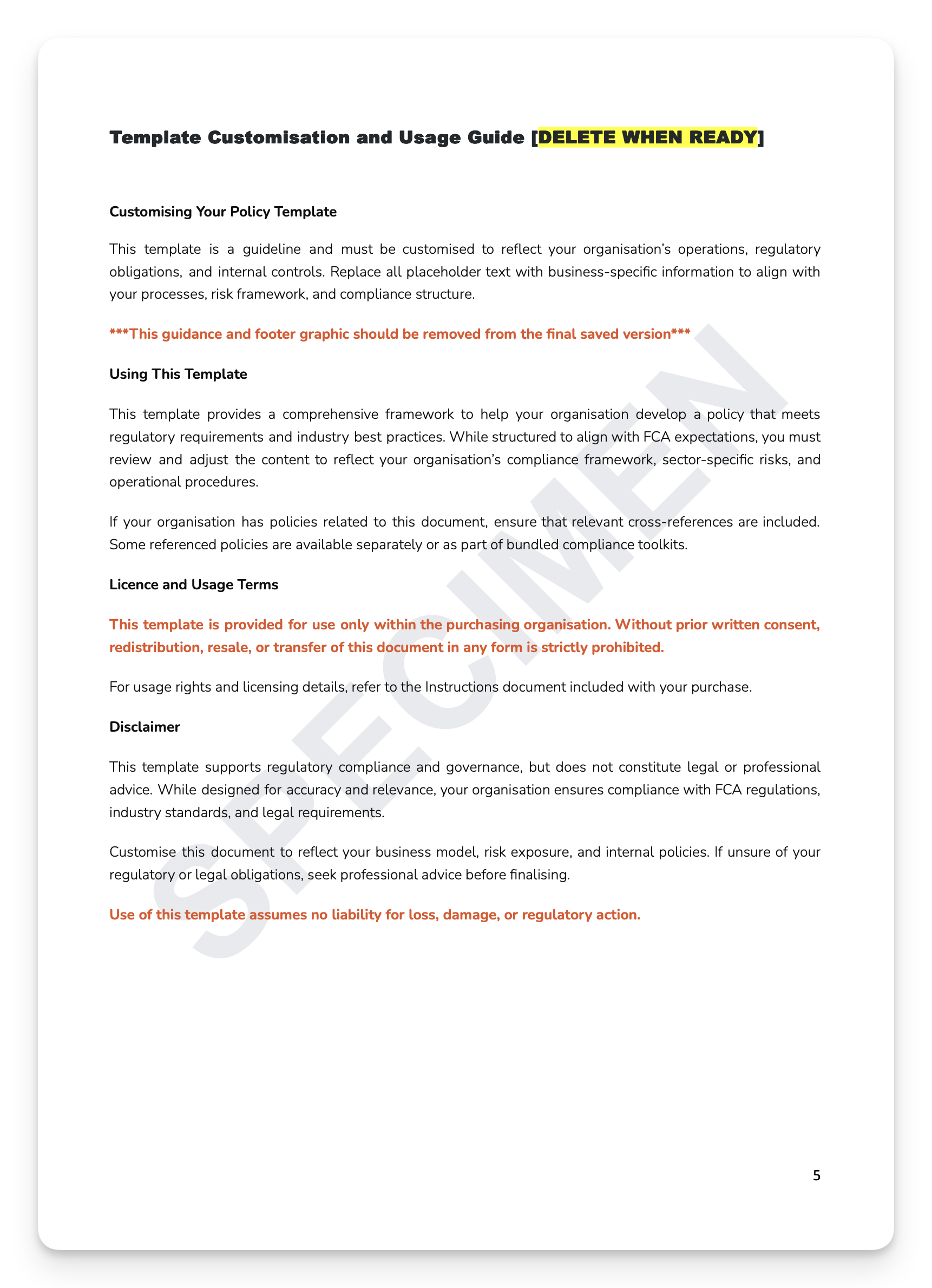
Step 1 — Read it. Every section exists for a reason, grounded in a specific regulatory obligation.
Step 2 — Understand it. Map the content against your current practices. Identify where you're strong and where gaps exist.
Step 3 — Make it yours. Tailor the language to reflect how your organisation actually operates. A policy that sounds like your firm is a policy your people will follow.
Step 4 — Take ownership. Assign clear accountability — Board approval, named SMF holder, designated policy owner. A policy without an owner is a liability, not an asset.
Step 5 — Operationalise it. Embed the policy into your governance calendar, training programme, and annual review cycle. This is where compliance becomes culture.
Or, get this free with RegTechPRO
Access this alongside the full compliance policy library — SM&CR, COBS, AML, Consumer Duty, GDPR, and more — for a fraction of the cost of consultancy.
View RegTechPRO pricing and packages →
Client money is not the firm's money. That distinction is the foundation of CASS — and when it breaks down, the consequences are immediate, irreversible, and personal. The CF10a/SMF18 holder carries personal accountability. A segregation failure, a missed reconciliation, or an inadequate resolution pack doesn't stay a compliance problem — it becomes a regulatory intervention. The FCA doesn't wait.
What's included:
Client money definition and classification: identification process, classification categories, exclusions, and mixed remittances
Client money segregation: fundamental principles, client bank account requirements, bank selection and due diligence, and physical segregation controls
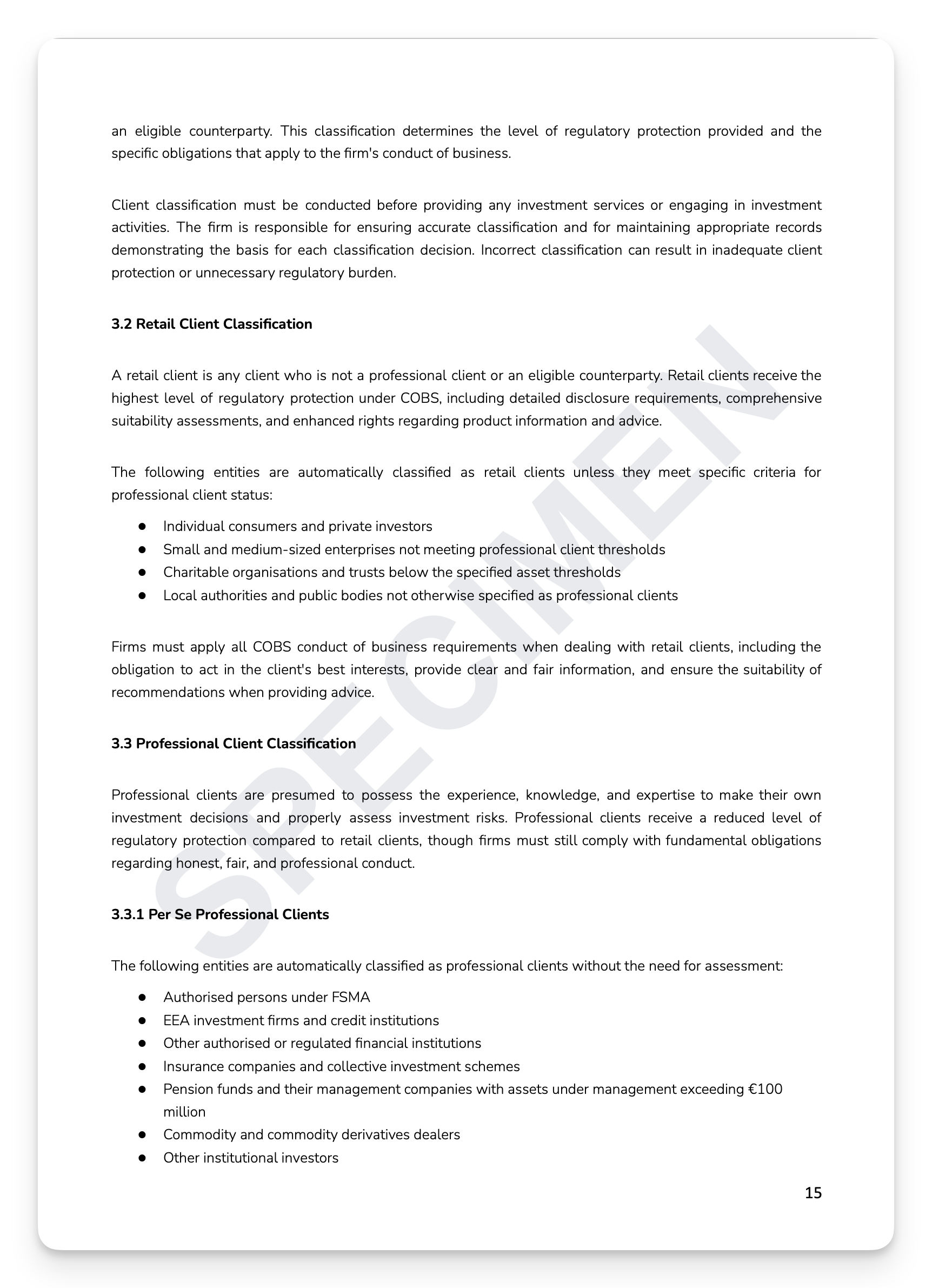
Daily reconciliation and record keeping: reconciliation procedures, systems and controls, and quality assurance and independent review
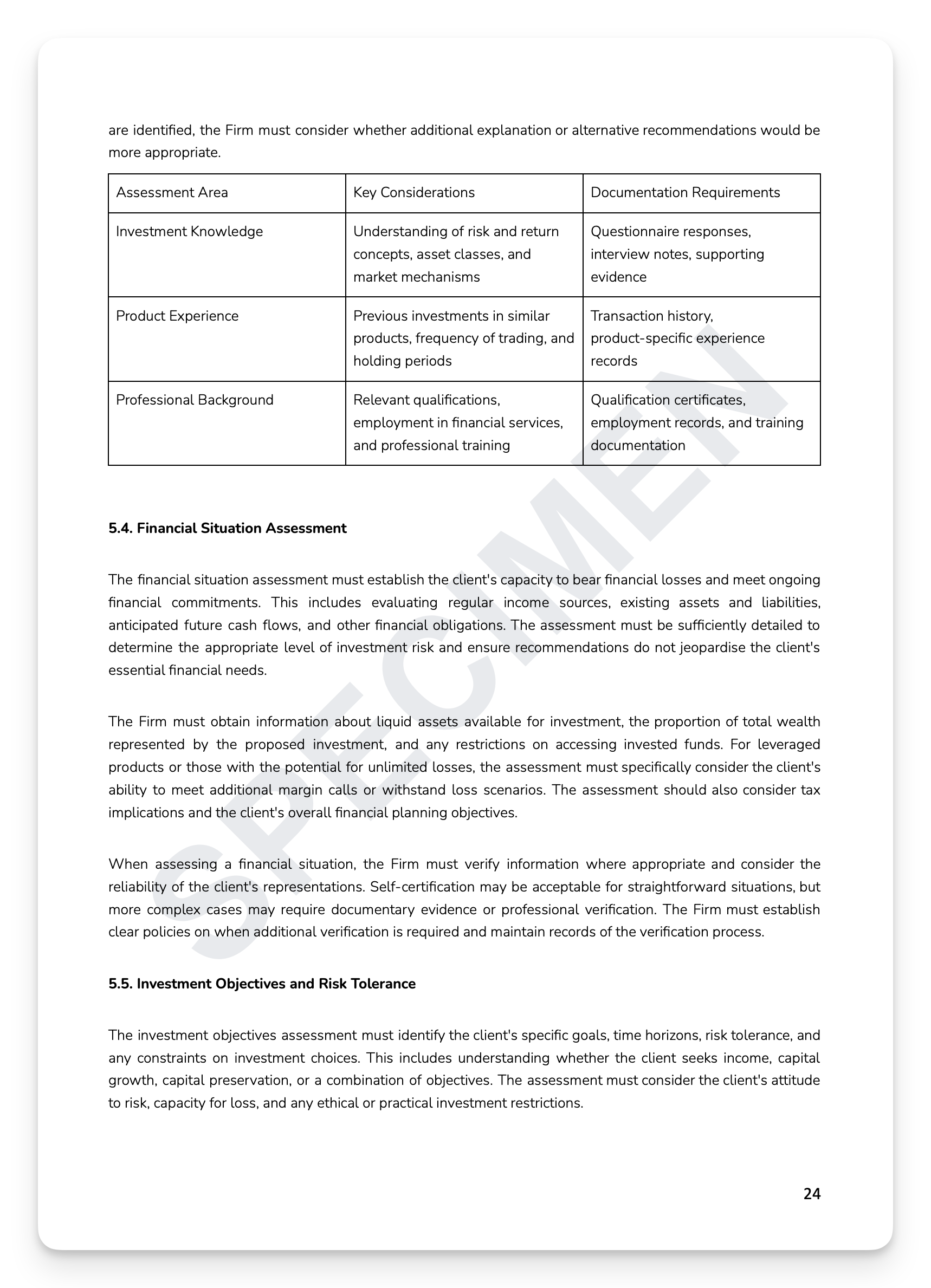
Third-party management and due diligence: risk assessment, ongoing monitoring, approved bank selection, and contractual arrangements
CASS Resolution Pack and exit planning: resolution pack content, wind-down procedures, client money distribution, and testing and validation
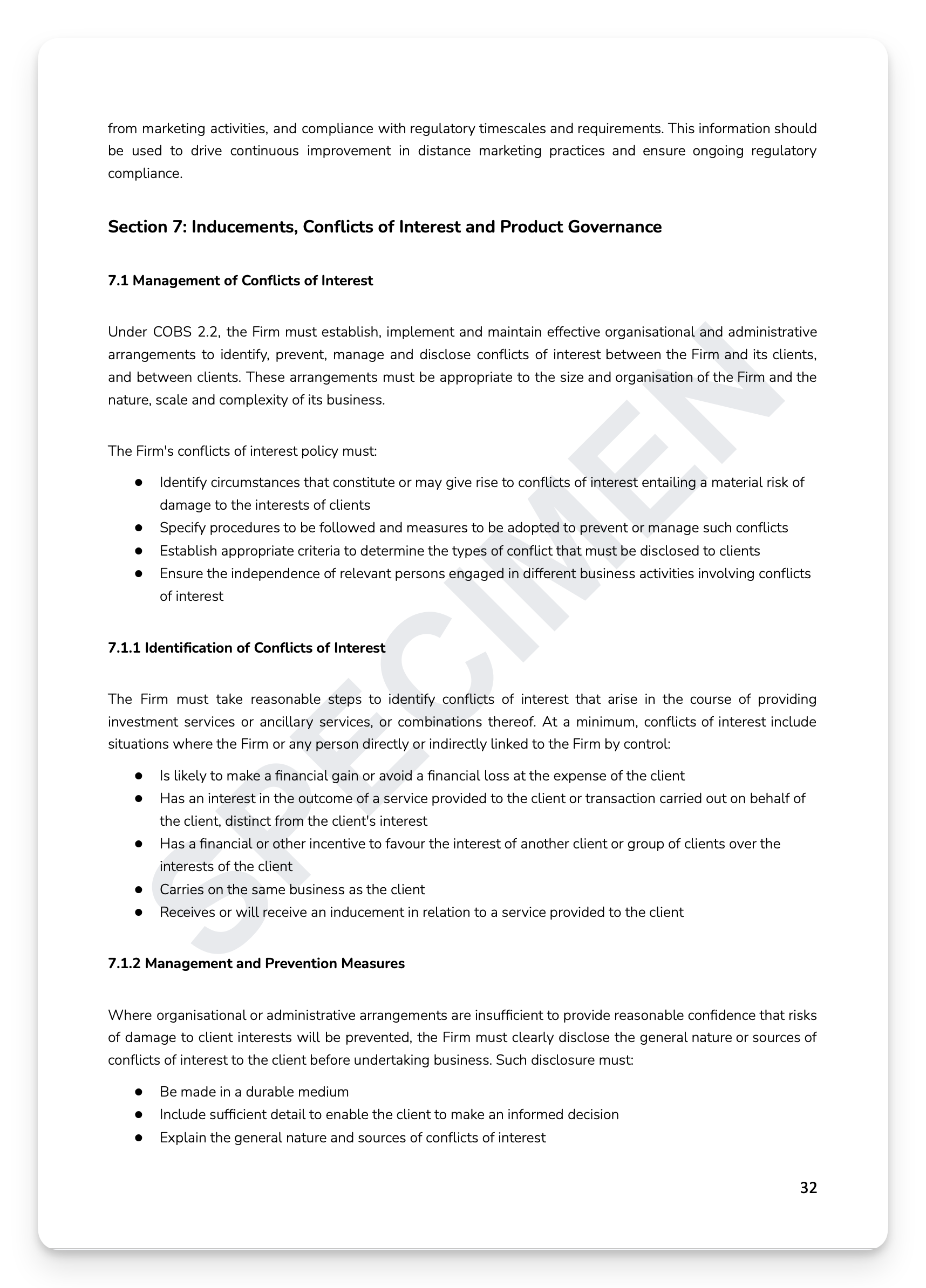
Governance: CF10a/SMF18 responsibilities, CASS Committee, Client Money Team obligations, and reporting and escalation
Training and compliance monitoring: training framework, competency assessment, regular monitoring activities, and escalation
+ much more
Who is this for?
CF10a/SMF18 CASS Oversight Function holders, Compliance Officers, Finance Directors, and Boards at FCA-regulated investment and wealth management firms.
How it works
Step 1 — Read it. Every section exists for a reason, grounded in a specific regulatory obligation.
Step 2 — Understand it. Map the content against your current practices. Identify where you're strong and where gaps exist.
Step 3 — Make it yours. Tailor the language to reflect how your organisation actually operates. A policy that sounds like your firm is a policy your people will follow.
Step 4 — Take ownership. Assign clear accountability — Board approval, named SMF holder, designated policy owner. A policy without an owner is a liability, not an asset.
Step 5 — Operationalise it. Embed the policy into your governance calendar, training programme, and annual review cycle. This is where compliance becomes culture.
Or, get this free with RegTechPRO
Access this alongside the full compliance policy library — SM&CR, COBS, AML, Consumer Duty, GDPR, and more — for a fraction of the cost of consultancy.
View RegTechPRO pricing and packages →


 Image 1 of 6
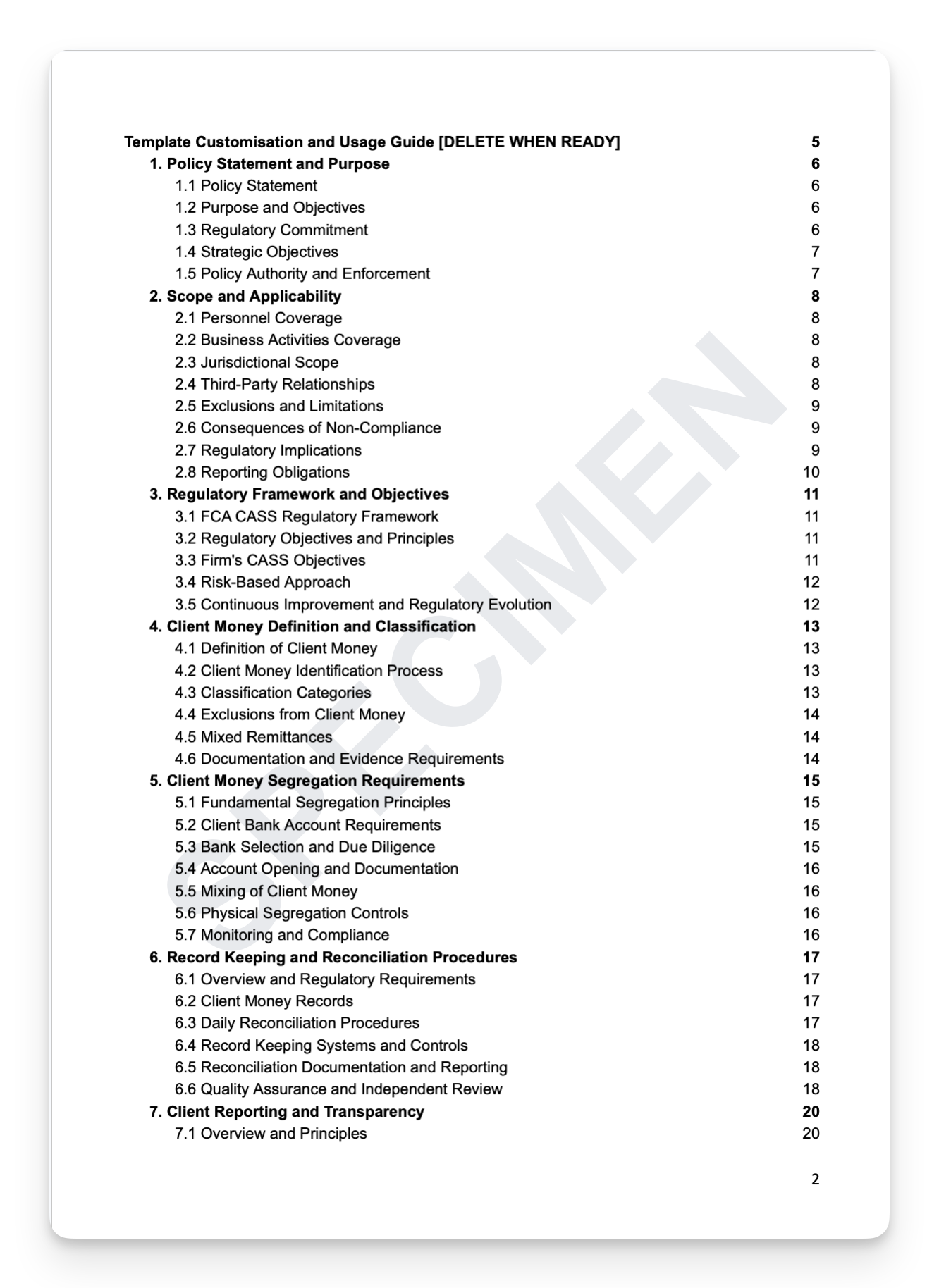 Image 2 of 6
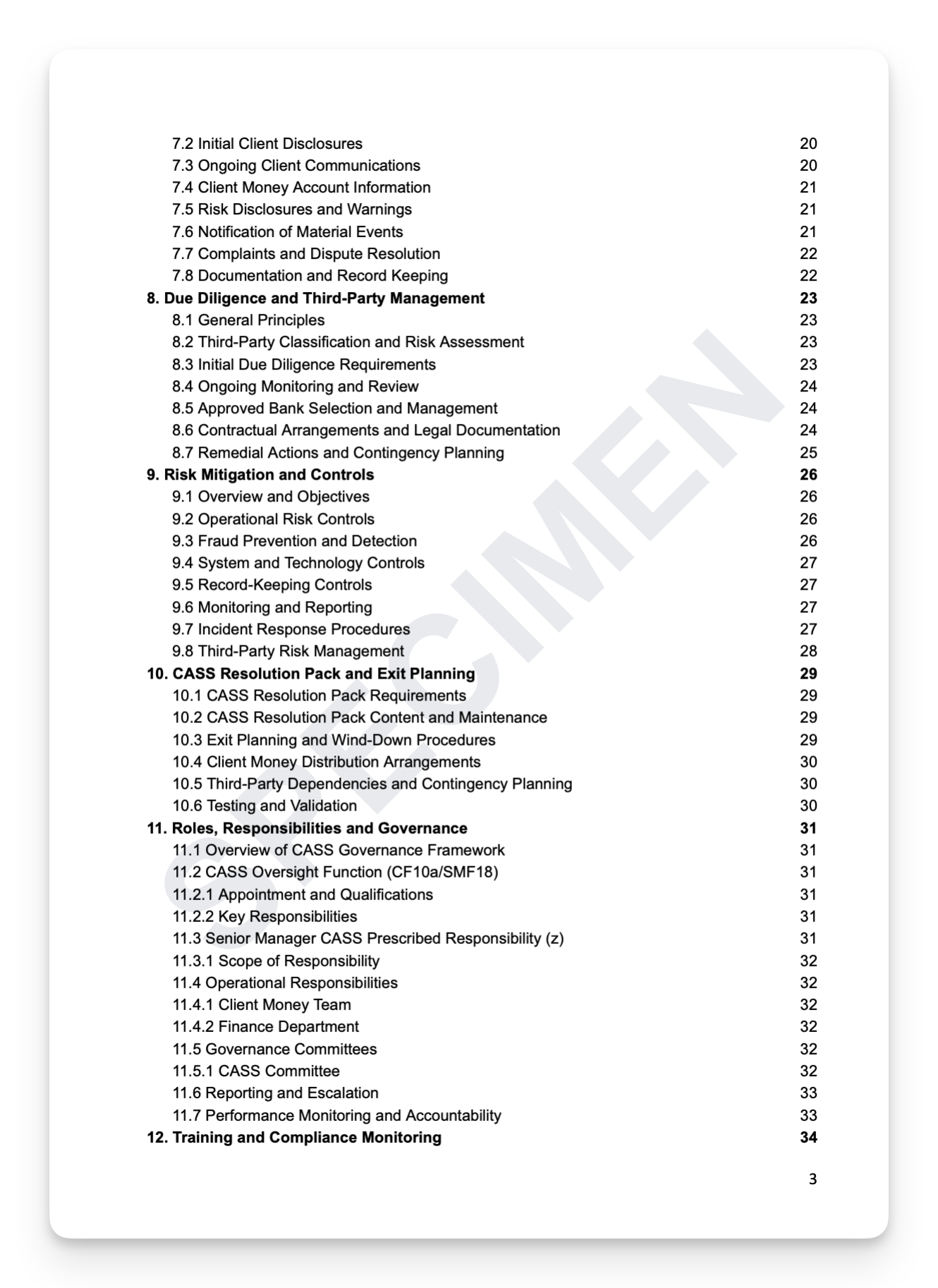 Image 3 of 6
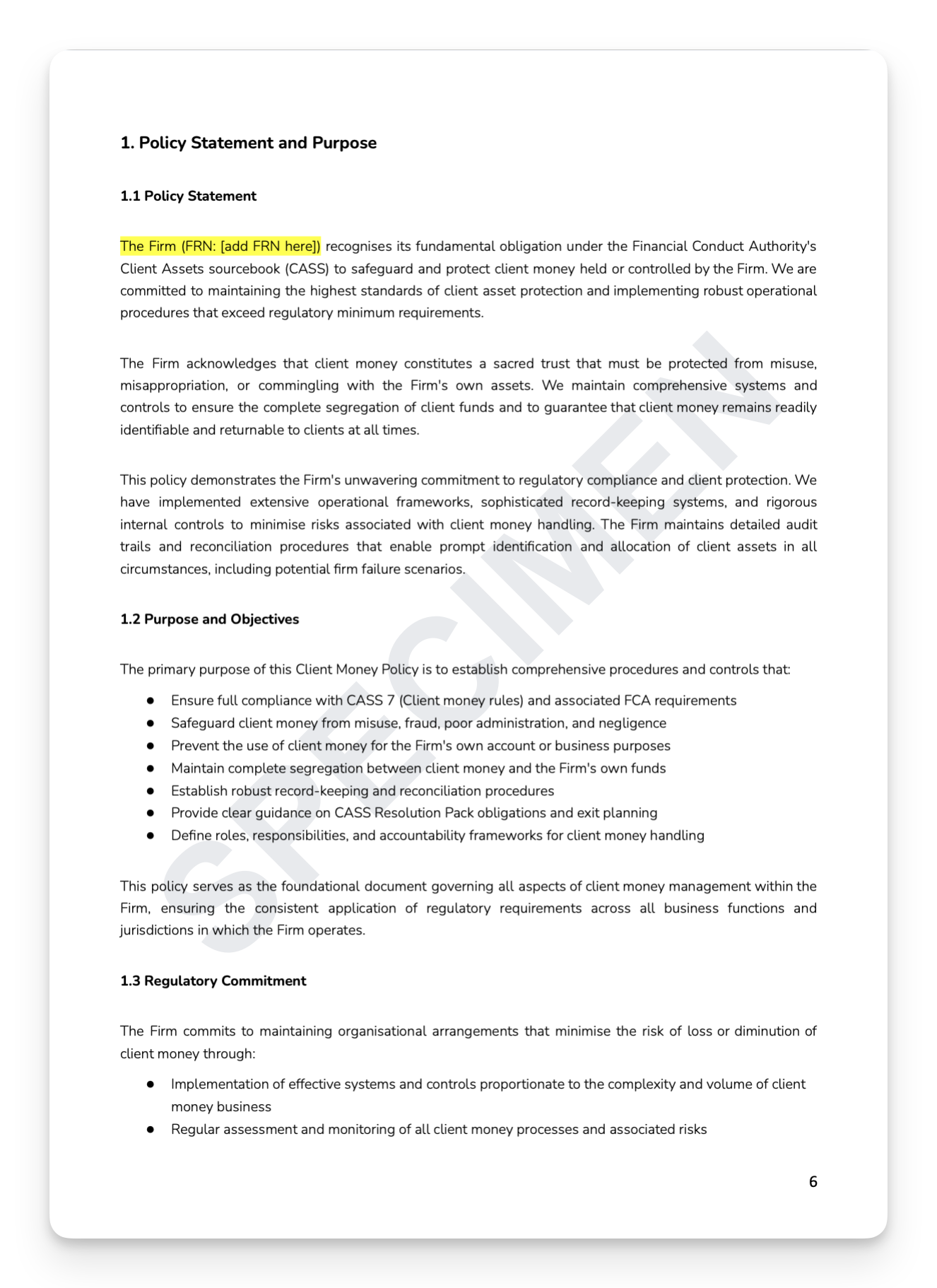 Image 4 of 6
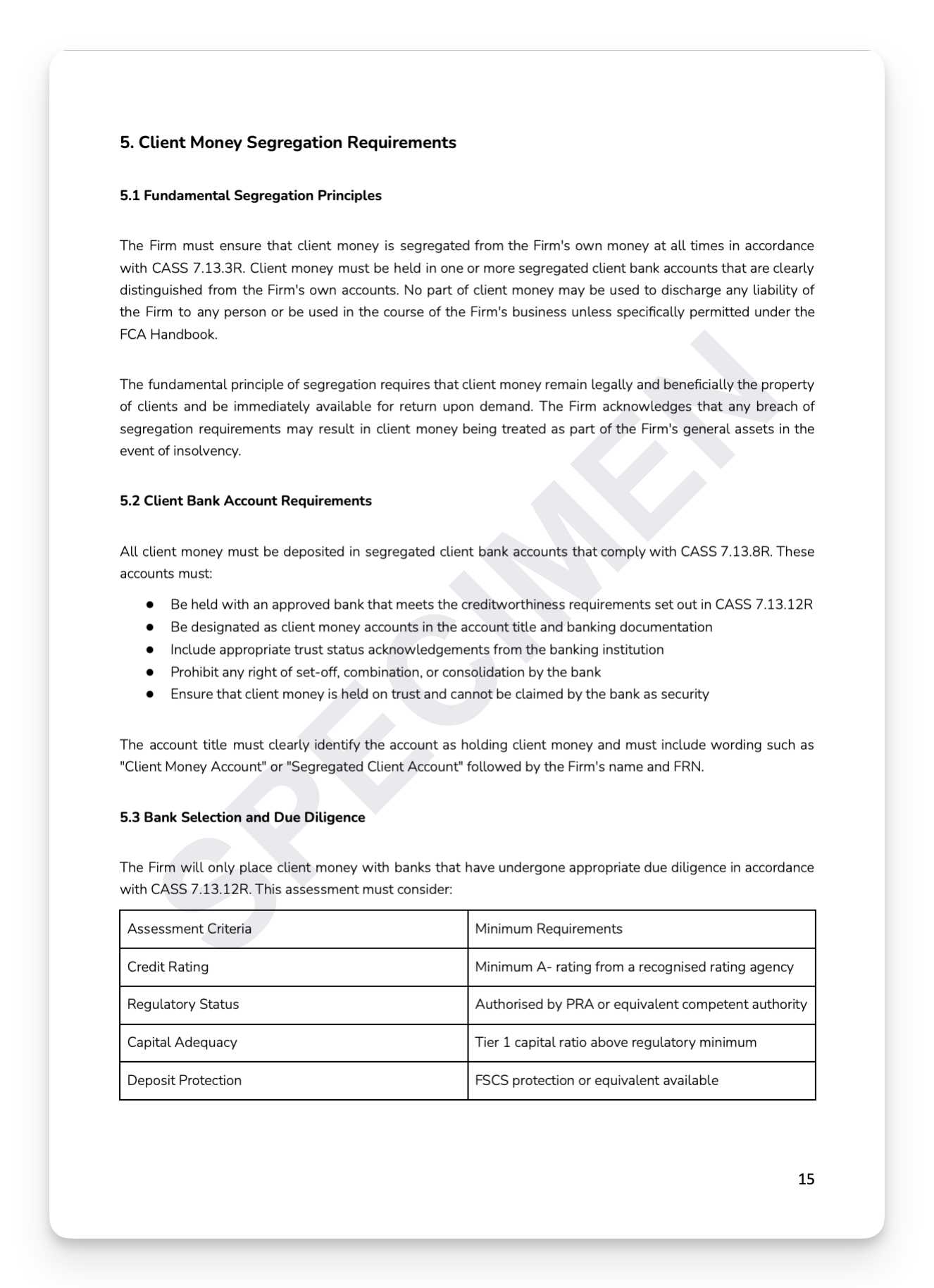 Image 5 of 6
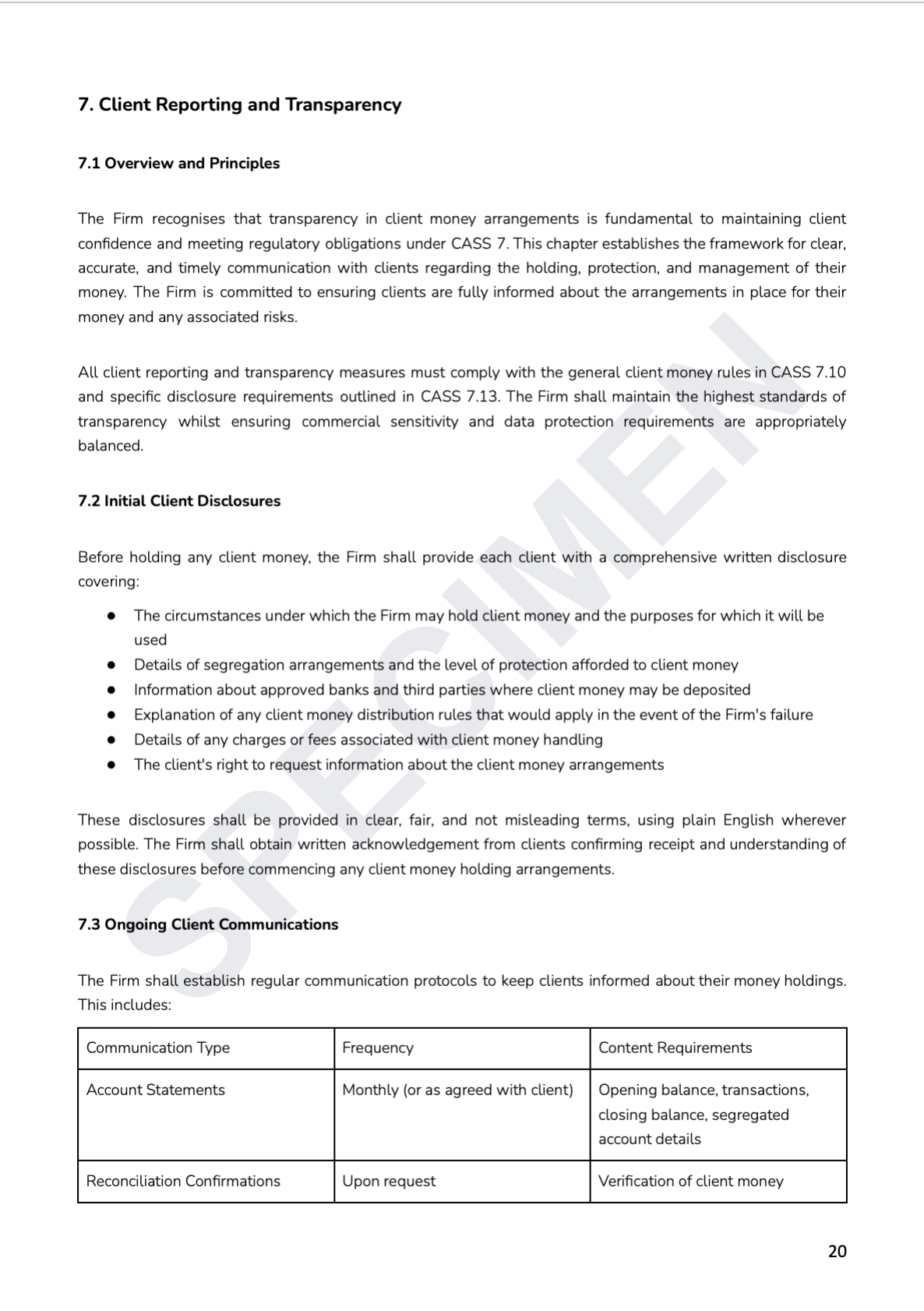 Image 6 of 6