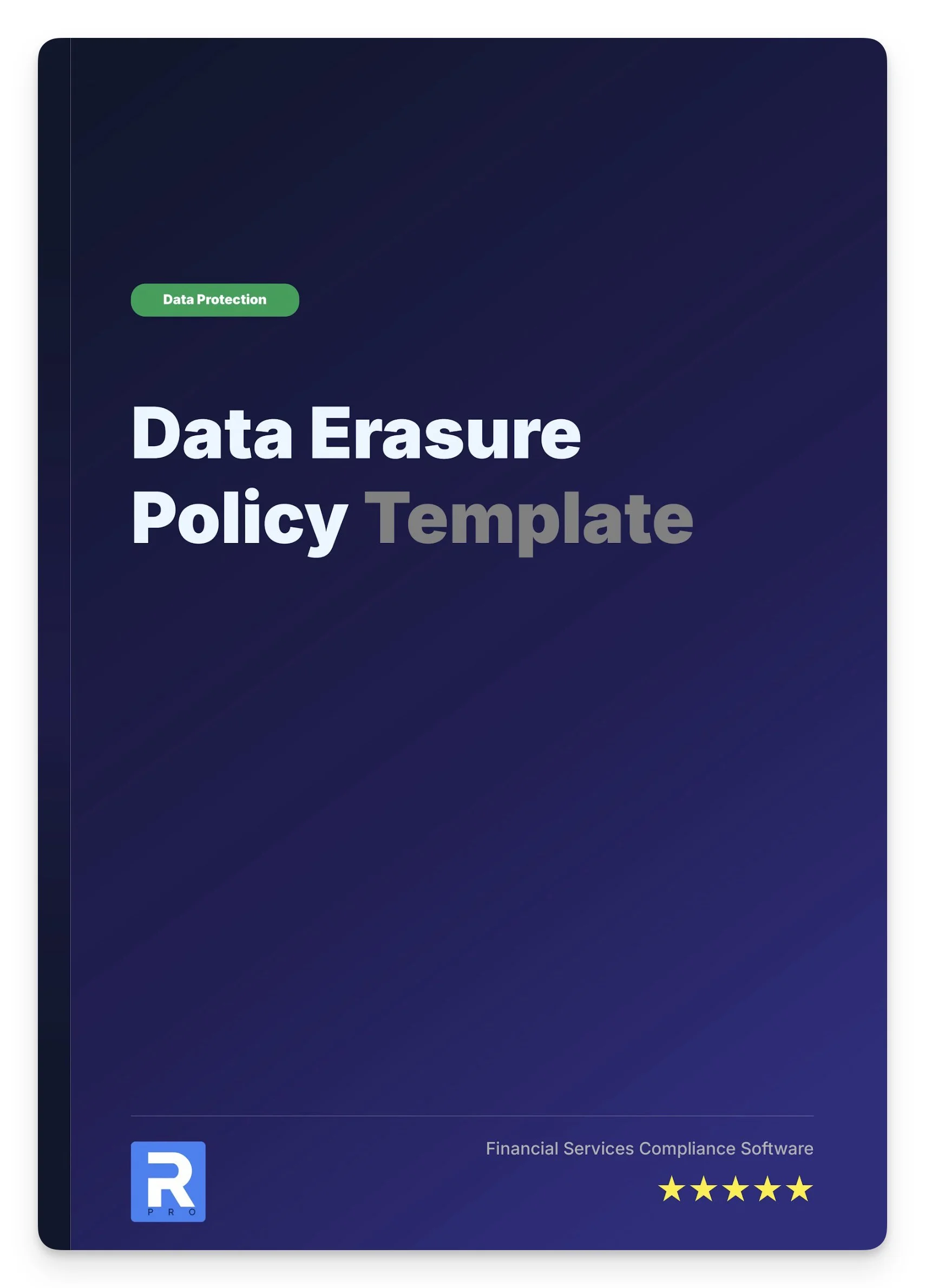
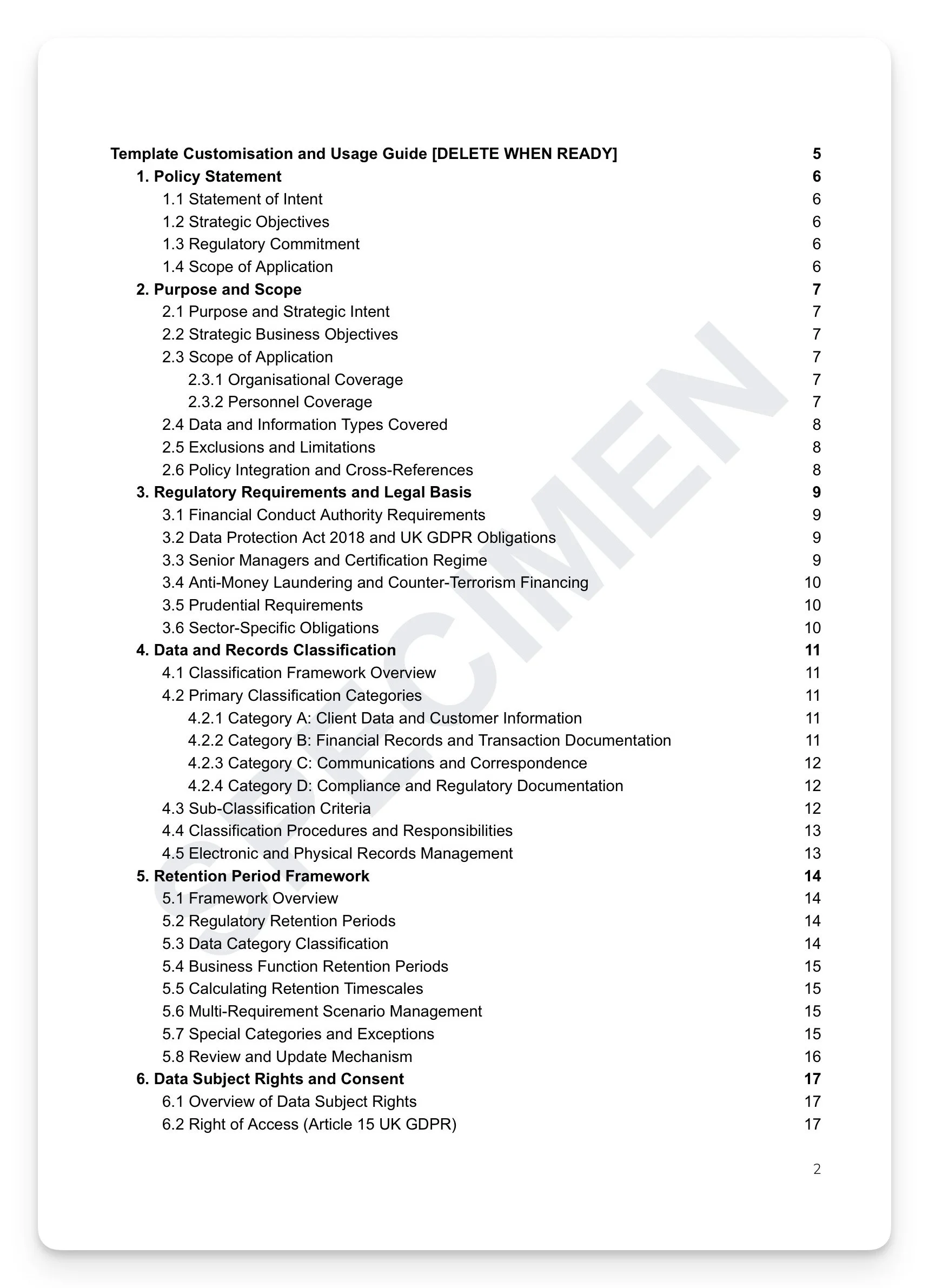
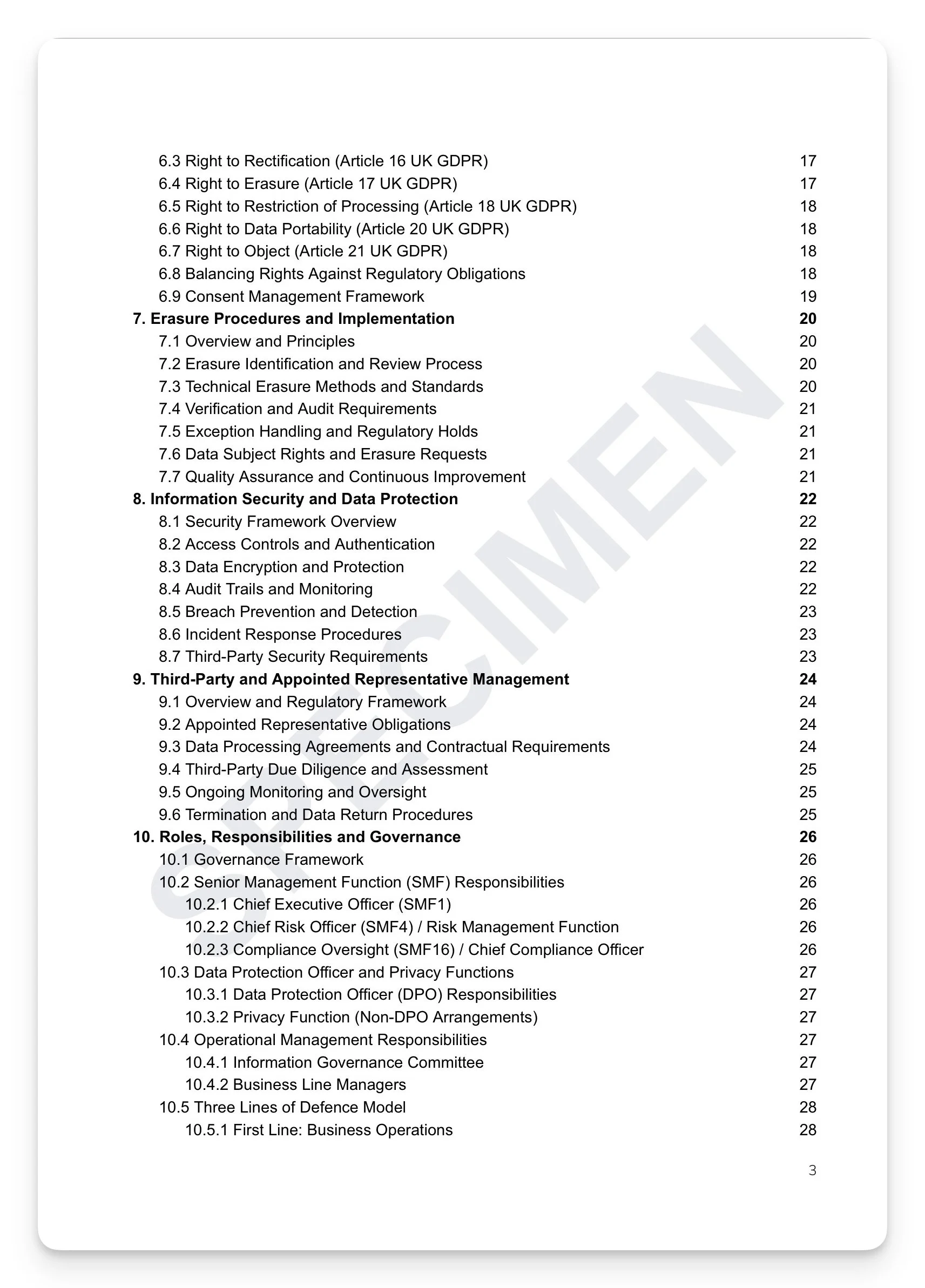
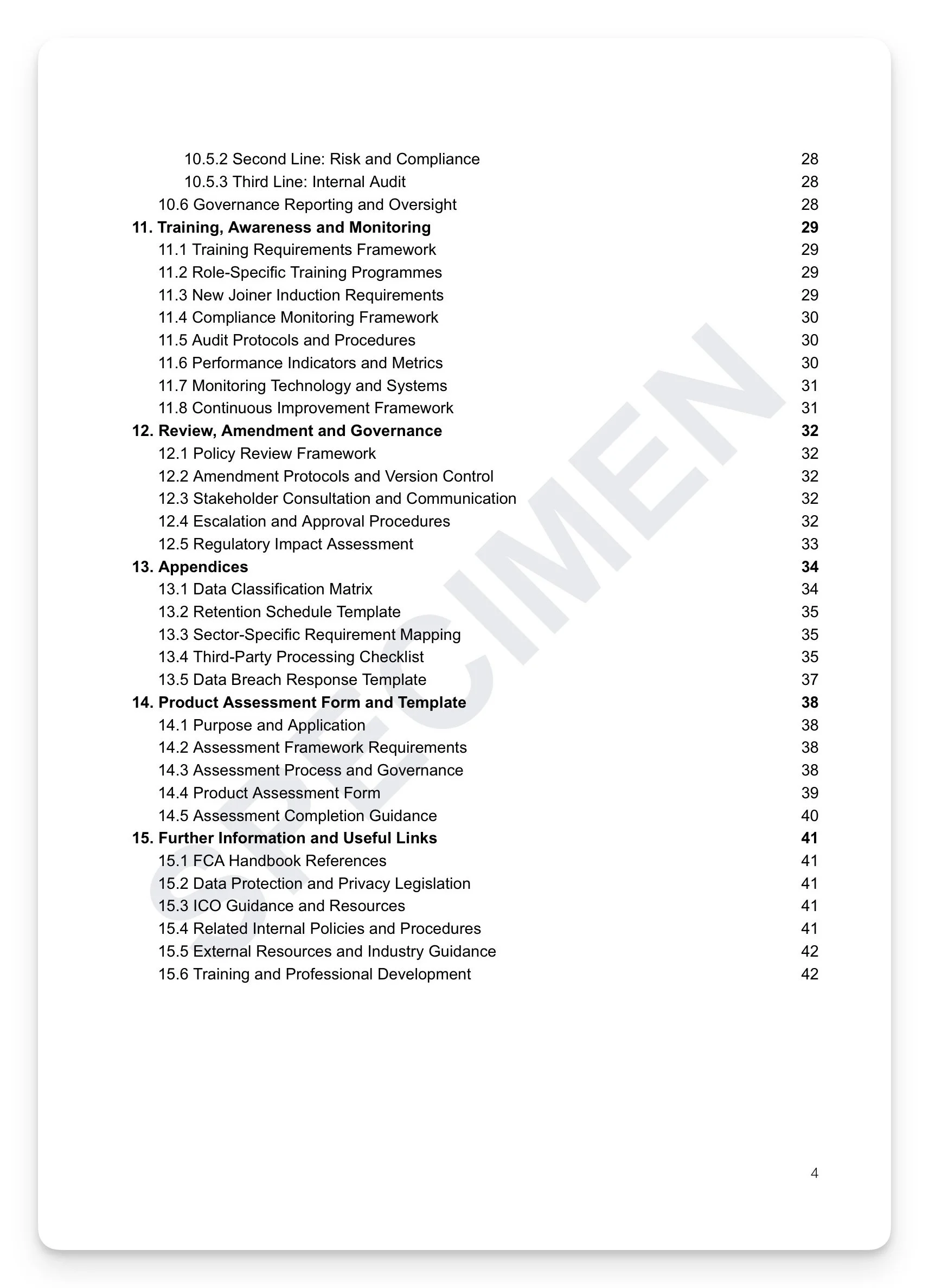
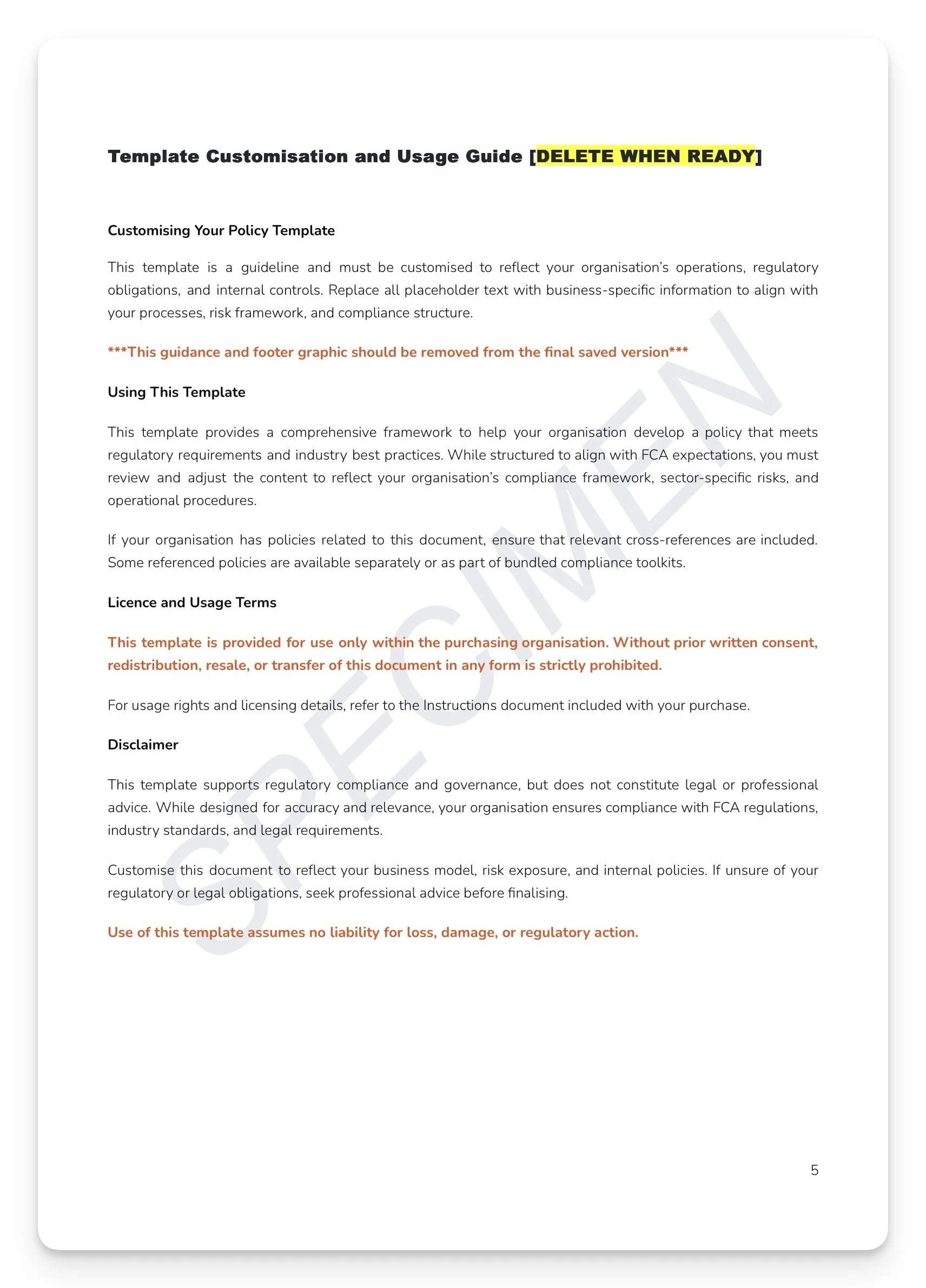
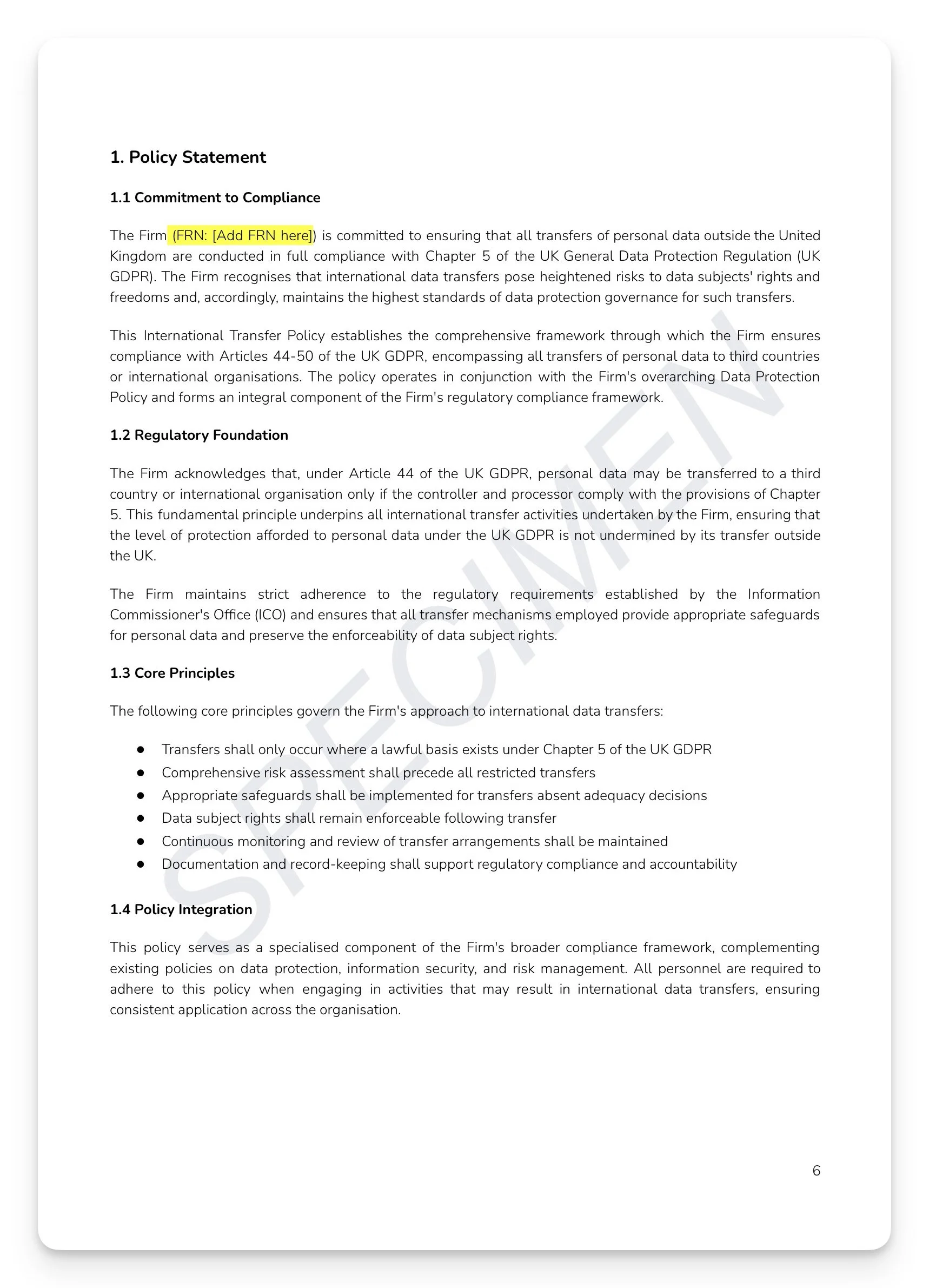
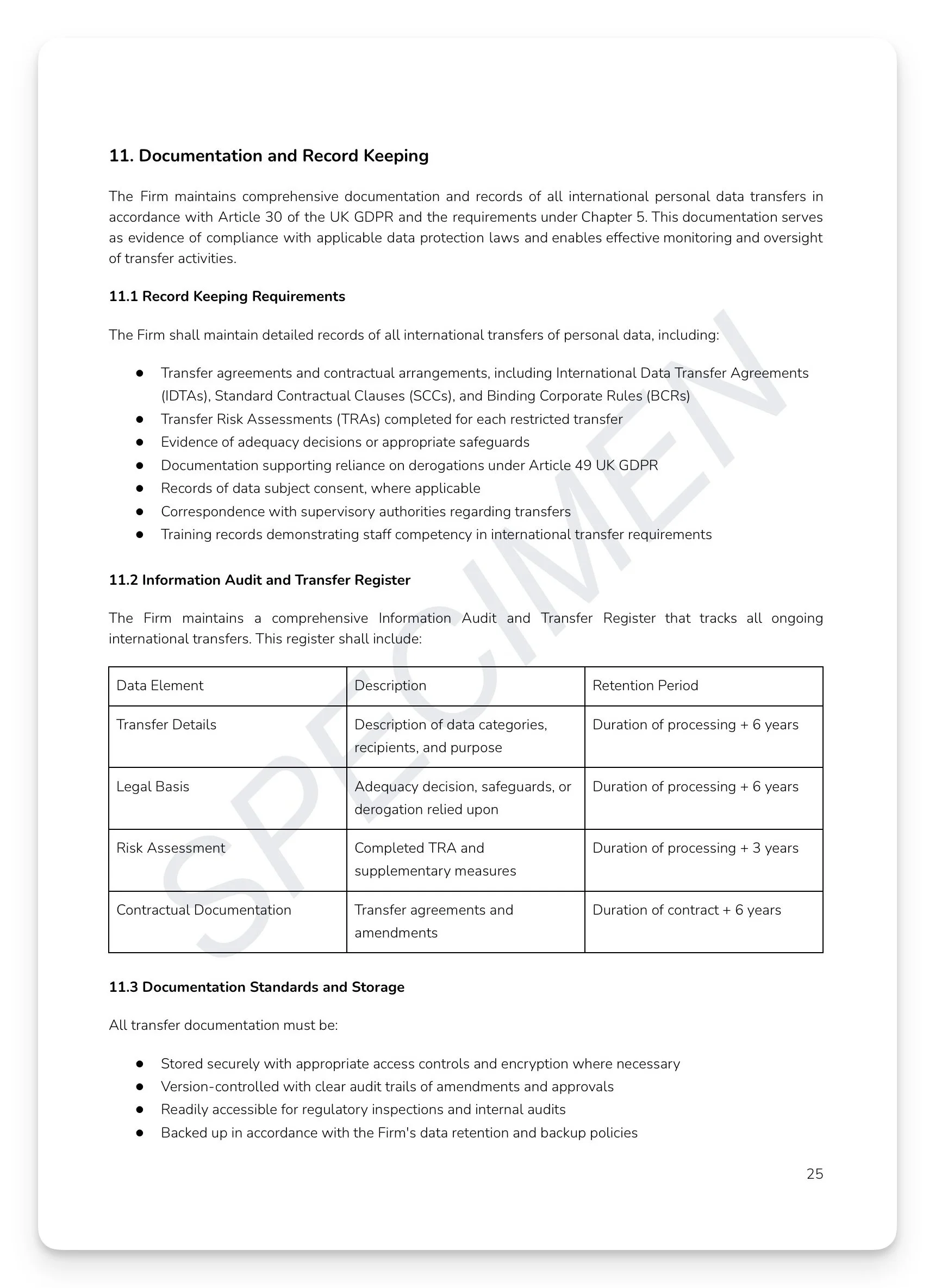
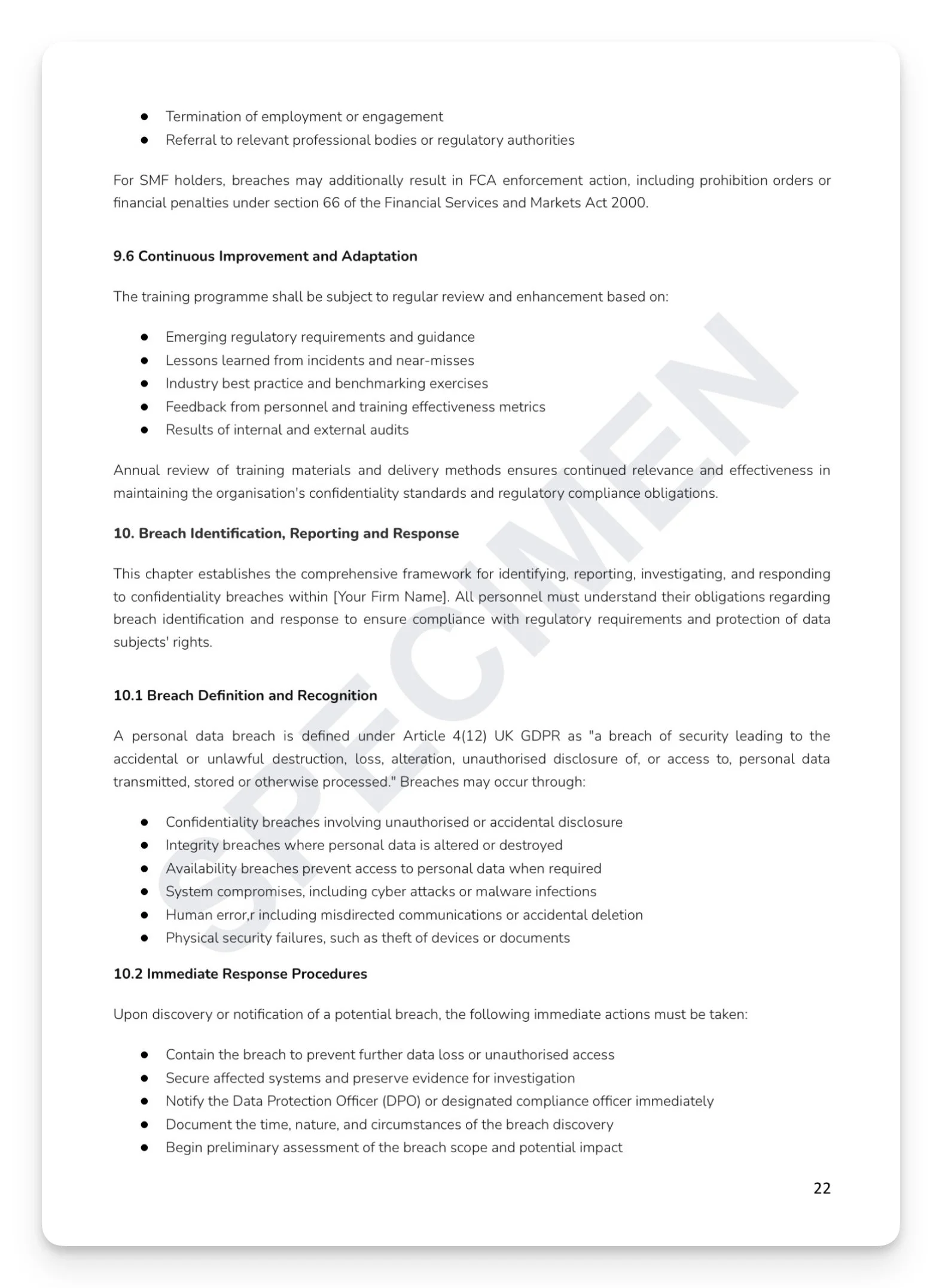
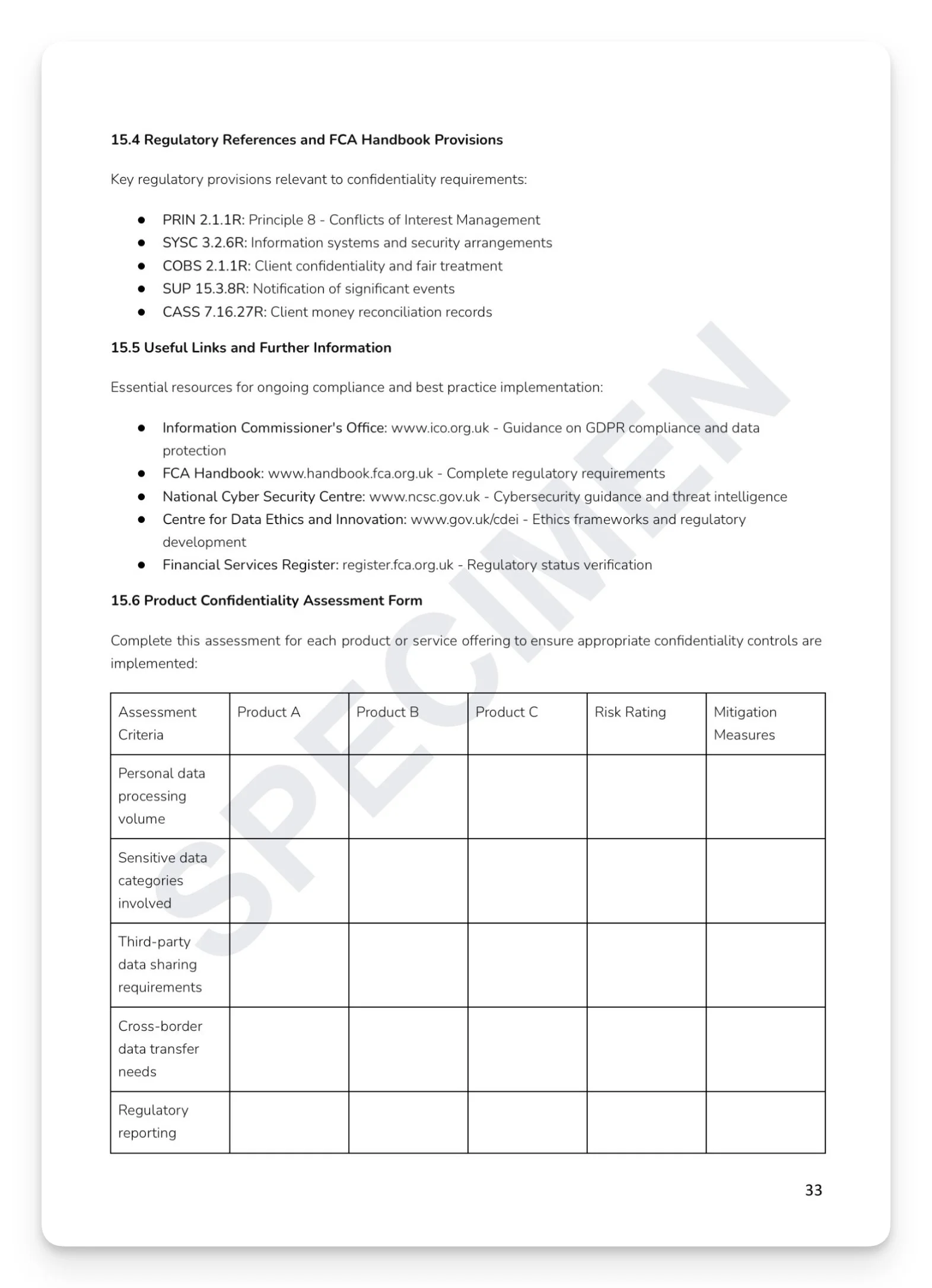
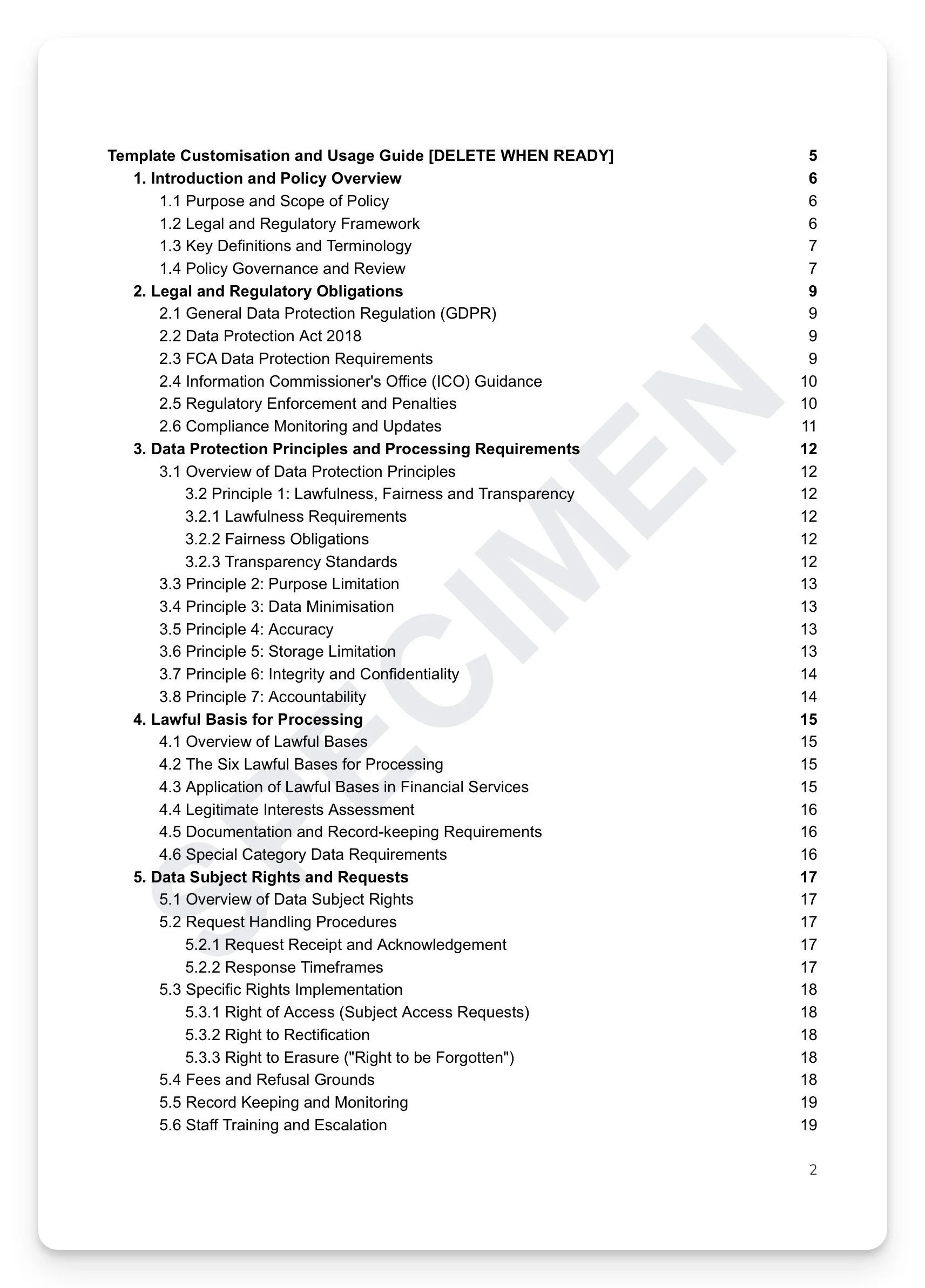
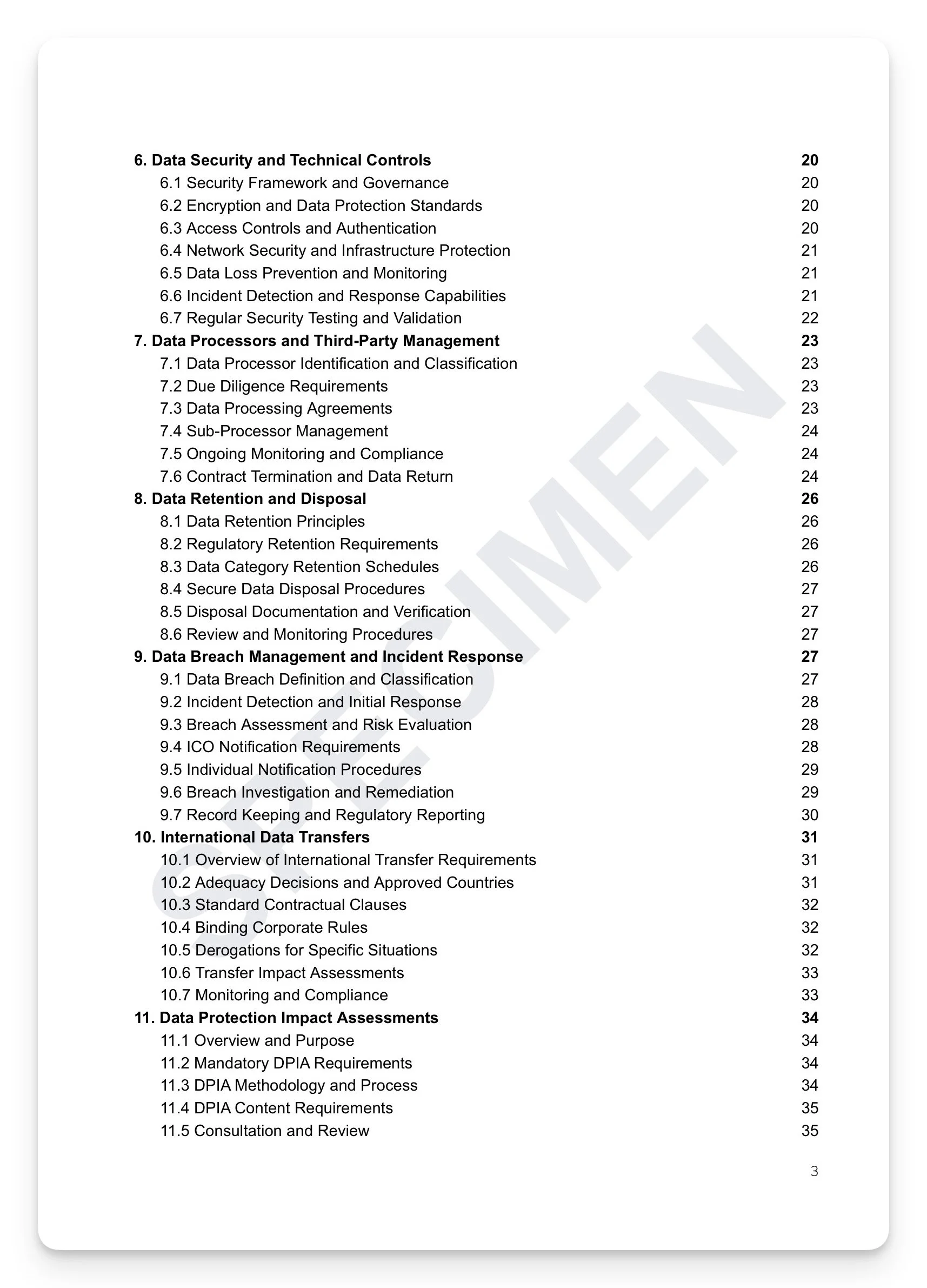
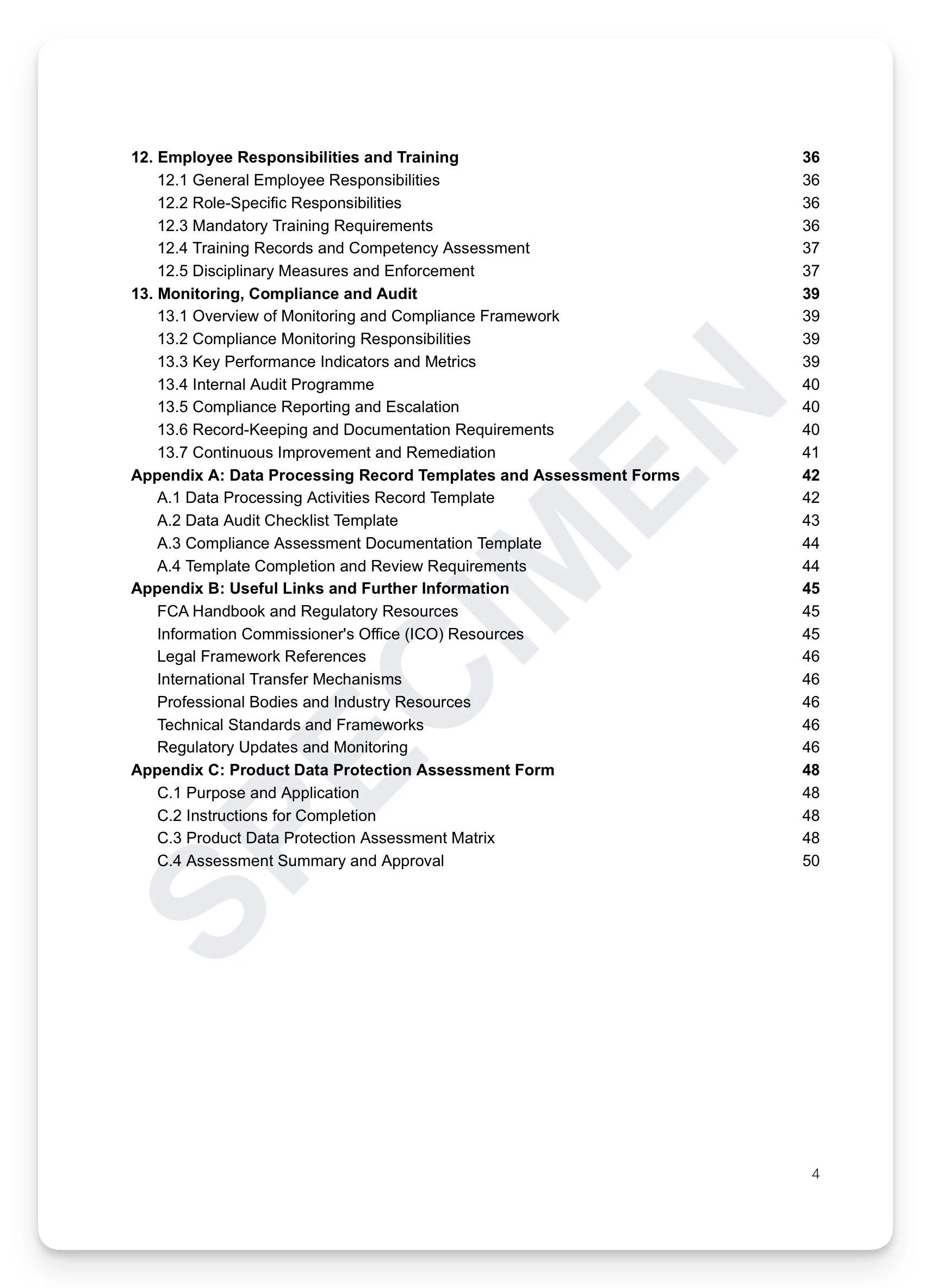
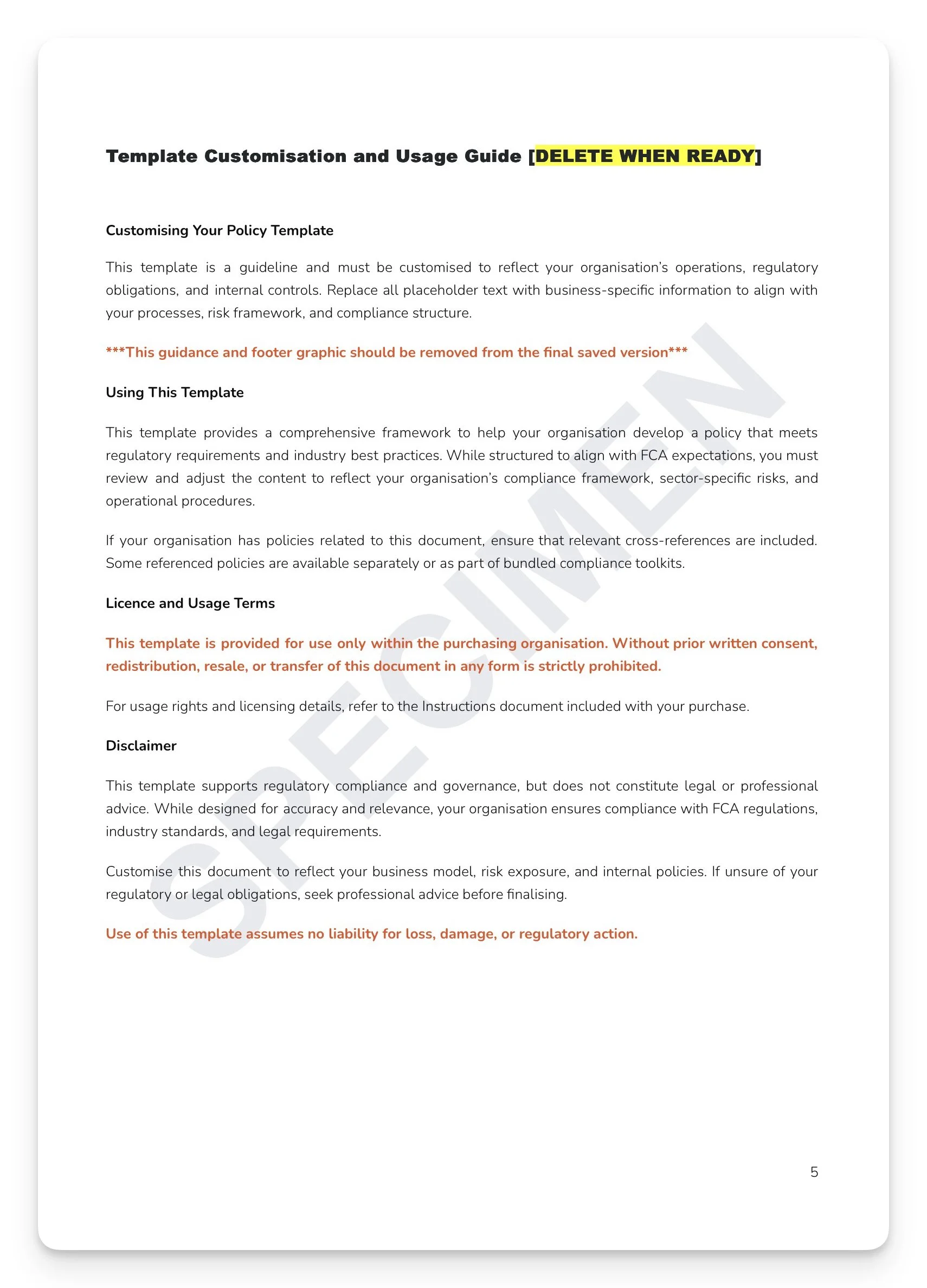
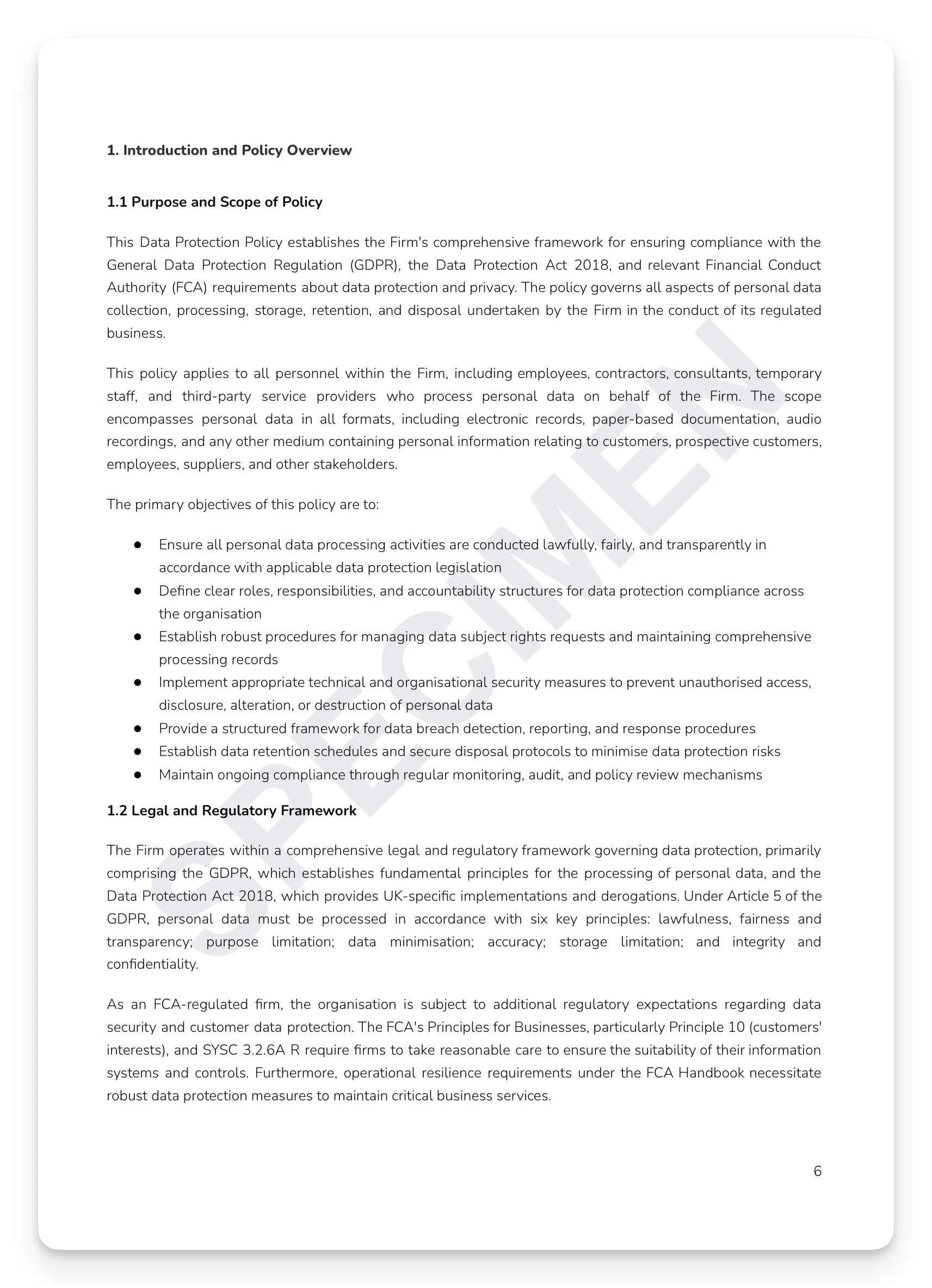
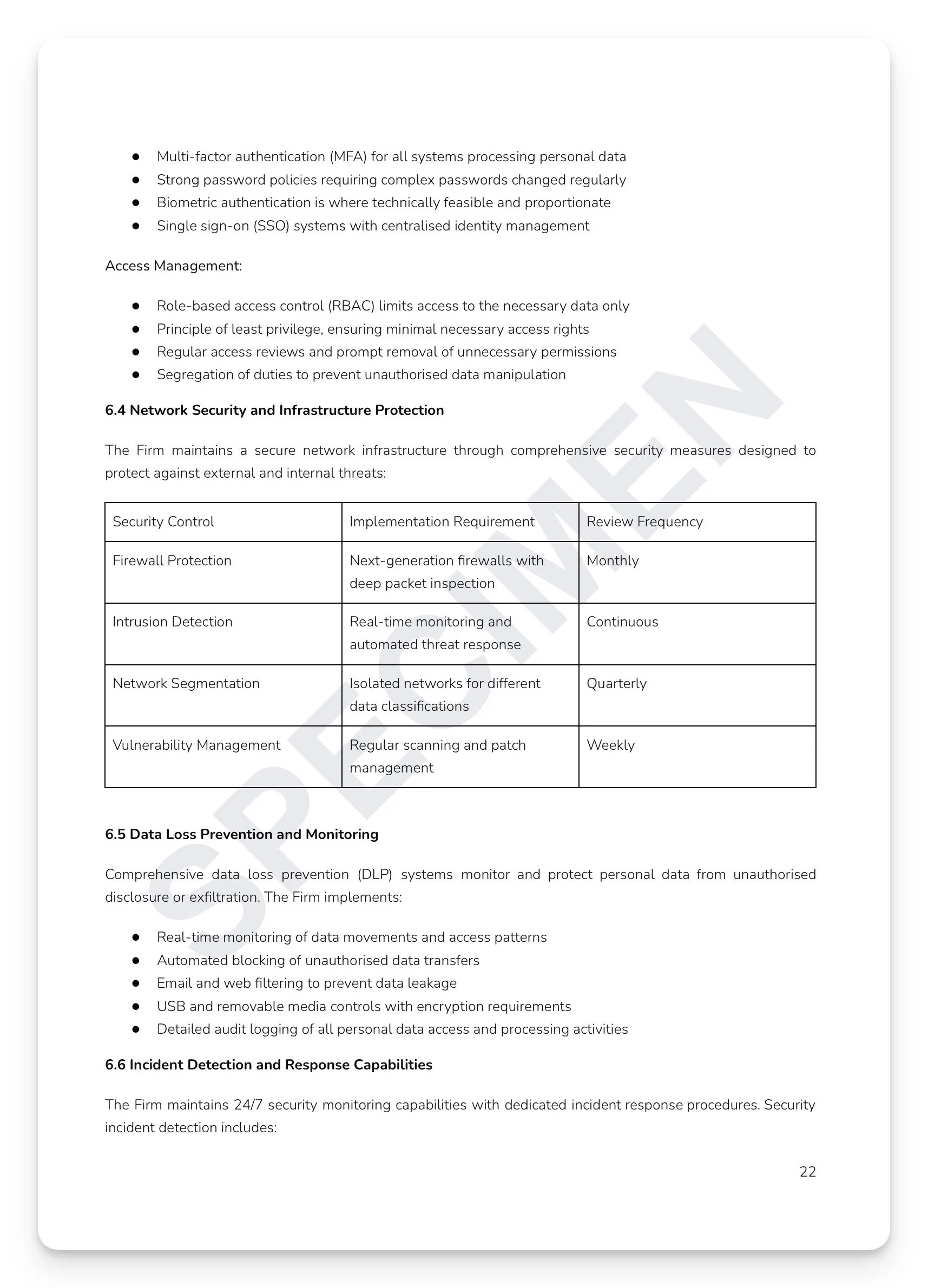
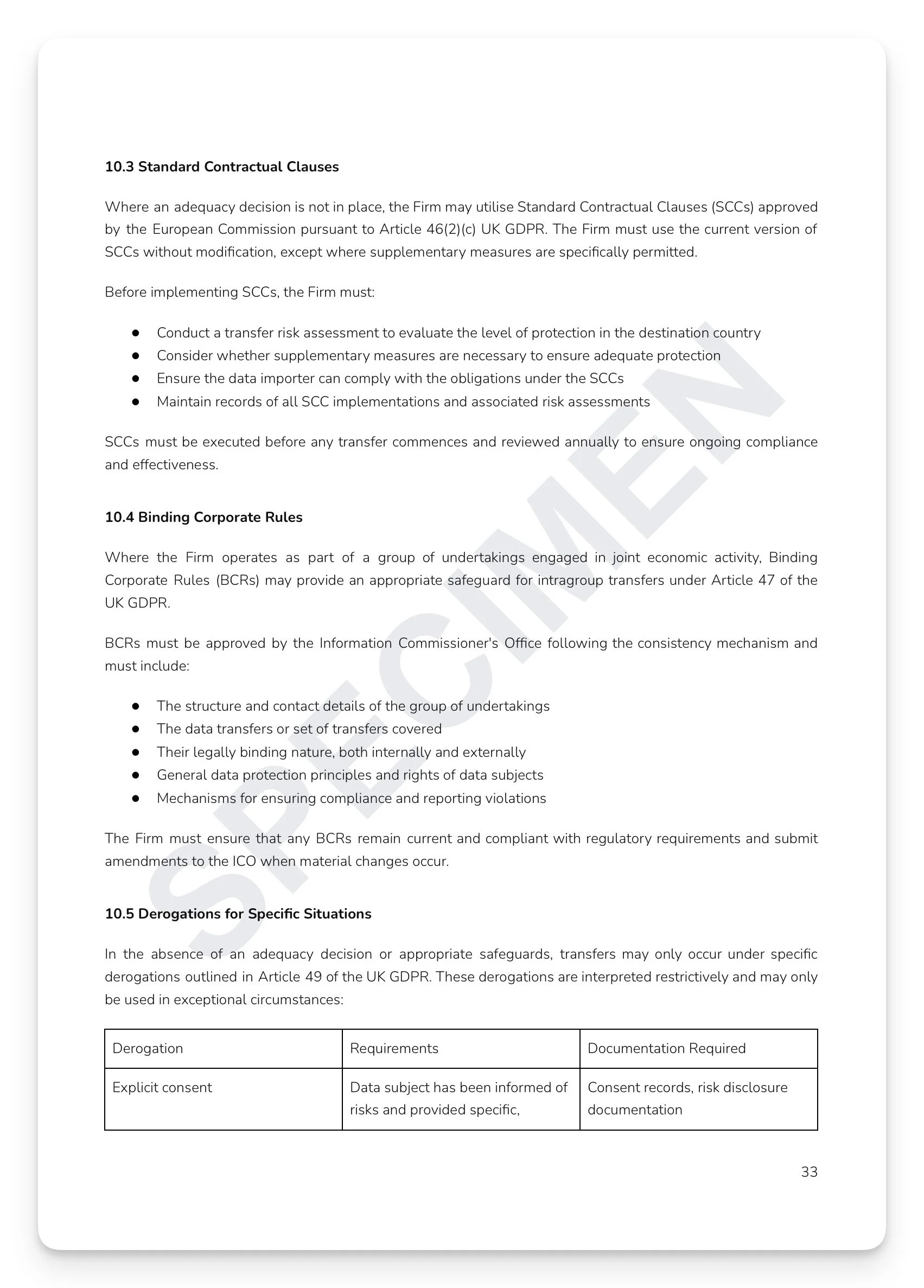
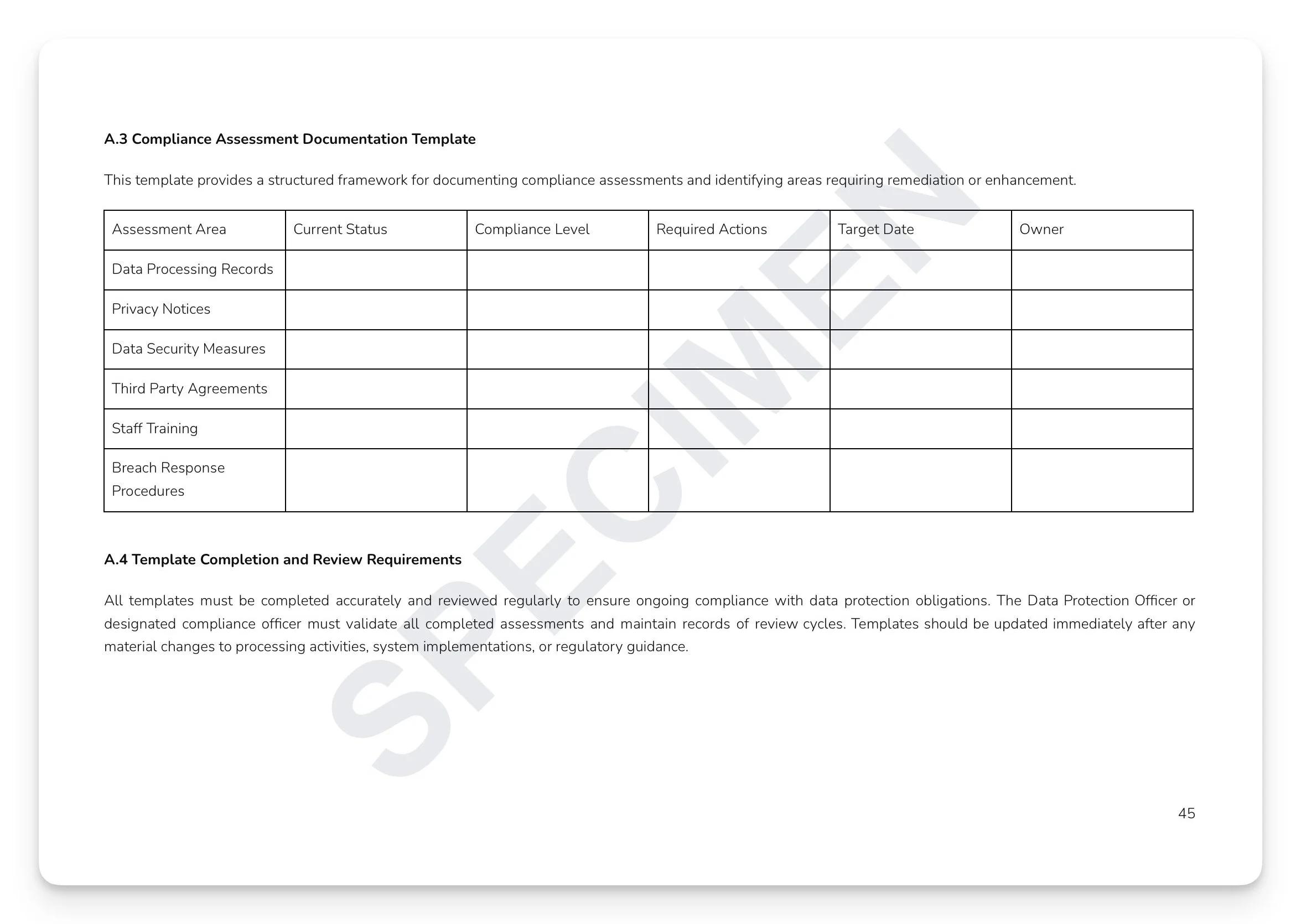
Your DPO is your regulator-facing shield — but do they have a policy behind them? Under UK GDPR Articles 37–39, your Data Protection Officer isn't just a job title. They're a legally defined role with mandatory independence, specific statutory duties, prohibited conflicts of interest, and a direct line to the ICO. Appointing someone without a governance framework to back them up isn't compliance — it's a liability. An under-governed DPO function is simultaneously an ICO exposure and, for FCA-regulated firms, a SYSC governance failure.
What's included:
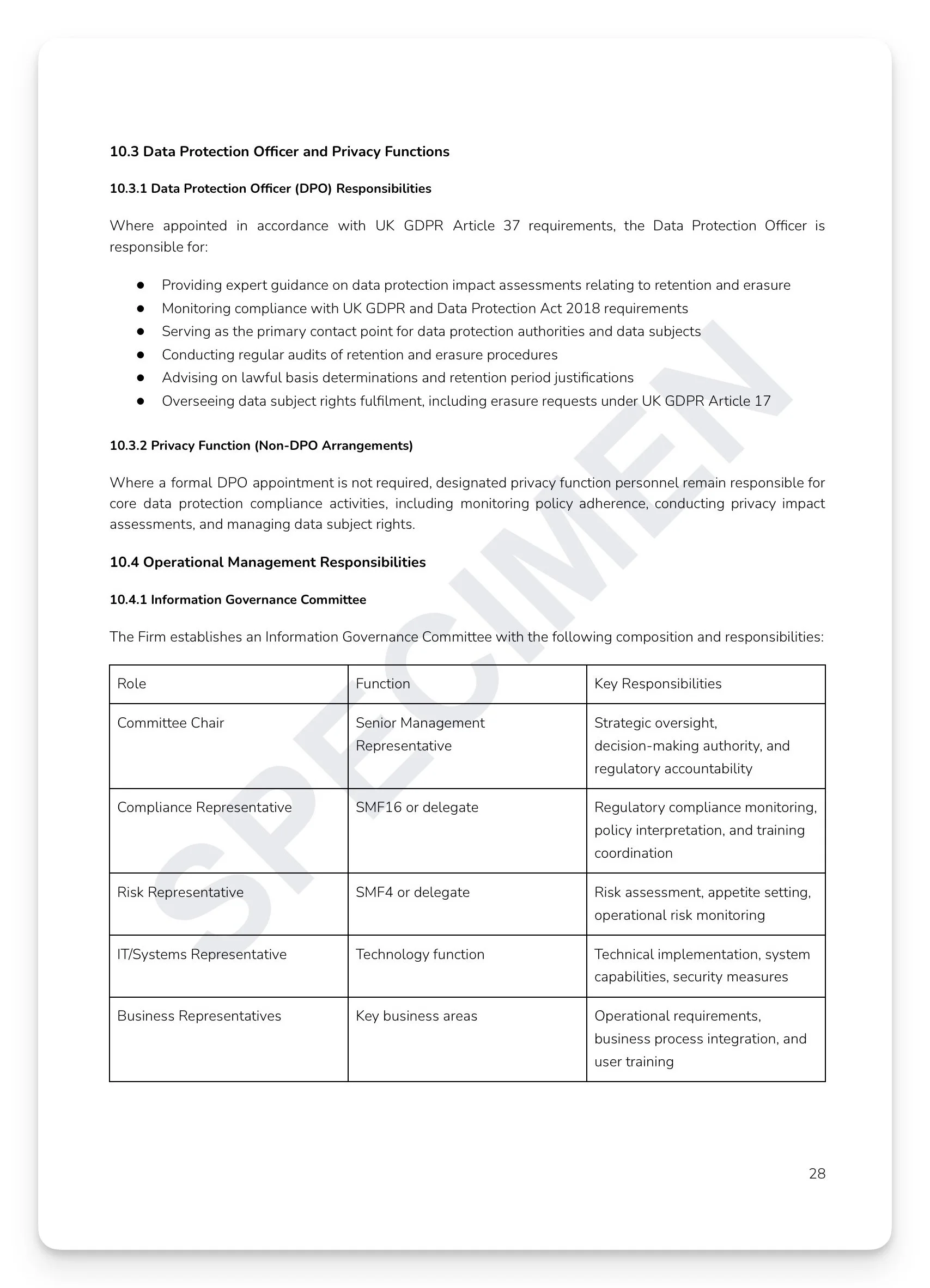
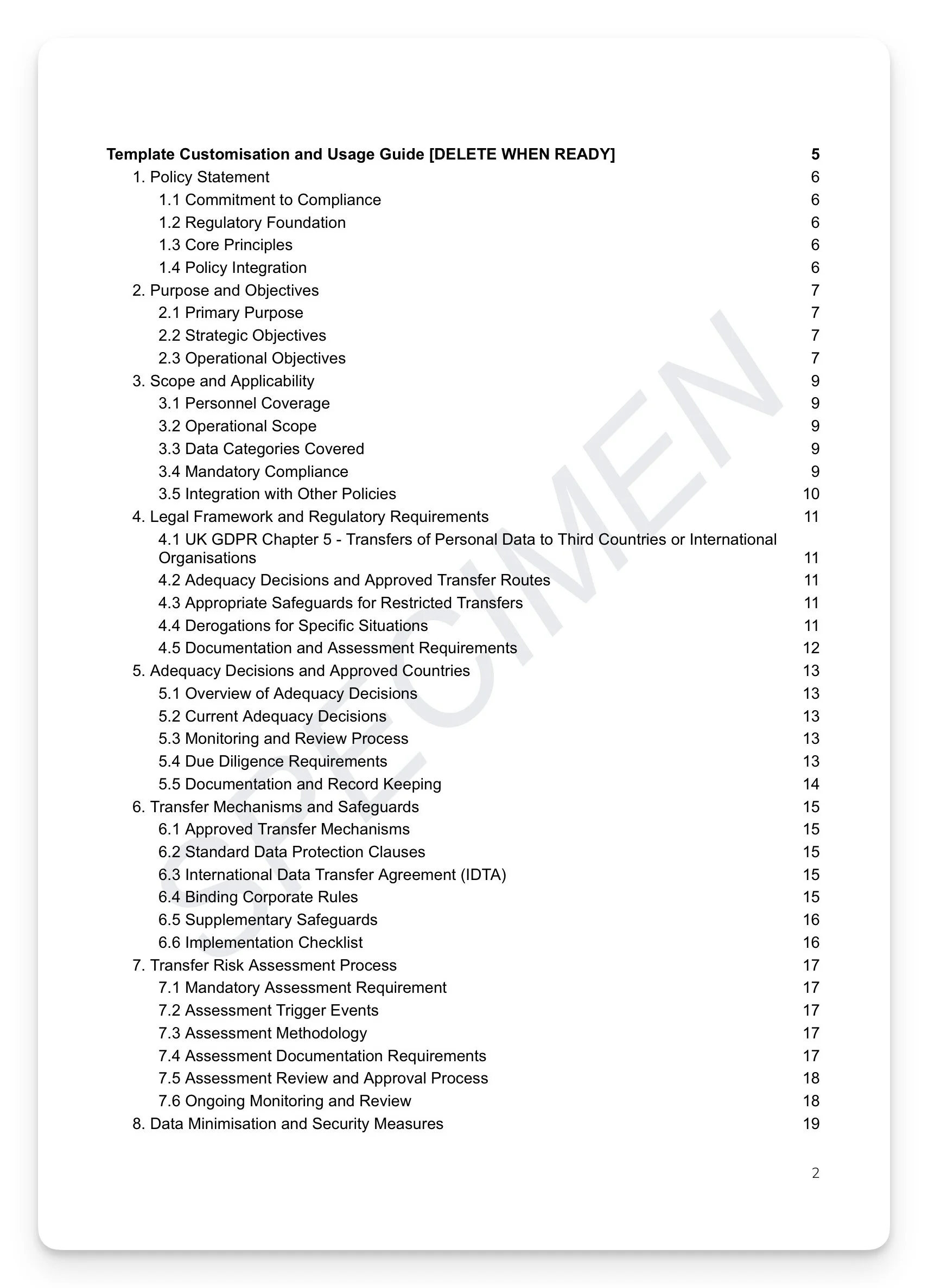
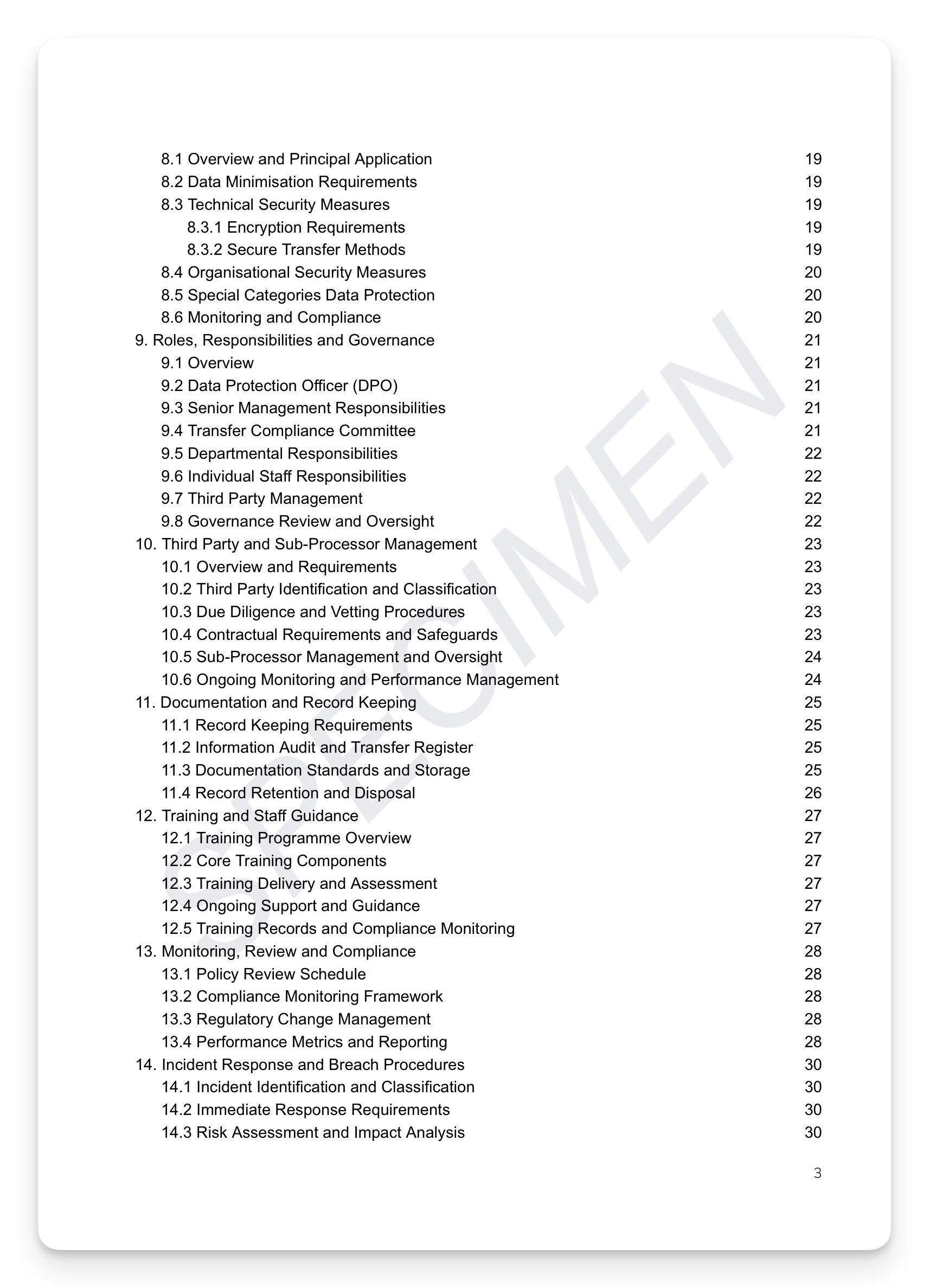
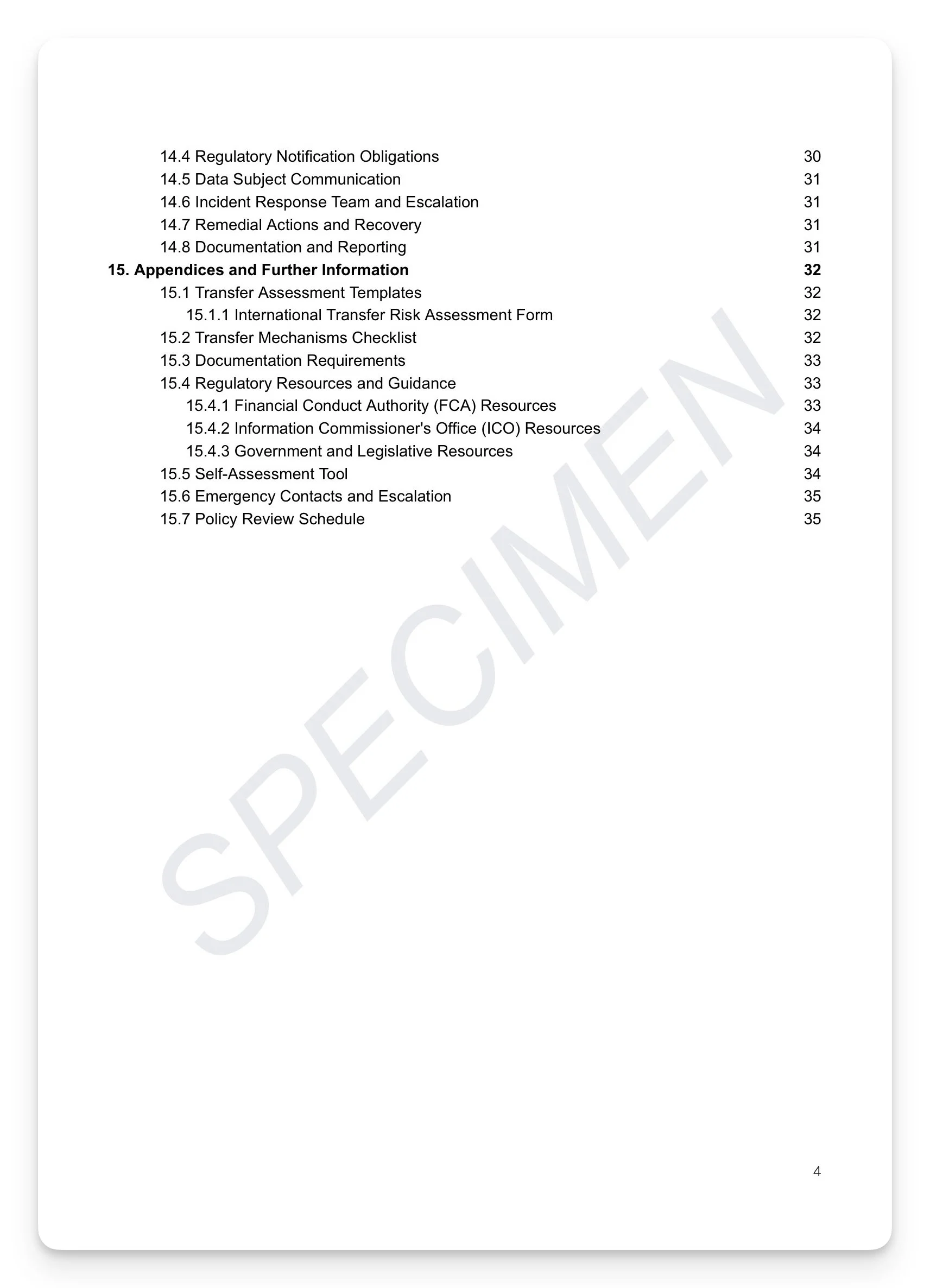
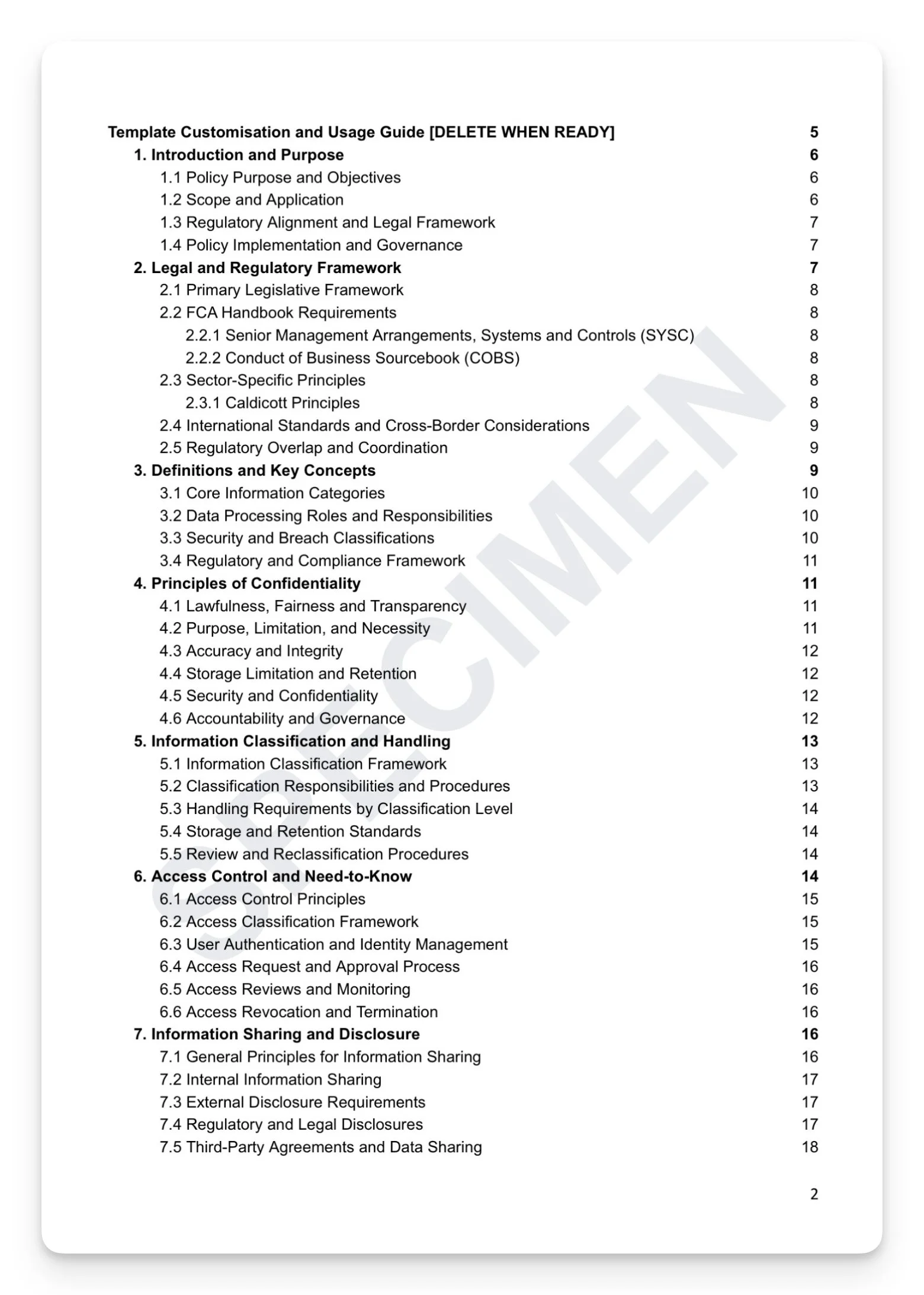
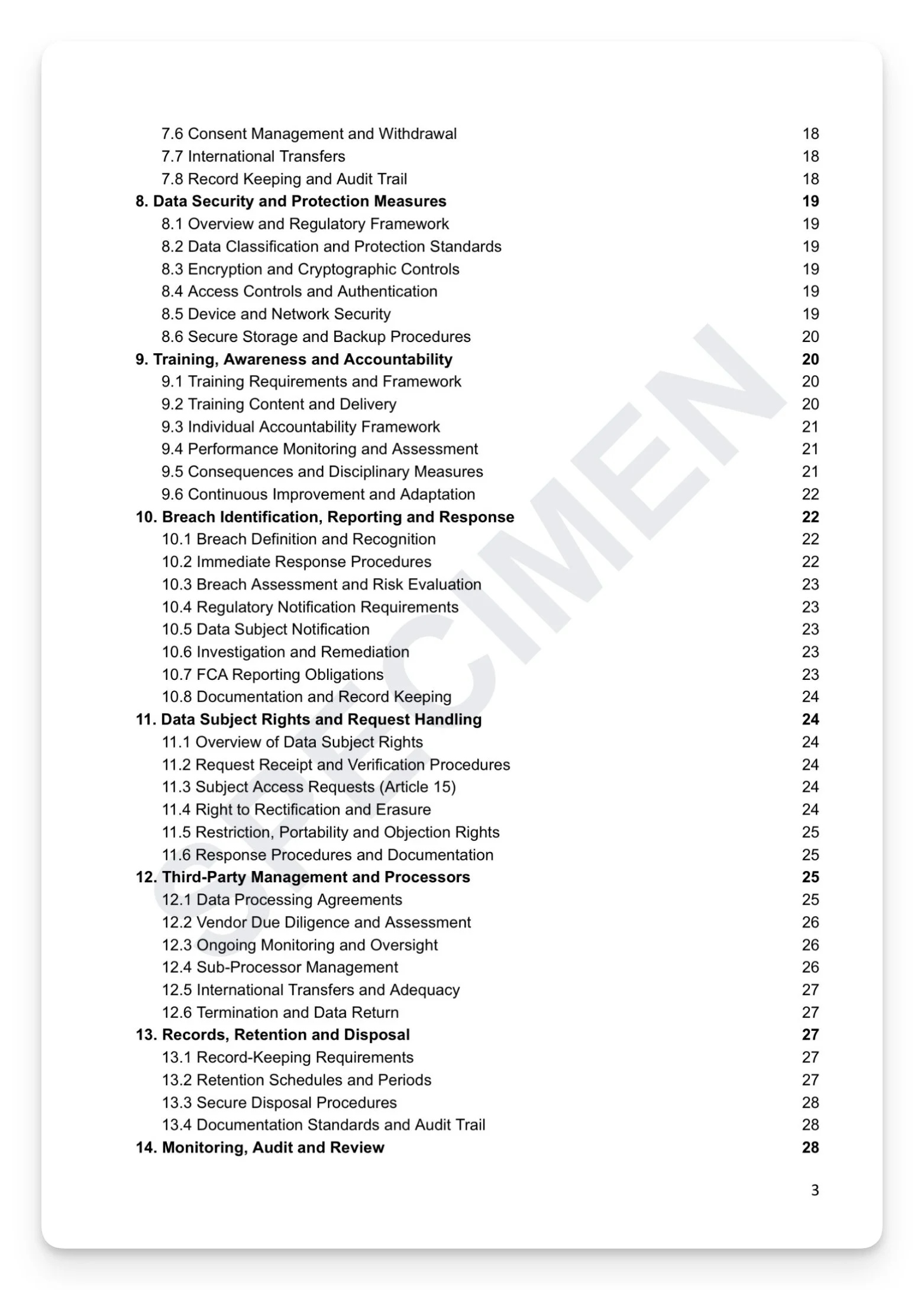
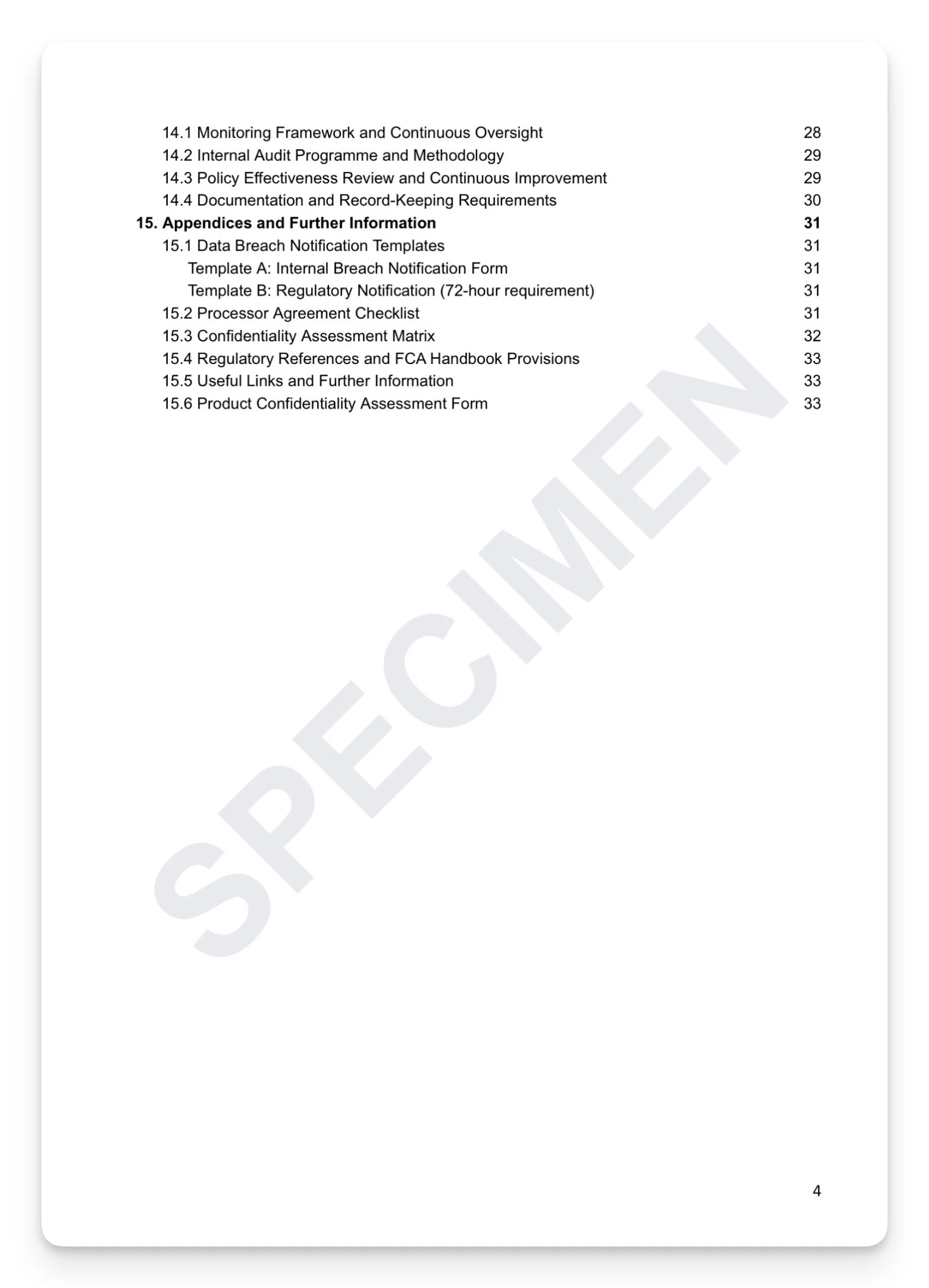
Mandatory vs voluntary DPO appointment assessment: Article 37 criteria and large-scale processing determination methodology — with independence requirements, prohibited roles matrix, and direct reporting line to Board/CEO structure
Conflict of interest assessment and annual declaration procedures with confidentiality agreement requirements under Article 38(5) — and DPO competency standards including IAPP CIPP/E qualification and 40-hour annual CPD commitment
Core statutory duties under Article 39: information and advice, monitoring compliance, DPIA consultation, cooperation with ICO, and data subject contact point
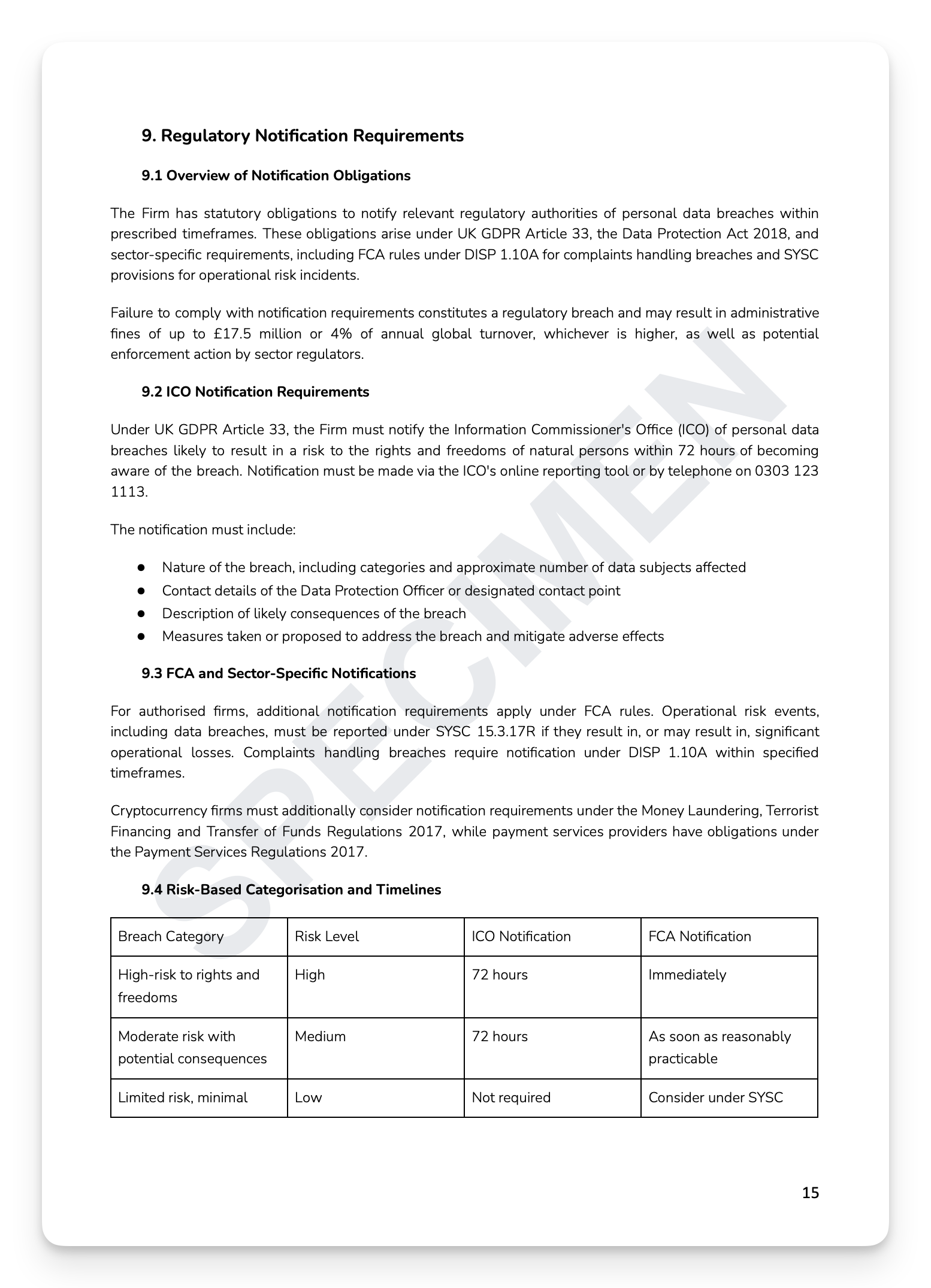
Subject access request coordination within a one-month framework with data subject rights handling across Articles 15–22 — and 72-hour ICO breach notification authority
Deputy DPO appointment, qualification, and activation procedures — with ICO registration and regulatory cooperation obligations
Resource allocation framework: financial, technical, and administrative — with annual independence audit and performance assessment framework
Six-year documentation retention standard
+ much more
Who is this for?
Compliance Officers, senior management, and HR teams at FCA-regulated firms appointing or formalising their Data Protection Officer arrangements who need a complete governance framework that satisfies Articles 37–39 and withstands ICO scrutiny.
How it works
Step 1 — Read it. Every section exists for a reason, grounded in a specific regulatory obligation.
Step 2 — Understand it. Map the content against your current practices. Identify where you're strong and where gaps exist.
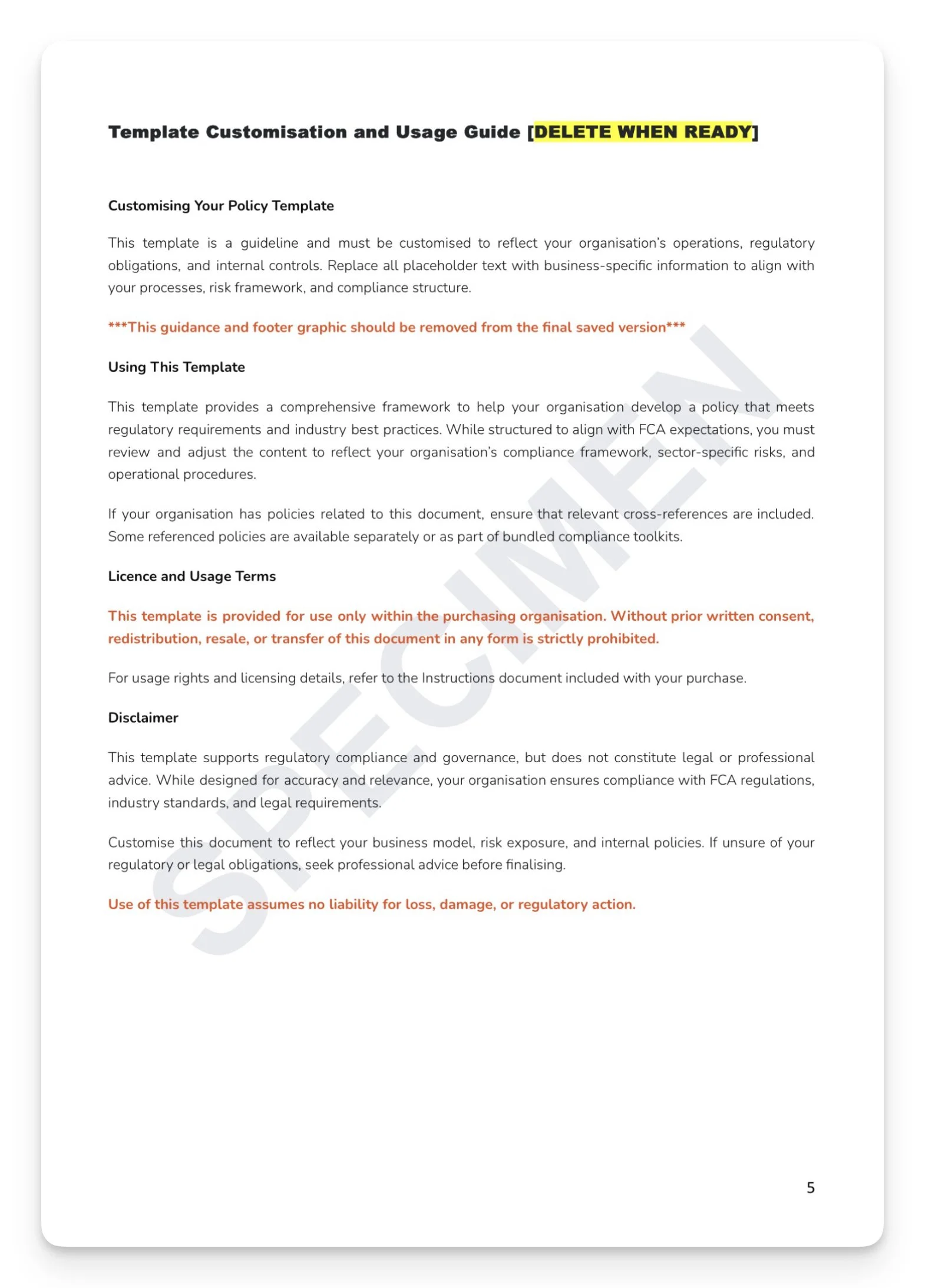
Step 3 — Make it yours. Tailor the language to reflect how your organisation actually operates. A policy that sounds like your firm is a policy your people will follow.
Step 4 — Take ownership. Assign clear accountability — Board approval, named SMF holder, designated policy owner. A policy without an owner is a liability, not an asset.
Step 5 — Operationalise it. Embed the policy into your governance calendar, training programme, and annual review cycle. This is where compliance becomes culture.
Or, get this free with RegTechPRO
Access this alongside the full compliance policy library — SM&CR, COBS, AML, Consumer Duty, GDPR, and more — for a fraction of the cost of consultancy.
View RegTechPRO pricing and packages →
Your DPO is your regulator-facing shield — but do they have a policy behind them? Under UK GDPR Articles 37–39, your Data Protection Officer isn't just a job title. They're a legally defined role with mandatory independence, specific statutory duties, prohibited conflicts of interest, and a direct line to the ICO. Appointing someone without a governance framework to back them up isn't compliance — it's a liability. An under-governed DPO function is simultaneously an ICO exposure and, for FCA-regulated firms, a SYSC governance failure.
What's included:
Mandatory vs voluntary DPO appointment assessment: Article 37 criteria and large-scale processing determination methodology — with independence requirements, prohibited roles matrix, and direct reporting line to Board/CEO structure
Conflict of interest assessment and annual declaration procedures with confidentiality agreement requirements under Article 38(5) — and DPO competency standards including IAPP CIPP/E qualification and 40-hour annual CPD commitment
Core statutory duties under Article 39: information and advice, monitoring compliance, DPIA consultation, cooperation with ICO, and data subject contact point
Subject access request coordination within a one-month framework with data subject rights handling across Articles 15–22 — and 72-hour ICO breach notification authority
Deputy DPO appointment, qualification, and activation procedures — with ICO registration and regulatory cooperation obligations
Resource allocation framework: financial, technical, and administrative — with annual independence audit and performance assessment framework
Six-year documentation retention standard
+ much more
Who is this for?
Compliance Officers, senior management, and HR teams at FCA-regulated firms appointing or formalising their Data Protection Officer arrangements who need a complete governance framework that satisfies Articles 37–39 and withstands ICO scrutiny.
How it works
Step 1 — Read it. Every section exists for a reason, grounded in a specific regulatory obligation.
Step 2 — Understand it. Map the content against your current practices. Identify where you're strong and where gaps exist.
Step 3 — Make it yours. Tailor the language to reflect how your organisation actually operates. A policy that sounds like your firm is a policy your people will follow.
Step 4 — Take ownership. Assign clear accountability — Board approval, named SMF holder, designated policy owner. A policy without an owner is a liability, not an asset.
Step 5 — Operationalise it. Embed the policy into your governance calendar, training programme, and annual review cycle. This is where compliance becomes culture.
Or, get this free with RegTechPRO
Access this alongside the full compliance policy library — SM&CR, COBS, AML, Consumer Duty, GDPR, and more — for a fraction of the cost of consultancy.
View RegTechPRO pricing and packages →


 Image 1 of 6
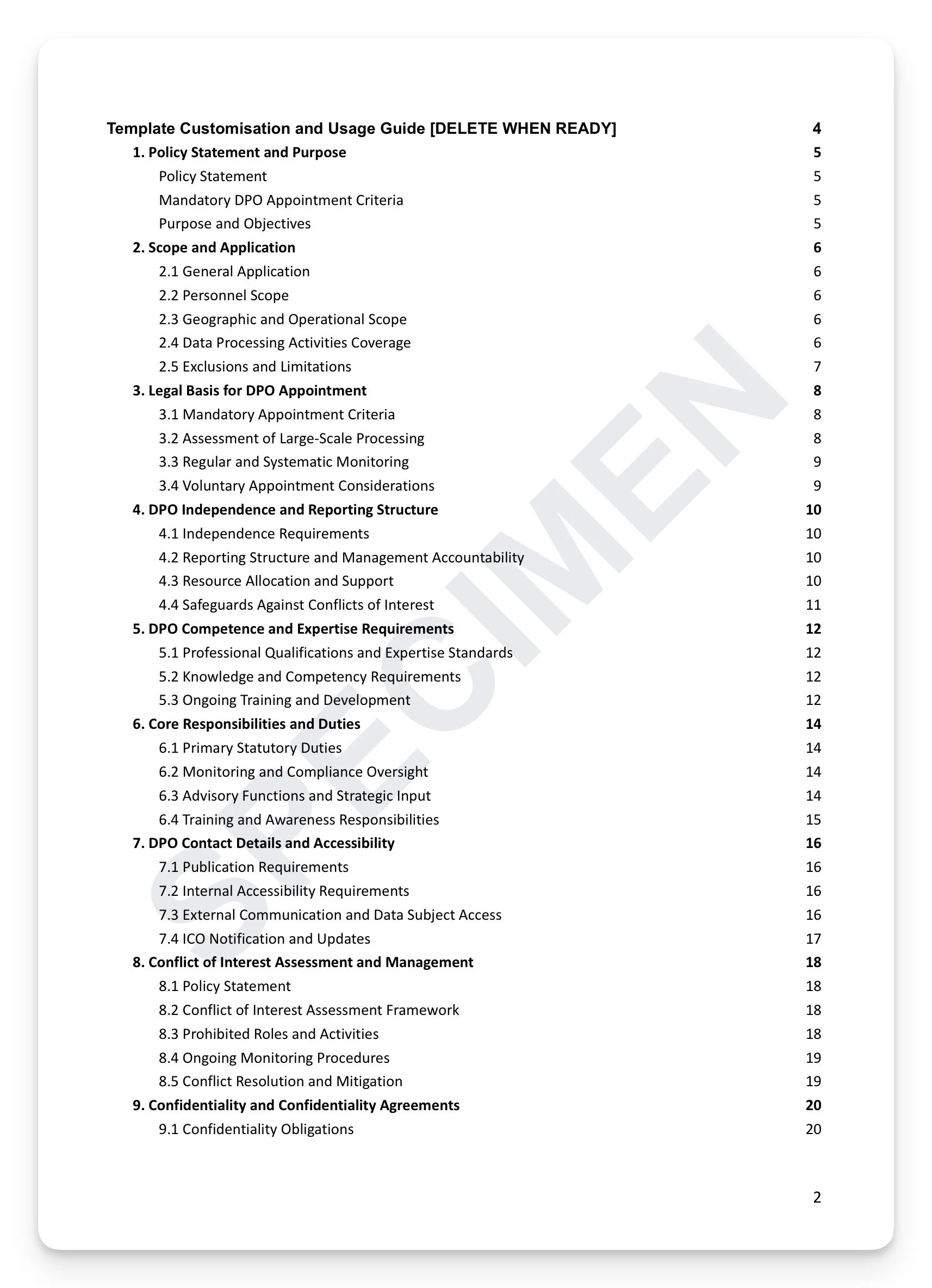 Image 2 of 6
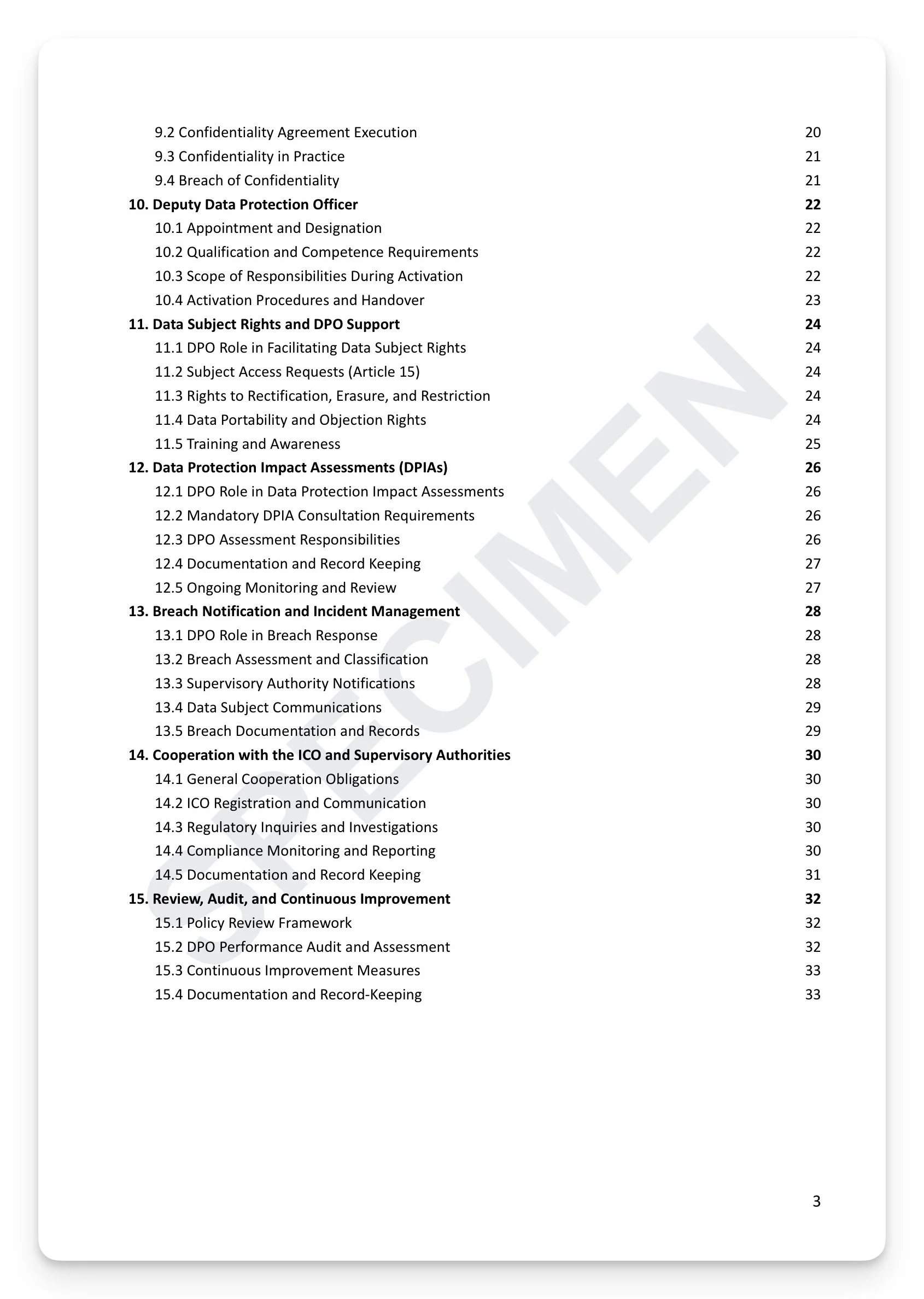 Image 3 of 6
 Image 4 of 6
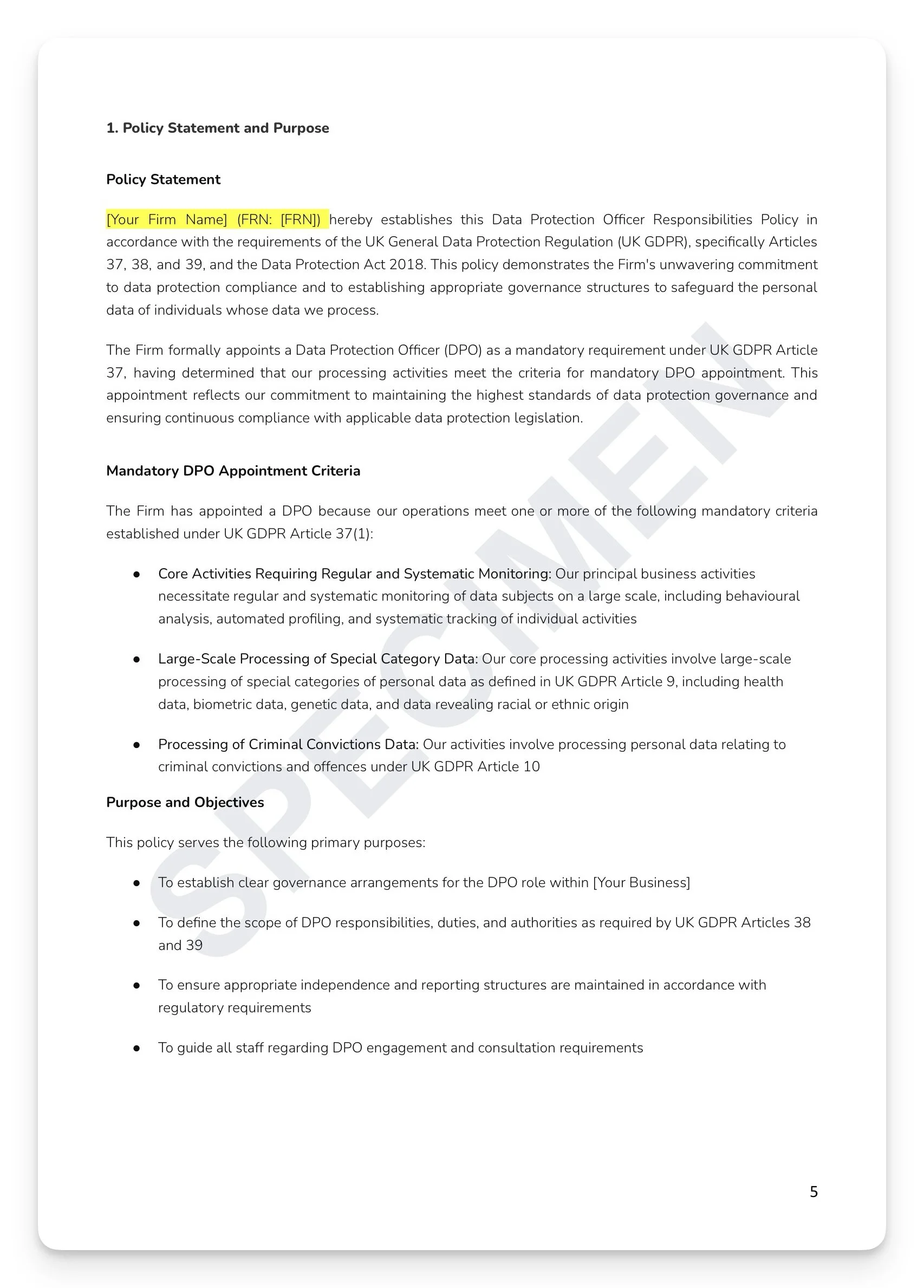 Image 5 of 6
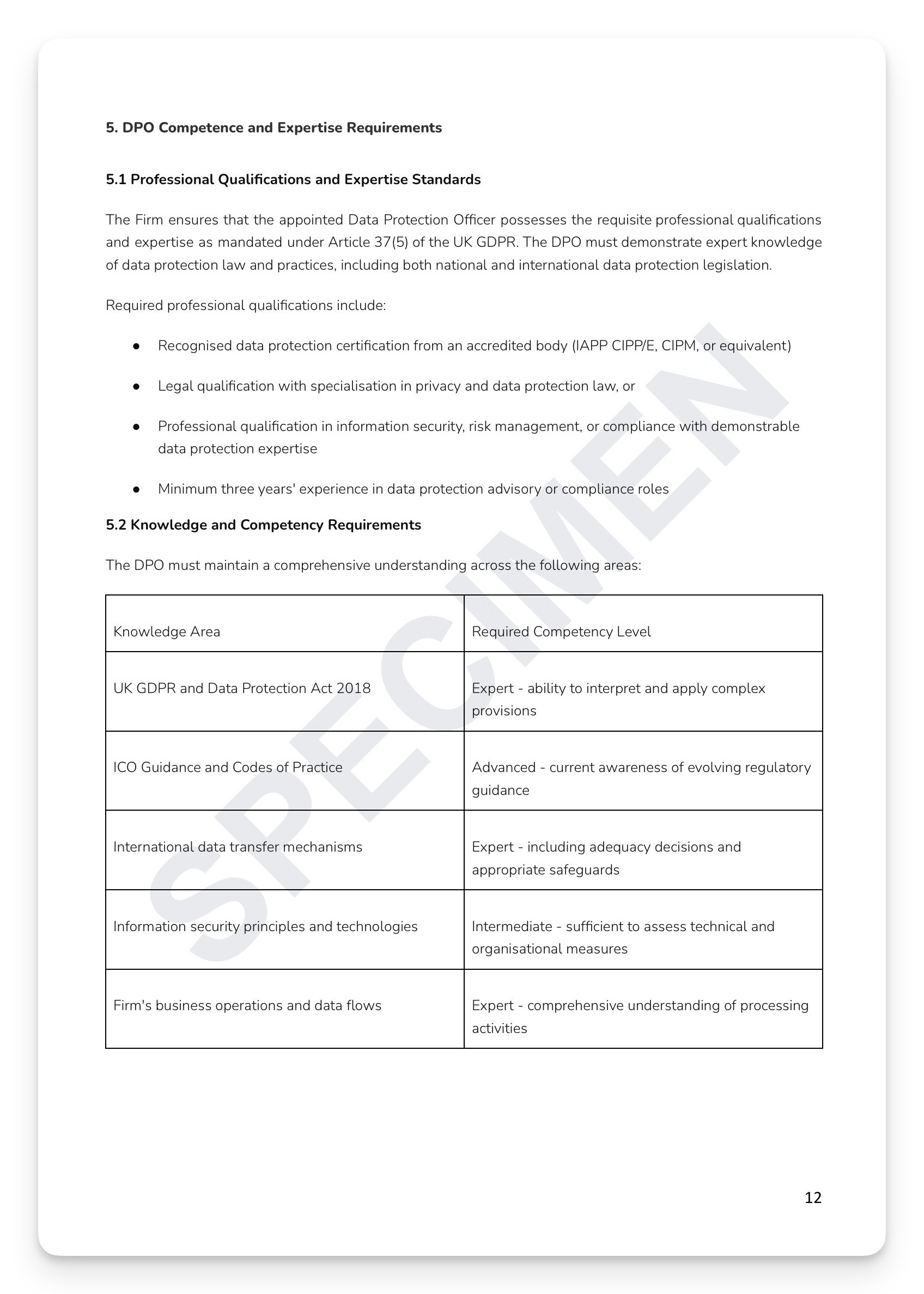 Image 6 of 6