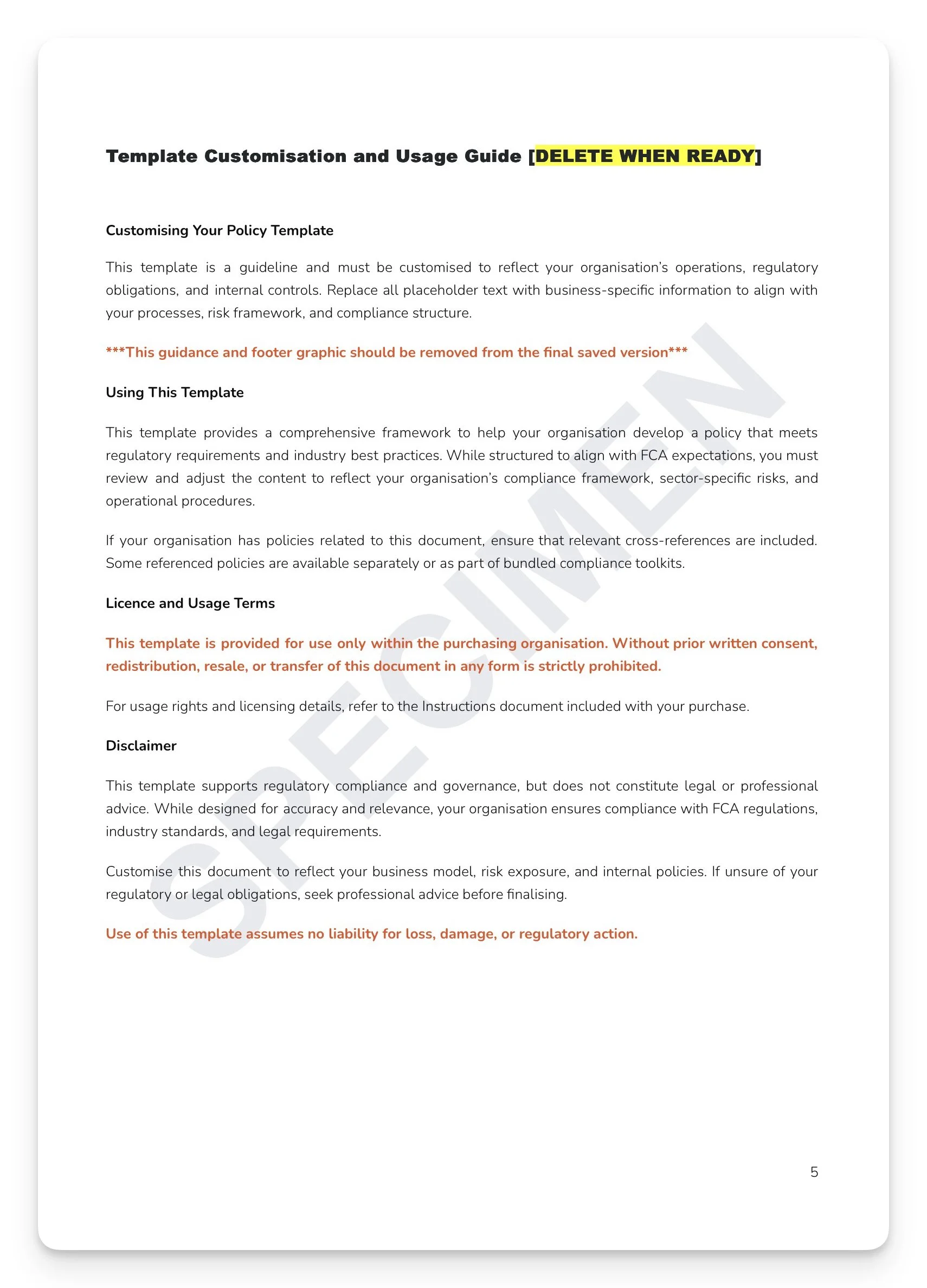
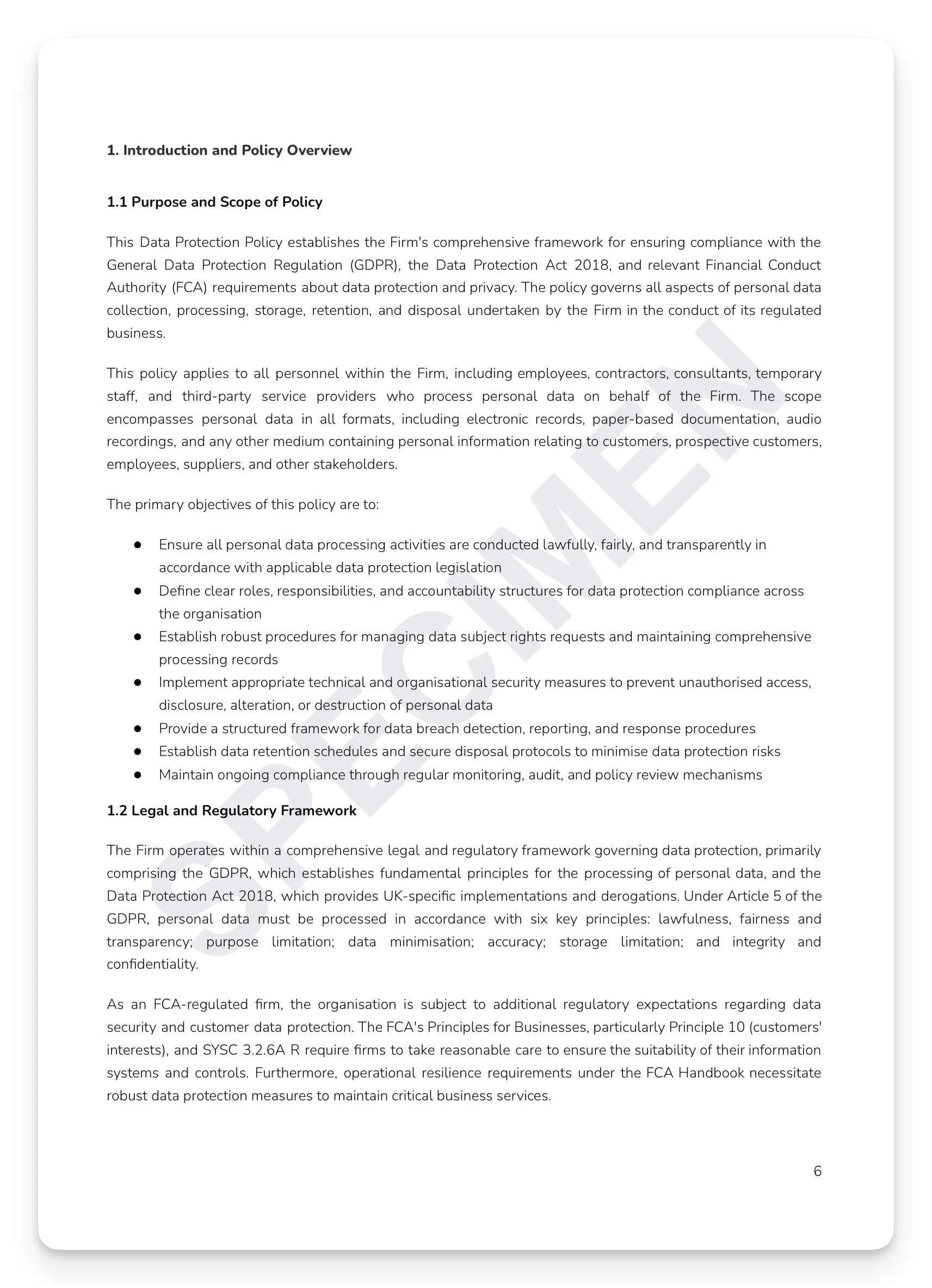
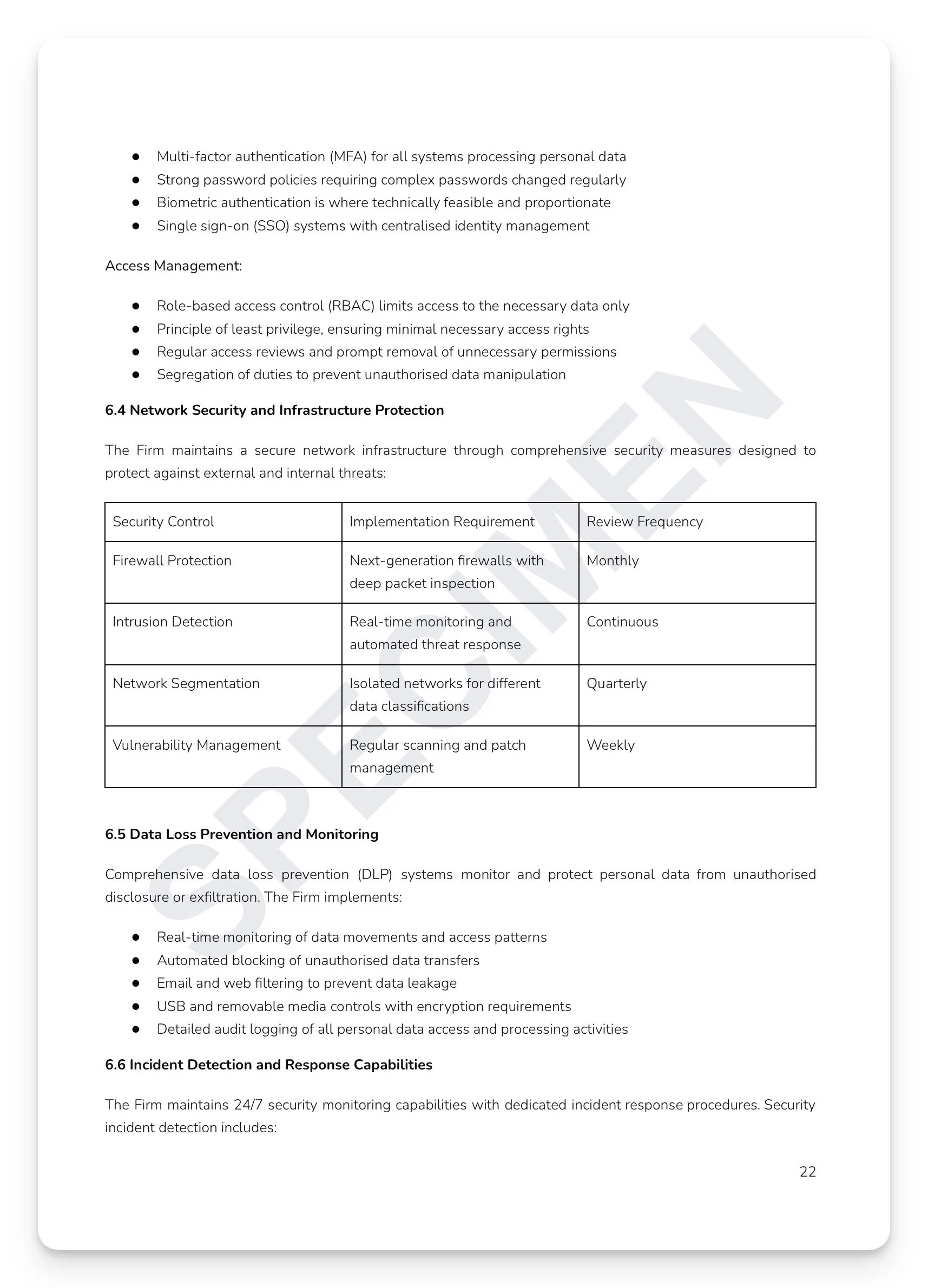
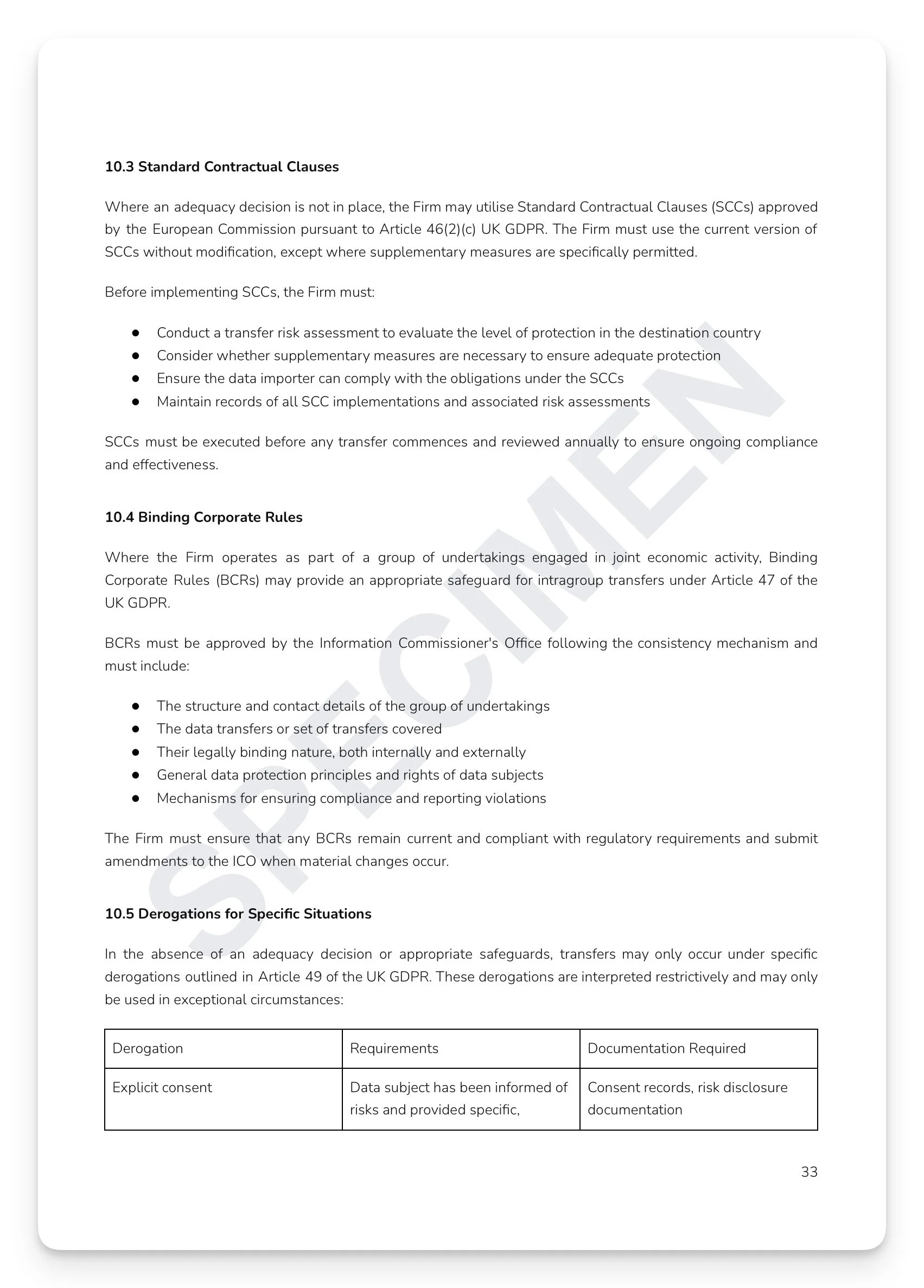
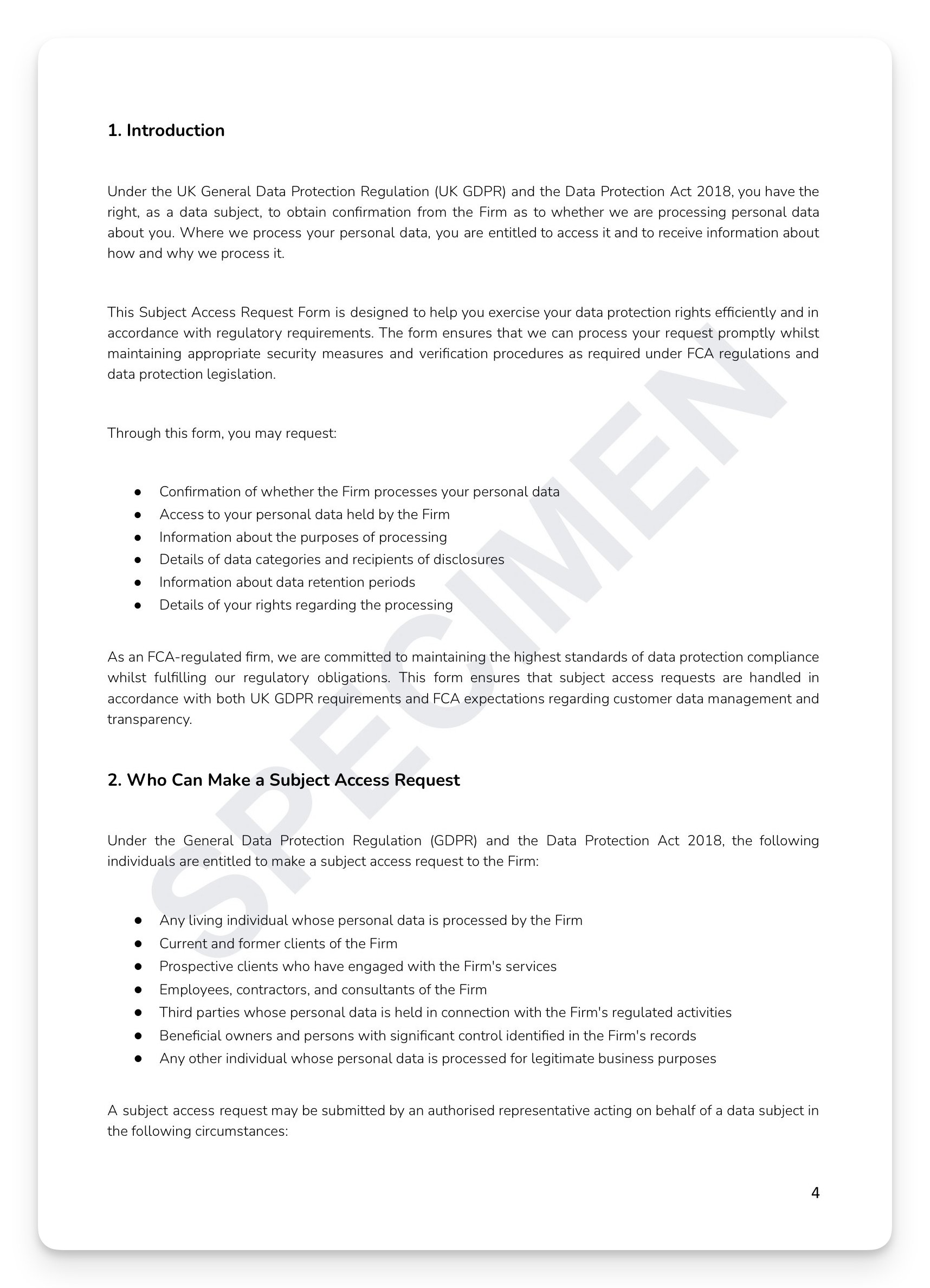
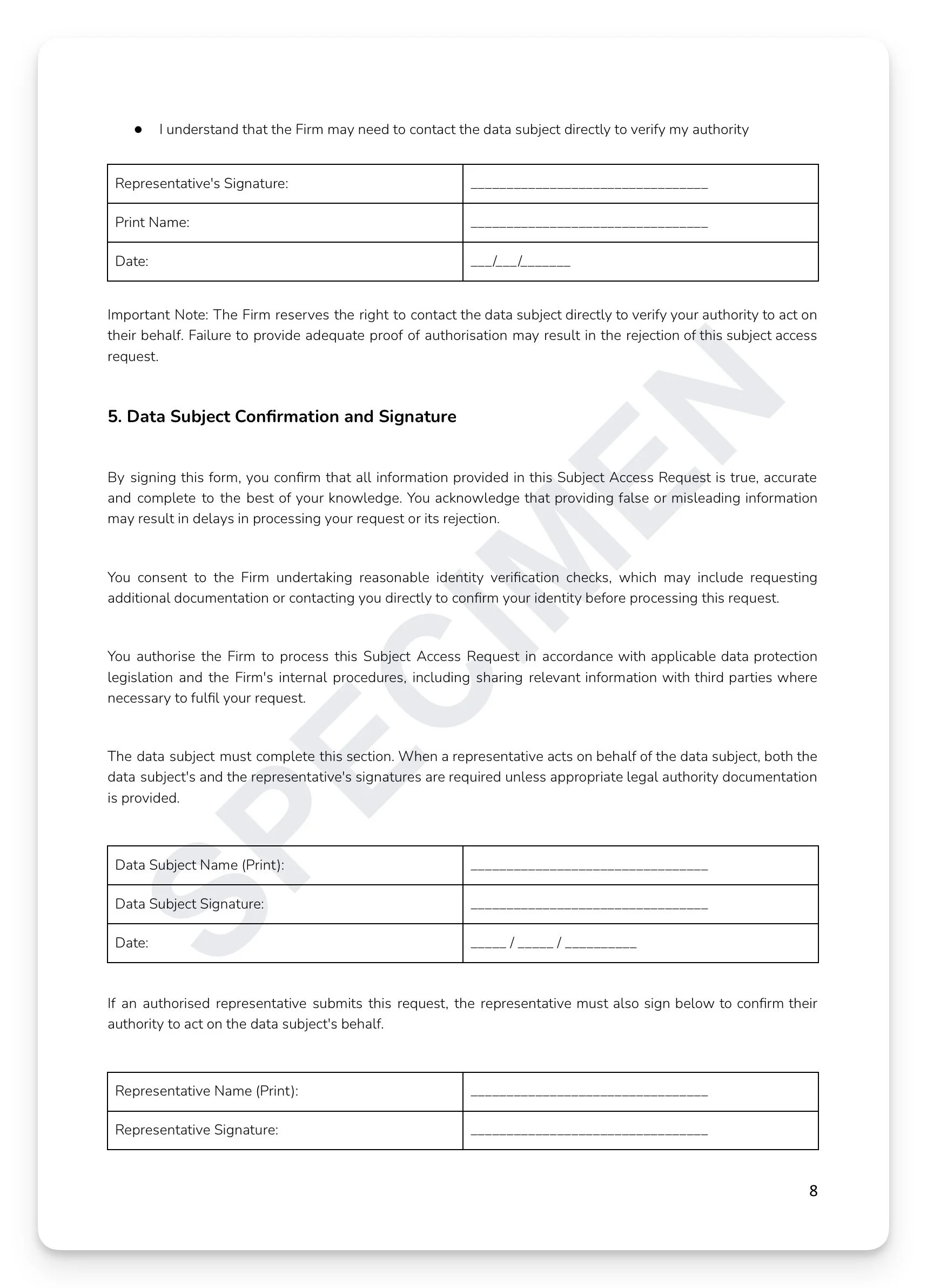
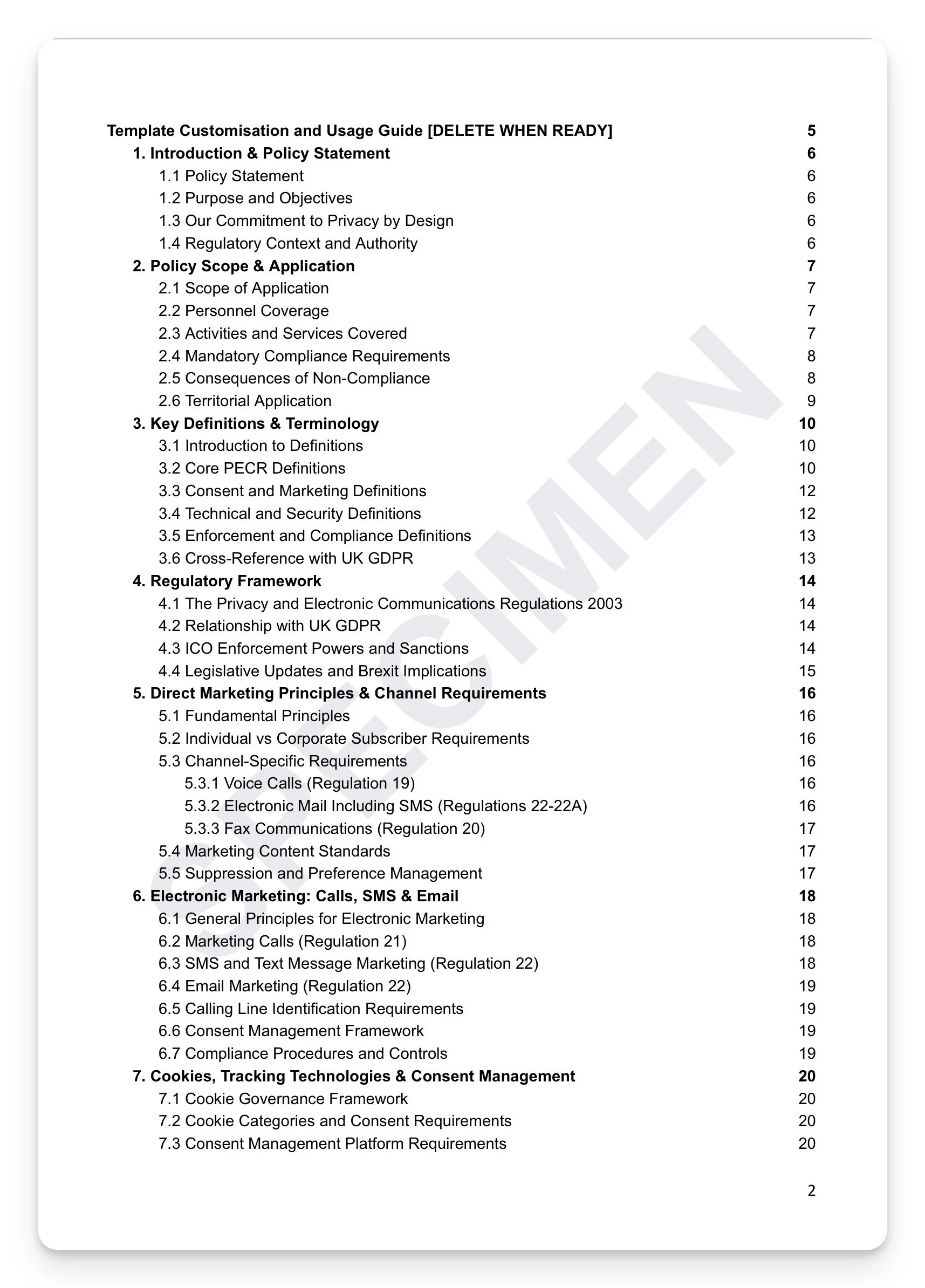
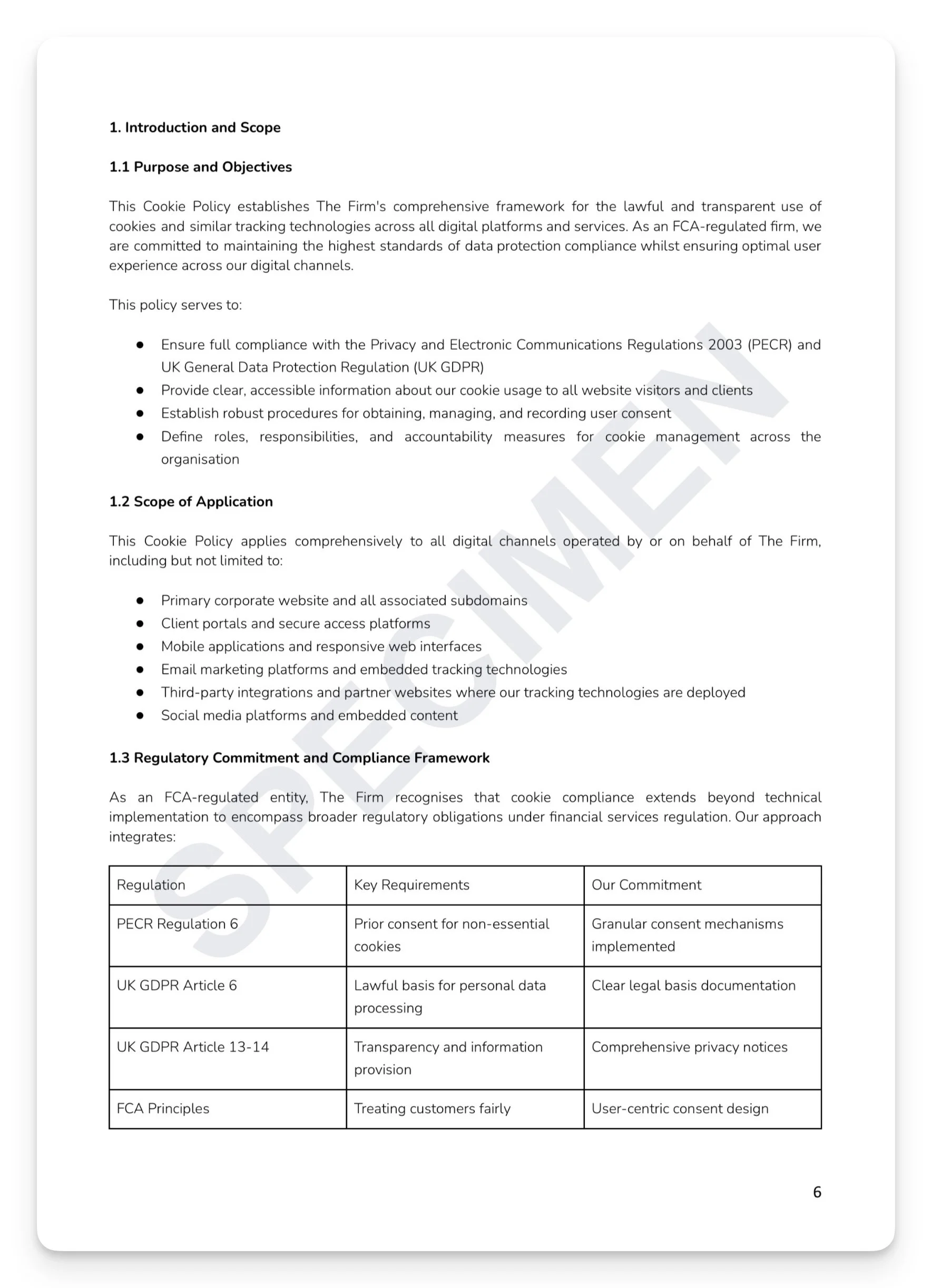
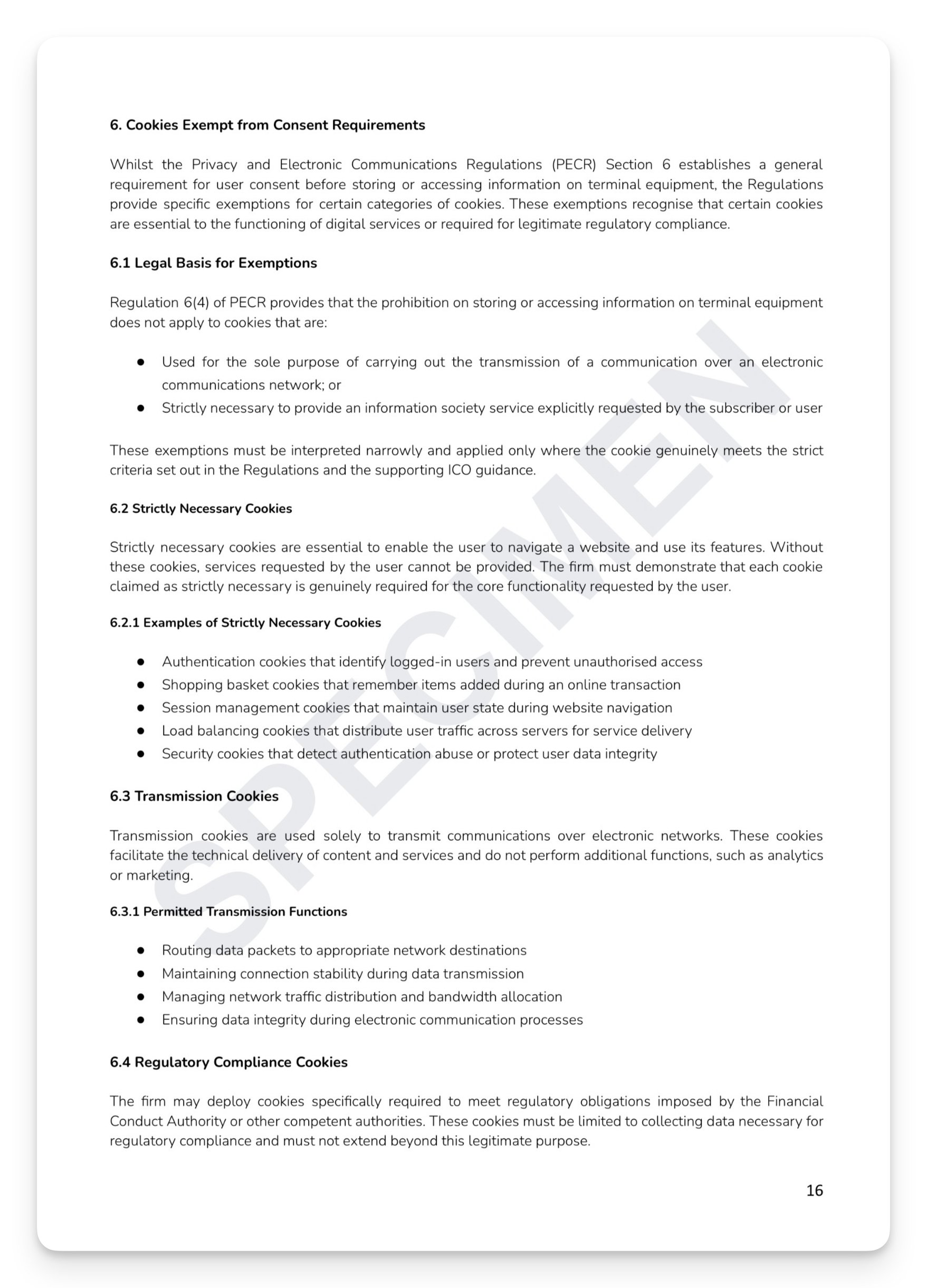
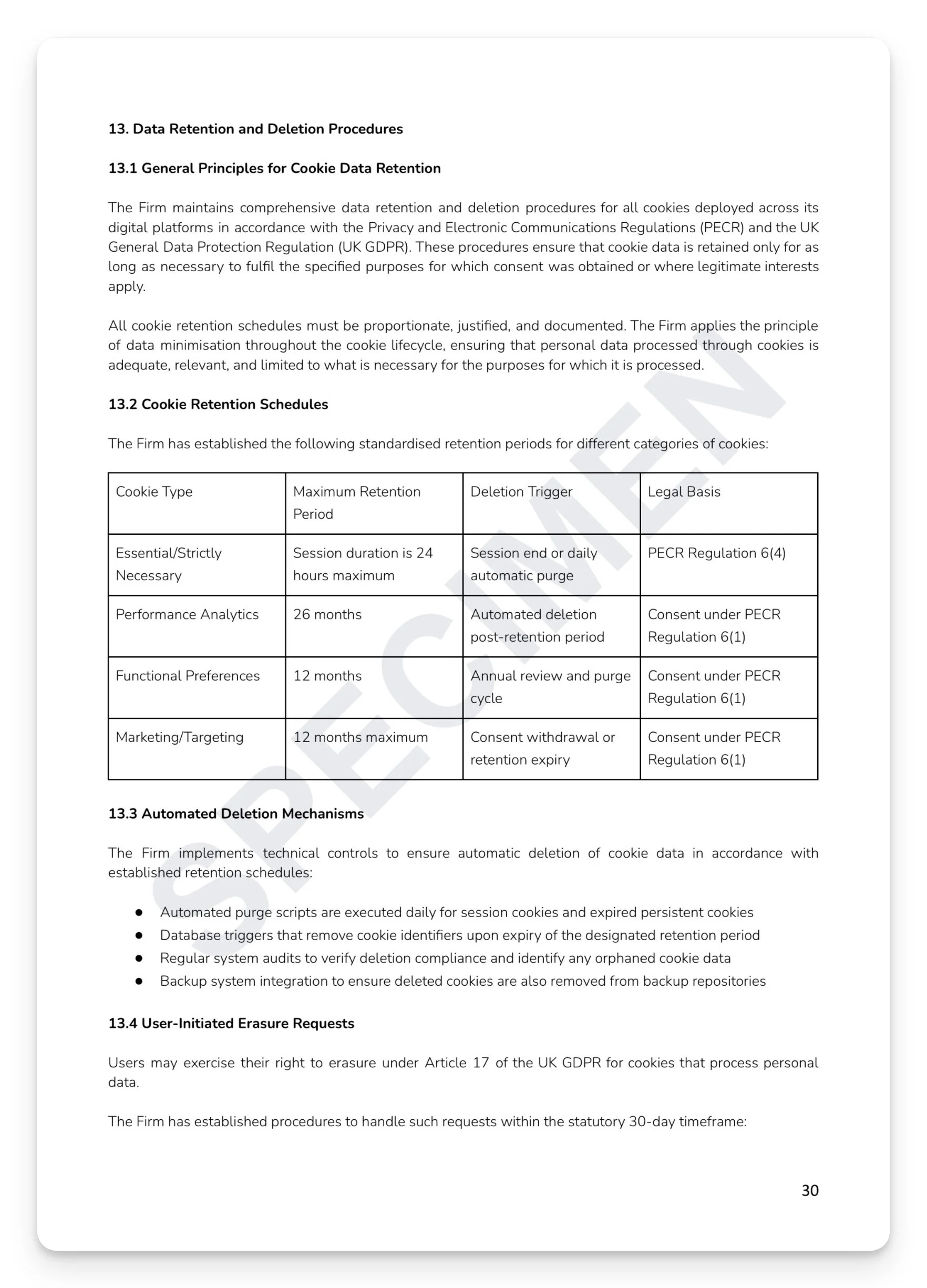
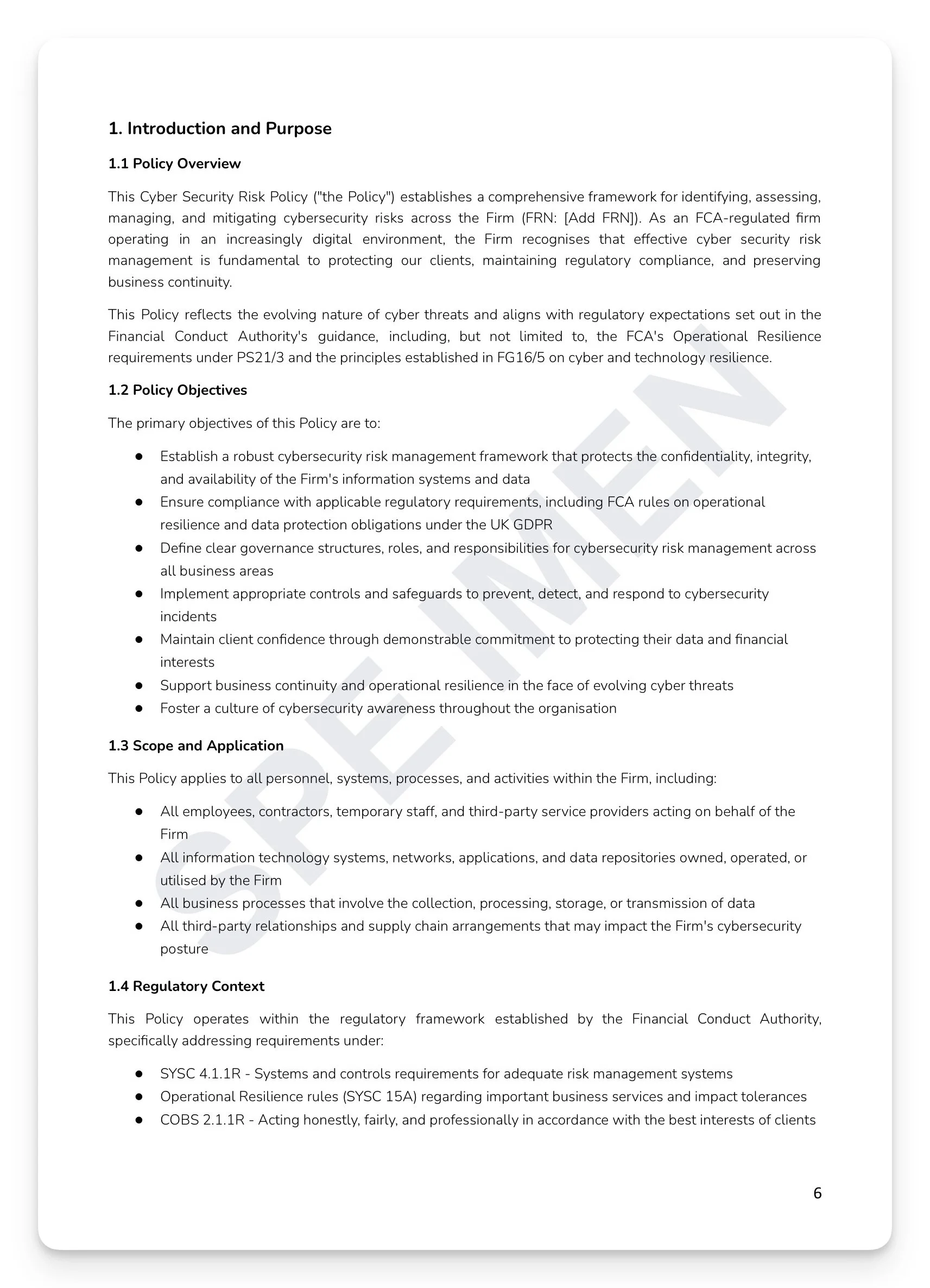
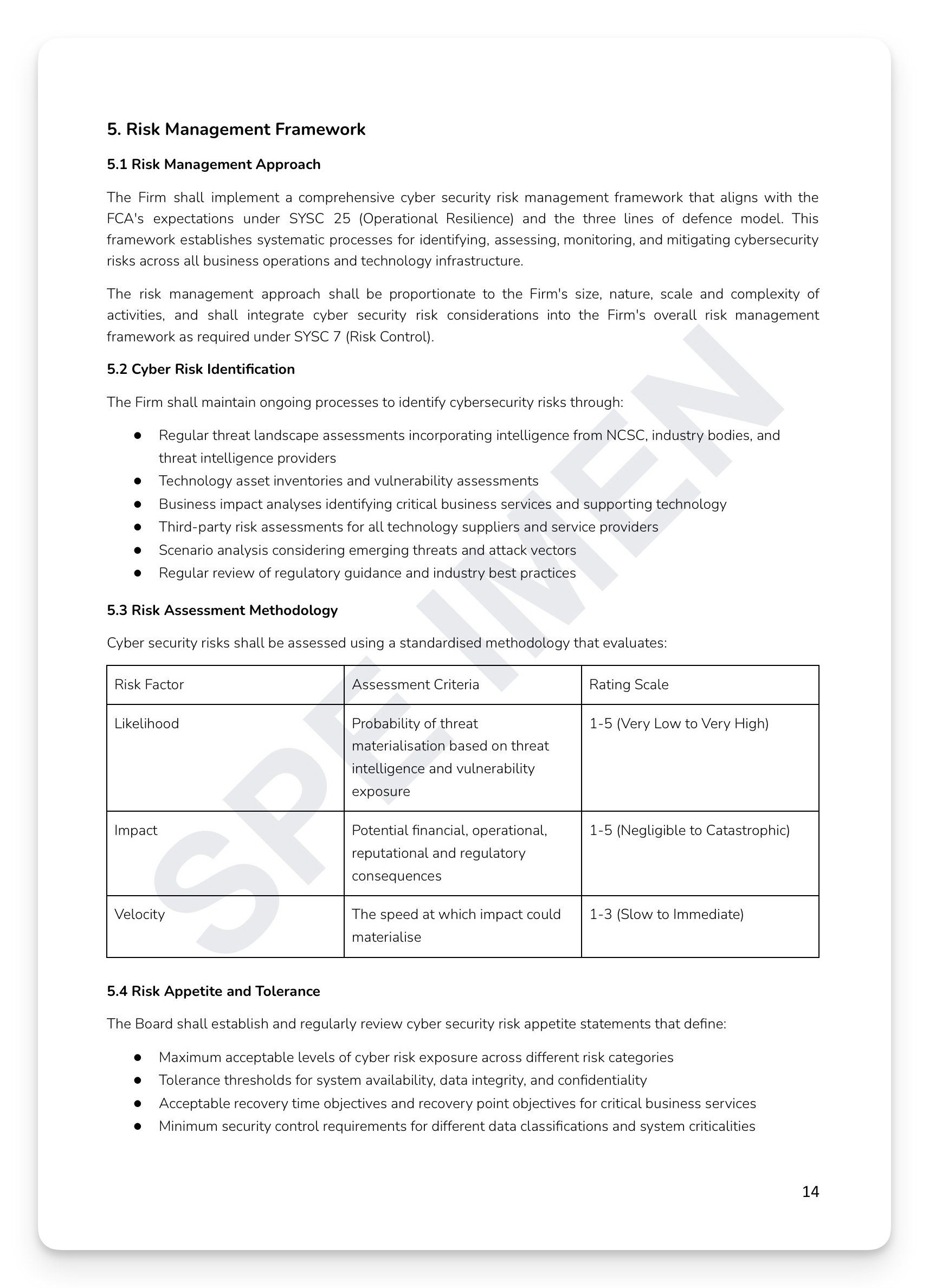
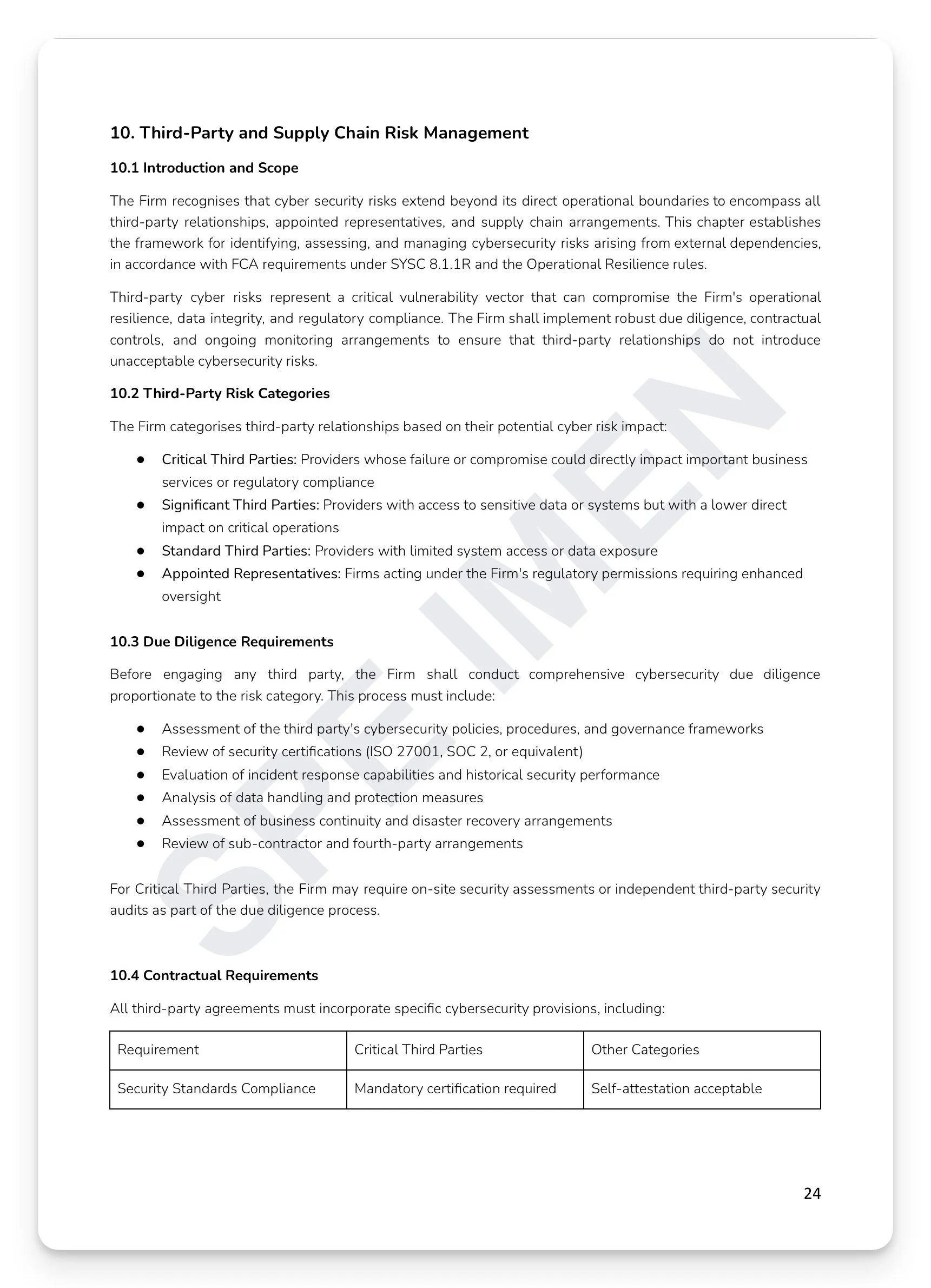
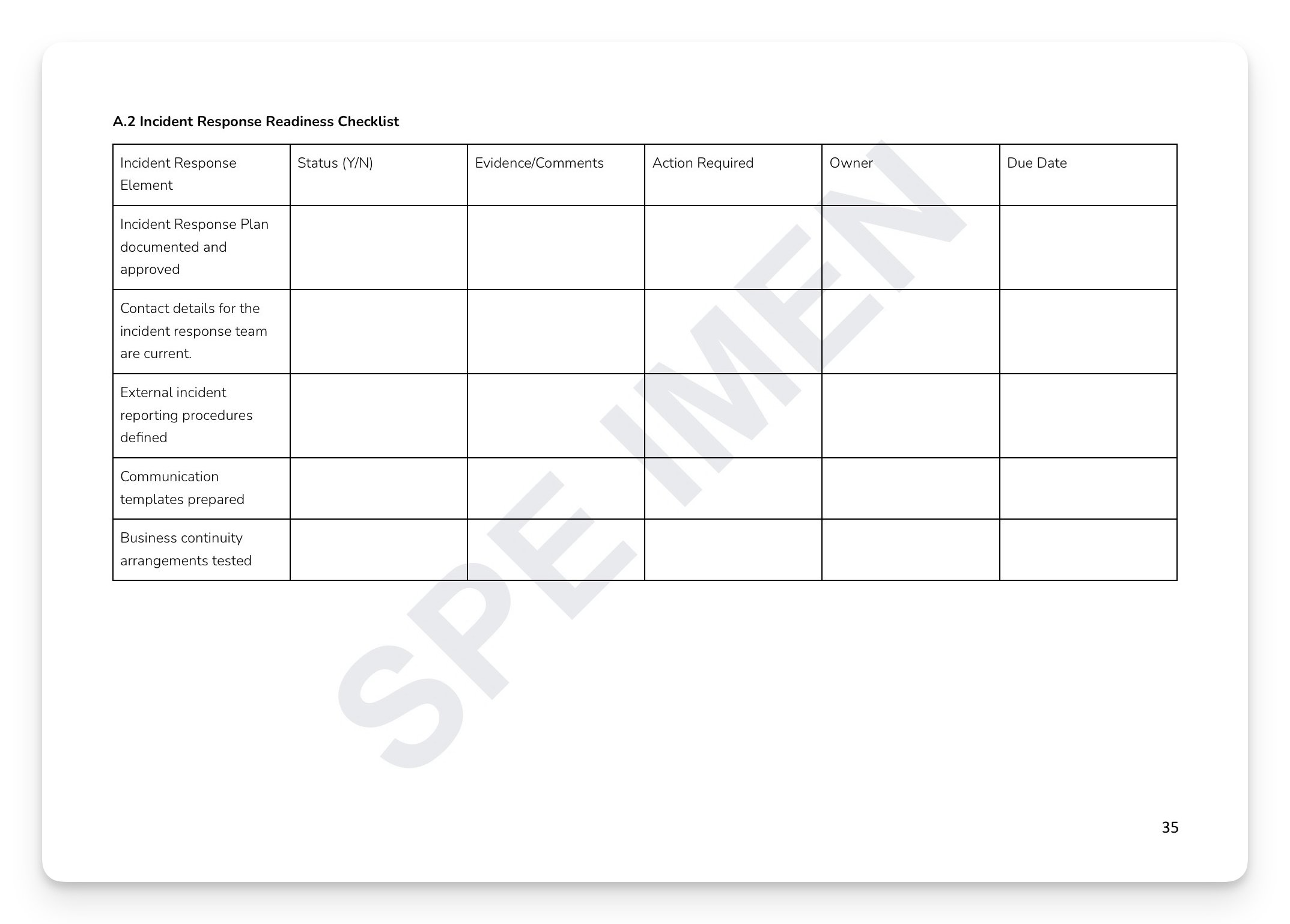
Every record you hold past its retention period is a data protection liability. Every record you delete before its regulatory minimum is a compliance failure. Data retention sits at the intersection of two competing obligations — UK GDPR's storage limitation principle and FCA Handbook minimum retention periods. Getting the balance wrong in either direction creates regulatory exposure. The FCA doesn't wait.
What's included:
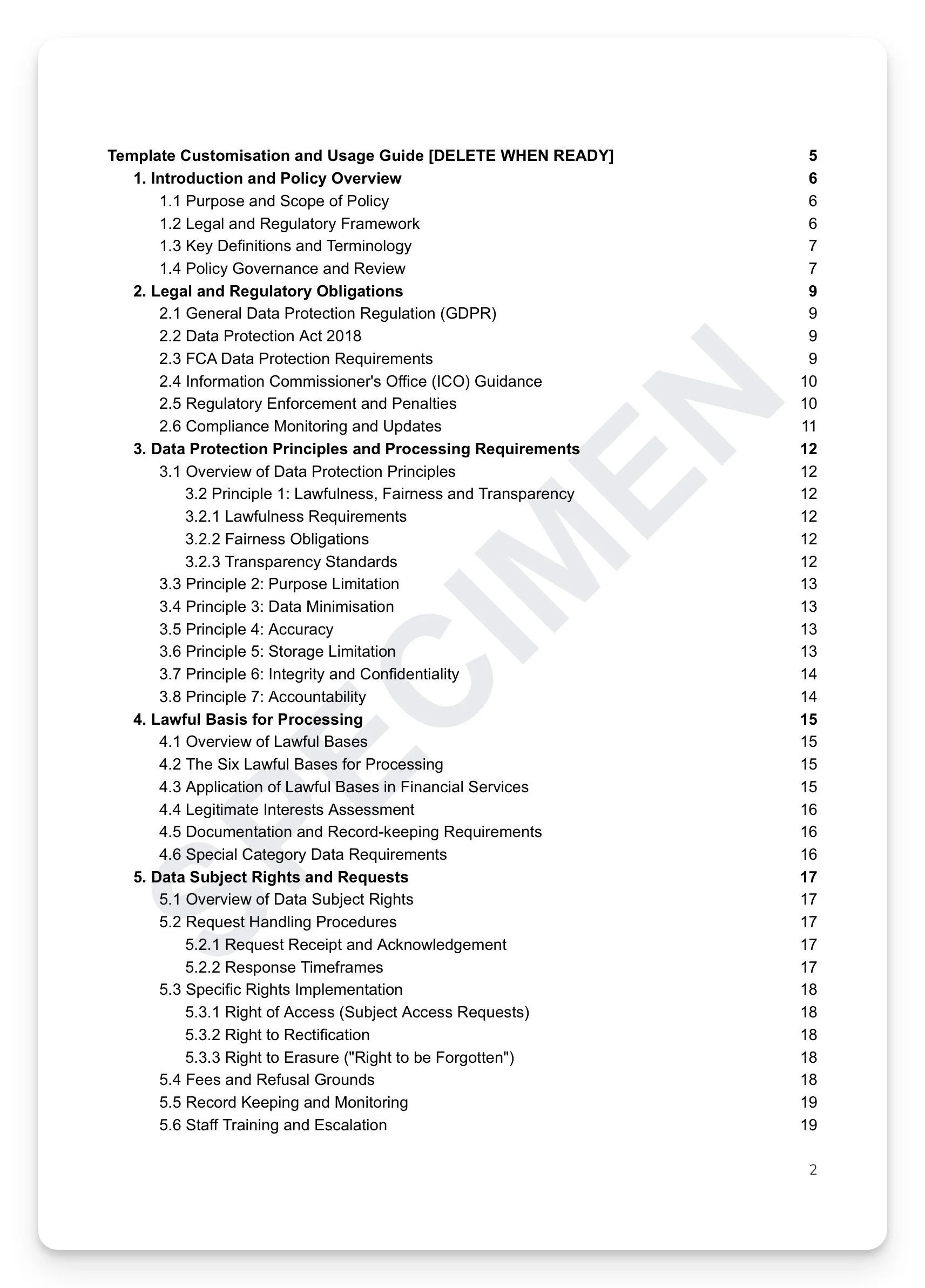
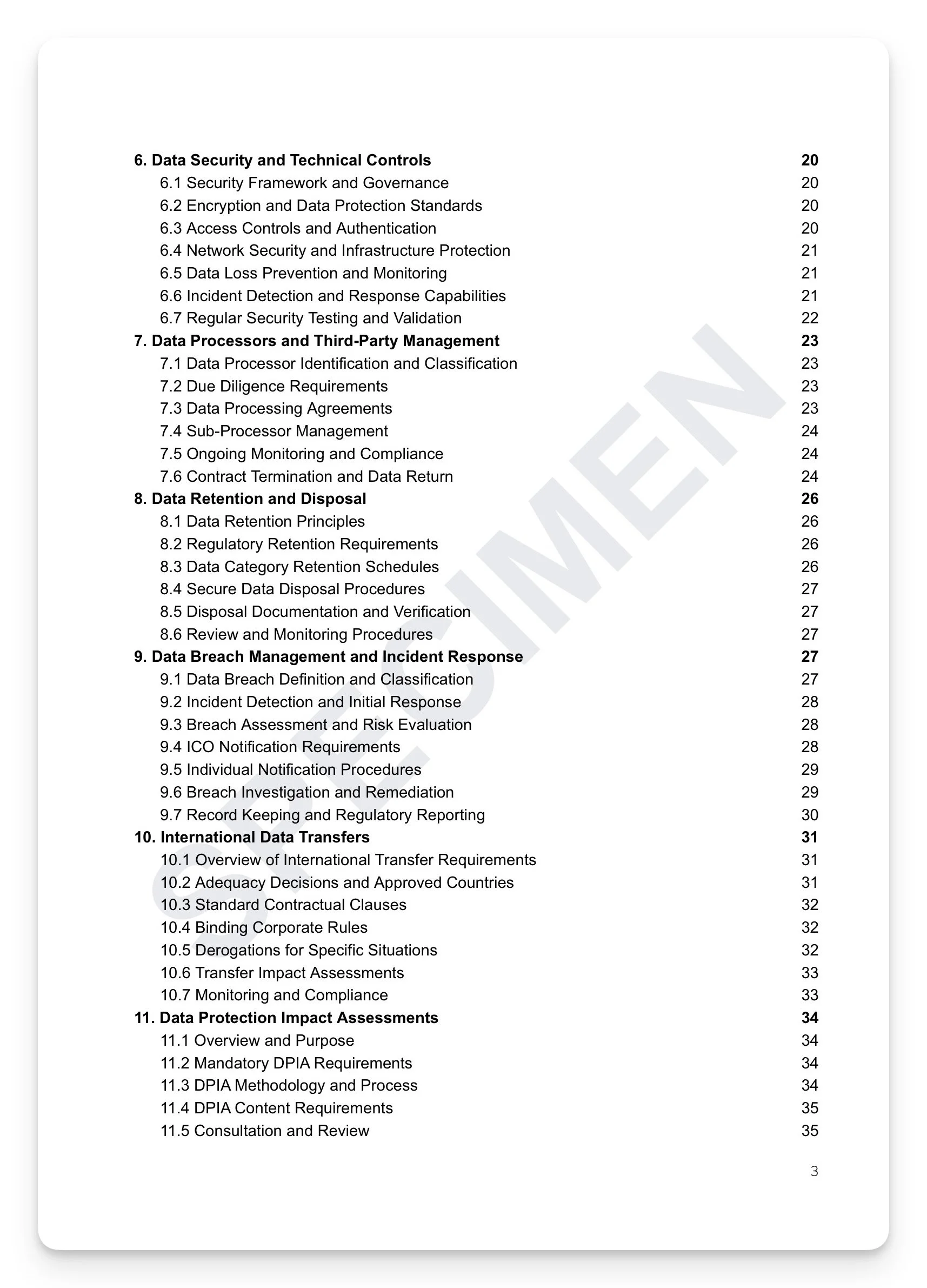
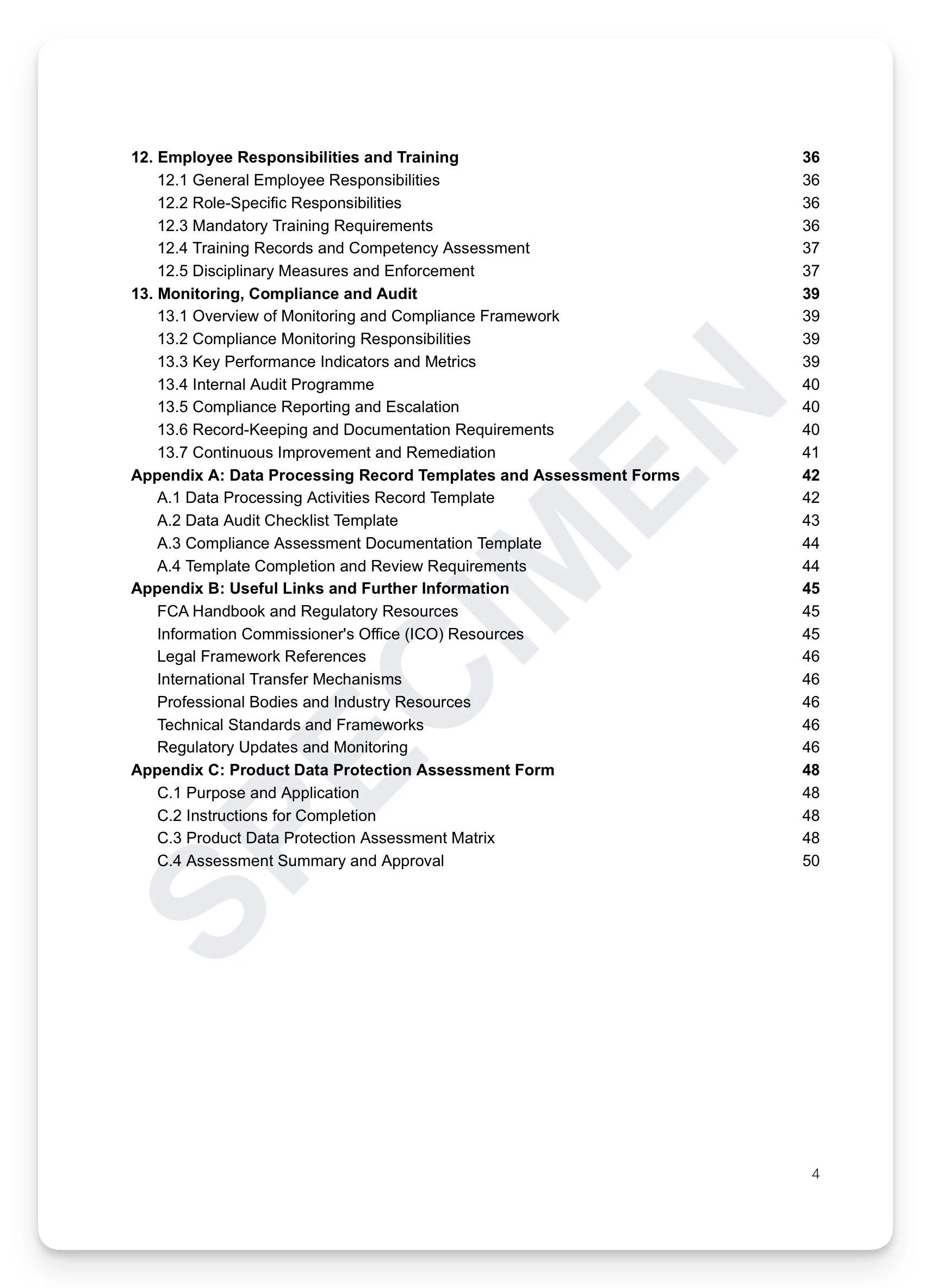
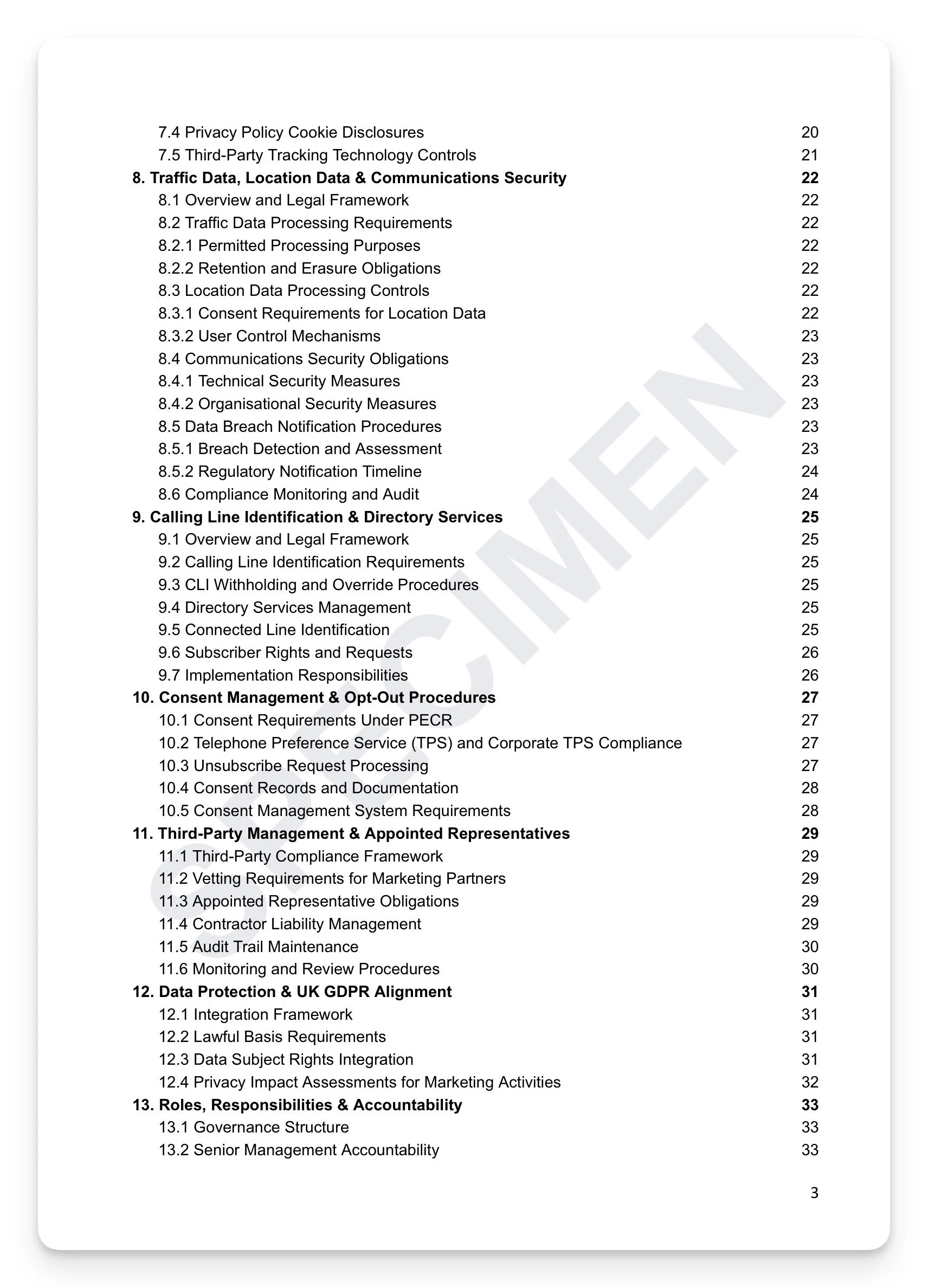
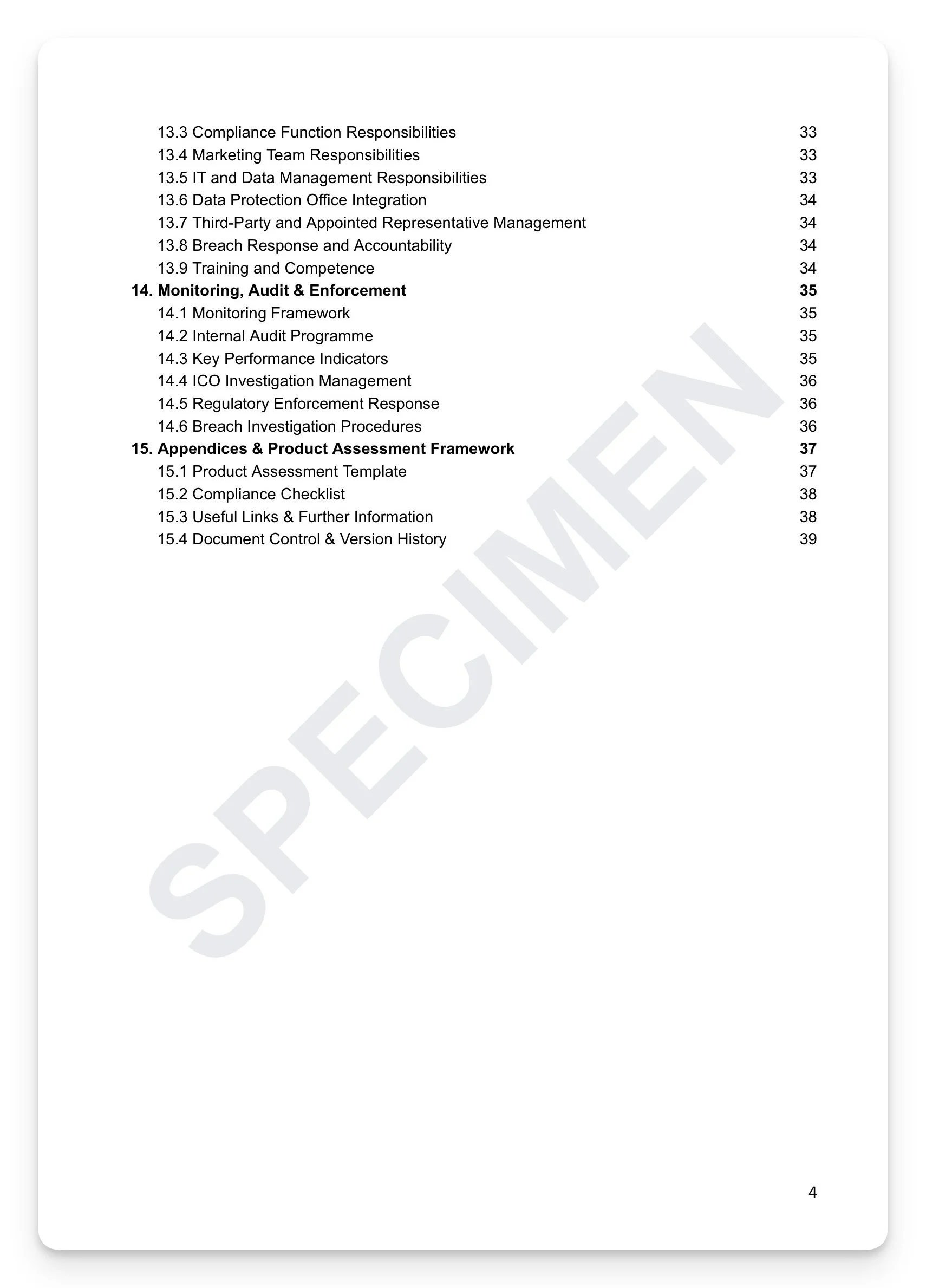
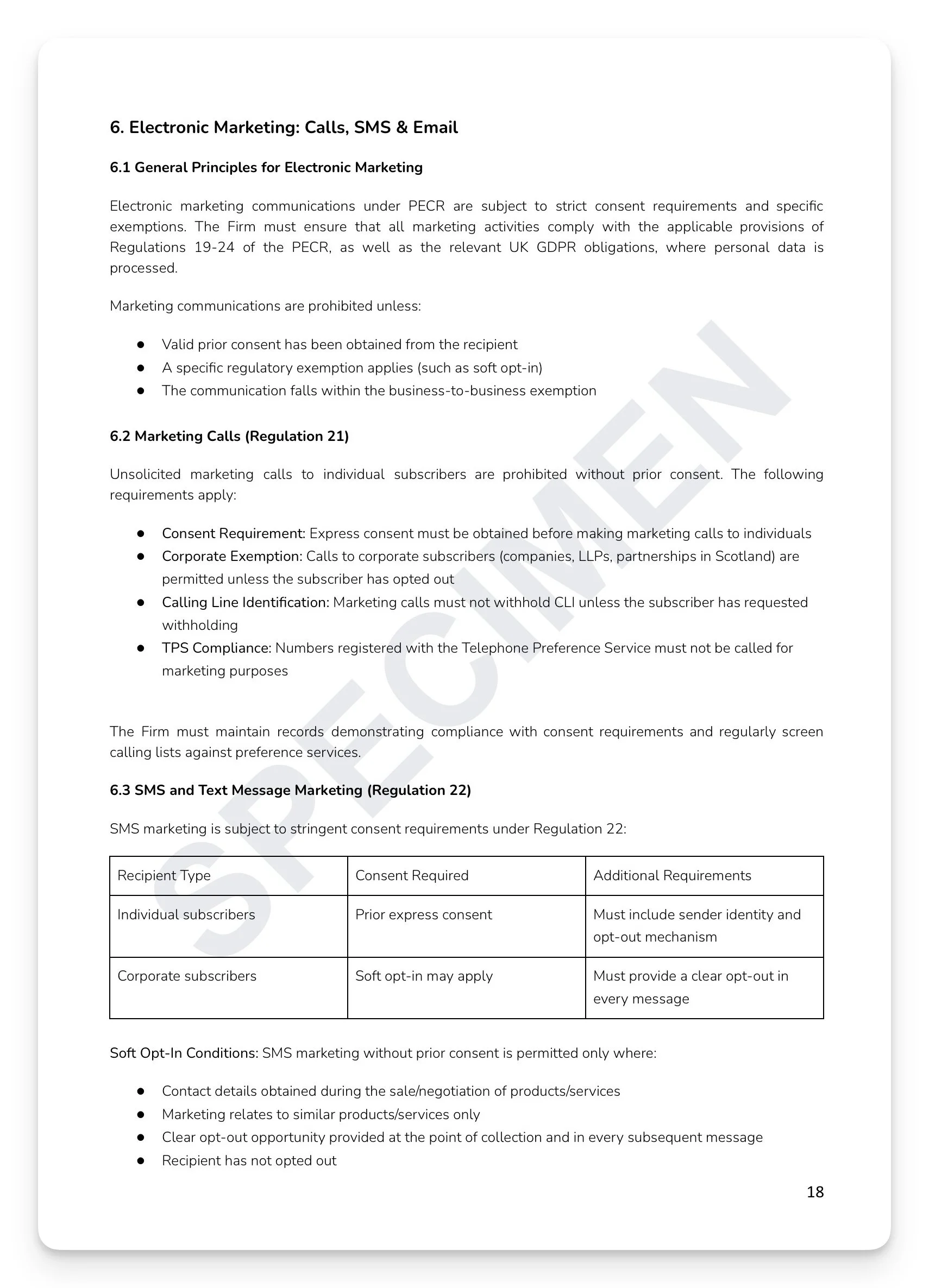
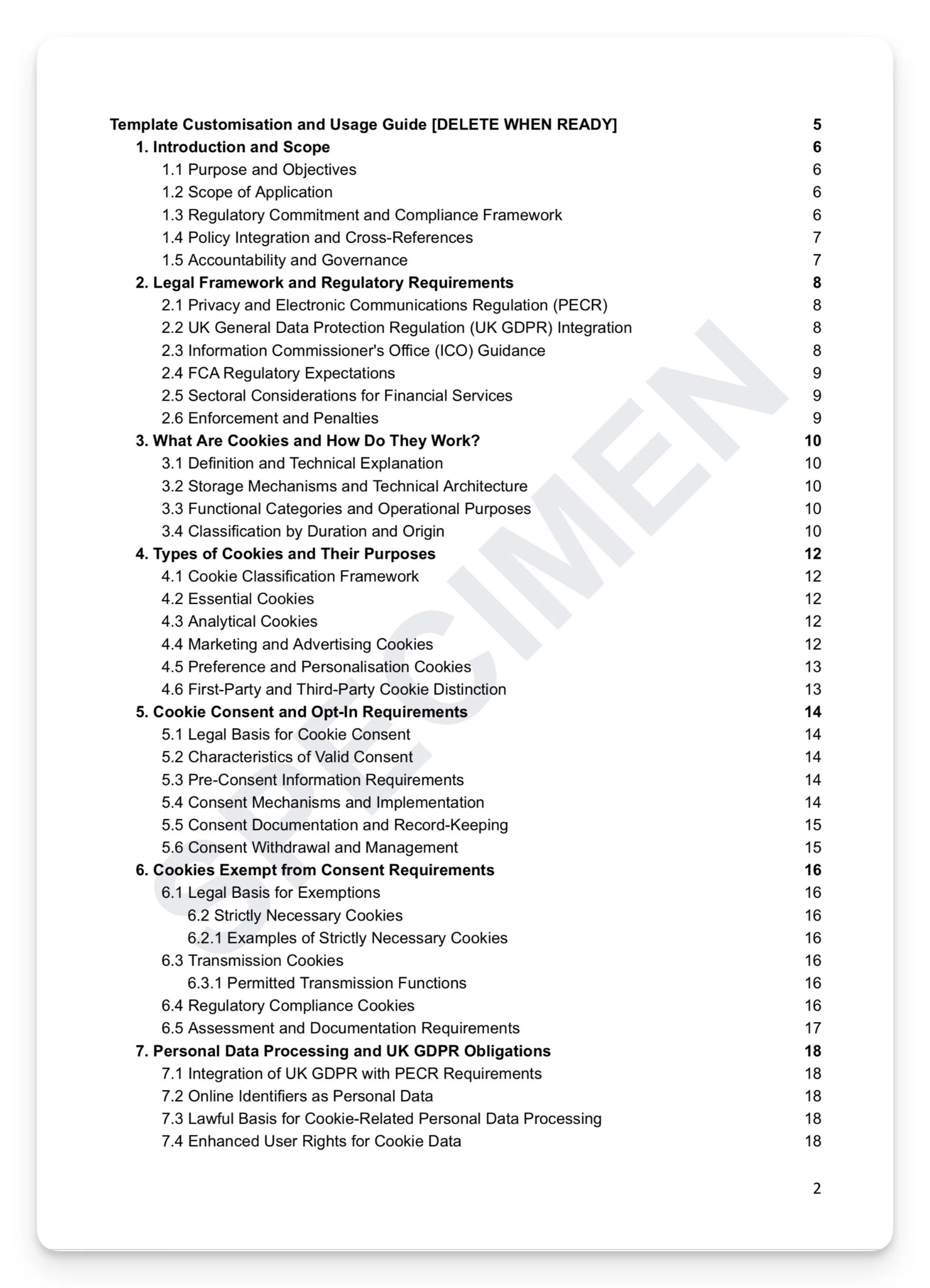
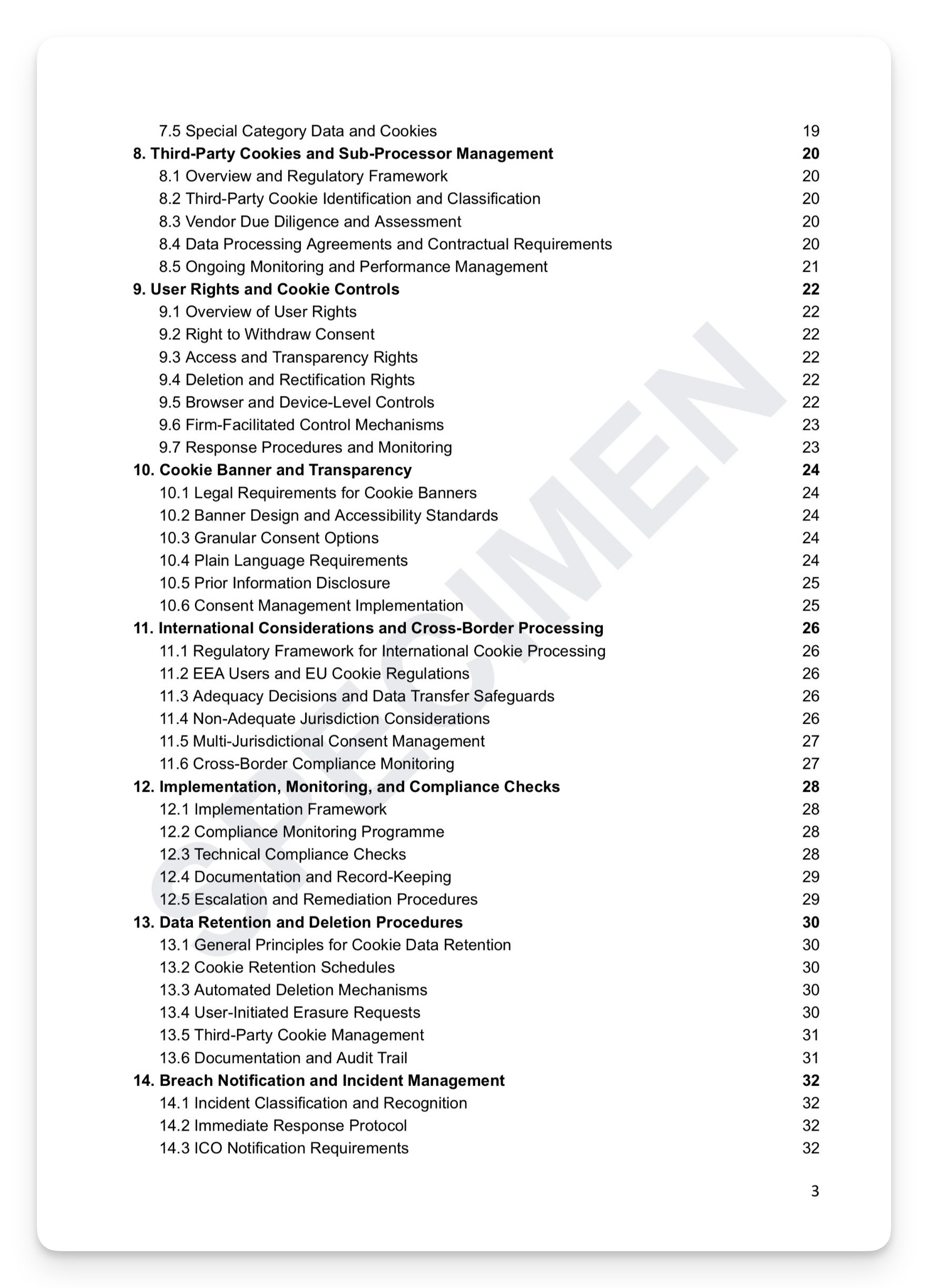
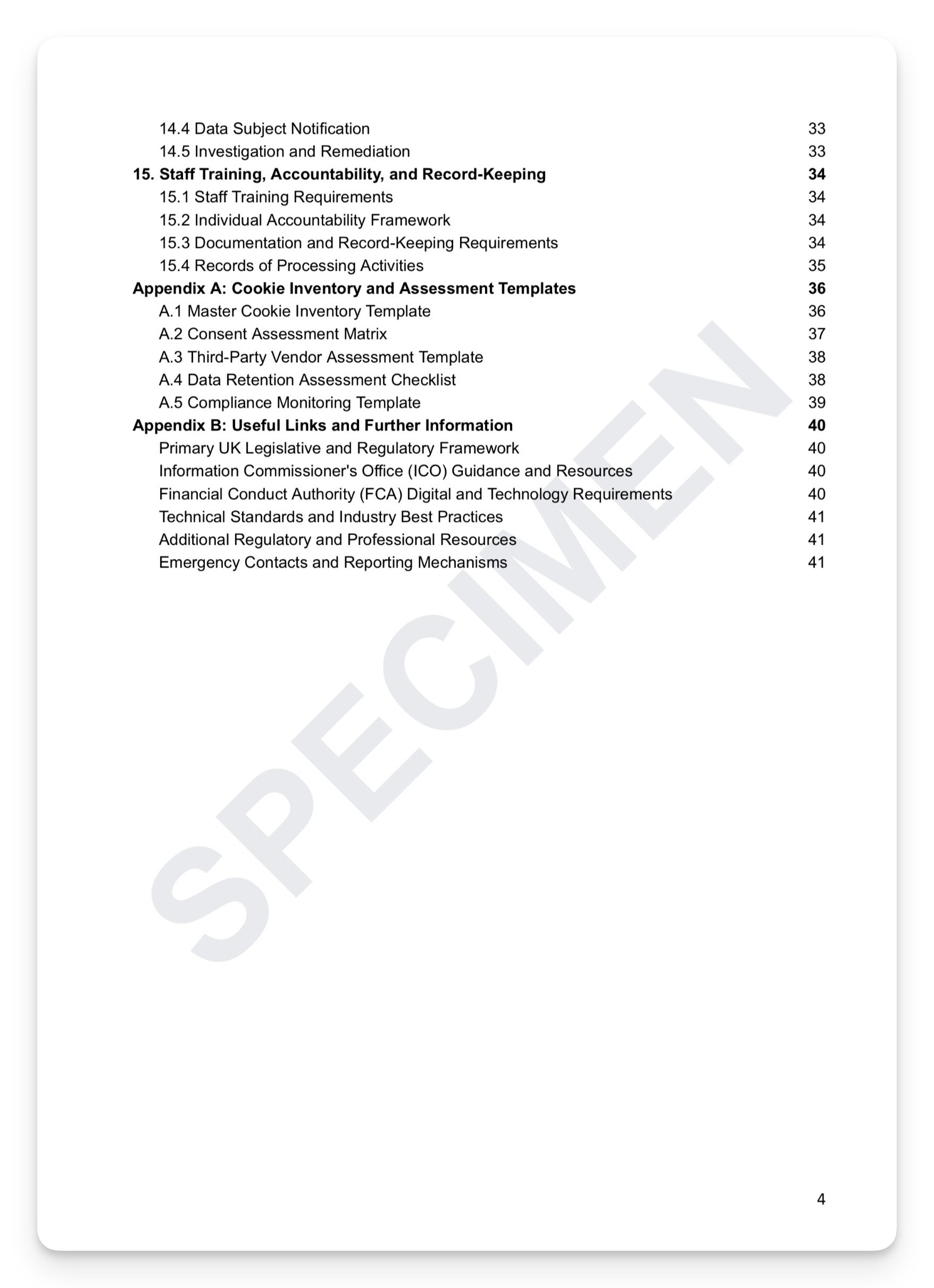
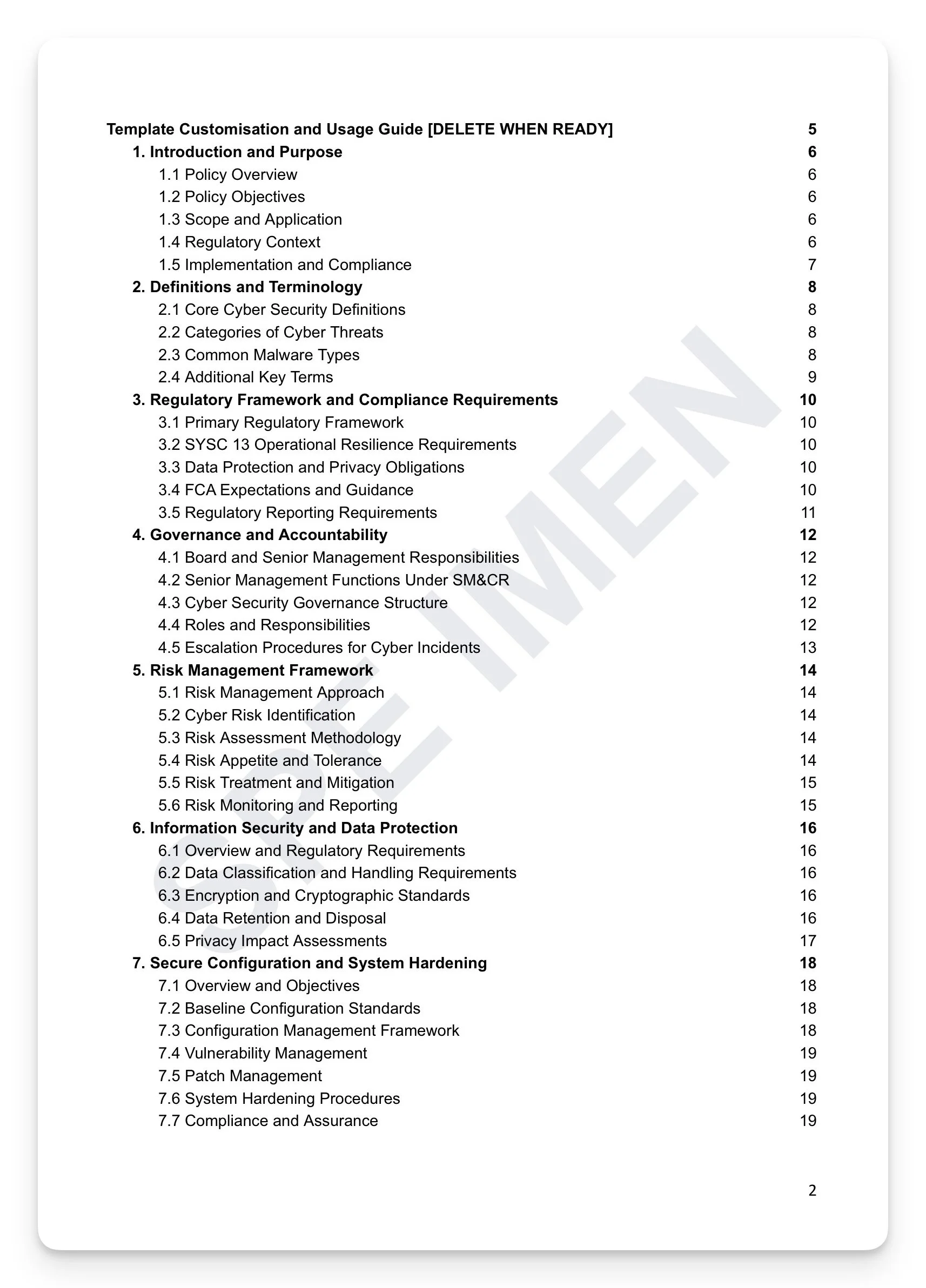
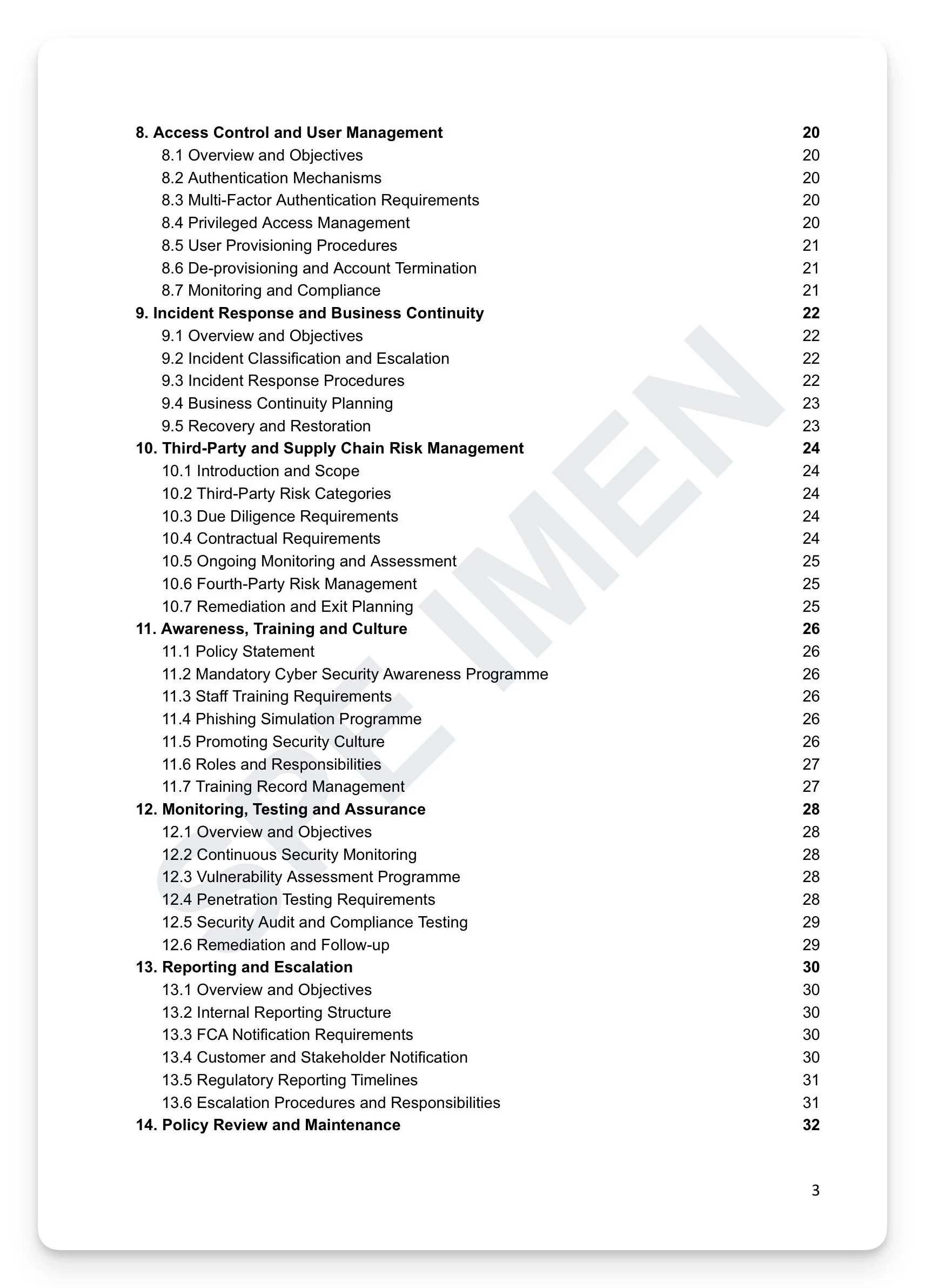
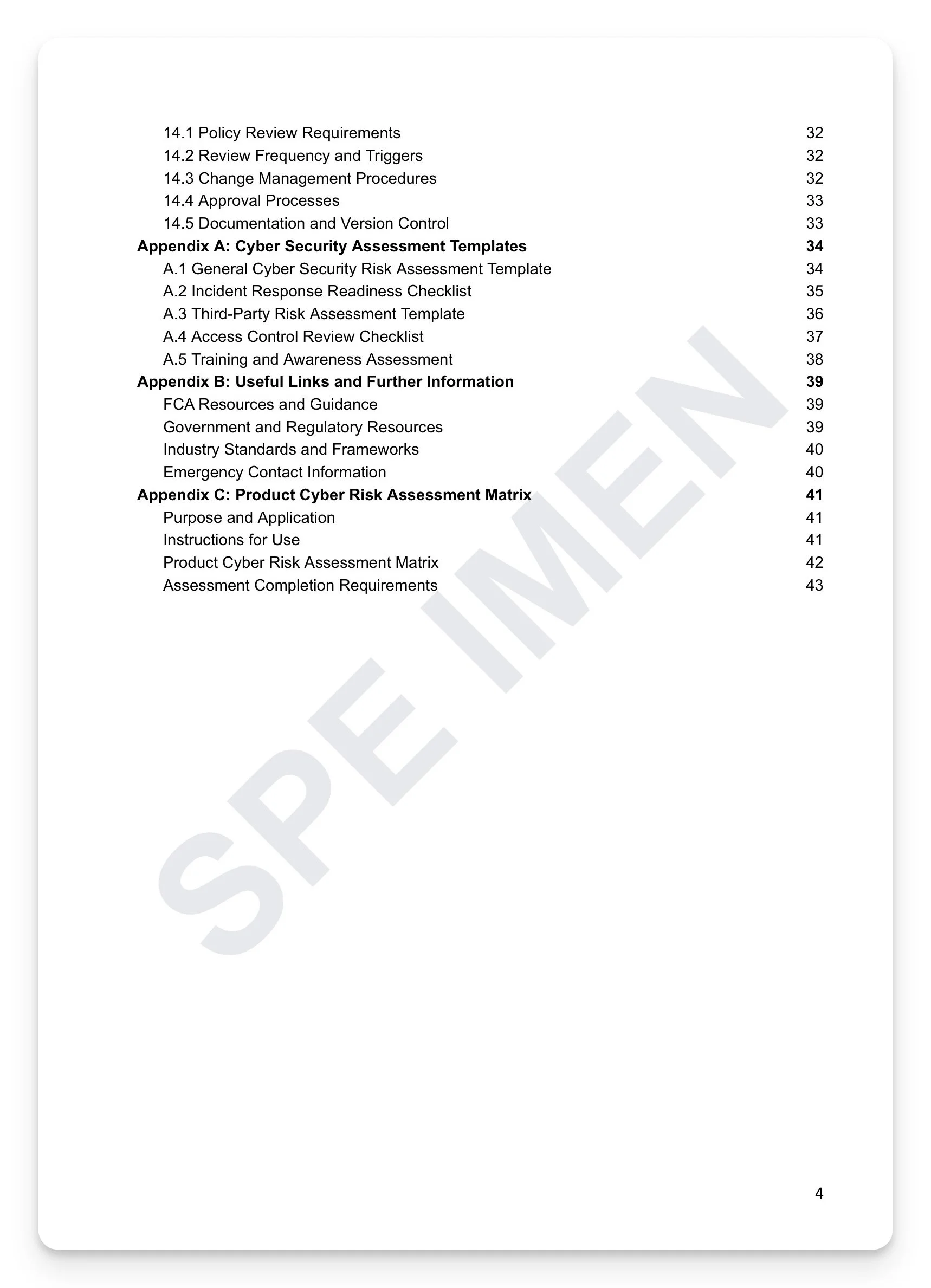
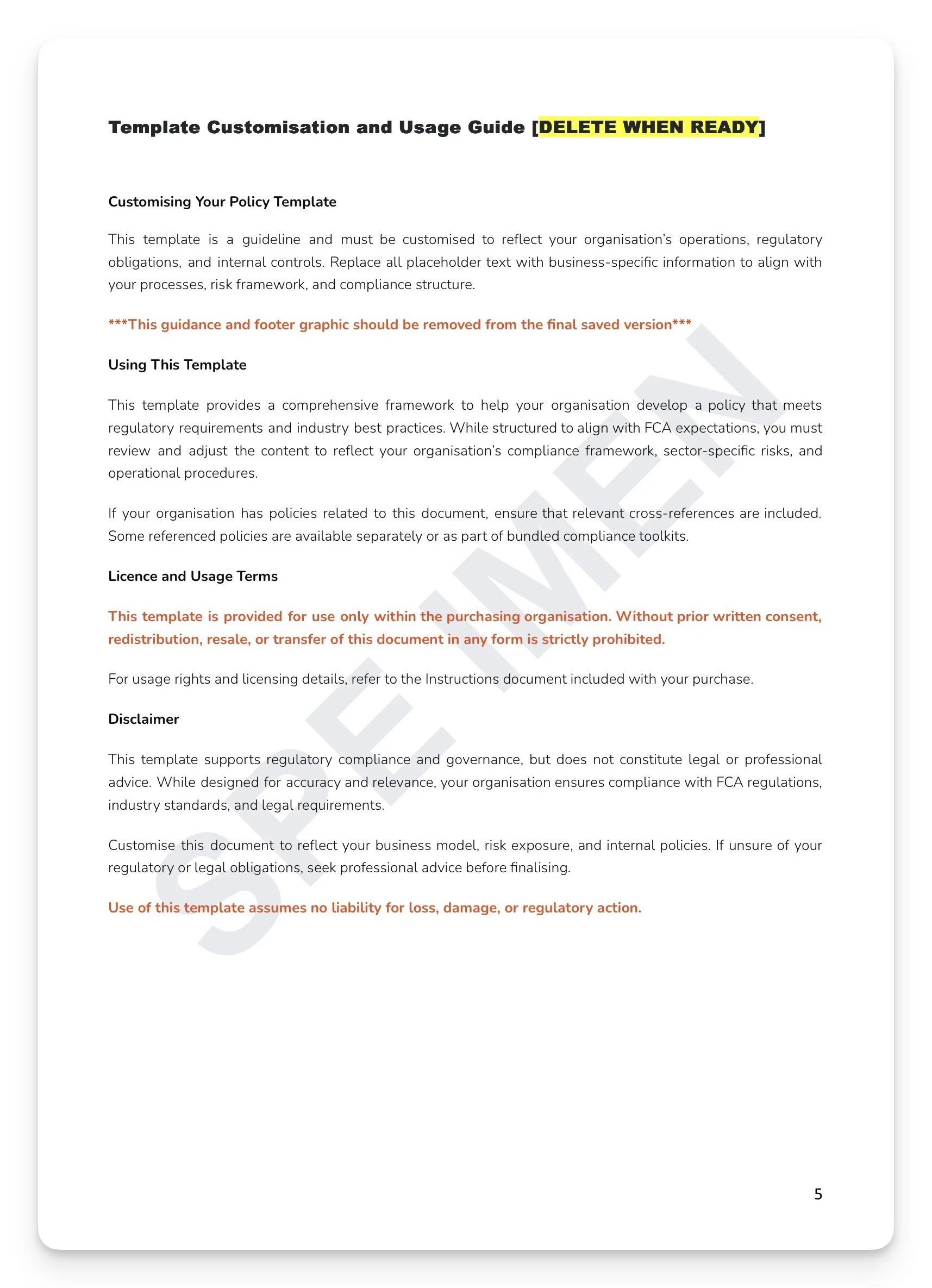
Retention schedules mapped across FCA Handbook, SYSC 9, COBS, MLR 2017, and UK GDPR
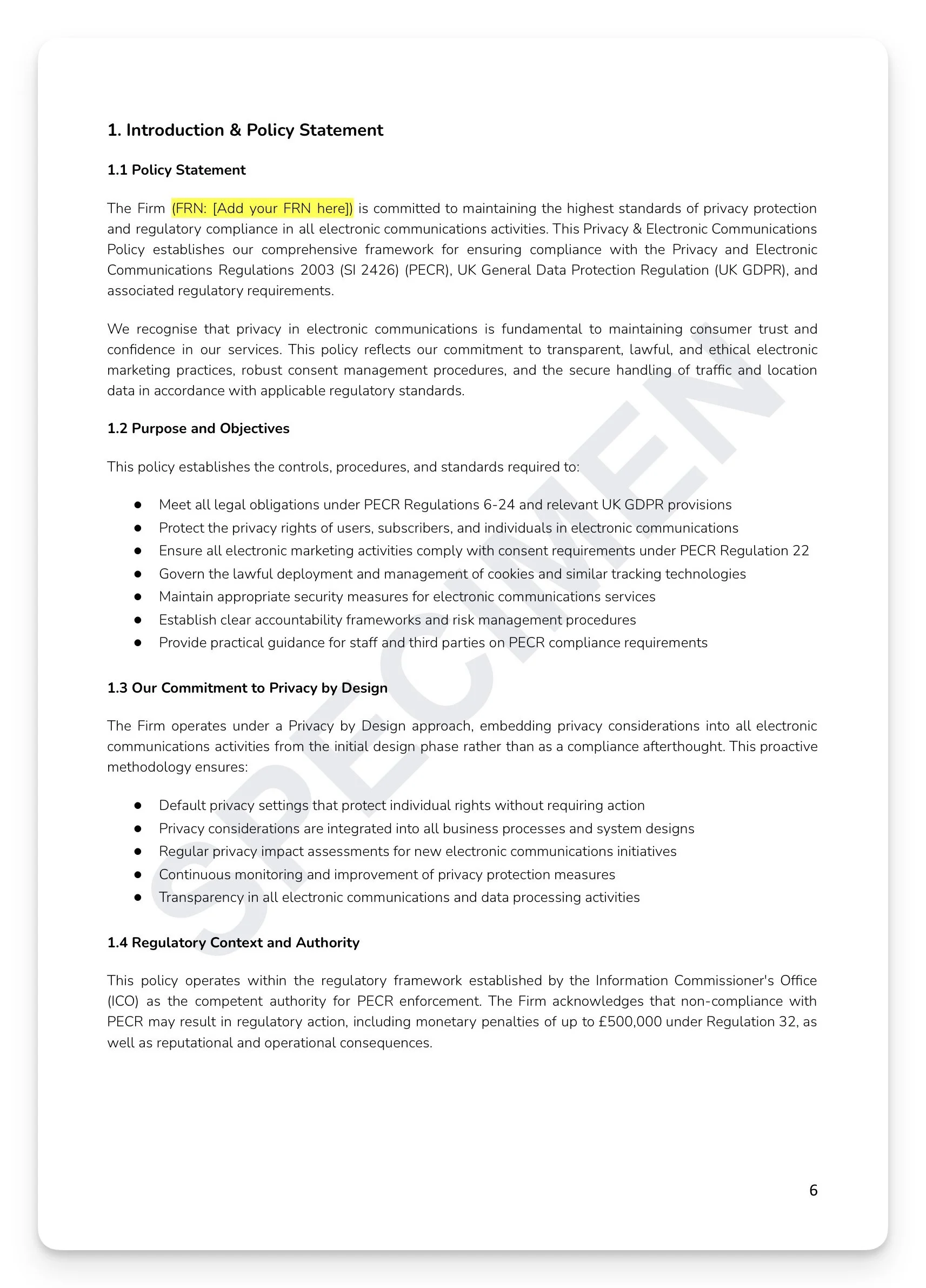
Data classification framework: primary categories, sensitivity classifications, and regulatory categorisation
Competing requirements balancing framework: UK GDPR storage limitation vs FCA mandatory minimums
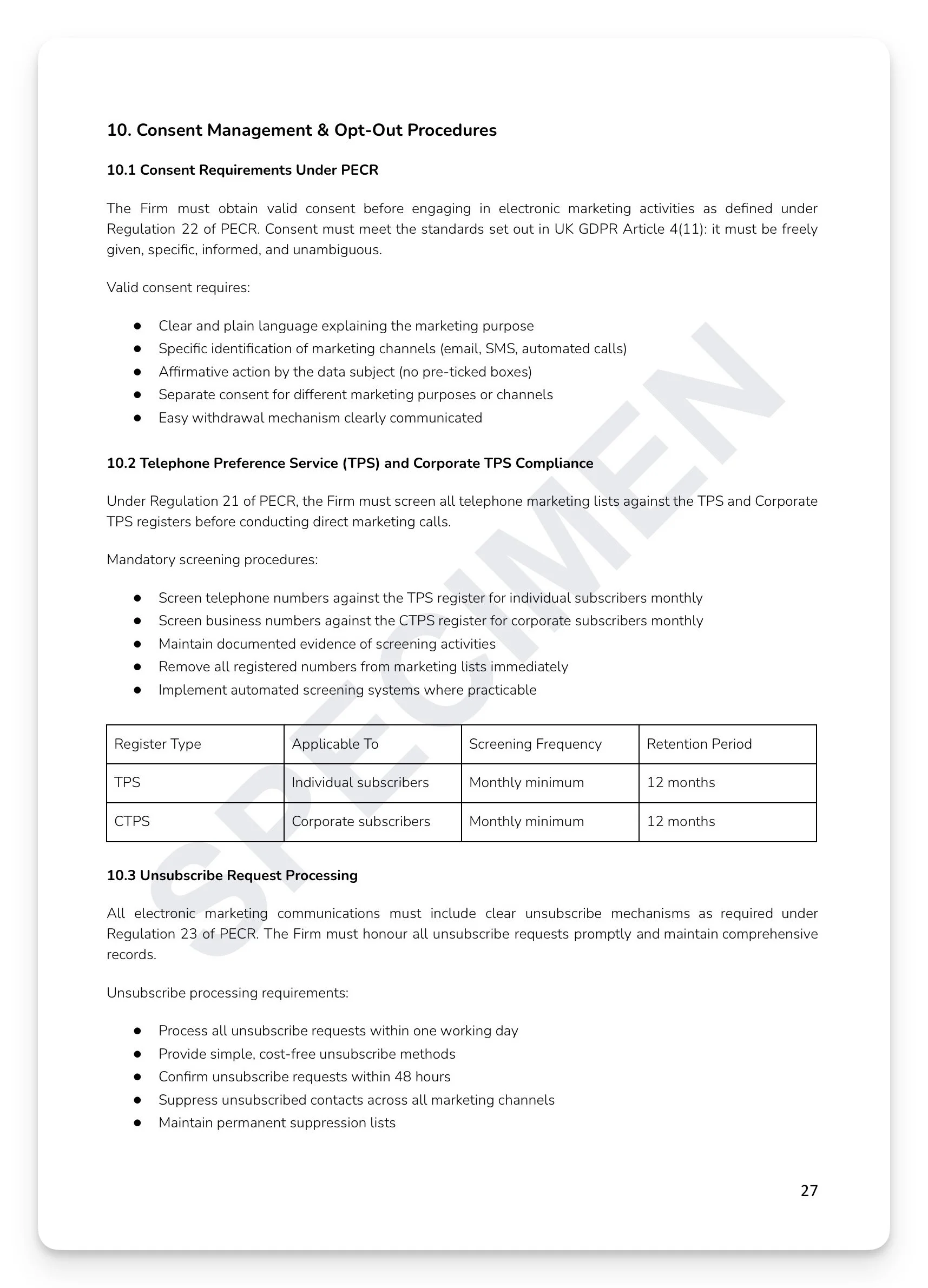
Secure disposal procedures with disposal documentation and full audit trail
Full data subject rights framework: Articles 15–22 with balancing rights against retention obligations
Governance structure: Senior Management accountability, DPO responsibilities, and Business Area Owner obligations
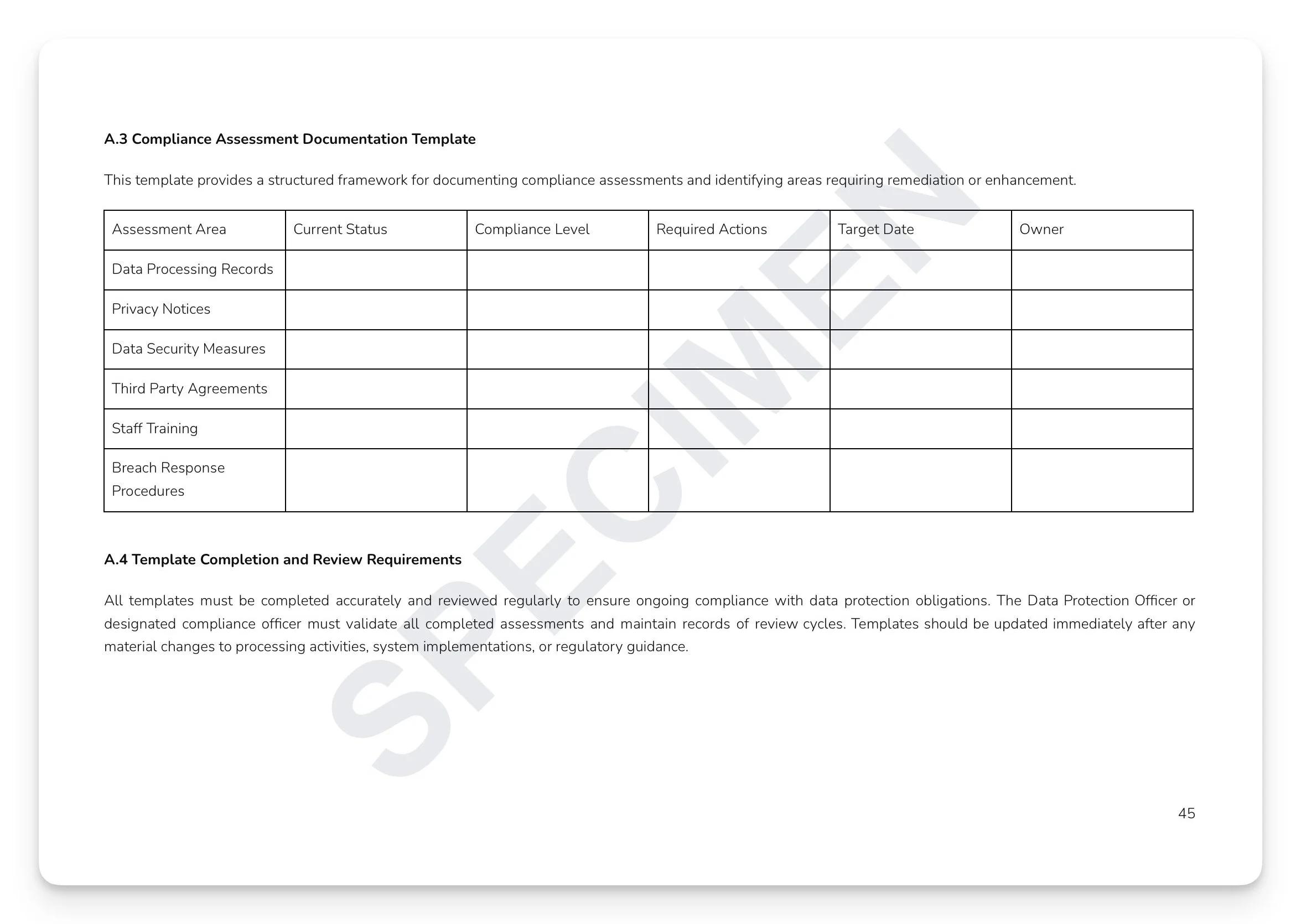
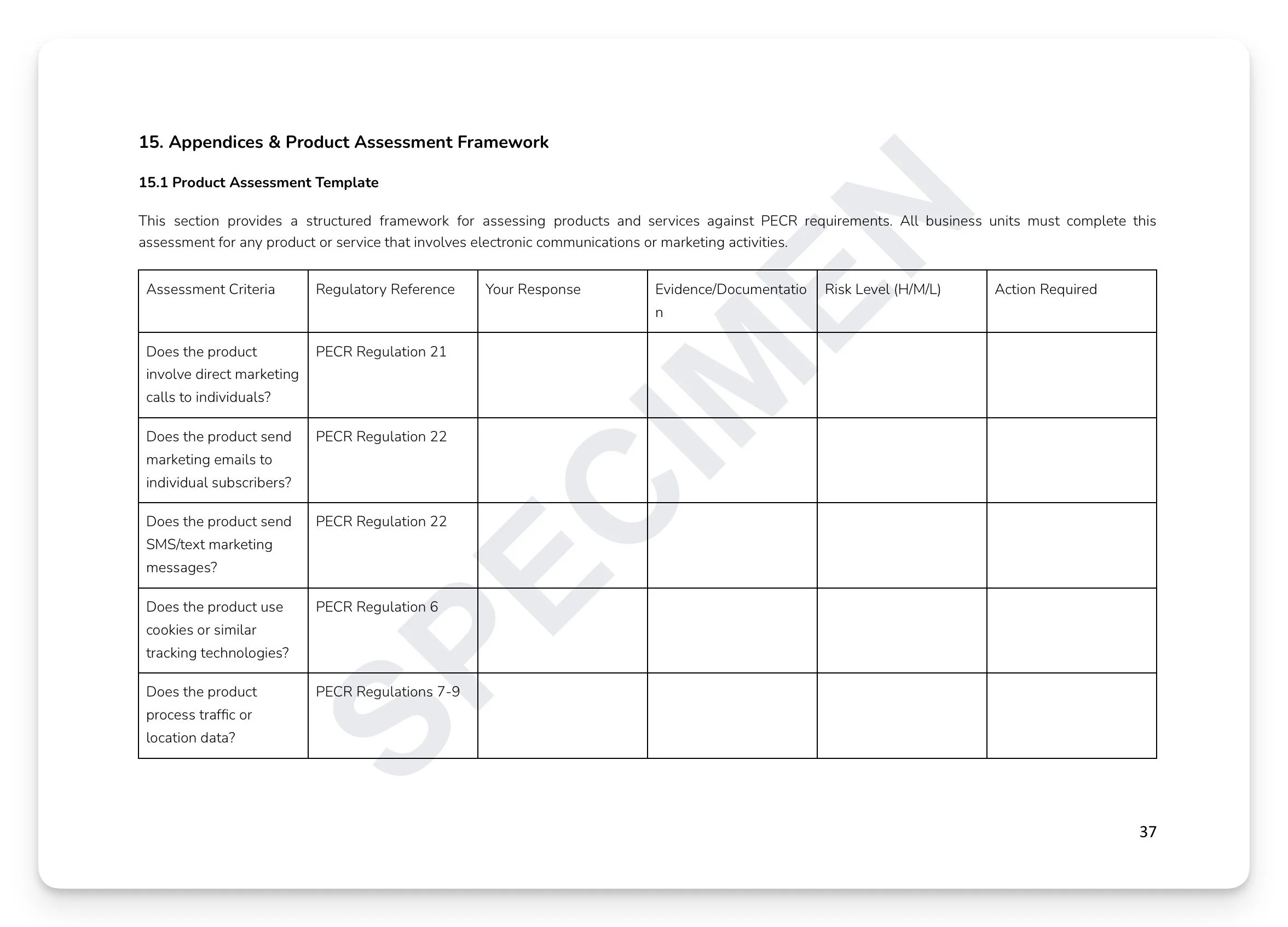
Ready-to-use appendices: Retention Schedule Table Template and Data Retention Assessment Matrix + much more
Who is this for?
Data Protection Officers, Compliance Officers, senior management, IT security teams, and records management functions at FCA-regulated firms who need a complete, board-approved Data Retention Policy satisfying both FCA supervisory expectations and ICO requirements simultaneously.
How it works
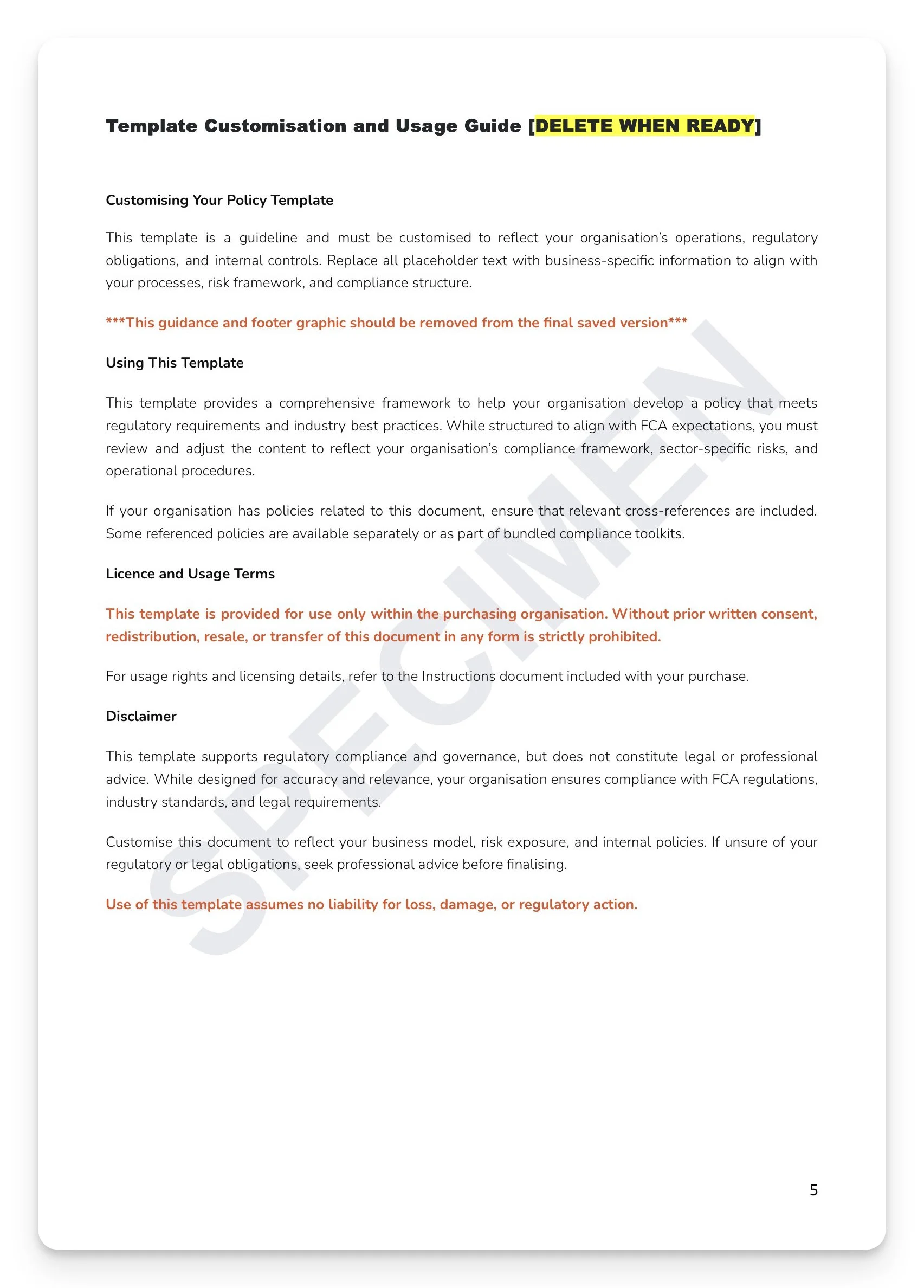
Step 1 — Read it. Every section exists for a reason, grounded in a specific regulatory obligation.
Step 2 — Understand it. Map the content against your current practices. Identify where you're strong and where gaps exist.
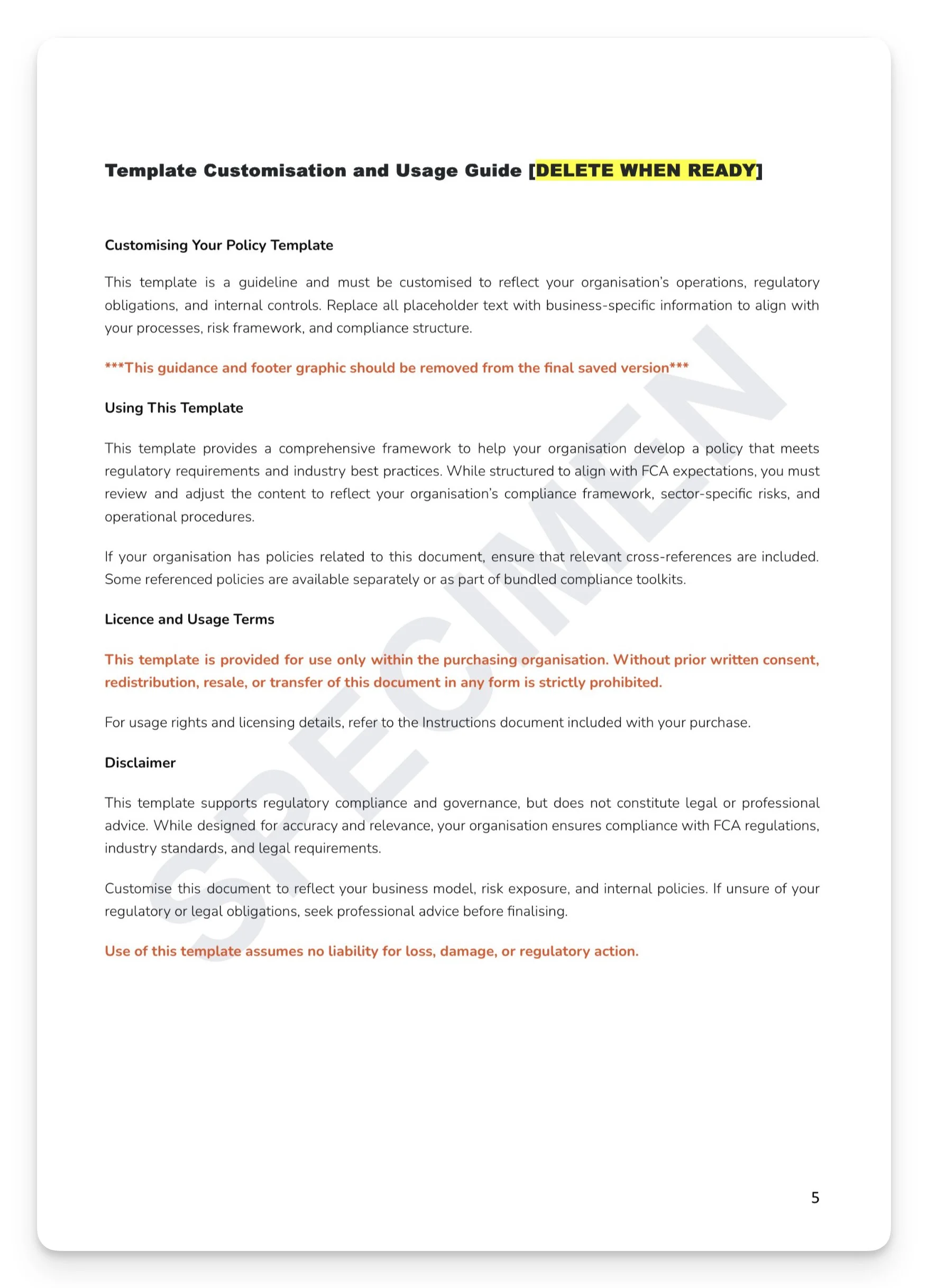
Step 3 — Make it yours. Tailor the language to reflect how your organisation actually operates. A policy that sounds like your firm is a policy your people will follow.
Step 4 — Take ownership. Assign clear accountability — Board approval, named SMF holder, designated policy owner. A policy without an owner is a liability, not an asset.
Step 5 — Operationalise it. Embed the policy into your governance calendar, training programme, and annual review cycle. This is where compliance becomes culture.
Or, get this free with RegTechPRO
Access this alongside the full compliance policy library — SM&CR, COBS, AML, Consumer Duty, GDPR, and more — for a fraction of the cost of consultancy.
View RegTechPRO pricing and packages →
Every record you hold past its retention period is a data protection liability. Every record you delete before its regulatory minimum is a compliance failure. Data retention sits at the intersection of two competing obligations — UK GDPR's storage limitation principle and FCA Handbook minimum retention periods. Getting the balance wrong in either direction creates regulatory exposure. The FCA doesn't wait.
What's included:
Retention schedules mapped across FCA Handbook, SYSC 9, COBS, MLR 2017, and UK GDPR
Data classification framework: primary categories, sensitivity classifications, and regulatory categorisation
Competing requirements balancing framework: UK GDPR storage limitation vs FCA mandatory minimums
Secure disposal procedures with disposal documentation and full audit trail
Full data subject rights framework: Articles 15–22 with balancing rights against retention obligations
Governance structure: Senior Management accountability, DPO responsibilities, and Business Area Owner obligations
Ready-to-use appendices: Retention Schedule Table Template and Data Retention Assessment Matrix + much more
Who is this for?
Data Protection Officers, Compliance Officers, senior management, IT security teams, and records management functions at FCA-regulated firms who need a complete, board-approved Data Retention Policy satisfying both FCA supervisory expectations and ICO requirements simultaneously.
How it works
Step 1 — Read it. Every section exists for a reason, grounded in a specific regulatory obligation.
Step 2 — Understand it. Map the content against your current practices. Identify where you're strong and where gaps exist.
Step 3 — Make it yours. Tailor the language to reflect how your organisation actually operates. A policy that sounds like your firm is a policy your people will follow.
Step 4 — Take ownership. Assign clear accountability — Board approval, named SMF holder, designated policy owner. A policy without an owner is a liability, not an asset.
Step 5 — Operationalise it. Embed the policy into your governance calendar, training programme, and annual review cycle. This is where compliance becomes culture.
Or, get this free with RegTechPRO
Access this alongside the full compliance policy library — SM&CR, COBS, AML, Consumer Duty, GDPR, and more — for a fraction of the cost of consultancy.
View RegTechPRO pricing and packages →


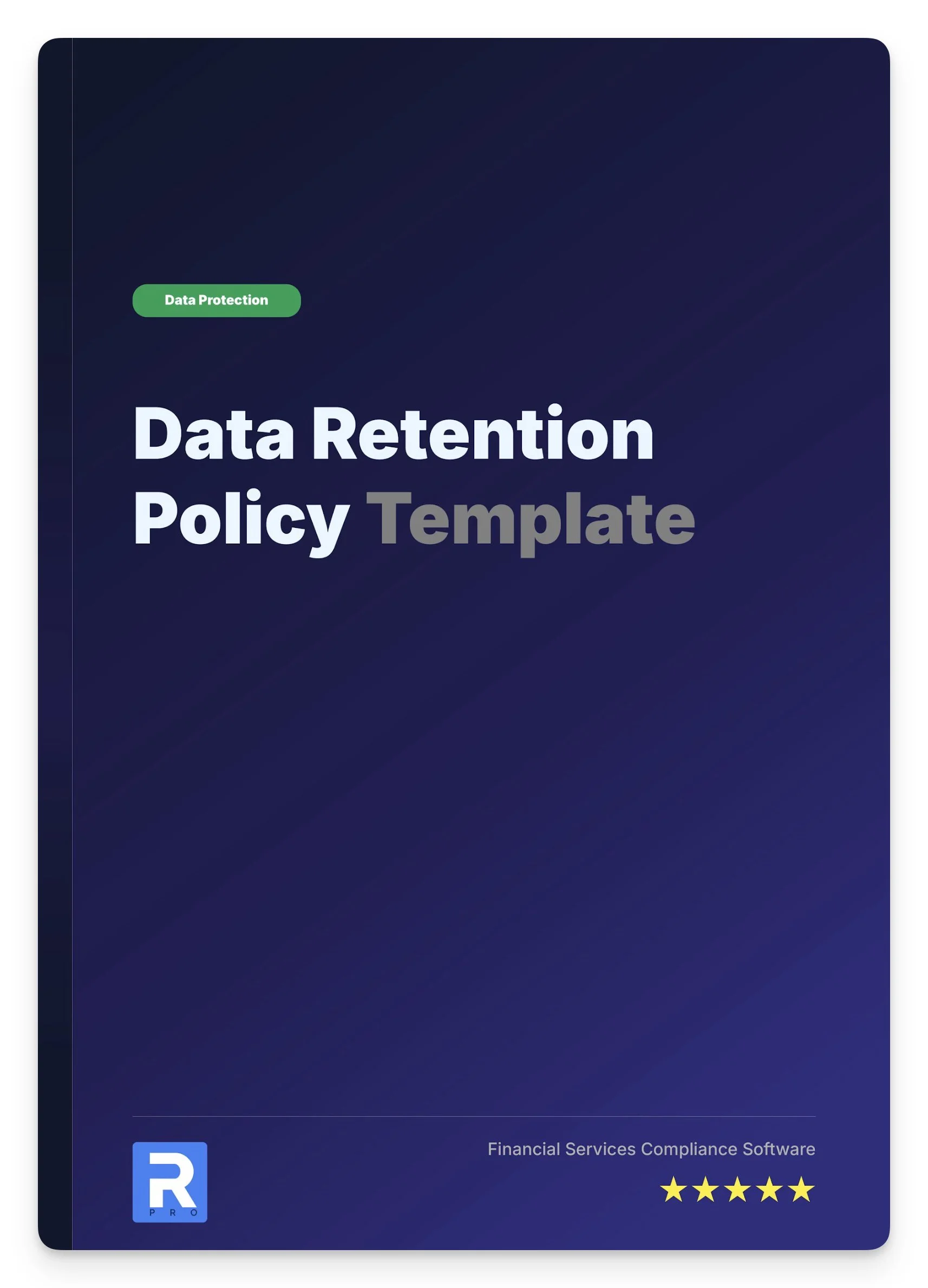 Image 1 of 6
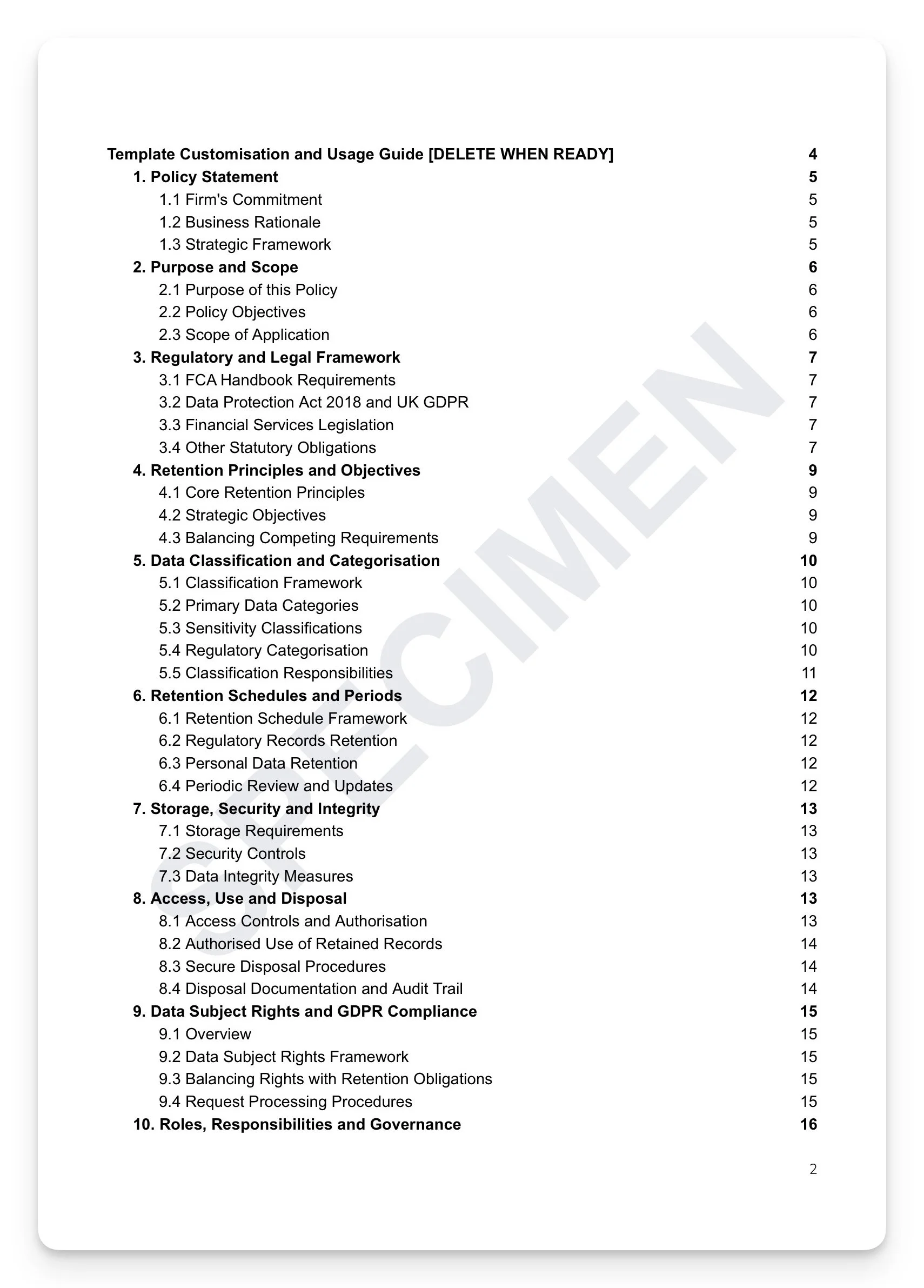 Image 2 of 6
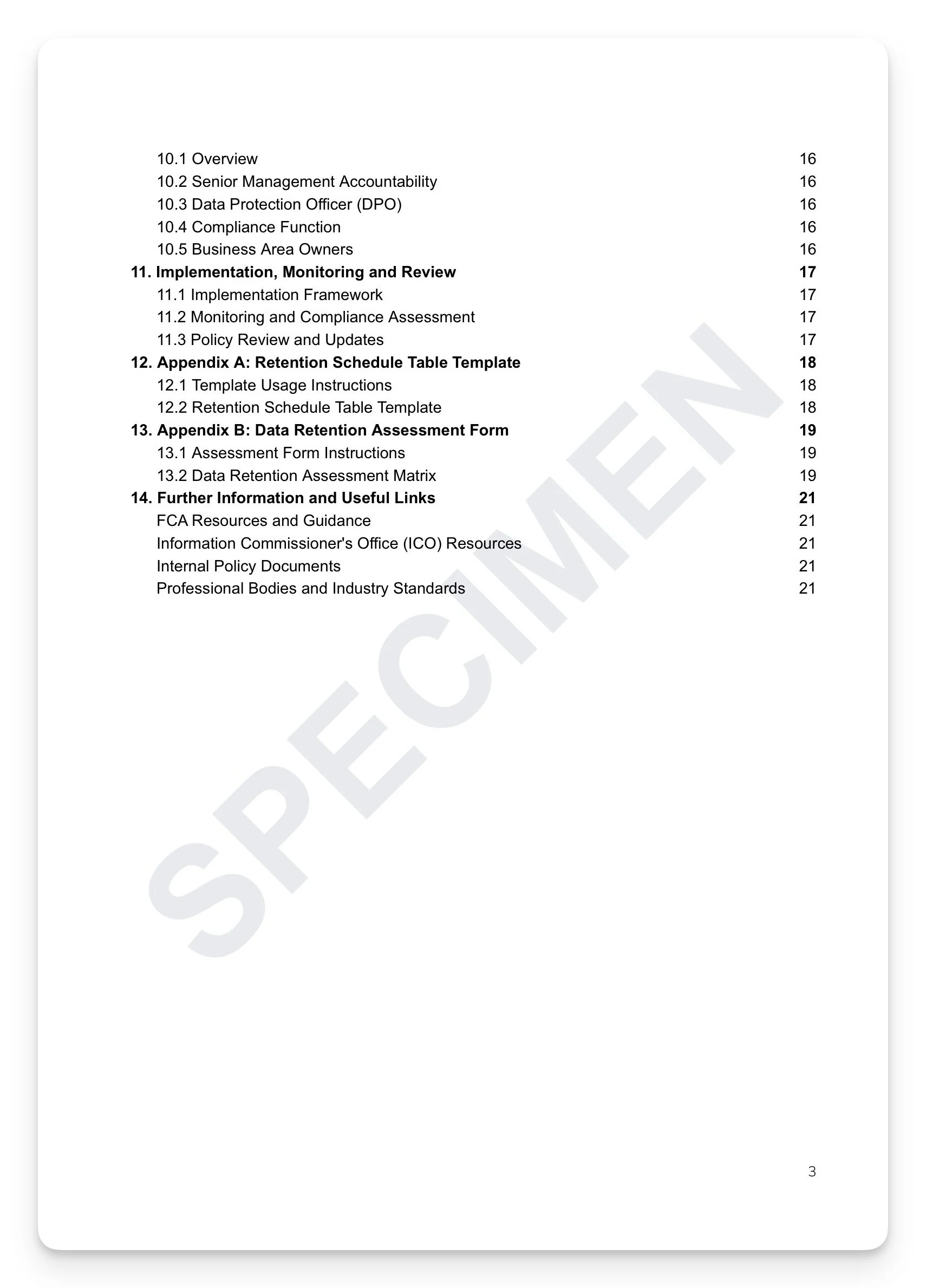 Image 3 of 6
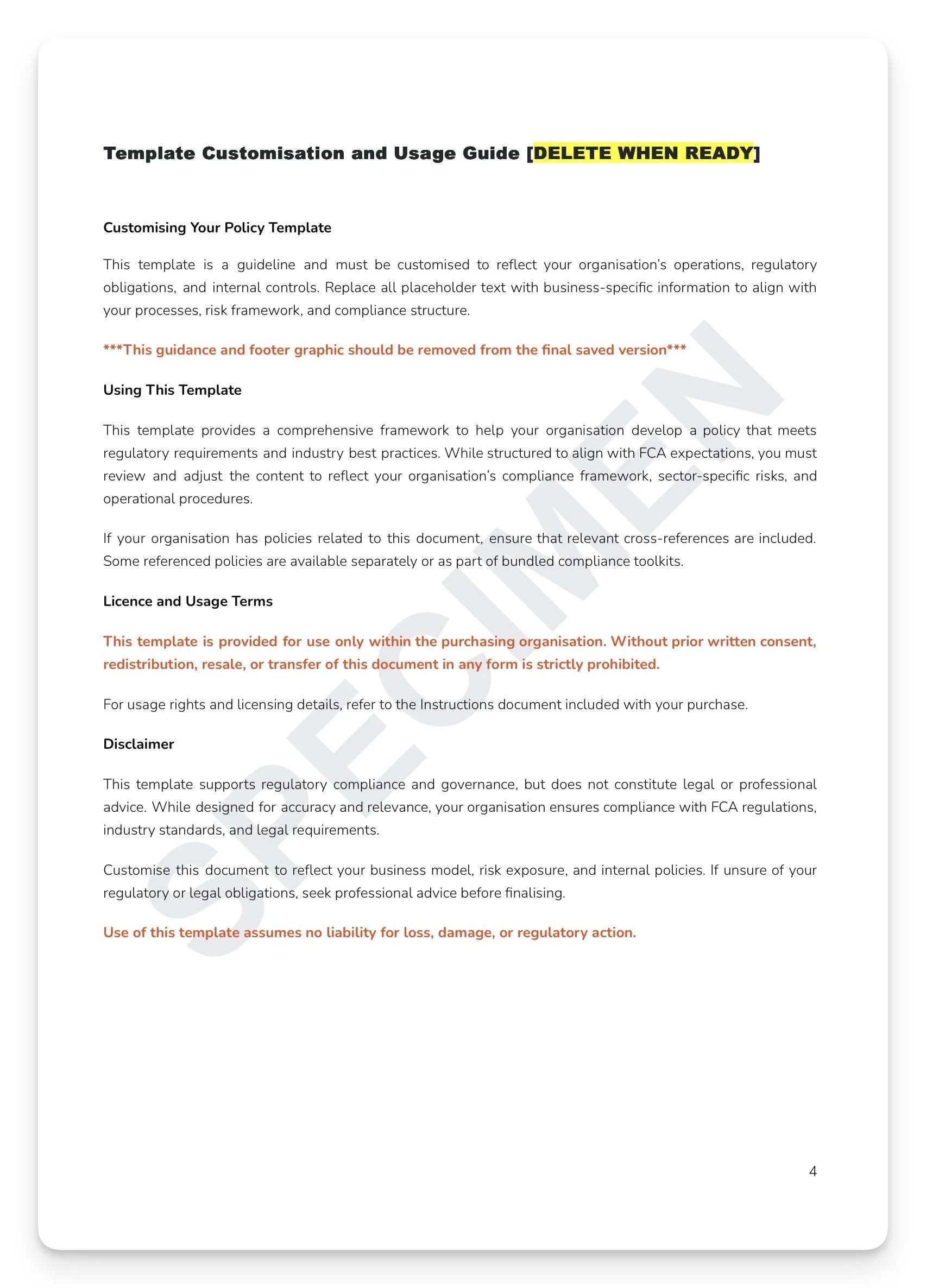 Image 4 of 6
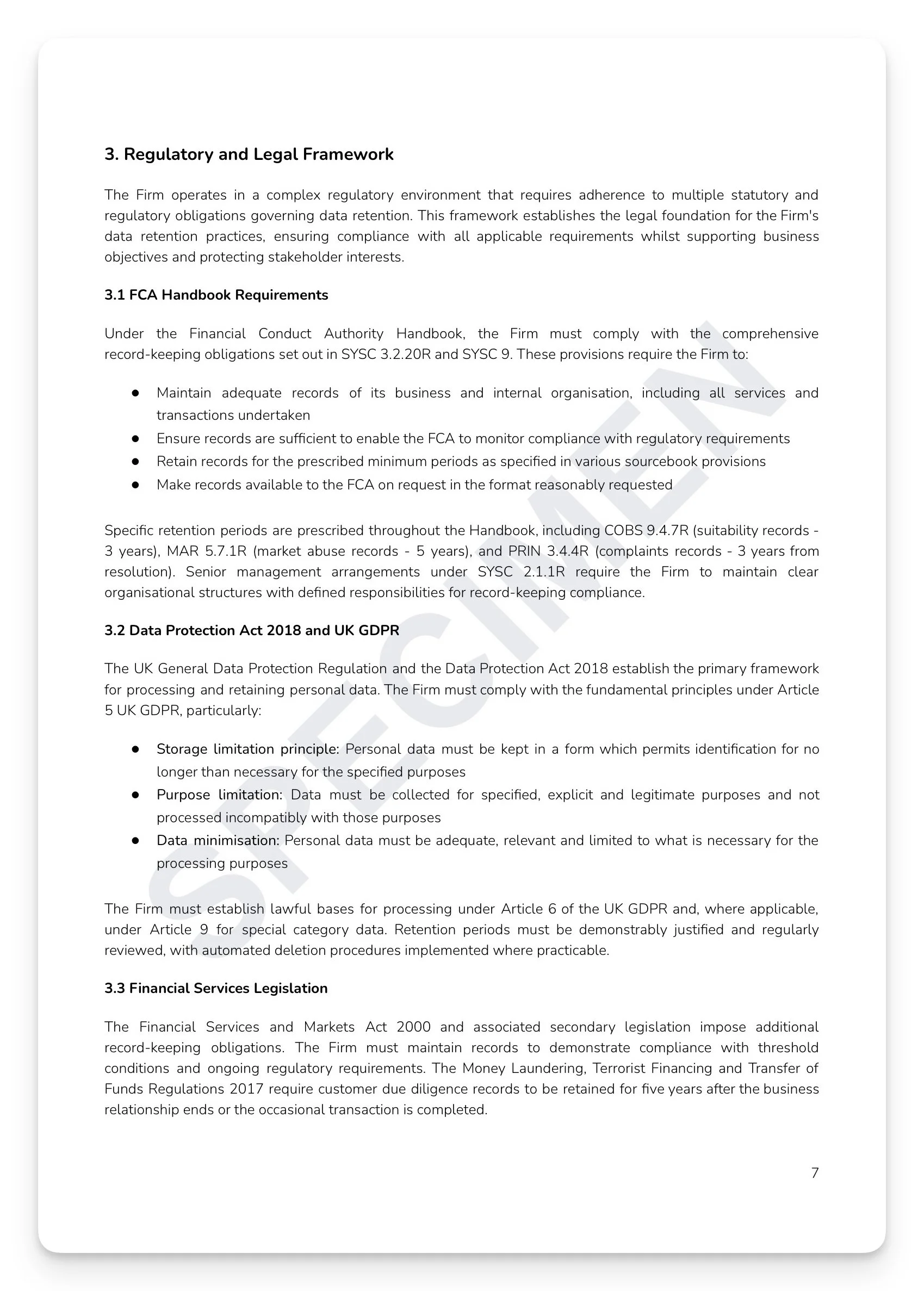 Image 5 of 6
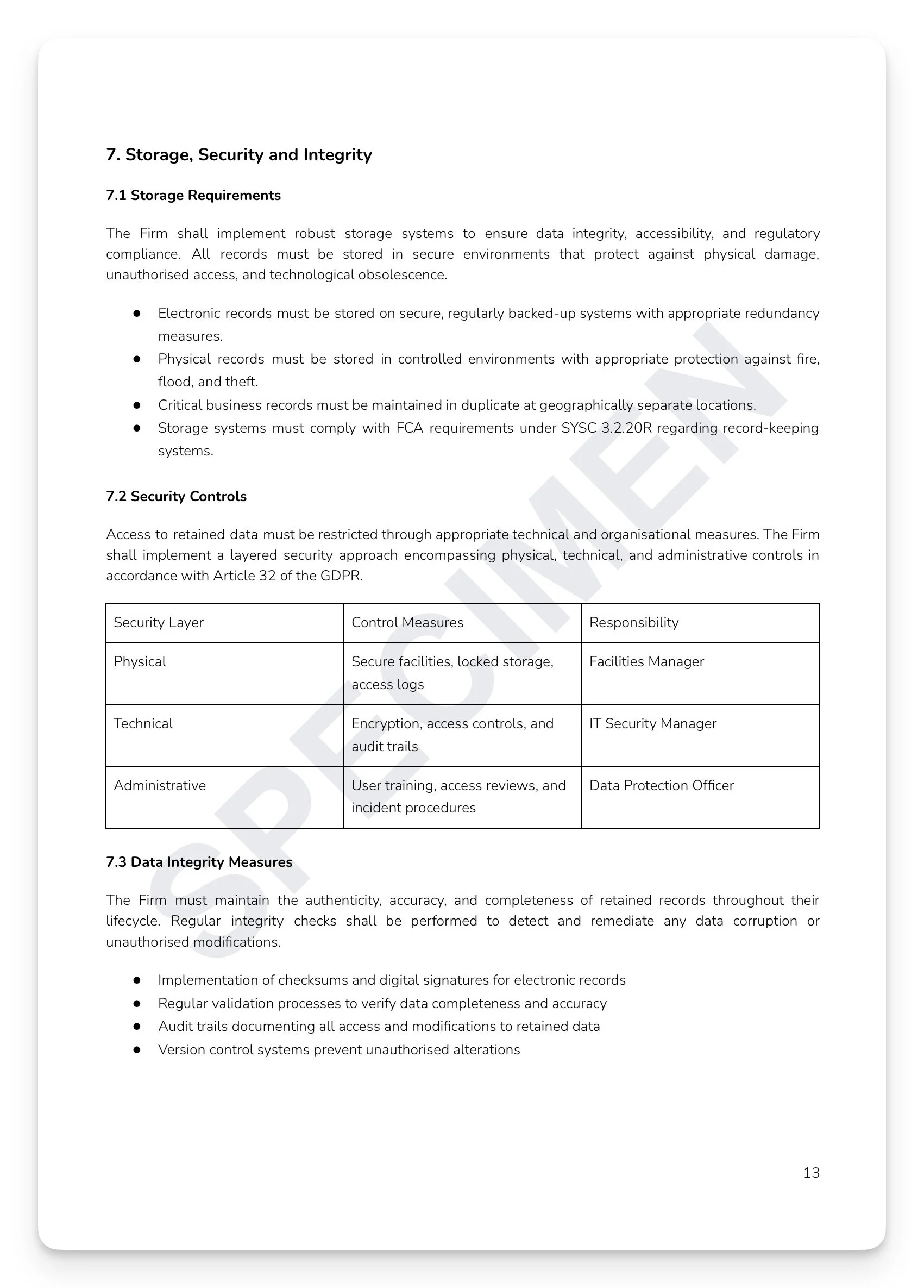 Image 6 of 6