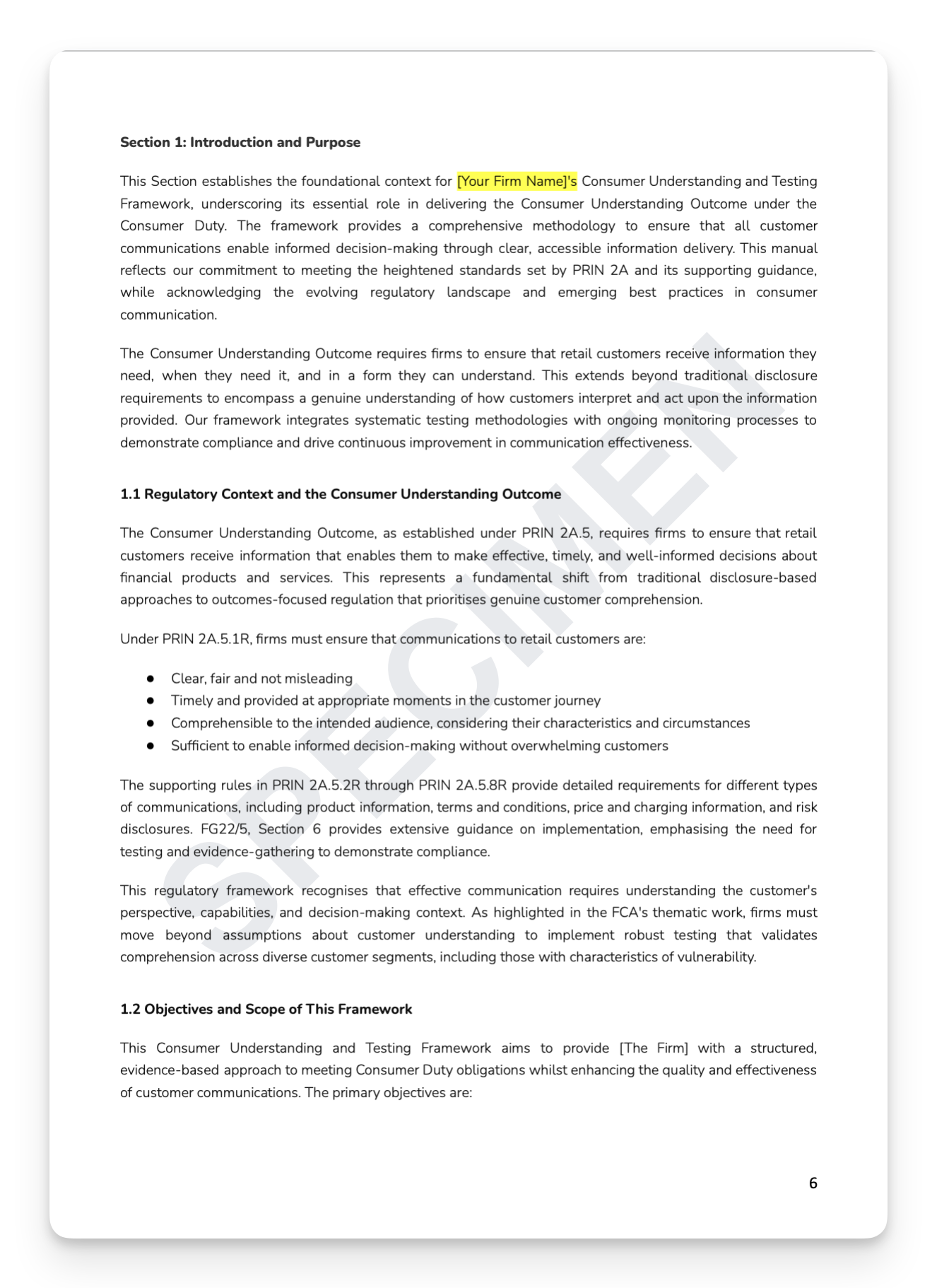
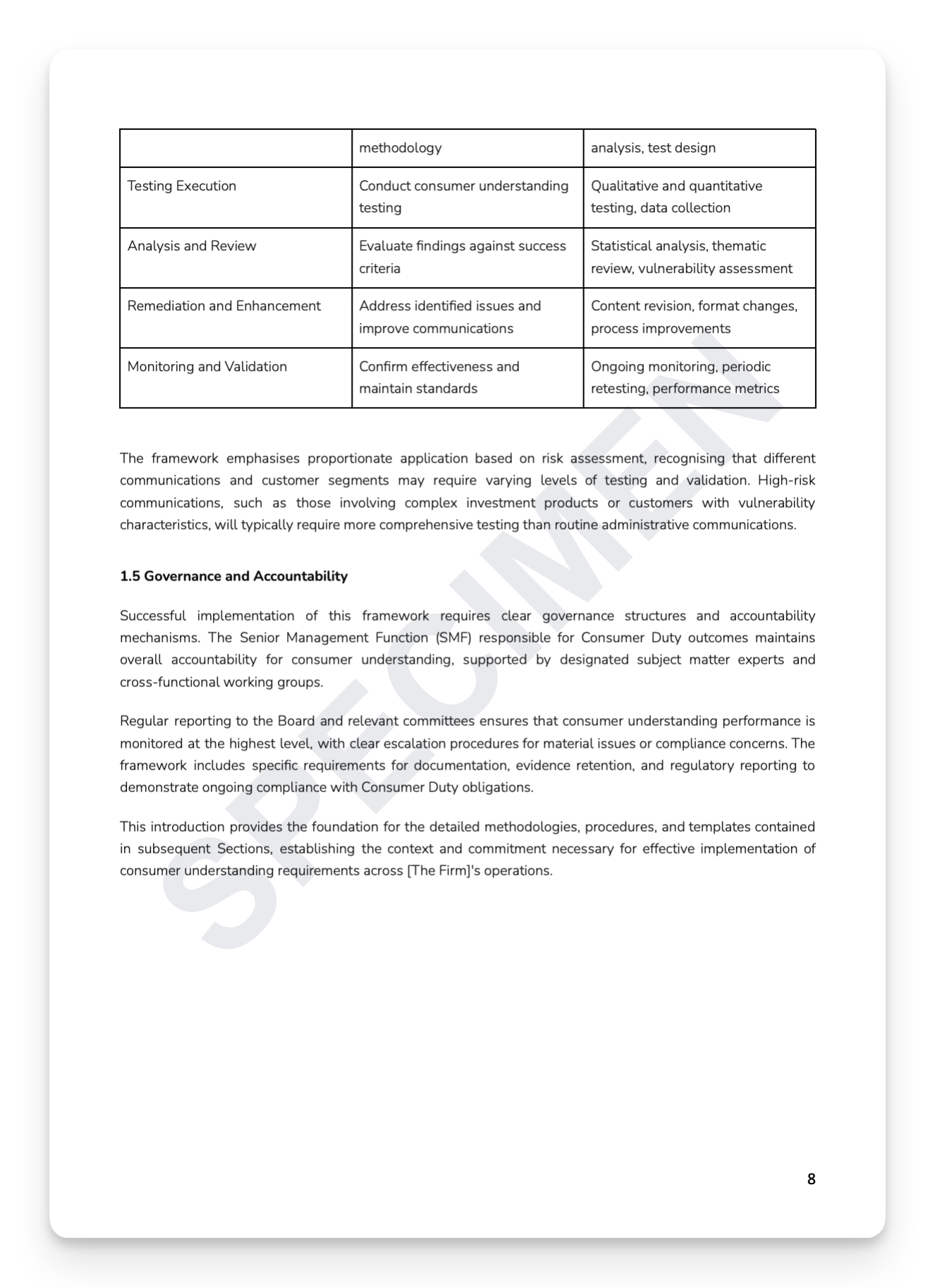
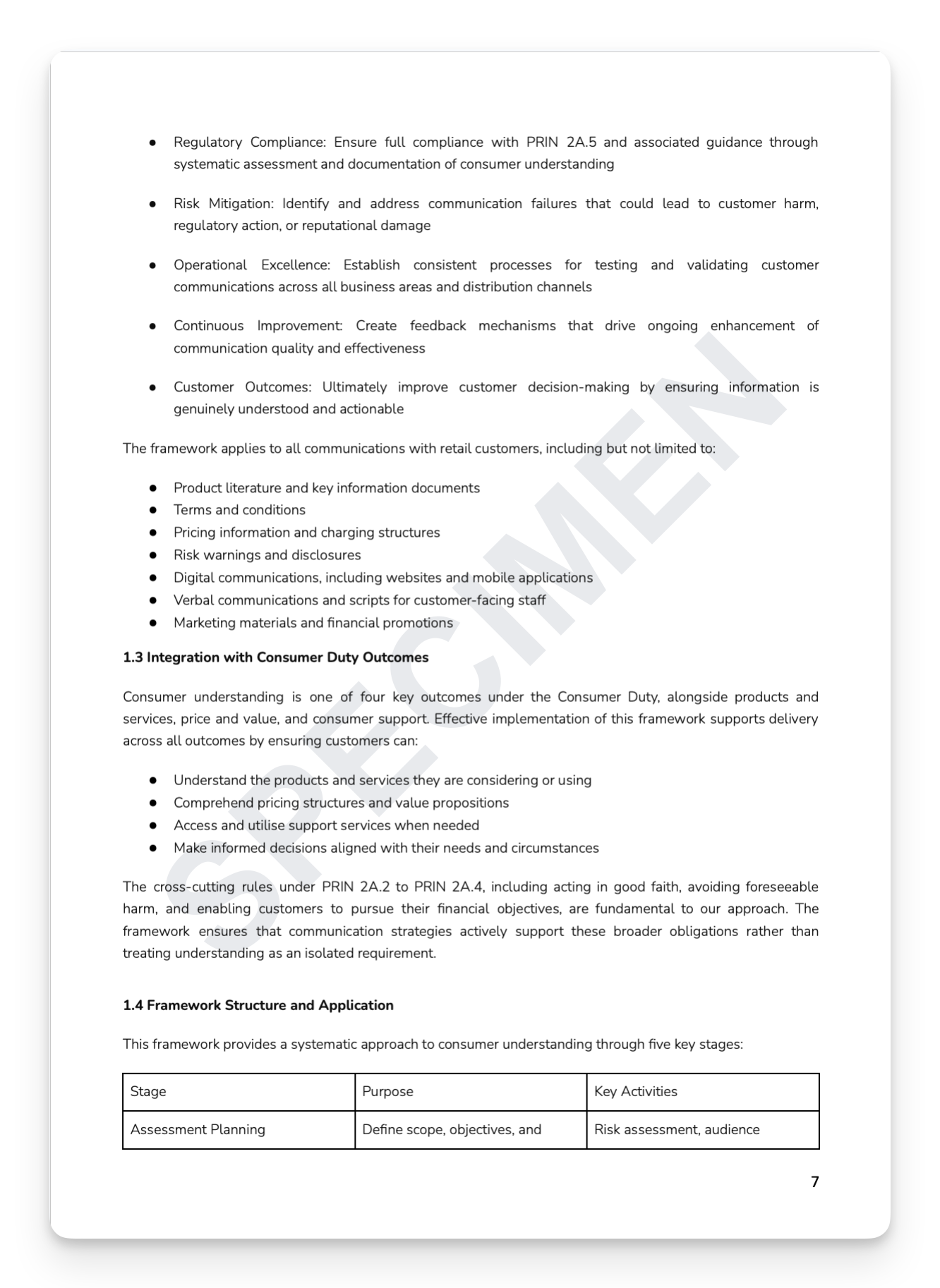
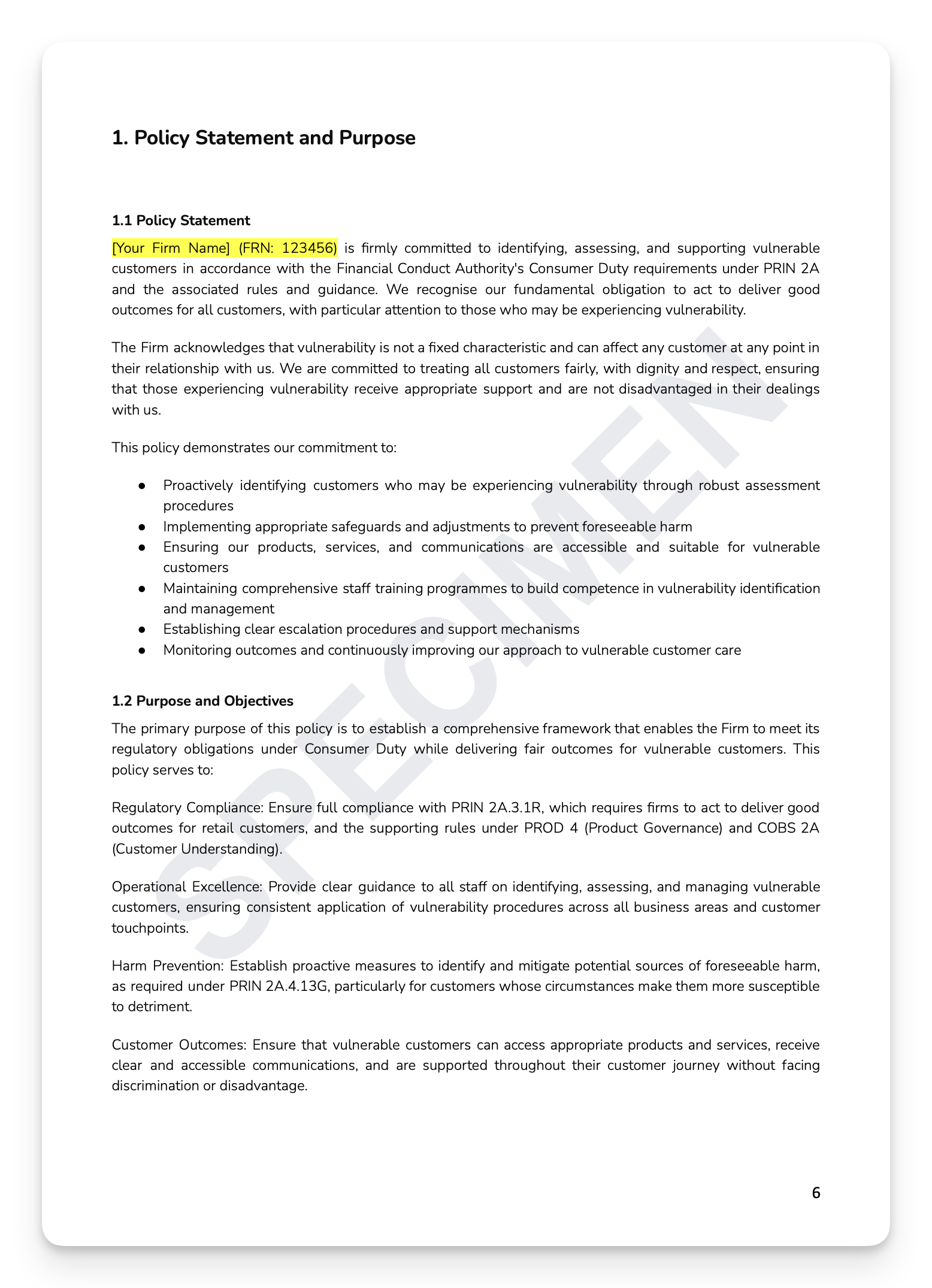
Consumer Duty doesn't end at implementation — it begins there. Under PRIN 2A.9, firms must monitor whether they are actually delivering good outcomes, not just whether their processes are designed to do so. The FCA expects Board-level reporting on outcome data, evidence of harm detection and remediation, and a functioning monitoring programme. The FCA doesn't wait.
What's included:
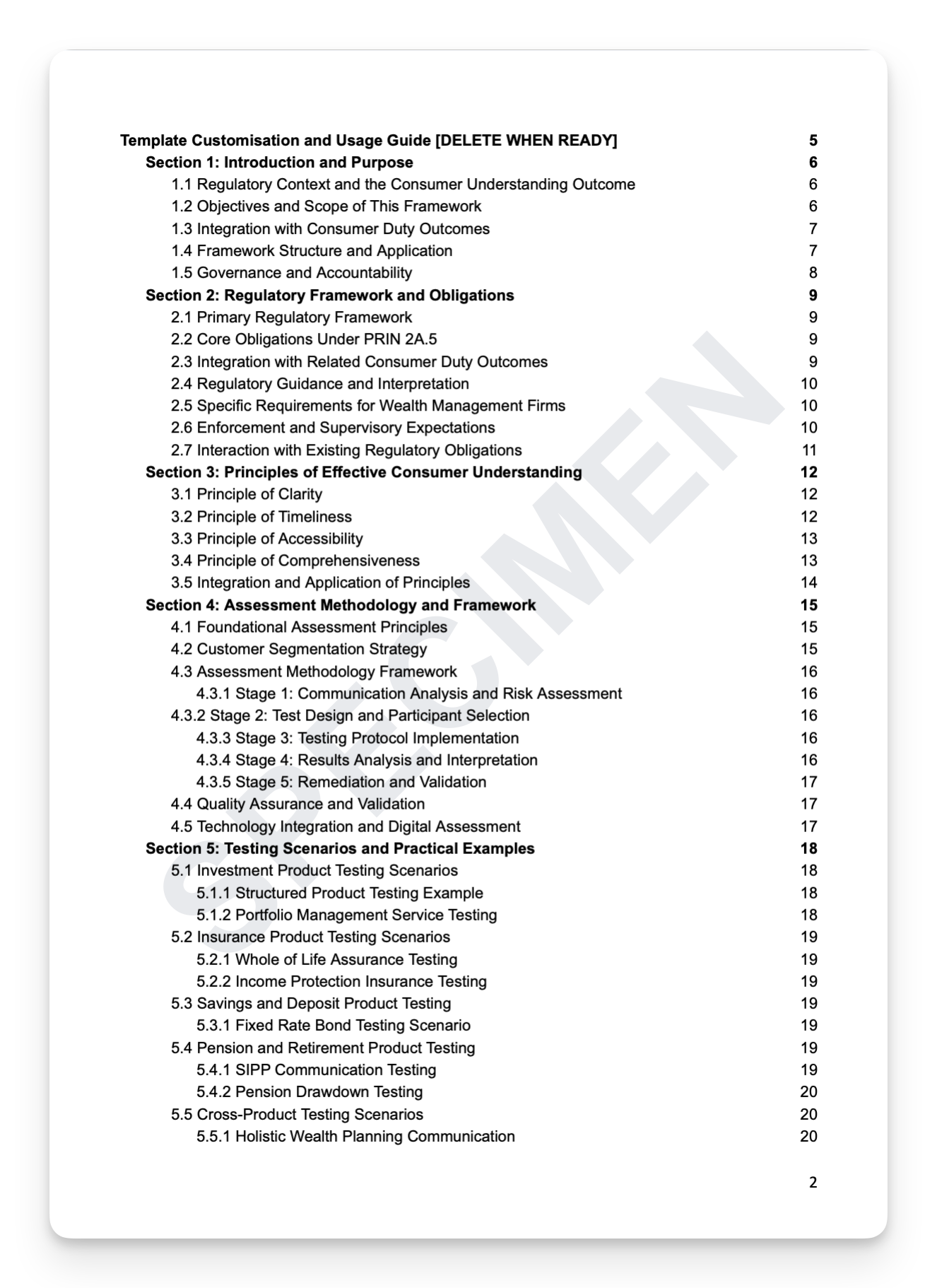
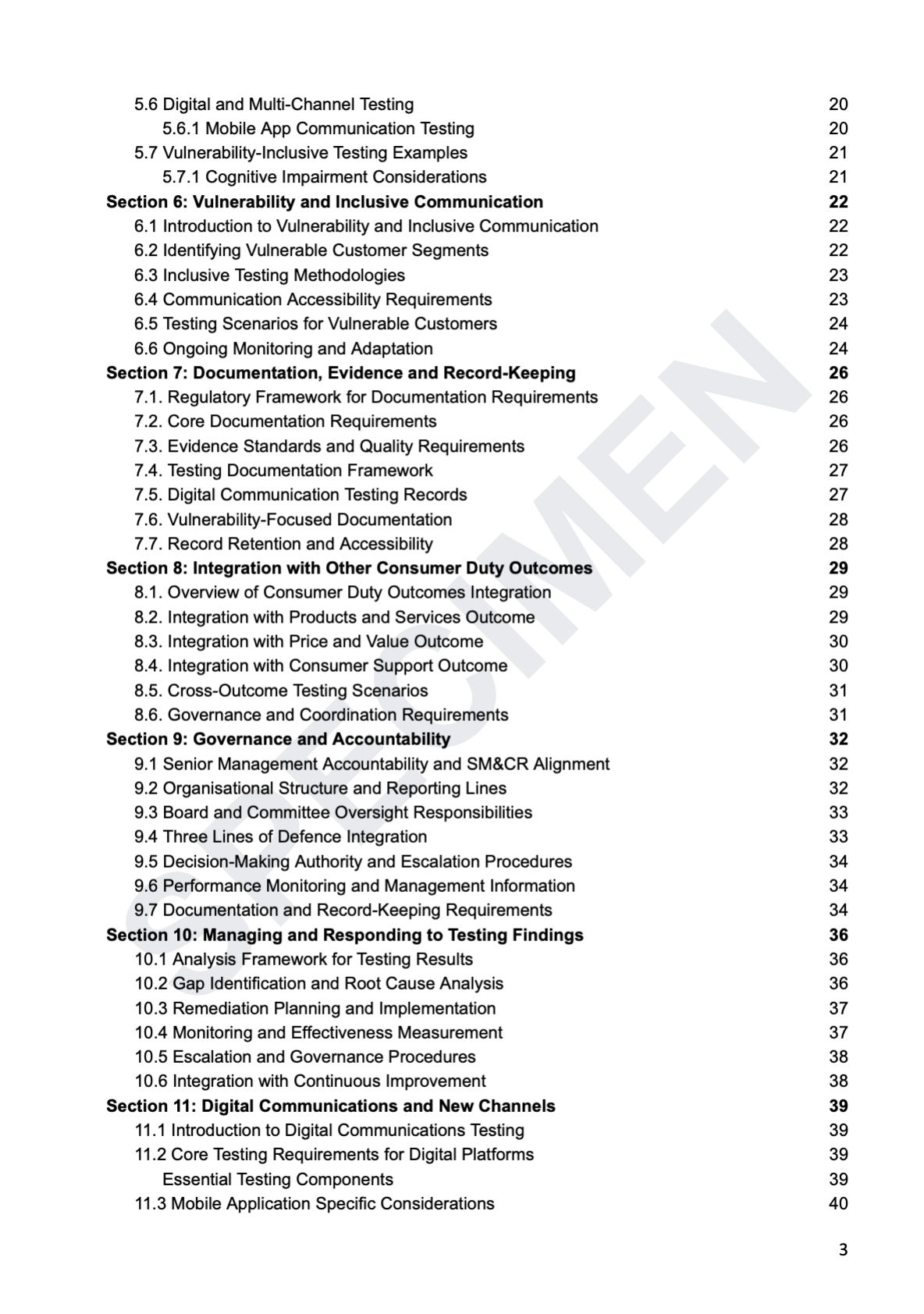
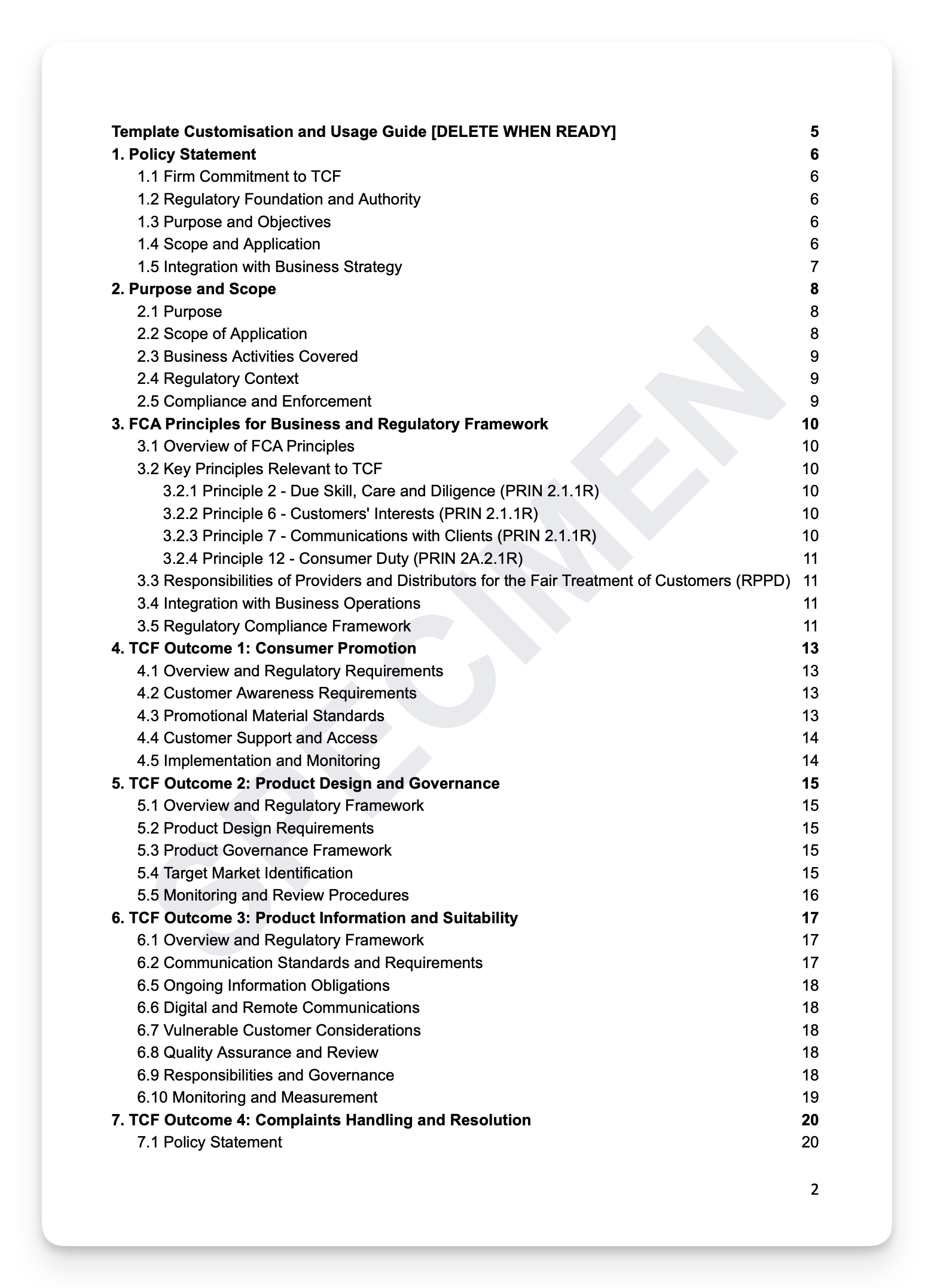
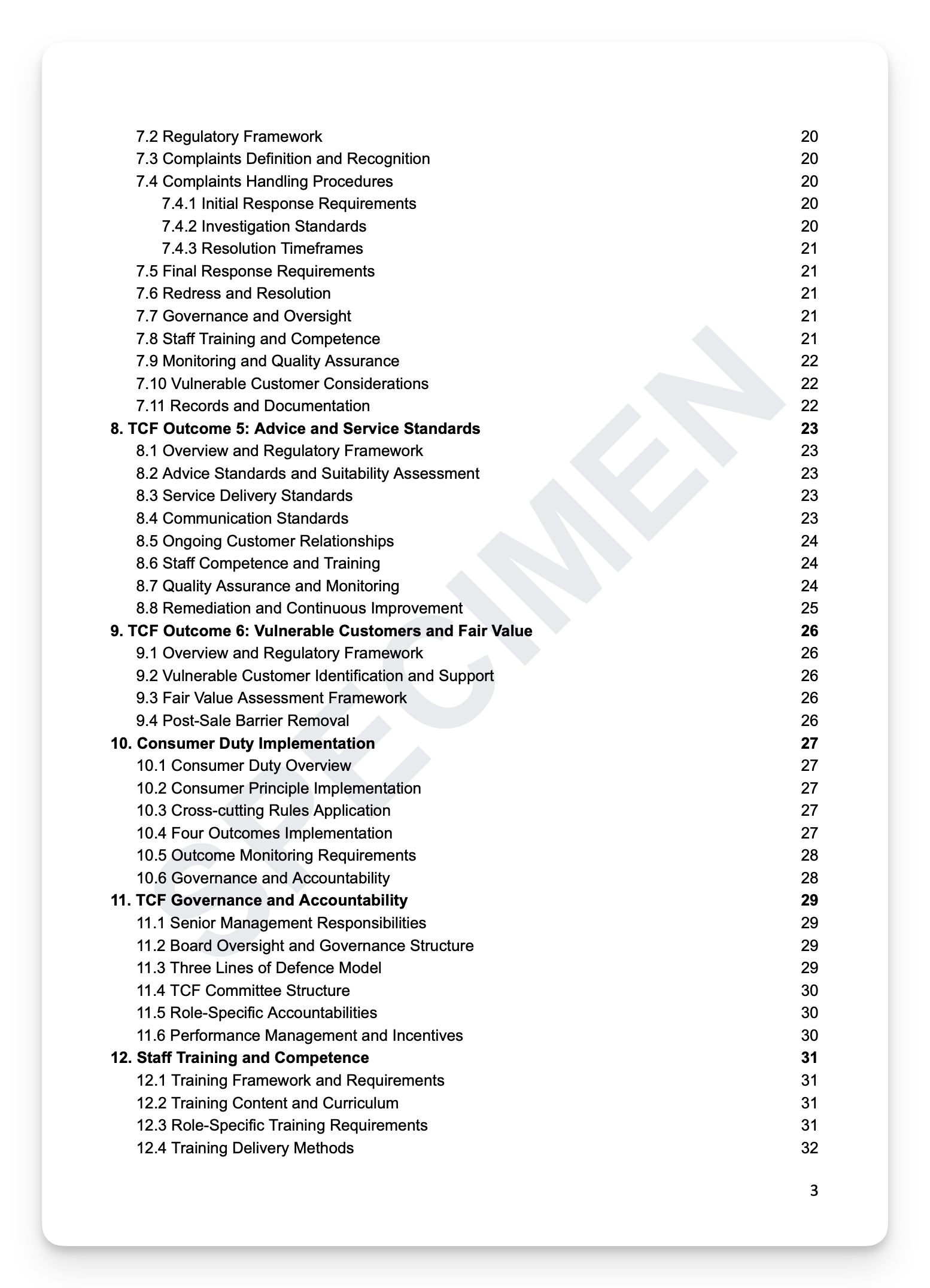
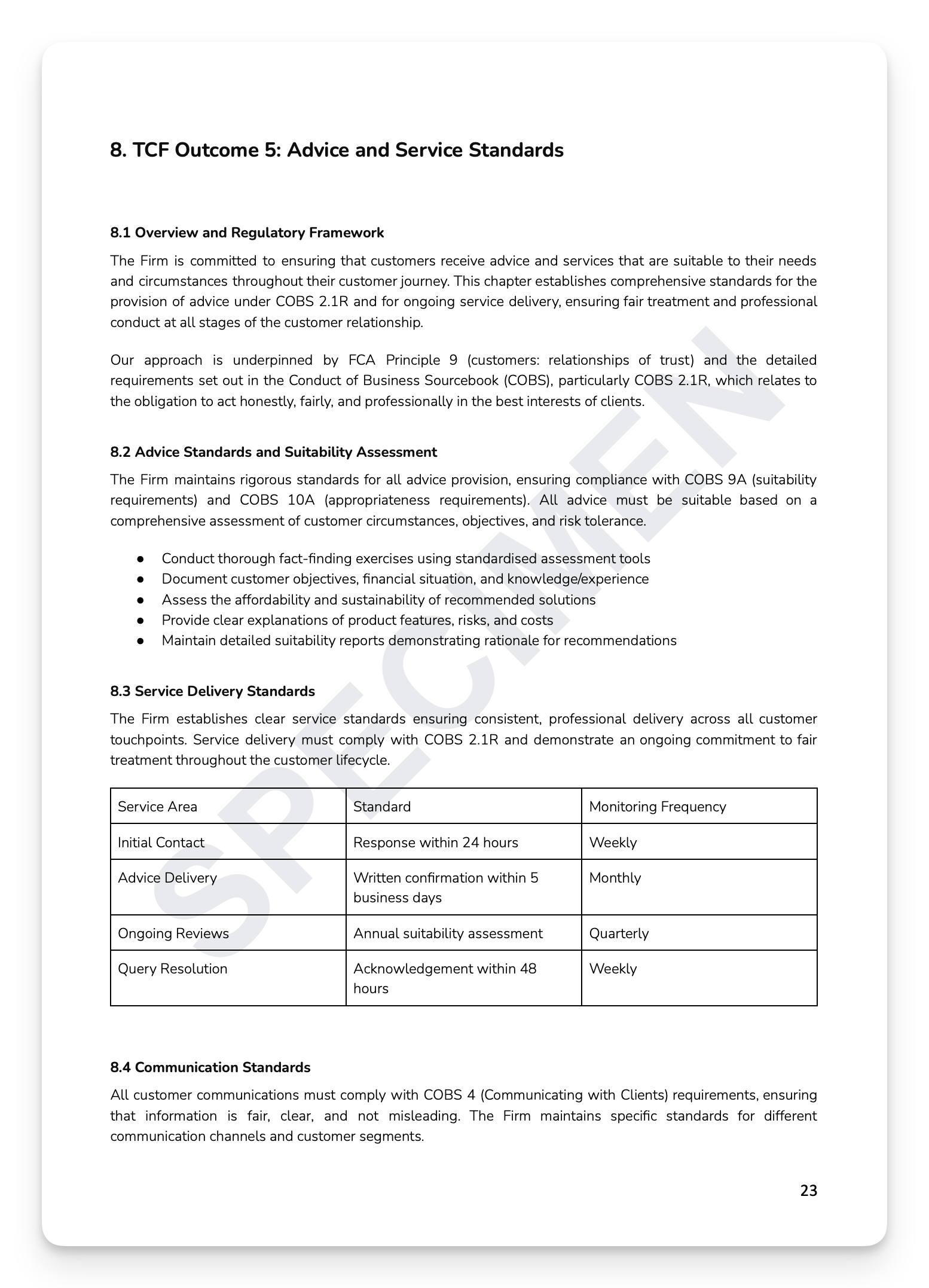
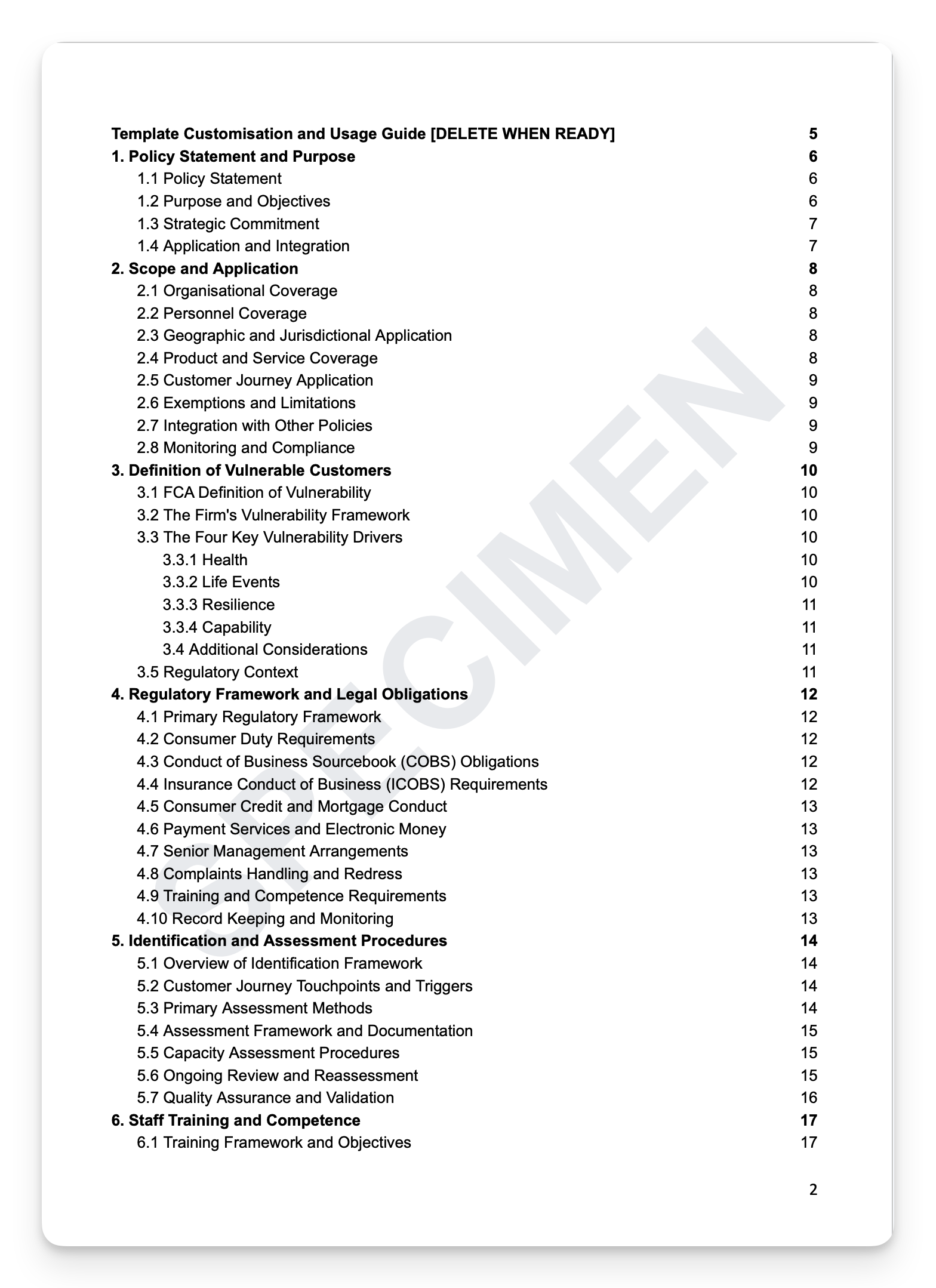
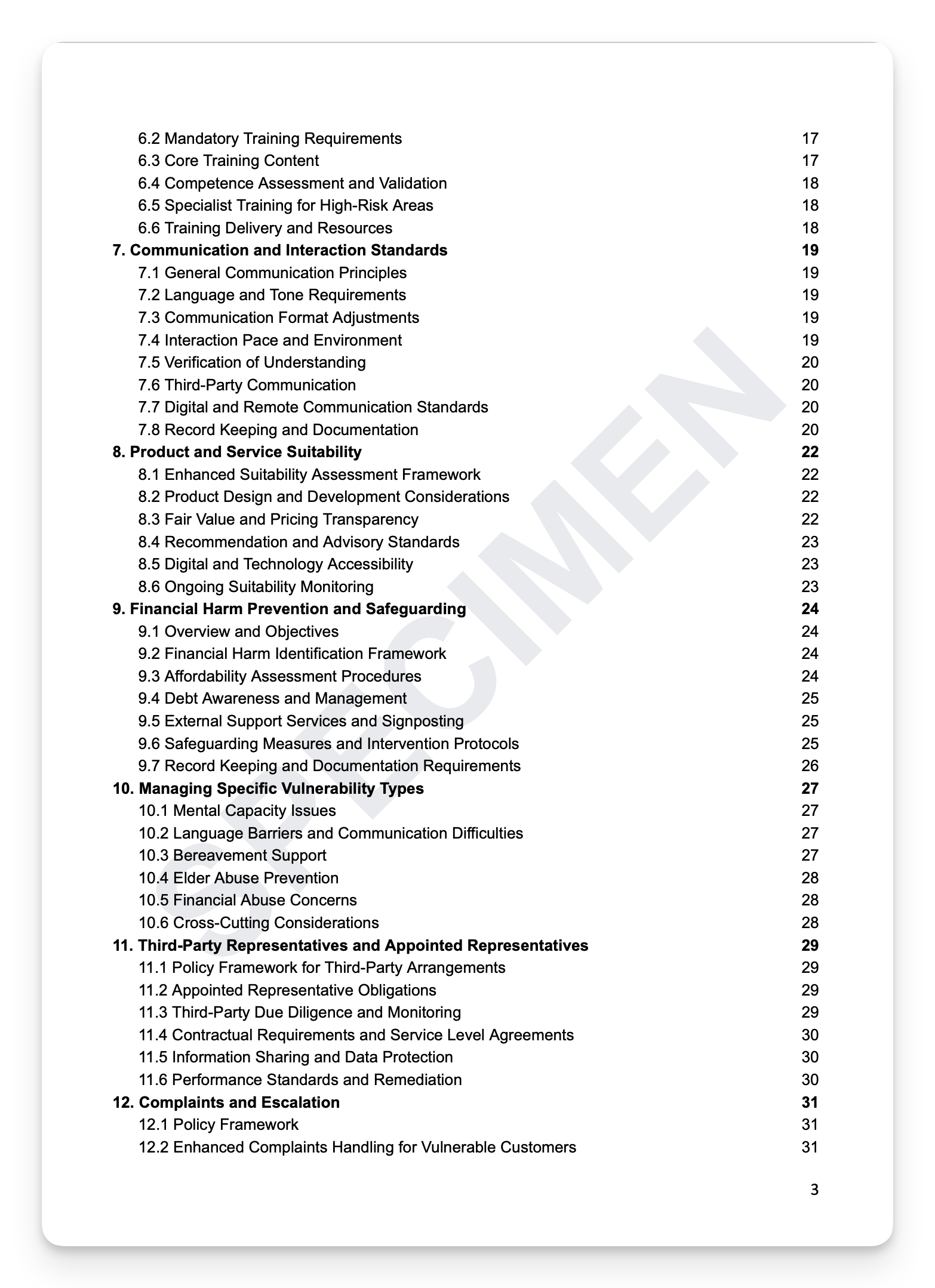
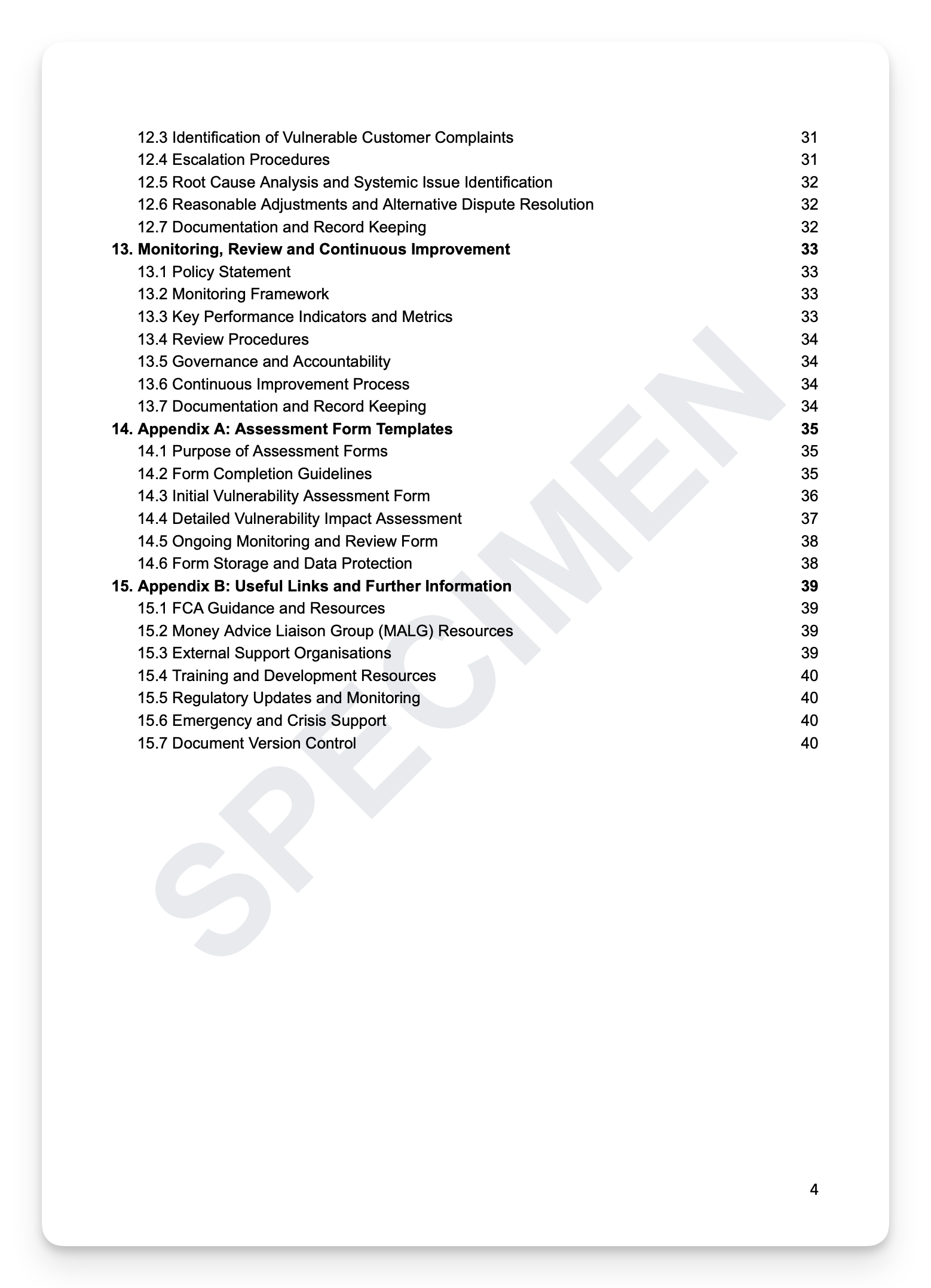
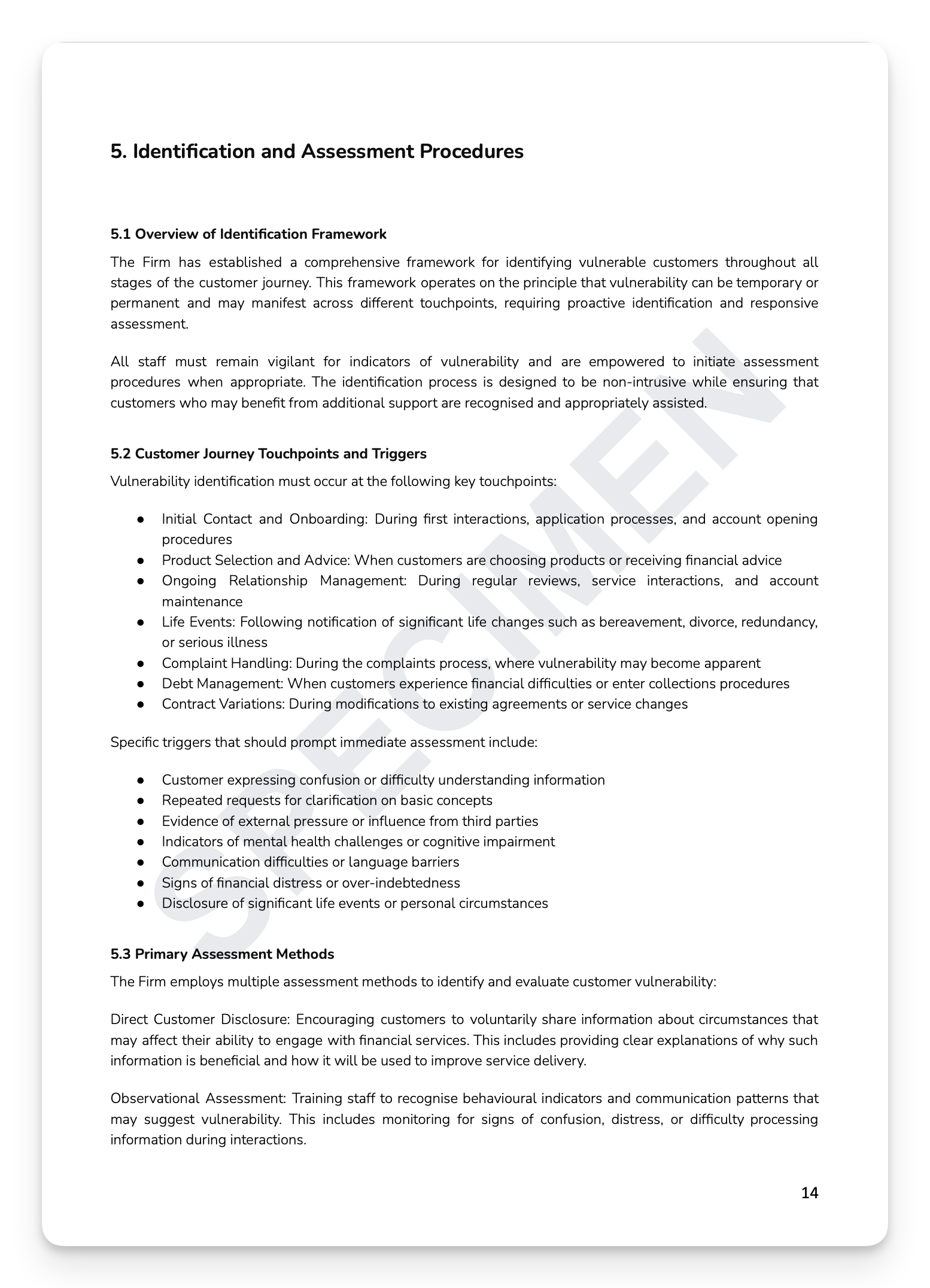
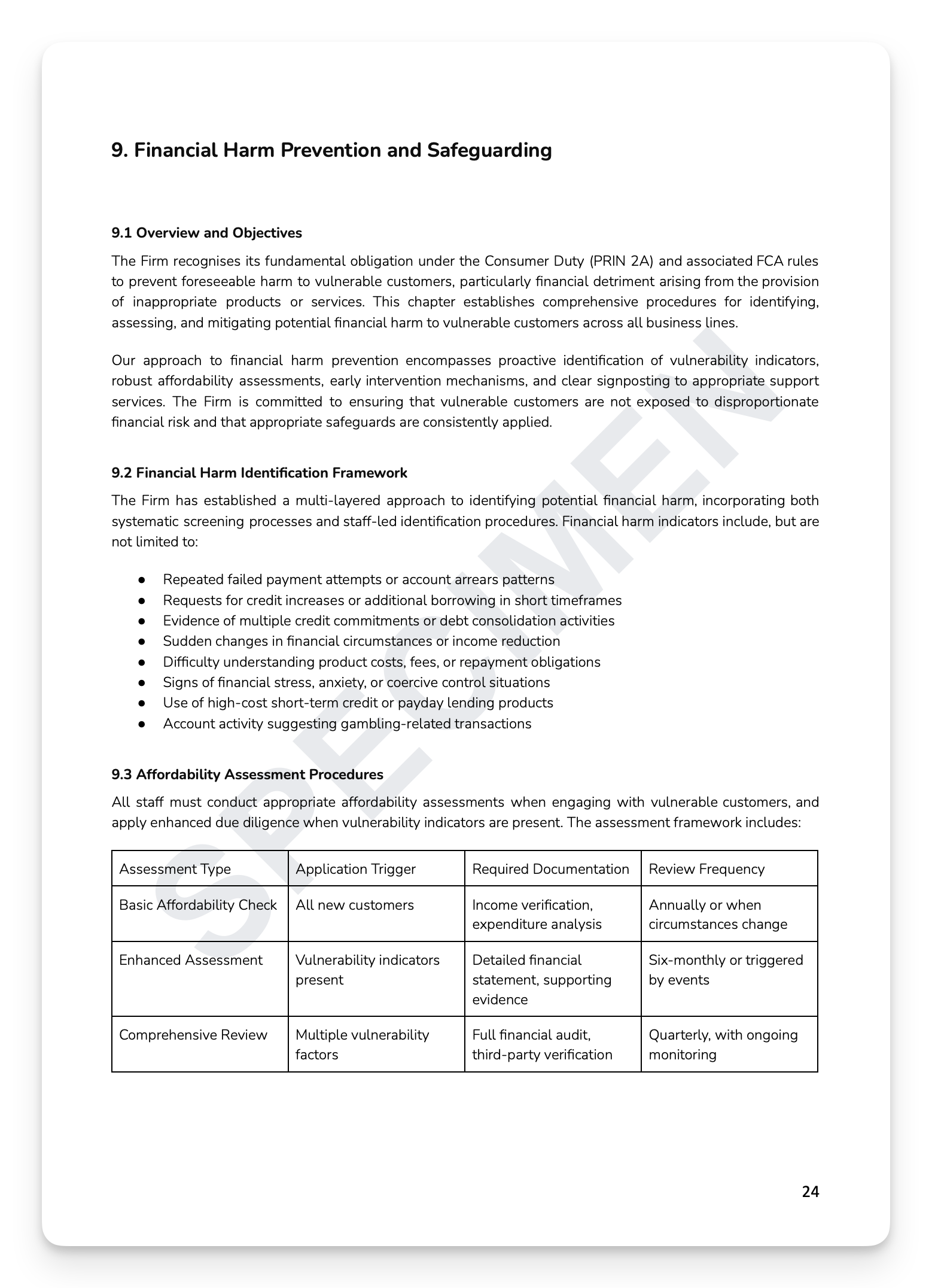
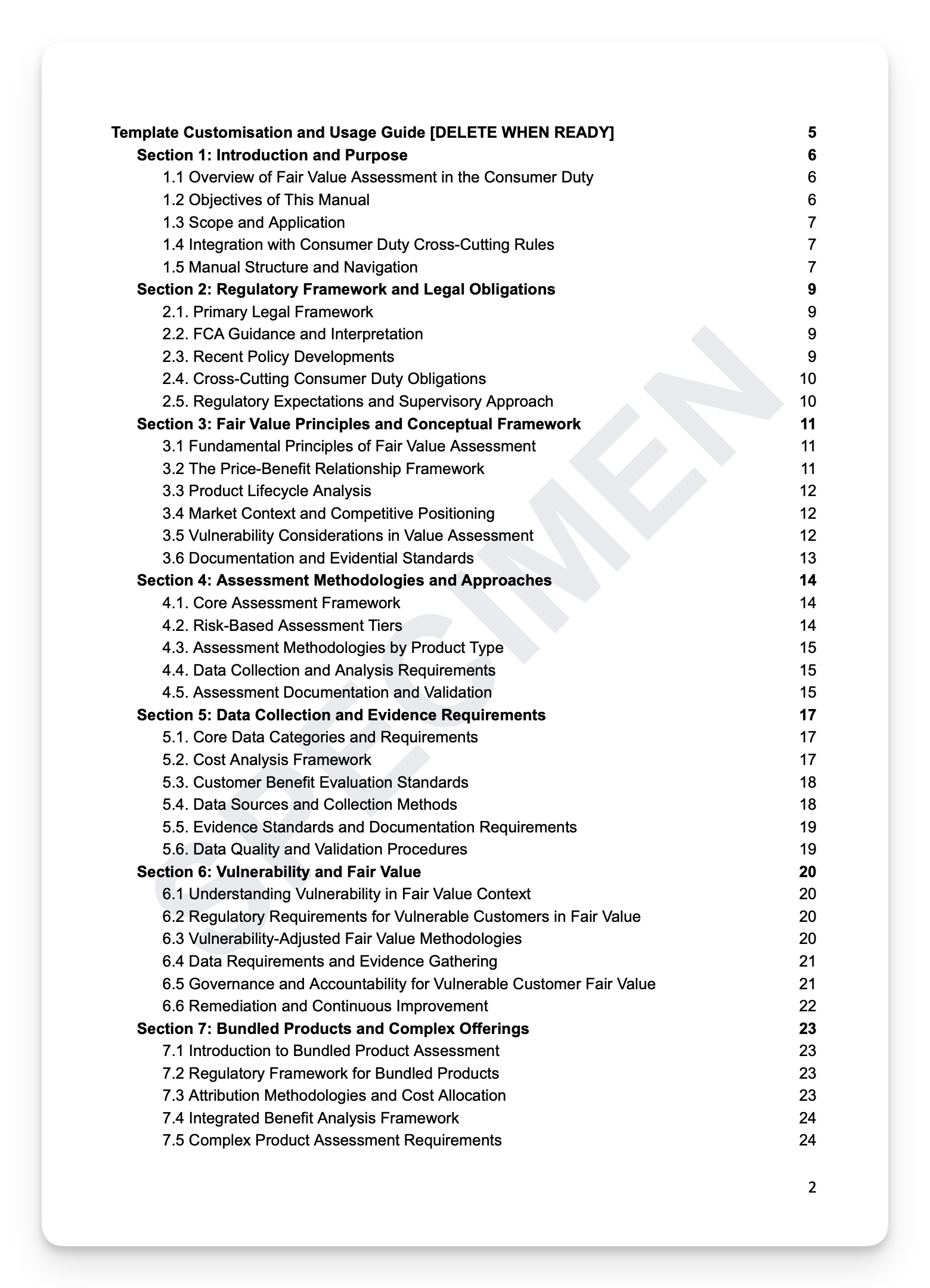
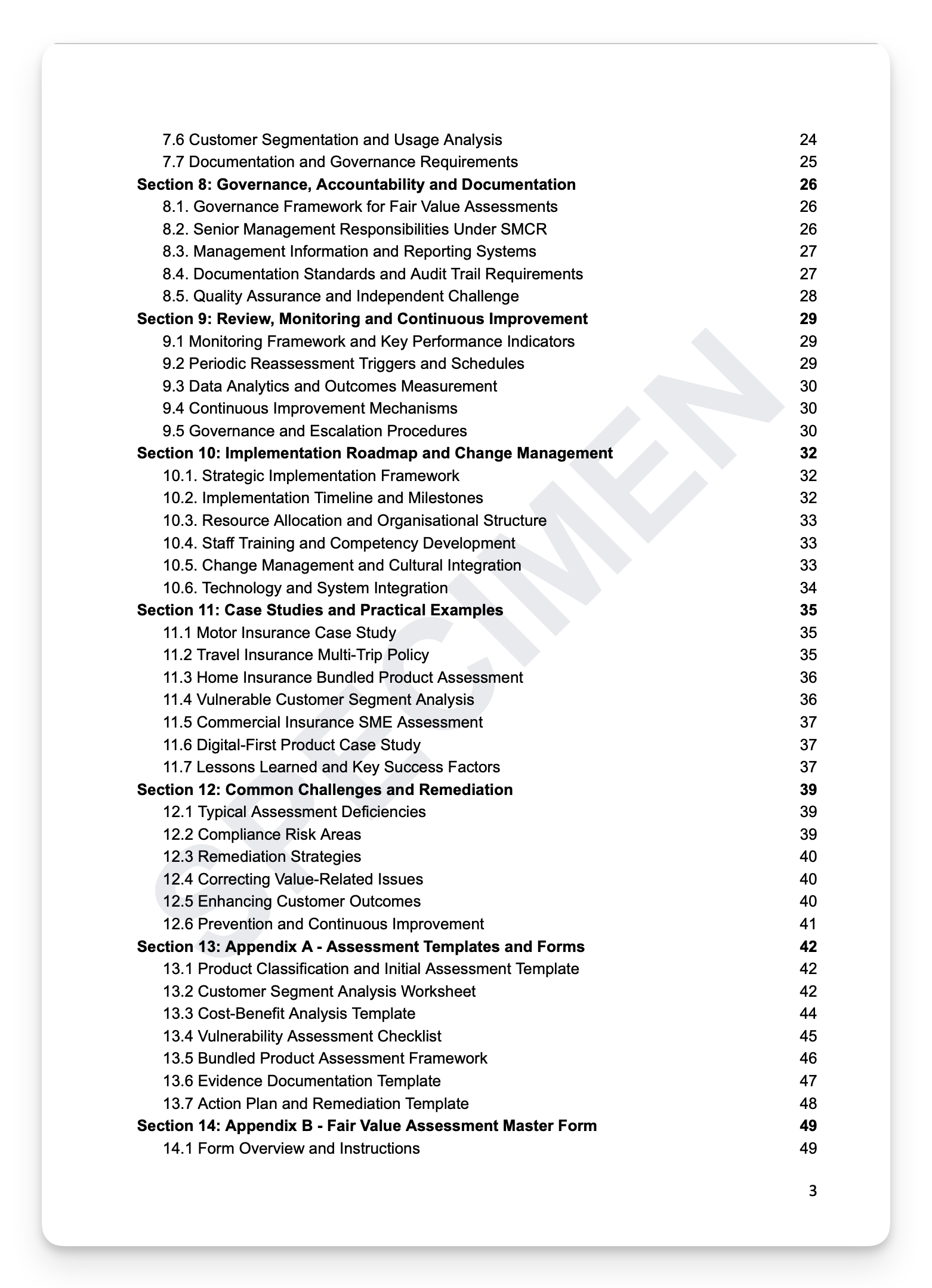
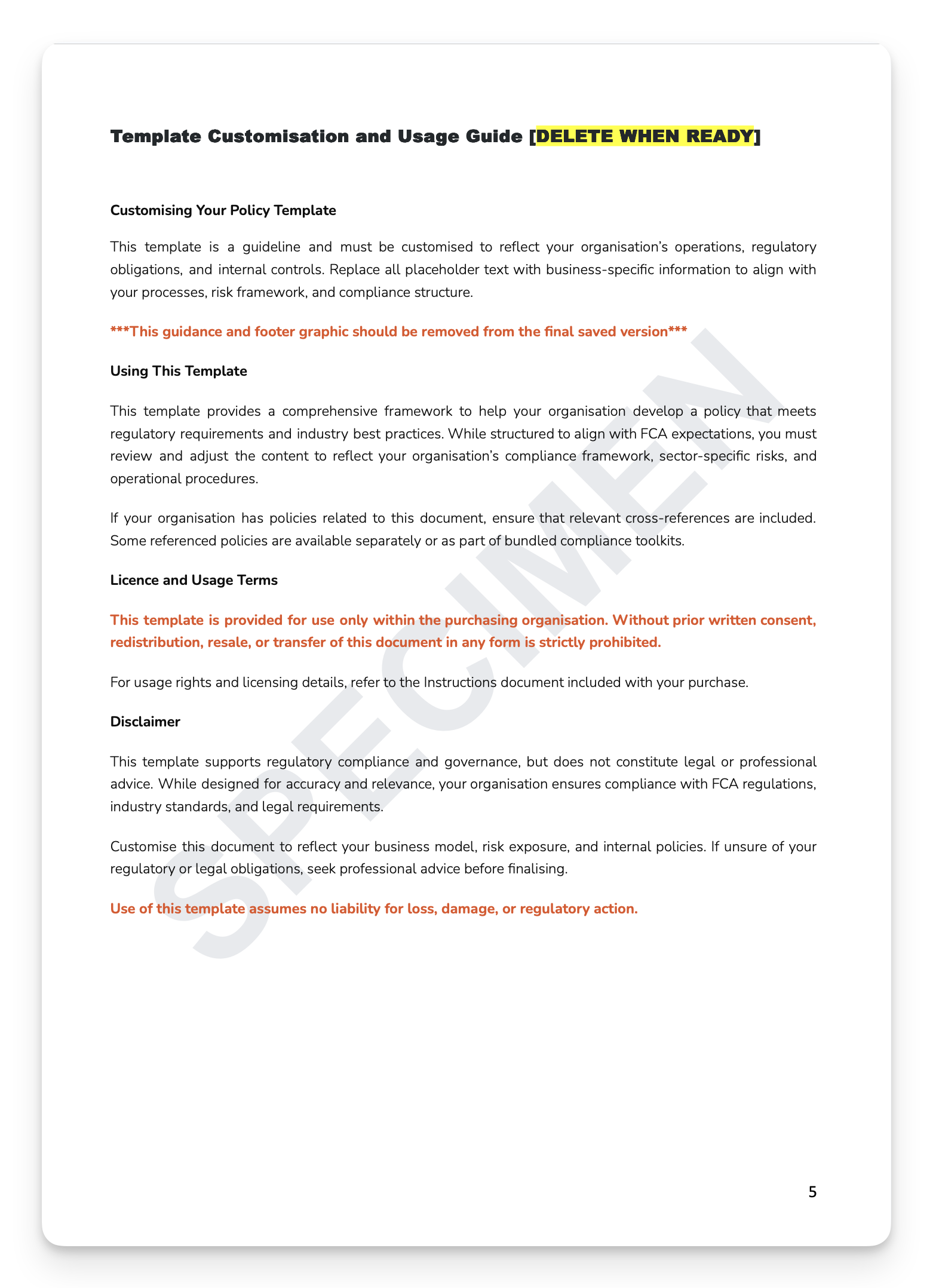
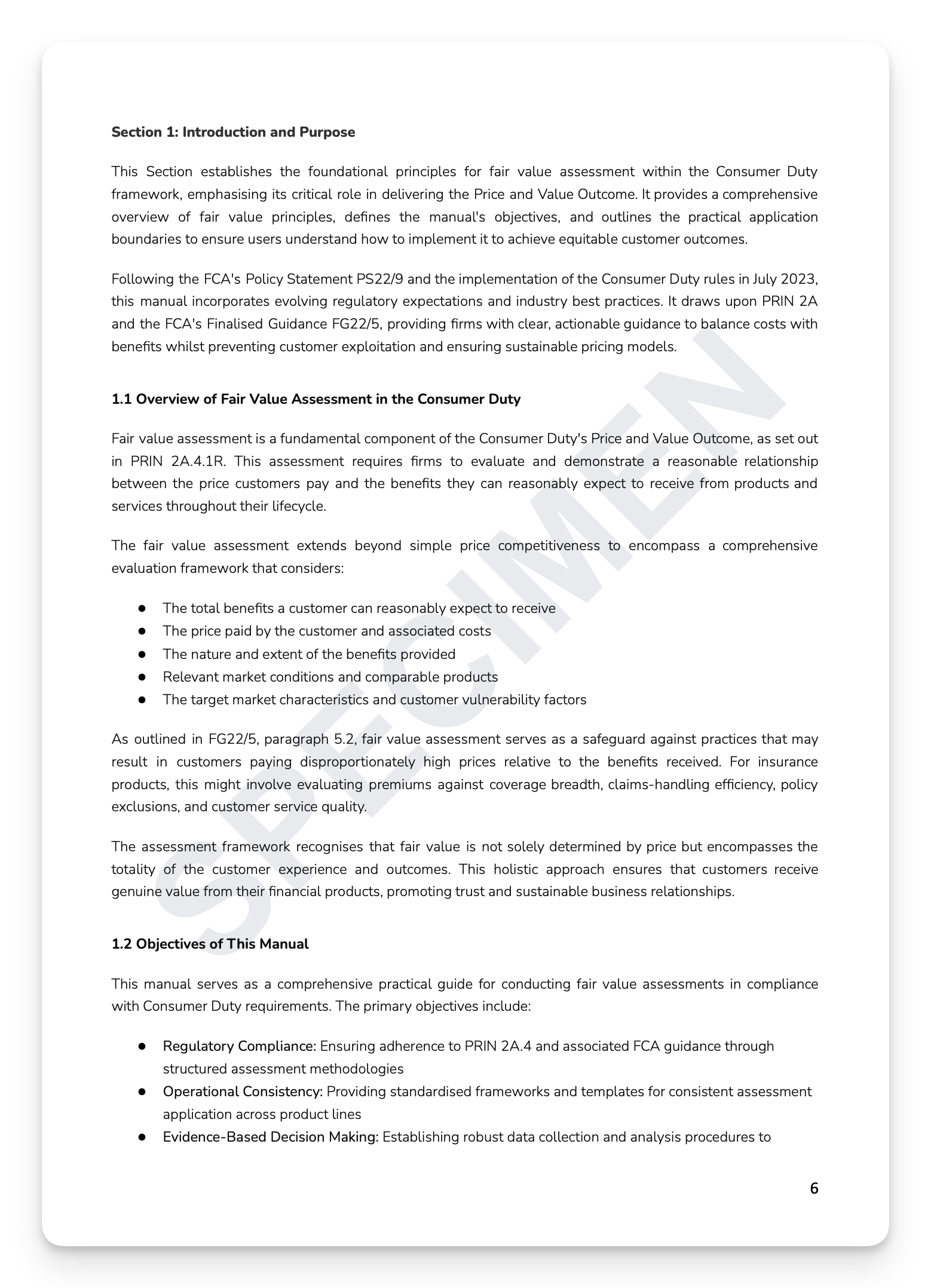
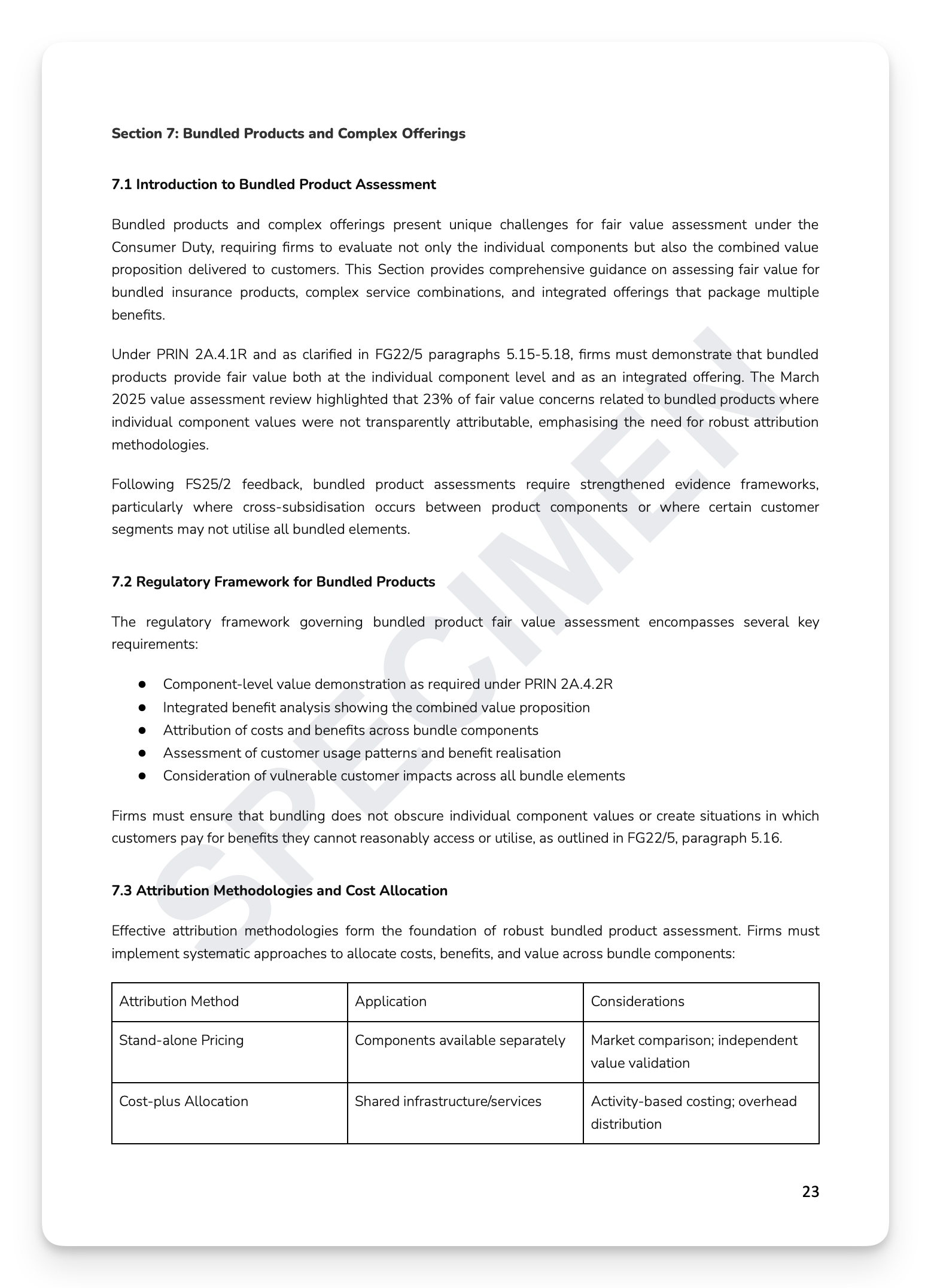
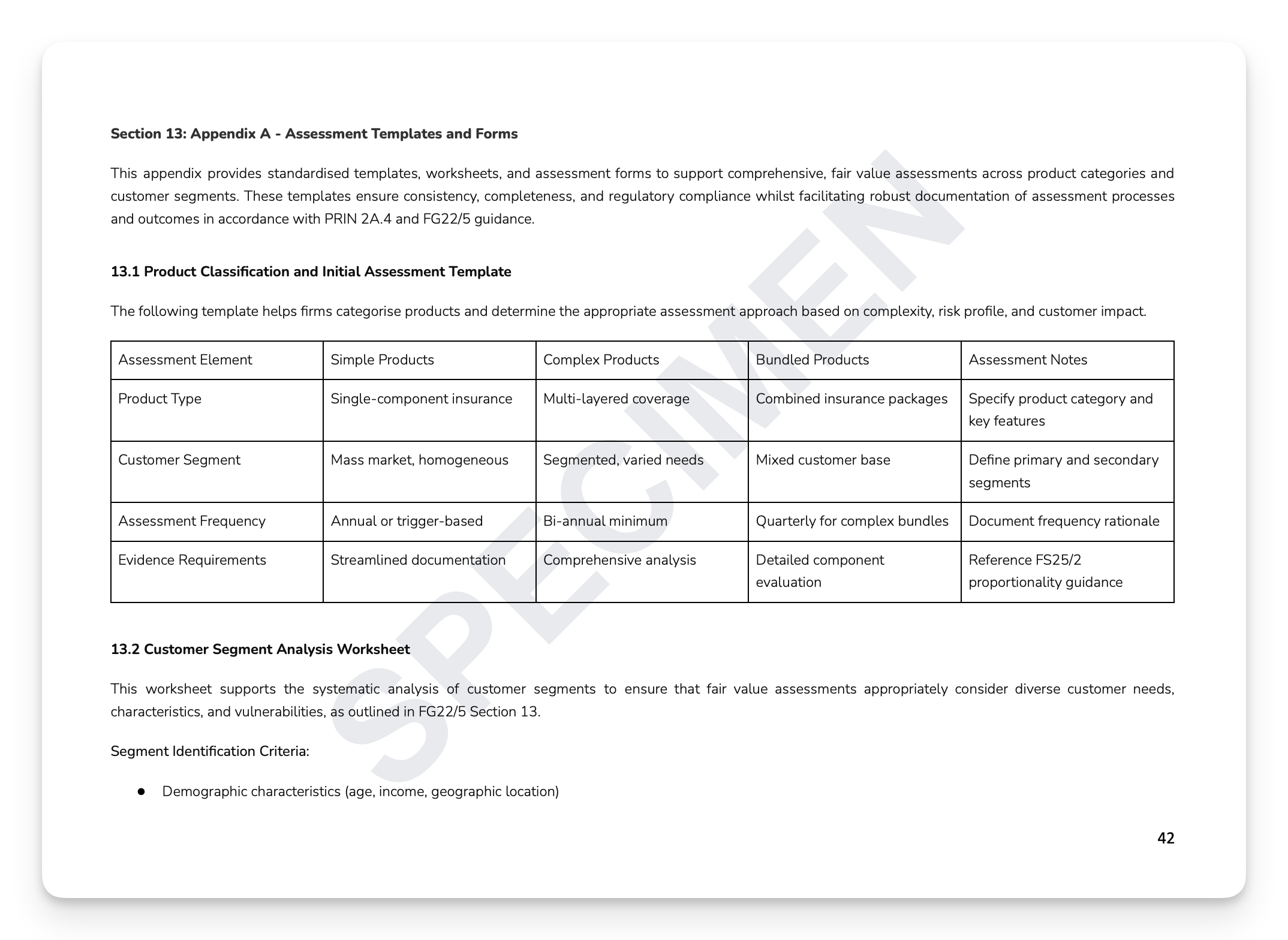
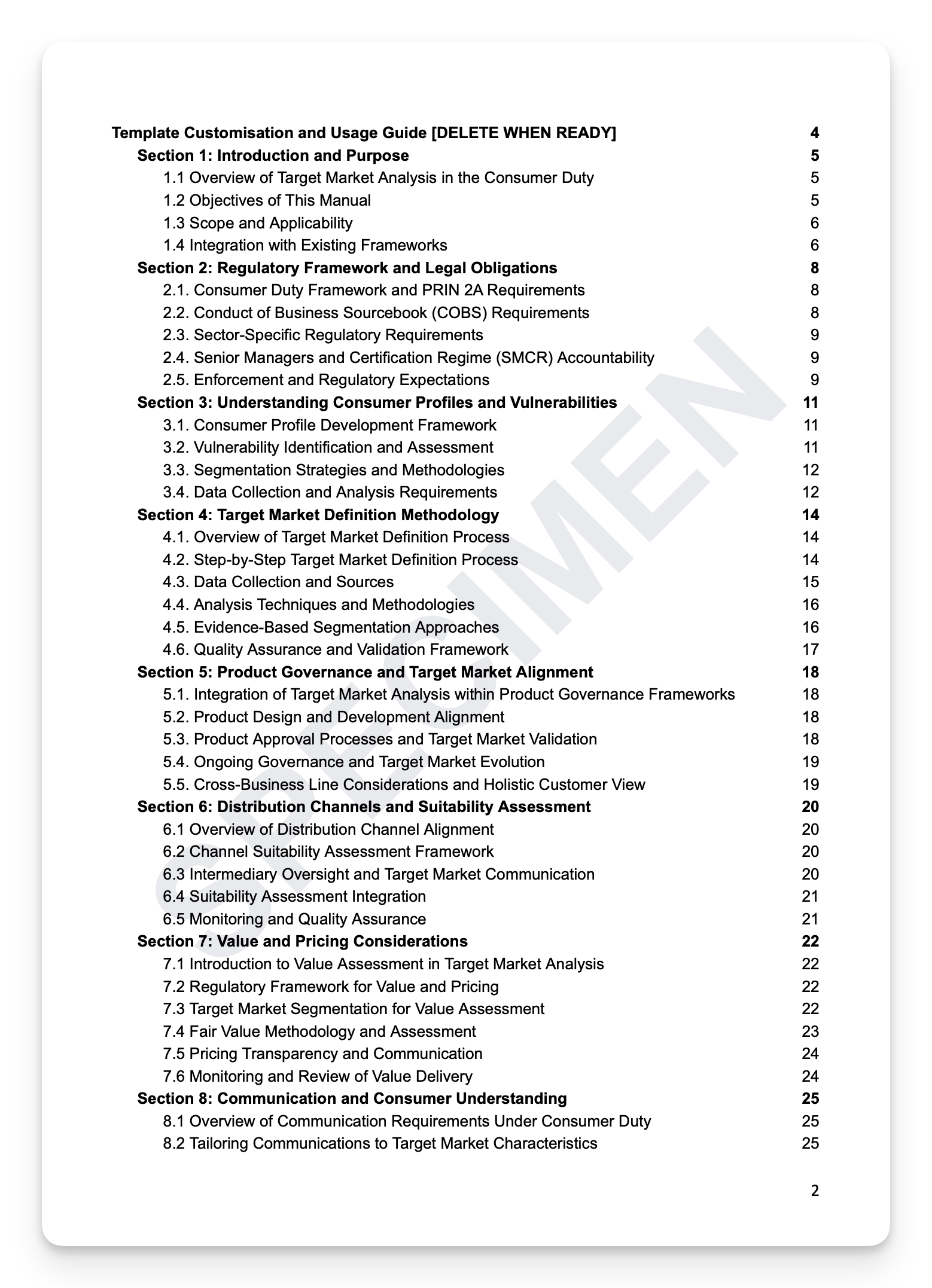
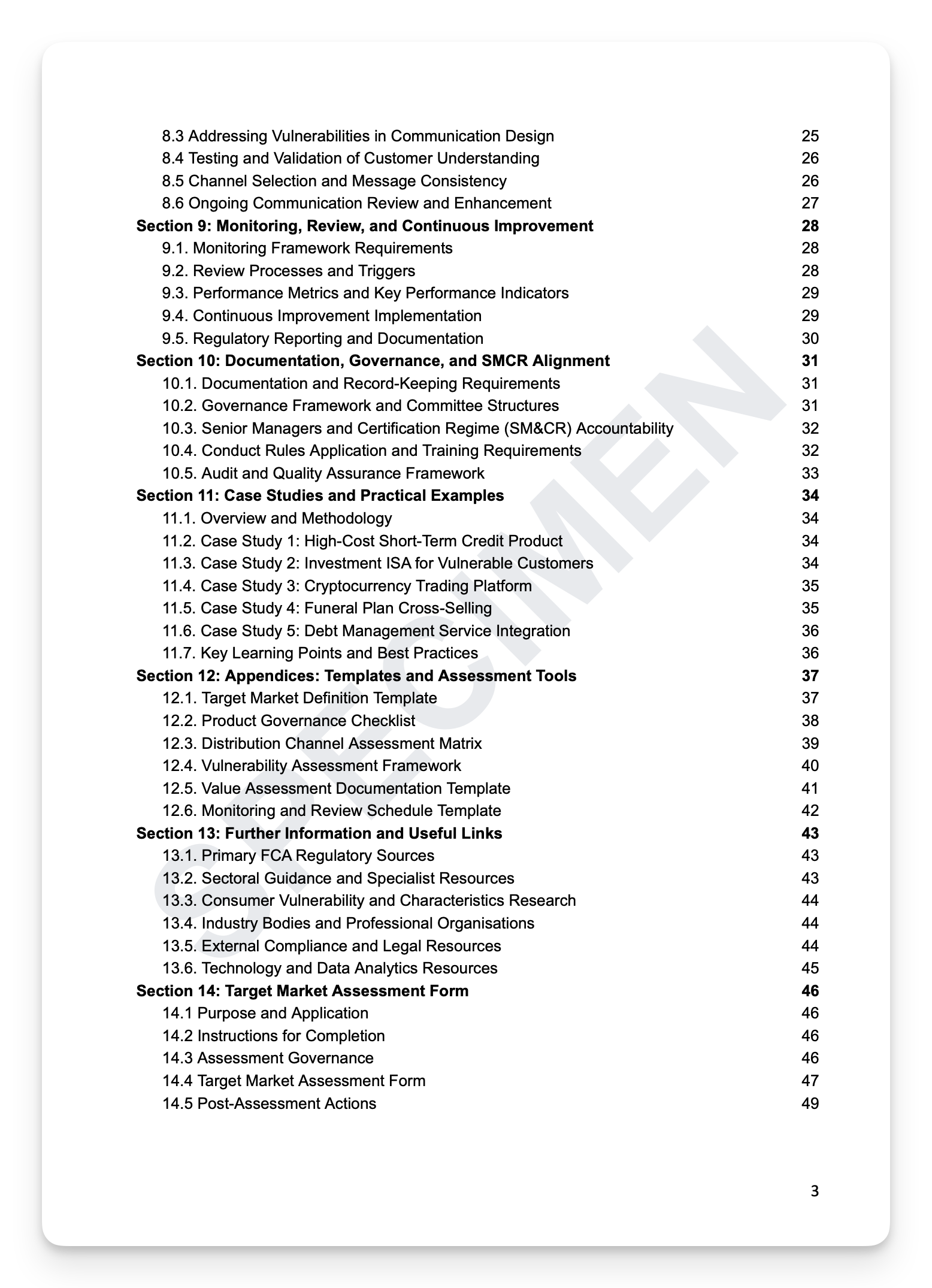
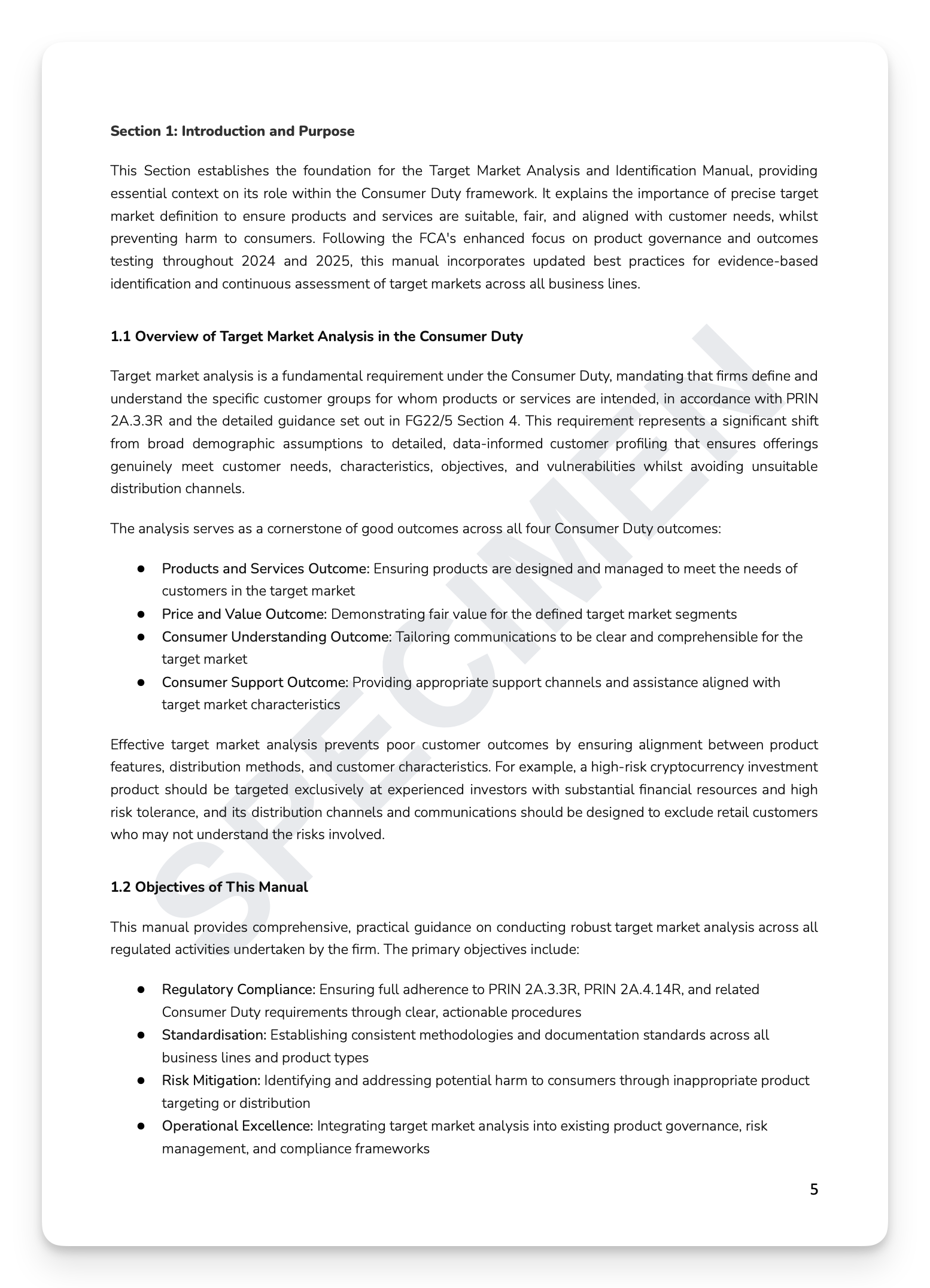
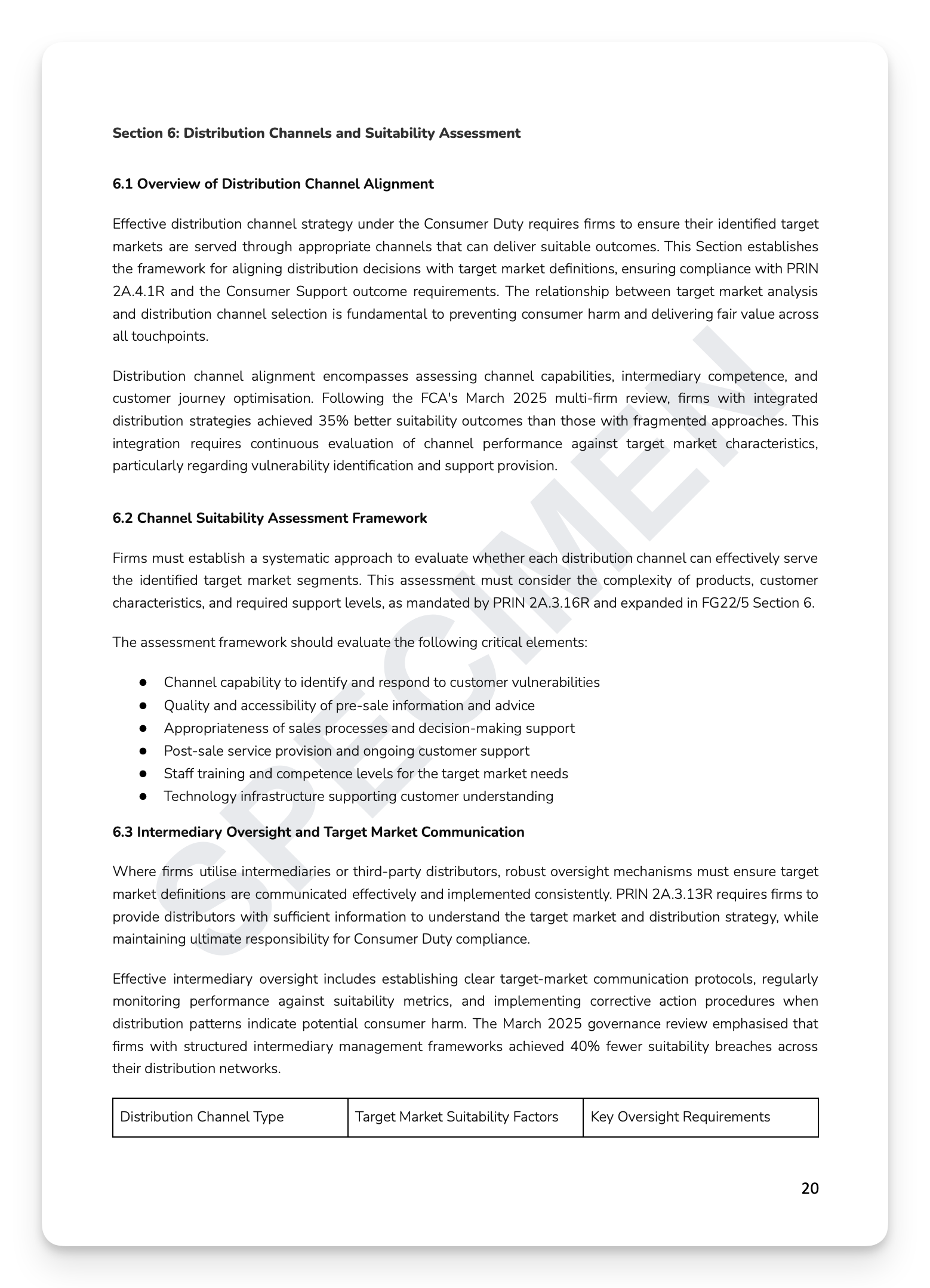
Four outcome monitoring frameworks: products and services, price and value, consumer understanding, and consumer support — with cross-outcome dependency mapping
MI system design: data architecture, quality standards, outcome-focused KPIs, and FS25/2 compliance
Vulnerable customer monitoring: segmented framework, early harm detection, intervention protocols, and data protection considerations
Testing and evaluation: product testing, pricing analysis, communications effectiveness, and root cause analysis
Remediation framework: identifying poor outcomes, designing remedial actions, customer remedy calculation, and continuous improvement
Board-level reporting: documentation standards, regulatory reporting obligations, and audit preparation and DEPP alignment
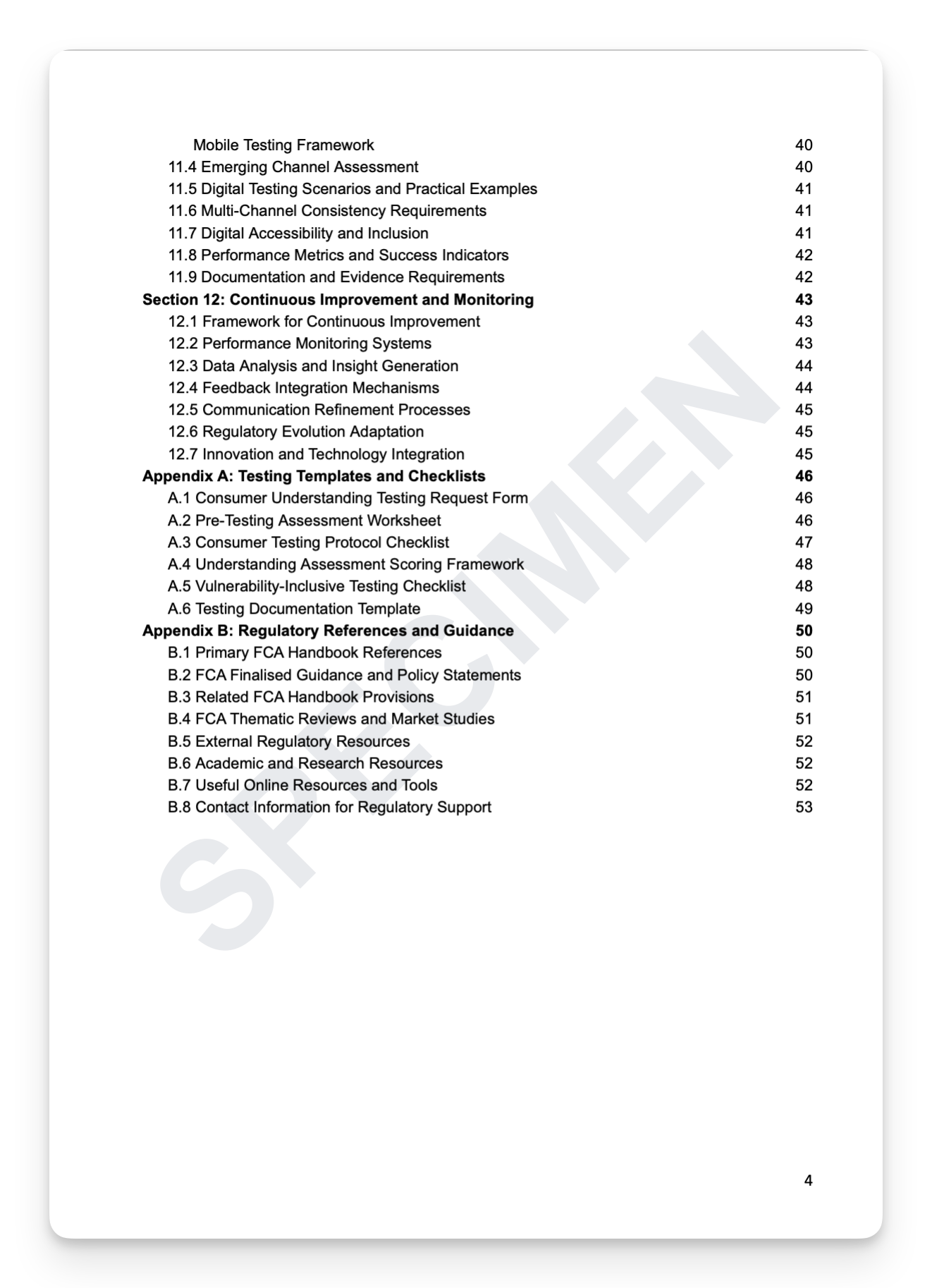
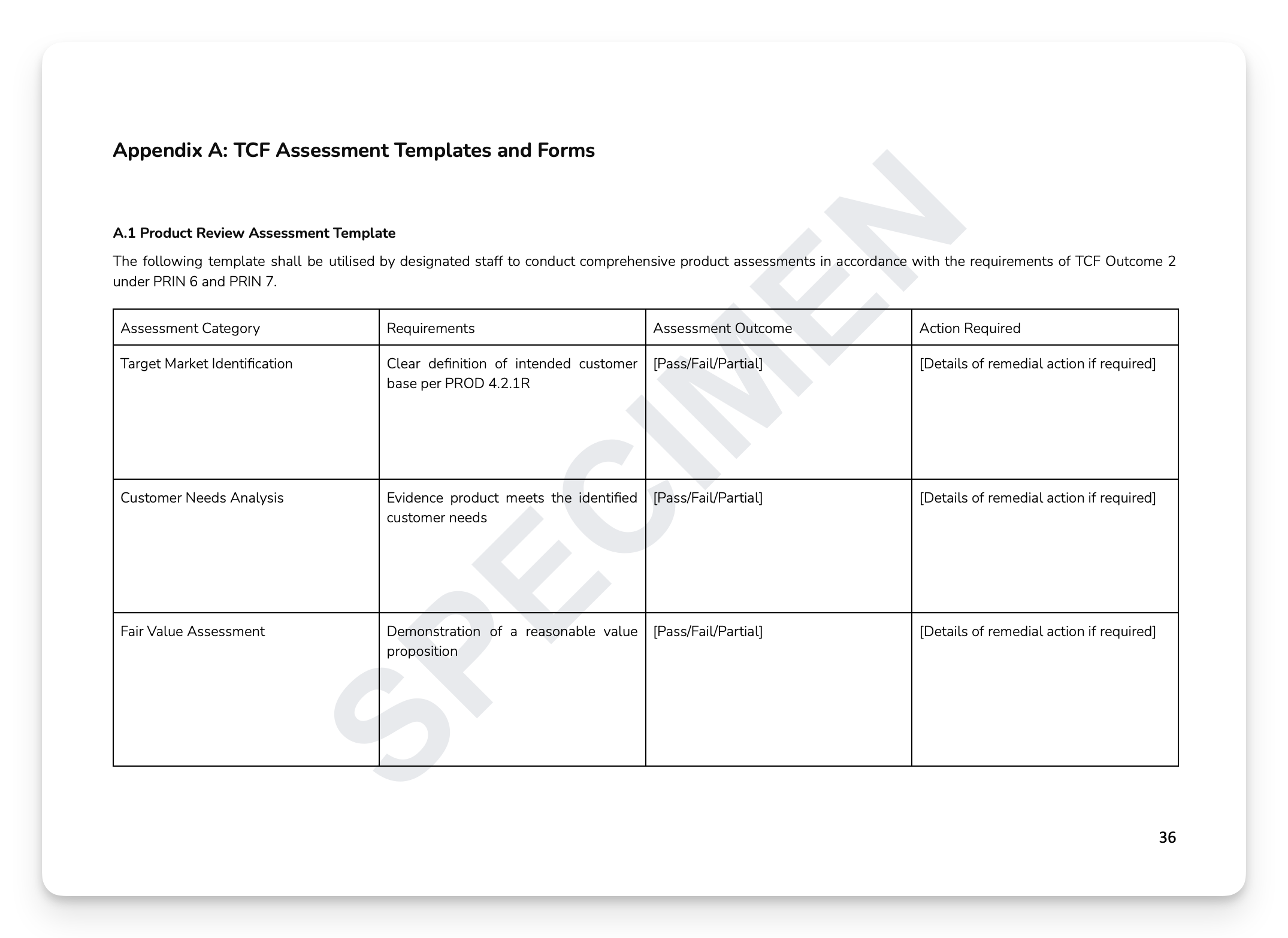
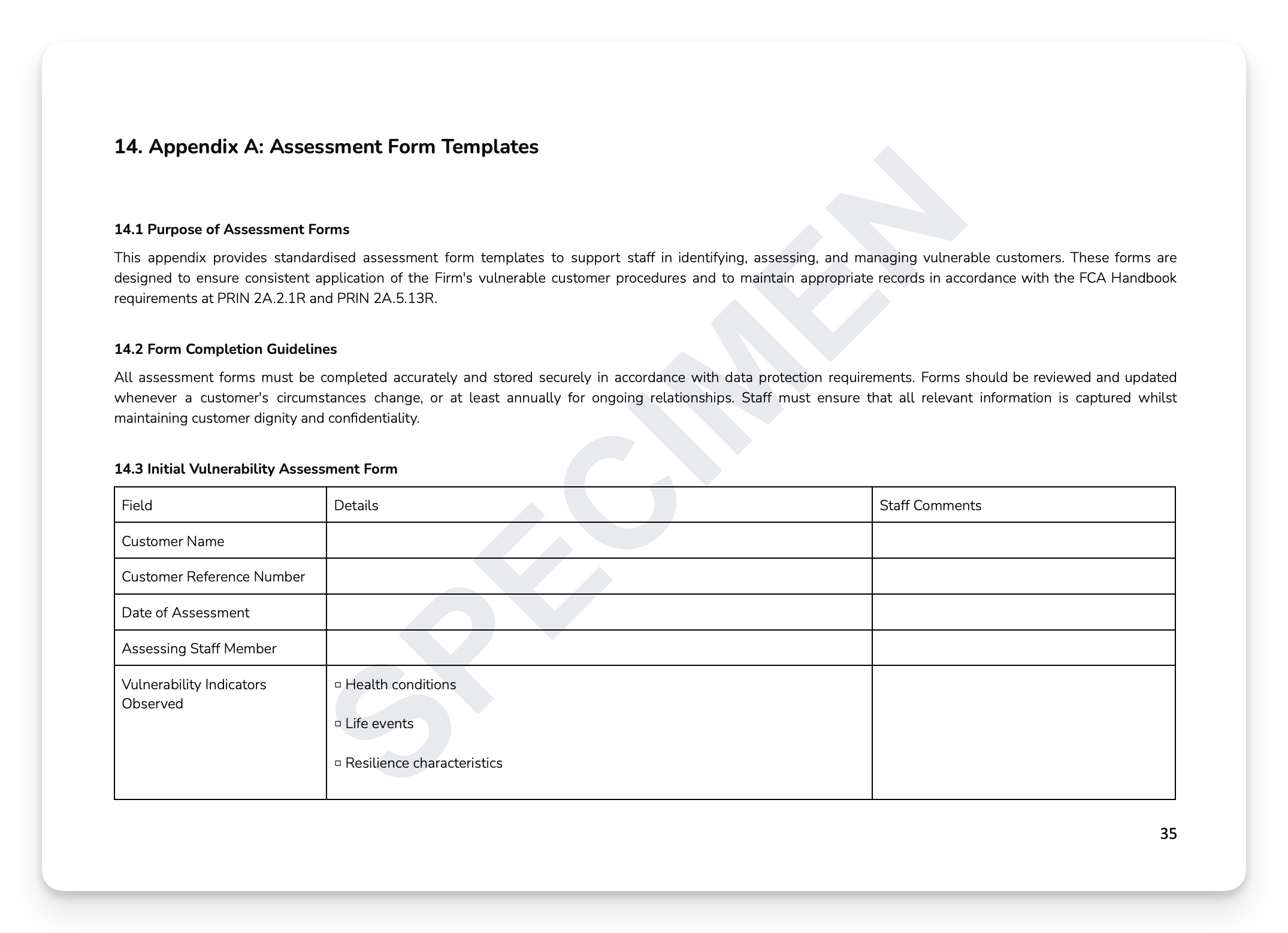
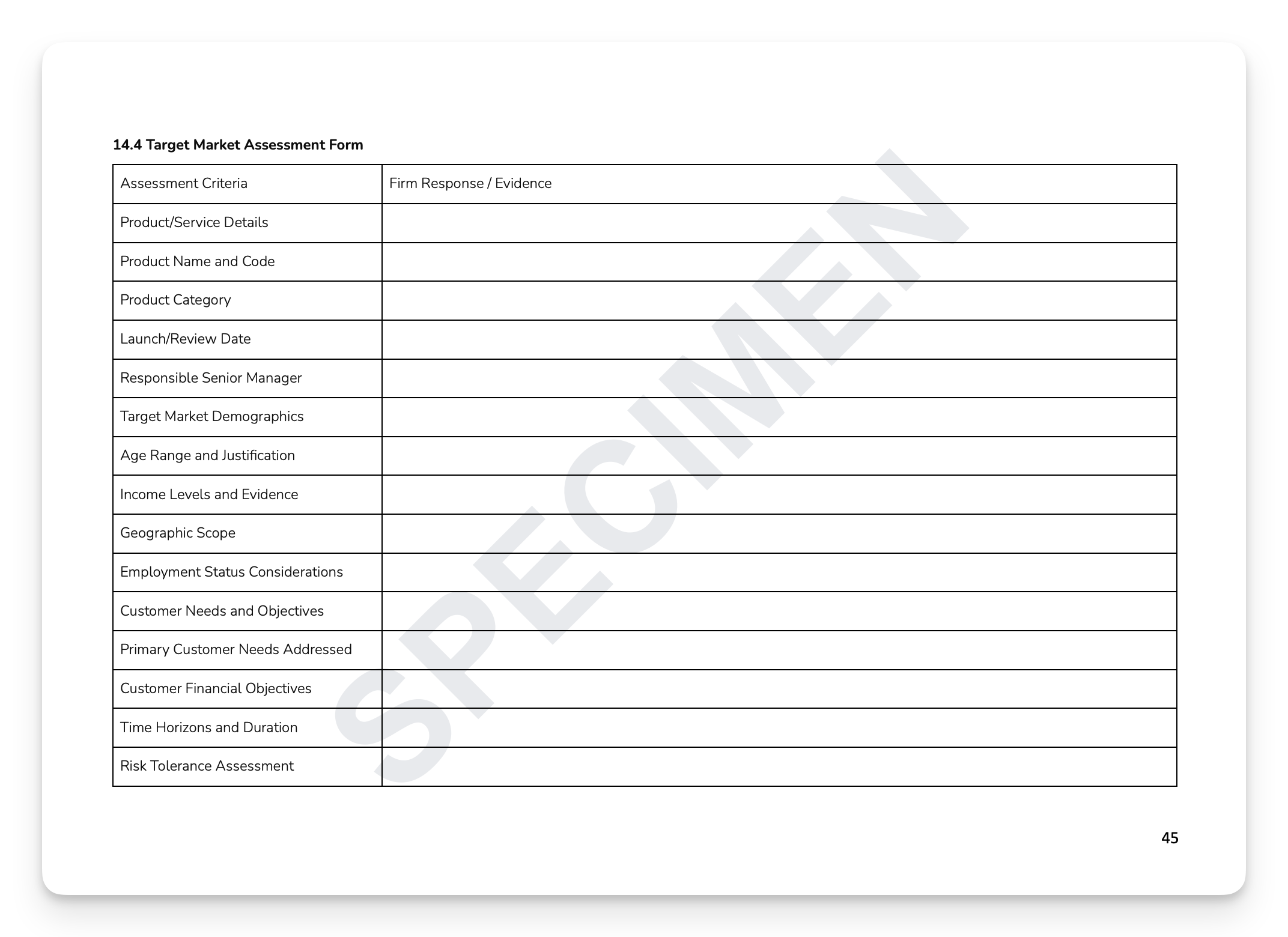
Ready-to-use appendices: Customer Outcome Data Collection Template, Harm Identification Matrix, Remediation Assessment Form, and Monthly Outcome Monitoring Dashboard
+ much more
Who is this for?
Compliance Officers, Consumer Duty leads, SMF holders, and Boards at FCA-regulated wealth management, investment, and retail financial services firms.
How it works
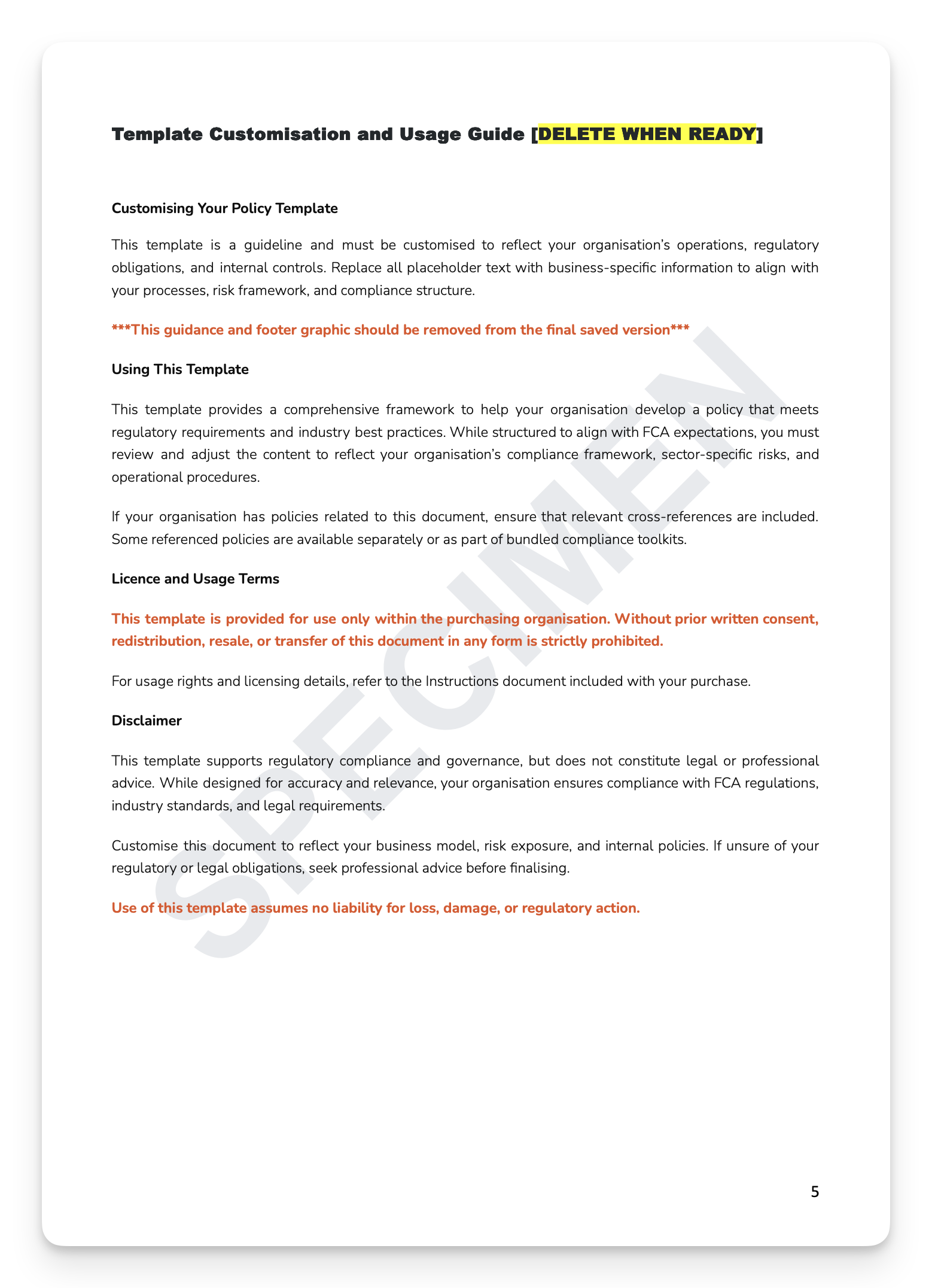
Step 1 — Read it. Every section exists for a reason, grounded in a specific regulatory obligation.
Step 2 — Understand it. Map the content against your current practices. Identify where you're strong and where gaps exist.
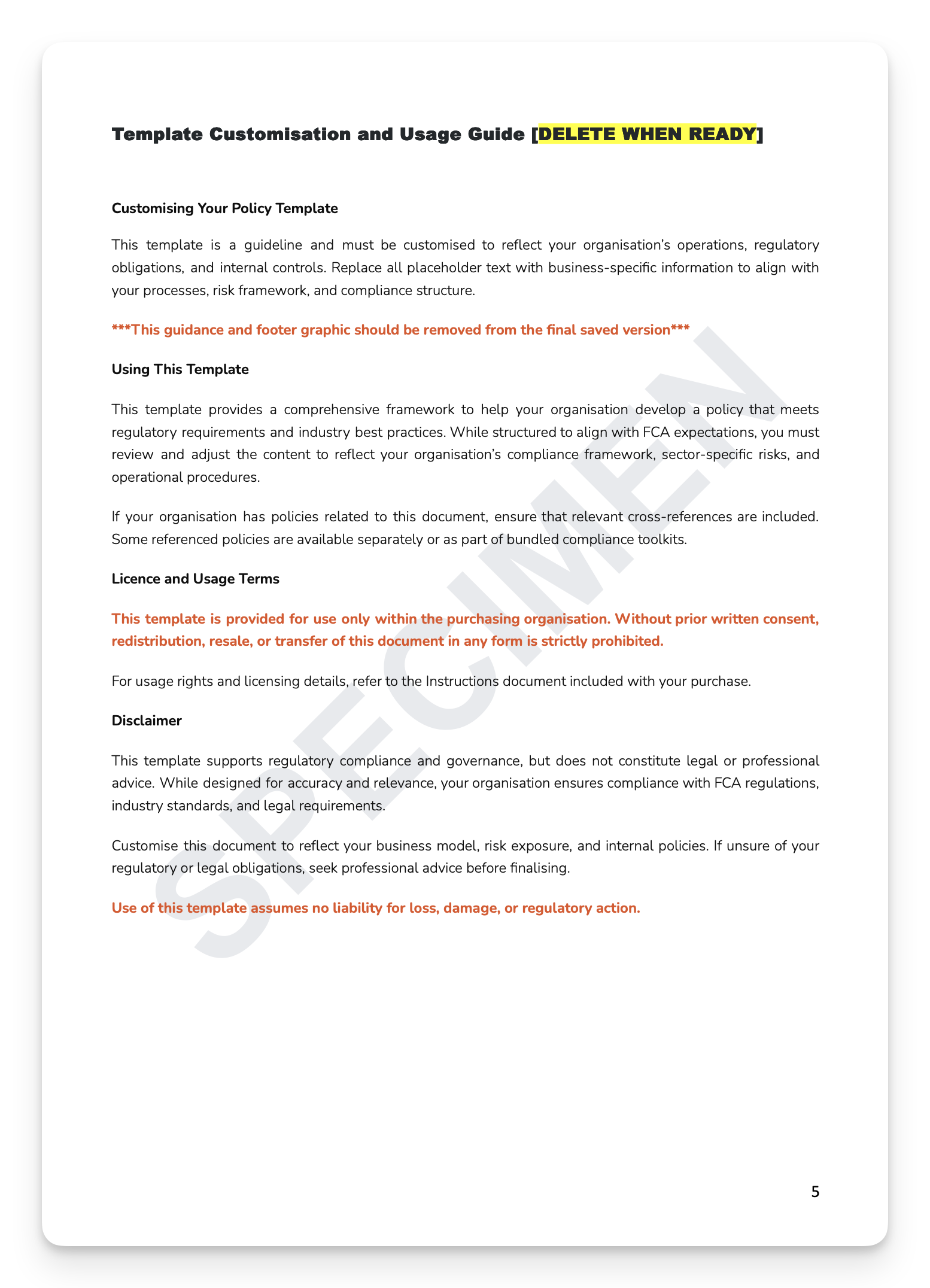
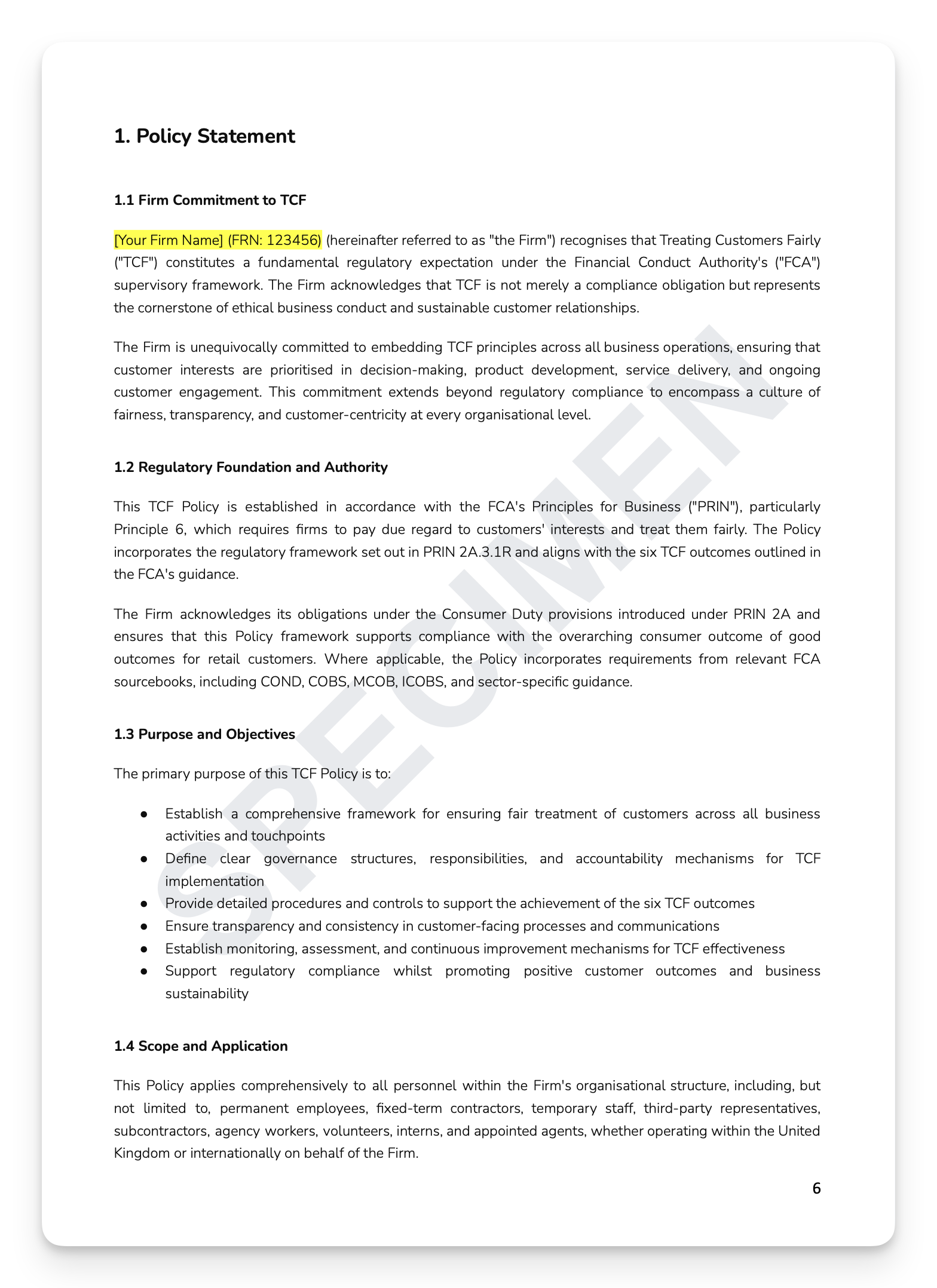
Step 3 — Make it yours. Tailor the language to reflect how your organisation actually operates. A policy that sounds like your firm is a policy your people will follow.
Step 4 — Take ownership. Assign clear accountability — Board approval, named SMF holder, designated policy owner. A policy without an owner is a liability, not an asset.
Step 5 — Operationalise it. Embed the policy into your governance calendar, training programme, and annual review cycle. This is where compliance becomes culture.
Or, get this free with RegTechPRO
Access this alongside the full compliance policy library — SM&CR, COBS, AML, Consumer Duty, GDPR, and more — for a fraction of the cost of consultancy.
View RegTechPRO pricing and packages →
Consumer Duty doesn't end at implementation — it begins there. Under PRIN 2A.9, firms must monitor whether they are actually delivering good outcomes, not just whether their processes are designed to do so. The FCA expects Board-level reporting on outcome data, evidence of harm detection and remediation, and a functioning monitoring programme. The FCA doesn't wait.
What's included:
Four outcome monitoring frameworks: products and services, price and value, consumer understanding, and consumer support — with cross-outcome dependency mapping
MI system design: data architecture, quality standards, outcome-focused KPIs, and FS25/2 compliance
Vulnerable customer monitoring: segmented framework, early harm detection, intervention protocols, and data protection considerations
Testing and evaluation: product testing, pricing analysis, communications effectiveness, and root cause analysis
Remediation framework: identifying poor outcomes, designing remedial actions, customer remedy calculation, and continuous improvement
Board-level reporting: documentation standards, regulatory reporting obligations, and audit preparation and DEPP alignment
Ready-to-use appendices: Customer Outcome Data Collection Template, Harm Identification Matrix, Remediation Assessment Form, and Monthly Outcome Monitoring Dashboard
+ much more
Who is this for?
Compliance Officers, Consumer Duty leads, SMF holders, and Boards at FCA-regulated wealth management, investment, and retail financial services firms.
How it works
Step 1 — Read it. Every section exists for a reason, grounded in a specific regulatory obligation.
Step 2 — Understand it. Map the content against your current practices. Identify where you're strong and where gaps exist.
Step 3 — Make it yours. Tailor the language to reflect how your organisation actually operates. A policy that sounds like your firm is a policy your people will follow.
Step 4 — Take ownership. Assign clear accountability — Board approval, named SMF holder, designated policy owner. A policy without an owner is a liability, not an asset.
Step 5 — Operationalise it. Embed the policy into your governance calendar, training programme, and annual review cycle. This is where compliance becomes culture.
Or, get this free with RegTechPRO
Access this alongside the full compliance policy library — SM&CR, COBS, AML, Consumer Duty, GDPR, and more — for a fraction of the cost of consultancy.
View RegTechPRO pricing and packages →


 Image 1 of 8
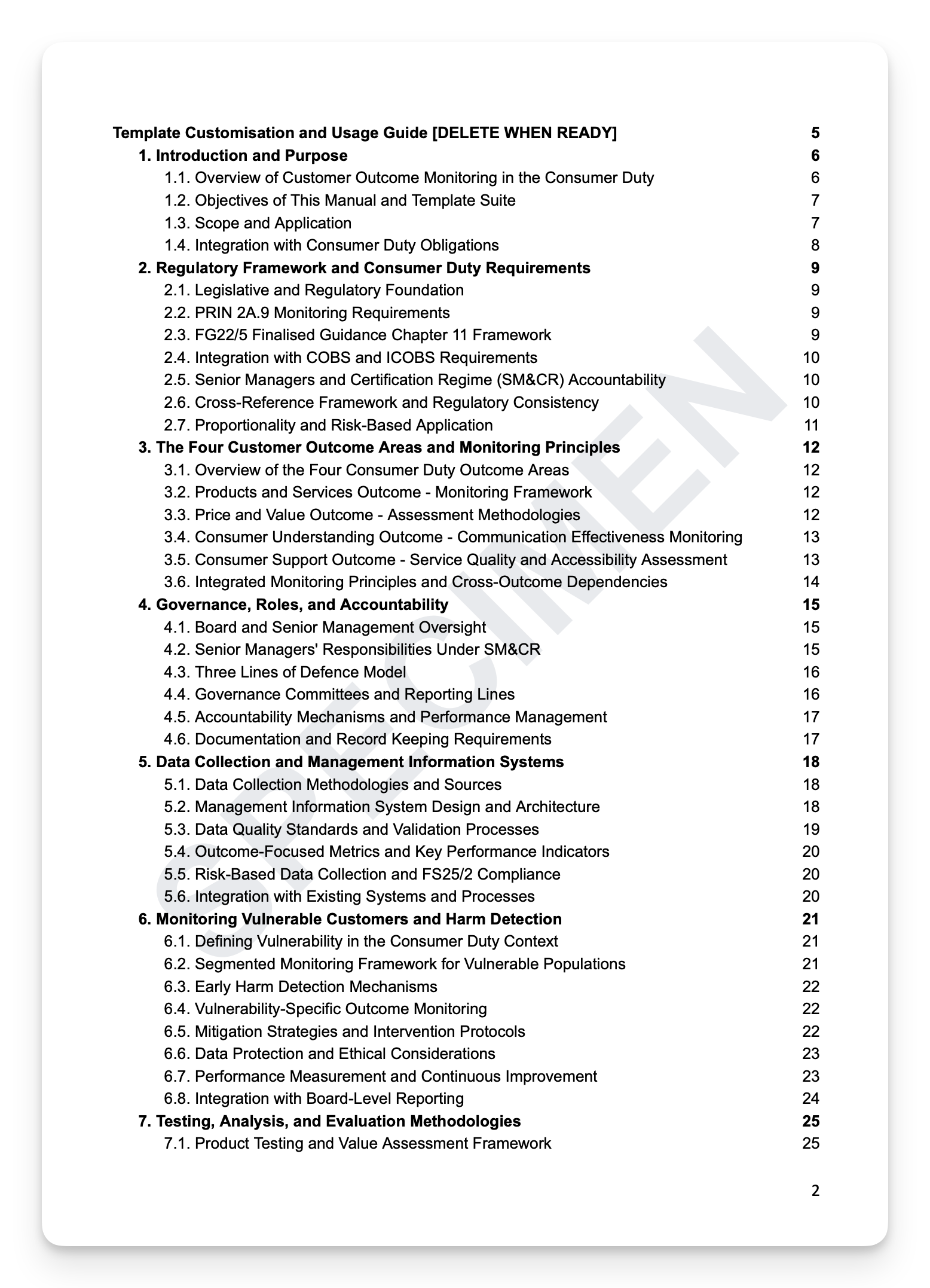 Image 2 of 8
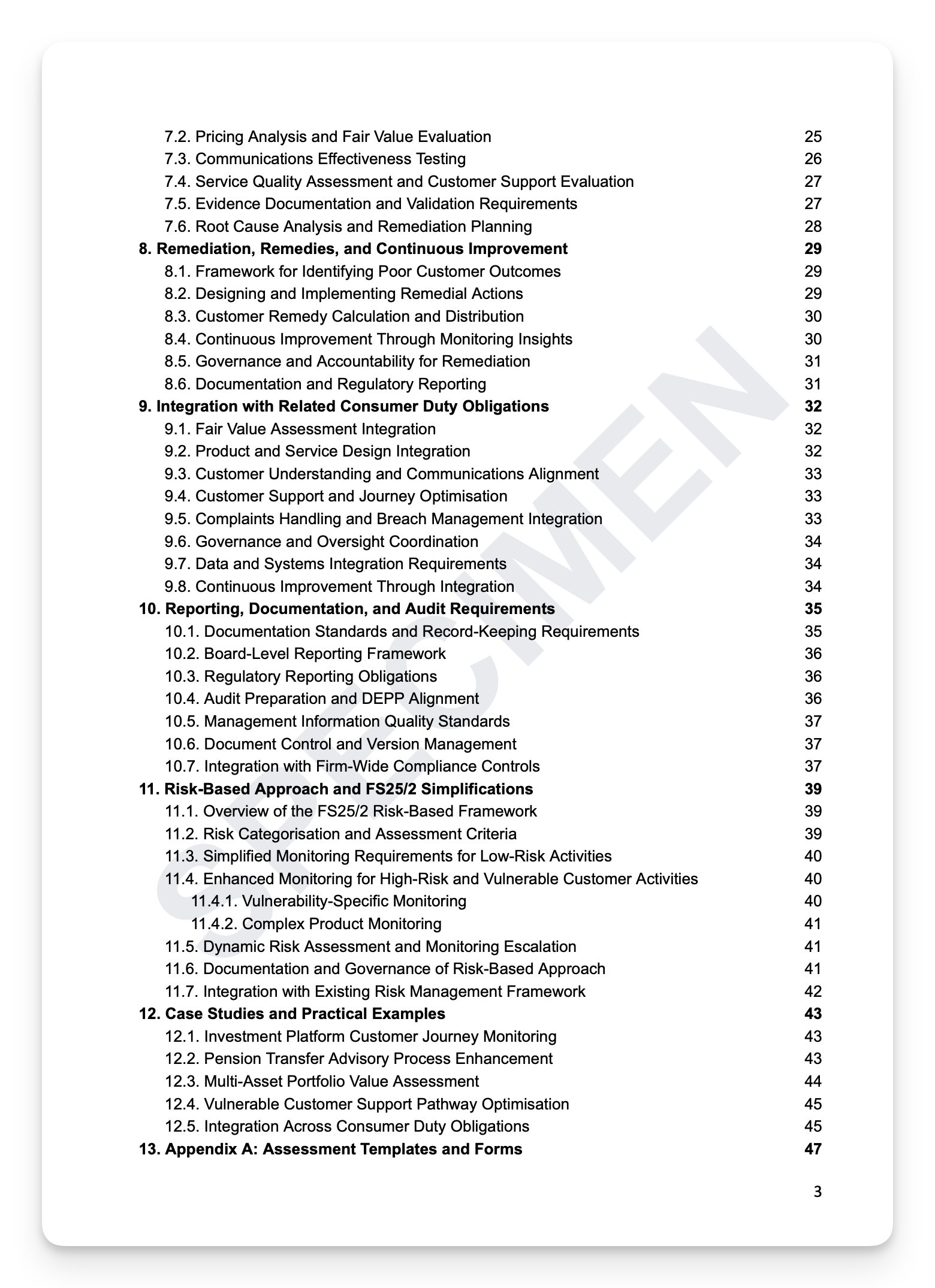 Image 3 of 8
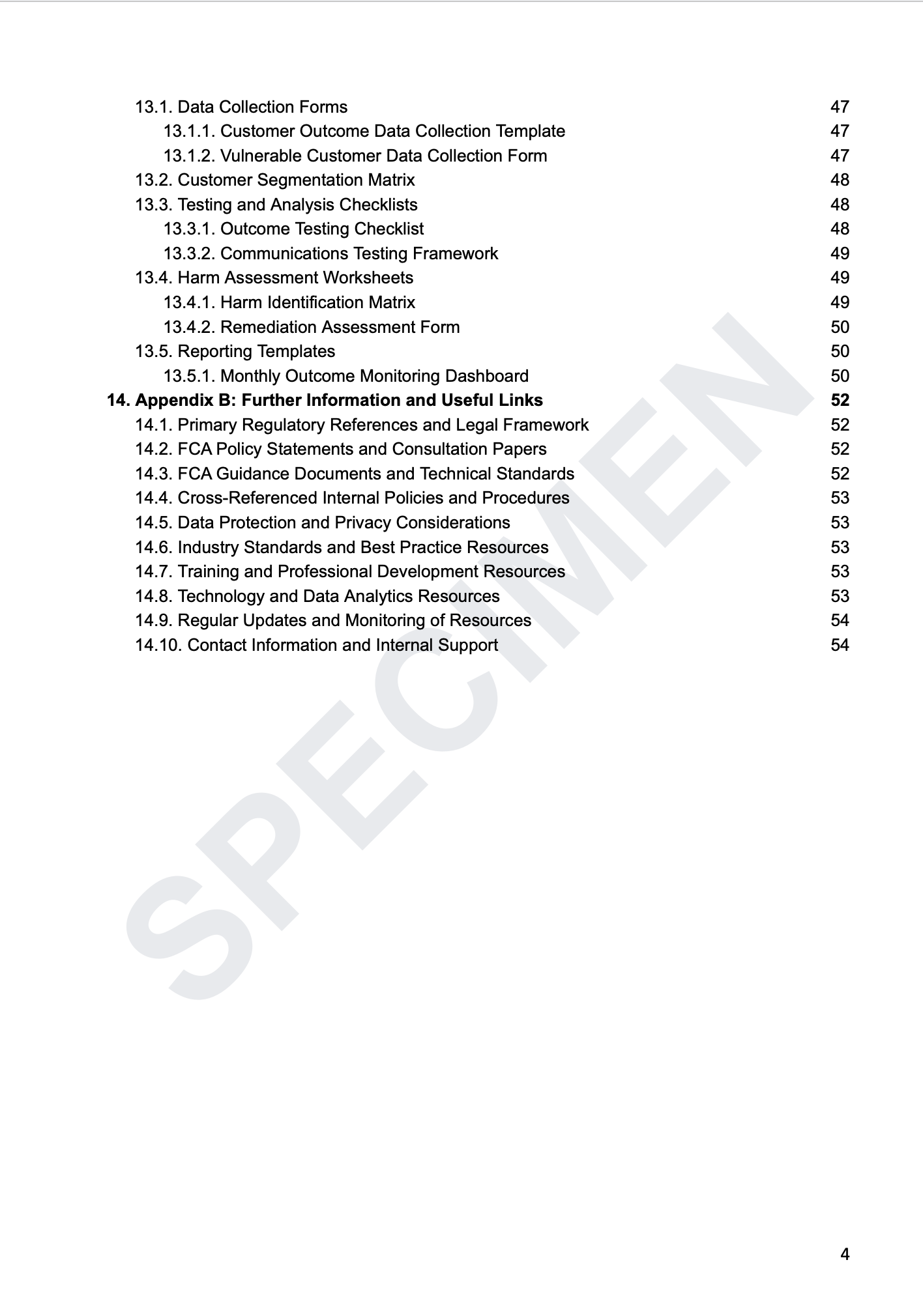 Image 4 of 8
 Image 5 of 8
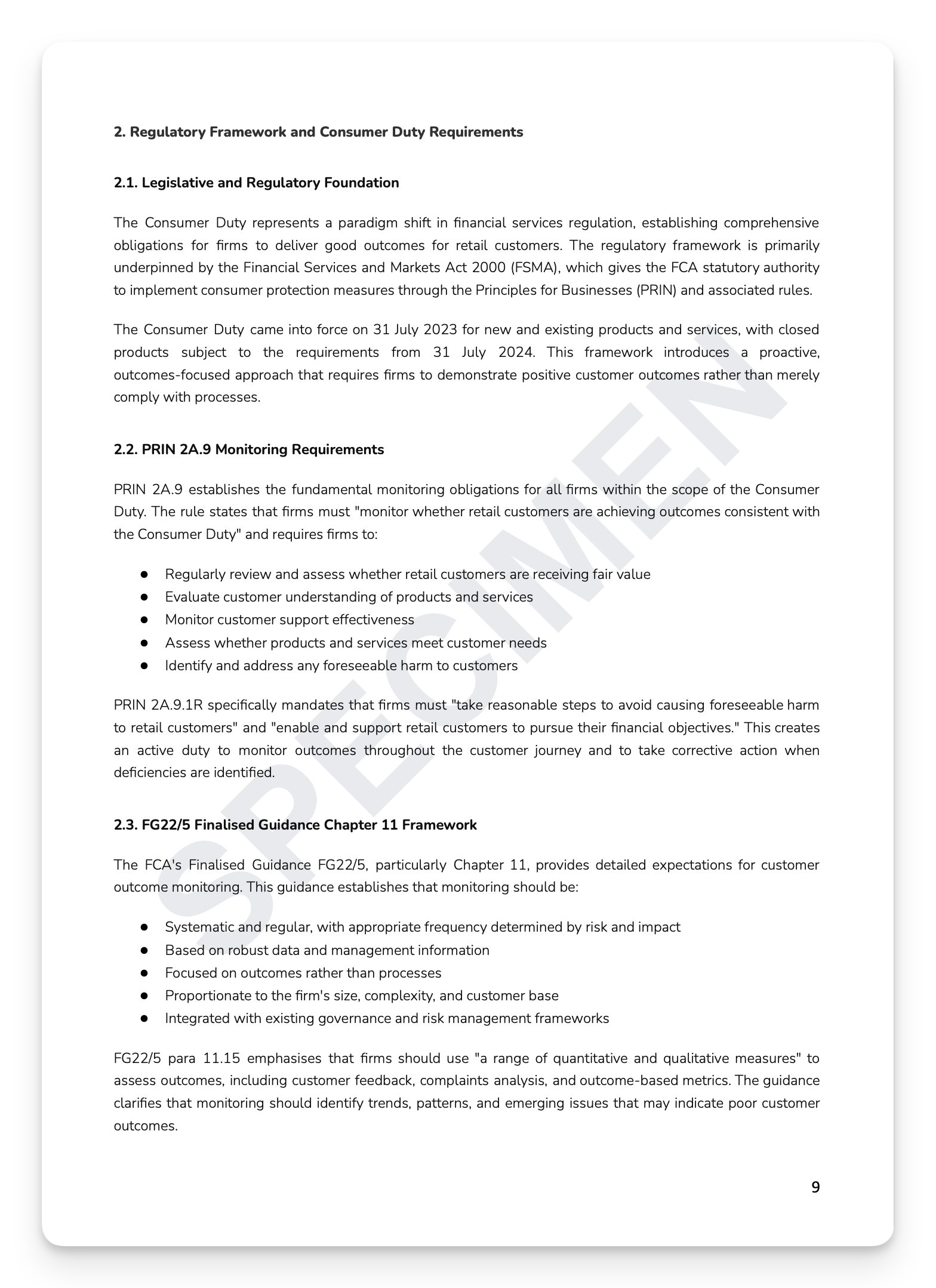 Image 6 of 8
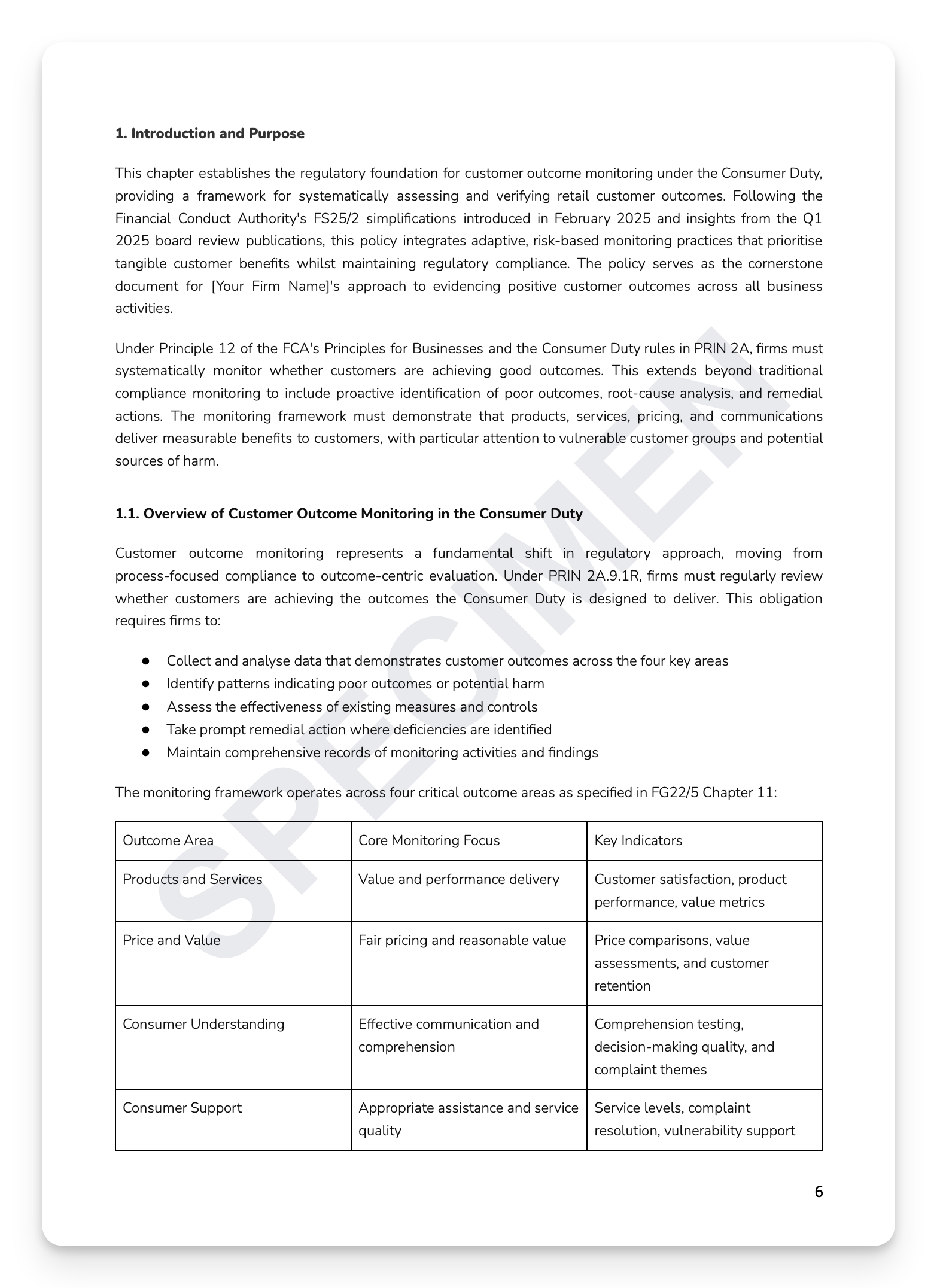 Image 7 of 8
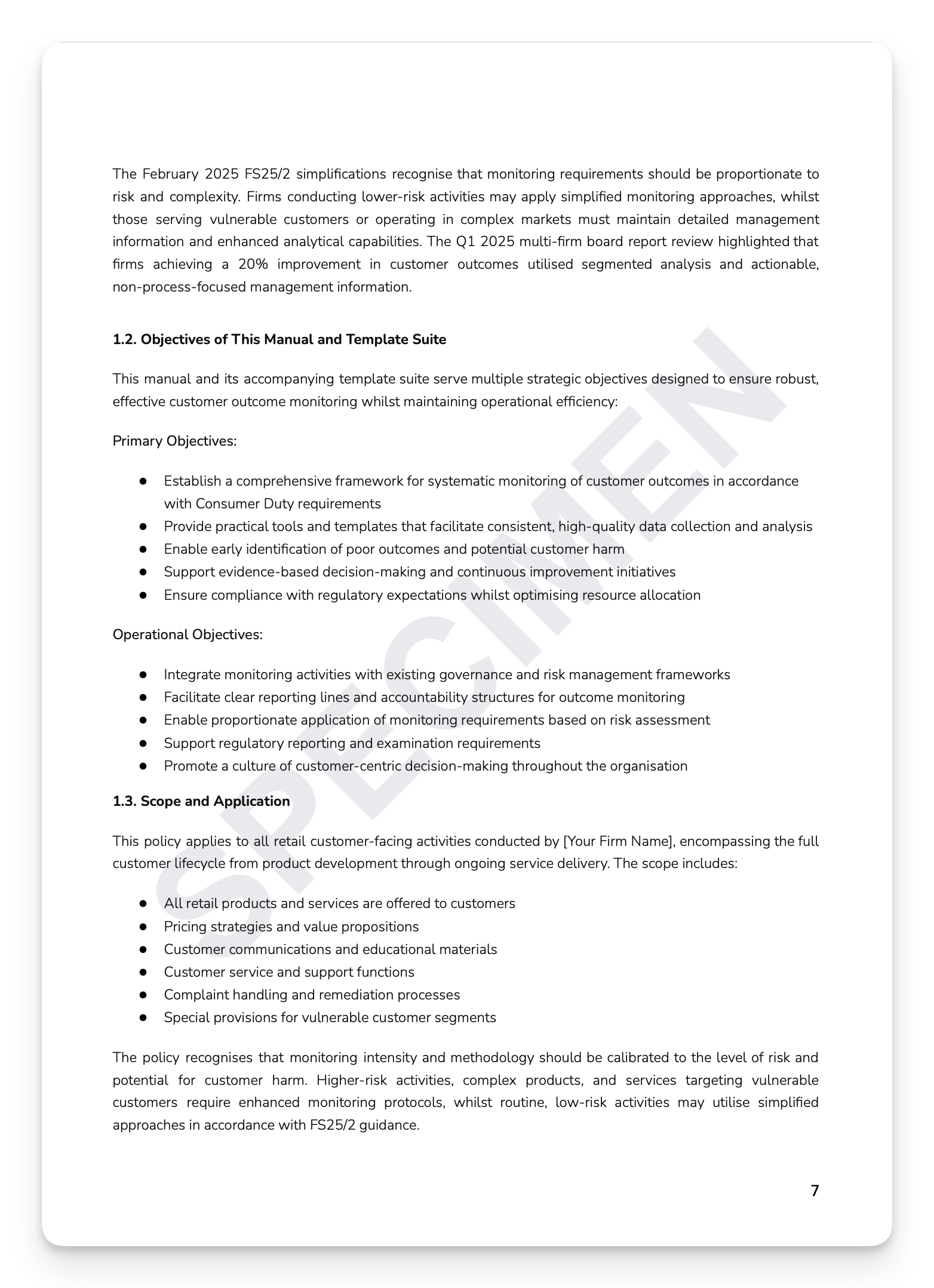 Image 8 of 8